

15. Heroes and Villains of the Roaring 20's: The Crash of 1929


My Name is Charles E. Mitchell: Banker and Wall Street Leader
I became one of the most powerful bankers in the United States during the Roaring Twenties. I was born in Illinois in 1877 and grew up believing that hard work, business, and opportunity could lift a person to great success. As a young man, I was fascinated by finance and the growing power of American industry. I worked my way into banking and eventually joined National City Bank, one of the largest financial institutions in the nation.
Building a Financial Empire
During the 1920s, America seemed unstoppable. Factories produced goods at record levels, businesses expanded, and millions of Americans invested in the stock market. As the leader of National City Bank, I believed strongly that ordinary people should have access to investments that had once been available mainly to the wealthy. I encouraged growth, lending, and participation in the markets. To me, this was progress, and I saw myself as helping create opportunities for millions of Americans.
My Belief in the Market
Many critics worried that stock prices were rising too quickly and that too many investors were borrowing money to buy shares. I disagreed. I believed the American economy was entering a new age of prosperity. I felt that many of the warnings came from people who failed to understand how modern finance worked. If businesses were growing and profits were increasing, why shouldn't stock prices rise as well? I struggled to understand why some economists and government officials viewed expansion and investment as dangerous.
The Crash and Growing Criticism
When the stock market collapsed in 1929, much of the optimism that had defined the decade disappeared almost overnight. Investors lost fortunes, businesses struggled, and fear spread across the nation. Many people blamed bankers like me for encouraging speculation and making it too easy for investors to borrow money. I believed these criticisms were unfair. In my view, no one could have predicted the speed and severity of the collapse, and I felt that many people were looking for someone to blame rather than understanding the complexity of what had happened.
Investigations and Controversy
As the Great Depression deepened, government investigators examined the actions of major banks and financial leaders. My banking practices, investments, and tax affairs became subjects of intense public scrutiny. Newspapers often portrayed me as a symbol of the excesses of the Roaring Twenties. I continued to defend many of my decisions, believing that they had been made in pursuit of growth and opportunity rather than greed. Yet the public increasingly viewed Wall Street leaders as contributors to the nation's suffering.
Looking Back
Only later did I begin to understand why so many Americans were angry. While I had focused on markets, investments, and economic growth, millions of families had lost their savings, jobs, and security. I still believe that innovation and investment helped build modern America, but I came to recognize that financial leaders also carry responsibilities that extend beyond profits. The lessons of the crash showed that confidence without caution can have consequences far greater than many of us imagined.
The Market Reaches Its Peak (1929) - Told by Charles E. Mitchell
In the late 1920s, America seemed unstoppable. My name is Charles E. Mitchell, president of National City Bank, and from my office in New York, I watched a nation overflowing with confidence. Factories produced automobiles, radios, refrigerators, and countless other products. New technologies appeared every year, businesses expanded rapidly, and many Americans believed that prosperity had become a permanent part of life. It felt as though the future had arrived, and few people wanted to believe that the good times could ever end.
Wall Street Becomes the Center of Attention
The stock market became a symbol of America's success. Newspapers printed stock prices on their front pages, radio programs discussed market gains, and conversations about investing took place in homes, barber shops, restaurants, and offices across the country. People who had never owned stocks before began buying shares, hoping to participate in the nation's growing wealth. Each new market record seemed to confirm the belief that stocks would continue rising indefinitely.
The Excitement of Easy Wealth
One of the most remarkable features of the era was how quickly fortunes appeared to grow. Investors watched their accounts increase month after month, sometimes week after week. Many borrowed money to purchase even more shares, believing future gains would easily cover their debts. Stories spread of ordinary workers, teachers, shopkeepers, and clerks making impressive profits. These success stories encouraged others to join the market, creating even greater excitement and demand for stocks.
Confidence Overcomes Caution
As prices climbed higher, warnings from a handful of economists and financial experts were often ignored. Most people focused on the evidence they could see: booming businesses, rising incomes, and growing stock values. Confidence became so widespread that caution often seemed unnecessary. Many investors believed America had entered a new economic age where old fears about financial crashes no longer applied. Optimism was not limited to Wall Street—it stretched across the entire nation.
The Summer of 1929
By the summer of 1929, stock prices reached extraordinary levels. The market continued setting records, and investors rushed to buy shares before prices climbed even higher. From the perspective of many bankers and business leaders, the economy still appeared strong. Manufacturing remained active, consumer spending continued, and the nation's wealth seemed greater than ever before. Looking around, it was easy to understand why so many people believed prosperity would last forever.
A Peak Few Recognized
What makes this moment so fascinating is that almost no one realized they were standing at the top of the mountain. The excitement, confidence, and optimism of 1929 were genuine. Millions of Americans believed they were witnessing the beginning of an even brighter future. Yet hidden beneath the celebrations and soaring stock prices were risks that many investors did not fully understand. The market had reached its peak, but few people could see the storm that was quietly approaching just beyond the horizon.
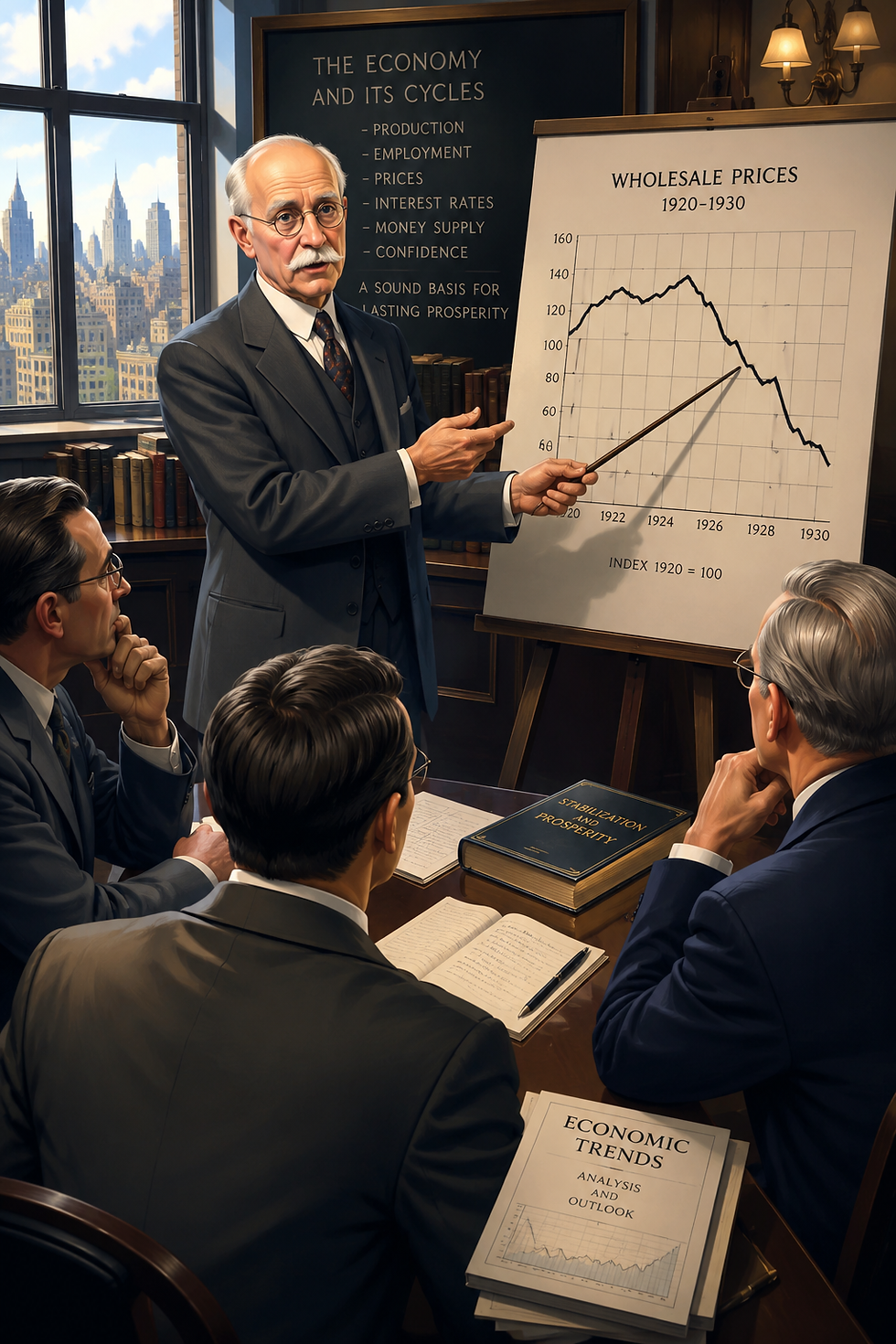
My Name is Irving Fisher: Economist and Professor
I spent my life trying to understand how economies work. I was born in New York in 1867 and became a professor at Yale University. Mathematics fascinated me from an early age, and I believed that careful study and scientific thinking could solve many of society’s problems. Over time, I became one of America’s most respected economists, writing books and developing theories that influenced business leaders, bankers, and government officials.
Building My Reputation
During the early twentieth century, I earned a reputation as a leading expert on money, prices, and economic growth. I believed that economics should be based on facts and measurement rather than guesswork. My research helped shape modern economic thinking, and many people looked to me for guidance on financial matters. As America grew wealthier during the 1920s, I saw evidence that technology, industry, and productivity were creating a stronger and more efficient economy.
My Confidence in Prosperity
As stock prices climbed throughout the Roaring Twenties, I became convinced that the nation had entered a period of lasting prosperity. In 1929, I famously argued that stock prices had reached what I believed was a permanently high level. Critics warned that speculation and borrowing were creating dangerous conditions, but I struggled to understand their concerns. To me, the economy appeared healthy, businesses were profitable, and innovation was transforming everyday life. I believed the pessimists were overlooking the facts.
Views That Sparked Controversy
My opinions extended beyond economics. I strongly supported public health campaigns, prohibition, and various social reforms that many Americans opposed. I believed scientific research should guide public policy, even when it challenged popular opinion. Some people viewed me as a visionary, while others considered me arrogant or disconnected from ordinary citizens. I often found it difficult to understand why people rejected ideas that I thought were supported by evidence and reason.
The Crash and Its Consequences
When the stock market crashed in October 1929, my reputation suffered greatly. Reporters and critics repeatedly pointed to my optimistic predictions as evidence that experts could be wrong. I continued to argue that the economy could recover and that the situation was more complex than many believed. Yet as banks failed, businesses closed, and unemployment spread, fewer people were willing to listen. The confidence I had placed in economic growth seemed increasingly out of touch with the hardships facing ordinary Americans.
Lessons from a Difficult Experience
In later years, I devoted much of my research to understanding what had gone wrong. I developed theories about debt and deflation that helped explain why economic downturns could become so severe. Looking back, I realized that even experts can become too confident in their assumptions. While I remain proud of much of my work, I learned that economies are influenced not only by numbers and theories but also by fear, uncertainty, and human behavior. Those lessons were among the most important of my life.
Warning Signs Beneath the Prosperity - Told by Irving Fisher
To many people, the decade looked like a golden age. Factories were busy, wages had risen for many workers, and new inventions seemed to appear every year. Yet beneath this prosperity, there were warning signs that not everyone recognized. While the headlines celebrated success, some cracks were beginning to form underneath the surface.
Stock Prices Rise Faster Than Reality
One concern was the rapid increase in stock prices. Company values were climbing much faster than the profits many businesses were actually earning. Investors increasingly bought shares because they expected prices to continue rising rather than because they carefully studied the companies themselves. As more people entered the market, rising prices attracted even more buyers, creating a cycle that seemed unstoppable. To many observers, this growing gap between stock values and business performance was becoming dangerous.
The Growth of Margin Buying
Another warning sign involved borrowing money to invest. Many Americans purchased stocks on margin, meaning they paid only a portion of the purchase price and borrowed the rest. This allowed investors to control large amounts of stock with relatively little cash. As long as prices increased, the system worked well. However, if prices fell, investors could quickly find themselves unable to repay their loans. The growing amount of borrowed money tied to the market increased the risk of a major collapse.
Uneven Prosperity Across America
Although the nation appeared wealthy, not everyone shared equally in the prosperity. Farmers had struggled for much of the decade as crop prices remained low after World War I. Some industries also faced declining demand and falling profits. While urban centers often appeared prosperous, many rural communities experienced economic difficulties long before the stock market crashed. These weaknesses suggested that the economy was not as strong as it appeared from a distance.
Warnings That Few Wanted to Hear
A number of economists, bankers, and financial experts expressed concerns about speculation and excessive borrowing. Some believed the market was becoming overheated and urged caution. Yet many investors ignored these warnings. After years of rising prices, confidence was extremely high. People tended to focus on recent successes rather than potential risks. The excitement of making money often drowned out voices calling for restraint.
The Danger of Overconfidence
Perhaps the greatest warning sign was psychological rather than financial. Millions of Americans had become convinced that prosperity would continue indefinitely. Success created confidence, and confidence encouraged even greater risk-taking. As investors watched neighbors, coworkers, and friends profit from the market, many feared missing out more than they feared losing money. This growing belief that prices could only rise made the market increasingly vulnerable to sudden changes in sentiment.
A Storm Behind the Sunshine
Looking back, the warning signs were visible, but they were difficult to see through the optimism of the age. Borrowing was increasing, stock prices were soaring, and parts of the economy were weaker than they appeared. Yet the nation remained focused on prosperity rather than risk. Like dark clouds forming on a bright horizon, the dangers were present long before the storm arrived. The challenge was that very few people believed the weather could change.
Buying Stocks on Margin - Told by Charles E. Mitchell
To many Americans, it seemed like a brilliant opportunity. Instead of paying the full price for a stock, investors could borrow much of the money and purchase far more shares than they could otherwise afford. As stock prices continued rising, this strategy appeared to turn ordinary investments into extraordinary profits.
How Margin Buying Worked
Imagine an investor who wanted to purchase $1,000 worth of stock. Instead of paying the full amount, he might put down only $100 or $200 and borrow the rest. If the stock increased in value, his profits could be much larger than if he had paid entirely with cash. This system allowed millions of Americans to participate in the market and helped fuel the excitement that swept across the nation. The possibility of making large gains with a relatively small investment attracted countless new investors.
The Engine Behind the Boom
As more people borrowed money to buy stocks, demand for shares increased. Rising demand pushed prices higher, which encouraged even more people to invest. Banks, brokers, and lending institutions supplied enormous amounts of credit to support these purchases. By 1929, billions of dollars had been borrowed for stock speculation. Many investors believed that as long as prices kept rising, there was little reason to worry about the growing debt behind the market.
The Hidden Danger
The problem with margin buying was that it worked both ways. While rising prices increased profits, falling prices increased losses. If a stock declined significantly, investors could receive a margin call, requiring them to deposit additional money immediately. If they could not provide the funds, brokers often sold their stocks automatically. What seemed like a small decline could quickly become a financial disaster for heavily borrowed investors.
A Chain Reaction of Risk
Because so many people were using borrowed money, the entire market became more fragile. When stock prices started to weaken, investors facing margin calls rushed to sell shares. Those sales pushed prices even lower, triggering even more margin calls and additional selling. What had once helped drive the market upward now accelerated its decline. The borrowing that fueled the boom also helped magnify the collapse.
A Lesson Hidden in the Prosperity
At the height of the Roaring Twenties, many people viewed margin buying as a modern financial tool that expanded opportunity. Few stopped to consider how much risk was building beneath the surface. The system depended on confidence and rising prices. Once those conditions changed, borrowed money transformed from a powerful advantage into a dangerous burden. By 1929, margin buying had connected millions of investors to a market that was far less stable than it appeared, setting the stage for one of the most dramatic financial collapses in American history.
Nervous Investors Begin Selling - Told by Irving Fisher
For years, confidence had been the fuel that powered the stock market higher. Investors believed America was entering a new era of permanent prosperity, and rising prices seemed to prove them right. Yet by the late summer and early autumn of 1929, small signs began to appear that suggested not everyone was as confident as before. The market was still high, but uncertainty was quietly beginning to spread.
Questions Replace Certainty
Throughout the decade, many investors had purchased stocks because prices seemed destined to rise. By 1929, however, some people began asking difficult questions. Were stock prices increasing faster than company profits? Had too much money been borrowed to buy stocks? Could the economy continue growing at the same pace forever? These concerns did not yet dominate conversations, but they were becoming harder to ignore. The certainty that had characterized the boom years was slowly giving way to doubt.
The First Waves of Selling
As concerns grew, some investors decided it was time to take profits and reduce their risk. Rather than holding their stocks, they began selling shares while prices remained high. At first, these sales seemed insignificant. Markets regularly experienced periods of profit-taking, and many people assumed this was simply another temporary pause. Yet each wave of selling introduced more shares into the market, making it harder for prices to continue their rapid climb.
Confidence Is Tested
The stock market depends heavily on confidence. As long as investors believe prices will rise, they are eager to buy. But when people begin to question the future, their behavior changes. Investors who once rushed to purchase stocks started waiting and watching. Some delayed new investments. Others sold part of their holdings. The shift was subtle, but it represented an important change. Confidence, which had taken years to build, was beginning to weaken.
Rumors and Anxiety Spread
Financial markets are often influenced by information, but they are also influenced by emotions. As stock prices became more volatile, rumors spread quickly through brokerage offices, newspapers, and conversations among investors. Some worried about excessive borrowing. Others feared that prices had risen too far, too fast. Each rumor added to the growing sense of uncertainty. Even investors who remained optimistic could feel the mood changing around them.
The Beginning of a Dangerous Cycle
What made these early sales so important was that they created a feedback loop. Falling prices encouraged more investors to sell, and additional selling pushed prices lower still. Although few people realized it at the time, the market was entering a dangerous phase. The great optimism of the Roaring Twenties had not disappeared overnight, but the first cracks were visible. Nervous investors had begun selling, and for the first time in years, confidence was no longer guaranteed.
A Warning Few Fully Understood
Looking back, these early signs seem obvious. Yet in 1929, many investors still believed the market would recover quickly and continue its upward march. Most viewed the selling as a temporary setback rather than a warning of greater trouble ahead. The first signs of weakening confidence had appeared, but very few people understood just how important those signs would soon become.
Black Thursday: The First Shock - Told by Charles E. Mitchell
For years, investors had grown accustomed to rising stock prices and growing wealth. Even as concerns increased during the autumn of 1929, many people believed the market would soon recover from any temporary weakness. When trading began that Thursday morning, however, it quickly became clear that something very different was happening.
A Flood of Sell Orders
As the market opened, enormous numbers of investors rushed to sell their stocks. Brokers were overwhelmed by the volume of orders pouring into the exchange. Prices began falling rapidly as sellers greatly outnumbered buyers. The ticker tape machines, which reported stock transactions, fell far behind because trades were occurring faster than they could be recorded. For the first time in years, investors struggled to learn the true value of their holdings as the market moved downward at an alarming pace.
Fear Reaches Wall Street
The atmosphere inside and around the New York Stock Exchange became tense and uncertain. Crowds gathered outside the building, hoping for news about what was happening. Investors watched stock values disappear in a matter of hours. Many feared that the decline would continue indefinitely. What had started as concern was quickly becoming fear, and fear often spreads faster than facts in financial markets.
The Bankers Step In
As prices continued falling, leading bankers from several major financial institutions gathered to discuss how to respond. They feared that panic selling could create a complete collapse of confidence. A group of bankers, including representatives from some of the nation's largest banks, announced plans to purchase significant amounts of stock. Their goal was simple: convince investors that powerful financial institutions still believed in the market's future. The move helped slow the decline and restore some confidence before the end of the day.
A Temporary Recovery
By the close of trading, the market had recovered some of its losses. Newspapers reported that the banking leaders had helped stabilize the situation. Many investors breathed a sigh of relief. Some believed the crisis had been defeated and that the worst was now behind them. The actions taken that day appeared to prove that Wall Street could still defend itself against panic.
The Warning No One Could Ignore
Although Black Thursday did not produce the full collapse that would follow days later, it served as a powerful warning. The event revealed how quickly confidence could disappear and how vulnerable the market had become after years of speculation and borrowing. For many Americans, it was the first realization that the prosperity of the 1920s might not be permanent after all.
The First Shock Before the Storm
Looking back, Black Thursday was not the end of the crisis—it was the beginning of it. The major sell-off alarmed investors across the country and exposed weaknesses that had been building for years. While confidence temporarily returned, the events of October 24 showed that the market was no longer standing on solid ground. A larger storm was still approaching, and within days it would shake the nation in ways few could have imagined.
Temporary Recovery and False Hope - Told by Irving Fisher
The market had suffered a dramatic sell-off, but it had not completely collapsed. Powerful bankers stepped in to purchase stocks, helping stabilize prices and calm investors. Newspapers across the country reported that Wall Street's leaders had acted decisively. To many people, it appeared that the financial system had weathered the storm and emerged stronger.
A History of Market Recoveries
One reason for this confidence was that stock markets had experienced declines before. Throughout the 1920s, temporary drops were often followed by recoveries and new highs. Investors had grown accustomed to setbacks that seemed serious at the time but ultimately proved short-lived. Because of this history, many people viewed Black Thursday as just another correction rather than the beginning of a much larger crisis.
Trust in American Prosperity
America's economy still appeared impressive in late 1929. Factories continued operating, stores remained open, and many businesses reported strong sales. New technologies such as radios, automobiles, and household appliances continued transforming daily life. To the average observer, the country did not look like it was entering a depression. These visible signs of prosperity encouraged people to believe that the market would soon resume its upward climb.
Experts Offer Reassurance
Many economists, business leaders, and financial experts attempted to calm the public. Some argued that stock prices had fallen too far and that investors now had an opportunity to buy shares at attractive prices. Others pointed to the strength of American industry and predicted a quick recovery. These statements reassured investors who wanted to believe that the danger had passed. Confidence, although shaken, had not yet disappeared.
Investors Return to the Market
As fears eased, some investors began buying stocks again. They saw lower prices as bargains and expected the market to recover as it had in the past. Others who had considered selling decided to hold their investments. The belief that prosperity would continue remained deeply rooted in the minds of millions of Americans. Many viewed the recent panic as an unfortunate interruption rather than a warning sign.
The Danger of False Hope
What few people understood was that the problems facing the market had not been solved. Excessive borrowing, speculative investing, and weakening confidence still existed beneath the surface. The actions taken after Black Thursday had slowed the panic, but they had not removed the underlying risks. The recovery created a sense of security that encouraged many investors to remain exposed to dangers they did not fully recognize.
The Calm Before the Collapse
Looking back, the days following Black Thursday were filled with false hope. Investors, bankers, economists, and ordinary citizens wanted to believe that the crisis had ended because the alternative was difficult to imagine. Yet the market's brief recovery masked deeper problems that were continuing to grow. For a short time, confidence returned, but the foundations beneath that confidence were already beginning to crumble. Within days, the nation would learn that the real crisis had only just begun.
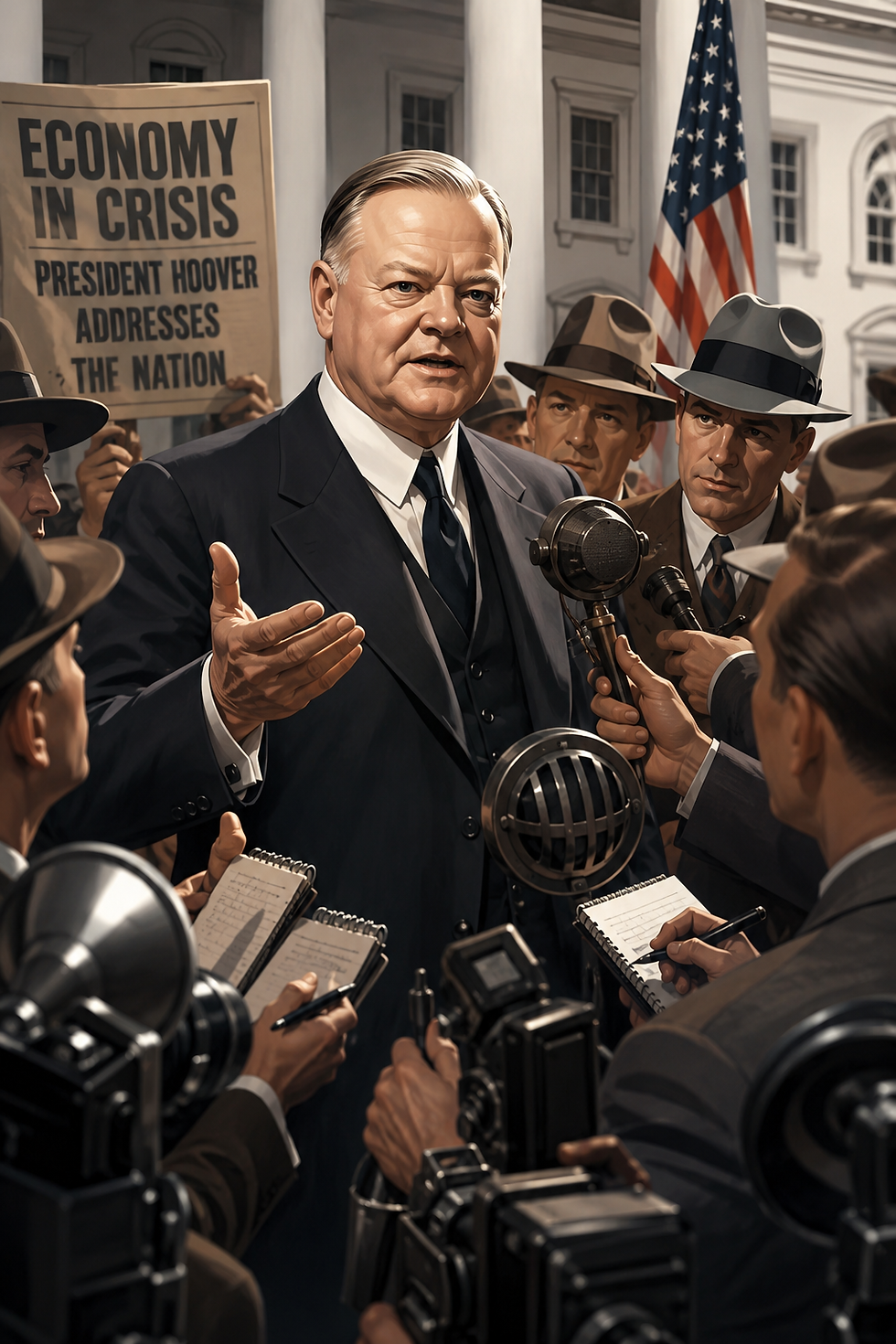
My Name is Herbert Hoover: President of the United States
I was born in Iowa in 1874 and lost both of my parents while I was still a child. Despite those hardships, I worked hard, studied engineering, and built a successful career in mining. My work took me around the world, and I became known as a skilled organizer who could solve difficult problems through careful planning and hard work.
A Reputation for Service
Before becoming president, I gained international recognition for organizing relief efforts during and after World War I. I helped deliver food and supplies to millions of people facing starvation. Americans saw me as a capable leader who believed in efficiency, cooperation, and practical solutions. By the time I entered the White House in 1929, many people expected the nation to continue enjoying prosperity and growth.
My Faith in Individual Effort
I strongly believed that Americans succeeded through hard work, personal responsibility, and voluntary cooperation. I felt that local communities, businesses, charities, and state governments could often solve problems better than the federal government. Many critics wanted Washington to take a larger role in economic affairs, but I worried that too much government intervention would weaken individual initiative. I often struggled to understand why others believed federal programs were the best solution to every challenge.
The Crash and My Response
Only months after I became president, the stock market crashed. Businesses failed, banks struggled, and unemployment began rising across the country. I encouraged business leaders to maintain wages and keep workers employed, and I supported public works projects to stimulate the economy. Yet many Americans believed I was not doing enough. I felt frustrated because I believed significant actions were being taken, but much of the public only saw the worsening conditions around them.
Controversies and Criticism
As the Great Depression deepened, criticism of my administration intensified. Many people blamed me personally for the economic collapse, even though the causes stretched back years before I took office. My opposition to large federal relief programs became especially controversial. I believed direct federal aid could create dependence and weaken local responsibility, while critics argued that the crisis was too large for states and charities to handle alone. I found it difficult to understand why so many people rejected the principles that had guided my success throughout life.
The Bonus Army and Public Opinion
One of the most damaging moments of my presidency came when thousands of World War I veterans gathered in Washington seeking early payment of promised bonuses. When the encampment was eventually cleared, many Americans viewed the event as harsh and uncaring. Although I believed order needed to be maintained, the images that spread across the country further damaged public confidence in my leadership.
Looking Back
After leaving office, I spent many years reflecting on the Depression and my presidency. I still believe that many of my intentions were honorable and that some criticisms overlooked the complexity of the crisis. Yet I came to recognize that during times of extraordinary hardship, people often need more visible reassurance and assistance than I was willing to provide. History remembers me largely for the Great Depression, but I hope people also remember a life devoted to service, humanitarian work, and a sincere desire to help my country.
Black Monday and Growing Panic - Told by Herbert Hoover
The actions of leading bankers appeared to have stabilized the stock market, and newspapers carried reassuring headlines. Yet beneath the surface, uncertainty remained. Investors spent the weekend discussing rumors, reading financial reports, and wondering whether the recovery would last. When markets reopened on Monday, October 28, those fears quickly returned.
Selling Begins Again
Instead of recovering, stock prices resumed their decline. Investors who had hoped for stability saw prices falling once more and began questioning whether the market was truly secure. As the morning progressed, more people decided to sell. Some wanted to protect what remained of their profits, while others feared even greater losses if they waited. The selling that followed was larger and more intense than many had expected.
Fear Spreads Across the Nation
The stock market was no longer just a concern for wealthy investors. Millions of Americans owned stocks directly or through investment groups, and many others followed market news closely. As reports of falling prices spread, anxiety grew far beyond Wall Street. Business leaders worried about future investments, workers worried about their jobs, and families wondered what the declines might mean for their savings. Confidence, which had fueled the prosperity of the 1920s, was beginning to weaken.
The Numbers Become Alarming
On Black Monday, stock prices suffered some of their largest losses up to that point. Massive numbers of shares changed hands as investors rushed to exit the market. The volume of trading overwhelmed normal operations, and prices fell faster than many thought possible. What had once seemed like a temporary correction was starting to look like something much more serious. Every drop in price seemed to create new waves of selling.
A Crisis of Confidence
Financial markets depend heavily on trust. Investors must believe that tomorrow will be better than today. During Black Monday, that trust began to disappear. People who had eagerly purchased stocks only weeks earlier were now desperate to sell them. The fear of losing money became stronger than the hope of making more. As confidence evaporated, the market became increasingly unstable.
Watching from Washington
From the White House, I monitored events closely. Although the broader economy still showed signs of strength, the market's continued decline was troubling. Government officials, bankers, and business leaders all hoped that confidence could be restored before the situation worsened. Yet the speed of the decline suggested that emotions were beginning to drive decisions more than careful analysis.
The Road to a Darker Day
Black Monday was not the most famous day of the crash, but it was a crucial turning point. It shattered much of the optimism that had returned after Black Thursday and convinced many investors that the danger was far from over. Fear continued to spread, selling accelerated, and confidence continued to erode. By the close of the day, Wall Street knew it faced a serious crisis. Few realized that an even more devastating day—Black Tuesday—was only hours away.
Black Tuesday: The Crash of 1929 - Told by Herbert Hoover
Black Thursday and Black Monday had already shaken confidence, but many investors still hoped the market would stabilize. Instead, when trading began on Tuesday, panic spread with a speed and intensity few had ever witnessed. What followed became one of the most famous and devastating days in financial history.
A Flood of Selling
From the opening bell, investors rushed to sell their stocks. Millions of shares poured onto the market as people desperately tried to protect what remained of their investments. Sellers greatly outnumbered buyers, causing prices to plunge. The ticker tape machines that reported stock transactions fell hours behind because trading activity was so overwhelming. Investors often did not know the current value of their holdings until long after trades had already occurred.
Wall Street in Chaos
Inside the New York Stock Exchange, brokers struggled to keep pace with the flood of orders. Telephones rang constantly, messengers hurried across the trading floor, and traders shouted bids and prices in an increasingly frantic atmosphere. Outside, crowds gathered in the streets seeking information about the crisis. Rumors spread rapidly, adding to the uncertainty. What had once been a symbol of prosperity had become a scene of confusion and fear.
Millions of Shares Change Hands
By the end of the day, more than 16 million shares had been traded, an astonishing record at the time. Some of the nation's most popular stocks lost enormous amounts of value in only a few hours. Investors who had borrowed money to purchase stocks faced devastating losses. Fortunes that had taken years to build seemed to disappear almost overnight. The scale of the collapse shocked both experienced financiers and ordinary citizens alike.
The End of an Era
Black Tuesday represented more than a stock market decline. It marked the collapse of the confidence that had defined much of the Roaring Twenties. For years, many Americans had believed that prosperity would continue indefinitely. The events of October 29 shattered that belief. Investors who once viewed the stock market as a pathway to wealth suddenly feared it could destroy their financial future.
The Immediate Aftermath
Although the stock market would continue operating, the damage was severe. Newspapers across the country carried dramatic headlines describing the collapse. Banks, businesses, and families began reassessing their financial positions. While few people yet understood the full consequences, many sensed that the nation had entered a new and uncertain chapter. The optimism of the previous decade had been replaced by questions, doubts, and growing concern.
A Day Remembered for Generations
Looking back, Black Tuesday remains one of the most significant financial events in American history. The crash did not single-handedly cause the Great Depression, but it exposed deep weaknesses in the economy and shattered public confidence. The dramatic collapse of October 29, 1929, became a symbol of how quickly fortunes can change and how fragile prosperity can be when fear overtakes confidence. For millions of Americans, it was the day the Roaring Twenties truly came to an end.
Panic Selling Across America - Told by Irving Fisher
For years, confidence had driven stock prices upward. Investors believed prosperity would continue, and many purchased stocks expecting easy profits. After Black Tuesday, however, that confidence began to disappear. As prices fell and losses mounted, fear spread rapidly through financial markets and into communities across the nation.
Bad News Travels Fast
In 1929, Americans followed stock market news through newspapers, radio broadcasts, and conversations with friends and neighbors. Reports of falling stock prices quickly reached cities, towns, and rural communities. Stories of investors losing large sums of money circulated everywhere. As more people heard about the losses, they began to worry about their own financial futures. Even individuals who owned few or no stocks became concerned about what the crash might mean for jobs, businesses, and savings.
The Rush to Sell
Many investors responded to the uncertainty by trying to sell their stocks before prices dropped further. Unfortunately, when thousands of people attempt to sell at the same time, prices often fall even faster. Every decline created new anxiety, encouraging even more selling. Investors who had once ignored warnings now rushed to protect themselves. The market became trapped in a cycle where fear generated selling, and selling generated even greater fear.
Ordinary Citizens Feel the Shock
The panic was not limited to Wall Street. Families who had invested savings in stocks watched their accounts shrink dramatically. Some had borrowed money to invest and now faced debts they could not easily repay. Others worried about banks, businesses, and employers that might be affected by the crisis. The stock market crash transformed from a financial event into a national emotional event, touching millions of people who had never set foot inside the New York Stock Exchange.
Rumors Fuel the Panic
As uncertainty grew, rumors spread rapidly. Some claimed banks were in danger. Others predicted even larger market declines. In times of fear, people often act before they verify information, and 1929 was no exception. Investors reacted to rumors just as they reacted to facts, increasing the sense of chaos. The lack of clear information made it difficult for many Americans to know what to believe.
The Psychology of a Financial Crisis
One of the lessons economists learned from the crash is that markets are influenced by human emotions as much as financial data. During the boom years, optimism encouraged people to take risks. During the crash, fear encouraged people to abandon those same investments. The economic fundamentals of the nation did not change overnight, but public confidence did. That sudden shift in psychology played a major role in the market's dramatic decline.
A Nation Gripped by Uncertainty
By the end of 1929, panic selling had become one of the defining features of the crash. Fear spread from investor to investor, from city to city, and from Wall Street into ordinary American homes. What began as a decline in stock prices evolved into a crisis of confidence that affected the entire nation. The panic itself became a powerful force, accelerating the collapse and setting the stage for the difficult years that followed during the Great Depression.
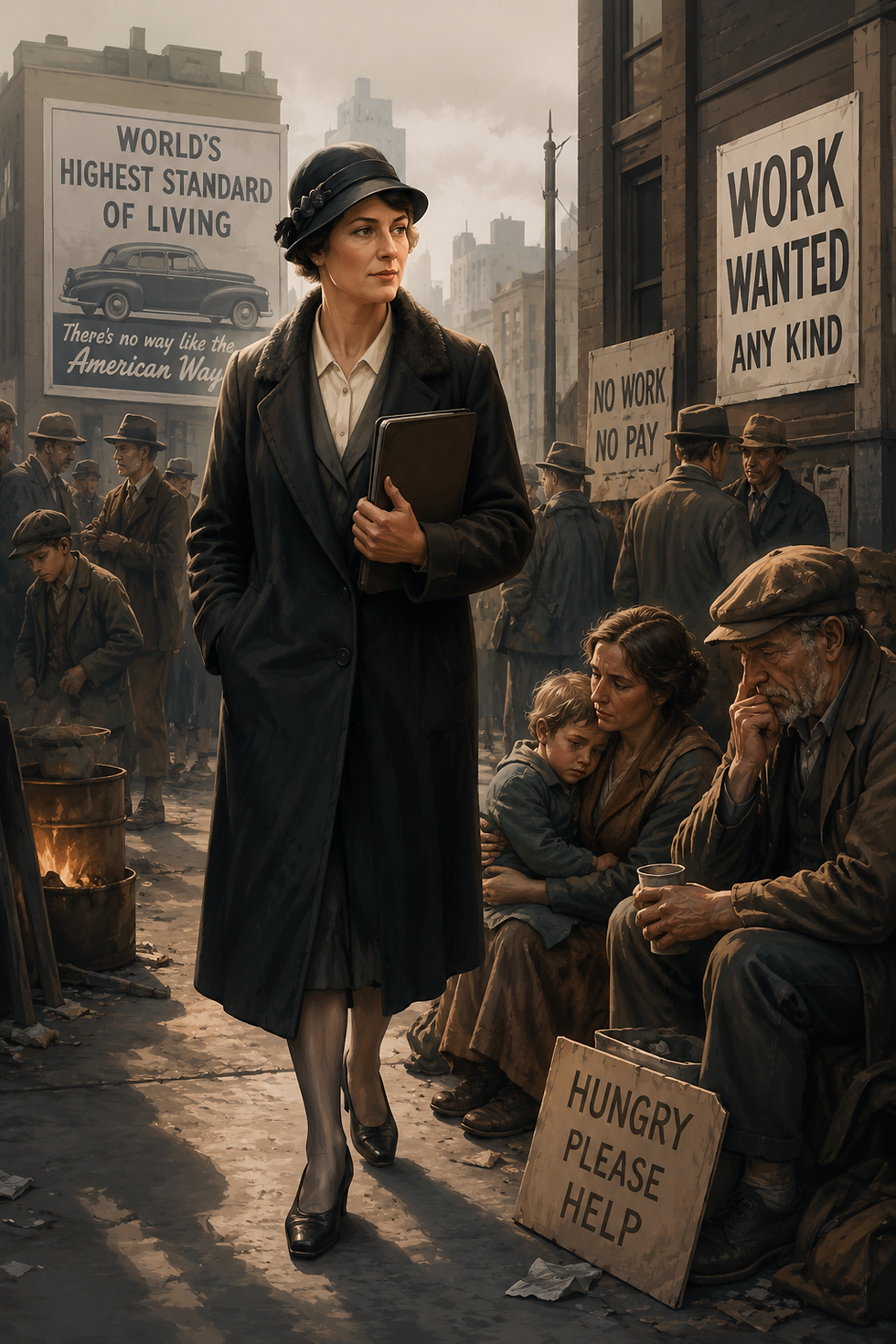
My Name is Frances Perkins: Labor Reformer and Secretary of Labor
I was born in Massachusetts in 1880 and grew up believing that society had a responsibility to protect those who were vulnerable. As a young woman, I became interested in social reform and spent time studying poverty, workplace safety, and the struggles faced by workers in rapidly growing cities.
The Event That Changed Me
One of the defining moments of my life came in 1911 when I witnessed the aftermath of the tragic Triangle Shirtwaist Factory Fire. The disaster killed many workers, most of them young immigrant women. Seeing the loss of life convinced me that governments should establish stronger workplace protections. From that moment forward, I dedicated myself to advocating for safer factories, fairer labor laws, and better treatment of workers.
Fighting for Reform
As my career advanced, I worked with political leaders who shared my concerns about labor conditions. I believed government should play an active role in protecting workers from dangerous conditions, unfair treatment, and economic hardship. Many business leaders disagreed with me. They argued that regulations would hurt economic growth and limit opportunities. I often struggled to understand why people opposed reforms that I believed would save lives and improve society.
A Historic Appointment
In 1933, President Franklin D. Roosevelt appointed me Secretary of Labor, making me the first woman to serve in a presidential cabinet. It was a historic achievement, but it also brought criticism. Some opponents questioned whether a woman belonged in such an important position. Others attacked my support for labor protections and social programs. I viewed these reforms as practical solutions to the suffering caused by the Great Depression, while many critics viewed them as unnecessary government interference.
Controversial Ideas
I supported policies that would later become central parts of the New Deal, including unemployment assistance, workplace protections, and what became the Social Security system. These ideas generated fierce debate. Some Americans feared that expanding government programs would weaken individual responsibility. I disagreed. To me, providing a safety net for workers and families was not a threat to freedom but a way of preserving stability and opportunity. I often found it difficult to understand why so many people resisted measures designed to help those in need.
Helping Build a New System
Throughout the Depression, I worked tirelessly to create programs that would protect workers during difficult times. Many of these reforms became lasting parts of American life. Although opponents continued to criticize my ideas, I believed the nation needed stronger protections against the hardships that millions of families had experienced during the economic collapse.
Looking Back
As I reflect on my life, I remain proud of the reforms I helped create and the people they assisted. Yet I also came to understand that reasonable people can disagree about the proper role of government. While I spent much of my career fighting for change, I eventually recognized that balancing individual freedom and public responsibility is a challenge every generation must face. My hope is that history remembers my efforts to make life safer, fairer, and more secure for working Americans.
Families Lose Their Savings - Told by Frances Perkins
For many families, the crash was not just a financial story—it was a personal one. Savings that had taken years or even decades to build suddenly seemed uncertain. The excitement of the Roaring Twenties gave way to worry as families realized that the crisis was no longer confined to investors and bankers.
The Savings of a Lifetime
Throughout the 1920s, many Americans had set aside money for their future. Some invested directly in stocks, believing the market would continue rising. Others placed their savings in investment trusts or financial accounts tied to the market. When stock prices collapsed, these investments often lost much of their value. Families who thought they were financially secure discovered that the nest eggs they depended upon for retirement, education, or emergencies had shrunk dramatically.
Difficult Choices Begin
As savings disappeared, families were forced to make difficult decisions. Vacations were canceled, major purchases were postponed, and household budgets became tighter. Many families reduced spending on clothing, entertainment, and even food. Parents worried about paying bills, supporting elderly relatives, and providing opportunities for their children. The uncertainty created stress in homes across the nation, even among those who had not lost everything.
The Emotional Cost of Financial Loss
The crash affected more than bank accounts. It also affected confidence and peace of mind. Many Americans had trusted that hard work and careful saving would provide security. When their savings suddenly lost value, that sense of security disappeared. Anxiety became common as families wondered whether conditions would improve or continue worsening. For some, the emotional shock was almost as painful as the financial losses themselves.
Communities Feel the Impact
The effects spread quickly through neighborhoods and towns. When families lost savings, they spent less money in local businesses. Stores saw fewer customers, businesses earned less revenue, and economic activity slowed. The financial troubles of one family often affected many others. What began as losses in the stock market gradually spread throughout entire communities.
Preparing for Harder Times
By late 1929 and early 1930, many Americans hoped the situation would improve quickly. Yet the losses already suffered had changed how families viewed money and risk. People became more cautious about spending and investing. The confidence that had defined much of the Roaring Twenties was fading, replaced by concern about the future.
The First Human Cost of the Great Depression
Looking back, one of the earliest signs of the Great Depression was the loss of savings experienced by ordinary families. Long before unemployment reached its highest levels or breadlines became common, households were already feeling the effects of the crash. The financial damage extended far beyond Wall Street and into millions of homes. For many Americans, the loss of savings marked the moment when the economic crisis became deeply personal.
Businesses Begin to Fail - Told by Herbert Hoover
In the weeks and months after the crash, business leaders across the country began noticing changes in customer behavior. Americans who had lost savings or feared future losses started spending less money. What began as a financial crisis soon spread into the broader economy, affecting businesses large and small.
Investment Comes to a Halt
During the prosperous years of the 1920s, companies had expanded factories, purchased equipment, and hired workers in anticipation of continued growth. After the crash, many business owners became cautious. Instead of investing in new projects, they delayed construction plans, postponed expansions, and canceled purchases. Investors who once eagerly funded new ventures became reluctant to take risks. As investment declined, economic growth began slowing throughout the nation.
Consumers Tighten Their Budgets
At the same time, ordinary Americans reduced their spending. Families worried about the future often postponed buying automobiles, household appliances, furniture, and other major products. Even small reductions in spending could have significant consequences. When millions of consumers purchased fewer goods, businesses earned less revenue. Stores experienced fewer customers, manufacturers received fewer orders, and companies began searching for ways to reduce expenses.
The First Layoffs
As sales declined, many businesses faced difficult decisions. Some reduced working hours, while others cut wages. Eventually, layoffs began appearing across various industries. Workers who lost their jobs often had little savings to rely upon, making unemployment especially painful. Each layoff reduced consumer spending even further, creating additional pressure on businesses. The economic slowdown began feeding on itself, growing stronger with each passing month.
Factories Slow Down
The nation's factories, which had been symbols of prosperity during the Roaring Twenties, also felt the impact. Production lines slowed as demand weakened. Automobile manufacturers produced fewer vehicles, steel mills reduced output, and other industries followed similar patterns. The decline in manufacturing affected suppliers, transportation companies, and countless other businesses connected to industrial production.
Failures Become More Common
By 1930, some businesses could no longer survive the combination of falling sales and shrinking investment. Companies that had borrowed heavily during the boom years found it increasingly difficult to repay debts. Smaller firms were often especially vulnerable. As business failures increased, communities lost employers, workers lost jobs, and local economies weakened. Each failure contributed to the growing sense that the nation faced a much larger problem than a temporary market decline.
The Beginning of a Larger Economic Crisis
Looking back, the failure of businesses marked a critical stage in the development of the Great Depression. The stock market crash had shaken confidence, but declining investment, falling sales, and widespread layoffs carried the crisis into everyday life. What began on Wall Street now affected factories, stores, offices, and communities throughout America. The economy was entering a difficult period, and the challenges facing businesses were only beginning to unfold.
Bank Failures and Financial Instability - Told by Charles E. Mitchell
The falling stock prices captured headlines, but a far more dangerous problem soon emerged within the banking system itself. As confidence weakened and economic conditions deteriorated, banks across the nation faced growing pressure. What began as a market crash gradually evolved into a banking crisis that touched nearly every corner of American life.
The Role of Banks in Daily Life
Banks were the financial foundation of communities throughout the United States. Families deposited their savings, businesses borrowed money to expand, and farmers relied on loans to purchase land and equipment. In the 1920s, thousands of banks operated across the country, many serving small towns and rural areas. These institutions helped fuel economic growth, but many were also vulnerable to sudden economic shocks.
Weaknesses Beneath the Surface
One challenge was that many banks were relatively small and lacked large financial reserves. If too many customers demanded their money at once, a bank could quickly run into trouble. In addition, some banks had invested heavily in local industries, farms, or real estate. When those sectors struggled, the banks that depended on them often suffered as well. These weaknesses existed long before the crash, but they became much more dangerous once economic conditions worsened.
When Depositors Lost Confidence
Perhaps the greatest threat to a bank was not a lack of money but a lack of confidence. If people believed their bank might fail, they often rushed to withdraw their savings. This phenomenon, known as a bank run, could overwhelm even a healthy institution. Banks typically kept only a portion of deposits available as cash, with the rest loaned to businesses and individuals. When large numbers of customers demanded their money at the same time, banks often could not meet the demand.
The Growing Wave of Failures
As the economy weakened, bank failures became more common. Businesses that could not repay loans placed pressure on banks. Farmers already struggling from years of low crop prices added further strain. Each bank failure created new fear among depositors at other institutions. People who heard about one bank closing often worried that their own bank might be next. This fear encouraged more withdrawals, creating a cycle that spread instability throughout the financial system.
The Impact on Communities
When a bank failed, the consequences could be devastating. Families often lost access to their savings, businesses lost important sources of credit, and local economies suffered. A bank closure did not simply affect investors—it affected shop owners, farmers, workers, and entire communities. Economic activity slowed as money became harder to borrow and confidence continued to decline.
A Crisis That Fed Itself
Looking back, the banking crisis worsened the Great Depression because it reduced trust in the financial system. Every failure increased fear, and every wave of fear created new failures. Weaknesses that had been manageable during prosperous times became dangerous during economic hardship. The collapse of confidence in banks transformed a severe market downturn into a much broader financial crisis, helping turn the Crash of 1929 into one of the most significant economic disasters in American history.
Public Fear and the Spread of Economic Hardship - Told by Frances Perkins
As businesses struggled and banks failed, ordinary Americans began to feel a growing sense of uncertainty about the future. The crisis slowly spread from financial institutions into homes, schools, farms, factories, and neighborhoods. What started as an economic downturn was becoming a national human crisis.
The Fear of Losing Everything
Many Americans had never experienced an economic collapse on this scale. Families who once felt secure suddenly worried about losing their jobs, homes, savings, and businesses. Even those who remained employed often feared that layoffs could come at any moment. People who had spent years planning for the future found themselves focused instead on surviving the present. Uncertainty became a daily companion for millions of citizens.
Unemployment Begins to Rise
As businesses reduced production and cut costs, workers increasingly lost their jobs. Factories slowed operations, construction projects were canceled, and stores reduced staff. Each layoff affected more than a single worker. Entire families depended on those paychecks for food, housing, clothing, and other necessities. As unemployment increased, more Americans found themselves searching for work in an economy that offered fewer and fewer opportunities.
Communities Feel the Pressure
Economic hardship rarely remains isolated. When workers lost income, they spent less money at local businesses. Shop owners earned less revenue and sometimes had to lay off employees of their own. Farmers struggled to find buyers for their crops, while manufacturers received fewer orders for goods. The difficulties of one family often became the difficulties of an entire community. The economic slowdown spread from town to town and state to state.
Confidence Continues to Decline
The economy depends heavily on confidence. Consumers must feel comfortable making purchases, businesses must feel confident enough to invest, and banks must trust that loans will be repaid. During the early years of the Depression, that confidence steadily weakened. Fear caused families to save what little money they had, businesses delayed expansion plans, and lenders became more cautious. These reactions were understandable, but they also slowed economic activity even further.
The Human Stories Behind the Numbers
Statistics can tell us how many people lost jobs or how much production declined, but they cannot fully capture the human experience. Behind every unemployment figure was a family trying to pay bills, put food on the table, and maintain hope. Parents worried about their children, workers worried about finding employment, and communities struggled to support those in need. The emotional impact of the crisis was as real as the financial damage.
A Nation Searching for Hope
Looking back, public fear played a significant role in deepening the Great Depression. As confidence declined, economic activity slowed, creating even greater hardship. The crisis became a cycle of uncertainty, unemployment, and fear. Yet it also revealed the resilience of ordinary Americans who worked together, supported neighbors, and searched for ways to endure difficult times. Understanding that human side of the Depression helps us appreciate why the events of 1929 and the years that followed left such a lasting mark on American history.
The Beginning of the Great Depression - Told by President Hoover and Perkins
A Nation Faces a New Reality
Herbert Hoover: When the stock market crashed in 1929, many Americans believed the nation was experiencing a severe but temporary setback. Economic downturns had occurred before, and there was hope that recovery would come quickly. However, as weeks turned into months, it became clear that the problems extended far beyond Wall Street. Businesses reduced investment, banks faced increasing pressure, and unemployment began to rise. The nation was entering a period unlike anything most Americans had ever experienced.
Frances Perkins: What made the situation so alarming was how rapidly the effects spread through everyday life. Families who had never owned a single share of stock still found themselves affected. Workers lost jobs, stores saw fewer customers, and communities struggled as economic activity slowed. The crash had shaken confidence, but the growing hardship that followed transformed concern into a national crisis.
The Economy Begins to Contract
Herbert Hoover: One of the most significant consequences was the decline in business activity. Companies postponed expansion plans, investors became cautious, and consumers reduced spending. As demand for goods decreased, factories produced less, which led to further layoffs. The economy began contracting in a cycle that proved difficult to stop. Every reduction in spending seemed to create additional reductions elsewhere.
Frances Perkins: For workers and families, these economic changes were deeply personal. A factory closing was not merely a statistic—it meant lost wages, unpaid bills, and uncertain futures. Communities that depended on a single industry often suffered the most. As unemployment increased, more families struggled to afford necessities, creating challenges that spread from household to household.
The Banking Crisis Deepens the Problem
Herbert Hoover: Banking difficulties made the downturn even worse. As businesses failed and loans went unpaid, some banks faced severe financial strain. When depositors lost confidence and rushed to withdraw funds, many institutions could not meet the demand. Bank failures reduced the availability of credit, making it harder for businesses to survive and for economic recovery to begin.
Frances Perkins: The consequences for ordinary Americans were devastating. Families who had spent years building savings sometimes found those savings inaccessible or lost when banks closed. People who had believed they were financially secure suddenly faced uncertainty. The loss of trust in financial institutions contributed to a growing sense of fear throughout the nation.
Confidence Gives Way to Uncertainty
Herbert Hoover: Economies depend heavily on confidence. Businesses invest because they believe customers will buy their products. Banks lend because they trust loans will be repaid. Consumers spend because they feel secure about the future. During the early years of the Depression, much of that confidence disappeared. Fear and uncertainty increasingly influenced economic decisions.
Frances Perkins: The decline in confidence became visible everywhere. Families postponed purchases, businesses delayed hiring, and investors avoided risks. These decisions were understandable, but together they reduced economic activity even further. What began as caution gradually became a widespread belief that difficult times would continue, making recovery even more challenging.
The Great Depression Takes Hold
Herbert Hoover: By the early 1930s, it was evident that the nation was facing more than a short-term recession. The economic downturn had spread into nearly every sector of American life. Production fell, unemployment climbed, and financial institutions struggled. The country had entered what would become known as the Great Depression.
Frances Perkins: Yet amid the hardship, Americans searched for ways to endure and adapt. Communities organized relief efforts, families supported one another, and leaders debated how best to respond. The beginning of the Great Depression was a period of profound difficulty, but it was also the beginning of a national effort to understand the crisis and find a path forward. The lessons learned during those years would shape American society for generations to come.


Comments