

16. Heroes and Villains from World War II: Women and Minorities During World War II


My Name is Benjamin O. Davis Jr.: Commander of the Tuskegee Airmen
I was born in Washington, D.C., in 1912, the son of Benjamin O. Davis Sr., who would become the first African American general in the United States Army. My father's example taught me discipline, duty, and perseverance. As a young man, I became fascinated with aviation and determined that military service would be my profession. I wanted to serve my country as an officer, and I would not allow other people's expectations to decide how far I could go.
Standing Alone at West Point
I entered the United States Military Academy at West Point in 1932. For four years, most of my white classmates refused to speak to me except when military duties required it. I ate alone, lived with isolation, and endured an organized effort to force me from the Academy. I refused to leave. I concentrated on my responsibilities, maintained my discipline, and graduated in 1936. West Point taught me that sometimes the strongest response to prejudice is simply refusing to surrender your purpose.
The Fight to Fly
Although I wanted to become a military pilot, the Army Air Corps did not initially permit Black men to serve as pilots. That began to change as America approached World War II. In 1941, I entered flight training at Tuskegee Army Air Field in Alabama and earned my wings in 1942. I soon took command of the 99th Fighter Squadron, one of America's first African American flying units. We understood that our performance would be judged not merely as individuals but as a test of whether Black Americans were capable of military aviation.
Into Combat
In 1943, the 99th entered combat in North Africa and later fought over Sicily and Italy. Questions were raised about our effectiveness, and some officials suggested removing Black pilots from combat. I defended my men and their record. Later, I commanded the 332nd Fighter Group, whose pilots became widely known as the Tuskegee Airmen. Flying missions over Europe, our men escorted bombers, attacked enemy positions, and demonstrated that courage and ability were determined by training and character—not skin color.
Two Battles for Freedom
There was a bitter contradiction in our service. America was fighting governments overseas that denied people fundamental rights, while segregation remained deeply established within our own military and society. Black Americans called this struggle the "Double V" campaign: victory against tyranny abroad and victory against racism at home. My men wore the uniform of the United States even when the country wearing that same flag did not always treat them equally. We served because America was our country too.
A Changing Air Force
After the war, President Harry Truman ordered the desegregation of the armed forces in 1948. I continued my career in the newly independent United States Air Force and eventually became a lieutenant general. I held important commands in the United States and overseas and witnessed barriers fall that had once seemed permanent. In 1998, President Bill Clinton advanced me to four-star general, an honor that represented far more than my own career.
America Before the War: Segregation and Women’s Changing Roles - Told by Davis
As war spread across Europe in 1939, Americans heard speeches about democracy, liberty, and the dangers posed by dictatorship. Those principles mattered deeply to me, but as a Black Army officer, I also knew there was a contradiction within our own country. The United States remained heavily segregated. Across much of the South, Jim Crow laws separated Black and white Americans in schools, transportation, restaurants, theaters, hospitals, and other public facilities. Discrimination also existed far beyond the South through employment practices, housing restrictions, and social customs. America was a nation founded upon extraordinary ideals, but millions of its citizens were still fighting to experience those ideals fully.
Segregation in Uniform
The armed forces reflected American society. When I graduated from West Point in 1936, I entered a military in which Black and white soldiers generally served separately. Opportunities for Black officers were severely limited, and the Army Air Corps did not initially accept Black men for pilot training. I wanted to fly, but my race stood between me and the cockpit. This was not a question of whether Black Americans wanted to serve. Black Americans had fought in every major American war. The question was whether their country would permit them to serve according to their abilities.
Women and the Boundaries of Opportunity
Women faced different barriers. By 1939, millions of American women already worked outside the home, particularly in teaching, nursing, domestic service, clerical work, factories, and retail. Yet many occupations remained dominated by men, and married women sometimes faced especially strong resistance to employment. Women could serve as military nurses, but they were not yet integrated into the armed forces on anything approaching the scale that wartime necessity would soon demand. The assumption remained widespread that many professional, industrial, and military responsibilities properly belonged to men.
Pressure Begins to Build
Events overseas began forcing America to reconsider how much talent it could afford to ignore. Germany invaded Poland in September 1939, and by 1940 much of Western Europe had fallen or come under threat. The United States expanded defense production and instituted the nation's first peacetime draft. Aircraft factories, shipyards, military bases, and arms plants needed workers. Black Americans demanded access to defense jobs, while women increasingly entered industries preparing the nation for possible war. The emergency was beginning to collide with America's established social barriers.
A Challenge to Discrimination
One important confrontation came in 1941. Labor and civil rights leader A. Philip Randolph threatened a massive march on Washington to protest discrimination against Black workers in defense industries and the federal government. President Franklin D. Roosevelt responded by issuing Executive Order 8802, which prohibited racial discrimination in the national defense industry and created the Fair Employment Practice Committee. It did not eliminate segregation or racial injustice, but it demonstrated that organized pressure could force the federal government to act.
December 7 Changes the Nation
Then came December 7, 1941. Japan attacked Pearl Harbor, and the United States entered World War II. Suddenly America needed soldiers, pilots, mechanics, factory workers, nurses, engineers, drivers, clerks, and countless others on a scale few had imagined. The old restrictions did not disappear overnight. Segregation continued, women still faced discrimination, and Japanese Americans would soon suffer grave violations of their civil liberties. But the war created a powerful question America could no longer easily avoid: if victory required the abilities and sacrifices of all Americans, how long could the nation justify denying some of those Americans equal opportunity?
The Double V Campaign: Victory Against Fascism - Told by Benjamin O. Davis Jr.
When the United States entered World War II after Pearl Harbor, Americans were told that we were fighting for freedom against aggressive dictatorships. I believed that fight mattered. Yet for Black Americans, those words raised an unavoidable question: how could we defend democracy overseas while accepting racial discrimination at home? Black soldiers entered a segregated military. Black workers encountered barriers in defense industries. Across much of the country, discrimination affected housing, education, employment, voting, and public life. We wanted Hitler and the Axis defeated—but we also wanted America's promises of liberty applied more completely to its own citizens.
A Letter Sparks a Campaign
Early in 1942, a young Black defense worker named James G. Thompson wrote to the Pittsburgh Courier, one of America's most influential Black newspapers. He asked whether Black Americans should not seek two victories: victory over America's enemies abroad and victory over prejudice at home. The newspaper embraced the idea. The symbol became two V's—"Double V." The campaign quickly captured something many African Americans already felt. Supporting the war and demanding civil rights were not contradictory goals. To many, they were parts of the same struggle.
Fighting in a Segregated Military
I knew that contradiction personally. I had graduated from West Point and wanted to fly, yet the Army Air Corps had long excluded Black Americans from becoming military pilots. Even after opportunities began opening, we trained in segregated units. At Tuskegee, Alabama, Black pilots, mechanics, instructors, and support personnel were being asked to prove that African Americans could perform jobs they had previously been denied the opportunity even to attempt. We understood that every mistake might be blamed upon our race while every achievement could help open another door.
The Home Front Pushes Back
African Americans were also demanding change outside the military. A. Philip Randolph's threatened March on Washington in 1941 had already pressured President Roosevelt into issuing Executive Order 8802, prohibiting racial discrimination in defense industries and federal defense employment. Black Americans moved in large numbers to industrial cities for wartime jobs, but opportunities often came alongside hostility and discrimination. The Double V Campaign gave these struggles a simple message: a nation mobilizing millions of citizens to defend democracy should examine whether it was practicing democracy fairly at home.
Patriotism Without Silence
The Double V Campaign was not a rejection of America. Quite the opposite. Black Americans bought war bonds, worked in factories, volunteered, joined the armed forces, and sent sons and daughters into danger. But patriotism did not require silence about injustice. Black newspapers reported the achievements of African American servicemen while exposing discrimination they encountered. That placed increasing pressure on military and political leaders. Every Black soldier performing his duty became evidence against the argument that segregation was necessary.
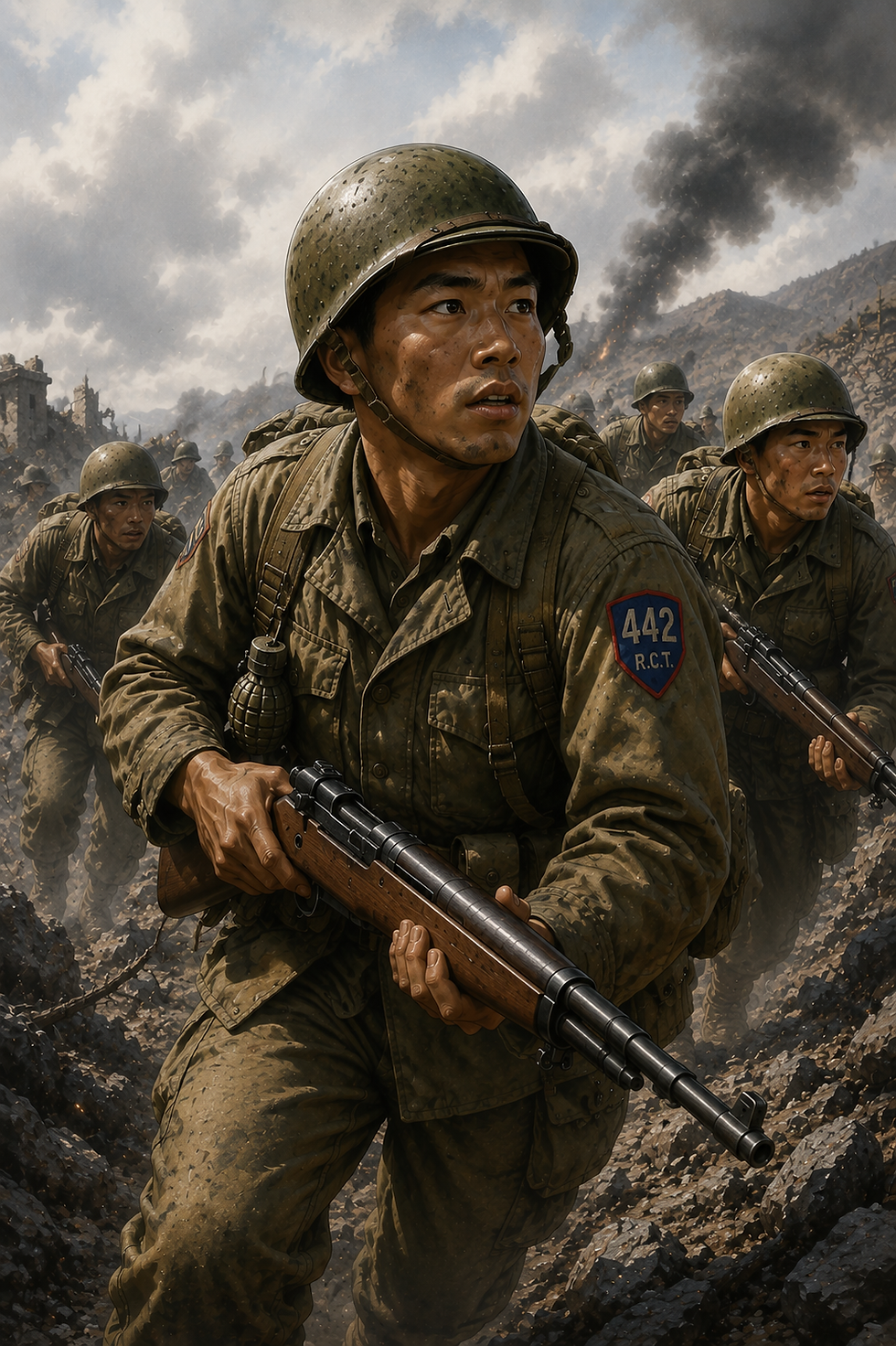
My Name is Daniel Inouye: A Japanese American Soldier of World War II
I was born in Honolulu, Hawaii, in 1924, the son of Japanese immigrants. I grew up believing myself completely American. I attended school, helped my family, and dreamed of becoming a doctor. I never imagined that before reaching adulthood, my loyalty to the United States would be questioned because of the ancestry of my parents.
The Morning Everything Changed
On December 7, 1941, Japanese aircraft attacked Pearl Harbor. I was seventeen years old and serving as a Red Cross medical volunteer. I rushed to help wounded civilians and servicemen. Yet in the days that followed, Americans of Japanese ancestry suddenly found themselves regarded with suspicion. On the mainland, thousands of Japanese American families were forced into incarceration camps. In Hawaii, where Japanese Americans made up a large portion of the population, mass incarceration did not occur on the same scale, but suspicion and restrictions remained.
Let Me Serve My Country
At first, Japanese Americans in Hawaii were classified as enemy aliens and prevented from joining the military. That classification angered me. I was an American citizen, and I wanted the opportunity to prove my loyalty through service. When the Army eventually opened combat service to Japanese Americans, I volunteered. I abandoned my plans for medical school and joined what became the 442nd Regimental Combat Team, composed largely of Nisei—American-born sons of Japanese immigrants.
Go for Broke
Our motto was "Go for Broke," and we meant it. We trained hard because we understood that people were watching us differently from other soldiers. The 442nd fought in Italy and France and became one of the most highly decorated American units of its size and length of service during the war. Some of our soldiers had families confined behind barbed wire in American incarceration camps while they themselves fought beneath the American flag. That contradiction was never far from us.
The Battle That Changed My Life
In April 1945, near San Terenzo, Italy, German machine guns pinned down my platoon. I led an attack against their positions and was shot in the abdomen. I continued forward. As I prepared to throw a grenade, a German rifle grenade struck my right arm, nearly severing it. I continued directing my men and attacking until another wound finally brought me down. My arm was later amputated. The injury ended my dream of becoming a surgeon, but it did not end my determination to serve.
A Different Kind of Service
After returning home, I studied political science and law and entered public life. When Hawaii became a state in 1959, I became its first member of the U.S. House of Representatives. In 1962, I was elected to the United States Senate, where I served for nearly fifty years. The battlefield had taught me that citizenship was not something to take lightly. I had seen Americans of many backgrounds bleed beside one another, and I carried that lesson with me into government.
Japanese American Incarceration and Executive Order 9066 (1942) - Told by Inouye
I was seventeen years old in Honolulu when Japanese aircraft attacked Pearl Harbor on December 7, 1941. I rushed to help as a Red Cross medical volunteer, tending to the wounded while smoke rose over our island. Yet almost immediately, Americans of Japanese ancestry came under suspicion. We were called "enemy aliens," even though many of us, including me, had been born in the United States and were American citizens. Fear of another attack was genuine, but fear soon became mixed with longstanding racial prejudice and suspicion.
Executive Order 9066
On February 19, 1942, President Franklin D. Roosevelt signed Executive Order 9066. The order authorized military commanders to establish exclusion areas from which people could be removed. It did not specifically name Japanese Americans, but it became the authority used to remove roughly 120,000 people of Japanese ancestry from the West Coast and other designated areas. About two-thirds were U.S. citizens. Families received orders telling them when to leave and what they could carry. Suddenly, Americans who had committed no crime found themselves forced from their communities.
What Do You Do With a Lifetime?
Imagine being told that you have only a short time to dispose of a farm, store, automobile, furniture, and possessions accumulated over decades. Some families sold property for far less than its value because buyers knew they had little time. Businesses were closed, farms were abandoned or transferred, and careers were interrupted. Families first passed through temporary "assembly centers," some established at racetracks and fairgrounds, before being transferred to more permanent War Relocation Authority camps in remote parts of the country. Their lives had been reduced to what they could carry.
Life Behind Barbed Wire
Places such as Manzanar, Heart Mountain, Tule Lake, and Topaz became home to thousands. Families lived in simple barracks with little privacy, surrounded by fences and guarded by armed sentries. Residents created schools, newspapers, gardens, religious services, sports teams, and community organizations because human beings try to build normal lives even under abnormal circumstances. Children attended classes while their parents wondered what would remain of their former lives when the gates finally opened.
Hawaii Was Different
My own experience in Hawaii was different. Japanese Americans made up such a large portion of Hawaii's population that removing everyone would have severely disrupted the islands' economy and society. There was no mass incarceration comparable to what occurred on the mainland, although some individuals in Hawaii were detained and Japanese Americans faced restrictions and suspicion. I therefore cannot claim to have lived the experience of a family imprisoned at Manzanar or Heart Mountain. But I knew what it meant to have one's loyalty questioned because of ancestry.
The Constitution Is Tested
The removals raised profound constitutional questions. How far could the government restrict citizens during wartime without individual evidence that they had done something wrong? Japanese Americans challenged the government's actions in court. In cases including Hirabayashi v. United States and Korematsu v. United States, the Supreme Court upheld important wartime restrictions at the time. Other cases, including Ex parte Endo, helped undermine continued detention. Decades later, evidence of governmental misconduct surrounding the wartime cases contributed to Korematsu's conviction being vacated, and the Supreme Court eventually stated that Korematsu had been gravely wrong.
Serving the Country That Questioned Us
Perhaps one of the most remarkable parts of this story is what happened next. Thousands of Japanese Americans volunteered or were drafted into the United States military. Men of the 100th Infantry Battalion and 442nd Regimental Combat Team fought with extraordinary distinction in Europe, while many had relatives living behind barbed wire at home. I joined the 442nd myself. We did not serve because our country had treated every Japanese American justly. We served because this was our country.
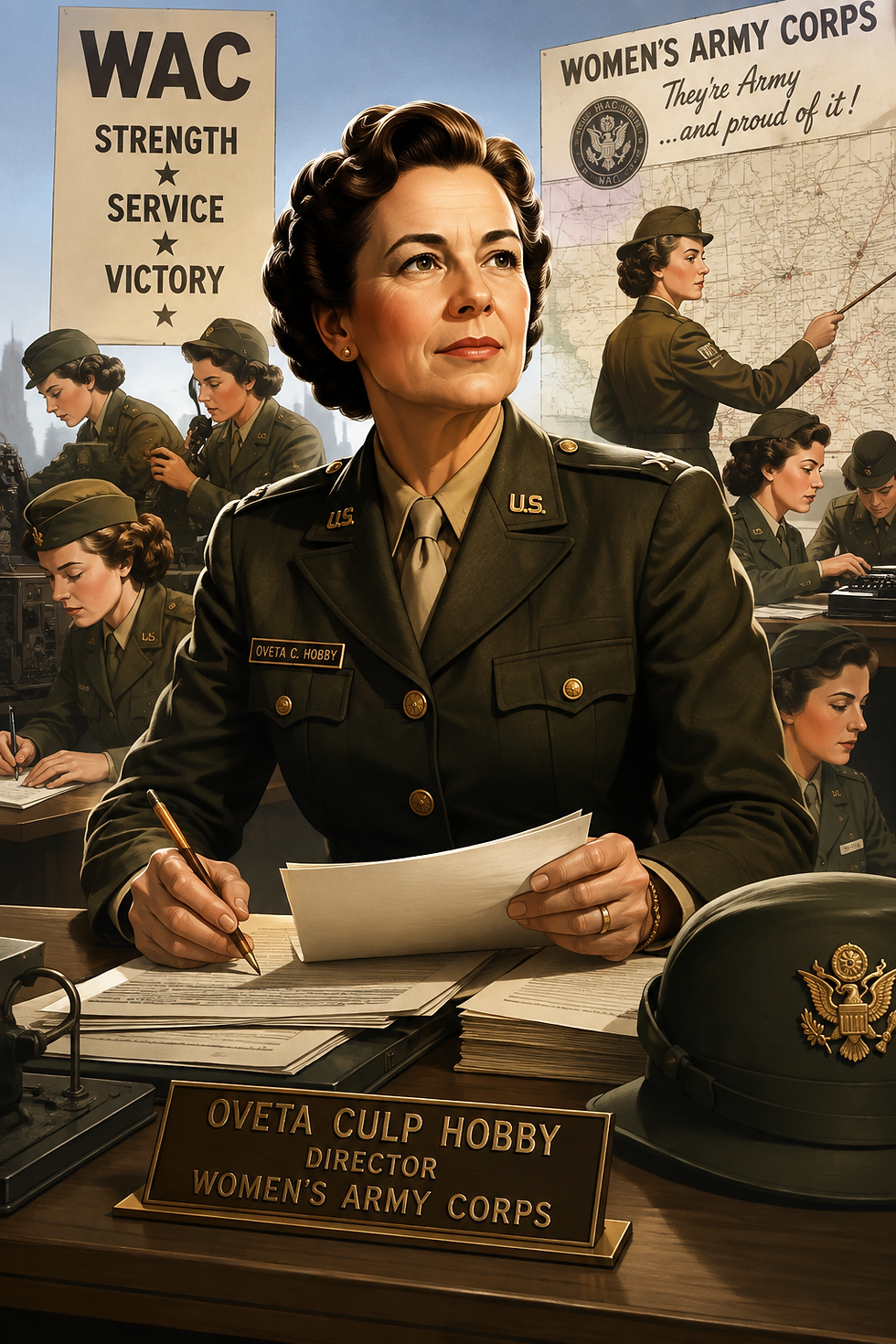
My Name is Oveta Culp Hobby: Leader of the Women’s Army Corps
I was born in Killeen, Texas, in 1905. My father was a lawyer and politician, and from an early age I listened carefully to discussions about government, law, and public responsibility. I studied at Mary Hardin-Baylor College and the University of Texas School of Law, though I did not complete a degree. I entered public service young, working with the Texas legislature and learning that leadership required preparation, discipline, and the willingness to make difficult decisions.
Newspapers, Politics, and Public Service
In 1931, I married William P. Hobby, the former governor of Texas and publisher of the Houston Post. I became deeply involved with the newspaper, eventually serving as executive vice president. Journalism taught me how quickly information could influence a nation and how important clear communication became during uncertain times. By the time another great war threatened the world, I had already spent years working in organizations where decisions had consequences. Soon, Washington would call upon that experience.
America Prepares for War
In 1941, I was asked to lead the Women's Interest Section of the War Department's Bureau of Public Relations. America had not yet entered the war, but preparations were accelerating. I saw immediately that women possessed abilities the military could not afford to ignore. They could serve as communications specialists, mechanics, clerks, technicians, drivers, administrators, and in many other essential positions. The question was no longer whether women could contribute. The question was whether our military was prepared to use their abilities effectively.
Building the Women's Army Corps
In 1942, Congress created the Women's Army Auxiliary Corps, and I became its first director. The organization later became the Women's Army Corps, or WAC, giving its members full military status. We had to recruit women, establish training, create regulations, overcome skepticism, and prove that women belonged within the Army's wartime organization. Thousands answered the call. Eventually, more than 150,000 women served in the WAC during World War II, performing hundreds of different military jobs at home and overseas.
Women Prove Their Worth
I watched women take assignments that many Americans had once considered unsuitable for them. They repaired equipment, processed military records, worked in intelligence and communications, operated radios, drove vehicles, and performed countless other duties necessary to keep a modern army functioning. Their service freed many men for combat assignments, but I never considered women's contribution merely a replacement for men's work. These women were soldiers performing essential responsibilities in their own right, and they demonstrated what competence, discipline, and patriotism looked like.
After Victory
I resigned from the Army in 1945 and returned to civilian life, but public service remained part of my future. President Dwight D. Eisenhower later appointed me the first secretary of the newly created Department of Health, Education, and Welfare in 1953. Yet the achievement for which I am most remembered remains the Women's Army Corps. I had witnessed American women step forward when their country needed them and demonstrate abilities that could no longer easily be dismissed.
What I Hope You Remember
Looking back, I know our generation did not eliminate every barrier facing women, nor did every woman who served receive the respect she deserved. I regret that discrimination and unequal opportunities remained realities even after women had proven themselves so thoroughly during the war. But I hope you remember what those women accomplished. When responsibility came, they did not ask whether history was ready for them. They trained, worked, served, and helped win a world war—and in doing so, they helped change what Americans believed women could accomplish.
Women Enter the Wartime Workforce - Told by Oveta Culp Hobby
When the United States entered World War II, our nation faced an enormous problem. Millions of men were entering the armed forces just as American factories were being asked to produce aircraft, ships, tanks, trucks, weapons, ammunition, and supplies on a scale never before attempted. President Roosevelt had called America the great "arsenal of democracy." But an arsenal requires workers. As men left civilian jobs for military service, American employers and government officials increasingly turned toward a workforce they had often overlooked: women.
Rosie Goes to Work
"Rosie the Riveter" became the popular symbol of these wartime women. Rosie was not one individual but an image representing millions. Women put on work clothes, tied back their hair, and entered aircraft factories, shipyards, steel plants, and other industries. They became welders, riveters, machinists, inspectors, electricians, laboratory workers, and clerks. Others drove buses, worked on farms, or filled office positions previously held by men. By 1945, roughly 19 million women were in the American civilian labor force, millions more than before the war.
Building the Arsenal of Democracy
Their work could be seen everywhere. At aircraft plants, women assembled bombers and fighters from thousands of individual parts. At shipyards, they welded sections of enormous vessels together. Women manufactured ammunition, inspected instruments, operated machine tools, and helped maintain the vast transportation and communications systems supporting the war. The work could be loud, dirty, exhausting, and dangerous. Yet every bomber completed, every ship launched, and every crate of ammunition packed brought the American military another step closer to its objectives overseas.
Women on America's Farms
The labor shortage extended far beyond factories. American farms had to feed civilians at home while supplying servicemen and Allied nations abroad. Women already played major roles on family farms, but wartime shortages increased the demand for their labor. The Women's Land Army recruited women for agricultural work, where they harvested crops, cared for livestock, drove tractors, and performed other essential jobs. The war reminded Americans that victory depended not merely upon soldiers at the front but upon an enormous network of people producing what those soldiers needed.
Opportunity Did Not Mean Equality
Wartime employment opened doors, but women did not suddenly receive equal treatment. They were often paid less than men doing comparable work and could face resistance from employers and male coworkers. Black women confronted racial discrimination as well as discrimination based on sex, and many had difficulty gaining access to better-paying industrial positions. Mothers also faced the practical problem of finding someone to care for their children while they worked. The federal government supported wartime childcare centers in some communities, but their availability remained limited.
More Than a Temporary Replacement
As director of the Women's Army Corps, I watched a similar transformation occur inside the military. Women proved themselves capable of responsibilities many had insisted belonged exclusively to men. The same thing was happening in America's factories, offices, laboratories, farms, and shipyards. Wartime necessity did not magically erase older attitudes, but it forced employers and communities to reconsider them. Once a woman had successfully repaired an aircraft, operated industrial machinery, managed an office, or welded a ship together, it became considerably harder to argue that she was incapable of such work.
When the Men Came Home
Victory in 1945 brought another change. Returning servicemen needed jobs, and many women were encouraged—or expected—to leave wartime positions and return to domestic life or traditionally female occupations. Many did. Others wanted to continue working, and women's participation in the labor force remained higher than it had been before the war. Rosie the Riveter therefore represented something larger than a wartime advertising image. Millions of women had been given an opportunity to demonstrate what they could accomplish. America could send many of them home from the factories, but it could not erase what they had proven.
Women Join the Armed Forces (1942–1945) - Told by Oveta Culp Hobby
When America entered World War II, our armed forces began expanding at a breathtaking pace. Millions of men were needed for combat, but a modern military also required radio operators, mechanics, clerks, weather observers, photographers, intelligence specialists, nurses, drivers, and hundreds of other occupations. Women had long served as military nurses, but now the country needed them in roles Americans had rarely imagined. In 1942, Congress created the Women's Army Auxiliary Corps, and I was selected as its first director. We were about to prove that military service could take many forms.
Building the WAC
Our first women arrived for training in 1942. They learned military discipline, regulations, physical training, and specialized skills. In 1943, the organization became the Women's Army Corps, or WAC, giving its members full military status. WACs eventually served in hundreds of occupations and at locations around the world. More than 150,000 women served in the WAAC and WAC during the war. Every woman performing an essential military assignment allowed the Army to use its manpower more effectively, including releasing some men for combat duties.
The Navy Calls Its WAVES
The Army was not alone. The Navy created the WAVES—Women Accepted for Volunteer Emergency Service—in 1942. Women served as yeomen, aviation mechanics, control-tower operators, parachute riggers, instructors, technicians, and in numerous other specialties. The Coast Guard established the SPARS, while women also served with the Marine Corps Women's Reserve. By the end of the war, hundreds of thousands of American women had worn the uniform of one of the nation's armed services.
The Women Who Flew
Then there were the Women Airforce Service Pilots, better known as the WASPs. These women flew military aircraft within the United States, ferrying planes from factories to bases, towing targets for training, testing aircraft, and performing other demanding assignments. More than 1,000 women served as WASPs, and 38 died during their service. Yet they were classified as civilians during the war and did not receive military veteran status until decades later. Their contribution demonstrated that women could handle sophisticated military aircraft under challenging conditions.
Nurses Near the Battlefield
Army and Navy nurses carried another burden. Thousands served at hospitals in the United States and overseas, sometimes working close to combat. They cared for men suffering from gunshot wounds, burns, infections, amputations, and the psychological and physical exhaustion of war. Nurses served from Europe to the Pacific, and some became prisoners of war after American positions fell early in the conflict. Their work was not glamorous. It was exhausting, emotionally demanding, and absolutely essential to keeping wounded servicemen alive.
Not Every Woman Was Treated Equally
The opportunities created by wartime service were real, but so were the barriers. African American women served in a segregated military and often faced limited assignments and discriminatory treatment. Japanese American, Chinese American, Native American, Hispanic American, and other women also contributed in military and medical roles while confronting different forms of prejudice at home. Rank and uniform did not automatically erase the attitudes of the society from which the military had been built.
The Tuskegee Airmen and African Americans in a Segregated Military (1942–1945) - Told by Benjamin O. Davis Jr.
When America entered World War II, Black Americans faced an extraordinary contradiction. Our nation was fighting governments overseas that denied freedom and human dignity, yet our own armed forces remained segregated. More than one million African Americans served during the war, but Black and white servicemen generally trained, lived, and served separately. I knew this contradiction personally. I had graduated from West Point in 1936, yet the Army Air Corps initially offered me no opportunity to become a pilot because Black men were excluded from military aviation.
The Experiment at Tuskegee
That barrier finally began to break. In 1941, the Army established flight training for Black military pilots at Tuskegee, Alabama. I entered the program and received my wings in 1942. The men who trained there—and the mechanics, instructors, technicians, and other personnel who supported them—became known collectively as the Tuskegee Airmen. We understood the pressure upon us. A white pilot's failure might be considered his own. A Black pilot's failure could be used by prejudiced observers as evidence against every Black man who wanted to fly. We could not control that unfair standard. We could control our preparation.
Proving Ourselves in Combat
I took command of the 99th Fighter Squadron, which entered combat in North Africa in 1943 and later fought over Sicily and Italy. Some officers questioned our performance and argued that Black pilots should be removed from combat. I defended my men and their record before officials in Washington. Later, I commanded the 332nd Fighter Group. Flying fighters with distinctive red markings on their tails, our pilots escorted bombers, attacked enemy targets, and fought German aircraft. Our combat record demonstrated what should never have required proving—that race had nothing to do with whether a man could become a capable military aviator.
Far More Than Pilots
Our story was only one part of Black military service. African Americans drove supply trucks, repaired equipment, constructed roads, handled ammunition, served in artillery and engineering units, and fought as infantrymen and tank crews. The 761st Tank Battalion distinguished itself in combat in Europe. Black Marines, first trained separately at Montford Point in North Carolina, served in the Pacific. Black sailors worked aboard ships and at naval installations, although the Navy initially restricted many to service positions. Black women served as nurses and members of the Women's Army Corps, including the women of the 6888th Central Postal Directory Battalion overseas.
The Double Victory
Black newspapers described our struggle as the "Double V" campaign: victory over fascism abroad and victory over racism at home. Consider what that meant for a Black serviceman. He could be trusted with a fighter aircraft, tank, truck, weapon, or the lives of other soldiers overseas, then return to an American community where segregation might determine where he could eat, sleep, attend school, or vote. We were not fighting against America by demanding change. We were asking America to live more completely according to the principles we had been ordered to defend.
Japanese Americans Go to War: The 442nd Regiment - Told by Daniel Inouye
After Pearl Harbor, Americans of Japanese ancestry suddenly found our loyalty questioned. On the mainland, families were forced into incarceration camps, while in Hawaii, where I lived, mass incarceration did not occur on the same scale. Japanese American men in Hawaii had even been removed from units of the Hawaii Territorial Guard. Then, in 1943, the government announced the formation of a Japanese American combat unit. Thousands volunteered. I was among them. We were Americans, and we wanted the opportunity to serve our country despite what had happened to people who shared our ancestry.
One Regiment, Two Very Different Experiences
The 442nd Regimental Combat Team brought together Japanese Americans from Hawaii and the mainland. Many of us from Hawaii had grown up in communities where Japanese Americans were numerous. Some mainland soldiers came from families confined behind barbed wire in camps such as Manzanar, Heart Mountain, and Minidoka. Imagine putting on an American uniform, preparing to risk your life for the United States, and then saying goodbye to parents who remained confined by that same government. Those circumstances could have destroyed morale. Instead, they gave many men another reason to prove that ancestry did not determine loyalty.
"Go for Broke"
Our motto was "Go for Broke," a phrase familiar in Hawaii meaning to risk everything in pursuit of the goal. We trained at Camp Shelby, Mississippi, before deploying to Europe. In 1944, the 442nd joined the 100th Infantry Battalion, another Japanese American unit already distinguished by hard fighting in Italy. The 100th eventually became the 442nd's 1st Battalion while retaining its famous designation. Together, we fought through Italy and France against experienced German forces.
The Rescue of the Lost Battalion
One of the regiment's most famous battles came in France's Vosges Mountains in October 1944. A battalion of the 141st Infantry Regiment had been surrounded by German troops. The 442nd was ordered to break through and rescue them. For days, Japanese American soldiers fought through forests, mud, cold weather, mines, artillery, and determined enemy resistance. We reached the trapped Americans, but the price was severe: the 442nd suffered hundreds of casualties during the broader fighting in the Vosges, including the rescue operation. The episode became one of the clearest examples of the regiment's determination and sacrifice.
Back to Italy
In 1945, the 442nd returned to Italy. There, the regiment participated in operations against German defensive positions in the Apennine Mountains. Japanese American soldiers climbed difficult terrain and helped break through sections of the Gothic Line that had resisted Allied attacks. It was during this campaign, near San Terenzo, that my own life changed forever. On April 21, 1945, while leading an attack, I was severely wounded and eventually lost my right arm. I was twenty years old.
Families Behind the Wire
What made our service especially difficult to comprehend was what remained behind us in America. While we fought Germans in Europe, thousands of Japanese Americans were still living in incarceration camps. Our soldiers received letters from families living behind fences guarded by American sentries. Yet those same families encouraged their sons to serve honorably. They understood something important: the government's actions did not determine whether we were Americans. Citizenship and loyalty belonged to us regardless of the prejudice directed against us.
What the 442nd Proved
The 442nd became one of the most highly decorated American units of its size and length of service during World War II, earning thousands of individual decorations as well as numerous unit honors. But I do not believe medals tell the entire story. The greater story is that young Americans were asked to defend a country that had questioned their loyalty and confined many of their families. We went anyway. We fought beside Americans of other backgrounds, buried friends on foreign soil, and demonstrated that loyalty cannot be measured by a person's face or family name. The 442nd did not merely fight to defeat Germany. Our service helped challenge America to live more faithfully by the principles for which we had gone to war.

My Name is Charity Adams Earley: Commander of the Six Triple Eight
I was born in Kittrell, North Carolina, in 1918 and grew up in Columbia, South Carolina. My parents believed strongly in education, discipline, and responsibility. I graduated as valedictorian of my high school class and attended Wilberforce University in Ohio, where I studied mathematics, physics, and Latin. I later became a teacher. I expected much from myself because I had learned early that preparation was one thing no prejudice could take away from me.
Answering the Army's Call
When America entered World War II, the military needed more personnel, and women were being called into new forms of service. In 1942, I joined the Women's Army Auxiliary Corps and entered officer training. I became one of the first African American women commissioned as an officer in the organization. The Army was still segregated, so Black women faced restrictions based on both race and sex. I understood those obstacles, but I had not entered the Army to be intimidated by them. I had entered to serve.
Leadership Means Responsibility
Military leadership required more than wearing an officer's insignia. I was responsible for the women under my command, and I expected them to meet high standards. I also expected them to be treated with dignity. On one occasion, a general threatened to send a white officer to tell me how to command my unit. I replied, "Over my dead body, sir." I knew military rank demanded respect, but command also required the courage to defend your soldiers when circumstances demanded it.
The Six Triple Eight Goes Overseas
In 1945, I commanded the 6888th Central Postal Directory Battalion, remembered as the "Six Triple Eight." We were the first and only predominantly Black Women's Army Corps unit sent overseas during World War II. When we arrived in Birmingham, England, we confronted warehouses filled with an enormous backlog of mail. Millions of letters and packages intended for American servicemen had been delayed, some for months. The Army wanted the problem solved, and that became our mission.
No Mail, Low Morale
Our motto was simple: "No mail, low morale." My women worked around the clock in eight-hour shifts, seven days a week. We created systems to identify servicemen who shared the same names, locate soldiers who had moved, and redirect mountains of mail. We worked in poorly heated facilities while German V-weapons still threatened England. The Army estimated that clearing the backlog could take six months. We accomplished the task in about three.
Serving While Facing Segregation
Our success did not mean discrimination disappeared. Black servicewomen could serve their nation overseas and still encounter segregation and prejudice within the military. I insisted that my soldiers conduct themselves professionally because our performance spoke louder than the assumptions made about us. After completing our work in Britain, the battalion continued its postal mission in France. By the end of the war, the women of the Six Triple Eight had demonstrated that Black women could organize, command, and accomplish difficult military assignments under demanding conditions.
Minority Americans on the Home Front (1942–1945) - Told by Charity Earley
When America entered World War II, victory required more than soldiers. Factories needed workers, shipyards needed welders, farms needed laborers, and military bases needed thousands of people to keep supplies moving. Opportunities opened for Americans who had long been excluded from better-paying occupations. I saw that contradiction in my own military service as a Black woman: the country desperately needed our abilities while many of its institutions still separated people according to race. The home front became a place where old barriers collided with wartime necessity.
Black Americans Move Toward Opportunity
Hundreds of thousands of African Americans moved from the rural South toward defense centers in the North and West, accelerating what historians call the Second Great Migration. Black workers helped construct aircraft, ships, vehicles, ammunition, and other military supplies. A. Philip Randolph's threatened March on Washington had helped pressure President Roosevelt into issuing Executive Order 8802 in 1941, which prohibited racial discrimination in defense industries and federal defense employment. Yet discrimination continued in hiring, housing, and public life. In 1943, racial tensions erupted into serious violence in Detroit and other communities, revealing how opportunity and prejudice could exist side by side.
Mexican Americans and the Wartime Economy
Mexican Americans also became essential to wartime production and agriculture. Workers moved into industrial cities and found employment in shipyards, aircraft plants, and other defense industries. Beginning in 1942, the Bracero Program brought Mexican laborers into the United States under agreements intended to address agricultural labor shortages. Yet Mexican Americans and Mexican nationals could still face discrimination in housing, schools, businesses, and public facilities. In Los Angeles, the 1943 Zoot Suit disturbances saw U.S. servicemen and others attack mostly Mexican American youths, exposing racial tensions beneath the image of national wartime unity.
Native Americans Leave the Reservations
World War II also transformed many Native American communities. Tens of thousands of Native Americans served in the armed forces, while many others left reservations for wartime jobs in cities and industrial centers. Native workers contributed to aircraft production, shipbuilding, agriculture, and other industries. Navajo Code Talkers famously used their language to help create secure battlefield communications in the Pacific, while members of other Native nations also contributed languages to military communications. For many Native families, the war brought greater contact with cities and wage employment, while raising new questions about preserving tribal cultures and communities.
Chinese Americans and a Changing Status
Chinese Americans occupied another complicated position. China was an American ally fighting Japan, yet Chinese immigrants still lived under the legacy of the Chinese Exclusion Act. Chinese American men and women worked in defense plants and served in the military, while public attitudes began to shift because China was now an important wartime ally. In 1943, Congress repealed the Chinese Exclusion Act through the Magnuson Act, permitting limited Chinese immigration and allowing eligible Chinese immigrants to become naturalized citizens. The restrictions were far from completely removed, but a discriminatory legal barrier dating from 1882 had finally been broken.
Japanese Americans Face a Different Reality
For Japanese Americans, wartime mobilization brought one of the country's gravest violations of civil liberties. Roughly 120,000 people of Japanese ancestry were forcibly removed from the West Coast and other designated areas, and about two-thirds were American citizens. Families lost homes, businesses, possessions, and years of freedom while living in incarceration camps. At the same time, Japanese American soldiers—including men of the 442nd Regimental Combat Team—fought with extraordinary distinction in Europe. Their experience presented America with a painful contradiction: citizens could fight and die for the United States while their relatives remained confined by their own government.
The 6888th Battalion and Minority Women Overseas (1944–1945) - Told by Earley
By late 1944, thousands of Black women were serving in the Women's Army Corps, but opportunities to serve overseas remained extremely limited. Black organizations and leaders had pressed the War Department to allow African American WACs to serve abroad. Finally, the Army organized the 6888th Central Postal Directory Battalion—the "Six Triple Eight." I was selected to command it. We would become the only predominantly Black WAC unit sent overseas during World War II. Our assignment did not involve rifles or front-line combat, but the Army had a serious problem waiting for us.
A Mountain of Mail
We arrived in Britain in February 1945 and encountered an enormous backlog of letters and packages intended for American servicemen. Mail had accumulated in warehouses, and some pieces had been delayed for months. Soldiers moved constantly from one location to another, and thousands shared common names. There were, for example, thousands of Robert Smiths in the Army. A letter without sufficient information could become nearly impossible to deliver. Yet those envelopes contained news of wives, husbands, children, parents, births, deaths, and everything else connecting soldiers to home. Our motto captured the importance of the assignment: "No mail, low morale."
Eight Hours at a Time, Around the Clock
We organized ourselves into three eight-hour shifts and worked around the clock, seven days a week. The facilities were poorly heated, and windows were sometimes blacked out because the war was still underway. We created an extensive directory containing millions of information cards to identify servicemen and determine where their mail belonged. Women sorted letters and packages while tracking men who had transferred, been wounded, returned home, or died. The Army expected the backlog could require approximately six months to clear. We completed the Birmingham assignment in about three.
Leadership Under Pressure
Completing our mission did not protect us from discrimination. We were Black women serving in a military that was segregated by race and still adjusting to women in uniform. I expected high standards from my soldiers, but I also defended their ability to do their jobs. During one inspection, a general threatened to send a white first lieutenant to show me how to command my unit. I told him, "Over my dead body, sir." It was not an attempt at theater. I knew my officers, I knew my enlisted women, and I knew what they were accomplishing.
From Britain to France
After clearing the backlog in Birmingham, we moved to France, where more mail awaited us. The war in Europe ended in May 1945, but our mission continued because millions of servicemen were still overseas and preparing for redeployment or the journey home. We worked in Rouen and later Paris, continuing to redirect mail through a military system undergoing enormous change. Our women had crossed the Atlantic to perform an assignment many people had never imagined Black servicewomen would receive, and they completed it with remarkable efficiency.
More Than Letters
It would be easy to dismiss mail as a minor concern beside tanks, bombers, and artillery. Anyone who has been separated from family during war understands otherwise. A letter could tell a soldier that his child had been born, that his family was safe, or simply that someone thousands of miles away was thinking about him. Mail sustained morale, and morale helped sustain armies. Our job was therefore part of the machinery of victory, even though it occurred far behind the battlefield.
Coming Home: How WWII Changed the Fight for Equality (1945 and After) - Told by Charity Adams Earley, Daniel Inouye, and Benjamin O. Davis Jr.
Charity Adams Earley: When victory came in 1945, Americans celebrated the defeat of regimes that had brought destruction across much of the world. Yet those of us who had served also returned with questions about our own country. Black women of the 6888th had worn the uniform overseas, commanded soldiers, and completed an enormous military assignment, but segregation still awaited us at home. Millions of women who had worked in factories, shipyards, offices, farms, and military organizations faced another transition as returning servicemen reclaimed civilian jobs. The war was over, but the social changes it had accelerated could not simply be packed away with the uniforms.
Returning to a Country That Had Confined Your Family
Daniel Inouye: My homecoming carried another contradiction. Japanese American soldiers had fought in Europe while many of our families had lived in incarceration camps created by our own government. Beginning in 1944 and continuing after the war, exclusion orders were lifted and Japanese Americans returned to the West Coast. Some discovered that homes, farms, businesses, and possessions had been lost. They also sometimes encountered continuing hostility. Yet families rebuilt their lives. Veterans of units such as the 442nd returned wearing American uniforms, carrying medals and wounds that made it increasingly difficult to claim that Japanese ancestry somehow meant disloyalty.
Benjamin O. Davis Jr.: Daniel, Black servicemen understood something of that contradiction. More than one million African Americans had served in the armed forces, yet many returned to communities where segregation remained legal or customary. A Black veteran could wear decorations earned overseas and still face discrimination in restaurants, hotels, transportation, employment, housing, and voting. The Double V idea—victory against fascism abroad and racism at home—did not disappear when Germany and Japan surrendered. If anything, wartime service gave greater strength to the second half of that campaign.
Women Had Proven What They Could Do
Charity Adams Earley: Women faced their own difficult homecoming. Wartime propaganda had encouraged women to enter factories and military service because the country needed them. After victory, many were encouraged to leave industrial positions as veterans returned. Some women wanted to return to their homes and families, while others wanted to continue careers they had discovered during the war. Either way, the experience could not be erased. Women had built aircraft, welded ships, flown military planes, managed offices, served overseas, and commanded troops. The argument that women were naturally incapable of such responsibilities had been weakened by the evidence of their own performance.
The Military Begins to Change
Benjamin O. Davis Jr.: The armed forces became one of the places where change could be measured clearly. During the war, the Tuskegee Airmen and other Black units had demonstrated their abilities while serving within a segregated system. In 1948, President Harry Truman issued Executive Order 9981, declaring a policy of equality of treatment and opportunity in the armed services without regard to race, color, religion, or national origin. Integration did not occur instantly, but the order began a transformation. The military that had once questioned whether men like me should even fly would eventually place Black and white Americans within the same units.
Daniel Inouye: And military service changed those who had served. Men who had fought through Italy, France, Germany, and the Pacific returned knowing what they had accomplished. Minority veterans had commanded men, operated sophisticated equipment, survived combat, and accepted responsibility for one another's lives. It was difficult to return from such experiences and quietly accept being treated as an inferior citizen. Veterans would become important participants in struggles for political representation, equal treatment, and civil rights.
The War Did Not Create Equality
Charity Adams Earley: We should be careful not to make the story too simple. World War II did not end racism or sexism. Segregation continued. Japanese American families had to rebuild after incarceration. Women encountered pressure to surrender wartime jobs. Discrimination remained deeply embedded in American institutions and communities. Yet the war had placed millions of Americans into circumstances where older assumptions were tested against reality—and many of those assumptions failed that test.
Benjamin O. Davis Jr.: Precisely. The Civil Rights Movement of the 1950s and 1960s did not suddenly appear from nowhere. Its foundations reached much further back, but World War II provided powerful new momentum. Black wartime migration increased African American political influence in northern and western cities. Black veterans returned determined to claim citizenship rights. Organizations such as the NAACP expanded their efforts, and the contradiction between American democratic ideals and segregation became increasingly visible at home and abroad.
What We Brought Home
Daniel Inouye: Perhaps the most important thing millions of Americans carried home was not something contained in a duffel bag. It was experience. Japanese Americans knew they could fight for their country even after their loyalty had been questioned. Black Americans had demonstrated their abilities throughout the military and wartime economy. Women had entered occupations once considered beyond their proper role. Native Americans, Mexican Americans, Chinese Americans, and many others had made essential contributions as well.
Charity Adams Earley: The war did not hand America equality in 1945. What it did was make many old barriers harder to defend. We had seen what people could accomplish when necessity opened doors that prejudice had kept closed. Once those doors had opened, Americans who had walked through them were not likely to forget what they had accomplished. The shooting war had ended, but another struggle continued—the long effort to make the freedoms America defended overseas more completely available to its citizens at home.


Comments