

12. Heroes and Villains of World War I: The War at Sea and Submarine Warfare (1914–1916)


My Name is John Jellicoe: Admiral of the British Grand Fleet
I was born in 1859 during the height of the British Empire, when the Royal Navy ruled oceans across the globe. As a young boy, I admired discipline, order, and duty above almost everything else. Britain depended on the sea for survival, trade, and power, and I believed from an early age that protecting the fleet was one of the greatest responsibilities a man could carry. I entered the Royal Navy as a cadet while still very young and quickly learned that mistakes at sea could destroy ships, crews, and nations in a matter of minutes.
Learning the Cost of War
Throughout my early career, I served across the empire and fought in dangerous campaigns, including during the Boxer Rebellion in China where I was badly wounded. Those experiences taught me something many younger officers did not yet understand: war was not glorious when viewed up close. A reckless commander could throw away thousands of lives in moments. I became known as calm, methodical, and careful. Some admired that quality. Others thought it made me too cautious. I did not see caution as weakness. I saw it as responsibility.
Commanding Britain’s Greatest Fleet
When the Great War began in 1914, I was placed in command of the British Grand Fleet, the most powerful naval force in the world. The fate of Britain rested upon our ships. If the fleet was destroyed, Britain could be invaded, starved, or isolated from its empire. Winston Churchill once said I was “the only man on either side who could lose the war in an afternoon.” He was correct. That burden sat on my shoulders every day. Many civilians and newspaper writers wanted dramatic battles and glorious victories, but they did not fully understand what was at stake.
The Blockade and My Critics
Instead of rushing into unnecessary risks, I focused on maintaining the blockade against Germany. Our fleet slowly strangled German trade and supplies, weakening their economy and their people’s ability to continue the war. Some younger officers and politicians criticized me for not seeking constant battle with the German High Seas Fleet. I could never understand why they wanted me to gamble Britain’s survival merely for excitement or headlines. Losing even a single major fleet action could have changed the entire war. My duty was not to entertain the public. My duty was to win.
The Battle of Jutland
In 1916, the German fleet finally challenged us in the Battle of Jutland, the largest naval battle of the war. The fighting was chaotic, deadly, and confusing. Ships exploded in flames, shells tore through steel armor, and thousands of sailors died in the cold North Sea. Although Britain suffered heavier immediate losses, the German fleet retreated and never truly challenged British naval dominance again. Yet many people called the battle disappointing because they expected another Trafalgar-style destruction of the enemy. I could not understand their frustration. The German fleet had failed to break Britain’s control of the sea. Strategically, we had succeeded.
A Difficult Reputation
Over time, I gained a reputation for being overly cautious and defensive. Some believed I lacked aggression. Others thought I was too focused on preserving ships instead of seeking dramatic victory. I often felt misunderstood. It seemed obvious to me that preserving the fleet was preserving Britain itself. I believed history would eventually recognize that patience and restraint could save nations just as surely as bold attacks. Still, I know now that caution without inspiration can leave people uncertain of your leadership, even when your decisions are correct.
Britain Rules the Seas at the Start of the War (1914) - Told by John Jellicoe
When the Great War began in 1914, Britain possessed the most powerful navy the world had ever seen. Our empire stretched across continents, islands, trade routes, and oceans, and every part of it depended upon ships. Food from Canada, wool from Australia, tea from India, oil from Persia, and goods from Africa all traveled through waters guarded by the Royal Navy. Unlike Germany or Russia, Britain could not survive by land alone. We were an island nation, and the sea was our lifeline. Every British sailor understood that if we lost command of the oceans, the empire itself could begin to collapse.
The Traditions of the Royal Navy
The Royal Navy was not simply a military force. It was one of the foundations of British identity. For centuries, British sailors had fought against the Spanish Armada, Napoleon’s fleets, pirates, and rival empires across the globe. Young officers studied heroes such as Admiral Nelson and learned that discipline, courage, and seamanship were sacred traditions. By 1914, these traditions were deeply rooted in every warship and naval academy in Britain. Sailors were expected to endure storms, exhaustion, and danger without complaint. Many boys joined the navy while still teenagers and spent their lives at sea defending the empire.
The Age of the Dreadnought
By the early twentieth century, naval warfare had entered a terrifying new age. Battleships known as dreadnoughts dominated the seas with giant steel hulls, massive guns, and engines powerful enough to move entire floating fortresses across the oceans. Britain led the world in building these warships. At the outbreak of war, the Royal Navy possessed more dreadnoughts than Germany and maintained fleets stationed around the globe. Every major nation watched Britain’s shipyards carefully because naval power had become a symbol of industrial strength and national survival.
Germany Challenges British Supremacy
Germany’s rapid naval expansion deeply worried British leaders before the war even began. Kaiser Wilhelm II dreamed of building a fleet strong enough to challenge Britain directly, and each new German battleship increased tensions between the two nations. Many people today imagine the war beginning with trenches in France, but long before the first shots were fired, a naval arms race was already underway. Britain adopted the “Two-Power Standard,” meaning the Royal Navy aimed to remain stronger than the next two largest navies combined. We believed anything less could invite disaster.
Guarding the Trade Routes
When war erupted, one of our greatest responsibilities was protecting merchant shipping. Thousands of cargo vessels crossed the seas carrying food, ammunition, coal, and soldiers. German raiders and submarines threatened these routes, and even the loss of a few important convoys could create shortages back home. The British public often imagined naval warfare as dramatic battles between giant fleets, but much of our work involved patrols, escorts, intelligence gathering, and maintaining control of strategic chokepoints such as the English Channel and North Sea. The oceans became highways of war.
The Grand Fleet Waits
As commander of the Grand Fleet, I knew Britain’s greatest strength also carried enormous risk. Our battleships were powerful, but if they were recklessly destroyed in a single disaster, Britain could lose control of the sea almost overnight. This is why we often waited carefully for the right moment to engage the German fleet. Some critics wanted immediate decisive battles like Trafalgar, but modern naval warfare had changed. Mines, submarines, torpedoes, and long-range guns made every decision deadly. Preserving the fleet was preserving Britain itself.
Why the Seas Mattered
Many people on land did not fully realize how much the war depended upon the oceans. Armies in France required constant shipments of supplies and reinforcements. Britain’s economy relied on global trade. The empire depended on communication between distant colonies and allies. If German ships or submarines had broken Britain’s naval control early in the war, the entire balance of the conflict could have shifted. The Royal Navy stood like a shield between Britain and starvation, invasion, or isolation. In 1914, command of the seas was not merely about pride. It was about survival.

My Name is Reinhard Scheer: Commander of Germany’s High Seas Fleet
I was born in 1863 in the Kingdom of Prussia during a time when Germany was rising into a powerful empire. From a young age, I believed strength and discipline were what allowed nations to survive in a dangerous world. I entered the Imperial German Navy as a teenager and dedicated my life to helping Germany challenge the old powers that had ruled the seas for centuries. Britain had its empire and its mighty navy, but many of us believed Germany deserved its place beside them as a global power.
Germany’s Growing Ambition
As Germany industrialized and expanded, our leaders believed the nation needed a great fleet capable of protecting trade and projecting strength across the world. I fully agreed. Some Europeans viewed Germany’s naval growth as aggressive, but I never understood why Britain believed it alone should dominate the oceans forever. We were a modern industrial nation with growing influence, and I believed our fleet was both justified and necessary. To many Germans, the navy became a symbol of national pride and unity.
The Great War Begins
When war erupted in 1914, Germany faced enemies on nearly every side. Britain quickly used its navy to blockade our ports and cut off supplies from the outside world. I viewed this blockade as an attack not just on soldiers, but on German civilians. Food shortages spread, industries struggled, and families began suffering at home. Yet many outside Germany criticized our responses while ignoring the slow starvation caused by Britain’s blockade. I found that hypocrisy difficult to accept.
Command of the High Seas Fleet
In 1916, I became commander of the High Seas Fleet. I believed Germany could not simply sit in harbor while Britain strangled our nation. I wanted action. I wanted to weaken the Royal Navy piece by piece and force Britain into negotiations. Some officers favored caution, but I believed hesitation would slowly destroy Germany. We could not match Britain ship for ship forever, so we needed bold operations and new methods of warfare to shift the balance.
The Battle of Jutland
That same year, we fought the Battle of Jutland, the largest naval battle of the war. The North Sea became a storm of steel, smoke, and exploding shells. Although Britain kept control of the sea afterward, our fleet inflicted serious damage and escaped destruction. In Germany, many viewed the battle as proof that the British fleet was not invincible. I believed we had shown courage against overwhelming odds. Still, I became frustrated that one battle had not changed the war more dramatically. Britain could absorb losses more easily than Germany could.
The U-Boat Controversy
Over time, I became one of the strongest supporters of unrestricted submarine warfare. Many critics accused us of barbarism for targeting merchant ships and vessels supplying Britain. I did not understand their outrage. Britain’s blockade was slowly starving German civilians, yet the world condemned submarines far more harshly than hunger imposed by surface fleets. To me, submarines were Germany’s best chance to break Britain’s power. War had already become industrial and total. I believed old rules written for another age no longer matched reality.
The Collapse of Germany
As the war dragged on, Germany weakened from exhaustion, shortages, and unrest at home. Sailors mutinied, protests spread, and faith in victory faded. Watching the empire unravel was deeply painful. Many blamed military leaders like myself for pushing too hard and believing too strongly in victory through force. At the time, I still believed we had few alternatives. Surrounded by enemies and strangled by blockade, surrender felt impossible to accept.
Germany’s High Seas Fleet Challenges Britain - Told by Reinhard Scheer
When I was a young naval officer, Germany was changing rapidly. Factories rose across our cities, railroads connected our industries, and our population expanded with incredible speed. After German unification in 1871, many citizens believed our nation deserved a place among the world’s greatest powers. Britain ruled the oceans with its mighty Royal Navy, but Germany’s leaders did not want our future limited to the European continent alone. We wanted colonies, trade, and influence across the globe. To achieve that, we believed Germany needed a navy powerful enough to stand beside Britain’s.
Kaiser Wilhelm II’s Great Dream
Kaiser Wilhelm II became one of the strongest supporters of naval expansion. He admired the British Empire and believed Germany should possess a global fleet worthy of a modern industrial power. The Kaiser often spoke passionately about ships, sea power, and Germany’s future upon the oceans. Under his leadership, shipyards expanded, steel production increased, and new battleships were ordered at an astonishing pace. He wanted Germany respected not only for its army, but also for a navy that could challenge the world itself.
Admiral Tirpitz and the Naval Laws
One of the most important architects of Germany’s naval growth was Admiral Alfred von Tirpitz. He helped push a series of Naval Laws through the German government beginning in the late 1890s. These laws funded the construction of massive battleships and modern warships that became known as the High Seas Fleet. Tirpitz believed Britain would avoid war if Germany built a fleet dangerous enough to inflict terrible losses upon the Royal Navy. This became known as the “Risk Theory.” The idea was simple: Britain might still defeat Germany at sea, but the cost would be so severe that Britain would hesitate to fight at all.
Britain Watches Nervously
The British did not see Germany’s naval buildup as defensive. They viewed it as a direct threat to their survival. Britain depended upon overseas trade and imported food more than almost any other major nation. If another power ever challenged British control of the seas, the entire empire could be endangered. As Germany built more battleships, Britain responded by building even more. Newspapers in both countries fueled fear and nationalism. Citizens began counting battleships the way nations once counted armies.
The Dreadnought Revolution
In 1906, Britain launched HMS Dreadnought, a revolutionary battleship that instantly changed naval warfare forever. It was faster, more powerful, and carried larger guns than older ships. Overnight, many existing fleets around the world became outdated. Germany responded quickly by constructing its own dreadnoughts, and the naval arms race intensified. Shipyards worked day and night producing floating steel fortresses that cost enormous sums of money. By the years before World War I, Europe’s greatest powers were preparing for a naval struggle unlike anything the world had ever seen.
Fears of Encirclement
Germany increasingly feared being surrounded by enemies. France remained hostile after losing territory to Germany in earlier wars, Russia was expanding its military power in the east, and Britain moved closer diplomatically to both nations. Many Germans believed Britain was trying to contain Germany’s rise before it became too powerful. This fear of encirclement shaped much of our military thinking before the war. We believed Germany had little choice but to strengthen itself or risk being isolated and threatened from every direction.
The High Seas Fleet Prepares for War
By 1914, Germany possessed one of the most modern navies in the world. The High Seas Fleet was smaller than Britain’s Grand Fleet, but it was highly trained, heavily armed, and filled with determined officers and sailors. We knew we could not easily defeat Britain in a direct struggle for total naval dominance, but we believed we could weaken them through careful operations and force them into a negotiated peace. Every sailor understood that if war came, the North Sea would become one of the most dangerous places on Earth.
The Naval Blockade of Germany Begins - Told by John Jellicoe
When the Great War began in 1914, many people expected enormous naval battles to decide the conflict quickly. Newspapers imagined lines of battleships exchanging fire in dramatic clashes across the North Sea. Yet Britain possessed another weapon far more powerful than many realized: control of the oceans themselves. The Royal Navy did not need to destroy Germany’s fleet immediately to weaken the German Empire. Instead, we could slowly cut Germany off from the outside world. A blockade could weaken an enemy nation month after month without risking the destruction of Britain’s own fleet in a reckless battle.
An Island Empire Understands the Sea
Britain understood maritime warfare better than most nations because our entire empire depended upon trade. For centuries, the Royal Navy had protected shipping lanes stretching across every major ocean. German leaders understood this danger as well. Germany imported food, fertilizer, oil, metals, rubber, and many other materials needed to support both civilians and armies. If those supplies were interrupted long enough, factories would slow, shortages would spread, and public morale could weaken. The blockade aimed to turn Britain’s command of the sea into an economic weapon.
The Grand Fleet Waits
As commander of the Grand Fleet, I knew one terrible truth: Britain could not afford to lose its navy. Germany’s High Seas Fleet was powerful, modern, and dangerous. A careless engagement could cost thousands of sailors and shift control of the sea. Because of this, the Royal Navy concentrated much of its strength at bases such as Scapa Flow in Scotland, where our battleships waited for the right opportunity to confront the Germans. Some civilians criticized this caution, but preserving the fleet was essential. Our very presence forced Germany to remain careful.
Closing the North Sea
Britain used geography to tighten the blockade around Germany. The Royal Navy patrolled the North Sea, the English Channel, and routes leading into the Atlantic Ocean. Merchant vessels traveling toward Europe were inspected, redirected, or seized if they carried goods that might aid Germany. Over time, Britain expanded the list of “contraband” materials to include not only weapons, but also food and industrial supplies. Neutral countries such as the Netherlands and Scandinavian nations found themselves under growing British pressure because goods shipped to them could eventually reach Germany.
The Role of Merchant Ships
The blockade depended not only on warships, but also on merchant vessels, intelligence networks, and international law. British authorities tracked cargo manifests, intercepted communications, and watched ports closely. Some German merchant ships became trapped in foreign harbors at the start of the war because they feared capture if they returned home. Others were hunted across the oceans by British cruisers. The war at sea became a giant contest of logistics, trade, and endurance rather than constant fleet battles.
Germany Feels the Pressure
At first, many Germans believed the blockade would fail quickly. Germany possessed a strong industrial economy and hoped to win the war before shortages became severe. Yet as the months passed, supplies became more difficult to obtain. Food prices rose, certain products disappeared from stores, and factories struggled to secure materials. The blockade especially hurt Germany’s ability to import nitrate fertilizers and chemicals needed for agriculture and explosives. By weakening Germany’s economy slowly, Britain hoped to exhaust the enemy’s ability to continue the war.
Criticism and Controversy
The blockade was not without controversy. Germany argued that Britain was violating international law by interfering with neutral trade and restricting food shipments. Some neutral nations protested British policies as well. Yet British leaders believed survival outweighed such complaints. Germany’s armies threatened France, Belgium, and eventually Britain itself. In London, many believed the blockade could shorten the war and save lives in the long run by weakening Germany’s strength before even greater battles occurred.
Commerce Raiders and Early Naval Skirmishes - Told by Reinhard Scheer
When most people imagine the beginning of World War I, they think of soldiers marching across Europe or trenches carved into the French countryside. Yet from the very first weeks of the war, another struggle unfolded across the oceans of the world. German warships and commerce raiders sailed through the Atlantic and Pacific searching for enemy merchant vessels, isolated colonies, and vulnerable shipping lanes. Britain’s empire depended upon global trade, and Germany hoped that even a smaller navy could create fear, confusion, and disruption far beyond Europe itself.
The Purpose of Commerce Raiders
Germany understood that we could not match Britain ship for ship across every ocean. Instead, we relied upon speed, surprise, and careful planning. Commerce raiders targeted merchant ships carrying supplies, food, fuel, and raw materials for the Allied war effort. Some raiders were official naval cruisers, while others were converted merchant ships armed with hidden guns. Their mission was not necessarily to destroy the Royal Navy outright, but to force Britain to spread its forces thin across the globe protecting trade routes.
German Ships Far from Home
Before the war began, Germany had stationed warships in distant parts of the world to protect colonial interests and trade. When war erupted, some of these vessels suddenly found themselves isolated thousands of miles from Germany. One of the most famous was Admiral Maximilian von Spee’s East Asia Squadron, based in the Pacific Ocean. Rather than surrender or remain trapped in foreign ports, these ships began a dangerous journey across the Pacific while searching for opportunities to strike British forces along the way.
The Battle of Coronel
In November 1914, German and British squadrons met off the coast of Chile in the Battle of Coronel. It became one of the Royal Navy’s worst early defeats of the war. Admiral von Spee’s experienced crews and powerful armored cruisers overwhelmed the British squadron commanded by Admiral Sir Christopher Cradock. British ships were sunk with heavy loss of life, and news of the defeat shocked Britain. For a moment, Germany demonstrated that British naval supremacy could still be challenged far from European waters.
Britain Strikes Back at the Falklands
The victory at Coronel did not last long. Britain quickly responded by dispatching powerful battlecruisers to hunt down the German squadron. In December 1914, the fleets clashed again at the Battle of the Falkland Islands in the South Atlantic. This time the British possessed faster and heavier ships. Admiral von Spee’s squadron was destroyed, and most of his ships were sunk after a desperate fight. The battle showed the immense reach of the Royal Navy and its ability to concentrate overwhelming force against isolated raiders.
The Emden and the Fear of German Raiders
One German raider that became famous across the Indian Ocean was the light cruiser SMS Emden. Operating far from Europe, Emden attacked merchant ships, bombarded ports, and disrupted Allied trade routes with remarkable success. The ship captured or destroyed dozens of vessels before finally being cornered and defeated by Australian forces near the Cocos Islands. Emden’s daring actions captured the imagination of many Germans and worried Allied shipping companies across the region.
Merchant Ships Become Targets
As the naval war expanded, merchant vessels became increasingly important targets. Coal, food, ammunition, and industrial supplies all traveled by sea, and disrupting those shipments could weaken entire armies. Merchant sailors suddenly found themselves part of the war whether they wore uniforms or not. Some ships tried to outrun raiders, others used wireless signals to call for help, and many crews lived with constant fear while crossing dangerous waters. The oceans became battlefields stretching across the globe.
A War of Movement Before the Stalemate
In the early months of the war, naval combat remained far more mobile than the trench warfare developing in Europe. Raiders crossed vast oceans, cruisers hunted one another through storms and distant islands, and fleets searched endlessly for enemy ships hidden somewhere beyond the horizon. These early naval clashes gave the war a dramatic and unpredictable quality before larger strategies of blockade and submarine warfare began to dominate the seas.
The Beginning of a Global Naval Conflict
The commerce raids and early naval battles of 1914 revealed that World War I would not remain confined to Europe alone. Fighting stretched from the Pacific islands to the South Atlantic and from African coasts to the Indian Ocean. Germany’s raiders could not ultimately break Britain’s control of the seas, but they forced the Royal Navy into a worldwide struggle to protect trade and communications. These early operations also hinted at a larger truth that would define the war: modern industrial nations could attack one another not only through armies, but through the lifelines of global commerce itself.
Life Aboard a Dreadnought Battleship - Told by John Jellicoe
When the Great War began, dreadnought battleships represented the peak of naval power. These enormous vessels were unlike anything the world had seen before: floating steel fortresses armed with giant guns capable of striking targets miles away across the sea. A single dreadnought carried thousands of sailors, massive engines, thick armor plating, and enough firepower to destroy older warships in minutes. Nations measured their strength by the number of dreadnoughts they possessed, and Britain’s Grand Fleet contained the greatest concentration of these warships anywhere on Earth.
Life in Tight Quarters
Despite their size, life aboard a battleship could feel crowded and uncomfortable. Hundreds or even thousands of sailors lived packed together below decks surrounded by machinery, coal dust, heat, and the constant smell of oil and seawater. Hammocks were hung tightly beside one another, and privacy hardly existed. Sailors woke early each morning to clean the ship, polish metal surfaces, scrub wooden decks, and maintain equipment. Discipline was strict because even a small mistake aboard a warship could lead to disaster during battle.
The Endless Routine
Most days at sea followed a careful routine. Sailors trained constantly with drills, gunnery exercises, emergency procedures, and lookout duties. Crews practiced loading shells into the giant gun turrets until the movements became automatic. Engineers worked deep inside the ship maintaining boilers and engines that powered the massive vessel through rough seas. Signalmen studied flags, lamps, and coded communications while officers reviewed maps and reports. Even during quiet periods, the crew remained alert because enemy submarines, mines, or raiders could appear without warning.
The Giant Guns of the Fleet
The most feared part of a dreadnought was its enormous main guns. Some battleships carried guns larger than 13 inches in diameter, capable of firing shells weighing over a thousand pounds for many miles. Entire teams of sailors operated each turret using hydraulic systems, elevators, and carefully timed commands. When these guns fired, the entire ship shook violently. The noise could damage hearing, and thick smoke filled the air. In battle, accuracy mattered as much as firepower because ships often fought at distances where enemy vessels appeared only as dark shapes on the horizon.
Technology Changes Naval Warfare
Dreadnoughts represented more than brute force; they also showcased new technology transforming warfare. Wireless radio allowed ships to communicate across long distances without relying entirely on signal flags. Rangefinders helped crews calculate distances to enemy vessels with remarkable precision. Armored control towers protected officers directing battle from enemy shells. Steam turbines made ships faster than older battleships, while improved steel armor allowed them to survive devastating hits. Naval warfare had become an industrial contest of engineering, mathematics, and production.
Communication Across the Fleet
One of the greatest challenges inside the Grand Fleet was communication. During operations, dozens of ships maneuvered together across rough seas, often in fog, darkness, or stormy weather. Signal flags, flashing lamps, coded radio transmissions, and messenger systems all helped coordinate the fleet. Yet confusion could still spread quickly during battle. A misunderstood signal or delayed order might place entire squadrons in danger. Officers constantly worried about maintaining order across such a massive force while under pressure from enemy attacks.
The Tension of Waiting
Perhaps the hardest part of serving aboard a dreadnought was the waiting. The Grand Fleet spent long stretches patrolling the North Sea, always preparing for a possible clash with Germany’s High Seas Fleet. Sailors lived with constant tension because everyone knew a major battle could erupt at any moment. Unlike soldiers in trenches who faced daily fighting, naval crews often endured long periods of silence broken suddenly by moments of deadly chaos. Every alarm bell or distant report caused men to rush to battle stations wondering whether the long-awaited confrontation had finally arrived.
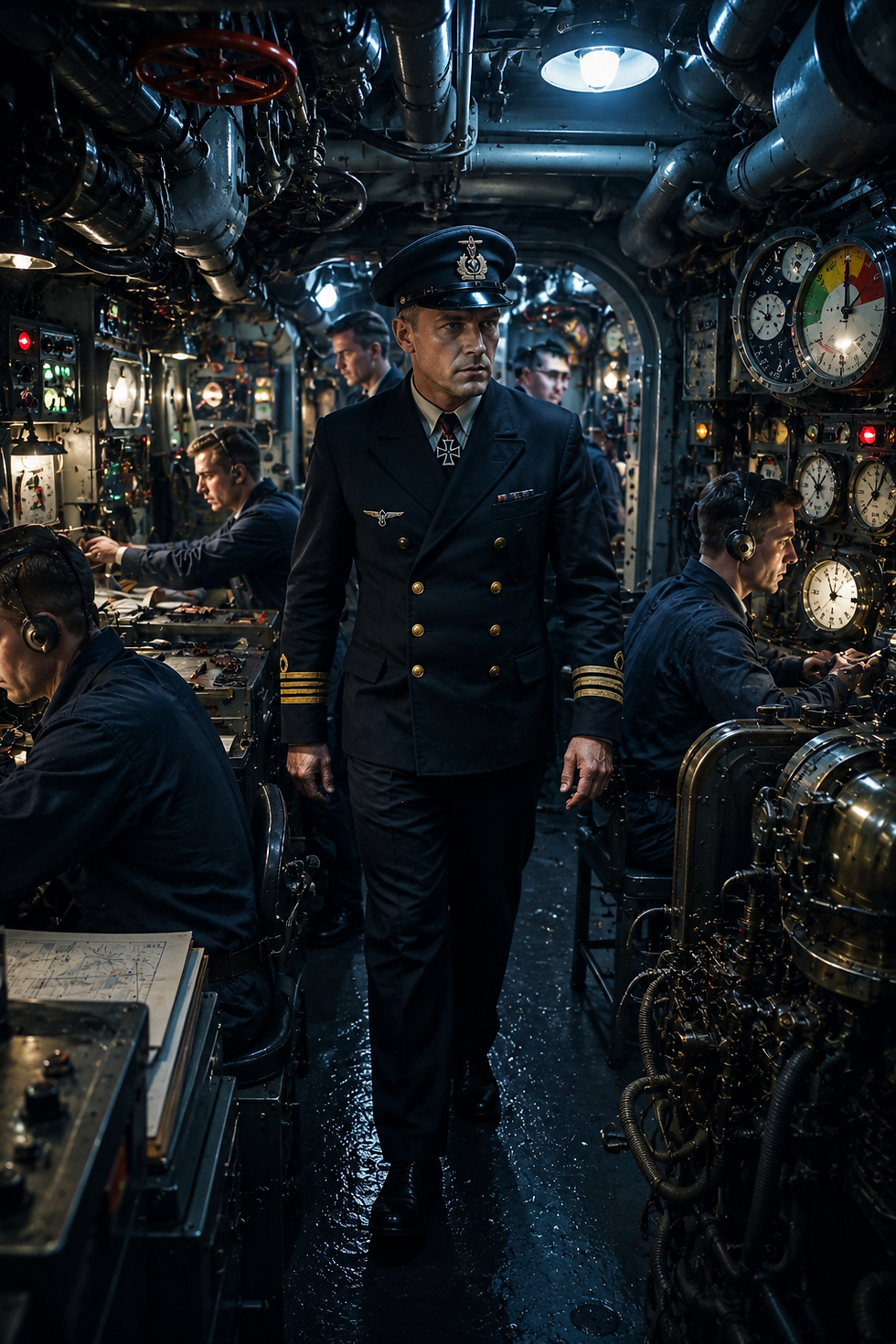
My Name is Walther Schwieger: Commander of the German U-Boat U-20
I was born in 1885 in the German Empire during a time when our nation was rapidly growing in strength and ambition. As a young man, I admired discipline, technology, and service to the Fatherland. The Imperial German Navy offered adventure and purpose, and I entered it believing Germany deserved respect among the great powers of the world. When submarines first appeared, many officers dismissed them as strange little machines with little value. I saw something different. I saw the future of naval warfare.
The New Weapon Beneath the Waves
Life aboard a submarine was dangerous, cramped, and exhausting. We lived surrounded by steel, fuel fumes, machinery, and constant pressure from the sea above us. Every patrol carried the risk of drowning, mechanical failure, or destruction by enemy warships. Yet submarines gave Germany an advantage we desperately needed. Britain controlled the surface of the oceans with massive battleships, but beneath the waves their power weakened. I believed submarines could force even the strongest empire to fear the sea.
Britain’s Blockade and My Beliefs
As the war began, Britain used its navy to blockade Germany, stopping food, supplies, and trade from reaching our people. German civilians suffered shortages while the British claimed moral superiority. I never understood why so many people condemned submarine warfare while saying little about the starvation caused by the blockade. From my perspective, Britain had already turned the entire sea into a battlefield. Merchant ships carried supplies, ammunition, fuel, and materials that kept the enemy alive. To us, they were part of the war effort.
Commanding U-20
I eventually took command of the submarine U-20, one of Germany’s deadly underwater hunters. Our missions required patience, stealth, and nerve. We spent hours submerged in silence, waiting for the right target while enemy destroyers searched above us. Some called submarine warfare cowardly because we attacked from beneath the sea instead of facing enemies openly with great fleets. I disagreed completely. We fought in the only way Germany could challenge Britain’s overwhelming naval power.
The Lusitania
In May 1915, my name became known across the world after U-20 sank the British passenger liner RMS Lusitania off the coast of Ireland. The ship carried civilians, and the loss of life shocked the world, especially in the United States. But Germany had warned that British waters were dangerous and that enemy ships could be attacked. I believed the Lusitania was helping Britain’s war effort and carrying war materials, which later evidence showed it partially was. Still, many people viewed the sinking as murder rather than warfare. At the time, I could not understand why the world refused to see the larger context of total war at sea.
A Divided World
After the sinking, newspapers painted me as a monster, while others in Germany viewed submarine commanders as patriots fighting impossible odds. The controversy surrounding submarine warfare grew larger than any one captain. Politicians argued, civilians feared ocean travel, and neutral nations questioned Germany’s actions. Yet each time I looked at Britain’s blockade and the suffering inside Germany, I remained convinced that submarines were necessary. We believed we were fighting for survival.
The Rise of the U-Boat Threat - Told by Walther Schwieger
At the beginning of the twentieth century, many naval officers still believed giant battleships would decide every major war at sea. Massive dreadnoughts armed with enormous guns symbolized national power and pride. Yet beneath the surface of the oceans, a new kind of weapon was quietly emerging that would change naval warfare forever: the submarine. Germany called these vessels Unterseeboote, or “U-boats.” Small, cramped, and often feared even by their own crews, submarines gave weaker naval powers a way to challenge larger fleets in ways traditional warships could not.
How a U-Boat Worked
A U-boat was part ship and part underwater machine. On the surface, diesel engines powered the vessel across the sea and charged large batteries inside the hull. When danger approached or an attack began, the submarine flooded ballast tanks with seawater and slipped beneath the waves. Underwater, electric motors powered the boat silently through the dark depths. Periscopes allowed commanders to observe the surface while remaining mostly hidden, and torpedoes carried explosive warheads capable of sinking even large ships with a single strike.
Life Inside the Submarine
Life aboard a U-boat was exhausting and uncomfortable. Crews lived packed tightly together among machinery, fuel tanks, torpedoes, and batteries. Air quickly became stale underwater, and the smell of diesel fuel, sweat, and damp steel filled every compartment. Sailors slept in narrow bunks, often sharing beds because space was so limited. During long patrols, fresh food spoiled quickly, and men worked in constant tension knowing that one leak, one mechanical failure, or one enemy attack could trap them beneath the sea forever.
Why Germany Turned to Submarines
Germany’s leaders understood that Britain possessed the world’s most powerful surface fleet. The Royal Navy controlled vital trade routes and maintained a blockade that slowly strangled Germany’s economy. Germany could not simply overpower Britain through traditional naval battles alone. Submarines offered another path. Instead of confronting the British fleet directly, U-boats could attack merchant shipping carrying food, fuel, weapons, and supplies to Britain and its allies. By targeting trade itself, Germany hoped to weaken Britain’s ability to continue the war.
The Fear of Invisible Attack
Submarines introduced a terrifying new reality to naval warfare because they could strike without warning. Battleships were visible giants that often fought openly against one another, but U-boats hid beneath the waves where enemy crews could not easily see them coming. Merchant sailors crossing the Atlantic suddenly faced the constant fear that a torpedo might explode beneath their ship at any moment. This psychological effect became one of the submarine’s greatest weapons. Entire shipping routes grew more dangerous as fear spread across the oceans.
Torpedoes Change the Battlefield
The submarine’s main weapon was the self-propelled torpedo. Earlier naval warfare relied heavily upon large guns firing shells across long distances, but torpedoes allowed much smaller vessels to destroy larger ships from below the waterline where armor was weaker. A successful torpedo strike could flood compartments, destroy engines, or cause ammunition explosions. Even the most powerful dreadnoughts had to fear these underwater attacks. Suddenly, expensive battleships worth millions could be threatened by far smaller and cheaper submarines.
The Limits of Traditional Naval Rules
Submarine warfare also created difficult legal and moral questions. Older naval traditions required warships to stop merchant vessels, inspect cargo, and often allow crews to escape before sinking ships. But submarines were vulnerable when surfaced. If a U-boat warned a merchant ship, the target could radio for help or even attempt to ram the submarine. Many German commanders argued these old rules no longer fit modern naval warfare. As the war continued, submarines increasingly attacked without warning, causing outrage among neutral nations and civilians.
The World Adapts to the U-Boat
As U-boat attacks increased, nations rushed to develop defenses. Merchant ships traveled in convoys protected by destroyers. Navies used depth charges, underwater listening devices, and patrol aircraft to hunt submarines. Harbors were protected with mines and anti-submarine nets. Yet even with these defenses, the submarine permanently changed warfare at sea. Naval commanders could no longer focus only on battleships and surface fleets. The oceans had become a battlefield above and below the waves.
Submarine Warfare and the Rules of War - Told by Walther Schwieger
Before submarines changed naval warfare, nations followed traditions often called “prize rules” when dealing with merchant ships during war. A warship was expected to stop a civilian vessel, inspect its cargo, and determine whether it carried supplies useful to the enemy. If contraband such as weapons or military equipment was discovered, the ship could be seized or sunk. However, crews and passengers were generally supposed to be given an opportunity to escape before destruction took place. These rules had developed during an age when large surface warships could openly confront merchant vessels without much danger to themselves.
Why Submarines Changed Everything
Submarines were different from traditional warships in almost every way. A U-boat depended upon stealth and surprise to survive. Unlike a heavily armored battleship, a surfaced submarine was fragile and vulnerable. Its thin hull could be destroyed quickly by gunfire or even by being rammed. If we stopped a merchant vessel and followed older naval procedures, we exposed ourselves to tremendous danger. Many merchant ships began carrying wireless radios capable of calling nearby warships for help, while some vessels were secretly armed with guns hidden aboard civilian-looking ships.
The Threat of Q-Ships
One of the greatest dangers facing submarine commanders came from British Q-ships. These were warships disguised as harmless merchant vessels. From a distance they appeared civilian, but once a submarine surfaced nearby, hidden guns could suddenly open fire. Several U-boats were destroyed in this way during the war. Incidents like these convinced many German commanders that following traditional prize rules was becoming nearly impossible. Every surfaced encounter could become a deadly trap.
Warning Merchant Ships
At the start of the war, German submarines often attempted to follow international law as closely as possible. U-boats stopped merchant ships, examined papers, and sometimes allowed crews to board lifeboats before sinking vessels. Yet these procedures consumed valuable time and increased risk. In rough seas, evacuating civilians safely could become chaotic and dangerous. Some merchant captains resisted orders, attempted escape, or transmitted distress signals that summoned enemy destroyers. Submarine warfare became a tense contest between military necessity and older naval customs.
The Problem of Rescuing Civilians
Unlike large surface ships, submarines possessed almost no room to rescue survivors. A U-boat crew already lived in extremely cramped conditions surrounded by torpedoes, fuel, batteries, and machinery. Bringing dozens of civilians aboard was usually impossible. Even towing lifeboats created risks because submarines needed to dive quickly if enemy warships approached. Some commanders provided directions toward land or offered supplies before leaving survivors behind, but there were many situations where little assistance could safely be given.
Britain’s Blockade and Germany’s Response
Germany argued that Britain’s naval blockade had already changed the nature of war at sea. The blockade restricted food and supplies entering Germany, causing hardship for civilians as the war dragged on. Many German leaders believed Britain was using hunger itself as a weapon. Because of this, Germany increasingly viewed merchant shipping as part of the enemy war effort rather than as purely civilian activity. Cargo ships transported food, ammunition, troops, fuel, and industrial materials essential for Britain’s survival.
The Shift Toward Unrestricted Warfare
As the war intensified, Germany gradually expanded unrestricted submarine warfare, meaning U-boats could attack enemy merchant ships without warning. German leaders believed submarines offered the best chance to weaken Britain quickly before the blockade destroyed Germany from within. However, these attacks caused international outrage, especially when civilian passengers died aboard targeted ships. Neutral nations such as the United States grew increasingly angry as submarine warfare spread fear across the Atlantic.
A New Kind of Naval War
Submarine warfare forced the world to confront difficult questions about technology and morality during industrial war. Older naval traditions had developed in an era of wooden ships and visible combat between surface fleets. Submarines operated invisibly beneath the sea where hesitation could mean destruction. Many commanders believed survival required abandoning rules that no longer matched modern conditions. Others argued that removing those rules endangered civilians and weakened international law itself.

My Name is Charles Fryatt: British Merchant Sea Captain
I was born in England in 1872 during the height of the British Empire. From an early age, the sea shaped my life. Britain depended upon merchant sailors for trade, transportation, and communication with distant parts of the world. I worked my way upward through the difficult life of commercial shipping, eventually becoming a captain for the Great Eastern Railway steamship service. Unlike naval officers commanding battleships, I was a civilian captain responsible for passengers, cargo, schedules, and the safety of my crew.
Merchant Sailors at War
When World War I began in 1914, merchant sailors suddenly found themselves in terrible danger. German submarines began attacking shipping in the North Sea and English Channel, and ordinary civilian crews became targets in a growing naval war. We carried food, supplies, coal, passengers, and materials essential to Britain’s survival. Although we did not wear military uniforms, the war reached us all the same. Every crossing became dangerous because submarines could appear without warning from beneath the waves.
The Day I Resisted
In March 1915, while commanding the ferry SS Brussels, I encountered the German submarine U-33. Instead of stopping when ordered, I attempted to ram the submarine before it could attack my ship. The U-boat escaped by diving beneath the water at the last moment. Britain praised my actions and treated me as a patriot defending civilian shipping against enemy attacks. I believed completely that I had done my duty. If submarines threatened innocent passengers and crews, why should merchant captains quietly surrender without resistance?
A Controversial Reputation
The Germans viewed my actions very differently. To them, civilian captains were not supposed to attack military vessels. Germany argued that by resisting, merchant sailors were acting as unlawful combatants rather than civilians. I never truly understood that argument. Britain encouraged resistance because submarines often attacked civilian vessels without warning. Merchant captains were expected to defend their ships, passengers, and cargo however possible. To me, survival and protection of innocent lives mattered more than old naval traditions written before submarines existed.
Captured by the Enemy
In 1916, while serving aboard another vessel, I was captured after German forces seized my ship near occupied Belgium. I was placed on trial by the Germans, accused of attempting to destroy a submarine the year before. They called me a “franc-tireur of the seas,” treating my actions as unlawful civilian resistance. News of the trial shocked Britain because many viewed me not as a criminal, but as an ordinary merchant captain protecting his ship from attack. I remained convinced throughout the proceedings that I had acted honorably.
Execution and Outrage
The Germans sentenced me to death, and in July 1916 I was executed by firing squad in Belgium. My death caused outrage throughout Britain and much of the Allied world. Newspapers portrayed the execution as evidence of German brutality during the war. To many civilians, I became a symbol of courage and resistance against submarine warfare. Germany defended its decision by claiming civilian captains who attacked submarines had crossed the line into combat. The controversy reflected how modern war was blurring the boundaries between civilian and military roles.
Merchant Sailors in a Dangerous Ocean - Told by Charles Fryatt
When most people think of World War I, they picture trenches, artillery, and soldiers fighting across muddy battlefields in Europe. Yet another war was being fought far from the trenches upon the oceans themselves. Britain depended upon merchant ships for survival. Food, coal, ammunition, machinery, medicine, and soldiers crossed the seas every single day. Without merchant sailors, Britain’s cities would starve, factories would slow, and armies overseas would struggle to continue fighting. Civilian shipping crews became one of the most important parts of the war effort, even though many of them never carried weapons.
Life at Sea Before the War
Before the war, life aboard merchant ships was already difficult. Sailors endured storms, freezing weather, long separations from family, mechanical breakdowns, and exhausting work schedules. Crews loaded cargo, maintained engines, navigated dangerous waters, and kept ships moving across crowded trade routes. Most merchant sailors never expected to become part of a global war. They were civilians whose job was transporting goods across the world, not fighting naval battles.
The Oceans Become Battlefields
Everything changed when Germany began using submarines to attack shipping. Suddenly, ordinary merchant vessels became targets. A peaceful crossing through the North Sea or Atlantic Ocean could turn deadly without warning. Merchant sailors faced the constant fear of torpedoes exploding beneath their ships or enemy submarines surfacing nearby. Many crews spent days scanning the horizon for the thin silhouette of a U-boat periscope cutting through the waves. Every strange movement in the water caused anxiety.
Transporting the Supplies of War
Merchant ships carried far more than simple commercial goods during the war. They transported rifles, artillery shells, coal, fuel, horses, medical supplies, uniforms, and millions of tons of food. Troopships carried soldiers from across the British Empire to battlefronts overseas. Because of this, Germany increasingly viewed merchant shipping as part of the Allied war effort. To Britain, these vessels represented survival. To German submarines, they became strategic targets that could weaken Britain without directly attacking the Royal Navy itself.
The Fear of Submarine Attack
Unlike battleships that fought openly against one another, submarines attacked from beneath the sea. Merchant crews often received little or no warning before disaster struck. A torpedo could rip through the hull in seconds, flooding compartments and throwing sailors into freezing water. Some ships sank slowly enough for lifeboats to launch, while others disappeared rapidly beneath the waves. Survivors sometimes drifted for hours or days waiting for rescue in rough seas filled with cold, storms, and exhaustion.
Captains Forced to Make Hard Decisions
Merchant captains faced impossible choices during the war. Some followed navy instructions to zigzag across the water to make targeting harder for submarines. Others attempted to outrun U-boats using speed alone. In certain situations, captains even tried to ram submarines if they surfaced nearby. I myself became known for attempting to escape and resist German submarine attacks rather than surrender quietly. Britain later honored such actions as bravery, while Germany viewed some of them as unlawful resistance by civilians.
The Human Cost at Sea
Thousands of merchant sailors lost their lives during the war, yet they often received far less recognition than soldiers fighting on land. Entire crews disappeared beneath the sea with their ships. Families at home sometimes waited weeks for news, uncertain whether loved ones were alive, captured, or lost forever. Merchant sailors came from across Britain and the empire, including experienced seamen, young apprentices, engineers, cooks, and wireless operators. Many were ordinary working men suddenly placed in extraordinary danger.
Convoys and New Defenses
As submarine attacks increased, Britain began organizing ships into convoys protected by naval escorts. Destroyers and patrol vessels guarded groups of merchant ships while aircraft searched for submarines from above. Crews also received emergency training for abandoning ship and responding to attacks. Even with these protections, merchant voyages remained dangerous. The ocean itself became a front line in the war, stretching across thousands of miles.
The Sinking of the RMS Lusitania (1915) - Told by Walther Schwieger
By 1915, the war at sea had become increasingly dangerous for every vessel crossing the Atlantic Ocean. Britain’s blockade was tightening around Germany, cutting off food, supplies, and trade. German leaders believed submarines offered the best chance to weaken Britain before Germany itself began collapsing under shortages. Passenger liners, cargo ships, and merchant vessels all traveled through waters now considered war zones. In February 1915, Germany officially declared the seas around the British Isles dangerous to enemy shipping, warning neutral nations and civilians that ships entering the area risked attack.
The Lusitania Sets Sail
The RMS Lusitania was one of the largest and fastest passenger liners in the world. Operated by the Cunard Line, the ship regularly carried travelers between the United States and Britain across the Atlantic. On May 1, 1915, Lusitania departed New York carrying nearly 2,000 passengers and crew, including businessmen, tourists, families, and over one hundred Americans. Before departure, German warnings appeared in some American newspapers cautioning travelers that British ships entering war zones could be attacked by German submarines. Many passengers ignored the warnings, believing a vessel as large and famous as Lusitania would remain safe.
Hunting Along the Irish Coast
I commanded the German submarine U-20 during this patrol. As we moved through waters near the southern coast of Ireland, we searched for enemy shipping supporting Britain’s war effort. German intelligence believed Britain often used passenger liners to transport military supplies alongside civilians. Later investigations confirmed Lusitania carried rifle ammunition and other war-related cargo, though not nearly enough to justify the scale of public outrage that followed. To us, however, the line between civilian and military shipping had already become dangerously blurred.
The Attack
On May 7, 1915, U-20 spotted Lusitania traveling at high speed through the foggy waters off Ireland. From the periscope, the liner appeared enormous compared to our submarine. After maneuvering into position, I ordered a torpedo fired. The torpedo struck the ship’s side, followed by a second larger explosion inside the vessel. Almost immediately, Lusitania began listing heavily. The ship sank in only about eighteen minutes, far faster than many expected. Lifeboats overturned, passengers panicked, and hundreds became trapped aboard as the giant liner disappeared beneath the sea.
The Human Tragedy
Nearly 1,200 people died in the sinking, including women, children, and 128 Americans. Survivors described scenes of chaos, freezing water, and desperate attempts to escape. News of the disaster spread rapidly around the world. Newspapers printed horrifying images and stories of civilian deaths, and public outrage exploded across Britain and the United States. To many people outside Germany, the sinking symbolized the growing brutality of modern warfare and the dangers posed by unrestricted submarine attacks.
Global Outrage
The reaction in the United States was especially severe. Although America remained officially neutral at the time, many Americans viewed the attack as an assault upon innocent civilians. President Woodrow Wilson demanded explanations from Germany, while newspapers portrayed the sinking as proof of German aggression and cruelty. German leaders defended the attack by arguing that Britain used civilian ships to carry military cargo and that Germany had warned travelers about entering war zones. Yet these arguments did little to calm international anger.
The Debate Over Responsibility
The sinking of Lusitania sparked fierce debates that continue even today. Germany argued the ship was assisting Britain’s war effort and traveling through a declared combat zone. Critics argued that civilians should never have been placed at such risk. The disaster highlighted the growing conflict between traditional laws of war and new technologies like submarines. A U-boat could not safely stop and search large passenger ships without exposing itself to danger. Yet attacking without warning shocked much of the world.
The Growing Anger in America
Although the United States did not enter the war immediately after the sinking, Lusitania deeply influenced American public opinion. Many citizens who had previously wished to remain neutral began questioning Germany’s actions. The disaster became one of several major events that slowly pushed the United States closer toward involvement in the war. German submarine warfare increasingly appeared reckless and dangerous to neutral nations whose citizens traveled and traded across the Atlantic.
Britain Tightens the Blockade - Told by John Jellicoe
As the war continued beyond 1914, Britain increasingly relied upon its greatest advantage: command of the sea. While armies clashed in the trenches of Europe, another battle unfolded far from the front lines. The Royal Navy tightened its blockade around Germany, restricting the flow of food, fuel, industrial materials, and overseas trade. Many people imagined victory would come through dramatic naval battles, but Britain understood that modern industrial warfare depended upon supplies as much as soldiers. If Germany could be weakened economically, its ability to continue the war might slowly collapse.
Closing the Gates of Trade
At the beginning of the war, Britain mainly targeted weapons and military supplies entering Germany. Over time, however, the blockade expanded dramatically. British authorities began restricting shipments of food, cotton, chemicals, metals, oil, and other goods that could support Germany’s economy or military industries. Neutral nations trading with Germany also faced increasing British pressure. Cargo ships traveling to ports in countries such as the Netherlands, Denmark, or Sweden were often inspected because Britain feared goods might eventually be transferred into Germany through land routes.
The Royal Navy’s Control of the Seas
The blockade succeeded because the Royal Navy controlled major sea routes surrounding Europe. British warships patrolled the North Sea, English Channel, and Atlantic approaches, intercepting merchant vessels suspected of carrying contraband. Britain also possessed a global network of naval bases and coaling stations stretching across the empire. German merchant shipping nearly disappeared from the oceans as British forces captured vessels or forced them into neutral harbors. Over time, Germany found itself increasingly isolated from world trade.
Germany Begins to Feel the Shortages
By 1915 and 1916, the blockade’s effects became more severe inside Germany. Imported food supplies declined sharply, and shortages of fertilizers reduced agricultural production at home. Meat, bread, milk, and cooking oils became harder to obtain. Long lines formed outside shops as civilians searched for basic necessities. Coal and fuel shortages disrupted transportation and factory production, while industries struggled to secure rubber, metals, and chemicals needed for manufacturing weapons and machinery. The blockade transformed everyday life for millions of German civilians.
Rationing and Civilian Hardship
German authorities introduced rationing systems to manage dwindling supplies. Families received limited portions of bread, meat, sugar, and other essentials. People searched for substitutes whenever possible. Bread sometimes contained fillers such as potato flour or other ingredients to stretch supplies further. Clothing became harder to replace, fuel for heating grew scarce, and urban populations especially suffered during harsh winters. Malnutrition weakened many civilians, particularly children and the elderly.
The “Turnip Winter”
One of the most difficult periods came during the winter of 1916–1917, remembered in Germany as the “Turnip Winter.” Poor harvests combined with the blockade created severe food shortages. Potatoes, a major part of the German diet, became scarce, forcing many people to survive on animal feed turnips usually reserved for livestock. Hunger spread throughout German cities. Disease and exhaustion increased as civilians struggled to maintain daily life under worsening conditions. The blockade had become a weapon reaching deep into German homes far from the battlefield.
A New Kind of Warfare
The blockade revealed how modern wars could target entire economies rather than simply armies alone. Factories producing weapons needed imported materials. Railroads required coal. Civilians required food to keep industries operating and maintain public morale. Britain’s strategy aimed not only to weaken German soldiers, but also to exhaust Germany’s entire ability to sustain war. Some critics argued the blockade unfairly harmed civilians, while British leaders believed it could shorten the conflict and save lives by weakening Germany without massive invasions.
Armed Merchant Ships and Civilian Resistance - Told by Charles Fryatt
At the start of World War I, most merchant captains believed their work would continue much as it had before the conflict began. We transported passengers, food, coal, machinery, and cargo across the oceans while the great navies fought one another far away. Yet as German submarines spread across the seas, civilian shipping crews found themselves drawn directly into the war. Merchant sailors who had never considered themselves soldiers suddenly faced torpedoes, deck guns, and the constant threat of death beneath the waves.
The Vulnerability of Merchant Ships
Merchant vessels were never designed for battle. Unlike warships, they carried little armor, few weapons, and limited protection against attack. Most captains depended upon speed, evasive maneuvers, and luck to survive submarine-infested waters. German U-boats often surfaced beside merchant ships and ordered crews to stop for inspection. If the cargo was considered useful to Britain’s war effort, the vessel could be sunk. Some crews were given time to abandon ship, while others faced sudden attacks without warning.
The Decision to Resist
As the war intensified, British authorities encouraged merchant captains not to surrender easily. Submarines were dangerous beneath the sea, but vulnerable when surfaced. A merchant ship traveling at high speed could potentially ram a submarine before it submerged. Captains were also instructed to zigzag across the water to make torpedo attacks more difficult. Many civilian crews understood these actions carried enormous risks, but they also recognized how important merchant shipping had become to Britain’s survival.
My Encounter with a U-Boat
In March 1915, while commanding the passenger ferry SS Brussels, I encountered the German submarine U-33 in the English Channel. Rather than stop, I ordered full speed ahead and attempted to ram the submarine. U-33 narrowly escaped by diving underwater at the last moment. The British government praised my actions and awarded me for bravery, viewing resistance against submarines as patriotic defense of civilian shipping. Germany, however, viewed such actions very differently.
Merchant Ships Become Armed
As submarine attacks increased, many merchant vessels began carrying defensive weapons. Small naval guns were mounted on decks to discourage surfaced submarines from approaching too closely. Some merchant crews received basic weapons training despite remaining civilian sailors. Britain also introduced disguised “Q-ships,” vessels that appeared harmless but secretly carried hidden guns intended to trap submarines. These changes blurred the line between civilian and military ships, making naval warfare even more dangerous and confusing.
The German Response
German submarine commanders argued that armed merchant ships and resistance by civilian captains made traditional prize rules nearly impossible to follow. A surfaced U-boat could be rammed, fired upon, or trapped by disguised vessels. Because of this, Germany increasingly treated merchant ships as hostile targets rather than neutral civilian vessels. This shift helped fuel unrestricted submarine warfare, where attacks often occurred without warning. The oceans became a battlefield where civilian status no longer guaranteed safety.
Captured by Germany
In 1916, my ship was captured by German forces after docking in occupied Belgium. German authorities accused me of acting as a combatant because of my earlier attempt to ram U-33. I was placed on trial and condemned as what they called a “franc-tireur of the seas,” essentially accusing me of unlawful civilian resistance. Despite international protests and outrage in Britain, I was executed by firing squad in July 1916. To Britain, I became a symbol of civilian courage. To Germany, my actions represented dangerous resistance that threatened submarine operations.
The Battle of Jutland (1916) - Told by Reinhard Scheer
For nearly two years after the war began, Britain’s Grand Fleet and Germany’s High Seas Fleet watched one another across the cold waters of the North Sea. Both sides understood the stakes were enormous. Britain depended upon naval supremacy for survival, while Germany hoped to weaken British power enough to challenge the blockade strangling our nation. Every movement at sea carried risk because a single disastrous defeat could alter the entire course of the war. Then, in late May 1916, the long-awaited clash finally arrived in what became the largest naval battle of World War I.
Germany’s Plan
Our strategy aimed to lure a portion of the British fleet into battle and destroy it before the full Grand Fleet could arrive. German battlecruisers under Admiral Franz von Hipper sailed into the North Sea hoping to attract British pursuit. I commanded the main body of the High Seas Fleet behind them, prepared to strike once the British moved into position. We understood we could not easily defeat the entire Royal Navy at once, but perhaps we could weaken it piece by piece through careful operations.
The Battlecruisers Collide
On May 31, 1916, British and German scouting forces encountered one another near the coast of Denmark close to the Jutland Peninsula. The first phase of the battle became known as the “Run to the South” as British battlecruisers under Admiral David Beatty chased Hipper’s ships toward the approaching German fleet. Massive shells screamed across the sea as battlecruisers exchanged fire at long range. Several British ships suffered catastrophic explosions after shells penetrated poorly protected ammunition magazines, sending entire vessels and hundreds of sailors into the sea within moments.
The Grand Fleets Engage
As the battle expanded, Britain’s full Grand Fleet under Admiral John Jellicoe arrived. Suddenly the North Sea filled with towering columns of smoke, flashing gunfire, and dozens of dreadnought battleships maneuvering for position. It was unlike anything the world had ever witnessed. Hundreds of giant naval guns fired across miles of open water while destroyers launched torpedoes through thick fog and darkness. The sea itself seemed alive with explosions, steel fragments, and burning ships.
Facing the British Line
One of the most dangerous moments came when the British Grand Fleet successfully crossed ahead of our formation, placing Germany in a vulnerable position where many British ships could fire simultaneously upon the front of our fleet. Realizing the danger, I ordered a dramatic battle turn-away maneuver to escape the trap. German battleships turned together under intense fire while our destroyers launched torpedo attacks to slow the British advance. The maneuver succeeded, though the fleet passed through tremendous danger during those chaotic moments.
Night Fighting in the North Sea
As darkness fell, confusion spread across the battlefield. Ships searched through smoke and fog while fleets crossed paths unexpectedly in the night. Destroyers launched surprise torpedo attacks, searchlights pierced the darkness, and isolated vessels stumbled into deadly close-range combat. Several ships were sunk during the nighttime fighting, yet the confusion also allowed much of the High Seas Fleet to escape toward Germany under cover of darkness. By morning, the British still controlled the sea, but Germany’s fleet had avoided destruction.
The Losses on Both Sides
The battle cost both nations heavily. Britain lost more ships and more sailors than Germany, including several battlecruisers destroyed by magazine explosions. Germany also lost important ships and suffered severe damage across much of the fleet. Over 8,000 sailors from both sides died during the battle. The enormous scale of destruction shocked many observers, yet unlike famous battles of earlier centuries, Jutland did not produce a simple, decisive victor.
Why Both Sides Claimed Victory
Germany claimed victory because we inflicted heavier losses upon the British fleet and survived direct confrontation with the world’s greatest navy. For German citizens, Jutland proved Britain was not invincible. Britain, however, claimed victory because the Royal Navy remained in control of the North Sea after the battle while Germany’s fleet returned to port and never again seriously challenged British naval dominance. Strategically, Britain maintained the blockade and command of the seas. Tactically, Germany demonstrated remarkable fighting skill and discipline against overwhelming odds.
Why Submarines Became Germany’s Best Hope - Told by Reinhard Scheer
By 1916, Germany faced a difficult reality at sea. Our High Seas Fleet remained powerful and modern, but Britain’s Royal Navy still controlled the oceans. After the Battle of Jutland, it became increasingly clear that even though Germany could challenge Britain in battle, we could not easily break British naval supremacy through traditional fleet warfare alone. Britain possessed more ships, greater global resources, and a worldwide network of naval bases. Every major sortie into the North Sea carried the risk of losing valuable battleships that Germany could not easily replace.
Britain’s Blockade Tightens
While our fleet remained largely confined to German ports, Britain’s blockade slowly weakened the German Empire from within. Food shortages spread across cities, industries struggled to obtain raw materials, and civilian morale suffered under the pressure of war. Germany imported many important resources before the conflict, and the Royal Navy’s control of trade routes cut off access to supplies from around the world. Each month the blockade continued, Germany’s position became more dangerous. Many of us believed time itself was becoming one of Britain’s greatest weapons.
The Limits of Battleship Warfare
Before the war, nations believed giant battleships would decide naval conflicts through dramatic fleet engagements. Yet modern technology complicated those expectations. Mines, submarines, torpedoes, long-range artillery, and wireless communications created enormous risks for surface fleets. Even at Jutland, the largest naval battle of the war, neither side achieved complete victory. Britain maintained control of the sea, while Germany avoided destruction but failed to break the blockade. The stalemate convinced many German naval leaders that a different strategy was needed.
The Rise of the U-Boat
Submarines offered Germany something battleships could not: the ability to strike directly at Britain’s lifelines. Britain depended upon merchant shipping for food, fuel, industrial supplies, and military equipment. Unlike battleships that waited for major engagements, U-boats could spread across the Atlantic and attack merchant vessels wherever they traveled. A relatively small submarine costing far less than a dreadnought could sink enormous cargo ships carrying valuable supplies. Submarines transformed naval warfare from contests between fleets into attacks upon entire economies.
Attacking Britain’s Supply Network
German strategists increasingly believed Britain could be defeated not by invasion, but by starvation and economic collapse. If enough merchant ships were destroyed, Britain might run out of food and essential imports before Germany itself collapsed under blockade. U-boats targeted cargo ships, troop transports, tankers, and merchant convoys carrying supplies across the Atlantic. Every successful sinking placed additional pressure upon Britain’s economy and civilian population. The oceans became battlefields where cargo itself became a weapon.
Why Germany Expanded Submarine Warfare
At first, Germany attempted to limit submarine attacks in order to avoid angering neutral nations such as the United States. However, many German naval leaders believed restrictions weakened the effectiveness of the U-boat campaign. Merchant ships increasingly traveled armed or escorted, and British Q-ships disguised themselves as civilian vessels while secretly carrying weapons. Submarine commanders argued they could not safely follow older prize rules requiring warning and inspection before attacks. Over time, Germany moved toward unrestricted submarine warfare, allowing U-boats to attack enemy shipping without warning.
The Gamble Against Britain
Many German leaders believed unrestricted submarine warfare offered the last realistic chance to force Britain into peace negotiations. Calculations suggested that if enough merchant tonnage were sunk each month, Britain’s supply system would collapse before the United States could fully intervene in the war. It was a dangerous gamble. Some German officials feared unrestricted submarine attacks would push America into the conflict against Germany. Others believed Britain would surrender first. The pressure of blockade and stalemate made the gamble seem necessary to many of us.
The Changing Nature of Naval Power
Submarines also challenged traditional ideas about naval strength. For centuries, power at sea depended upon massive surface fleets dominating open waters. Now, relatively small underwater vessels could threaten even the strongest maritime empires. Battleships still mattered, but submarines introduced uncertainty into every trade route and harbor. Merchant captains feared invisible attacks from beneath the waves, while navies struggled to develop new defenses such as convoys, destroyer escorts, and depth charges.
Germany’s Last Great Naval Strategy
In the end, submarines became Germany’s best hope because they allowed us to strike where Britain was most vulnerable: its dependence upon global trade. The High Seas Fleet alone could not defeat the Royal Navy directly, but U-boats could slowly bleed Britain’s shipping network across thousands of miles of ocean. Germany turned increasingly toward submarine warfare because the stalemate at sea left few other options. It was a strategy born from desperation, technology, and the brutal realities of industrial war upon the oceans.


Ces derniers mois j’ai observé plusieurs évolutions dans les cliniques dentaires à Tanger, notamment concernant la manière dont les patients sont accueillis et suivis pendant leurs soins. Certains cabinets donnent encore une impression très traditionnelle alors que d’autres proposent un environnement beaucoup plus moderne et mieux structuré. En regardant différentes informations liées à un cabinet dentaire moderne Tanger, j’ai apprécié les approches qui mettent l’accent sur la clarté des explications, les équipements récents et l’amélioration du confort des consultations. Beaucoup de personnes appréhendent les soins dentaires, donc le cadre général influence énormément leur expérience. J’ai aussi remarqué que les technologies numériques permettent aujourd’hui des diagnostics plus rapides et souvent plus précis qu’avant. Finalement, les cabinets qui prennent le temps de…