

10. Heroes and Villains of the Roaring 20's: Immigration Restrictions and Nativism (1920s)


My Name is Calvin Coolidge: 30th President of the United States
I was born on July 4, 1872, in the small village of Plymouth Notch, Vermont. My family valued hard work, honesty, self-reliance, and thrift. As a boy, I spent long hours helping on the family farm and in my father's store. The simple life of rural New England shaped me forever. While many people enjoyed speeches and excitement, I learned that careful thought and quiet determination often accomplished more than loud words.
Finding My Way into Politics
After attending Amherst College, I became a lawyer in Northampton, Massachusetts. I slowly entered public service, serving on local boards before becoming a state legislator, mayor, and eventually governor. I believed government worked best when it interfered as little as possible in people's lives. Many voters appreciated my calm and steady approach, but others found me distant and difficult to understand. I did not see why politicians needed to constantly seek attention when their job was simply to do their work.
The Boston Police Strike
My national reputation grew during the Boston Police Strike of 1919. When police officers left their jobs and disorder spread through the city, I took a firm position. I declared that no one had the right to strike against public safety. Many Americans praised me for restoring order, while others believed I was too harsh toward workers. I never fully understood why some people thought maintaining law and order should come second to labor disputes. To me, public safety was non-negotiable.
Becoming President
In 1923, after the sudden death of President Warren G. Harding, I became president. I famously took the oath of office from my father in the family home in Vermont. As president, I focused on reducing taxes, limiting government spending, and encouraging business growth. The economy expanded during much of my presidency, and many Americans prospered. I believed that if government stepped aside, hardworking citizens and businesses would create opportunity for themselves.
Immigration and American Identity
One of the most controversial issues of my presidency involved immigration. During the 1920s, many Americans worried about rapid social change and increasing immigration from southern and eastern Europe. I supported immigration restrictions and signed the Immigration Act of 1924. I believed the law would help preserve national unity and allow immigrants already in the country to better assimilate. Critics argued that these restrictions unfairly targeted certain nationalities and cultures. At the time, I struggled to understand why opponents viewed the quotas as discriminatory. I believed I was protecting American stability rather than excluding people unfairly.
A President of Few Words
People often called me "Silent Cal." I spoke carefully and rarely wasted words. Some admired this quality, while others thought I lacked warmth or imagination. I saw no need for endless speeches or dramatic promises. My belief was simple: government should be honest, efficient, and restrained. Looking back, I realize that my quiet nature sometimes made it difficult for people to understand my reasoning or intentions.
Life After the White House
I chose not to run for another term in 1928 and returned to private life. I watched from afar as the nation entered the Great Depression shortly after I left office. Critics blamed some of my policies for failing to address economic weaknesses that had developed during the prosperous years. I defended my record, believing that no president could control every force affecting the economy.
Looking Back
As I reflect on my life, I remain proud of my commitment to honesty, responsibility, and limited government. Yet I can also see that some of the policies I supported, particularly regarding immigration, caused hardship and exclusion for many people. At the time, I believed I was acting in the nation's best interest and often could not understand why others disagreed so strongly. Only later did I come to appreciate that good intentions do not always produce fair outcomes. History judges leaders not only by what they hoped to achieve, but also by how their decisions affected the lives of others.
The New America After World War I (1919–1920) - Told by Calvin Coolidge
When the guns of the Great War finally fell silent in 1918, Americans hoped for peace and prosperity. Yet the United States that emerged from World War I was not the same nation that had entered it. More than four million Americans had served in uniform, thousands had lost their lives, and millions had witnessed dramatic changes in society. Factories had expanded, cities had grown, and new immigrants continued to arrive from Europe. Many citizens were proud of America's growing strength, but they also wondered whether the country was changing too quickly.
The Flood of New Arrivals
For decades before the war, millions of immigrants had entered the United States. They came from Italy, Poland, Russia, Greece, Hungary, and many other nations. They worked in factories, mines, railroads, and construction projects that helped build modern America. During the war, immigration slowed dramatically because of military conflict and travel restrictions. When the fighting ended, many Americans expected another large wave of newcomers. Some welcomed this possibility, but others worried that the nation would struggle to absorb so many people at once.
Fear in an Uncertain Time
The years immediately after the war were marked by uncertainty. Inflation increased the cost of living, workers launched strikes across the country, and businesses struggled to adjust to peacetime conditions. At the same time, the Russian Revolution had created the world's first communist government. News of revolutions, bombings, and political unrest spread through newspapers. Many Americans began to associate foreign ideas with danger. Although most immigrants had nothing to do with radical movements, fear often made little distinction between peaceful newcomers and political extremists.
Questions About American Identity
Across the nation, citizens began asking an important question: What does it mean to be American? Some believed that anyone willing to work hard, obey the law, and embrace American principles should be welcomed. Others argued that large numbers of newcomers from unfamiliar cultures might weaken national unity. Debates erupted over language, customs, religion, and education. Churches, schools, and civic organizations encouraged immigrants to learn English and adopt American traditions. To many people, assimilation seemed essential if the country was to remain united.
The Push for Selective Immigration
As concerns grew, more Americans began supporting restrictions on immigration. They argued that the nation should be more selective about who could enter. Supporters of restrictions claimed that immigration should proceed at a pace that allowed newcomers to successfully integrate into society. Others worried about competition for jobs and housing. Some citizens were influenced by ideas that certain nationalities were more desirable than others, beliefs that would later be widely criticized. Regardless of their reasoning, increasing numbers of voters supported policies that would limit immigration.
A Turning Point in American History
The years 1919 and 1920 marked a turning point in the nation's immigration story. The debate was no longer about whether immigration would continue but about how much immigration should be allowed and under what conditions. These discussions would eventually lead to major immigration laws during the 1920s that reshaped who could come to America. The decisions made during these years affected millions of lives and helped define the nation's identity for generations.
Looking Toward the Future
As Americans entered the Roaring Twenties, they stood at a crossroads. The nation was wealthier and more powerful than ever before, yet many citizens remained uneasy about rapid social change. The arguments over immigration reflected larger questions about culture, security, and national identity. Those debates did not end in 1920. In many ways, they continue even today, making this period one of the most fascinating chapters in American history.
My Name is Nicola Sacco: Italian Immigrant and Accused Anarchist
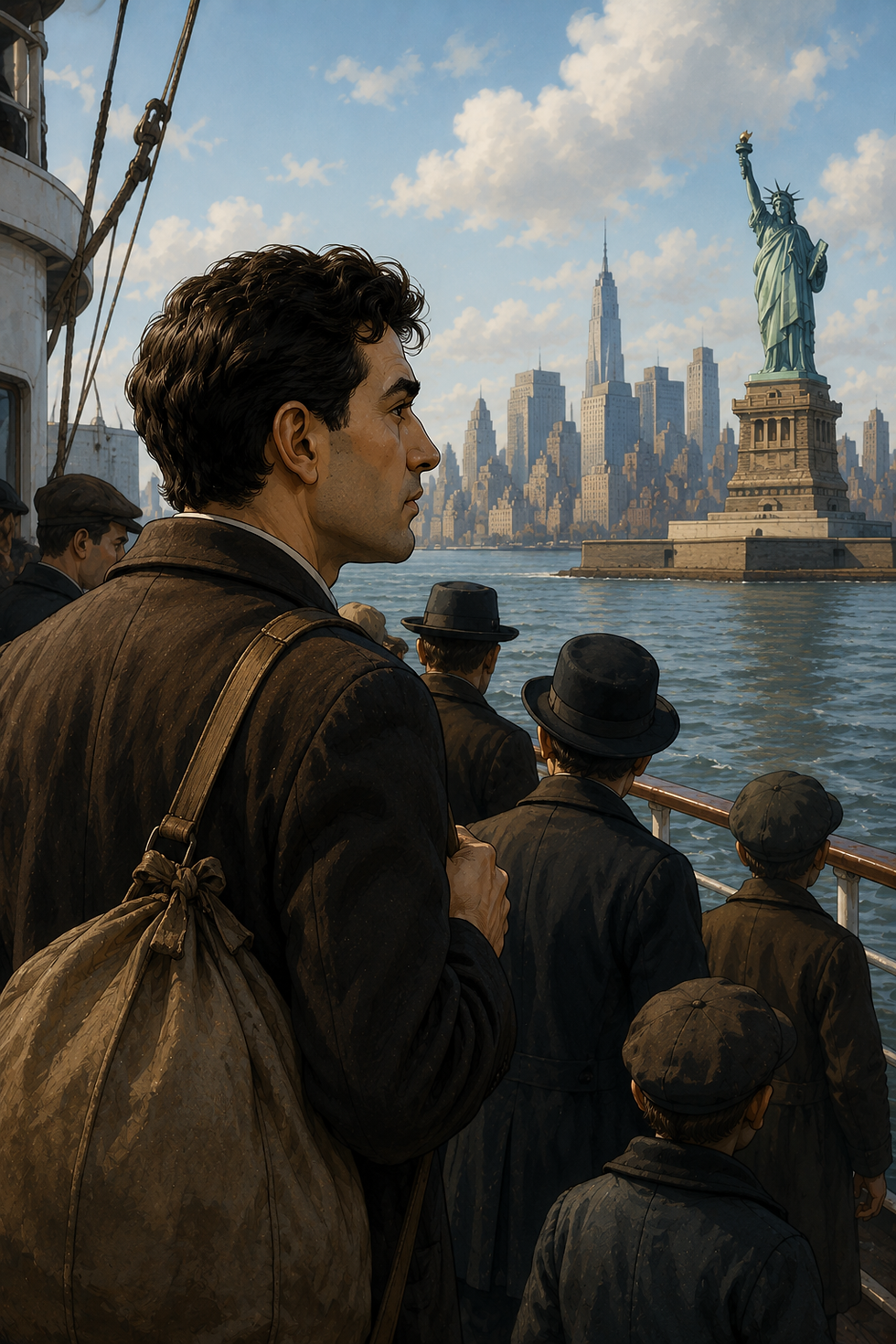
I was born in 1891 in Torremaggiore, Italy, into a poor farming family. Life was difficult, and opportunities were limited. Like many young men of my generation, I dreamed of a better future. In 1908, I left my homeland and crossed the Atlantic to the United States. I believed America was a place where hard work could build a better life, regardless of where a person was born.
Building a New Life
After arriving in America, I worked long hours in factories and eventually found employment as a skilled shoe worker in Massachusetts. I married, raised a family, and became active in my local immigrant community. Yet I also saw difficult working conditions, low wages, and dangerous factories. Many immigrants felt that wealthy businessmen held too much power while workers struggled. These experiences pushed me toward political activism.
My Radical Beliefs
I became involved with anarchist groups that believed governments often served the powerful rather than ordinary people. I opposed war, supported workers' rights, and believed society should be organized more fairly. These ideas were controversial, especially after World War I. I could never understand why so many people feared anyone who questioned authority. To me, challenging injustice was a responsibility, not a crime. Many Americans saw people like me as dangerous radicals, but I saw myself as a man fighting for a better world.
The Red Scare Years
The years after the war were filled with fear. Bombings carried out by a few extremists caused many Americans to suspect immigrants, radicals, and labor activists. Newspapers often portrayed foreign-born workers as threats to the nation. I watched as people became increasingly suspicious of those who spoke with accents, followed different customs, or held unpopular political beliefs. I believed America was supposed to value freedom of thought, so I struggled to understand why so many demanded conformity instead.
The Arrest
In 1920, my friend Bartolomeo Vanzetti and I were arrested and charged with robbery and murder connected to a payroll theft in South Braintree, Massachusetts. From the beginning, I believed the authorities were more interested in our political beliefs than in the evidence. During the trial, prosecutors highlighted our anarchist views and our decision to avoid military service during World War I by traveling to Mexico. I knew these actions angered many Americans, but I did not believe they made us murderers.
The Trial That Divided a Nation
As the trial continued, supporters around the world argued that prejudice against immigrants and radicals had influenced the proceedings. Others believed the jury had reached the correct verdict. The case became one of the most famous legal battles of the twentieth century. While I maintained my innocence, many people judged me not only for the crime but for my beliefs, my accent, and my background. I often wondered why so many people could not separate political disagreement from justice.
The Final Years
For years, appeals were filed while public debate continued. Writers, activists, labor leaders, and ordinary citizens protested the verdict. Yet the courts repeatedly upheld our convictions. In 1927, after seven years in prison, Bartolomeo and I were executed in the electric chair. Until the very end, I proclaimed that I had not committed the crime for which I was condemned.
Fear of Foreign Radicalism - Told by Nicola Sacco
The end of World War I should have been a time of celebration, but many Americans instead felt nervous about the future. Factories were adjusting to peacetime production, labor strikes spread across the country, and the cost of living rose sharply. At the same time, millions of immigrants continued to live and work in American cities. For many citizens, the rapid changes of the early twentieth century created uncertainty. In this atmosphere of anxiety, fears about foreign influences began to grow.
The Shock of Revolution
One event in particular captured America's attention: the Russian Revolution of 1917. In Russia, revolutionaries overthrew the government and established a communist state. To many Americans, the revolution seemed to prove that radical political movements could destroy entire nations. Newspapers filled their pages with stories about revolution, socialism, and communism. As news spread, some Americans began to worry that similar movements might appear in the United States. Fear of political extremism soon became fear of the people who were believed to support it.
Anarchists, Socialists, and Immigrants
Most immigrants came to America seeking work, freedom, and opportunity. However, a small number of immigrants were involved in radical political organizations. Because some anarchists and socialists had been born overseas, many Americans began linking foreign-born residents with dangerous political ideas. This association grew stronger after several bombings carried out by extremists in 1919. Although only a tiny fraction of immigrants supported violence, public fear often ignored such distinctions. To many people, foreign accents, unfamiliar customs, and radical politics became connected in their minds.
The First Red Scare
As concerns increased, the nation entered what became known as the First Red Scare. Government officials investigated suspected radicals, labor organizers, and political activists. Attorney General A. Mitchell Palmer led a series of raids that resulted in thousands of arrests. Many Americans applauded these actions because they believed the government was protecting the country. Others worried that constitutional rights were being ignored. The balance between security and freedom became one of the most important debates of the era.
Life Under Suspicion
For immigrants, the atmosphere could be difficult. Many people who had never broken a law found themselves viewed with suspicion simply because of where they came from or what language they spoke. Italians, Russians, Eastern Europeans, and others often faced questions about their loyalty. Employers, neighbors, and government officials sometimes treated immigrants differently because they feared foreign influence. In many communities, being an immigrant became more challenging as public distrust grew.
The Sacco and Vanzetti Connection
It was in this environment that Bartolomeo Vanzetti and I were arrested in 1920. Whether people believed we were guilty or innocent, our case quickly became tied to the larger fears of the period. We were immigrants, we held anarchist beliefs, and we lived during a time when many Americans feared radicalism. Around the world, observers debated whether prejudice against immigrants and political dissenters had influenced our trial. Our case became one of the most famous symbols of the tensions that defined the era.
A Lasting Legacy
The fear of foreign radicalism helped shape American politics throughout the 1920s. It influenced immigration laws, government policies, and public attitudes toward newcomers. The events of those years remind us how easily fear can spread during uncertain times. They also show how difficult it can be for a society to distinguish between a small number of dangerous individuals and the millions of peaceful people who simply hope to build better lives. The story of this period is not only about politics—it is about how fear can change the way a nation sees its neighbors.

My Name is Fiorello La Guardia: Congressman and Mayor of New York City
I was born in New York City in 1882 to an Italian father and a Jewish mother. My family moved often while I was growing up, and I spent part of my childhood in the American West and on military posts where my father served as a bandmaster. Because of my mixed heritage and unusual upbringing, I learned early that people from different backgrounds could live and work together. I spoke several languages and never saw immigrants as outsiders. To me, they were simply Americans in the making.
Finding My Place in Public Service
As a young man, I worked for the United States government in immigration offices and later became a lawyer. These experiences allowed me to meet people arriving from all over the world, each carrying hopes for a better life. I saw hardworking families willing to sacrifice everything for opportunity. Their stories convinced me that America became stronger when it welcomed newcomers. I could never understand why some people viewed immigrants as threats when so many were contributing to the nation's growth.
Entering Politics
I entered politics during a time when powerful political machines controlled many cities. I built a reputation as an independent reformer who challenged corruption wherever I found it. In Congress, I often fought for workers, immigrants, and those who lacked political influence. This earned me supporters among ordinary citizens but also enemies among powerful politicians. I was outspoken and energetic, and some critics believed I was too willing to challenge established traditions. I believed that if a system was unfair, it should be changed rather than protected.
Fighting Immigration Restrictions
During the 1920s, Congress debated laws that restricted immigration from many parts of Europe. I strongly opposed these measures. I argued that America had been built by immigrants and that judging people based on where they were born was unfair and shortsighted. Many Americans supported the new quotas because they feared cultural change or believed certain groups would not assimilate. I genuinely struggled to understand these arguments. To me, loyalty, hard work, and character mattered far more than ancestry.
A Voice Against Prejudice
I also spoke out against religious and ethnic discrimination. Catholics, Jews, Italians, Eastern Europeans, and many other groups faced suspicion during the 1920s. Organizations promoting nativism gained influence, and many citizens wanted a narrower definition of what it meant to be American. I rejected that idea. I believed America was strongest when people from different backgrounds united under shared principles of liberty and opportunity. Critics sometimes accused me of being too sympathetic to immigrants, but I considered diversity one of the nation's greatest strengths.
Mayor During Difficult Times
In 1933, I was elected mayor of New York City during the depths of the Great Depression. The city faced enormous challenges, including unemployment, poverty, and failing infrastructure. I worked closely with President Franklin D. Roosevelt and New Deal programs to modernize the city. We built parks, airports, roads, and public housing. Some opponents believed government had become too involved in people's lives. I disagreed. When families were suffering and cities were struggling, I believed government had a responsibility to act.
Leadership During War
During World War II, I helped prepare New York for possible emergencies and encouraged citizens to support the war effort. The city remained a symbol of American resilience. Through every challenge, I tried to bring energy and optimism to public service. I believed leaders should solve problems directly rather than spend their time arguing about them.
The Legacy of Earlier Immigration Waves - Told by Fiorello La Guardia
Between the 1880s and the outbreak of World War I, the United States experienced one of the largest immigration movements in its history. Millions of people arrived from southern and eastern Europe, including Italians, Poles, Russians, Greeks, Hungarians, Croatians, Slovaks, and many others. Unlike earlier generations of immigrants who had often come from northern and western Europe, these newcomers spoke different languages, practiced different customs, and frequently followed the Catholic, Orthodox, or Jewish faiths. Their arrival transformed American cities and helped shape the nation that emerged in the twentieth century.
Leaving the Old World Behind
Most of these immigrants did not leave their homes because they wanted adventure. They left because they faced poverty, political unrest, religious discrimination, military conscription, or limited opportunities. Many sold their possessions to pay for passage across the Atlantic. The journey itself could be difficult, with families crowded into steerage compartments aboard large steamships. Yet they endured these hardships because America represented hope. They believed that through hard work, they could build a better future for themselves and their children.
Ellis Island and the First Steps in America
For millions, the first sight of America was New York Harbor and the towering Statue of Liberty. At places such as Ellis Island, immigrants underwent inspections before being allowed to enter the country. Most passed through within hours, but many arrived nervous and uncertain about what awaited them. Some knew no English and had little money. Nevertheless, they stepped into a nation that offered opportunities unavailable in much of Europe. Their first days in America often became stories passed down through generations.
Building America's Cities and Industries
These immigrants played a vital role in the growth of the United States. They worked in steel mills, coal mines, textile factories, railroads, and construction projects. They helped build bridges, tunnels, roads, and skyscrapers that became symbols of American progress. The work was often dangerous and exhausting, but immigrant labor helped fuel the nation's rapid industrial expansion. Entire neighborhoods grew around these communities, creating vibrant centers of culture, commerce, and family life.
Challenges and Discrimination
Success did not come easily. Many immigrants faced prejudice from those who viewed them as outsiders. Newspapers sometimes portrayed them as criminals, radicals, or people unwilling to assimilate. Signs reading "No Italians Need Apply" or similar messages reflected the discrimination many encountered. Religious prejudice against Catholics and Jews was common. Despite these obstacles, immigrant families worked hard to establish themselves and often placed enormous importance on education, community organizations, and family loyalty.
Changing America from Within
As immigrant communities grew, they influenced American culture in countless ways. They introduced foods, music, traditions, businesses, and religious institutions that enriched local communities. Political leaders, business owners, labor organizers, artists, and educators emerged from immigrant backgrounds. By the 1920s, many children of immigrants were attending schools, serving in the military, and participating fully in American life. Their experiences demonstrated that newcomers could become an important part of the nation's future while still honoring their heritage.

My Name is Harry H. Laughlin: Eugenics Researcher & Restriction Advocate
I was born in Iowa in 1880 and grew up during a period when Americans were becoming increasingly interested in science, agriculture, and heredity. As a young man, I studied biology and agriculture and became fascinated by the idea that traits could be passed from one generation to the next. Many scientists of my era believed that society could be improved through careful study of heredity, and I became convinced that science could help solve many of the nation's social problems.
The Rise of Eugenics
In the early twentieth century, I joined the growing eugenics movement. Eugenics was the belief that human populations could be improved by encouraging certain traits and discouraging others. At the time, many respected academics, politicians, and reformers supported these ideas. I worked at the Eugenics Record Office and spent years gathering statistics and reports that I believed demonstrated hereditary patterns in society. I saw myself as a scientist following evidence rather than as a political activist.
My Influence in Washington
As my reputation grew, I was invited to testify before Congress on immigration issues. I argued that large numbers of immigrants from certain regions of the world would change the nation's character and place burdens on society. I believed immigration policies should favor groups that I considered more easily assimilated into American life. Many lawmakers found my testimony persuasive, and my research influenced debates that eventually contributed to restrictive immigration laws during the 1920s.
The Sterilization Debate
One of my most controversial positions involved compulsory sterilization programs. I argued that individuals with certain hereditary conditions should not pass those traits to future generations. I drafted model legislation that several states used when creating sterilization laws. At the time, I genuinely believed these policies would reduce suffering and improve society. I could not understand why critics viewed such measures as violations of individual rights. To me, the needs of society seemed more important than the concerns of any one individual.
Criticism and Opposition
As the years passed, more people challenged the assumptions behind eugenics. Religious leaders, civil rights advocates, scientists, and many ordinary citizens questioned both the morality and the scientific validity of the movement. They argued that poverty, crime, and illness often had social causes rather than purely hereditary ones. I often dismissed these criticisms because I believed the evidence supported my conclusions. Looking back, I can see that I was often too confident in ideas that had not been fully tested.
International Controversy
Perhaps the most troubling chapter of my life came when some of my writings and research were admired by leaders in Nazi Germany. Their government adopted racial policies that went far beyond anything I publicly advocated. At the time, I focused on what I considered scientific questions and paid little attention to how such ideas could be expanded into systems of oppression. Many people later viewed this connection as deeply disturbing, and history has judged these associations harshly.
The Fall of Eugenics
By the late 1930s and 1940s, growing scientific research began to undermine many of the claims that eugenics supporters had made. After World War II, the horrors committed by Nazi Germany caused much of the world to reject eugenics entirely. Ideas that had once been widely accepted by many academics and policymakers became symbols of prejudice and discrimination. The movement that had once seemed modern and scientific rapidly lost credibility.
Nativism Returns - Told by Harry H. Laughlin
During the years following World War I, many Americans felt that their country was changing faster than ever before. Cities were growing rapidly, new technologies were transforming daily life, and millions of immigrants from southern and eastern Europe had settled in the United States during the previous decades. To some citizens, these developments represented progress and opportunity. To others, they created uncertainty. Many people began to wonder whether the traditions and values they associated with America were being altered by forces beyond their control.
What Was Nativism?
Nativism was the belief that the interests of native-born Americans should take priority over those of immigrants. Although nativist movements had appeared throughout American history, they gained renewed strength during the 1920s. Supporters argued that immigration should be limited to protect American culture, institutions, and social stability. They feared that large numbers of newcomers might not fully adopt American customs and could weaken national unity. These concerns became increasingly influential in politics and public debate.
The Impact of War and Revolution
The First World War and the Russian Revolution intensified these fears. Americans watched governments collapse in Europe and saw radical political movements gain power overseas. News reports about communism, socialism, anarchism, and labor unrest convinced many people that dangerous ideas could spread across national borders. Because some political radicals were immigrants, many citizens began connecting immigration with political extremism. While most immigrants had no connection to revolutionary movements, public fear often treated these groups as if they were linked.
Cultural and Religious Concerns
Many native-born Americans also worried about cultural change. Earlier waves of immigrants had largely come from northern and western Europe, while newer arrivals often came from Italy, Poland, Russia, Greece, and other parts of southern and eastern Europe. These immigrants frequently spoke different languages and practiced different religious traditions, particularly Catholicism, Eastern Orthodoxy, and Judaism. Some Americans feared that these differences would make assimilation more difficult and permanently alter the nation's cultural identity.
The Rise of Restrictionist Thinking
During this period, a growing number of academics, politicians, and public figures argued that immigration should be more carefully controlled. Some relied on cultural arguments, while others used theories that they claimed were based on science and heredity. These ideas gained support among voters who believed that limiting immigration would preserve social order and national character. Such arguments played a significant role in shaping immigration policy during the 1920s, particularly as Congress debated new restrictions.
The Immigration Debate Reaches Washington
By the early 1920s, concerns about immigration had become a major political issue. Legislators received pressure from citizens who wanted stricter controls on who could enter the country. Supporters of restrictions argued that immigration levels should be reduced and that admissions should favor certain regions of the world. These debates eventually led to major immigration laws that dramatically changed who could legally enter the United States. The decisions made during this decade would influence immigration policy for generations.
The Rise of Eugenics and “Scientific” Arguments - Told by Harry H. Laughlin
In the late nineteenth and early twentieth centuries, many people believed that science could solve nearly every problem facing society. Advances in medicine, agriculture, and industry had transformed daily life, leading many scholars to believe that human society could also be improved through scientific methods. Out of this optimism emerged a movement known as eugenics. Supporters claimed that human traits such as intelligence, health, and behavior were largely inherited and that society could be strengthened by encouraging certain traits while discouraging others.
The Influence of Heredity Studies
Eugenics grew from the study of heredity, particularly after scientists rediscovered the work of Austrian monk Gregor Mendel. Mendel's research showed how some traits could be passed from parents to children. Many eugenicists believed these discoveries could be applied to entire populations. They argued that social problems such as poverty, crime, and mental illness were often inherited rather than influenced by environment, education, or economic conditions. Today, historians recognize that these conclusions greatly oversimplified the complex causes of human behavior.
Ranking Human Groups
As the movement expanded, some eugenicists began classifying people into groups they considered more or less desirable. They often judged entire populations based on nationality, ethnicity, race, religion, or social class. Many argued that northern and western Europeans possessed superior traits compared to immigrants arriving from southern and eastern Europe. These claims were presented using statistics, charts, and reports that appeared scientific to many observers. However, much of the evidence was flawed, biased, or based on assumptions rather than objective research.
Eugenics and Immigration Policy
During the 1920s, eugenic arguments became closely connected to immigration debates. Supporters of immigration restrictions argued that limiting newcomers from certain countries would protect the nation's future. Congressional hearings included testimony from eugenicists who claimed that some immigrant groups were less capable of assimilation or more likely to contribute to social problems. These arguments helped influence public opinion and contributed to laws that restricted immigration from many parts of the world.
The Appeal of “Scientific” Authority
One reason eugenics gained influence was because it appeared to be based on science. Many citizens trusted experts and assumed that scientific language guaranteed accuracy. Politicians, educators, journalists, and reformers often cited eugenic studies when discussing public policy. Few people possessed the scientific training needed to evaluate these claims critically. As a result, ideas that are now widely discredited were accepted by many respected institutions and leaders during the era.
The Removal of the “Undesirable”Activists, like Margaret Sanger, embraced many eugenic ideas that were popular during the early twentieth century. While she is best known for promoting birth control, she also argued that society would benefit if reproduction among those she considered "unfit" or "undesirable," including some of the poor and those with certain disabilities, was reduced. Sanger worked with prominent eugenicists, spoke before eugenics organizations, and viewed birth control and sterilization as a tool for improving society through selective reproduction. Her views were part of a larger eugenics movement that extended across the United States and Europe. Although she did not openly support the genocidal policies later carried out by Nazi Germany, historians note that Nazi racial theorists drew upon ideas circulating within the broader American and European eugenics movements, making her association with eugenics an enduring debate.
Growing Criticism
Not everyone accepted the conclusions of eugenics. Religious leaders, civil rights advocates, some scientists, and many immigrant communities challenged the movement. Critics argued that human worth could not be measured by ancestry and that social conditions often played a greater role in shaping people's lives than heredity alone. As genetics advanced, researchers increasingly discovered that many eugenic assumptions lacked scientific support. Evidence began to show that intelligence, behavior, and success were influenced by a combination of factors rather than simple inheritance.
A Troubling Legacy
The reputation of eugenics suffered further damage when governments used its ideas to justify discriminatory policies. In the United States, eugenic theories influenced sterilization laws and immigration restrictions. Overseas, some of these concepts were adopted and expanded by Nazi Germany, which used racial theories to justify persecution and mass murder. After World War II, the connection between eugenics and these atrocities caused many people to reject the movement entirely.
Lessons from the Eugenics Era
The rise of eugenics remains one of the most important examples of how scientific language can be misused to support prejudice and discrimination. Many people who promoted these ideas believed they were acting in the public interest, yet their conclusions often reflected cultural biases rather than objective truth. Today, historians study eugenics as a cautionary tale about the dangers of allowing assumptions, fear, and flawed science to shape public policy. The story reminds us that scientific claims should always be questioned, tested, and examined carefully before being used to judge entire groups of people.
The Emergency Quota Act of 1921 - Told by Calvin Coolidge
In the years immediately following World War I, immigration became one of the most debated issues in the United States. For decades, millions of newcomers had entered the country, helping build its factories, railroads, mines, and cities. Yet by 1920, many Americans believed the nation was changing too quickly. Concerns about labor unrest, political radicalism, housing shortages, and cultural differences led citizens to question whether immigration should continue at the same pace. These concerns eventually pushed Congress toward a historic decision.
The Demand for Action
The years after the war were marked by uncertainty. The First Red Scare had convinced many Americans that foreign radicals might threaten national security. At the same time, large numbers of immigrants from southern and eastern Europe continued to seek entry into the United States. Newspapers, politicians, and civic organizations debated whether the country could successfully absorb so many newcomers. Calls for immigration restrictions grew louder, and lawmakers began searching for a way to reduce immigration without stopping it entirely.
America's First Quota System
In 1921, Congress passed the Emergency Quota Act, the first major immigration quota law in American history. Rather than banning immigration altogether, the law limited the number of immigrants who could enter from each country. The quota allowed annual immigration equal to 3 percent of the number of foreign-born persons from that nation who were already living in the United States according to the 1910 census. This approach dramatically reduced immigration from many regions while favoring countries that had sent large numbers of immigrants in earlier decades.
Who Was Most Affected?
The law particularly affected immigrants from southern and eastern Europe. Nations such as Italy, Poland, Greece, and Russia faced significant reductions in the number of people allowed to immigrate. Meanwhile, countries from northern and western Europe generally received larger quotas because more of their citizens had already settled in America before 1910. The law reflected the belief held by many lawmakers that immigration should be carefully managed and that some immigrant groups were easier to assimilate than others.
A Family's Dream Delayed
For countless families overseas, the law changed their futures overnight. Relatives who expected to join family members in America suddenly found themselves waiting months or even years for opportunities that had once seemed within reach. Steamship companies, immigration officials, and foreign governments all had to adjust to the new system. The flow of people that had shaped American society for generations slowed considerably, marking a major turning point in the nation's immigration history.
Supporters and Critics
Supporters of the Emergency Quota Act argued that it would protect jobs, reduce social tensions, and give immigrants already in the country time to assimilate into American society. Critics, however, argued that the law discriminated against certain nationalities and unfairly favored others. They believed America had long been a nation of opportunity and that the new quotas betrayed that tradition. These disagreements would continue throughout the decade as immigration remained a deeply divisive issue.
The Beginning of a New Era
Although lawmakers described the legislation as temporary, the Emergency Quota Act established a framework that would shape future immigration policy. It demonstrated that the federal government was willing to actively regulate immigration through numerical limits. Just a few years later, Congress would pass even stricter restrictions through the Immigration Act of 1924. Together, these laws fundamentally changed who could come to America and how immigration would be managed.
Debating Who Could Become American - Told by Fiorello La Guardia
During the 1920s, one of the most important questions facing the United States was surprisingly simple: Who could become American? The nation had welcomed millions of immigrants over previous generations, but rapid social changes, political fears, and cultural differences caused many citizens to reconsider what it meant to belong. The debate touched nearly every aspect of life, including citizenship, loyalty, language, religion, and national identity. For many Americans, the answer seemed obvious. For others, it became one of the most divisive issues of the decade.
Citizenship Beyond a Piece of Paper
Becoming an American citizen involved more than completing legal paperwork. Many people believed citizenship required a commitment to the nation's laws, institutions, and values. Immigrants who sought naturalization studied American history, learned about government, and took oaths of allegiance. Yet disagreements remained. Some citizens argued that immigrants could never fully understand American traditions, while others pointed out that generations of newcomers had successfully become loyal citizens. The debate often centered on whether citizenship was determined by birthplace, ancestry, or commitment to the nation.
Questions of Loyalty
The First World War and the First Red Scare intensified concerns about loyalty. Many Americans worried that immigrants might remain more loyal to their countries of birth than to the United States. Newspapers frequently discussed foreign political movements, revolutions, and labor unrest. As a result, some citizens viewed immigrant communities with suspicion. Yet millions of immigrants had served in the American military, worked in essential industries, and contributed to their communities. The challenge was determining whether loyalty should be judged by a person's background or by their actions.
The Language Debate
Language became another major point of discussion. Many schools, civic organizations, and government leaders encouraged immigrants to learn English as quickly as possible. Supporters argued that a common language helped unite a diverse nation and allowed newcomers to participate fully in American society. However, immigrant families often continued speaking their native languages at home while learning English in public life. Across cities and towns, children frequently grew up speaking two languages, serving as a bridge between their family's heritage and their new country.
The Meaning of Assimilation
Assimilation was one of the most debated ideas of the era. Some Americans believed immigrants should completely abandon their old customs and adopt American traditions. Others argued that immigrants could remain proud of their heritage while embracing American citizenship. Neighborhoods across the country reflected this balance. Italian festivals, Jewish synagogues, Polish churches, and Greek businesses flourished while their members also participated in American schools, elections, and civic life. The question became not whether immigrants could become Americans, but how much of their old identity they should retain.
Religion and National Identity
Religious differences also shaped the debate. Many native-born Americans were Protestant, while many newer immigrants were Catholic, Jewish, or Eastern Orthodox. Some citizens feared these religious differences would divide the nation. Yet immigrant communities built churches, synagogues, schools, and charities that became important parts of American society. Over time, these institutions helped demonstrate that loyalty to the United States could coexist with a variety of religious traditions.
A Nation Decides Its Future
Throughout the 1920s, discussions about citizenship, loyalty, language, and assimilation influenced immigration laws and public attitudes. Some Americans favored stricter restrictions, believing they would preserve national unity. Others argued that the nation's strength came from its ability to welcome people from many backgrounds. These debates were about more than immigration policy—they were about defining the American identity itself.
Americanization Campaigns - Told by Fiorello La Guardia
During the late nineteenth century and the early decades of the twentieth century, millions of immigrants arrived in the United States seeking opportunity and freedom. As immigrant communities grew, many Americans began asking how newcomers could successfully adapt to life in their new country. Out of this question emerged a movement known as Americanization. These campaigns sought to help immigrants learn English, understand American government, and participate fully in civic life. Supporters viewed these efforts as a way to strengthen national unity in an increasingly diverse nation.
Learning the English Language
One of the most important parts of Americanization involved teaching English. Across the country, schools, churches, settlement houses, libraries, and employers offered language classes to immigrants. Many adults attended evening lessons after working long hours in factories, mines, or construction jobs. Learning English allowed newcomers to communicate with employers, understand newspapers, and participate more easily in community life. For many immigrant families, English became the key that opened doors to greater opportunities.
Preparing for Citizenship
Citizenship programs became another major focus of Americanization campaigns. Immigrants seeking naturalization studied the Constitution, American history, and the structure of government. Classes taught newcomers about voting, civic responsibilities, and the rights guaranteed under the law. Public ceremonies celebrating new citizens often attracted large crowds and became important community events. These programs reflected the belief that informed and engaged citizens were essential to a healthy democracy.
The Influence of Schools and Employers
Public schools played a major role in Americanization efforts, especially for the children of immigrants. Students learned English, studied American history, and participated in patriotic activities. Employers also became involved. Some large companies offered classes designed to help immigrant workers understand workplace rules, safety procedures, and American customs. In some cases, businesses believed that better-integrated workers would be more productive and less likely to participate in labor unrest.
Encouraging American Customs
Americanization programs often encouraged immigrants to adopt customs that many citizens considered traditionally American. Organizers promoted celebrations of national holidays, civic participation, and familiarity with American institutions. However, these efforts sometimes created tension. Many immigrants wanted to embrace their new country while preserving their languages, foods, traditions, and religious practices. Families often found themselves balancing two worlds, maintaining ties to their heritage while adapting to life in America.
Successes and Criticisms
Many immigrants benefited from Americanization programs. Learning English and understanding American institutions helped newcomers find jobs, pursue education, and become active members of their communities. At the same time, critics argued that some programs placed too much pressure on immigrants to abandon their cultural identities. They questioned whether becoming American required giving up traditions that families had cherished for generations. This debate became one of the central questions of immigration during the 1920s.
Religious Prejudice in the 1920s - Told by Nicola Sacco
By the 1920s, the United States had become one of the most religiously diverse nations in the world. Millions of immigrants arriving from southern and eastern Europe brought with them traditions rooted in Roman Catholicism, Judaism, Eastern Orthodoxy, and other faiths. For generations, most Americans had been Protestant Christians, and many communities were unfamiliar with these newer religious groups. While countless Americans welcomed their new neighbors, others viewed these changes with suspicion. Religious differences became one of the most important social issues of the decade.
Fear of the Unfamiliar
Much of the prejudice directed at religious minorities grew from fear of the unfamiliar. Many Americans had little direct contact with Catholics, Jews, or Orthodox Christians before large immigration waves reshaped cities and towns. Rumors, stereotypes, and misinformation spread easily. Some people questioned whether Catholics would be loyal to the United States or to the Pope in Rome. Others repeated false claims about Jewish communities and their influence in business, politics, or finance. These fears often reflected misunderstanding rather than reality.
The Experience of Catholic Immigrants
Catholics made up a large portion of the immigrants arriving from countries such as Italy, Poland, Ireland, and Hungary. Although Catholics had lived in America since colonial times, many still faced discrimination. Some employers preferred Protestant workers, while certain social organizations excluded Catholics from membership. Anti-Catholic books, speeches, and political campaigns became common in some parts of the country. Yet Catholic communities continued to grow, building churches, schools, hospitals, and charities that became important parts of American life.
Mormon Converts and Nativist Suspicion
Another religious group that faced suspicion was the Church of Jesus Christ of Latter-day Saints, commonly known as the Mormons. During the nineteenth and early twentieth centuries, tens of thousands of people across Great Britain, Scandinavia, and other parts of Europe converted to the faith. Many of these converts immigrated to the United States, particularly to Utah and other western communities. Nativists often distrusted both the immigrants and their faith, viewing Mormonism as foreign and separate from traditional Protestant Christianity. Some Americans worried that Mormon immigrants would be more loyal to the church than to the nation itself, reflecting the same fears and misunderstandings that many other religious minority groups experienced during this era.
Challenges Facing Jewish Americans
Jewish immigrants also faced significant prejudice during the 1920s. Many had fled persecution and violence in Eastern Europe, hoping to find safety and opportunity in America. Instead, some encountered barriers in employment, education, housing, and social organizations. Universities sometimes limited the number of Jewish students they admitted. Certain neighborhoods and clubs excluded Jewish families. Despite these obstacles, Jewish Americans made important contributions to business, science, education, entertainment, and public service throughout the decade.
The Ku Klux Klan and Religious Intolerance
The resurgence of the Ku Klux Klan during the 1920s demonstrated how deeply religious prejudice had become embedded in some parts of American society. Unlike the Reconstruction-era Klan, the new organization targeted not only African Americans but also Catholics, Jews, immigrants, and other groups it considered threats to traditional American values. Millions joined the organization during the decade. The Klan's popularity revealed that fears about religion, immigration, and cultural change were often closely connected.
Politics and Public Life
Religious prejudice even influenced national politics. One of the most famous examples came during the 1928 presidential election when Governor Al Smith became the first major-party Catholic nominee for president. Opponents frequently focused on his faith rather than his policies. Many voters worried that a Catholic president would somehow place religious authority above the Constitution. The election demonstrated how religious identity could shape political debates during the era.
Communities Persevere
Despite discrimination, religious minorities continued building strong communities across the nation. Churches, synagogues, schools, newspapers, and charitable organizations helped families preserve their faith while becoming active participants in American society. Many immigrants balanced pride in their religious traditions with loyalty to their new homeland. Their success challenged stereotypes and gradually helped reduce some of the fears that had fueled prejudice.
The Immigration Act of 1924 - Told by Calvin Coolidge
By the early 1920s, immigration had become one of the most debated issues in the United States. Millions of people had entered the country during the previous forty years, transforming cities, industries, and communities. While many Americans celebrated the nation's diversity and growth, others worried that immigration was occurring too rapidly. Concerns about economic competition, political radicalism, cultural change, and national identity fueled demands for stricter controls. These debates ultimately led Congress to pass one of the most significant immigration laws in American history.
Building on Earlier Restrictions
The Immigration Act of 1924 did not emerge suddenly. It followed the Emergency Quota Act of 1921, which had already established limits on immigration based on nationality. Many lawmakers believed those restrictions had not gone far enough. They argued that the government needed a permanent system to regulate immigration and maintain what they considered the nation's social and cultural stability. As a result, Congress began working on a more comprehensive law that would fundamentally reshape immigration policy.
How the New Law Worked
The Immigration Act of 1924 established a new quota system that limited the number of immigrants who could enter the United States each year from specific countries. The law based quotas on the 1890 census rather than the more recent 1910 census. This change was extremely important because the population in 1890 included far fewer immigrants from southern and eastern Europe. As a result, the law significantly reduced immigration from countries such as Italy, Poland, Greece, and Russia while allowing larger quotas for immigrants from northern and western European nations.
Who Was Excluded
The law's impact extended beyond Europe. One of its most significant provisions effectively barred immigration from most Asian countries by excluding immigrants who were ineligible for citizenship under existing laws. This particularly affected immigrants from Japan and caused diplomatic tensions between the United States and Japan. For many families around the world, the law closed opportunities that had once seemed available, separating relatives and limiting pathways to a new life in America.
Supporters of the Act
Supporters argued that the Immigration Act of 1924 would protect American jobs, reduce social tensions, and give immigrant communities already in the country more time to assimilate. Many believed that limiting immigration would strengthen national unity and preserve American traditions. These arguments gained support from citizens who feared rapid cultural change and from organizations that promoted immigration restriction. To them, the law represented a practical solution to challenges they believed the nation faced.
Criticism and Controversy
Critics viewed the law very differently. They argued that the quota system unfairly favored certain nationalities while discriminating against others. Many believed the legislation contradicted America's long-standing reputation as a land of opportunity. Religious leaders, immigrant organizations, labor groups, and civil rights advocates criticized the law for treating people differently based on their birthplace rather than their character or abilities. The debate over fairness and national identity became one of the defining political discussions of the decade.
Border Restrictions and the Creation of Modern Enforcement - Told by Coolidge
For much of the nineteenth century, the United States had relatively few restrictions on who could enter the country. Millions of immigrants arrived through ports such as New York, Boston, Philadelphia, and San Francisco with limited federal oversight. By the early twentieth century, however, attitudes were changing. As immigration increased and new laws restricted entry from certain regions, government officials faced a difficult question: How could these laws be enforced? The answer led to the creation of a more organized system of border control that would shape immigration policy for generations.
From Open Borders to Regulation
The first major immigration laws focused primarily on processing arrivals at ports and inspecting travelers before they entered the country. As restrictions expanded during the 1910s and 1920s, lawmakers realized that limiting immigration required more than passing legislation. If quotas and exclusion laws were to be effective, the government needed a way to monitor who entered the country and where they crossed the border. This realization transformed immigration enforcement from a relatively small administrative task into a major federal responsibility.
The Impact of New Immigration Laws
The Emergency Quota Act of 1921 and the Immigration Act of 1924 dramatically reduced the number of immigrants who could legally enter the United States from many countries. Yet these laws also created new incentives for people to seek alternative ways into the country. Officials became increasingly concerned about unauthorized crossings along both the northern and southern borders. While most immigrants continued to follow legal procedures, the government believed stronger enforcement was necessary to uphold the new restrictions.
The Birth of the U.S. Border Patrol
One of the most significant developments came in 1924 with the creation of the United States Border Patrol. Established under the Department of Labor, the new agency was tasked with preventing unauthorized entry between official ports of entry. Early Border Patrol agents often worked in remote and difficult conditions, traveling on horseback, by automobile, and sometimes on foot across vast stretches of desert, mountains, and open land. Their mission was to enforce immigration laws that had become increasingly complex and restrictive.
Monitoring the Northern and Southern Borders
Although modern discussions often focus on the southern border, enforcement efforts during the 1920s targeted both the border with Mexico and the border with Canada. Officials monitored railroads, roads, and isolated crossing points where individuals might attempt to enter without inspection. The challenges were enormous. Thousands of miles of border, limited personnel, and rugged terrain made enforcement difficult. Nevertheless, the federal government was now far more involved in border security than it had been during earlier periods of American history.
Technology, Records, and Inspection
The expansion of border control also brought improvements in recordkeeping and identification procedures. Immigration officials increasingly relied on documents, inspections, photographs, and detailed records to track arrivals. Ports of entry became more organized, and federal agencies worked together to monitor movement across the nation's borders. These developments marked the beginning of many systems that continue to influence immigration enforcement today.
Debates Over Security and Opportunity
Not everyone agreed with the expansion of border restrictions. Supporters argued that stronger enforcement protected national security, upheld immigration laws, and ensured orderly entry into the country. Critics contended that the new system made it more difficult for families to reunite and limited opportunities for people seeking a better life. The debate reflected larger questions about immigration, citizenship, and the role of government—questions that would continue long after the 1920s.
The Foundation of Modern Border Control
The border enforcement measures of the 1920s represented a major turning point in American history. Before this period, immigration policy focused largely on welcoming newcomers and processing arrivals. Afterward, enforcement became a central part of immigration policy itself. The creation of the Border Patrol, the expansion of inspections, and the development of modern recordkeeping systems laid the foundation for the border control structure that exists today. Understanding these changes helps explain how immigration enforcement evolved from a limited function into a major responsibility of the federal government.
The Sacco and Vanzetti Trial - Told by Nicola Sacco
On April 15, 1920, two employees of the Slater and Morrill Shoe Company in South Braintree, Massachusetts, were carrying a payroll worth more than $15,000 when armed men attacked them. Both men were killed, and the robbers escaped with the money. The crime quickly attracted public attention. Police searched for suspects, determined to find those responsible for one of the region's most notorious robberies. What followed would become one of the most famous and controversial trials in American history.
The Arrest of Two Immigrants
A few weeks later, Bartolomeo Vanzetti and I were arrested. We were Italian immigrants, factory workers, and followers of anarchist political ideas. At the time, the United States was experiencing the First Red Scare, a period marked by fears of radical political movements, foreign revolutionaries, and social unrest. Because of our political beliefs and immigrant backgrounds, many people immediately viewed us with suspicion. The charges against us centered on the South Braintree robbery and murders, but the case quickly became about much more than the crime itself.
The Trial Begins
Our trial took place in 1921 before Judge Webster Thayer. Prosecutors presented witnesses, ballistics evidence, and testimony linking us to the crime. The defense challenged much of this evidence and argued that inconsistencies existed throughout the case. Yet beyond the facts of the robbery, our political views repeatedly entered the courtroom. Questions about anarchism, military service, and loyalty to the United States became part of the proceedings. Many observers believed that our beliefs influenced how the case was viewed.
A Divided Public
As news of the trial spread, Americans became deeply divided. Some believed the evidence proved our guilt and viewed the trial as a straightforward criminal case. Others believed prejudice against immigrants and radicals had shaped the investigation and court proceedings. Newspapers debated the verdict, while labor groups, intellectuals, and civil rights advocates raised concerns about fairness. What began as a murder trial gradually became a national discussion about justice, citizenship, and equal treatment under the law.
Worldwide Attention
The controversy soon expanded beyond the United States. Demonstrations took place in cities across Europe, Latin America, and North America. Writers, professors, politicians, and ordinary citizens followed the case closely. Supporters argued that we had become symbols of the hostility directed toward immigrants during the 1920s. Critics of these campaigns maintained that the courts had acted properly and that public protests should not influence legal decisions. Few criminal cases in American history had attracted such international attention.
Years of Appeals
For six years, lawyers filed appeals and requested new trials. New evidence and witness statements were presented, but the courts repeatedly upheld the convictions. Throughout this period, public debate continued. Some people viewed the case as evidence that justice was being denied to unpopular minorities. Others believed the legal system had carefully reviewed the facts and reached the correct conclusion. The disagreement showed how differently people could interpret the same events.
National Identity Debates in the Late 1920s - Told by Fiorello La Guardia
As the 1920s drew to a close, Americans found themselves debating a question that was both simple and deeply complicated: Who should be considered truly American? The nation had grown through centuries of immigration, yet many citizens worried that rapid cultural change was transforming the country too quickly. Immigration restrictions, religious prejudice, and fears about foreign influence all contributed to a larger conversation about identity. Across cities, towns, schools, churches, and political halls, Americans argued over what united the nation and who belonged within it.
Different Visions of America
For some citizens, being American was closely tied to ancestry, language, religion, and long-established traditions. They believed the country should preserve the customs brought by earlier generations, particularly those from northern and western Europe. Others argued that America was not defined by birthplace or bloodline but by shared principles such as liberty, democracy, opportunity, and citizenship. This disagreement became one of the most important social debates of the decade, influencing politics, education, and immigration policy.
The Children of Immigrants
One of the most fascinating parts of this story was the experience of second-generation Americans. Millions of children grew up in homes where Italian, Polish, Greek, Russian, Yiddish, or other languages were spoken while they attended English-speaking schools during the day. They celebrated American holidays while also honoring family traditions from overseas. Many served in the military, attended universities, started businesses, and entered public life. Their experiences challenged the idea that a person could belong to only one culture at a time.
Contributions That Shaped the Nation
By the late 1920s, immigrants and their children had become essential to American society. They worked in factories, built roads and skyscrapers, operated businesses, taught in schools, and served in government. Immigrant communities contributed music, food, art, literature, science, and entrepreneurship that enriched the nation. Entire neighborhoods became centers of economic and cultural activity. Even those who criticized immigration often benefited from the labor, creativity, and innovation these communities provided.
The Role of Religion and Culture
Religious diversity also played an important role in national identity debates. Catholics, Jews, Eastern Orthodox Christians, and many other groups expanded America's religious landscape. Some Americans viewed this diversity as a threat to national unity, while others saw it as evidence that freedom of religion was one of the nation's greatest strengths. Similar debates occurred over language, customs, and cultural traditions. The question was not whether immigrants influenced America—they clearly did—but whether that influence should be embraced or resisted.
Politics and Public Opinion
These debates often appeared in politics. Immigration laws, citizenship requirements, and election campaigns reflected competing visions of what America should become. The 1928 presidential campaign of Al Smith demonstrated how questions about religion, ethnicity, and cultural background could influence public opinion. Americans were not simply choosing leaders; they were also deciding how broadly or narrowly they defined national identity.
An American Story of Change
What makes this period so remarkable is that the nation was simultaneously restricting immigration while absorbing the millions who had already arrived. The children and grandchildren of immigrants were becoming teachers, lawyers, soldiers, business owners, artists, and elected officials. Their success showed that American identity was not fixed. It evolved as new groups joined the nation's story and contributed their talents and traditions.
A Debate That Continues
The national identity debates of the late 1920s never truly ended. They reflected enduring questions about citizenship, belonging, culture, and opportunity. Yet history demonstrates that immigrants helped shape nearly every aspect of modern American life. Their labor built cities, their ideas fueled innovation, and their families became part of the fabric of the nation. The debate over who is truly American ultimately reveals something important about the United States itself: it is a country continually shaped by people from many backgrounds who choose to build a common future together.
Immigration Restrictions and Their Long-Term Legacy - Told by Fiorello La Guardia and Calvin Coolidge
Looking Back at a Turning Point
Calvin Coolidge: By the 1920s, many Americans believed the nation needed time to adjust to decades of unprecedented immigration. Millions of newcomers had entered the country, cities were expanding rapidly, and fears about political unrest, cultural change, and economic competition were widespread. The quota system emerged as an attempt to slow immigration and create what supporters believed would be a more orderly process. At the time, many citizens saw these restrictions as a practical solution to concerns they believed threatened national unity.
Fiorello La Guardia: Yet those same restrictions changed the lives of millions of people around the world. Families were separated, opportunities disappeared, and entire regions faced barriers that earlier immigrants had never encountered. The debate was never simply about numbers. It was about who was considered welcome and who was not. For many immigrants and their descendants, the quota system sent a message that some nationalities were viewed more favorably than others.
The Power of Cultural Fears
Calvin Coolidge: The fears driving these policies were real to many Americans. The nation had witnessed war, revolution abroad, labor unrest, and political violence at home. Citizens worried that rapid change could weaken social stability. They feared that newcomers might struggle to assimilate or bring foreign conflicts with them. Whether those fears were justified or exaggerated, they shaped public opinion and influenced lawmakers throughout the decade.
Fiorello La Guardia: History shows that fear often has a powerful influence on public policy. Many of the concerns expressed during the 1920s reflected uncertainty about change rather than evidence about immigrant communities themselves. Most newcomers sought work, security, and opportunity. Over time, the children and grandchildren of those immigrants became soldiers, teachers, business owners, scientists, and public officials. Their contributions demonstrated that cultural differences did not prevent people from becoming loyal and productive Americans.
The Debate Over Identity
Calvin Coolidge: One lasting consequence of the 1920s immigration debate was its influence on how Americans thought about national identity. Citizens asked difficult questions: What binds a nation together? Is American identity rooted primarily in ancestry, culture, language, or civic ideals? These discussions shaped immigration policy for decades and continued to influence political debates long after the Roaring Twenties ended.
Fiorello La Guardia: Those questions remain important because America has always been a nation shaped by many peoples. Every generation has debated who belongs and how newcomers should fit into society. Yet each generation has also watched immigrants become part of the American story. The nation has repeatedly expanded its understanding of who can be considered American while remaining committed to shared principles of citizenship and democracy.
The Long Shadow of the Quota System
Calvin Coolidge: The quota system remained a major part of American immigration policy for more than forty years. It determined who could enter the country and from where they could come. These laws influenced population growth, labor markets, family reunification, and international relations. Their effects reached far beyond the decade in which they were enacted.
Fiorello La Guardia: Eventually, many Americans came to view the quota system as too restrictive and too dependent on national origin. In 1965, Congress passed sweeping immigration reforms that replaced much of the old quota structure. Those changes reflected a growing belief that immigration policy should be based less on ancestry and more on family relationships, skills, and opportunity. The debates of the 1920s helped shape the reforms that followed.
A Shared Reflection
Calvin Coolidge: The immigration restrictions of the 1920s reveal how nations respond during times of uncertainty. Leaders and citizens sought solutions to challenges they believed were significant, and those decisions influenced American society for generations. Whether praised or criticized, the policies became a defining part of the nation's history.
Fiorello La Guardia: And they remind us that every generation faces choices about identity, belonging, and opportunity. The story of immigration in America is not only about laws and borders. It is about people—families seeking better lives, communities adapting to change, and a nation continually redefining itself. The legacy of the 1920s lives on because the questions raised during that era continue to shape discussions about what it means to be American and how a diverse society can build a common future.


Comments