

9. Lessons from the Globablization Era: Music, Movies, Television, Sports, and Celebrity Culture

MTV, Grunge, Hip-Hop, and the Changing Sound of the 1990s
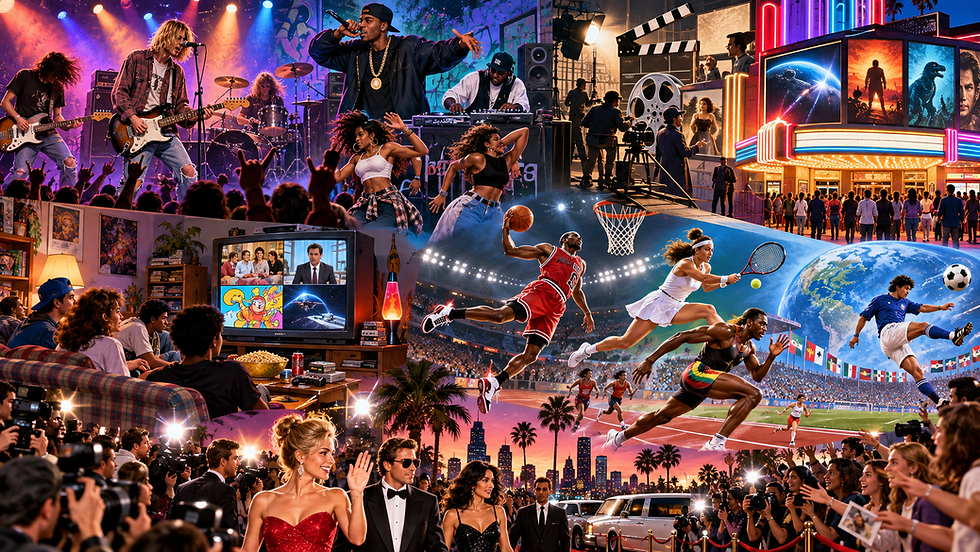
The 1990s were a decade when music seemed to change almost overnight. New sounds moved from local clubs and city neighborhoods to millions of radios, televisions, and CD players across the country. MTV had become one of the most powerful forces in youth culture, music videos could turn unknown performers into international stars, grunge challenged the polished sound of the 1980s, and hip-hop grew from a powerful urban movement into one of the dominant forms of American popular music. At the same time, country, R&B, alternative rock, and pop all reached enormous audiences, making the 1990s one of the most musically diverse decades in modern American history.
MTV Turns Music into Something You Could See
MTV had begun broadcasting in 1981, but by the 1990s it had become deeply woven into youth culture. Music videos were no longer simply advertisements for songs; they were miniature films that could shape fashion, dance, attitudes, and even the public image of an artist. Programs such as MTV's countdown shows and specialized music programs introduced viewers to new performers and genres, while artists learned that a memorable video could be almost as important as a hit song. The network helped create a generation that did not just listen to musicians—they watched them, copied their styles, and followed their personalities.
Grunge Explodes Out of Seattle
One of the most dramatic musical changes came from the Pacific Northwest. In the late 1980s and early 1990s, bands around Seattle developed a rough style that blended punk rock, heavy metal, and alternative music. The sound became known as grunge. Nirvana's 1991 album Nevermind, driven by the success of "Smells Like Teen Spirit," helped bring the movement into the mainstream. Pearl Jam, Soundgarden, and Alice in Chains soon gained large audiences as well. Their distorted guitars, emotional lyrics, and casual appearance stood in sharp contrast to the glamorous image associated with many 1980s rock performers. For many young listeners, grunge seemed raw, personal, and authentic.
Hip-Hop Becomes a National Force
Hip-hop was already well established before the 1990s, but the decade transformed it into a major part of American popular culture. Artists used rap to tell stories about neighborhood life, poverty, policing, racism, ambition, violence, family, and personal struggle. Performers such as Tupac Shakur, The Notorious B.I.G., Dr. Dre, Snoop Dogg, Nas, and Lauryn Hill reached enormous audiences. Different regions developed distinctive sounds, especially the East Coast and West Coast scenes. Hip-hop also influenced clothing, slang, dance, advertising, and film, proving that it was far more than a musical style—it had become a major cultural movement.
Music, Controversy, and the Culture Wars
The changing sound of the 1990s also created fierce debates. Some parents and politicians criticized violent or sexually explicit lyrics in rap and rock music, while musicians and free-speech advocates argued that artists should be allowed to describe difficult realities and controversial ideas. "Parental Advisory" labels became common on albums containing explicit material, and public arguments over censorship became part of the decade's broader cultural battles. These debates revealed just how influential popular music had become: Americans were arguing not merely about entertainment, but about what young people were hearing and what those songs said about society.
A Decade with No Single Sound
Although grunge and hip-hop became defining movements, the 1990s contained far more than two musical styles. Whitney Houston and Mariah Carey became major voices in pop and R&B, Garth Brooks helped bring country music to huge new audiences, and groups such as TLC and Boyz II Men dominated the charts. Later in the decade, performers such as the Backstreet Boys, NSYNC, and Britney Spears helped launch another wave of teen pop. Record stores were filled with CDs representing nearly every genre imaginable, while portable CD players made music easier to carry everywhere.
The Soundtrack of a Generation
By the end of the 1990s, American music had become more diverse, visual, commercial, and culturally influential than ever before. MTV helped turn musicians into celebrities, grunge gave young listeners a new kind of rock hero, and hip-hop grew into a cultural force that would continue expanding far beyond the decade. The music of the 1990s reflected the hopes, frustrations, conflicts, and changing identities of the people who listened to it. For millions who grew up during the decade, these songs did more than provide entertainment—they became the soundtrack to an era.
The Hip-Hop Revolution: From a Musical Movement to Mainstream Culture
The Hip-Hop Revolution transformed American music and culture during the 1990s. Hip-hop had begun decades earlier in New York City, especially in the Bronx, where DJs, MCs, breakdancers, and graffiti artists helped build a new cultural movement. By the 1990s, however, hip-hop was no longer confined to local neighborhoods or underground scenes. Rap albums climbed the charts, music videos reached millions of viewers, and hip-hop artists became some of the most recognizable celebrities in the United States.
From the Streets to the National Stage
During the late 1980s and early 1990s, rap music reached increasingly large audiences. Artists such as Public Enemy used music to discuss racism, inequality, politics, and life in Black communities, while other performers focused on storytelling, humor, competition, or everyday experiences. Record companies recognized that hip-hop could attract millions of listeners, and major labels invested heavily in rappers and producers. Radio stations and MTV gradually gave hip-hop more exposure, helping turn a regional cultural movement into a national industry.
East Coast, West Coast, and New Sounds
Hip-hop developed differently across the country. New York remained a major center, producing artists such as Nas and The Notorious B.I.G., while California became famous for a powerful West Coast sound led by artists such as Dr. Dre, Snoop Dogg, and Tupac Shakur. Southern cities also began building influential rap scenes that would become even more important in later decades. These regional styles gave hip-hop remarkable variety, with different rhythms, production techniques, slang, and stories reflecting the communities where the music was created.
Tupac, Biggie, and a Tragic Rivalry
Two of the most famous rappers of the decade were Tupac Shakur and Christopher Wallace, better known as The Notorious B.I.G. Both became enormously successful artists, but they also became associated with a highly publicized rivalry between parts of the East Coast and West Coast rap industries. Media coverage and disputes among performers and record-label figures intensified the conflict. Tupac was killed in a drive-by shooting in Las Vegas in September 1996, and Biggie was killed in Los Angeles in March 1997. Their deaths shocked the music world and remain two of the most famous unsolved killings in popular-music history.
More Than Music
By the middle of the decade, hip-hop was influencing much more than record sales. Clothing styles, sneakers, slang, hairstyles, dance, advertising, movies, and television increasingly reflected hip-hop culture. Companies discovered that musicians could sell products as well as albums, while rappers appeared in films and launched businesses of their own. Hip-hop was becoming both an artistic movement and a powerful commercial force, demonstrating how culture created in local communities could reshape mainstream American entertainment.
Controversy and Freedom of Expression
Hip-hop's rise also produced intense controversy. Some songs included profanity, descriptions of violence, sexual themes, or criticism of police and government institutions. Parents, politicians, activists, and law-enforcement groups sometimes objected to particular lyrics, while artists argued that rap often described real conditions and experiences that mainstream society preferred to ignore. These disputes contributed to debates over censorship and parental-advisory labels and raised larger questions about whether music causes social problems or reflects problems that already exist.
Hip-Hop Changes American Culture
By the end of the 1990s, hip-hop had become one of the most important forces in American popular culture. Lauryn Hill, Jay-Z, Outkast, Missy Elliott, and many other performers demonstrated how broad the genre had become, while producers developed sounds that influenced pop, R&B, film, television, and advertising. What began as a community-driven culture in New York had grown into an international phenomenon. The hip-hop revolution showed how music created by young people could move from neighborhood parties to the center of global popular culture—and permanently change the way America sounded.
Hollywood in the 1990s: Blockbusters, Independent Films, and the MultiplexHollywood in the 1990s became bigger, faster, and more technologically ambitious than ever before. Movie studios chased enormous box-office hits, theaters expanded into large multiplexes with many screens, and new computer effects allowed filmmakers to create scenes that earlier generations could only imagine. At the same time, smaller independent films found enthusiastic audiences and introduced new directors, actors, and storytelling styles. The decade produced everything from giant disaster films and animated classics to low-budget dramas that became cultural landmarks.
The Age of the Blockbuster
Major studios increasingly built their schedules around expensive films designed to attract huge audiences. Movies such as Jurassic Park, Independence Day, Men in Black, The Lion King, Forrest Gump, and Titanic became major cultural events. Successful films could earn hundreds of millions of dollars around the world, and studios often supported them with massive advertising campaigns, merchandise, soundtrack albums, and tie-in products. A hit movie was no longer just a film; it could become an entire entertainment brand.
Computer Effects Change What Movies Could Show
One of the greatest changes of the decade was the rapid improvement of computer-generated imagery, or CGI. Jurassic Park amazed audiences in 1993 by combining computer-generated dinosaurs with practical effects and animatronics in ways that looked remarkably believable. Toy Story, released in 1995, became the first feature-length film created entirely with computer animation. These advances changed filmmaking because directors could now create creatures, environments, disasters, and action scenes that would have been extremely difficult or impossible to produce with traditional techniques alone.
The Rise of the Multiplex
Moviegoing itself also changed. Large multiplex theaters with numerous screens became increasingly common, giving audiences many films and showtimes to choose from in one location. These theaters often included larger concession areas, improved sound systems, stadium-style seating in later developments, and multiple auditoriums under one roof. The multiplex helped studios release major movies on more screens at the same time, turning opening weekends into increasingly important measures of success.
Independent Films Find Their Audience
While major studios spent heavily on blockbusters, independent filmmaking also flourished. Directors working with smaller budgets often experimented with unusual stories, unconventional characters, and darker or more personal themes. Films such as Pulp Fiction, The Blair Witch Project, Good Will Hunting, and Fargo showed that movies did not need enormous budgets to attract attention or critical praise. Film festivals such as Sundance became increasingly important places for discovering new filmmakers and helping independent movies reach wider audiences.
VHS, Video Stores, and Movies at Home
The 1990s were also the golden age of the neighborhood video store. Families could rent VHS tapes and watch movies at home instead of waiting for a television broadcast or returning to the theater. Chains such as Blockbuster Video became familiar parts of American communities, and home video created an important second market for Hollywood. Films that performed modestly in theaters could find new audiences through rentals and sales, while children often watched favorite movies again and again.
Hollywood Becomes a Global Business
By the end of the decade, Hollywood increasingly thought beyond the American audience. International ticket sales became more important, and studios designed many major films to appeal across national borders. Stars such as Tom Hanks, Julia Roberts, Will Smith, Tom Cruise, and Leonardo DiCaprio became internationally recognized celebrities. The worldwide success of Titanic, released in 1997, demonstrated just how large the global movie audience had become.
A New Era of Movie Entertainment
The 1990s changed both how movies were made and how people experienced them. Blockbusters became larger, computer effects became more convincing, independent filmmakers gained new opportunities, and multiplex theaters offered audiences more choices than ever before. At the same time, VHS rentals brought Hollywood directly into people's homes. By the close of the decade, the movie industry had become a truly global entertainment machine, setting the stage for the effects-heavy franchises, digital filmmaking, and streaming culture that would follow.
The Television Generation: Sitcoms, Dramas, Cartoons, and Cable TVThe television generation grew up in a decade when television became one of the strongest forces in American popular culture. Families still gathered around network television, but cable channels multiplied rapidly and gave viewers more choices than earlier generations had known. Sitcoms created famous catchphrases, dramas became weekly events, cartoons attracted both children and adults, and new specialty channels focused on everything from music and sports to news and history. Television was no longer just something people watched at night. It helped shape conversation, humor, fashion, and even the way Americans understood current events.
Sitcoms Become Cultural Landmarks
Comedy dominated much of 1990s television. Shows such as Seinfeld, Friends, The Fresh Prince of Bel-Air, Home Improvement, and Frasier attracted large audiences and created characters viewers felt they knew personally. Some sitcoms focused on family life, while others followed groups of friends or working adults. The success of these programs showed how television could turn ordinary situations—dating, work, parenting, friendships, and embarrassing mistakes—into shared national experiences. Popular episodes were often discussed the next day at schools, offices, and dinner tables.
Dramas Bring Bigger Stories to the Small Screen
Television dramas also became more ambitious. ER brought fast-paced hospital emergencies into millions of homes, while The X-Files mixed science fiction, mystery, and government conspiracy stories. Law & Order developed a distinctive crime-and-courtroom format, and programs such as NYPD Blue pushed television toward more serious and mature storytelling. Viewers increasingly followed long-running characters and storylines from week to week, helping prepare audiences for the more serialized television dramas that would become common in later decades.
Cartoons Were No Longer Just for Children
Animation experienced a major revival during the 1990s. The Simpsons, which began as a regular series in 1989, became one of the decade's most influential television programs by using animation to satirize family life, politics, advertising, and American culture. Children had an enormous range of choices as well, including Rugrats, Animaniacs, Batman: The Animated Series, and many other programs. Networks such as Nickelodeon and Cartoon Network gave animated entertainment entire channels, helping make cartoons a major part of the decade's identity.
Cable Television Changes the Rules
Cable television expanded dramatically during the decade. CNN offered around-the-clock news, ESPN turned sports coverage into a constant presence, MTV focused heavily on music and youth culture, and channels such as Discovery, Nickelodeon, and the History Channel targeted specific interests. Instead of choosing among only a few major broadcast networks, Americans increasingly had dozens of channels available. This fragmentation changed television forever because different audiences could now find programming created specifically for them.
Television Becomes a Shared National Experience
Even with more channels, certain broadcasts still brought enormous audiences together. Major sports championships, award shows, season finales, breaking news coverage, and nationally discussed television events could attract tens of millions of viewers. Before social media, television often created the closest thing Americans had to a single national conversation. A dramatic episode, famous interview, or championship game could dominate discussion across the country the following morning.
A Bridge to the Modern Media World
By the end of the 1990s, television had become more diverse, specialized, and competitive. Network sitcoms and dramas remained powerful, but cable television had permanently changed viewing habits by offering audiences far more choice. Cartoons expanded their appeal, news became available around the clock, and television celebrities became household names. The 1990s television generation stood between two worlds: the older age when most Americans watched the same few networks and the modern era of hundreds of channels, streaming services, and entertainment available whenever viewers want it.
Sports Superstars and the Globalization of American SportsAmerican athletes were no longer famous only in their hometowns or even across the United States. Television, international broadcasting, advertising, and major sponsorship deals turned leading athletes into worldwide celebrities. Basketball, football, baseball, tennis, golf, and Olympic competition all reached enormous audiences, and the decade helped transform sports into a truly global entertainment business.
Michael Jordan and the Worldwide Rise of Basketball
No athlete symbolized the decade more than Michael Jordan. As the leader of the Chicago Bulls, Jordan won six NBA championships during the 1990s and became one of the most recognizable athletes in the world. His success on the court was matched by his influence in advertising and merchandise, especially through Nike's Air Jordan brand. The NBA expanded its international audience during the decade, and Jordan helped make American professional basketball popular far beyond the United States. He was loved by all, those who were not lovers of his rivals, because it didn’t matter who you were, what gender, what race, what political party you affiliated with. He is quoted to have said “even Republicans buy shoes.” He was idolized be many for his down to earth and yet strong, masculine demeanor.
The Dream Team Takes American Basketball Global
The 1992 United States men's Olympic basketball team became one of the most famous teams in sports history. Known as the Dream Team, it included NBA stars such as Michael Jordan, Magic Johnson, Larry Bird, Charles Barkley, and Scottie Pippen. Because professional NBA players were allowed to compete in the Olympics, international audiences saw many of America's biggest basketball stars together on one team. Their overwhelming success in Barcelona helped inspire greater worldwide interest in basketball and encouraged the growth of international players and leagues.
Tiger Woods Changes the Face of Golf
Tiger Woods became one of the most important sports figures of the late 1990s. In 1997, at age 21, he won the Masters Tournament by a record margin of 12 strokes. His victory attracted enormous attention because he was young, exceptionally talented, and came from a multiracial background in a sport that had long been associated with a narrower social audience. Television ratings rose when Woods competed, sponsorship deals followed, and golf gained new viewers around the world.
Women Athletes Gain a Larger Spotlight
The 1990s also brought greater visibility to women in sports. Tennis stars such as Steffi Graf, Monica Seles, and later Venus and Serena Williams drew international attention, while American women's soccer reached a historic moment when the United States won the 1999 FIFA Women's World Cup. The championship match at the Rose Bowl drew more than 90,000 spectators and a massive television audience. These achievements helped expand public interest in women's athletics and encouraged more girls to participate in organized sports.
Baseball, Football, and the Power of Television
Baseball and football remained central parts of American sports culture. The New York Yankees returned to dominance late in the decade, while stars such as Ken Griffey Jr., Cal Ripken Jr., Mark McGwire, and Sammy Sosa became household names. In football, the Dallas Cowboys won three Super Bowls during the decade and became one of the NFL's most recognizable teams. Television contracts and national broadcasts brought games into millions of homes, helping professional leagues earn more money and reach larger audiences.
Athletes Become Global Brands
By the 1990s, elite athletes were increasingly marketed like entertainers. Shoe companies, soft-drink brands, automobile companies, and other major corporations paid athletes to appear in commercials and promote products. Sports stars appeared on magazine covers, in movies, and in video games, while jerseys and branded merchandise became major businesses. The line between athlete and celebrity grew thinner as sports personalities became part of mainstream entertainment culture.
A New Global Sports Era
By the end of the 1990s, American sports had become deeply connected to a worldwide audience. International television broadcasts, the Olympics, global advertising, and the growing movement of athletes between countries changed the meaning of professional competition. Stars such as Michael Jordan and Tiger Woods demonstrated that an athlete could become a global cultural figure, not just a sports champion. The decade helped create the modern sports world, where games are played locally but watched, marketed, and celebrated across the planet.
The 1996 Atlanta Olympics and America's Sports SpectacleOfficially known as the Games of the XXVI Olympiad, the Atlanta Games opened on July 19, 1996, and brought more than 10,000 athletes from nearly 200 nations and territories to Georgia. The event mixed athletic competition with television, advertising, national pride, and global entertainment, showing just how large and commercial the modern Olympic Games had become.
Atlanta Welcomes the World
Atlanta had won the right to host the Centennial Olympic Games, marking 100 years since the first modern Olympics were held in Athens in 1896. The city prepared new sports venues, transportation systems, housing, and public spaces for athletes and visitors. Unlike many earlier Olympics, the Atlanta Games relied heavily on private funding and corporate sponsorships. Companies promoted themselves alongside the event, and critics sometimes argued that commercialization had become too visible. Still, the Games gave Atlanta international exposure and brought millions of spectators and television viewers into contact with the city.
American Athletes Deliver Memorable Moments
The United States produced several unforgettable performances. Sprinter Michael Johnson won gold medals in both the 200-meter and 400-meter races, wearing his famous gold-colored shoes. Gymnast Kerri Strug became one of the most remembered athletes of the Games after completing her final vault despite an injured ankle, helping the U.S. women's gymnastics team win its first Olympic team gold medal. Swimmer Amy Van Dyken won four gold medals, while Carl Lewis captured his fourth consecutive Olympic long-jump gold medal.
Women's Sports Take Center Stage
The Atlanta Olympics were especially important for women's athletics. Women's soccer made its Olympic debut, and the United States won the first gold medal in the event. Women's softball also debuted, with the American team winning gold. The success of U.S. women in gymnastics, soccer, basketball, swimming, and other events reflected the increasing opportunities available to female athletes in the decades after Title IX and helped raise the visibility of women's sports across the country.
The Centennial Olympic Park Bombing
Celebration turned to tragedy during the early morning of July 27, when a bomb exploded in Centennial Olympic Park. One person was killed directly by the blast, another died from a heart attack, and more than 100 people were injured. Security guard Richard Jewell discovered the suspicious backpack containing the bomb and helped move people away before the explosion, likely reducing the number of casualties. He was later wrongly treated as a suspect in intense media coverage before being cleared. Years later, Eric Rudolph pleaded guilty to carrying out the bombing as well as several other attacks.
The Olympics Become a Television Spectacle
For most Americans, the Games were experienced through television. NBC broadcast extensive coverage, turning Olympic athletes into household names and presenting dramatic personal stories alongside competition. Advertisers recognized the enormous value of such a large national audience, and Olympic sponsorships became increasingly important to major corporations. The Games demonstrated how thoroughly sports had merged with entertainment, marketing, and television by the 1990s.
A Lasting Symbol of 1990s Sports Culture
The Atlanta Olympics captured both the excitement and complications of major international sports in the 1990s. They celebrated remarkable athletic achievement, expanded attention to women's sports, and brought nearly the entire world together in competition. At the same time, commercial pressure, security concerns, and the park bombing reminded Americans that even a celebration of international unity could be affected by the dangers of the modern world. The 1996 Games became one of the decade's defining sporting events and a powerful example of how athletics, media, business, and national identity had become closely connected.
Celebrity Culture: Fame, Tabloids, Paparazzi, and the 24-Hour News Cycle
Actors, musicians, athletes, politicians, and members of royal families were no longer known only for their work. Their marriages, divorces, clothing, scandals, vacations, and private lives became news. Television programs, supermarket tabloids, celebrity magazines, and around-the-clock cable news created a media world in which fame itself became a major form of entertainment.
Tabloids Turn Private Lives into Public Stories
Supermarket tabloids had existed long before the 1990s, but the decade gave celebrity gossip even greater reach. Publications competed for dramatic photographs, rumors, scandals, and personal details about famous people. Stories about stars could dominate magazine covers even when they had little connection to a new movie, album, or sporting event. The growing demand for celebrity news created a powerful business in which attention could be almost as valuable as achievement.
Paparazzi Chase the Perfect Photograph
Photographers known as paparazzi followed celebrities through airports, restaurants, nightclubs, vacations, and public streets in search of valuable photographs. A single exclusive image could sell for large sums of money, giving photographers strong incentives to capture moments that celebrities might have preferred to keep private. Critics argued that aggressive photography could become intrusive or dangerous, while news organizations defended the public's interest in well-known figures. The debate over privacy and press freedom became one of the major issues surrounding celebrity journalism.
Cable News Never Stops
The growth of 24-hour cable news changed celebrity coverage dramatically. CNN had already established continuous news broadcasting in the 1980s, and additional cable channels expanded the competition during the 1990s. News organizations now had many hours of programming to fill each day, making long-running trials, scandals, interviews, and celebrity controversies especially attractive. Stories could be discussed repeatedly by reporters, commentators, lawyers, and eyewitnesses, keeping public attention focused on the same event for weeks or even months.
The O.J. Simpson Trial Becomes a Media Event
Few events demonstrated the power of the new media environment more clearly than the 1995 criminal trial of former football star O.J. Simpson, who was charged with murdering Nicole Brown Simpson and Ronald Goldman. The televised trial attracted enormous audiences and generated months of continuous coverage. Simpson was acquitted in the criminal case, though a later civil jury found him liable for the wrongful deaths. The case became a national conversation about celebrity, race, policing, courts, television, and whether news coverage itself could become entertainment.
Princess Diana and the Price of Fame
The death of Diana, Princess of Wales, in Paris on August 31, 1997, brought worldwide attention to the relationship between celebrity and the press. Diana had been one of the most photographed women in the world, and photographers were pursuing the car in which she was traveling shortly before the fatal crash. Investigations identified multiple contributing factors, including the driver's intoxication and high speed, while public debate focused intensely on paparazzi behavior. Her death triggered an extraordinary global outpouring of grief and renewed arguments about how far photographers should go in pursuing famous people.
Entertainment News Becomes an Industry
Television programs devoted specifically to entertainment reporting expanded the appetite for celebrity information. Shows such as Entertainment Tonight and Access Hollywood offered interviews, premieres, behind-the-scenes reports, and coverage of stars' personal lives. Celebrities also learned to use media attention strategically, appearing on talk shows, magazine covers, and major televised events to promote projects and shape their public images. Fame was becoming something that could be carefully managed as well as reported.
The Beginning of Modern Celebrity Culture
By the end of the 1990s, the foundations of modern celebrity culture were firmly in place. Famous people lived under greater public scrutiny, photographers competed for exclusive images, and television networks could turn a single story into days or weeks of coverage. The Internet and social media would soon accelerate these trends even further, but the 1990s created the basic model: a world in which celebrity, news, entertainment, and business increasingly blended together.
Celebrity Becomes a Brand: Advertising, Endorsements, and New Fame EconomyActors, musicians, athletes, and television personalities were no longer paid only for performing. Their names, faces, clothing styles, and public images could help sell shoes, soft drinks, cars, cosmetics, clothing, and countless other products. By the end of the decade, a successful celebrity could become not just a performer, but a valuable business identity.
Michael Jordan Changes the Endorsement GameMichael Jordan became one of the clearest examples of the new fame economy. His partnership with Nike helped turn Air Jordan shoes into a global brand, while his appearances in commercials for companies such as Gatorade and McDonald's made him familiar even to people who rarely watched basketball. Jordan demonstrated that an athlete's commercial value could extend far beyond the playing court. His success encouraged companies to search for other stars who could connect products with excitement, talent, and personal style.
Music Stars Become Marketing PowersMusicians also became powerful commercial figures. Major artists appeared in advertisements, promoted fashion trends, and helped shape what young consumers bought. Performers such as Michael Jackson, Whitney Houston, Mariah Carey, and later Britney Spears were not simply recording artists; they were highly recognizable public personalities whose images carried enormous marketing value. Music videos, magazine covers, television appearances, and concert tours all helped strengthen the connection between popular music and consumer culture.
Movies, Merchandise, and the Power of a Familiar FaceHollywood studios increasingly understood that celebrity names could help sell tickets. Successful actors such as Tom Cruise, Julia Roberts, Will Smith, Arnold Schwarzenegger, and Tom Hanks became major marketing assets because audiences recognized them instantly. Their names could appear prominently in advertising campaigns, and popular movies often generated toys, clothing, soundtrack albums, posters, and other merchandise. A successful film could therefore earn money from far more than theater tickets alone.
Athletes Become BusinessesProfessional athletes increasingly signed endorsement contracts that sometimes rivaled or exceeded their salaries from competition. Shoe companies, sports-drink manufacturers, automobile companies, and clothing brands competed to associate themselves with successful athletes. Stars such as Andre Agassi, Shaquille O'Neal, Tiger Woods, and Serena Williams developed commercial identities that reached well beyond their sports. An athlete's personality and public image became valuable financial assets.
The Celebrity Image Has to Be ManagedAs fame became more profitable, celebrities and their representatives worked harder to control public image. Agents, publicists, managers, lawyers, and marketing specialists helped decide which interviews to accept, which companies to endorse, and how a celebrity should appear to the public. A positive image could lead to valuable contracts, while scandal could threaten sponsorships. The celebrity was increasingly treated almost like a company whose reputation had to be protected.
Fame and Consumer Culture Join ForcesThe growth of celebrity endorsements reflected a larger change in American consumer culture. Companies realized that people did not always buy products only because of price or quality; they also bought stories, identities, and associations. A sneaker connected to a famous athlete or a perfume connected to a movie star could make consumers feel closer to the celebrity they admired. Advertising became less about simply explaining what a product did and more about selling a lifestyle.
The Beginning of the Modern Fame EconomyBy the end of the 1990s, celebrity had become a major economic force. Athletes could build global brands, musicians could influence fashion and advertising, and actors could help create entire product lines around their films. The decade helped establish a model that would grow even larger in the Internet and social-media age. In the new fame economy, success was no longer measured only by championships, record sales, or box-office totals. A celebrity's image itself had become something that could be marketed, licensed, and sold.
World Events That Shaped Music, Movies, Television, Sports, and Celebrity Culture
1990–1991 — The Gulf War Demonstrates the Power of Live Television
The Persian Gulf War became one of the first major international conflicts experienced by millions of Americans through continuous cable television coverage. CNN's round-the-clock reporting showed how satellite technology could bring distant events into homes almost immediately. Audiences became accustomed to following major events as they happened rather than waiting for the evening news. This same demand for immediacy later affected sports, celebrity scandals, trials, award ceremonies, and entertainment news, helping establish the 24-hour media culture of the decade.
1992–1993 — Satellite Television Creates a Global Audience
During the early 1990s, satellite and cable television networks expanded across Europe, Asia, Latin America, and other regions. Channels such as MTV developed international versions, allowing music videos and performers to reach audiences thousands of miles from their home countries. Hollywood films, American television programs, and professional sports also became easier to distribute internationally. Popular culture increasingly crossed borders, allowing a successful musician, actor, or athlete to become famous around the world rather than only within one nation.
1992 — The Barcelona Olympics Showcase Global Sports Celebrity
The 1992 Summer Olympics in Barcelona demonstrated how television could turn athletes into worldwide celebrities. The American men's basketball "Dream Team," featuring Michael Jordan, Magic Johnson, Larry Bird, and other NBA stars, attracted tremendous international attention. Their appearance helped accelerate basketball's popularity outside the United States and showed sports leagues how valuable international audiences could become. Sports stars increasingly joined movie actors and musicians as globally recognizable celebrities.
1993–1995 — Digital Technology Begins Transforming Entertainment
Advances in computers during the early 1990s dramatically changed filmmaking and recorded entertainment. Jurassic Park amazed audiences in 1993 with groundbreaking computer-generated dinosaurs, while Pixar's Toy Story became the first fully computer-animated feature film in 1995. Digital editing, computer effects, and improved recording technology gave filmmakers and musicians new creative possibilities. These innovations began a technological transformation that would eventually reshape nearly every part of the entertainment industry.
1994 — South Africa's Apartheid System Ends
South Africa's first fully democratic national election in 1994 brought Nelson Mandela to the presidency and symbolized the end of apartheid. The event attracted enormous international media attention and demonstrated how musicians, actors, and athletes could participate in global political and humanitarian causes. International concerts, sporting events, and celebrity campaigns increasingly connected entertainment with social activism. South Africa's return to major international sports competition also strengthened the idea that sports could serve as a symbol of national reconciliation.
1994–1995 — International Trade Accelerates Global Entertainment
The establishment of the World Trade Organization in 1995 followed years of expanding international trade and investment. Entertainment increasingly became part of this worldwide commercial system. Hollywood studios pursued foreign box-office revenues, record companies marketed musicians internationally, sports leagues sold overseas broadcasting rights, and corporations used celebrities in advertising campaigns that crossed national borders. Entertainment was becoming not simply American culture exported abroad, but a major part of the global economy.
1995–1997 — The Internet Begins Connecting Fans and Entertainment
Although the Internet would receive its own major chapter, its early growth directly affected celebrity culture. Entertainment companies created websites, fans joined online discussion groups, movie trailers and promotional materials appeared online, and information about musicians, actors, and athletes could spread more quickly than through traditional magazines or television alone. The Internet did not replace older media during the 1990s, but it began breaking the control that television networks, newspapers, and magazines had traditionally held over entertainment information.
1997 — Princess Diana's Death Becomes a Worldwide Media Event
The death of Diana, Princess of Wales, following a car crash in Paris on August 31, 1997, became one of the decade's largest international media events. Television networks around the world provided extensive coverage as millions followed developments and later watched her funeral. Her death also intensified debate about paparazzi, privacy, celebrity journalism, and the pressures placed on internationally famous individuals. The enormous response demonstrated that celebrity culture had become truly global.
1998 — The World Cup Shows the Global Power of Sports
The 1998 FIFA World Cup in France demonstrated the extraordinary international reach of televised sports. Teams and players became national symbols, while billions of viewers around the world followed portions of the tournament. Major corporations used international sporting events to advertise products across many countries simultaneously. Events such as the World Cup showed American media companies and professional leagues that sports entertainment could reach audiences far beyond national borders.
Important People of 1990s Music, Movies, Television, Sports, and Celebrity Culture
Michael Jordan — Basketball Superstar and Global Sports IconBorn in 1963 in Brooklyn and raised in North Carolina, Michael Jordan became the defining basketball star of the 1990s. With the Chicago Bulls, he won six NBA championships during the decade and became internationally famous through television, advertising, and his partnership with Nike. Jordan demonstrated that a professional athlete could become a worldwide commercial brand whose influence extended into shoes, clothing, movies, and popular culture. His starring role in the 1996 film Space Jam illustrated how completely he had crossed from sports into mainstream entertainment.
Whitney Houston — One of the Decade's Great VoicesBorn in Newark, New Jersey, in 1963, Whitney Houston had already achieved enormous success during the 1980s, but the 1990s established her as one of the era's most important singers. Her performance in the 1992 movie The Bodyguard and its soundtrack made her music an international phenomenon. Her recording of "I Will Always Love You" became one of the defining songs of the decade. Houston represented the increasing connection between Hollywood movies, popular music, television appearances, and global celebrity.
Steven Spielberg — Filmmaker Who Changed the BlockbusterBorn in 1946, Steven Spielberg had already become one of Hollywood's most successful directors before the 1990s, but his work during the decade demonstrated the extraordinary range of modern filmmaking. Jurassic Park, released in 1993, helped revolutionize computer-generated visual effects, while Schindler's List, released the same year, received widespread recognition for its depiction of the Holocaust. Spielberg showed that a director could create enormous commercial spectacles while also making serious historical dramas, reinforcing the growing cultural power of filmmakers.
Oprah Winfrey — Television Host and Media PowerhouseBorn in Mississippi in 1954, Oprah Winfrey rose from local broadcasting to become one of the most influential television personalities in America. The Oprah Winfrey Show had entered national syndication in 1986 and became a dominant part of daytime television during the 1990s. Winfrey discussed relationships, books, health, social problems, personal improvement, and major cultural issues with millions of viewers. She also built Harpo Productions and increasingly controlled her own media business, demonstrating that a television personality could become both a celebrity and a powerful media entrepreneur.
Michael Jackson — Pop Music as Global SpectacleBorn in Gary, Indiana, in 1958, Michael Jackson had already achieved extraordinary worldwide fame before the 1990s. During the decade, albums such as Dangerous and HIStory, elaborate music videos, enormous concerts, and heavily publicized television appearances kept him at the center of global celebrity culture. His career demonstrated the growing power of music videos, international touring, advertising, and television to transform a performer into a worldwide figure. His 1993 Super Bowl halftime performance also helped establish the halftime show as a major pop-cultural spectacle.
Madonna — Reinventing the Modern Pop StarBorn in Michigan in 1958, Madonna entered the 1990s as one of popular music's biggest stars and repeatedly reinvented her public image. Albums such as Erotica, Bedtime Stories, and Ray of Light, together with films, tours, music videos, fashion, and controversial performances, kept her highly visible throughout the decade. She also helped found Maverick Records in 1992. Madonna's career illustrated how a performer could combine music, visual imagery, controversy, business strategy, and personal branding into a carefully managed celebrity identity.
Tupac Shakur — Rapper, Actor, and Voice of a GenerationBorn in New York City in 1971, Tupac Shakur became one of the most influential rappers of the 1990s. His songs addressed poverty, violence, racism, relationships, ambition, and life in struggling communities, while his acting career included films such as Poetic Justice. Tupac also became associated with the highly publicized East Coast–West Coast rivalry within hip-hop. His murder in Las Vegas in 1996, when he was only 25, shocked the music world. His career demonstrated hip-hop's growing ability to influence music, film, fashion, politics, and youth culture simultaneously.
Kurt Cobain — The Face of GrungeBorn in Aberdeen, Washington, in 1967, Kurt Cobain became the singer, guitarist, and principal songwriter of Nirvana. The band's 1991 album Nevermind helped carry Seattle's grunge movement into mainstream American culture. Cobain's songwriting and anti-glamour image appealed to many younger listeners who felt disconnected from the highly polished entertainment culture of the previous decade. His death by suicide in 1994 at age 27 brought enormous attention to the pressures associated with fame and made him an enduring symbol of alternative rock.
Will Smith — From Rap Music to Television and Blockbuster MoviesBorn in Philadelphia in 1968, Will Smith demonstrated how a celebrity could successfully move between different entertainment industries. After beginning as a rapper, he became the star of The Fresh Prince of Bel-Air, which ran from 1990 to 1996. He then became a major movie star through films including Independence Day, Men in Black, and Enemy of the State. Smith's career represented the increasingly interconnected nature of music, television, and Hollywood during the 1990s.
Princess Diana — Global Celebrity Beyond EntertainmentDiana, Princess of Wales, was born in 1961 and became internationally famous after marrying Prince Charles in 1981. During the 1990s, enormous media attention surrounded her charitable activities, fashion, marriage, divorce, and personal life. Photographers followed her constantly, making her one of the clearest examples of the rapidly expanding global celebrity culture. Her death in a Paris car crash in 1997 produced worldwide mourning and renewed intense debate over paparazzi, privacy, and the responsibilities of the press.
Life Lessons from Music, Movies, Television, Sports, and Celebrity CulturePopularity Is Not the Same as Importance
One important lesson is that something can be extremely popular without necessarily being historically important, and something important may not always be popular at first. Many musical styles, films, television programs, and athletes gained attention because millions of people enjoyed them, but historians must ask deeper questions. Did they change the industry? Did they influence later generations? Did they reflect an important social change? Learning to separate popularity from long-term influence helps students make better judgments about culture today.
New Technology Can Change an Entire Industry
The 1990s demonstrate how quickly technology can reshape everyday life. Computer-generated imagery changed filmmaking, cable television expanded viewing choices, satellite broadcasting created international audiences, and improved recording technology affected music production. The lesson is that technological changes rarely remain limited to one invention. They often change jobs, businesses, habits, entertainment, and communication at the same time. Students can learn to ask not only what a new technology does, but what other parts of society it might eventually transform.
Success Often Comes from Adaptation
Many successful figures of the decade learned how to adapt. Will Smith moved from music to television and then movies. Michael Jordan became both an athlete and a worldwide commercial figure. Madonna repeatedly changed her musical and visual style. Entertainment companies also adapted to new audiences, technologies, and international markets. The larger lesson is that success often requires people and organizations to recognize change rather than assume that what worked yesterday will always work tomorrow.
Talent Matters, but So Do Discipline and Preparation
Sports provide some of the clearest examples of this principle. Michael Jordan, Tiger Woods, Serena Williams, Olympic athletes, and countless others reached elite levels through years of practice, competition, coaching, and preparation. Their public victories were only the visible result of enormous amounts of work that audiences rarely saw. This teaches students to look beyond moments of success and study the habits, preparation, and persistence that made those moments possible.
Fame Can Create Opportunity and Pressure at the Same Time
The 1990s also show that fame has costs. Celebrities could earn extraordinary wealth, promote causes, build companies, and influence millions of people, but they also faced intense media attention and reduced privacy. The experiences of Princess Diana, Kurt Cobain, Tupac Shakur, and other highly visible figures remind students that public success does not automatically create personal happiness or safety. A useful life lesson is to judge success by more than attention, money, or popularity.
Media Should Be Questioned, Not Simply Consumed
Tabloid reporting, entertainment television, 24-hour news, advertising, and celebrity coverage became increasingly powerful during the decade. This provides an excellent lesson in media literacy. Students should ask who created a message, why it was created, what evidence supports it, and what might have been left out. A dramatic headline may be designed to attract attention rather than provide complete understanding. These questions became even more important with the later rise of the Internet and social media.
Vocabulary to Learn While Studying Music, Movies, Sports and Celebrities (1990s)
1. Celebrity CultureDefinition: A society's strong interest in the lives, careers, relationships, and public images of famous people.Sample Sentence: Celebrity culture grew rapidly in the 1990s as television, magazines, and tabloids followed famous entertainers and athletes.
2. Hip-HopDefinition: A cultural movement that includes rap music, DJing, breakdancing, graffiti art, and other forms of artistic expression.Sample Sentence: Hip-hop became one of the most influential parts of American popular culture during the 1990s.
3. RapDefinition: A musical style in which rhythmic spoken lyrics are performed over a beat or instrumental track.Sample Sentence: Rap music expanded dramatically during the 1990s and reached audiences across the United States and around the world.
4. Music VideoDefinition: A short film or visual production created to accompany and promote a song.Sample Sentence: Music videos helped artists build recognizable images and reach young audiences through MTV.
5. MTVDefinition: A cable television network that became famous for broadcasting music videos and youth-oriented entertainment.Sample Sentence: MTV played an important role in shaping music, fashion, and youth culture during the 1990s.
6. Alternative RockDefinition: A broad category of rock music that developed outside mainstream popular styles and became widely successful in the 1990s.Sample Sentence: Alternative rock gave listeners new choices beyond the dominant pop and hard-rock styles of earlier years.
7. BlockbusterDefinition: A movie designed to attract very large audiences and earn major box-office revenue.Sample Sentence: Jurassic Park became one of the most memorable blockbusters of the 1990s.
8. MultiplexDefinition: A movie theater building containing many separate screens and auditoriums.Sample Sentence: Families could choose from several different films when they visited a large multiplex.
9. CGIDefinition: Computer-generated imagery used to create or enhance visual effects in movies and television.Sample Sentence: CGI allowed filmmakers to create realistic dinosaurs in Jurassic Park.
10. Independent FilmDefinition: A movie produced outside, or with less direct control from, the major Hollywood studio system.Sample Sentence: Independent films often gave filmmakers more freedom to experiment with unusual characters and stories.
11. SitcomDefinition: A television comedy based on recurring characters placed in humorous everyday situations.Sample Sentence: Sitcoms such as Friends and Seinfeld became major parts of 1990s television culture.
12. Cable TelevisionDefinition: A television service that delivers many channels to subscribers through cable or related systems.Sample Sentence: Cable television gave Americans far more viewing choices during the 1990s.
13. 24-Hour News CycleDefinition: A system in which television news is continuously reported and updated throughout the day and night.Sample Sentence: The 24-hour news cycle allowed major trials and celebrity stories to receive constant coverage.
14. PaparazziDefinition: Photographers who pursue famous people in order to obtain candid or exclusive photographs.Sample Sentence: Paparazzi frequently followed major celebrities during the 1990s in search of valuable photographs.
15. TabloidDefinition: A newspaper, magazine, or news format that often emphasizes sensational stories, scandals, and celebrity gossip.Sample Sentence: Tabloids regularly placed stories about famous actors and musicians on their covers.
16. EndorsementDefinition: A commercial agreement in which a famous person publicly promotes a product, company, or brand.Sample Sentence: Michael Jordan earned enormous attention through endorsement deals with major companies.
17. BrandDefinition: A recognizable identity associated with a product, company, or public figure.Sample Sentence: Some athletes became so famous that their names developed into powerful commercial brands.
18. SponsorshipDefinition: Financial or promotional support provided by a company or organization in exchange for publicity or association with an event or person.Sample Sentence: Corporate sponsorship became increasingly important in professional sports during the 1990s.
19. Mass MediaDefinition: Communication systems that reach large audiences, including television, radio, newspapers, magazines, and film.Sample Sentence: Mass media helped turn entertainers and athletes into national and international celebrities.
20. Pop CultureDefinition: Popular entertainment, styles, ideas, and activities widely enjoyed or recognized by the public.Sample Sentence: Music, television, movies, and sports were important parts of 1990s pop culture.
Activities to Try While Studying Music, Movies, Sports and Celebrities (1990s)
Build a 1990s Pop Culture TimelineRecommended Age: 10–18
Activity Description: Students create a visual timeline showing major developments in music, movies, television, sports, and celebrity culture during the 1990s. They might include the release of Nirvana's Nevermind, the 1992 Olympic Dream Team, Jurassic Park, the rise of Friends, the 1996 Atlanta Olympics, Titanic, the deaths of Tupac Shakur and Princess Diana, and the 1999 Women's World Cup.Objective: Help students understand how entertainment and cultural events developed across the decade and often influenced one another.
Materials: Poster board or large paper, markers, index cards, printed research materials, ruler, and optional photographs.
Instructions: Assign students several important events from the decade or allow them to choose their own. Have them research the date, write a short explanation of what happened, and describe why the event mattered. Arrange the events chronologically and connect related developments with arrows or notes. Finish by asking students to identify which years seem especially important and explain why.
Learning Outcome: Students will develop chronological thinking skills and understand how different forms of popular culture changed together during the 1990s.
Create a 1990s Music Museum
Recommended Age: 9–18
Activity Description: Students create exhibits about major musical movements of the decade, including grunge, hip-hop, R&B, country, alternative rock, and pop. Each student or group becomes responsible for one genre and explains its important artists, sounds, cultural influences, and historical significance.
Objective: Teach students that music can reflect social change, regional identity, technology, and the experiences of different communities.
Materials: Poster paper, markers, note cards, books or approved research sources, headphones if available, and teacher-selected age-appropriate song excerpts.
Instructions: Divide students into groups and assign each a genre. Have them research at least three important performers, the origins of the style, major themes, and how the genre influenced American culture. Students then create a small exhibit and present it to the class as if they were museum guides.Learning Outcome: Students will be able to compare different musical styles and explain how music both reflected and influenced life in the 1990s.
Plan a Night of 1990s Television
Recommended Age: 10–16
Activity Description: Students design an imaginary evening television schedule for a 1990s network or cable channel. They must decide which kinds of programs would appear and when, including sitcoms, dramas, cartoons, sports, news, or music programming.
Objective: Demonstrate how television networks competed for audiences before streaming and how scheduled programming shaped viewing habits.
Materials: Television schedule template, pencils, markers, and information about 1990s television genres.
Instructions: Give students a block of programming from 5:00 p.m. to 11:00 p.m. Have them choose what type of show will air during each half-hour or hour and identify the intended audience. They should then create short advertisements for two programs. Afterward, compare schedules and discuss why certain programs might have been placed at particular times.
Learning Outcome: Students will understand how television programming worked before on-demand streaming and how networks used scheduling to attract particular audiences.
The Paparazzi and Privacy Debate
Recommended Age: 13–18
Activity Description: Students hold a structured discussion about the conflict between freedom of the press, public interest, celebrity privacy, and aggressive media coverage. Cases from the 1990s, including Princess Diana and the growth of tabloid journalism, can provide historical context.
Objective: Encourage students to examine multiple perspectives involving journalism, privacy, ethics, and celebrity culture.
Materials: Short background readings, debate role cards, note paper, and classroom discussion questions.
Instructions: Divide students into groups representing celebrities, photographers, newspaper editors, fans, and privacy advocates. Give each group time to prepare arguments about when photographing or reporting on a public figure is appropriate. Conduct a moderated discussion and conclude by having students write their own proposed rules for ethical celebrity journalism.
Learning Outcome: Students will strengthen critical-thinking skills by considering competing rights and responsibilities in the media.


Comments