

7. Heroes and Villains of the Westward Expansion: The Presidents of Westward Expansion


My Name is Martin Van Buren: Eighth President of the United States
I was not born into grandeur, nor shaped by the frontier myth that later defined American politics. My power came from something quieter and more enduring—organization, patience, and an understanding of how men truly govern one another.
A Dutch Boy from Kinderhook
I was born in 1782 in the small village of Kinderhook, New York, to a family of modest means and Dutch heritage. English was not my first language, and I grew up listening more than speaking, watching how adults argued, bargained, and reconciled. My father ran a tavern, and from its benches I learned politics long before I studied law. Farmers, lawyers, and local officials talked freely there, and I learned that influence rarely came from shouting—it came from knowing people and timing your words.
Learning the Law and the Game of Power
I studied law not to become famous, but to become useful. The law was a ladder, and I climbed it carefully. By my twenties, I was practicing successfully and already involved in New York politics. I learned early that principles without organization collapse, and that ideals require structure if they are to survive elections. I built alliances not on passion alone, but on loyalty, discipline, and shared interest.
Architect of the Party System
My greatest achievement may never appear on a battlefield or monument. I helped create the modern American political party. I believed democracy required order, not chaos—that parties gave citizens a voice while restraining ambition. In New York, I organized what became known as the Albany Regency, a political machine not of corruption alone, but of efficiency. Through it, I learned how to win elections without tearing the nation apart.
Serving Andrew Jackson
I aligned myself with Andrew Jackson not because we were alike, but because we complemented each other. He was fire; I was structure. As his Secretary of State and later Vice President, I managed diplomacy, patronage, and party unity while he commanded public loyalty. Together, we reshaped American politics, even when I privately worried about the consequences of speed and force.
Ascending to the Presidency
In 1836, I became president not as a hero of war, but as a steward of continuity. I inherited a nation expanding rapidly westward, divided by slavery, land hunger, and ambition. I believed restraint was strength. I resisted immediate annexation of Texas, not because I doubted expansion, but because I feared civil war more than delay. History would later judge this caution harshly, but I governed for stability, not applause.
The Panic That Defined My Presidency
Almost immediately, the nation plunged into economic disaster. The Panic of 1837 was not of my making, but it was my burden. Banks collapsed, credit vanished, and western dreams stalled. I refused to interfere recklessly, believing the federal government should not become a permanent rescuer of speculation. My stance cost me popularity, but I believed temporary suffering was better than permanent dependence.
Westward Expansion Without War
During my presidency, the West continued to grow, but carefully. New states formed, settlers moved, and boundaries stretched—but without igniting national conflict. I believed expansion must follow law, not impulse. I delayed what others rushed, knowing that once blood is spilled, restraint becomes impossible.
Losing Power, Keeping Convictions
I lost the presidency in 1840 to spectacle and slogans. Log cabins and hard cider replaced caution and calculation. I accepted defeat calmly. Power, I had learned, is temporary; institutions endure. I remained active in politics, opposing the spread of slavery and later breaking with my own party when conscience demanded it.
Looking Back
I was never the loudest man in the room, nor the most beloved. But I helped build the machinery that allowed a vast republic to function. I believed the presidency was not a throne, but a balance beam. Others would push the nation toward war and empire. I tried, for a time, to slow its steps.
The Election of 1836 and the Question of Expansion – Told by Martin Van Buren
I did not seek the presidency to ignite new conflicts or rush the nation toward uncharted futures. I sought it to preserve balance in a republic already strained by its own growth, because by 1836, westward expansion was no longer a dream—it was a pressure testing whether the Union itself could endure.
An Election About Continuity, Not Conquest
When I stood for election in 1836, the nation was restless. Settlers moved west faster than laws could follow them, and every mile added new questions about power, slavery, and representation. The election was not merely about who would lead next, but whether the political system could still manage expansion without tearing itself apart. I understood that the presidency was no longer a platform for grand gestures; it was a fulcrum balancing North and South, East and West. My opponents promised energy and change, but I promised continuity, believing that stability itself was a form of leadership in dangerous times.
Expansion as a Political Problem, Not a Military One
Many Americans spoke of expansion as destiny, but I saw it as a political equation that could not be rushed. Every new territory threatened to upset the delicate sectional balance between free and slave states. Expansion without restraint risked turning Congress into a battlefield and elections into referendums on survival. I believed that land could be added to the Union only if institutions were strong enough to absorb it. Otherwise, expansion would not unify Americans—it would force them to choose sides.
The Shadow of Slavery Over the West
Slavery hung over every western question like a gathering storm. Texas loomed largest of all, its annexation demanded by some and feared by others. I knew that bringing Texas into the Union in 1836 or 1837 would not merely add land—it would ignite sectional conflict that the nation was not prepared to survive. My refusal to pursue immediate annexation was not weakness, as critics claimed, but calculation. Delay was not surrender; it was preservation.
Party Politics as a Stabilizing Force
I believed deeply in political parties as instruments of order. Parties, when disciplined, could channel ambition into compromise rather than chaos. The election of 1836 tested whether this system could still function under the strain of expansion. I worked to keep the Democratic coalition intact across regions, knowing that if parties fractured along sectional lines, the Union would soon follow. Expansion required patience, negotiation, and an acceptance that not every demand could be met immediately.
Winning the Election, Inheriting the Burden
I won the presidency not by promising more land, but by promising steadiness. Yet victory only confirmed the burden I carried. Expansion did not pause because I was cautious, nor did ambition quiet because I urged restraint. The West continued to pull the nation forward, even as economic collapse soon struck and tested public patience further. Still, I believed then—and believe now—that managing expansion politically was the only way to prevent it from becoming a catalyst for disunion.
A Republic Tested by Its Own Success
By 1836, America was already a victim of its success. Growth had outpaced consensus, and ambition had outrun trust. The election forced the nation to confront a hard truth: expansion without agreement would not strengthen the Union, it would expose its fractures. My task was not to halt progress, but to slow it enough for the Constitution and the people to keep pace.
Party Politics and the Geography of Power – Told by Martin Van Buren
Long before armies marched or borders were fixed by war, the true struggle of westward expansion unfolded in quieter places—in caucus rooms, ballot boxes, and the shifting arithmetic of representation. The West did not merely add land to the Union; it rearranged power itself, and those who failed to understand that soon found themselves irrelevant.
When Geography Began to Vote
As new states formed beyond the Appalachians, they brought more than settlers and farms—they brought electoral votes, senators, and representatives who owed little loyalty to the old Atlantic order. Each western state altered the balance of Congress and the Electoral College, forcing parties to reconsider whom they served and how they survived. The East could no longer dominate national politics through tradition alone. Power now followed population, and population moved west.
Building Parties That Could Stretch
I learned early that a political party confined to one region was a temporary thing. To endure, a party had to stretch across geography without tearing apart. This meant crafting messages broad enough to unite farmers in Ohio, planters in the South, and merchants along the coast. Western voters cared less for inherited status and more for access—land, credit, and opportunity. Parties that ignored this reality fractured quickly, often along sectional lines.
The West as Kingmaker
By the 1820s and 1830s, western states had become decisive in national elections. Presidential contests were no longer won solely in Virginia, Massachusetts, or New York. Ohio, Kentucky, Tennessee, and later Missouri could tip the scales. Candidates who dismissed western concerns discovered that ideology meant little without votes. As elections grew more competitive, alliances shifted, and national platforms evolved to reflect western priorities.
Coalitions Over Convictions
This new geography of power demanded compromise. Absolute positions were luxuries a national party could no longer afford. To hold a coalition together, leaders had to tolerate disagreement on issues like tariffs, internal improvements, and even slavery—at least temporarily. I believed parties existed not to purify opinion, but to govern a diverse republic. Western expansion made this necessity unavoidable.
The Danger of Sectional Parties
The greatest threat I perceived was not disagreement, but alignment—when political loyalty began to mirror geography too closely. A party of the North or a party of the South would inevitably turn elections into rehearsals for separation. Western states, still forming their identities, could either moderate this divide or accelerate it. Managing their integration into national parties was essential to preventing political geography from becoming political destiny.
Elections as Maps of the Future
Each election told a story about where the nation was headed. Vote tallies became maps, revealing shifting centers of influence and emerging fault lines. The West rewarded adaptability and punished rigidity. Leaders who listened survived; those who clung to old formulas faded. Power no longer flowed from history alone—it flowed from movement.
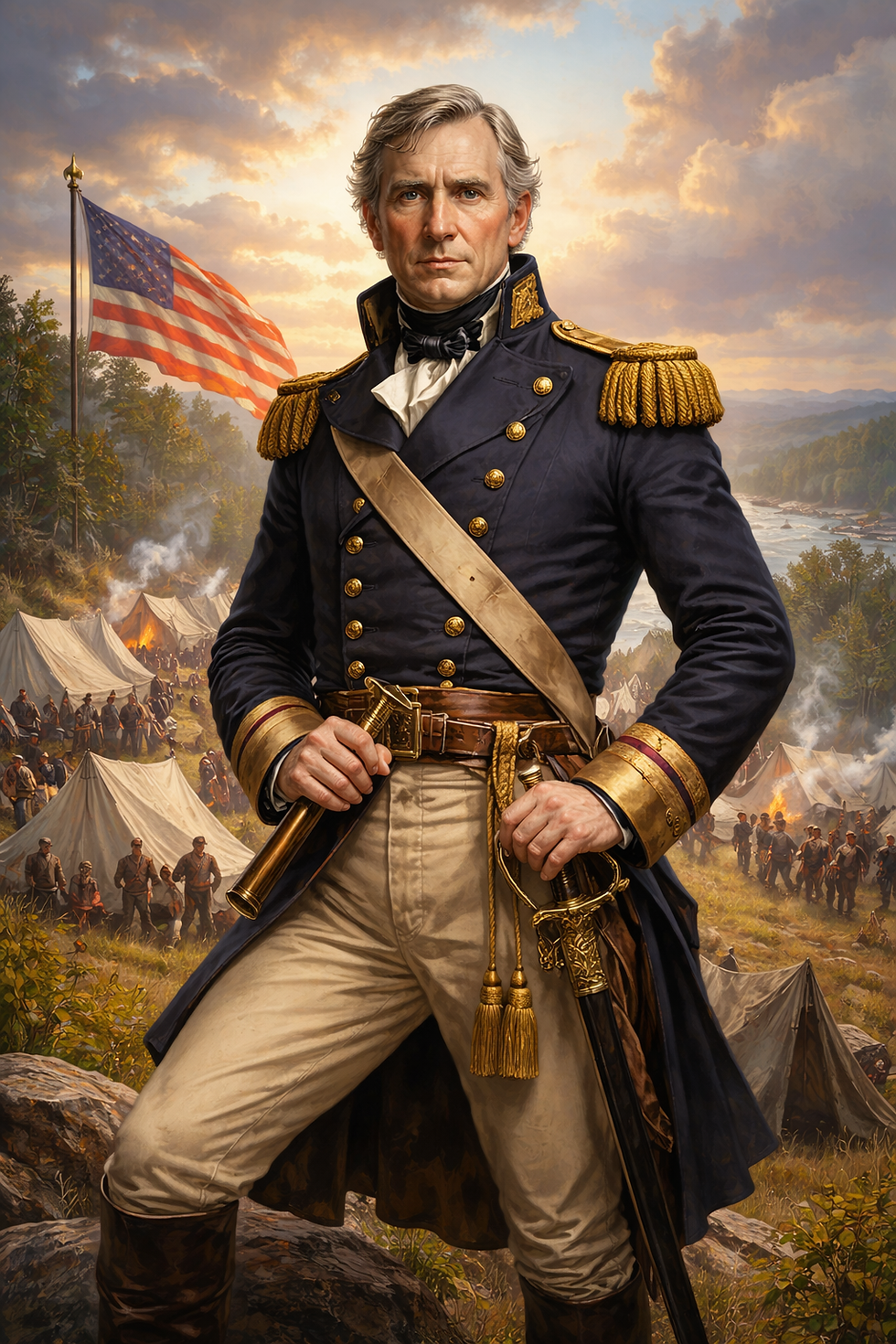
My Name is William Henry Harrison: Frontier Soldier and Ninth U.S. President
My life was shaped not in drawing rooms or party councils, but along rivers, forts, and contested borders where the young republic pushed against the unknown.
A Virginia Beginning
I was born in 1773 at Berkeley Plantation in Virginia, into a family already woven into the fabric of the Revolution. My father signed the Declaration of Independence, and from an early age I understood that public service was not optional—it was expected. Though I began studying medicine, the pull of the frontier and the army proved stronger than the classroom.
Into the Western Territories
I joined the army as a young man and was quickly sent west, where the United States was still an idea more than a fact. The Northwest Territory was vast, unsettled, and tense. Native nations resisted the steady advance of American settlers, and federal authority was thin. There, I learned that the frontier was not romantic—it was dangerous, uncertain, and unforgiving.
Governor of the Indiana Territory
I was appointed governor of the Indiana Territory in 1801, placing me at the center of America’s westward movement. My task was simple in theory and brutal in practice: secure land for settlement. Treaties were negotiated, pressure applied, and resistance met with force. I believed expansion was necessary for the nation’s survival, even as I saw the cost paid by Native peoples pushed from their lands.
Tecumseh and the Rising Storm
No figure challenged me more fiercely than Tecumseh. He sought to unite Native nations against American expansion, and I recognized the threat he posed—not just militarily, but symbolically. When negotiations failed, conflict followed. At Tippecanoe in 1811, my forces clashed with his confederation. Though the battle was inconclusive, it cemented my reputation as a frontier defender.
War of 1812 and National Fame
When war came with Britain, the frontier erupted. I led American forces in the Northwest and achieved victory at the Battle of the Thames, where Tecumseh was killed and British influence in the region shattered. That victory transformed me from a territorial governor into a national figure. The frontier soldier had become a symbol of American resolve.
Years Between Wars and Politics
After the war, I served in Congress, as a senator, and as a diplomat. Yet I remained most closely associated with the West. As settlers poured into new territories, my name followed them, carried by stories of forts, battles, and open land. I was not a political theorist—I was living proof of what expansion looked like on the ground.
The Election of 1840
By the time I ran for president, my image mattered more than my record. I was portrayed as a log-cabin man, a symbol of humble frontier virtue, though my upbringing was anything but poor. The campaign was loud, emotional, and modern. I won not by argument, but by myth, riding the public’s hunger for expansion and strength.
A Presidency Cut Short
My time in office lasted only a month. I spoke too long in the cold, fell ill, and died before I could govern. Some called it tragedy, others fate. I had waited my entire life to lead the nation, only to pass before I could shape it.
Legacy of the Frontier
Though my presidency was brief, my influence was not. I represented the moment when the frontier soldier became a national hero, when westward expansion moved from policy to identity. I showed Americans who they believed they were becoming—restless, bold, and always moving forward.
The Myth of the Frontier Hero – Told by William Henry Harrison
I watched my own life transformed into a symbol, my battles compressed into slogans, and my experiences on the frontier reshaped into something the nation could rally behind. What Americans celebrated as heroism was often born from violence, fear, and survival, yet in politics it became something cleaner, louder, and far more powerful.
From Hard Reality to Public Story
The frontier was never the simple, noble place later campaigns described. It was uncertain ground where law arrived slowly and conflict arrived quickly. Forts were built not for glory but for protection. Treaties were signed under pressure, broken under necessity, and followed by bloodshed when words failed. Yet when these experiences traveled east, they were stripped of their complexity. What remained was the image of the frontier defender—steady, brave, and necessary. The violence itself faded, replaced by the idea that America advanced because strong men stood firm against chaos.
Tippecanoe and the Birth of a Symbol
My name became inseparable from Tippecanoe, though the battle itself was confused, costly, and far from decisive. Still, it served a political purpose. It turned a contested skirmish into a moral victory, a story of order confronting resistance. In campaign language, Native resistance became threat, American advance became defense, and expansion became protection rather than invasion. The frontier hero was not portrayed as an aggressor, but as a guardian of civilization.
Campaigns Built on Cabins and Courage
By the time I ran for president, the frontier hero had become a marketing tool. Log cabins, hard cider, and plain speech were used to suggest closeness to the people, even when the reality was more complicated. Voters were invited to see themselves in the image of the frontier soldier—self-reliant, unrefined, and righteous. This imagery allowed Americans to claim expansion as part of their identity, not merely their policy.
Violence Recast as Virtue
What troubled me, even as I benefited from it, was how easily violence was recast as virtue. Battles fought over land and sovereignty were reframed as moral tests. Loss, displacement, and suffering became background noise to national pride. The frontier hero made it easier to accept these costs by giving them a face that reassured rather than challenged the conscience.
A Nation Looking for Itself
America was still young and unsure of who it was meant to be. The frontier hero offered an answer. He suggested that identity came not from ancient institutions or inherited titles, but from struggle and motion. By celebrating frontier figures, the nation told itself that expansion was not only inevitable, but righteous—and that those who resisted it stood in the way of progress.
The Power and Danger of the Myth
My story became larger than my life, and in that enlargement, the nation found both unity and justification. The myth of the frontier hero bound Americans together, but it also simplified truths that deserved harder reflection. It made expansion feel clean and necessary, even when it was neither.
The Election of 1840 and the Rise of Popular Expansion – Told by Harrison
By the time Americans cast their votes in 1840, they were no longer content to watch expansion unfold slowly through law and negotiation. They wanted movement they could feel, opportunity they could seize, and a future that promised land and independence rather than patience and restraint.
A Nation Restless for Opportunity
The people who carried me into office were not aristocrats or theorists. They were farmers pressed against exhausted soil, laborers crowded into eastern cities, and families who saw the West not as a symbol but as an escape. Land meant security. It meant ownership, self-rule, and dignity. As economic uncertainty lingered and confidence in institutions wavered, westward expansion became the most tangible promise a politician could offer.
From Policy to Popular Demand
Expansion was no longer something discussed quietly in Congress. It had entered the language of the people. Voters spoke of the West as their inheritance, not a distant frontier to be managed. The question was no longer whether America would expand, but who would help ordinary citizens claim a place in that expansion. Elections became referendums on access—who would open the door and who would keep it guarded.
Campaigning on Belonging
My campaign did not revolve around complex programs or careful calculations. It revolved around identity. The imagery of log cabins and frontier simplicity was meant to say something deeper: that the nation belonged to those willing to work the land and defend it. Expansion was presented not as elite ambition, but as popular right. Voters were invited to imagine themselves as participants in the nation’s growth, not merely observers.
Economic Anxiety and the Western Answer
Hard times sharpened the appeal of the West. When banks failed and jobs disappeared, land remained. The promise of acres and autonomy felt more reliable than paper wealth or distant markets. Expansion offered a solution that required neither reform nor redistribution—only movement. In this way, westward promise absorbed frustration that might otherwise have turned inward against the system itself.
A Shift in Political Power
The election of 1840 confirmed that popular energy now drove national politics. Leaders could no longer speak only to institutions; they had to speak to aspiration. Western voters, and those who hoped to become western settlers, demanded representation. Their numbers and enthusiasm reshaped parties and campaigns, making expansion not just a policy goal, but a political necessity.
The Meaning of Victory
My victory signaled more than a change in administration. It marked a shift in how Americans understood their future. Expansion was no longer framed as something to be cautiously managed by leaders alone. It had become a shared expectation, fueled by hope, hardship, and the belief that the nation’s promise lay just beyond the horizon.

My Name is John Tyler: Tenth President of the United States
I never sought the presidency, yet history placed it in my hands at a moment when the nation stood uncertain, divided, and restless for land, power, and direction.
Born to the Republic
I was born in 1790 in Virginia, only a year after George Washington took office. The United States itself was young, fragile, and untested, and I grew up alongside it. My father served as governor of Virginia and later as a federal judge, and from him I learned to respect the Constitution not as a tool of convenience, but as a boundary meant to restrain ambition—including my own.
Law, Virginia, and State Loyalty
I studied law early and entered politics young, serving in the Virginia legislature while still in my twenties. I believed deeply in states’ rights and limited federal power. To me, the Union existed because the states consented to it, not because it commanded them. This belief would follow me through every office I held and would often place me at odds with allies and enemies alike.
From Congress to the Senate
I served in the U.S. House of Representatives and later the Senate, where I consistently opposed efforts to expand federal authority. I broke with presidents of my own party when I believed they overstepped constitutional limits. Popularity mattered less to me than consistency. I resigned from the Senate rather than support policies I believed violated the principles of the republic.
An Unlikely Vice President
By 1840, my political independence had left me isolated. When I was chosen as vice president, it was not because I commanded the party, but because I balanced the ticket. I was meant to reassure southern states and strict constitutionalists. No one expected I would soon be president.
A President by Accident
When William Henry Harrison died just one month into his term, the nation faced a question it had never answered: was I truly president, or merely acting? I answered without hesitation. I took the oath and assumed full authority. I did not govern as a placeholder. I governed as president.
A Man Without a Party
My assertion of executive authority cost me nearly all political support. I vetoed bills I believed unconstitutional, even when my own party demanded compliance. In response, they expelled me. I became a president without a party, ruling through conviction rather than coalition.
Texas and the Edge of Expansion
The defining issue of my presidency was Texas. The Republic of Texas sought annexation, and the question threatened to tear the nation apart. I believed annexation was lawful and desirable, but I also knew it carried enormous risk. Slavery, sectional balance, and foreign relations all hung in the balance. I pushed annexation forward quietly, through diplomacy and timing, setting the stage for what would come next.
Leaving Office, Leaving Consequences
I left the presidency unpopular, criticized, and politically isolated. Yet Texas was annexed just as I departed office, altering the nation’s future permanently. I had acted where others hesitated, believing delay itself could be a form of danger.
A Union Fractured
In later years, I watched the nation I helped lead drift toward division and war. When my home state of Virginia seceded, I followed it—not lightly, but consistently with the beliefs I had held all my life. The Union I had served no longer resembled the one I believed the Constitution described.
Looking Back
I was never meant to be president, and perhaps because of that, I governed without illusion. I did not charm, rally, or inspire crowds. I enforced boundaries, asserted authority, and accepted isolation as the cost of conviction.
A President Dies, a Nation Shifts – Told by John Tyler
William Henry Harrison died only weeks into his presidency, the nation mourned a man, but it also stumbled into uncertainty. No one expected his death to change the course of westward expansion, yet in that sudden silence at the top of government, the balance of power shifted in ways few had anticipated—including myself.
An Unanswered Constitutional Question
Harrison’s death created a crisis not of territory, but of authority. The Constitution had never been tested by the death of a sitting president so early in a term. Many believed I should serve merely as a caretaker, a temporary figure holding the office together until the next election. I rejected that notion immediately. I took the oath and assumed full presidential authority, knowing that hesitation would invite chaos. That decision alone altered the direction of national politics, including how expansion would be debated and decided.
From Popular Symbol to Political Calculation
Harrison had been elected as a symbol of popular expansion—a frontier hero promising opportunity and movement. His presidency was expected to follow the momentum of the election, shaped by party leaders and public enthusiasm. His death interrupted that trajectory. What had been a populist surge suddenly became a constitutional and political recalculation, and expansion shifted from campaign promise back into the realm of executive decision-making.
A Change in Temperament at the Helm
Where Harrison’s image invited energy and spectacle, my approach emphasized authority and restraint. I was not bound by campaign mythology or party expectations. This unsettled many who believed expansion should move quickly, loudly, and in response to popular demand. Instead, decisions about land, territory, and annexation now flowed through a presidency defined by independence rather than consensus.
Expansion Without a Party Anchor
Harrison’s death also fractured the political coalition that had brought him to power. Without a strong party framework to guide expansion policy, I found myself isolated—yet paradoxically freer. I was no longer obligated to satisfy competing factions within a party eager to capitalize on western enthusiasm. Expansion politics became quieter, more deliberate, and more dependent on executive timing than public pressure.
Texas Moves from Idea to Strategy
Nowhere was this shift more evident than in the question of Texas. Under Harrison, annexation might have been framed as a popular reward for voters. Under my presidency, it became a strategic calculation. I pursued annexation cautiously, aware that its consequences would reverberate far beyond the West. Harrison’s death transformed Texas from a campaign symbol into a diplomatic and constitutional problem that demanded precision rather than passion.
The Fragility of Momentum
The nation learned, perhaps unwillingly, that momentum alone does not govern. Expansion had seemed inevitable, driven by voters and imagery, yet a single death revealed how dependent that momentum was on leadership. Policies slowed, alliances shifted, and assumptions were questioned. The West did not disappear from national attention, but its advance was no longer choreographed by slogans.
A Presidency Defined by Disruption
I did not arrive in office promising to redirect the nation, yet history placed me in that position. Harrison’s death forced Americans to confront how fragile their expectations were—and how quickly expansion politics could move from public enthusiasm to executive responsibility.
Executive Power and the Limits of the Constitution – Told by John Tyler
I did not inherit a settled presidency; I inherited an argument. From the moment I assumed office, westward expansion forced a question far more dangerous than borders or treaties—how much authority the Constitution truly granted the president when the nation pushed beyond what its founders had clearly imagined.
Becoming President by Precedent, Not Permission
When I took the oath after President Harrison’s death, I understood that every decision I made would echo beyond my term. The Constitution was silent on whether I was fully president or merely acting in his place. I chose decisively, not for ambition, but because uncertainty itself threatened national stability. That choice strengthened executive power, yet it also placed responsibility squarely on my shoulders when questions of expansion arose. The West did not wait for clarification—it demanded action.
Expansion and the Question of Authority
Territorial growth tested the presidency in ways no domestic policy could. Expansion required treaties, diplomacy, military readiness, and timing—powers divided between branches of government by design. Congress claimed authority over territory; the Senate guarded treaties; the president executed foreign policy. When these powers overlapped, conflict was inevitable. I found myself constantly navigating where constitutional permission ended and necessity began.
Vetoes as Constitutional Defense
I vetoed legislation not to obstruct expansion, but to preserve constitutional limits. Many believed the presidency existed to carry out congressional will. I believed it existed to restrain it when necessary. Western issues magnified this tension. Infrastructure bills, land policy, and territorial governance often stretched federal authority beyond what I believed the Constitution allowed. Each veto deepened political isolation, yet each reaffirmed my belief that expansion without limits would weaken the republic it sought to enlarge.
A President Without a Party
My refusal to yield executive judgment to party leadership left me without political shelter. I governed not through coalition, but through assertion of constitutional responsibility. This independence mattered most in matters of expansion, where public enthusiasm often outran legal clarity. I was unwilling to let popularity determine authority, even when the West demanded speed and certainty.
Texas and the Edge of Constitutional Silence
The annexation of Texas exposed the limits of the Constitution more clearly than any previous issue. Was annexation a treaty requiring Senate approval, or could it be achieved through joint resolution? The Constitution offered no explicit answer. I acted within what I believed to be lawful interpretation, knowing that precedent would shape future executive action. Expansion forced the presidency to interpret silence—and silence, I learned, is one of the Constitution’s greatest tests.
Power Defined by Restraint
Contrary to accusation, I did not seek to expand presidential power endlessly. I sought to define it clearly. The presidency had to be strong enough to act, yet restrained enough to endure. Westward expansion pressured the office to become something larger than intended, and I resisted that transformation even as I exercised authority decisively.
The Cost of Holding the Line
History remembers popularity more kindly than principle. My insistence on constitutional limits made me enemies and obscured my intentions. Yet I believed then, as I do now, that expansion without constitutional discipline would transform the presidency into something unrecognizable—and the Union into something unstable.
Texas: Republic, Problem, or Promise? – Told by John Tyler
No issue during my presidency carried more weight, more danger, or more consequence than Texas. It was not merely land seeking a flag—it was a question that cut across diplomacy, slavery, constitutional authority, and the future balance of the Union itself.
A Republic Born of Conflict
Texas arrived at America’s doorstep as an independent republic, forged through revolution and sustained by uncertainty. Its settlers were largely American in origin, its economy deeply tied to slavery, and its borders contested by Mexico. To some, Texas looked like a natural extension of the United States, a promised continuation of westward growth. To others, it looked like a spark lying too close to dry timber.
Why Texas Could Not Be Ignored
Ignoring Texas was not a neutral act. As an independent nation, it courted foreign powers, including Great Britain, whose influence in Texas alarmed southern leaders and unsettled national security calculations. Texas mattered because it sat at the intersection of American expansion and international rivalry. Whether annexed or not, it would shape the nation’s future, and delay itself carried risk.
Slavery and the Balance of Power
No discussion of Texas could escape slavery. Annexation threatened to upset the fragile balance between free and slave states, intensifying sectional distrust. Northern leaders feared the expansion of slave power; southern leaders feared political isolation if Texas remained outside the Union or aligned elsewhere. Texas became a symbol not just of land, but of which section would control the nation’s direction.
Annexation as a Constitutional Puzzle
The Constitution offered no clear roadmap for absorbing an independent republic. Was annexation a treaty, requiring Senate approval, or could it be accomplished through a joint resolution of Congress? The ambiguity itself was explosive. Any method chosen would set precedent, inflame opposition, and invite accusations of overreach. Texas tested not only national unity, but constitutional interpretation itself.
Diplomacy Before War
Annexation before war mattered because war would have removed choice. If the United States annexed Texas deliberately, it did so by decision; if it waited until conflict forced action, it surrendered control to events. I believed it better to act with calculation than to be dragged by momentum. Texas demanded foresight, not applause.
Public Desire and Political Fear
Among the people, enthusiasm for Texas was strong. Land, opportunity, and national pride fueled support. Yet leaders understood what voters often did not: annexation risked war with Mexico, intensified sectional hostility, and destabilized party coalitions. Texas was popular, but popularity did not reduce danger—it magnified it.
A Decision That Could Not Be Clean
There was no version of Texas annexation that avoided consequence. Any path forward promised gain and invited loss. To delay was to risk foreign influence; to act was to court sectional rupture and war. Texas was not simply a prize—it was a test of whether the Union could grow without tearing itself apart.
Annexation Without Consensus – Told by John Tyler
The question of Texas did not divide the nation quietly or cleanly. It exposed fractures that had long been present but carefully managed, revealing that westward expansion was no longer a matter of shared ambition, but of competing futures.
A Nation Speaking Different Languages
As president, I learned quickly that Americans were no longer arguing over the same questions. In the South, Texas represented security—new land, political balance, and protection for an economic system they believed essential. In the North, it represented threat—an expansion of slavery’s influence and a distortion of democratic fairness. Both sides claimed loyalty to the Union, yet they defined its survival in fundamentally different ways. Texas did not create these differences; it made them impossible to ignore.
Sectional Fear Disguised as Principle
Public debate over annexation often wrapped itself in constitutional language, but beneath it lay fear. Northern leaders feared permanent minority status in national politics if slave states multiplied. Southern leaders feared isolation and vulnerability if Texas remained independent or aligned elsewhere. Each side framed its position as defensive, even as the nation edged closer to confrontation. Consensus was impossible because compromise felt like surrender.
Political Parties Under Strain
The Texas question strained political parties to their limits. Parties that had once bridged regional differences now struggled to speak with one voice. Leaders avoided clear positions, knowing that clarity would alienate half their supporters. Annexation revealed that party loyalty could no longer reliably suppress sectional identity. Geography began to outweigh ideology.
Expansion Without Agreement
Texas forced the nation to confront an uncomfortable truth: expansion no longer enjoyed universal support. Earlier growth had been absorbed gradually, often before its consequences fully emerged. Texas arrived already burdened with meaning. It was too large, too symbolic, and too entangled with slavery to be quietly added. Expansion had become a public reckoning rather than a procedural act.
Leadership in the Absence of Unity
As president, I could not wait for consensus that would never come. The Constitution did not require unanimity, only lawful action. Yet acting without consensus carried its own risks. Every move deepened suspicion, hardened opposition, and reinforced the belief that the Union itself was being reshaped without consent. Annexation became less about Texas and more about who controlled the nation’s future.
A Warning Before the Storm
The debates surrounding Texas were not an end—they were a preview. They showed how sectional loyalty could override national compromise and how expansion could magnify rather than relieve division. The nation crossed no battlefield yet, but the lines were already drawn.

My Name is Thomas Hart Benton: U.S. Senator and Champion of Expansion
I was never president, never a general crowned by a single battle, yet for more than thirty years I shaped the direction of the nation by pressing it steadily westward, mile by mile, law by law.
A Nation Still Forming
I was born in 1782 in North Carolina, in the uneasy years after independence when America was still deciding what kind of country it would become. My youth was marked by movement—westward even then—as my family settled in Tennessee. From an early age, I understood that America’s future did not lie along the Atlantic coast alone, but beyond the mountains where land, opportunity, and conflict awaited.
Law, Conflict, and Conviction
I studied law, but like many young men of ambition, I found myself drawn into disputes that were personal as well as political. I fought a duel with Andrew Jackson, an encounter that nearly ended my life and permanently altered my relationship with him. Though we later found ourselves on the same side of national questions, I learned early that American politics was not gentle—it was contested, physical, and unforgiving.
Missouri and the Western Identity
I moved to Missouri when it was still a frontier state, raw and ambitious. There, I found my voice. Missouri was not merely a place; it was a statement about America’s direction. When Missouri entered the Union, the balance between free and slave states trembled. I defended Missouri fiercely, believing western states deserved equality, not suspicion, within the Union.
Entering the United States Senate
In 1821, I entered the United States Senate, where I would remain for three decades. I did not see myself as a sectional man, but as a national one. My loyalty was not to East or South, but to expansion itself. I believed the republic must grow or fracture, that land ownership created independence, and that settlers were the backbone of democracy.
The West as America’s Destiny
Long before the phrase became popular, I argued that America was destined to stretch from ocean to ocean. This belief was not poetic—it was practical. I pushed for roads, surveys, homestead policies, and exploration. I championed expeditions into the Rocky Mountains and beyond, believing knowledge was the first step to settlement. To me, maps were instruments of democracy.
Expansion Without Apology
I did not pretend expansion was painless. Native nations were displaced, conflicts multiplied, and moral questions followed every mile west. Yet I believed that stopping expansion would not preserve peace—it would only delay conflict and weaken the republic. I argued that a strong, growing Union could absorb tension better than a frozen one.
Opposing Extremes
Though I supported westward growth, I opposed efforts to spread slavery into new territories later in my career. I believed slavery weakened free labor and endangered national unity. This position cost me political support, especially as sectional tensions sharpened. Still, I refused to abandon the West simply because the nation argued over its future.
A Voice Against War for Glory
As the nation edged toward war with Mexico, I grew cautious. I supported Texas but warned against war driven by ambition rather than necessity. Expansion, I believed, should be deliberate and lawful, not reckless conquest. My voice was increasingly drowned out by younger men hungry for rapid triumph.
Leaving the Senate, Leaving a Legacy
I left the Senate in 1851, watching a new generation inherit the West I had helped open. Railroads followed trails, states followed territories, and the map I had envisioned began to fill. I had not commanded armies, but I had armed settlers with law, land, and opportunity.
Looking Toward the Horizon
I died in 1858, just before the nation I loved shattered into war. Yet the West endured. Farms, towns, and states stood where wilderness once ruled. I believed America’s greatness lay not in holding still, but in moving forward together—carefully, lawfully, and with purpose.
Manifest Destiny Before the Name – Told by Thomas Hart Benton
Long before poets gave it a title and politicians sharpened it into a slogan, Americans already believed expansion was their future. They felt it in their movement, their labor, and their confidence that the continent itself invited settlement. I did not invent that belief—I gave it voice, law, and direction.
A Nation That Refused to Stand Still
From the earliest days of the republic, Americans moved. They crossed mountains, cleared forests, and followed rivers not because Congress commanded them, but because opportunity pulled them forward. Expansion was not imagined as conquest by most settlers; it was understood as growth. To own land was to be independent, and independence was the foundation of republican government. A people who stopped moving, many believed, would stop thriving.
Expansion as a Moral Argument
Americans did not see themselves as invaders. They believed they were improving land through labor, order, and law. Farms replaced wilderness, towns replaced camps, and schools followed cabins. This transformation was framed as moral progress—civilization advancing where emptiness had reigned. Whether this belief ignored those already living on the land was rarely questioned at the time. To many, expansion was proof that republican values worked.
The Geography of Democracy
I argued consistently that democracy required space. Crowded cities bred dependence; land ownership bred independence. The West offered a safety valve for ambition and dissent alike. If citizens could move, they could start again. Expansion, therefore, was not merely territorial—it was political. It preserved democracy by preventing stagnation and inequality from hardening into permanent classes.
Nature as Invitation
Americans looked west and saw rivers flowing toward the Pacific, plains fit for farming, and passes through the mountains that seemed placed by design. Geography itself appeared to encourage settlement. This fed the belief that expansion was not only possible, but intended. Nature was read as permission, even as instruction. To stop short of the continent’s edge felt like defying providence itself.
Law Catching Up to Motion
By the time Congress debated surveys, roads, and land policy, settlers were already there. My work in the Senate was often less about initiating expansion than organizing it—mapping it, regulating it, and anchoring it to law. Expansion felt inevitable because it was already happening. Government could guide it or be dragged behind it.
Confidence Born of Success
Each successful settlement reinforced the belief that the next would succeed as well. The nation had grown without collapse, absorbed states without dissolving, and expanded its borders without surrendering its identity. Past success bred future certainty. Americans concluded that growth itself was proof of righteousness.
Unquestioned Necessity
To many, expansion was not debated because it felt essential. It promised land for families, markets for goods, and strength against foreign powers. A growing nation was a secure nation. Expansion became synonymous with survival, making resistance seem not merely mistaken, but dangerous.
Standing at the Edge of War – Told by Thomas Hart Benton and John Tyler
We spoke not as allies bound by party, nor as rivals seeking advantage, but as men who could feel the ground tightening beneath the nation’s feet, knowing that conflict was no longer a distant possibility but a looming consequence of choices already made.
The Pressure of Land Hunger
Benton spoke first, his voice carrying the confidence of a man who had watched settlers outrun laws for decades. He argued that land hunger was not a temporary fever but the natural condition of a growing republic. Families needed farms, markets needed roads, and democracy itself needed space. He insisted that the nation was not being dragged toward conflict by ambition alone, but by the sheer weight of people moving west faster than politics could restrain them. Tyler answered more cautiously, acknowledging the force of that hunger but warning that desire did not excuse recklessness. Land, he said, could pull a nation forward, but it could also pull it apart if seized without agreement or foresight.
Politics Trying to Hold the Line
Tyler described how, from the executive seat, every western question arrived tangled in constitutional limits and sectional fear. He spoke of Congress divided, parties strained, and the presidency forced to act in moments where delay felt dangerous and action felt explosive. Benton responded that politics had always lagged behind movement, and that attempts to hold the line often hardened resistance rather than calming it. To Benton, politics existed to organize expansion, not to deny it. To Tyler, politics existed to slow expansion just enough to keep the Union intact.
Ideology Before the First Shot
The conversation turned to belief—what Americans told themselves about their purpose. Benton spoke of confidence, of a people convinced that growth was proof of virtue and that stopping short of opportunity was a betrayal of the republic’s promise. Tyler countered that ideology, once unexamined, became fuel. When expansion was framed as destiny, compromise became weakness and caution became treason. He warned that nations often marched into war long before soldiers moved, carried there by certainty rather than necessity.
Texas as the Unspoken Battlefield
Both men returned, again and again, to Texas. Benton described it as the culmination of decades of movement, the place where land hunger and national confidence finally met geography that could not be quietly absorbed. Tyler described it as a fuse—short, visible, and burning. He explained how annexation debates sharpened language, hardened sections, and made retreat politically impossible. Benton admitted that even those who favored expansion could feel the change in tone, the moment when growth stopped feeling manageable and began to feel confrontational.
Knowing the Line Was Near
They agreed, uneasily, that the nation was standing at the edge of something it did not yet name. There was no declaration, no battlefield, no formal enemy—but there was momentum. Benton argued that history often punished hesitation as much as aggression. Tyler replied that history punished nations most when they mistook momentum for inevitability. Both recognized that the machinery of conflict was assembling itself through votes, speeches, treaties, and assumptions.
A Pause Before the Fall
Their conversation ended not with resolution, but with recognition. The nation had not crossed into war, but it was leaning forward, balanced on arguments already made and decisions already implied. Land hunger pressed from below, ideology pushed from behind, and politics struggled to keep pace. Whether war would come, and how soon, no longer depended on desire alone—but on whether restraint could survive belief.


Comments