

1. Heroes and Villains of the Westward Expansion: The Louisiana Purchase (1803)


My Name is Robert Livingston: Diplomat and Architect of a Nation’s Expansion
I was born in 1746 into the Livingston family of New York, a name already woven deeply into colonial politics and landholding. Privilege opened doors for me, but it also carried expectation. From an early age, I understood that influence came with responsibility, and that leadership required more than inheritance. I was trained to think carefully, speak precisely, and act deliberately.
Education and the Law
I studied law at King’s College in New York, where I learned to value order, structure, and reason. The law appealed to me because it balanced power with principle. As tensions with Britain rose, I saw clearly that colonial grievances were not merely emotional, but legal and constitutional. Parliament had overstepped, and the colonies had a right to resist.
Revolution and Independence
When revolution came, I supported independence with conviction. I served on the committee that drafted the Declaration of Independence, though circumstances kept me from signing it. My contribution was quieter, but no less committed. I believed revolutions succeeded not only through bold declarations, but through steady administration and lawful transition.
Chancellor of New York
As Chancellor of New York, I presided over the state’s highest court and helped shape its early government. Law and stability mattered deeply to me, especially in the fragile years following independence. I believed that liberty could only survive if it was anchored to institutions strong enough to withstand passion and faction.
Diplomat to France
My most consequential service came when I was appointed minister to France. The position demanded patience, restraint, and constant judgment. France was powerful, unpredictable, and entangled in European wars. I worked to protect American interests while navigating shifting alliances and opaque intentions. Often, I negotiated in the dark, unsure of what my counterparts truly intended.
The Louisiana Opportunity
The negotiations over Louisiana were unlike anything I had anticipated. My instructions were limited, my authority unclear, and the stakes enormous. When France offered all of Louisiana, I understood instantly that this was a once-in-a-generation moment. Delay could invite British intervention or French reversal. I chose action, trusting that the value of the land and the security it offered outweighed procedural caution.
Risk and Responsibility
Signing the agreement required courage of a different kind. There were no guarantees that the President or Senate would approve what we had done. I accepted the risk because I believed history would judge the outcome more than the process. Diplomacy, I learned, often demands decisions before certainty arrives.
Return Home and Public Life
After returning to the United States, I continued to serve in public roles, including helping administer the oath of office to presidents. I watched as the nation expanded westward, its future transformed by decisions made in distant rooms under intense pressure. Few moments in my life equaled the weight of that responsibility.
Final Years and Reflection
In my later years, I reflected often on how quietly history moves. Battles and speeches capture attention, but treaties and signatures shape borders and destinies. I was not a conqueror or a visionary philosopher. I was a negotiator who recognized opportunity and acted when it mattered.
Legacy of Quiet Impact
My name is not always the first spoken when the Louisiana Purchase is remembered, yet I know the role I played. I helped secure a future in which the United States could grow without foreign chains along its western frontier. If my life is remembered, let it be as that of a man who understood that sometimes the most powerful acts are made not on battlefields, but at negotiating tables, where a steady hand can change the course of a nation.

My Name is Thomas Jefferson: Author, Statesman, and President
I was born in 1743 at Shadwell, a plantation in Virginia, into a world shaped by land, books, and hierarchy. My father, Peter Jefferson, taught me the value of discipline and curiosity, while my mother connected me to the traditions of Virginia’s planter class. From an early age, I learned that education was a form of freedom. I read constantly, studied languages, and developed a belief that the mind, once awakened, could never again be ruled easily.
Education and the Power of Ideas
At the College of William and Mary, I immersed myself in law, philosophy, and the Enlightenment thinkers of Europe. John Locke and Montesquieu shaped my understanding of natural rights and the limits of power. I came to believe that governments existed to protect liberty, not to command obedience. These ideas did not remain abstract to me; I intended to apply them to real societies and real people.
The Pen and the American Revolution
When conflict with Britain deepened, my skill was not the sword but the pen. In 1776, I was tasked with drafting a document that would justify rebellion before the world. Writing the Declaration of Independence was the most consequential act of my life. I sought to express truths I believed were self-evident: that all men are created equal, that rights come from nature and God, and that tyranny must be resisted. I knew the words would echo far beyond my lifetime.
Governor and the Hard Lessons of War
Serving as governor of Virginia during the Revolutionary War tested my ideals against reality. British invasions exposed the limits of philosophy when confronted with chaos and fear. I made mistakes, learned humility, and came to understand that leadership required more than vision. It demanded resilience under criticism and failure.
Diplomat in France
My years in France opened my eyes to the wider world. I admired French culture and intellect, yet I also witnessed the dangers of inequality and absolutism. Watching the early stages of the French Revolution confirmed my belief that liberty was fragile and that unchecked power, whether royal or revolutionary, could destroy the very freedoms it claimed to defend.
Secretary of State and the Birth of Parties
Under President Washington, I served as Secretary of State, where my disagreements with Alexander Hamilton revealed a growing divide in American politics. I feared centralized power, permanent debt, and financial systems that favored elites. From these conflicts emerged the first political parties, something I once hoped the republic could avoid.
The Presidency and the Burden of Decision
When I became president in 1801, I sought to govern with restraint, believing the best government was one that governed least. Yet history forced my hand. The opportunity to acquire Louisiana challenged my strict interpretation of the Constitution. I struggled deeply, knowing that purchasing foreign land was not explicitly permitted, but also knowing that refusing the chance might doom the republic. I chose action over hesitation, trusting that the survival of the nation outweighed my personal doubts.
Contradictions and Slavery
I lived with contradictions that history has not forgotten. I spoke of liberty while owning enslaved people. I understood slavery as a moral wrong, yet failed to end it in my lifetime. These failures weigh heavily on my legacy, and I know they complicate the ideals I proclaimed. I can only say that I was shaped by my time, even as I tried to push against its limits.
Retirement and the Pursuit of Knowledge
In my later years, I returned to what I loved most: learning. Founding the University of Virginia allowed me to shape education around inquiry rather than dogma. I believed a republic could only endure if its citizens were informed, curious, and capable of independent thought.
Final Reflections
I asked that my tombstone remember me not as president, but as the author of the Declaration of Independence, the author of the Virginia Statute for Religious Freedom, and the founder of a university. These were the works of my soul. Power passes, but ideas endure, and it is through ideas that I hoped to serve both my country and the future.
Spain Controls Louisiana, Then Transfers It to France (1800) – Told by Livingston
When I first studied Louisiana, long before the United States had any claim to it, I was struck by how misunderstood the territory was by European powers that formally owned it. Stretching from the Gulf of Mexico deep into the continent, Louisiana was less a settled colony and more a strategic promise. Whoever controlled it held the central artery of North America: the Mississippi River. Spain acquired Louisiana from France in 1762 not because it wished to develop it aggressively, but because it needed a buffer—an immense, sparsely governed shield against British expansion after the Seven Years’ War. Spain ruled lightly, understanding that possession mattered more than population.
Economic Power Without Heavy Settlement
Under Spanish control, Louisiana functioned as an economic gateway rather than a traditional colony. The port of New Orleans was the true prize. Goods from the interior—furs, timber, grain, and later cotton—flowed downriver to global markets. Spain allowed foreign merchants, including Americans, limited access because it lacked the manpower and capital to exploit the region fully on its own. This tolerance kept Louisiana quiet and profitable, even if underdeveloped. The wealth of the territory lay not in immediate revenue, but in its ability to control commerce moving across an entire continent.
Strategic Importance in a Balance-of-Power World
From a diplomatic perspective, Louisiana was less about what it produced and more about what it prevented. Spanish Louisiana blocked British Canada from pushing south and limited British access to the Mississippi. It also kept rival European powers at bay while Spain focused on protecting its richer colonies in Mexico and the Caribbean. The territory was a chess piece, not a settlement project. As long as Spain held it, no single rival could dominate the heart of North America.
The Quiet Transfer That Changed Everything
The most consequential moment came not with war, but with secrecy. In 1800, through the Treaty of San Ildefonso, Spain quietly transferred Louisiana back to France. This was done with little public announcement and even less transparency. From a diplomatic standpoint, this was alarming. Spain was predictable and weak in Louisiana; France was ambitious, organized, and capable of enforcing control. A French Louisiana signaled not stagnation, but revival. It suggested armies, taxation, and exclusion where tolerance had once existed.
Why This Mattered Before America Acted
Even before the United States formally involved itself, the transfer reshaped every calculation. France’s return to Louisiana threatened to close American access to New Orleans, choke western trade, and place a powerful European state at the republic’s border. Economically, it endangered farmers whose livelihoods depended on free navigation of the Mississippi. Strategically, it introduced the possibility of war—or worse, permanent dependence—at a moment when the United States was still fragile. Long before negotiations began, Louisiana had already become the fulcrum upon which the future balance of North America would turn.
American Dependence on the Mississippi River – Told by Thomas Jefferson
As I watched the young republic expand beyond the Appalachian Mountains, I came to understand that the Mississippi River was not merely a geographic feature, but the lifeline of America’s western people. Roads were poor, distances vast, and alternatives impractical. For farmers in Kentucky, Tennessee, and the Ohio Valley, the river was the only efficient route to market. Crops floated southward, not eastward, bound inevitably for New Orleans. Without access to that river and its mouth, the labor of thousands would be rendered nearly worthless.
New Orleans and the Economy of Survival
New Orleans mattered because it transformed produce into profit. Grain, pork, flour, and timber could not realistically cross mountains, but they could move effortlessly downstream. If the port were closed, western farmers would be cut off from the global economy. They would either face ruin or be forced to seek protection from whatever power controlled the river. I feared that economic desperation could fracture the union long before foreign armies ever needed to intervene.
Foreign Control and Political Danger
So long as Spain controlled Louisiana, the threat remained manageable. Spain governed weakly and inconsistently, often allowing American trade out of necessity. But the idea of a strong and ambitious power controlling New Orleans was intolerable. If France or Britain held that position, they could strangle our commerce at will. A foreign nation stationed at the Mississippi’s mouth would possess leverage over our economy, our diplomacy, and our internal stability.
Western Loyalty and the Fragility of Union
I worried constantly about the loyalty of western settlers. These Americans were separated from the Atlantic states by geography and hardship. If their livelihoods depended on the goodwill of a foreign governor in New Orleans, their allegiance to the federal government could erode. A nation divided by economic necessity would not long remain united by principle alone. Control of the river was therefore not just a matter of trade, but of national cohesion.
National Security Beyond the Battlefield
In my view, national security was not limited to armies and fortresses. It included rivers, ports, and the quiet forces that sustain daily life. Whoever controlled New Orleans held the power to destabilize the United States without firing a single shot. This realization shaped my urgency when Louisiana changed hands in Europe. To protect our independence, we had to secure the Mississippi—not through war if possible, but through foresight and decisive action.
A Republic Tied to Geography
The Mississippi taught me that nations are shaped as much by rivers as by laws. Our western future depended on uninterrupted access to the sea, and New Orleans was the key that unlocked it. To ignore that reality would have been to gamble the republic itself. I did not seek expansion for glory, but for survival, knowing that without control of our own economic lifelines, political independence would always remain uncertain.
France’s Secret Treaty and Jefferson’s Alarm (1801) – Told by Thomas Jefferson
When word reached us that Spain had quietly transferred Louisiana back to France, I felt an alarm deeper than any I had known since the Revolution. Spain had been a manageable neighbor, distant, cautious, and often inattentive. France was none of these things. France was energetic, ambitious, and guided by a leader who understood power in its most practical form. The treaty itself was secret, and that secrecy alone was troubling. Nations do not hide harmless acts. They conceal intentions that may provoke resistance.
Why France Was Different from Spain
Spanish rule in Louisiana had been defensive and passive. Spain lacked both the population and the will to dominate the interior of North America. Its governors tolerated American trade because they needed it. France, by contrast, possessed organization, manpower, and a vision of empire. Under French control, Louisiana would not be a buffer, but a base. It could be fortified, taxed, and enforced with discipline. The difference was not merely administrative, but existential.
Napoleon and the Shadow of Empire
What frightened me most was not France in the abstract, but Napoleon in particular. He did not acquire territory to hold it loosely. He acquired it to use it. A French Louisiana meant soldiers on the Mississippi, a revived colonial system in the Americas, and the potential exclusion of American commerce whenever it suited European strategy. One strong nation at the mouth of our greatest river could bend our future without conquest.
The Risk of Dependence and Division
I feared that French control would force Americans into impossible choices. If western farmers lost access to New Orleans, they might look not to Washington for relief, but to Paris or London. Economic dependence would breed political dependence. A foreign power could whisper promises to the West and fracture the union from within. No republic can survive when its people must choose between prosperity and allegiance.
A Threat Beyond War
This was not a threat that marched openly. It crept through treaties, ports, and trade restrictions. France did not need to invade us to harm us. It merely needed to close a gate. That is why I believed the transfer of Louisiana to France to be more dangerous than any open hostility. Spain had held the territory without ambition. France would hold it with purpose.
From Alarm to Resolve
Once I understood the danger, hesitation was no longer an option. The republic could not remain indifferent while a European empire planted itself at our door. We had to secure our future by securing the Mississippi and its mouth. My alarm was not born of fear alone, but of responsibility. A nation that ignores such a moment invites its own decline.

My Name is Napoleon Bonaparte: General, First Consul, and Emperor of France
I was born in 1769 on the island of Corsica, a place of rugged hills and fierce loyalties. My family was minor nobility, proud but not wealthy, and I grew up feeling both ambitious and resentful of those born to greater privilege. From a young age, I learned to rely on discipline, memory, and willpower. I believed that talent and determination mattered more than birth, a belief that would guide me throughout my life.
Education and the Art of War
France educated me, and war became my language. At military school, I studied mathematics, artillery, and history with relentless focus. I admired the great commanders of the past and convinced myself that I, too, was destined for greatness. When the French Revolution erupted, it shattered the old order and created opportunity for men like me—those willing to rise quickly and decisively amid chaos.
The Revolution and My Rise
The Revolution destroyed kings but demanded generals. I proved myself in battle through speed, surprise, and calculated risk. Victories in Italy brought me fame, loyalty from my soldiers, and fear from my enemies. I learned that armies follow confidence as much as commands, and I cultivated both. France needed order, and I was ready to provide it.
Power Through the Coup of Brumaire
By 1799, France was exhausted by instability. I returned from Egypt and seized the moment. Through the coup of Brumaire, I became First Consul, effectively ruling France. I promised stability, efficiency, and national glory. The people accepted strong leadership in exchange for peace at home, and I believed I was fulfilling the Revolution’s promise by saving it from itself.
Rebuilding France
As First Consul, I governed as much as I conquered. I reformed education, centralized administration, and created the Napoleonic Code to establish equality before the law. These achievements mattered to me as much as any battlefield victory. I wanted France to be strong not only through armies, but through institutions that would endure.
Empire and Ambition
In 1804, I crowned myself Emperor. I did not do this out of vanity alone, but because I believed France required a unifying symbol stronger than fragile republicanism. Europe resisted me, and war became constant. I defeated coalitions of monarchs and redrew maps, convinced that my system would replace theirs. Each victory reinforced my belief that destiny favored me.
The Limits of Power
Ambition has no natural end, and mine carried me too far. The invasion of Russia broke the spell of invincibility. Cold, distance, and attrition destroyed my army more effectively than any enemy general. After that disaster, Europe rose against me, and my empire began to collapse under its own weight.
Exile and Return
I was forced into exile, yet even then I could not be ignored. I returned briefly during the Hundred Days, hoping to reclaim what I had lost. At Waterloo, my fate was sealed. Defeat there ended my rule forever, proving that even the greatest commanders are bound by chance, weather, and human limits.
Final Exile and Reflection
My last years were spent on Saint Helena, far from the world I once commanded. There, I reflected on my life and my legacy. I know I brought war and suffering, but I also carried ideas—merit, law, and modern governance—across Europe. Empires fall, but systems endure, and I believe parts of my vision outlived me.
History may judge me as tyrant or genius, conqueror or reformer. I was all of these things. I rose from obscurity to rule an empire because I believed utterly in my own capacity to shape the world. I failed in the end, but for a time, the course of Europe bent to my will—and that, in itself, is my story.
Napoleon’s Vision of a New French Empire – Told by Napoleon Bonaparte
When I took power in France, I inherited a nation exhausted by revolution yet hungry for greatness. Europe still measured strength by colonies, trade routes, and control of resources, and France had lost much during years of upheaval. I did not intend merely to defend what remained. I intended to rebuild France into a modern empire, one that could rival Britain not only on battlefields, but across oceans. The Americas were essential to that vision.
The Caribbean as the Empire’s Heart
My plans for a renewed French empire began in the Caribbean. Sugar, coffee, and tropical trade were the engines of Atlantic wealth, and Saint-Domingue was the most valuable colony in the world. From it, France could dominate Atlantic commerce and finance armies in Europe. Louisiana, vast and fertile, was never meant to stand alone. It was designed to supply food, timber, and livestock to the islands, creating a self-sustaining imperial system beyond Britain’s reach.
Louisiana as Strategic Foundation
Louisiana was not valuable because of what it immediately produced, but because of where it sat. Control of the Mississippi River meant control of the interior of North America. With Louisiana secured, France could influence trade flowing from the continent, pressure the growing American republic, and block British expansion southward from Canada. It was a position of leverage, and leverage is power without constant war.
Dominating Atlantic Trade
Britain ruled the seas, but sea power alone was not enough. I believed empire required coordination between land and sea, between Europe and the New World. A French Atlantic system would funnel goods, wealth, and influence back to France while denying them to our enemies. With strong ports, disciplined administration, and military presence, France could challenge Britain’s commercial supremacy indirectly, striking at its lifeblood rather than its fleets.
American Independence as a Temporary Convenience
I respected American independence only insofar as it served French interests. A strong France in Louisiana would keep the United States cautious and dependent, preventing it from drifting too close to Britain. I did not seek immediate conflict with the Americans, but I had no intention of allowing them unchecked expansion across the continent. Empires are not built by generosity; they are built by control of space and opportunity.
Ambition Meets Reality
Vision alone does not guarantee success. War in Europe demanded resources, and events in the Caribbean did not unfold as planned. Disease, resistance, and distance weakened the foundations of my American strategy. Empire is unforgiving. When its core falters, its outer ambitions must be reassessed. Yet my vision was never foolish. It was grounded in the realities of power as they existed at the dawn of the nineteenth century.
Empire as Strategy, Not Fantasy
My plans for the Americas were not dreams of glory, but calculations of necessity. France could not remain a great power without access to global trade and strategic depth beyond Europe. The New World offered that possibility. Though circumstances forced change, the logic of my vision remains clear: control trade, command territory, and shape the balance of power before your rivals do. That is how empires rise—and how history is made.
The Haitian Revolution Undermines French Ambitions – Told by Bonaparte
Before the rebellion, Saint-Domingue was the jewel of France’s overseas possessions. Its plantations produced wealth unmatched in the Atlantic world, and that wealth was meant to finance my ambitions both in Europe and the Americas. Louisiana was to support it, Europe was to be defended by it, and France was to rise through it. When unrest began, I did not see it as an existential threat, but as a disorder to be corrected by force and discipline.
Rebellion as a Political Earthquake
The uprising was not a mere riot of the enslaved, as many in Europe believed, but a revolution fueled by organization, leadership, and conviction. Formerly enslaved men understood the terrain, the economy, and the psychology of colonial rule better than any general sent from France. They fought not for reform, but for freedom, and such wars do not end through negotiation alone. Each victory they claimed weakened French authority far beyond the island itself.
Disease as an Unseen Enemy
Armies are trained to face bullets and blades, not climate and fever. Yellow fever devastated my forces in Saint-Domingue, killing soldiers faster than combat ever could. Thousands died without firing a shot. Discipline, courage, and strategy meant little against disease. The Caribbean became a graveyard for European troops, and with each transport ship lost to illness, my confidence in the sustainability of the campaign eroded.
Resistance That Could Not Be Pacified
Even when cities were taken and leaders captured, resistance did not end. Guerrilla warfare, sabotage, and popular support for the rebels made permanent control impossible. Unlike European wars, there were no decisive battles that could end the conflict. Every plantation, road, and mountain pass became contested ground. France could occupy territory, but it could not command obedience.
The Collapse of the Caribbean Strategy
Without Saint-Domingue, my vision of a French Atlantic empire unraveled. Louisiana had no purpose without a Caribbean core to supply and protect. The economic logic vanished, leaving only the burden of defense. What was meant to be a system of mutual support became an isolated liability. An empire cannot be sustained by territory alone; it requires profitable centers, and Saint-Domingue was gone.
Strategic Consequences Beyond the Island
The failure in Haiti forced me to reconsider every American ambition. Resources were needed in Europe, where war with Britain was unavoidable. Holding Louisiana now risked losing it to British naval power or provoking American hostility without compensation. Strategy demands flexibility, and pride must yield to necessity. The revolution in Haiti did not merely defeat an army; it destroyed the foundation of France’s New World strategy.
When Reality Overrides Ambition
I have often been judged for abandoning Louisiana, but decisions must be understood in context. The Haitian Revolution taught me that control cannot be assumed, and that some battles, once lost, reshape all others. Rebellion, disease, and resistance proved stronger than imperial design. In that moment, I chose to cut losses rather than cling to illusion, knowing that empires fall not only from defeat, but from refusing to adapt when the world changes.
Britain Looms as a Global Threat – Told by Napoleon Bonaparte
Among all the powers of Europe, Britain was the most persistent and dangerous rival France faced. Monarchies could be defeated, borders redrawn, and treaties imposed, but Britain endured. Its strength did not rest solely in armies, but in fleets, finance, and global reach. As long as Britain controlled the seas, no overseas possession of France was ever truly secure. Every colonial holding existed under the shadow of British naval power.
War in Europe Demands Total Focus
By the early years of my rule, conflict with Britain was no longer a possibility but a certainty. Europe itself had become the primary battlefield upon which France’s survival and supremacy would be decided. Armies had to be raised, supplied, and commanded across the continent. Resources were finite, and attention divided is power weakened. An empire cannot fight decisively in Europe while simultaneously defending distant territories vulnerable to naval blockade.
Louisiana’s Strategic Weakness
Louisiana, vast though it was, posed a strategic problem rather than a solution. It had few fortifications, limited population, and no strong naval protection. In the event of war, Britain could seize it almost at will from Canada or the Gulf. To defend it properly would require ships I did not possess and forces better used elsewhere. A territory that cannot be defended becomes a liability, no matter how impressive it appears on a map.
British Control of the Seas
Britain’s navy dictated the rhythm of global conflict. It could isolate colonies, disrupt supply lines, and strike where it pleased. France, though powerful on land, could not guarantee safe passage across the Atlantic. Holding Louisiana under these conditions meant risking its loss without compensation. Strategy demands anticipation, not reaction. I refused to allow Britain to take Louisiana for nothing while France bled in Europe.
Preventing a British Gain
If France could not securely hold Louisiana, then Britain must be prevented from acquiring it. A British Louisiana would place an even stronger enemy on the Mississippi, threaten American trade, and extend British influence deep into North America. That outcome would strengthen Britain at precisely the moment I needed to weaken it. Better that Louisiana pass to a neutral power than fall into British hands through conquest.
Europe Over the New World
My ambitions were continental before they were colonial. Europe was the stage upon which power was truly decided, and every soldier and franc had to serve that struggle. Louisiana offered promise, but not certainty. Europe demanded immediacy. To cling to distant land while the fate of France hung in the balance would have been reckless.
Strategy Over Sentiment
Letting go of Louisiana was not an admission of defeat, but an act of calculation. Empires survive by choosing where not to fight. Britain’s looming threat forced clarity upon me. The New World could wait; Europe could not. In relinquishing Louisiana, I denied Britain a prize, strengthened France’s position through immediate resources, and focused my strength where history would judge victory or failure most harshly.
Jefferson’s Quiet Shift from Diplomacy to Urgency – Told by Thomas Jefferson
From the beginning of my public life, I believed that diplomacy was the strongest weapon of a republic. Standing armies, entangling alliances, and hasty wars threatened liberty more than they protected it. As president, I hoped to secure America’s future through negotiation, trade, and restraint. I trusted that reason, when patiently applied, could resolve even the most dangerous disputes without bloodshed.
The Growing Pressure of Events
Yet history rarely grants leaders the luxury of patience. The transfer of Louisiana to France altered our circumstances in ways no careful diplomacy could ignore. Each report from Europe carried new uncertainty, and every delay increased the risk that our access to New Orleans could be revoked without warning. The situation demanded not loud declarations, but decisive preparation. I did not abandon diplomacy, but I recognized that diplomacy without urgency is often mistaken for weakness.
Negotiation as a Race Against Time
Peaceful negotiation became essential because the alternative was unacceptable. If France closed the Mississippi or stationed troops along it, the United States would face a choice between submission and war. I knew that once a European power entrenched itself at the river’s mouth, removing it would require force. Time, not intention, became the enemy. We had to act before events hardened into permanence.
Preparing for War Without Declaring It
Though I spoke softly in public, privately I considered the unthinkable. If negotiation failed, war with France—or alliance with Britain—might become unavoidable. Both options troubled me deeply. War threatened our finances and unity, while alliance risked entanglement in Europe’s endless conflicts. The mere possibility forced me to rethink my assumptions about the safety of distance and the limits of American power.
Urgency Without Panic
I worked carefully to ensure that urgency did not become recklessness. My shift was quiet because it needed to be. Panic invites error. Instead, I sent envoys, weighed contingency plans, and prepared the nation psychologically for outcomes I hoped never to see. Leadership sometimes requires moving swiftly without appearing hurried, and decisively without appearing desperate.
When Peace Depends on Action
I came to understand that peace is not preserved by passivity. In this moment, peaceful negotiation required speed, clarity, and resolve. War loomed not because we desired it, but because delay invited it. By acting urgently while still speaking the language of diplomacy, I sought to preserve the republic without sacrificing its principles. In that balance lay the future of the United States.
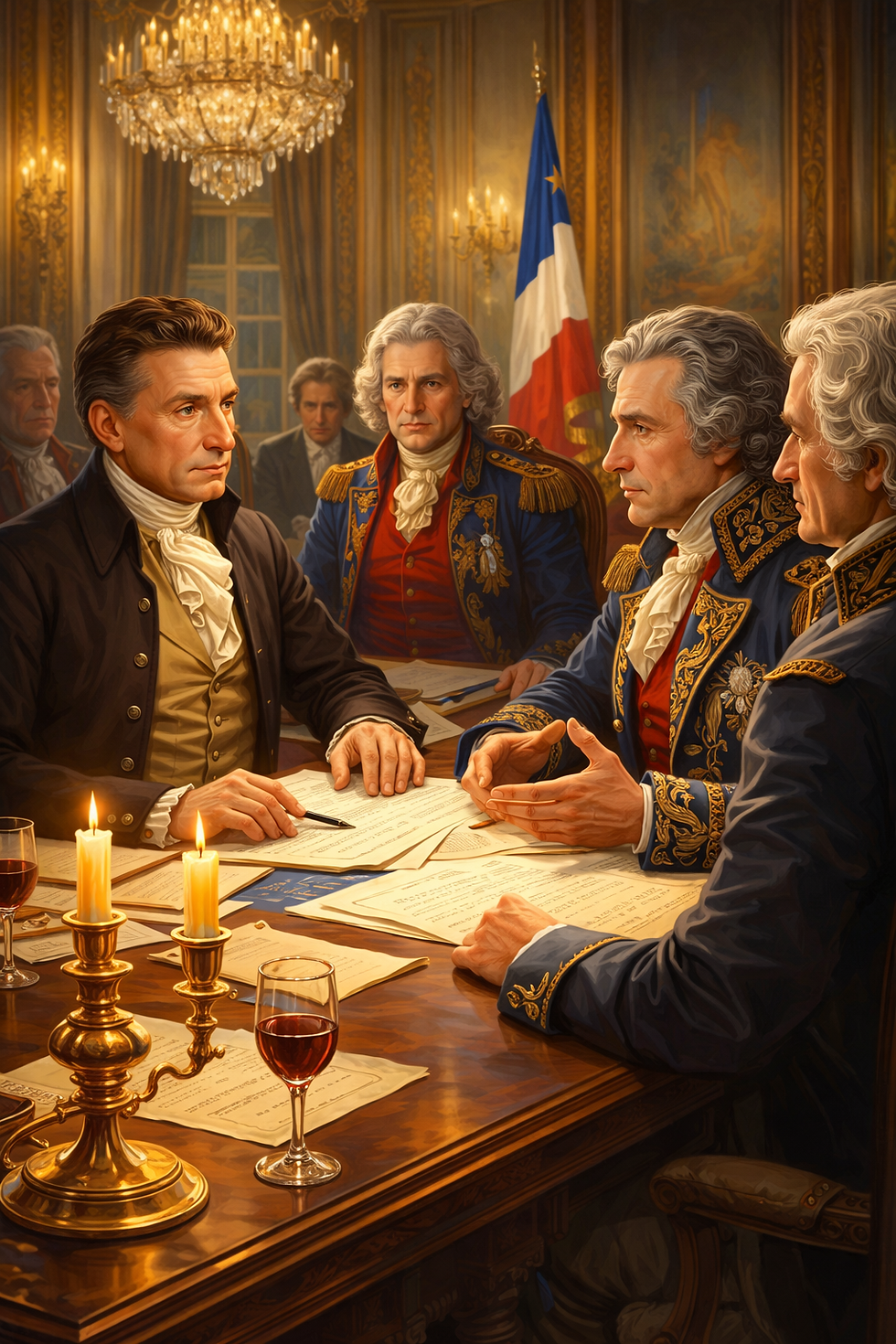
My Name is James Monroe: Revolutionary Soldier, Diplomat, and President
I was born in 1758 in Virginia, at a moment when loyalty to the British Crown was already weakening. My family was not wealthy, but they valued independence and education. I attended the College of William and Mary, yet my studies were cut short by revolution. When the call came, I chose action over comfort, believing that liberty demanded sacrifice.
A Soldier of the Revolution
I entered the Continental Army as a young officer and quickly learned the cost of independence. I crossed the Delaware River with General Washington and was wounded at the Battle of Trenton. That moment marked me forever. I saw how fragile the American cause truly was and how courage, perseverance, and unity mattered more than numbers or supplies. War taught me discipline and loyalty to the republic we were struggling to create.
Law, Politics, and a New Nation
After the war, I returned to Virginia to study law under Thomas Jefferson. His ideas shaped my understanding of republican government and constitutional restraint. Entering public life, I served in Congress and later in the Virginia legislature. I believed deeply that the states and the people must remain central to American government, even as the nation grew stronger.
Diplomacy Abroad
My career took me far from home as I served as minister to France and later to Britain. Diplomacy tested my patience and resolve in ways war never had. I learned that nations pursue interests, not friendships, and that American survival depended on careful negotiation rather than emotional alliances. These lessons would prove critical when the fate of American expansion hung in the balance.
The Louisiana Negotiation
Sent to France to assist in negotiations over New Orleans, I expected a limited and difficult mission. Instead, opportunity appeared suddenly and unexpectedly. When France offered all of Louisiana, I understood the magnitude of the moment. We acted quickly, knowing delay could mean disaster. Though we exceeded our instructions, I believed history would favor boldness over caution, and time proved us right.
Secretary of State and War
Serving as Secretary of State during the War of 1812 forced me to confront the vulnerabilities of the young republic. Diplomacy failed, war followed, and I watched Washington burn. These events hardened my belief that American independence required both military readiness and diplomatic clarity.
The Presidency and National Confidence
When I became president, the nation was weary of conflict. I sought unity, stability, and growth. My presidency became known as a time of national confidence, though I knew underlying divisions remained. I focused on strengthening American independence abroad and encouraging development at home.
Doctrine and Destiny
In my later years as president, I supported a clear statement of American independence from European interference in the Western Hemisphere. This principle, later known as the Monroe Doctrine, reflected my lifelong belief that the United States must control its own destiny and defend its sovereignty through resolve rather than conquest.
Retirement and Reflection
After leaving office, I returned to Virginia, content that I had served the republic in war, diplomacy, and leadership. I was not a man of soaring rhetoric or dramatic vision, but of steady service. I believed that history is shaped not only by bold leaders, but by those willing to act responsibly when opportunity and danger arrive together.
Legacy of Service
My life was one of continuity rather than revolution. I stood between generations, helping carry the ideals of independence into a stable and lasting nation. If my story is remembered, I hope it is as that of a man who placed the survival and unity of the United States above personal ambition, and who trusted that careful action could secure a nation’s future.
James Monroe Sent as a Special Envoy (1802) – Told by James Monroe
When President Jefferson asked me to travel to France as a special envoy, I understood immediately that this was no ordinary diplomatic assignment. The situation surrounding New Orleans and the Mississippi River had grown too dangerous to manage through routine correspondence. Spain’s former tolerance could no longer be assumed under French rule, and delay risked disaster. My mission was clear in its urgency, if narrow in its wording: secure New Orleans for the United States, or be prepared for consequences that could lead to confrontation.
The Weight of Limited Instructions
My formal authority was restrained, perhaps deliberately so. I was empowered to assist our minister in negotiating the purchase of New Orleans and adjacent territory, but nothing more. Yet I knew that diplomacy rarely unfolds according to instructions alone. Events move faster than letters cross the Atlantic. I carried with me not only written orders, but the understanding that failure could push the United States toward war with a European empire at a time when we were unprepared for such a conflict.
Crossing the Atlantic with Uncertainty
As I crossed the ocean, I reflected often on the stakes involved. Western farmers depended on New Orleans for survival. The unity of the republic rested on uninterrupted access to the Mississippi. If France denied us that access, pressure for military action would rise quickly at home. My task was to prevent that outcome if at all possible, knowing that success would preserve peace and failure might ignite war.
Negotiation Under the Shadow of Force
Though my mission was diplomatic, force hovered constantly in the background. France knew the United States could not tolerate permanent exclusion from the river. We knew France faced greater threats in Europe and the Caribbean. Diplomacy, in this case, was not an exchange of pleasantries, but a contest of timing and resolve. Each side weighed what it could afford to lose.
Prepared for Outcomes Beyond Purchase
I did not travel to France believing negotiation alone guaranteed success. If talks collapsed, I expected the United States would be forced to consider alliances, military preparations, or both. My role was to exhaust every peaceful option while making clear, without threats, that American patience had limits. Peace, when it endures, is often secured by those willing to acknowledge the possibility of conflict.
A Turning Point for the Republic
Looking back, I see that my appointment marked a shift in America’s posture on the world stage. We were no longer a nation reacting cautiously from the sidelines of global politics. We were defending vital interests that could not be compromised. Whether through purchase or confrontation, the future of the Mississippi would be decided. My task was to ensure that decision favored peace, stability, and the long-term survival of the United States.
Livingston Negotiates Under Extreme Uncertainty – Told by Robert Livingston
Serving as the American minister in France placed me in a position of constant uncertainty, but never more so than during the negotiations surrounding Louisiana. Communication across the Atlantic was slow and unreliable. Instructions arrived late, if at all, and events moved faster than guidance could follow. I was expected to protect American interests while operating without precise authority, knowing that every decision carried consequences far beyond my own career.
Limited Authority, Enormous Stakes
My formal mandate was narrow. I was authorized to seek security for American access to New Orleans, not to negotiate the fate of an entire continent. Yet diplomacy rarely respects the boundaries set by paperwork. French officials spoke ambiguously, intentions shifted quickly, and the scale of what was being discussed expanded almost overnight. I found myself weighing opportunities that exceeded my instructions against dangers that delay might invite.
Negotiating in the Dark
French politics were opaque, even to seasoned diplomats. Decisions were centralized, secretive, and subject to sudden reversal. I often did not know whether I was speaking to men with real authority or merely repeating rumors shaped to test American resolve. Every word mattered. A careless response could close doors permanently, while hesitation could signal weakness at the worst possible moment.
The Burden of Judgment
Without clear direction, judgment became my most valuable tool and my greatest burden. I had to ask not only what I was permitted to do, but what must be done to protect the republic. The risk of overstepping authority weighed heavily, yet so did the risk of missing a singular opportunity. In diplomacy, refusing to decide is itself a decision, and often the most dangerous one.
Responsibility Without Certainty
I understood that whatever course I chose would be examined closely back home, where hindsight would sharpen criticism. There would be questions about legality, authority, and precedent. Still, uncertainty did not absolve responsibility. I reminded myself that my duty was not to avoid blame, but to serve the long-term security of the United States as best I could with the information at hand.
Acting Before the Moment Passed
The most difficult aspect of negotiation under uncertainty is knowing when delay becomes failure. Opportunities in international affairs rarely announce themselves clearly, and they vanish without warning. I acted when it became clear that waiting for perfect clarity would cost us everything. In that moment, I trusted that outcomes would justify decisions made without complete instruction.
Diplomacy as Calculated Risk
Looking back, I know that negotiation under extreme uncertainty demands courage different from that required on the battlefield. It requires the willingness to accept responsibility without assurance, to act without permission when necessity demands it, and to trust that the nation will ultimately judge results more than process. In that crucible of uncertainty, the fate of the Louisiana negotiations was decided—not by certainty, but by resolve.
France Offers All of Louisiana (1803) – Told by Robert Livingston
For months, our negotiations had moved cautiously, even frustratingly so. We spoke of access, of rights, of narrow solutions meant to secure New Orleans and little more. I had resigned myself to incremental progress, if any at all. Then, without warning, the entire structure of the discussion shifted. French officials began to speak not of ports or privileges, but of territory—vast territory. When the words were finally spoken, I scarcely believed them myself. France was prepared to offer all of Louisiana.
From Limited Aim to Continental Scale
The magnitude of the offer was staggering. Louisiana was not a city or a strip of land, but an immense domain stretching beyond the imagination of most Americans. Our original instructions had been modest by comparison, and nothing in our prior exchanges suggested such a dramatic reversal. What had begun as a defensive negotiation suddenly became an opportunity to reshape the future of the United States. The sheer scale of it forced me to rethink everything I thought I understood about the moment.
Shock Tempered by Urgency
Astonishment quickly gave way to urgency. Offers of this kind do not linger. I knew at once that delay could invite reconsideration, interference, or collapse. France’s willingness to part with Louisiana was rooted in pressures far beyond our control, and those pressures could change overnight. The shock of the proposal sharpened my awareness that history rarely grants second chances.
Weighing Authority Against Opportunity
The difficulty lay not in recognizing the value of the offer, but in deciding whether we could accept it. Our authority did not clearly extend this far. No letter from home had prepared us for a choice of this magnitude. Yet refusing to act because of imperfect instructions would have been an act of negligence. I had to judge whether fidelity to procedure outweighed responsibility to outcome.
A Moment That Could Not Be Deferred
I understood that this decision would be questioned, perhaps fiercely, once known in America. Constitutional concerns, political opposition, and accusations of overreach would surely follow. Still, I believed that losing Louisiana through hesitation would prove far more damaging than answering for boldness. Some moments in diplomacy do not allow consultation. They demand resolve.
When Negotiation Becomes History
As the reality settled in, I felt the weight of the transformation taking place. Negotiations that had once seemed narrow and defensive had expanded into something epochal. In that instant, I understood that the United States stood at the threshold of becoming a continental nation. The negotiation had not merely advanced—it had exploded beyond all expectations, carrying with it the future shape of the republic.
Choosing Action Over Astonishment
I did not allow myself the luxury of wonder for long. History was moving, and it required a response. By acting, we accepted risk, responsibility, and uncertainty, but we also seized a future that might otherwise have slipped away. In that extraordinary moment, diplomacy ceased to be about managing relations and became about defining a nation’s destiny.
The $15 Million Deal Is Signed – Told by James Monroe
When the terms of the agreement were finally placed before us, there was little time for hesitation. France was prepared to sell, but not to wait. European politics shifted rapidly, and any delay risked reversal or interference. We understood that waiting for formal approval from across the Atlantic could cost the United States everything. In diplomacy, opportunity often arrives before permission.
The Risk of Acting Beyond Instructions
Our authority did not clearly extend to the purchase of all Louisiana. We were aware of this, and the weight of that realization pressed heavily upon us. Yet authority is not exercised in isolation from circumstance. The choice was not between perfect legality and reckless action, but between decisive risk and irreversible loss. We judged that the nation’s security outweighed the dangers of overstepping our instructions.
Time as the Deciding Factor
Communication with Washington required weeks, not days. During that time, Britain could intervene, France could reconsider, or war could reshape priorities entirely. The value of the deal lay not only in its price, but in its immediacy. Hesitation would have signaled weakness and invited complications we could not control.
The Scale of What Was at Stake
Fifteen million dollars was an enormous sum for the young republic, but the land it purchased was beyond valuation. Control of the Mississippi, security for western farmers, and removal of European power from our borders justified the cost many times over. We understood that the price would be debated, but the consequences of inaction would be far worse.
Trusting Judgment Over Instruction
By signing the agreement, we accepted personal and political risk. We knew our decision might be rejected or criticized at home. Still, we trusted that reason would prevail once the scope of the achievement became clear. Diplomats are sometimes required to act as guardians of opportunity, even when guidance lags behind reality.
Commitment Without Certainty
The moment the signatures were placed, the future of the United States shifted irreversibly. We had acted without guarantees, trusting that the nation would recognize the necessity of what had been done. It was not arrogance that guided us, but responsibility. When the moment demanded action, we chose commitment over caution, believing that history would reward courage exercised in service of peace and national survival.
Jefferson’s Constitutional Dilemma – Told by Thomas Jefferson
When news reached me that our envoys had agreed to purchase all of Louisiana, my first reaction was not triumph, but unease. I had spent my life arguing for strict limits on federal power, insisting that the Constitution be read carefully and narrowly. The opportunity before us was immense, yet I could not escape the question of legality. Did the Constitution grant the president authority to acquire foreign territory, or were we stepping beyond the bounds we had so carefully set?
Silence Within the Constitution
The Constitution spoke clearly on many matters, but on this point it was silent. It authorized treaties, yet it did not explicitly permit the acquisition of land from foreign nations. Silence, in constitutional matters, is dangerous ground. To assume power simply because it was not forbidden risked turning a government of limited authority into one of convenience. I feared that accepting the purchase without amendment would establish a precedent future leaders might exploit for less noble ends.
The Weight of Precedent
My concern extended beyond Louisiana itself. If the Constitution could be stretched to justify this act, what else might be justified in years to come? I worried that the same reasoning could later excuse aggression, unchecked expansion, or disregard for the rights of states and citizens. A republic, once accustomed to bending its founding document, may find it difficult to stop.
Practical Necessity Versus Principle
Yet the practical realities were impossible to ignore. Refusing the purchase might leave Louisiana in foreign hands, threaten the Mississippi, and invite war. An amendment, though legally cleaner, would take time we did not have. The opportunity could vanish before the process concluded. I was forced to weigh constitutional purity against national survival, knowing that either choice carried lasting consequences.
A Reluctant Acceptance
In the end, necessity prevailed. I accepted the treaty as a legitimate exercise of the nation’s treaty-making power, even as I remained uneasy. I did not abandon my principles lightly. Rather, I recognized that the Constitution was designed to preserve the republic, not to render it helpless in the face of danger. Still, I hoped future generations would treat such moments with the same caution and restraint.
A Lesson in Republican Responsibility
This dilemma taught me that leadership in a republic is rarely simple. Fidelity to principle must sometimes coexist with adaptation to circumstance. The challenge lies in knowing when flexibility preserves the system and when it erodes it. The Louisiana Purchase tested that balance, and while I accepted its necessity, I never forgot the warning it carried. Power once exercised is rarely surrendered, and vigilance must remain the companion of liberty.
Senate Ratification and Public Reaction – Told by James Monroe
When news of the Louisiana Purchase reached the United States, the reaction was far from uniformly celebratory. The scale of the acquisition shocked the public and unsettled political leaders. Many Americans had expected negotiations over a port, not the sudden doubling of the nation’s size. Surprise quickly gave way to debate, and debate revealed deep anxieties about what such an expansion might mean.
Political Opposition Takes Shape
Opposition formed most strongly among those who already distrusted the expansion of federal power. Critics argued that the Constitution had been violated and that the executive branch had acted without proper authority. Others feared the precedent such a treaty might establish, warning that it placed too much discretion in the hands of future presidents. These concerns were voiced loudly in newspapers and on the Senate floor, reflecting a broader unease about rapid change.
Regional Fears and Sectional Tensions
Beyond constitutional objections, regional fears dominated public discussion. Eastern states worried that new western lands would shift political power away from the Atlantic seaboard. Some feared the dilution of their influence in Congress, while others worried that the nation would become too large to govern effectively. Questions about slavery, statehood, and cultural cohesion hovered over every discussion, even if they were not always spoken openly.
Weighing Risk Against Opportunity
Despite these fears, the advantages of the purchase were undeniable. Senators understood that rejecting the treaty would likely leave Louisiana in foreign hands, inviting future conflict and instability. Control of the Mississippi River, security for western settlers, and removal of European influence from the continent weighed heavily in the deliberations. Practical security began to outweigh theoretical objections.
The Case for Ratification
Supporters of the treaty emphasized that the Senate’s role was not to revisit the negotiation, but to judge its outcome. They argued that the treaty-making power existed precisely for moments like this, when national interest demanded swift and decisive action. The cost, though significant, was manageable. The opportunity, if lost, might never return.
Public Opinion Gradually Shifts
As debate continued, public reaction evolved. Farmers, merchants, and western settlers recognized the promise of stability and opportunity. Even skeptics began to see that the purchase reduced the likelihood of war rather than increased it. Economic benefit and national security proved persuasive arguments in a young nation still wary of foreign entanglements.
Approval and Acceptance
When the Senate ratified the treaty, it did so with awareness of both risk and reward. The decision was not unanimous, nor was it made lightly. Yet it reflected a growing confidence in the republic’s ability to adapt without abandoning its principles. The deal passed because it offered security, growth, and peace at a moment when the alternative was uncertainty and danger.
A Precedent Tempered by Prudence
In time, opposition faded, replaced by acceptance and even pride. The nation had taken a bold step, and it had done so through lawful process and open debate. The ratification of the Louisiana Purchase showed that disagreement need not prevent decisive action, and that a republic, when guided by reason and restraint, could expand without losing its identity.
Long-Term Consequences of the Louisiana Purchase – Told by James Monroe, Thomas Jefferson, Napoleon Bonaparte, and Robert Livingston
A Continent Opens Before a Republic
James Monroe: When we secured Louisiana, we did more than purchase land—we unlocked movement. Americans streamed westward in numbers none of us could have fully predicted. Farmers, merchants, and families followed rivers and trails into lands once distant and uncertain. Expansion brought opportunity and stability for many, but it also ensured that the United States would no longer be a coastal nation. It would become a continental power, defined by motion rather than boundaries.
Power Gained, Power Tested
Thomas Jefferson: I understood that expansion would test our principles as much as our strength. A republic spread across vast territory must govern wisely or fracture under its own weight. New states meant new political balances, new demands on the Constitution, and new questions about federal authority. The purchase strengthened the nation, but it also forced us to confront how power grows once opportunity is seized.
Displacement and the Cost of Growth
Robert Livingston: Expansion carried consequences that diplomacy could not soften. Native nations had lived on these lands long before European claims or American treaties. As settlers advanced, displacement followed. Agreements were made and broken, borders redrawn, and cultures uprooted. The purchase made these outcomes possible, even inevitable. History rarely expands without exacting a human cost, and this expansion was no exception.
Slavery’s Shadow Moves West
Thomas Jefferson: One of my deepest fears was that new territory would carry old injustices with it. Slavery did not remain confined to the original states; it followed the frontier. Each new territory reignited debate over whether slavery would expand or be restrained. The purchase postponed resolution while magnifying the stakes. What had once been a regional contradiction became a national crisis that future generations would be forced to confront.
Migration and the American Identity
James Monroe: Westward migration reshaped how Americans saw themselves. Independence came to mean land ownership, self-reliance, and mobility. Communities formed far from old centers of authority, demanding representation and protection. This movement strengthened democratic participation, but it also strained institutions not designed for such rapid growth. The nation learned to adapt by necessity.
A European View of American Ascent
Napoleon Bonaparte: From my perspective, the consequences were unmistakable. By acquiring Louisiana, the United States removed European power from the heart of North America. It ensured that no rival empire would easily contain it. In time, America would dominate the continent as decisively as any European state once did its own lands. I sold territory, but I also witnessed the rise of a power that would no longer be shaped by Europe’s will.
Security Through Space
Robert Livingston: Strategically, the purchase transformed security into geography. Distance became defense. Foreign threats no longer pressed directly against the nation’s core. The Mississippi became an internal artery rather than a contested boundary. That shift alone altered America’s future, allowing growth without constant fear of invasion or coercion.
The Making of a Continental Power
Thomas Jefferson: I hoped expansion would preserve liberty, not undermine it. The Louisiana Purchase ensured that the United States would have room to grow, but it also ensured that growth would define our challenges. Expansion magnified both our virtues and our flaws. It created prosperity and conflict in equal measure.
A Decision That Could Not Be Reversed
James Monroe: Once made, the decision reshaped every chapter that followed. The Louisiana Purchase was not merely an event, but a turning point. It set the nation on a path toward continental dominance, internal struggle, and global relevance. We acted to secure peace and opportunity in our time, knowing that the consequences would extend far beyond us.
History’s Long Shadow
Napoleon Bonaparte: Empires rise when moments are seized and fall when consequences are ignored. The Louisiana Purchase reshaped North America permanently. It did not end conflict; it relocated it. It did not resolve injustice; it expanded its reach. Yet it also created the conditions for a nation to define itself on its own terms. That is the enduring legacy of the decision we made together, knowingly or not.


Comments