

7. Heroes and Villains of the Roaring 20's: Women, Fashion, and Changing Roles (1920s)


My Name is Carrie Chapman Catt: American Woman Suffrage Movement Leader
I devoted much of my life to the belief that women deserved the same political rights as men. I was born in 1859 in Wisconsin and grew up in Iowa during a time when women had very few opportunities in public life. Even as a young woman, I questioned why women could not vote, hold political influence, or enjoy the same freedoms as men. Education became important to me, and after attending college, I became a teacher and later a school superintendent, which was a rare achievement for a woman of my time.
Joining the Fight for Suffrage
As I grew older, I became involved in the movement for women's voting rights. I worked alongside many dedicated reformers and eventually became one of the leaders of the National American Woman Suffrage Association. I traveled across the country giving speeches, organizing campaigns, and convincing lawmakers that women deserved a voice in government. Many people opposed our cause, but I believed their fears were based on outdated ideas about what women could accomplish.
Winning the Right to Vote
The greatest achievement of my career came in 1920 when the 19th Amendment was ratified, guaranteeing women the right to vote throughout the United States. For decades, countless women had worked toward this goal, and I was proud to help lead that effort. I believed voting would improve government, strengthen families, and give women the ability to shape the future of their communities. To me, it seemed obvious that a democracy could not truly represent its people while excluding half of its citizens.
Encouraging Women to Participate
After suffrage was achieved, I focused on helping women become informed voters and active citizens. I helped establish organizations that taught women about government, elections, and public policy. I wanted women to use their new political power wisely and believed that educated participation would improve American society. I saw voting not only as a right but also as a responsibility.
Views That Created Controversy
Not all of my views were welcomed by everyone. During my lifetime, I sometimes supported arguments that today are considered deeply troubling. At times, I believed that educated women voters would strengthen American government and society, and I used arguments that reflected the racial and social attitudes common among many leaders of my era. I often failed to understand why some critics viewed these arguments as unfair or exclusionary. In my mind, I was trying to persuade resistant lawmakers and voters, and I focused on what I thought would help the suffrage movement succeed.
Debates Over Race and Citizenship
Some African American leaders and activists believed that the women's suffrage movement did not do enough to fight racial discrimination. While I supported voting rights for women, I did not always fully recognize the different barriers faced by minority communities. I often viewed the movement through the lens of achieving women's suffrage first, believing that success in one area would eventually lead to progress in others. Many disagreed with that approach and felt it left important issues unresolved.
Watching Society Change
The 1920s brought dramatic changes that I could scarcely have imagined as a young woman. Women entered professions, attended universities in larger numbers, and gained greater independence. New fashions, new social freedoms, and new opportunities appeared across the nation. While I supported greater opportunities for women, some of the cultural changes surprised even those of us who had fought for equality. America was changing rapidly, and not everyone agreed on what those changes should look like.
The Long Road to Women's Suffrage (Before 1920) - Told by Carrie Chapman Catt
When the United States was founded, many people celebrated ideas such as liberty, representation, and self-government. Yet for generations, most women could not vote, hold political office, or directly influence the laws that governed their lives. Women paid taxes, worked beside their families, raised children, and helped build communities, but they were largely excluded from the political process. As America expanded across the continent and its democracy grew, more women began asking a simple question: If government derives its power from the people, why were women not included among those people?
The Beginning of an Organized Movement
The fight for women's suffrage truly began to take shape in 1848 at the Seneca Falls Convention in New York. There, reformers such as Elizabeth Cady Stanton and Lucretia Mott gathered to discuss the rights of women. Their Declaration of Sentiments boldly stated that women deserved equal treatment under the law, including the right to vote. At the time, many Americans considered the idea shocking. Newspapers mocked the movement, critics laughed at its supporters, and some people believed women who sought political rights were abandoning their proper place in society. Yet the movement had begun, and it would not disappear.
Decades of Persistence
The struggle lasted far longer than most supporters expected. Women organized meetings, gave speeches, circulated petitions, and traveled thousands of miles to persuade lawmakers and voters. Leaders such as Susan B. Anthony, Elizabeth Cady Stanton, Lucy Stone, and many others devoted their lives to the cause. Progress came slowly. Some western territories and states granted women the right to vote before the rest of the nation, giving suffragists valuable examples they could point to when arguing for broader reform. Each victory proved that women voters did not destroy society as critics had predicted.
The Challenges of a Changing Nation
The suffrage movement unfolded during one of the most dramatic periods in American history. The nation experienced the Civil War, Reconstruction, rapid industrialization, mass immigration, and growing urbanization. Many reformers supported multiple causes, including abolition, education reform, and labor rights. Yet these overlapping movements sometimes created disagreements about priorities and strategy. Some believed women's suffrage should wait until other issues were resolved, while others insisted that equal political rights could not be postponed indefinitely.
A New Generation Takes the Fight Forward
By the early twentieth century, a new generation of activists brought fresh energy to the movement. Large parades filled city streets. Public demonstrations attracted national attention. Newspapers regularly covered the debate. Organizations expanded their membership and improved their political influence. Women increasingly attended colleges, entered professions, and participated in public life, making it more difficult for opponents to argue that they lacked the knowledge needed to vote. The nation itself was changing, and many Americans began to see women's suffrage as part of a broader movement toward modernization.
The World War I Turning Point
World War I became a turning point in the struggle. As American men left for military service, women stepped into important roles in factories, offices, hospitals, and community organizations. Their contributions demonstrated their ability to serve the nation during a time of crisis. Many Americans who had once opposed suffrage began reconsidering their views. The argument that women deserved a voice in the government they were helping support became increasingly difficult to ignore.
Preparing for the Opportunities of the 1920s
By 1920, after more than seventy years of organized activism, sacrifice, and determination, the movement stood on the edge of victory. The campaign for suffrage had done more than seek voting rights. It had encouraged women to pursue education, develop leadership skills, engage in public debate, and participate in civic life. These experiences prepared women for the opportunities and challenges that would emerge during the Roaring Twenties. The right to vote was not the end of the story—it was the beginning of a new chapter in American history, one that would reshape politics, society, and the lives of millions of women for generations to come.
My Name is Alice Paul: Leader of the National Woman's Party
I dedicated my life to securing equal rights for women. I was born in 1885 in New Jersey into a Quaker family that believed women and men were equal before God. From an early age, I was taught that women should have the same opportunities as men. Education was important in my family, and I attended college before continuing my studies in England, where I first encountered the militant suffrage movement.
Learning to Fight for Change
While in England, I witnessed suffragists willing to march, protest, and even go to prison to gain voting rights. I joined their cause and was arrested several times. Those experiences convinced me that polite requests alone would not bring change. When I returned to the United States, I brought many of those tactics with me. I believed the fight for equality required courage, persistence, and public pressure.
Taking the Suffrage Movement to Washington
I organized large parades, demonstrations, and public campaigns demanding voting rights for women. Many leaders within the suffrage movement thought my methods were too aggressive. I disagreed. I believed politicians would ignore women unless they were forced to confront the issue directly. To me, the slow pace of reform was unacceptable, and I could not understand why some supporters preferred caution over action.
The Silent Sentinels
One of my most famous campaigns involved the Silent Sentinels, women who peacefully picketed outside the White House. This was unprecedented and controversial. Even during World War I, we continued our demonstrations. Many Americans believed criticizing the government during wartime was unpatriotic. I saw it differently. I believed that if democracy was worth defending overseas, it was worth improving at home. I struggled to understand why so many people viewed our protests as offensive.
Prison and Public Sympathy
My protests eventually led to arrest and imprisonment. While in prison, I participated in hunger strikes and endured force-feeding by authorities. News of our treatment shocked many Americans and helped increase support for women's suffrage. I viewed these sacrifices as necessary. Rights were rarely given freely, and I believed every hardship brought us closer to victory.
Winning the Vote
In 1920, the 19th Amendment became law, granting women the right to vote nationwide. It was a moment I had worked toward for years. Yet while many celebrated the victory as the end of the struggle, I saw it only as the beginning. Voting rights were important, but I believed true equality required much more than access to the ballot box.
The Equal Rights Amendment
Soon after suffrage was achieved, I introduced the Equal Rights Amendment, often called the ERA. The amendment sought legal equality for women under the law. Many reformers supported it, but others strongly opposed it. Some labor activists feared it would remove special workplace protections for women. I could not understand why anyone would oppose equal treatment under the law. To me, equality was simple and obvious, while critics believed the issue was more complicated.
A Lifetime of Advocacy
For decades, I continued promoting the ERA and advocating for women's legal rights. I worked internationally as well, encouraging greater equality for women around the world. Progress often came slowly, and many of the goals I pursued remained unfinished during my lifetime. Nevertheless, I remained convinced that equal rights should never depend upon gender.
The Ratification of the 19th Amendment (1920) - Told by Alice Paul
When Americans think about the 19th Amendment, they often picture a single vote, a single celebration, or a single year. The truth is far more remarkable. By the time the amendment was ratified in 1920, generations of women had spent more than seventy years fighting for the right to vote. Some had organized conventions, others had traveled across the country giving speeches, and many had endured ridicule, criticism, and defeat. What happened in 1920 was not a sudden victory—it was the culmination of one of the longest reform movements in American history.
Demanding a Voice in Democracy
For decades, women asked a simple question: How could a democratic nation deny voting rights to half of its adult population? Many politicians ignored the issue, believing women either did not want the vote or did not need it. Others openly opposed suffrage, fearing that women would change politics or challenge traditional social roles. Despite these obstacles, suffragists continued to organize campaigns, gather petitions, and pressure lawmakers. Every election without women's participation became another reminder that the nation's promise of equality remained incomplete.
A New Generation of Activists
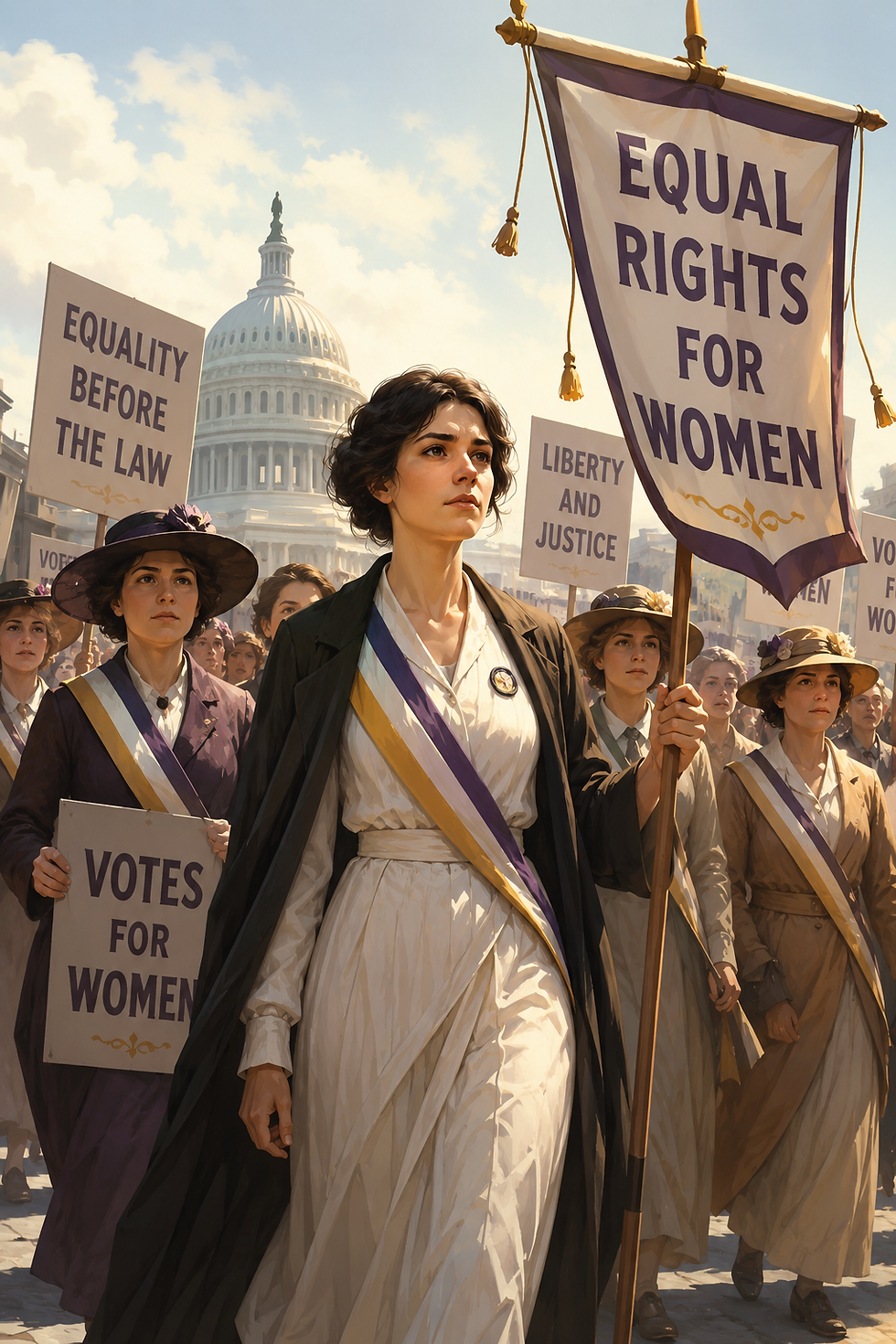
By the 1910s, many suffragists believed stronger action was needed. I helped organize large parades, demonstrations, and public protests designed to keep the issue in the national spotlight. In 1913, thousands marched through Washington, D.C., demanding voting rights. Later, members of the National Woman's Party became the first group to continuously picket the White House. These actions shocked many Americans, but they ensured that the suffrage question could no longer be ignored.
Prison, Protest, and Public Attention
The government's response to our demonstrations created even more attention. Many protesters were arrested and imprisoned. Some of us launched hunger strikes, leading prison officials to force-feed us. Newspapers reported these events across the country, and public sympathy began to grow. Americans who had never considered women's suffrage suddenly found themselves questioning why peaceful demonstrators were being treated like criminals. The movement gained momentum precisely because so many people witnessed the sacrifices being made.
The Impact of World War I
World War I further changed public opinion. As millions of men served in the military, women took on critical roles in factories, offices, hospitals, and community organizations. Their contributions demonstrated their commitment to the nation and challenged old stereotypes about women's abilities. President Woodrow Wilson, who had previously been reluctant to support a federal suffrage amendment, eventually endorsed it. Many lawmakers concluded that women had earned full political participation through both their citizenship and their service.
The Final Fight for Ratification
Congress approved the proposed amendment in 1919, but it still needed approval from three-fourths of the states. The final battle became a state-by-state campaign. Supporters and opponents lobbied legislators intensely. The decisive vote came in Tennessee during the summer of 1920. The outcome was so close that a single legislator, Harry Burn, changed his vote after receiving encouragement from his mother, who supported suffrage. Tennessee became the thirty-sixth state to ratify the amendment, providing the final approval needed for adoption.
A New Era Begins
On August 26, 1920, the 19th Amendment officially became part of the United States Constitution. For the first time, women across the nation could no longer be denied the right to vote because of their sex. Millions of women were now eligible to participate directly in elections, influence public policy, and shape the future of their communities. The amendment transformed American politics by expanding the electorate and giving women a powerful voice in government.
The Legacy of the 19th Amendment
The ratification of the 19th Amendment was one of the most important milestones in American history. It opened doors for greater political participation, encouraged more women to seek leadership positions, and inspired future movements for equality. Yet many challenges remained, and some women—particularly minority women in parts of the country—continued to face barriers to voting. Even so, the victory of 1920 proved that determined citizens could change the Constitution itself. It was a moment that forever altered American democracy and prepared the nation for the social changes that would define the decades ahead.
Women Enter the Voting Booth - Told by Carrie Chapman Catt
The ratification of the 19th Amendment in August 1920 was not the end of the women's suffrage movement—it was the beginning of a new chapter. For the first time in American history, millions of women across the nation could participate in federal elections without being denied the vote because of their sex. As Election Day approached in November 1920, newspapers, political parties, and civic organizations all recognized that American politics had changed forever. The electorate had expanded dramatically, and politicians now had to consider the concerns and opinions of women voters.
Preparing Women for Citizenship
Many women had never voted before and wanted to understand how the electoral process worked. Organizations such as the League of Women Voters, which grew out of the suffrage movement, helped educate new voters about candidates, government institutions, and public policy. Meetings, pamphlets, and community discussions encouraged women to learn about issues and participate responsibly. The goal was not simply to cast ballots, but to become informed citizens capable of shaping the future of their communities and nation.
Political Parties Take Notice
Political leaders quickly realized that women represented a powerful new voting bloc. Both major parties began addressing issues that they believed would appeal to female voters. Topics such as education, public health, child welfare, housing, and workplace conditions received greater attention in political discussions. Although women did not all vote the same way, their participation forced candidates to consider viewpoints that had previously been overlooked. Elections became more representative of the broader population.
Influencing Public Policy
Women soon began using their political influence to support reforms they believed would improve society. Many advocated for better schools, safer working conditions, public health programs, and protections for children. Women's organizations worked with local, state, and national governments to promote legislation addressing these concerns. The voting booth gave women a direct voice in determining which leaders would write and enforce the laws affecting everyday life.
Running for Public Office
The 1920s also saw growing numbers of women seeking elected office themselves. In 1922, Rebecca Latimer Felton briefly became the first woman to serve in the United States Senate. In the same year, Mae Ella Nolan won election to the House of Representatives. Across the country, women were elected to school boards, city councils, and state legislatures. While they remained a small minority, their presence demonstrated that political leadership was no longer reserved exclusively for men.
Challenges and Limitations
Despite the amendment's success, not all women could easily exercise their new rights. In parts of the country, especially the South, many African American women faced discriminatory laws and practices that limited their ability to vote. Native American women also faced obstacles because many Native Americans were not recognized as U.S. citizens until 1924. The struggle for full voting access continued long after the 19th Amendment became law, reminding Americans that legal victories often require further efforts to achieve their full promise.
Changing the Meaning of Citizenship
Women's participation in elections transformed how Americans viewed citizenship. No longer were women expected to remain entirely outside political life. They attended campaign events, joined civic organizations, followed public debates, and influenced government decisions. Young girls growing up in the 1920s now lived in a country where women voting was becoming normal rather than controversial. This shift changed expectations for future generations.
A Lasting Political Legacy
The first women who entered voting booths after 1920 helped reshape American democracy. Their participation expanded public debate, influenced government priorities, and encouraged greater civic engagement across the nation. The right to vote did not solve every challenge facing women, but it provided a powerful tool for pursuing change. The ballots cast by millions of women during the 1920s marked the beginning of a new era in which their voices would play an increasingly important role in shaping the United States.

My Name is Amelia Earhart: Aviation Pioneer and Women's Advocate
I became known as one of the most famous pilots in history. I was born in Kansas in 1897 and grew up during a time when society expected women to follow very specific paths in life. Even as a young girl, I enjoyed activities many considered unusual for girls. I climbed trees, explored outdoors, and questioned why certain opportunities were reserved for boys. I never saw much value in limits based solely on gender.
Discovering the World Beyond Expectations
During World War I, I worked as a nurse's aide and saw firsthand the sacrifices made by many people. After the war, I became increasingly interested in new technologies and changing opportunities for women. In 1920, I attended an air show and took my first airplane ride. The experience changed my life. As soon as the plane left the ground, I knew I wanted to fly.
Learning to Fly
Flying was not an easy career for a woman. Few female pilots existed, and many people doubted that women belonged in aviation. I worked various jobs, saved money for lessons, and earned my pilot's license. To me, flying represented freedom and possibility. I often struggled to understand why so many people believed women should avoid careers that were considered difficult, dangerous, or traditionally male.
Breaking Records and Barriers
My fame grew after I became the first woman to fly across the Atlantic Ocean as a passenger in 1928. While the accomplishment brought attention, I wanted people to recognize women as capable pilots, not simply passengers. In 1932, I became the first woman to fly solo across the Atlantic. Each record I broke was intended to prove that women could succeed in fields long dominated by men.
Speaking Out for Equality
As my popularity increased, I used my public platform to encourage women to pursue education, careers, and independence. I supported greater opportunities in business, science, aviation, and public life. Some people admired these views, while others believed women should focus primarily on traditional family roles. I often found their objections confusing. If a woman had the ability and determination to achieve something, I could not understand why society should stand in her way.
A Modern Marriage
One of my most controversial decisions involved my marriage to publisher George Putnam. Before we married, I wrote a letter explaining that I wanted a partnership based on equality rather than traditional expectations. Some Americans viewed these ideas as radical or even threatening to family life. I saw them as practical and fair. I believed two people could love one another while still maintaining independence and personal ambitions.
Controversies of Fame and Risk
Not everyone approved of my constant pursuit of aviation records. Critics argued that I encouraged women to take unnecessary risks or seek fame instead of stability. Others believed my public image promoted social changes that moved too quickly. I disagreed. To me, progress always involved risk, and I believed that visible examples of successful women could inspire others to pursue their own dreams.
The Final Journey
In 1937, I began an attempt to fly around the world. It was one of the most ambitious aviation challenges ever attempted. During the journey, my aircraft disappeared over the Pacific Ocean. Despite countless searches and investigations, my fate remains one of history's greatest mysteries. Some believe I crashed at sea, while others have proposed different theories, but no final answer has ever been universally accepted.
New Opportunities in Colleges and Universities - Told by Amelia Earhart
When people think about the changes experienced by women during the 1920s, they often focus on fashion, music, or social life. Yet one of the most important transformations was taking place on college campuses across America. More young women than ever before were enrolling in colleges and universities, pursuing advanced education, and preparing for careers that previous generations could scarcely imagine. These educational opportunities helped create the modern woman of the twentieth century and expanded possibilities far beyond the home.
The Early Struggle for Higher Education
For much of American history, higher education was largely reserved for men. While a few women's colleges existed during the nineteenth century, many universities either refused to admit women or severely limited their participation. Reformers argued that women were just as capable of academic achievement as men, and by the late nineteenth and early twentieth centuries, more institutions began opening their doors. As these barriers slowly fell, increasing numbers of young women seized the opportunity to continue their education beyond high school.
The Impact of World War I
World War I accelerated many social changes, including attitudes toward education. During the war, women took on new responsibilities in offices, factories, hospitals, and public service. These experiences demonstrated that women possessed skills and talents that could benefit society in countless ways. After the war, many families viewed higher education as a path toward professional success and greater independence for their daughters. College attendance became more common and increasingly respected.
Life on Campus in the 1920s
College campuses became centers of learning, friendship, and personal growth. Young women studied literature, science, mathematics, education, history, business, and many other subjects. Student organizations, debate clubs, sports teams, and campus newspapers provided opportunities to develop leadership skills. For many women, attending college was their first experience living away from home and making important decisions independently. These experiences helped prepare them for active participation in modern society.
Preparing for Professional Careers
Higher education opened doors to careers that had once been difficult or impossible for women to enter. Teaching remained one of the most common professions, but women increasingly pursued opportunities in journalism, social work, nursing, business, research, and public administration. Some entered fields such as law and medicine, though they often faced significant obstacles. College degrees provided credentials that helped women compete for positions requiring specialized knowledge and training.
Women in Science and Aviation
The growth of educational opportunities also benefited fields that had traditionally been dominated by men. As aviation developed during the early twentieth century, educated women began entering technical and scientific careers connected to the industry. While I gained much of my flight experience outside the classroom, the broader expansion of educational opportunities helped create a culture in which women increasingly believed they could succeed in demanding professions. Education encouraged confidence, curiosity, and ambition.
Challenges That Remained
Despite this progress, barriers still existed. Women often faced discrimination in admissions, hiring, and professional advancement. Certain fields remained overwhelmingly male, and many employers expected women to leave their careers after marriage. Tuition costs also prevented some young women from attending college. Even so, each graduating class helped challenge old assumptions about what women could accomplish.
Women in the Workforce After World War I - Told by Amelia Earhart
When World War I ended in 1918, America entered a period of rapid change. The war had disrupted traditional patterns of work and opened doors that had previously been closed to many women. During the conflict, women had stepped into jobs left vacant by men serving in the military. They worked in factories, offices, hospitals, transportation systems, and government agencies. When peace returned, many women were unwilling to surrender the independence and experience they had gained. The workforce of the 1920s would look very different from that of previous generations.
The Rise of Office Work
One of the fastest-growing areas of employment for women was office work. As businesses expanded during the Roaring Twenties, they needed clerks, typists, stenographers, bookkeepers, and secretaries. New technologies such as typewriters, telephones, and filing systems created thousands of positions. Office work was often considered respectable and modern, making it attractive to young women seeking careers outside the home. In cities across America, office buildings filled with women helping manage the growing economy.
Teachers, Nurses, and Professionals
Teaching and nursing remained among the most common professions for women. Schools were expanding to serve growing communities, while advances in medicine increased demand for trained nurses. At the same time, a small but growing number of women entered professions such as journalism, law, social work, and business. These careers often required additional education and training, but they offered opportunities that would have been difficult to imagine only a few decades earlier.
Factories, Stores, and Service Jobs
Not all working women held office positions. Millions worked in factories producing clothing, textiles, food products, and consumer goods. Others found employment in department stores, restaurants, hotels, and other service industries. These jobs could be demanding and often paid less than similar work performed by men, but they provided income and opportunities for women to contribute directly to their families' finances. The growing consumer economy of the 1920s relied heavily on female workers.
Earning Independence
Perhaps the most important result of employment was the independence it provided. For many young women, earning a paycheck meant making decisions about their own lives. They could purchase clothing, save money, travel, attend social events, and sometimes delay marriage while pursuing personal goals. Economic independence gave women greater control over their futures and helped challenge older assumptions that women should rely entirely on fathers or husbands for financial support.
Changing Expectations
As more women entered the workforce, public attitudes began to change. Employers increasingly expected to see women in offices, schools, hospitals, and stores. Young girls growing up during the 1920s could imagine careers that had once been unavailable to their mothers or grandmothers. While many women still left the workforce after marriage, the idea that women could build successful careers became more widely accepted than ever before.
Obstacles and Inequality
Despite these advances, significant challenges remained. Women were often paid less than men for similar work and were frequently excluded from leadership positions. Certain professions remained difficult to enter, and discrimination was common. Married women sometimes faced pressure to leave their jobs, especially during periods of economic uncertainty. Even so, each year more women demonstrated that ability and determination mattered far more than outdated stereotypes.
The Rise of the Modern Working Woman - Told by Amelia Earhart
The 1920s are often remembered for jazz music, automobiles, and changing fashions, but another transformation was taking place in offices, schools, hospitals, and stores across the nation. More women than ever before were working outside the home. While women had always worked in some capacity, the Roaring Twenties saw the emergence of what many called the "modern working woman"—educated, skilled, and increasingly independent. Her presence would reshape American society and influence future generations.
The Office Revolution
One of the greatest sources of employment for women was the growing office sector. As businesses expanded, they required workers to manage records, answer telephones, prepare documents, and organize information. Women became typists, stenographers, secretaries, bookkeepers, and clerks in rapidly increasing numbers. The spread of typewriters, telephones, and filing systems created thousands of new jobs. Office work offered stable employment and allowed many women to enter professional environments that had previously been dominated by men.
Teaching the Next Generation
Teaching remained one of the most respected professions available to women. Across the country, expanding school systems needed trained educators to teach growing numbers of students. Female teachers became important leaders within their communities, helping shape the education of future generations. Many women viewed teaching as an opportunity to use their education while contributing to society in meaningful ways. By the 1920s, women made up a large percentage of America's teaching workforce.
Nursing and Healthcare Careers
The medical field also offered growing opportunities. Advances in medicine and public health increased demand for trained nurses, hospital staff, and healthcare professionals. Women worked in hospitals, clinics, and public health programs that sought to improve the health of American communities. Nursing required skill, discipline, and compassion, and many women found it both rewarding and respected. The profession became one of the most important career paths available during the decade.
The Growth of Retail and Consumer Culture
The booming economy of the 1920s created a growing consumer culture, and department stores became major employers of women. Sales clerks, cashiers, buyers, and managers worked in stores that sold everything from clothing to household goods. Shopping itself became a popular social activity, and women played a central role in the retail industry. These jobs connected workers directly to the changing tastes and fashions that defined the decade.
New Professional Opportunities
Although barriers remained, women also began entering careers that had once been difficult to access. Journalism, social work, library science, banking, and government service attracted increasing numbers of female workers. A small number pursued careers in law, science, and business leadership. Each woman who entered these fields helped challenge traditional assumptions about what careers women could pursue. Their successes encouraged others to follow similar paths.
Balancing Opportunity and Expectations
Despite these advances, society still expected many women to prioritize marriage and family life. Some employers preferred hiring single women and assumed they would leave their jobs after marrying. Women often received lower wages than men performing similar work. Yet even with these obstacles, the opportunities available during the 1920s represented significant progress compared to earlier generations. Many women were now able to imagine futures that included both careers and personal ambitions.

My Name is Coco Chanel: Fashion Designer and Cultural Revolutionary
I was born Gabrielle Bonheur Chanel in France in 1883. My early years were not filled with luxury or fame. After my mother died, my father left me in an orphanage run by nuns. There I learned discipline, sewing, and self-reliance. While many people would later associate my name with elegance and wealth, my life began in poverty. Those difficult years shaped my determination to escape the limitations that society placed upon women of humble backgrounds.
Building a New Vision of Fashion
As a young woman, I worked as a singer in cafés and small clubs, where I earned the nickname "Coco." Eventually I turned my attention to fashion. At the time, women's clothing was often heavy, restrictive, and uncomfortable. I believed fashion should allow women to move freely and live actively. Through hard work and ambition, I opened boutiques and introduced simpler designs that rejected many Victorian traditions. My clothing became popular because it reflected the changing lives of modern women.
Becoming a Fashion Icon
During the 1910s and 1920s, my reputation grew rapidly. I helped popularize practical dresses, comfortable suits, and elegant simplicity. My designs appealed to women who were entering the workforce, traveling, and participating more fully in public life. One of my most famous creations was Chanel No. 5, a perfume introduced in 1921 that became one of the best-selling fragrances in history. By the 1930s, I had become one of the most famous fashion designers in the world.
The Chanel No. 5 Dispute
Although Chanel No. 5 carried my name, the business arrangements behind the perfume would later become a source of controversy. I had partnered with businessmen Pierre and Paul Wertheimer to manufacture and distribute the fragrance. Over time, I became increasingly frustrated with the agreement because I believed they received a much larger share of the profits than I did. I often argued that the success of the perfume depended primarily upon my reputation and creativity. Many people disagreed, believing that the Wertheimers' business expertise and investment had been essential to its success.
The German Occupation of France
When World War II began and Germany occupied France, I closed much of my fashion business. During the occupation, I lived at the Ritz Hotel in Paris, where many German officials also stayed. I became involved with Hans Günther von Dincklage, a German intelligence officer and diplomat. At the time, I viewed many of my relationships and decisions as practical matters that helped me survive during an uncertain period. I did not fully understand why others believed that any association with German officials during the occupation would later be viewed with such suspicion.
Trying to Gain Control of Chanel No. 5
One of the most controversial actions of my life involved my attempt to gain control of Chanel No. 5 during the war. Because the Wertheimer family was Jewish, I sought to use Nazi-era laws that restricted Jewish ownership of businesses to reclaim control of the perfume company. I believed I was correcting what I viewed as an unfair business arrangement. However, the Wertheimers had anticipated the danger posed by the occupation and had legally transferred control of their interests before the Germans arrived. As a result, my effort failed. To many people, this episode became one of the strongest criticisms of my character.
Questions About Intelligence Activities
After the war, documents emerged suggesting that I had connections to German intelligence services. Historians later discovered records indicating that I had been registered as an intelligence asset and may have participated in efforts connected to German operations. The extent of my involvement remains debated by scholars. Some believe I actively cooperated with German intelligence, while others argue that my role was limited. During my lifetime, I rarely explained these matters publicly and often felt that many of my critics misunderstood my motivations.
Investigation and Return
Following the liberation of France, I was questioned regarding my wartime activities. Despite the suspicions surrounding me, I was never convicted of collaboration. Nevertheless, the controversy damaged my reputation, and I spent several years living in Switzerland. Many assumed my career was finished. Yet in the 1950s, I returned to Paris and rebuilt my fashion empire. Once again, women embraced my designs, and the Chanel brand regained its position among the most influential names in fashion.
A New Look for a New Era - Told by Coco Chanel
At the beginning of the twentieth century, many women still dressed according to styles that had been popular during the Victorian era. Clothing was often elaborate, heavy, and restrictive. Corsets tightly shaped the waist, long skirts limited movement, and multiple layers of fabric could make even simple activities uncomfortable. Fashion reflected a society that often expected women to remain within traditional roles. Yet as the world changed through industrialization, urban growth, education, and new opportunities for women, many began questioning whether their clothing still matched their lives.
A Changing Society
The years surrounding World War I accelerated social change. Women entered workplaces, attended universities, participated in public life, and gained greater independence. The practical demands of work and daily life made restrictive clothing increasingly impractical. Women who were teaching, nursing, working in offices, or helping support their families needed garments that allowed them to move freely. Fashion was no longer just about appearance—it was becoming a reflection of a changing society.
The Decline of the Corset
One of the most significant changes was the gradual disappearance of the corset. For decades, corsets had shaped the ideal feminine silhouette, but many women found them uncomfortable and restrictive. As fashion evolved, looser designs became more popular. Designers introduced dresses and suits that emphasized comfort and natural movement rather than rigid structure. The abandonment of the corset symbolized more than a fashion trend; it represented a broader shift toward personal freedom and practicality.
Simple Styles for Modern Lives
The modern woman of the 1920s often preferred clothing that was elegant but functional. Skirts became shorter, making walking and other activities easier. Fabrics became lighter, and designs became less complicated. Tailored suits, simple dresses, and comfortable daywear reflected the needs of women who were increasingly active in public life. These styles allowed women to work, travel, shop, and participate in social activities without the limitations imposed by earlier fashions.
The Influence of World War I
World War I played an important role in transforming fashion. During the war, shortages of materials encouraged simpler designs, while women's participation in the workforce increased demand for practical clothing. Many women became accustomed to garments that prioritized function over decoration. After the war ended, few wanted to return completely to the cumbersome fashions of previous decades. The experience had permanently altered expectations about what women could wear.
Fashion as a Symbol of Independence
Clothing became a visible symbol of changing attitudes. Many women viewed modern fashion as a way to express confidence, independence, and participation in contemporary life. A woman no longer had to dress according to traditions established generations earlier. Instead, she could choose styles that reflected her own needs and ambitions. Fashion became closely connected to broader social changes involving education, employment, and personal freedom.
Critics and Defenders
Not everyone welcomed these changes. Some Americans believed that shorter skirts and simpler fashions represented a decline in traditional values. Religious leaders, social critics, and conservative commentators sometimes argued that modern clothing encouraged behavior they considered improper. Supporters, however, saw these fashions as practical responses to a changing world. The debate over clothing often reflected larger disagreements about women's roles in society during the 1920s.
The Flapper Revolution - Told by Coco Chanel
In the years following World War I, a new type of young woman captured the attention of America and much of the Western world. She was often called a flapper. To some people, she represented freedom, confidence, and modernity. To others, she represented rebellion and the breakdown of traditional values. Whether admired or criticized, the flapper became one of the most recognizable symbols of the Roaring Twenties. Her appearance, behavior, and outlook reflected a generation eager to embrace the opportunities of a rapidly changing world.
The World That Created the Flapper
The flapper did not appear suddenly. She emerged from decades of social change. Women had gained greater access to education, entered the workforce in larger numbers, and secured the right to vote in the United States through the 19th Amendment in 1920. Urbanization, new technologies, and rising incomes gave many young people more freedom than previous generations had enjoyed. After the hardships of World War I, many sought excitement, entertainment, and new experiences. The flapper became a visible expression of these changing attitudes.
A New Fashion Style
One of the most noticeable features of the flapper was her appearance. Flappers often wore shorter skirts, looser dresses, and lighter fabrics than earlier generations. Many cut their hair into short bobbed styles and used cosmetics more openly than their mothers or grandmothers. These fashions allowed greater comfort and mobility while also signaling a break from Victorian traditions. Clothing became a way for young women to express independence and participation in modern life.
Dancing Into a New Era
Music and entertainment played a major role in flapper culture. Jazz clubs, dance halls, and social gatherings became popular destinations for young adults. New dances such as the Charleston required energy and movement, making older styles of clothing impractical. The flapper embraced these social spaces, helping create a youth culture that was distinct from that of previous generations. For many young people, dancing, music, and social events represented the excitement of the modern age.
Freedom and Independence
The flapper symbolized more than fashion. Many young women sought greater independence in their personal lives. They attended college, worked in offices and stores, drove automobiles, and participated in public life. The automobile, in particular, gave young people more freedom to travel and socialize without constant supervision. While not every young woman lived as a flapper, the image represented growing opportunities and changing expectations about what women could do.
A Source of Controversy
Not everyone welcomed these changes. Many parents, religious leaders, and community organizations worried that flapper culture encouraged behavior they considered irresponsible. Critics objected to changing fashions, public dancing, dating customs, and the growing independence of young women. Newspapers frequently published debates about whether the flapper represented progress or decline. These disagreements revealed deeper tensions between traditional values and modern social trends.
The Reality Behind the Image
Despite the popularity of the flapper image, most women of the 1920s did not fully live the glamorous lifestyle often portrayed in magazines and films. Many continued working hard, supporting families, and following traditional expectations. Nevertheless, the flapper became a powerful cultural symbol because she represented possibilities that earlier generations had rarely considered. Even women who never identified as flappers often benefited from the broader changes taking place around them.
Hairstyles, Cosmetics, and Personal Expression - Told by Coco Chanel
The 1920s witnessed one of the most dramatic transformations in personal style in modern history. For generations, many societies had associated femininity with long hair, modest cosmetics, and highly structured clothing. By the end of the decade, millions of women had embraced shorter hairstyles, modern makeup, and simpler fashions. These changes were not merely about appearance. They reflected broader shifts in how women viewed themselves and how they wished to be seen by the world. Personal style became a way to express independence, confidence, and participation in a rapidly changing society.
The Rise of the Bobbed Hairstyle
Perhaps no fashion trend shocked the older generation more than the bobbed haircut. Before the 1920s, long hair was widely considered an essential part of a woman's appearance. Cutting it short was often viewed as unconventional or even rebellious. Yet young women increasingly adopted the bob because it was practical, modern, and easy to maintain. The style complemented active lifestyles and reflected a growing desire to move beyond traditions that many considered outdated. For supporters, the bob symbolized freedom from old expectations.
The Growing Popularity of Cosmetics
Cosmetics also became more widely accepted during the 1920s. In earlier decades, visible makeup was sometimes associated with stage performers or viewed negatively by respectable society. During the Roaring Twenties, however, lipstick, face powder, rouge, and eye makeup became increasingly common among ordinary women. Advances in manufacturing made beauty products more affordable, while magazines, films, and advertisements encouraged their use. Makeup became another way for women to express their individuality and participate in modern consumer culture.
Hollywood's Influence on Style
The growing popularity of motion pictures played a major role in shaping beauty trends. Silent film stars such as Clara Bow and Louise Brooks helped popularize modern hairstyles, makeup, and fashion. Audiences watched these glamorous figures on the screen and often sought to imitate their appearance. For the first time, mass media allowed fashion trends to spread rapidly across the nation and around the world.
Fashion and Personal Identity
Clothing, hairstyles, and cosmetics became tools of personal expression. Women no longer felt obligated to follow a single standard of appearance dictated by tradition. Many experimented with styles that reflected their personalities, careers, and lifestyles. A woman working in an office, attending college, or participating in social activities might choose fashions that emphasized practicality and confidence rather than strict adherence to older customs. Appearance became more closely tied to individual choice than ever before.
The Debate Over Modern Beauty
Not everyone welcomed these trends. Critics argued that modern hairstyles and cosmetics encouraged vanity or weakened traditional values. Religious leaders, parents, and social commentators sometimes viewed these changes as evidence that society was becoming too focused on appearance and entertainment. Supporters saw the situation differently. They believed women should have the freedom to choose how they presented themselves and that personal style was simply another expression of individual liberty. The debate reflected broader disagreements about changing gender roles throughout the decade.
Dating, Courtship, and Social Life - Told by Amelia Earhart
The 1920s brought dramatic changes to the social lives of young Americans. For generations, courtship had often taken place under the watchful eyes of parents and relatives. Social gatherings were frequently organized by families, churches, or local communities, and relationships tended to develop within carefully supervised settings. During the Roaring Twenties, however, new technologies, growing cities, and changing attitudes gave young men and women more freedom than ever before. Dating and social life became increasingly shaped by personal choice rather than family oversight.
The Automobile Changes Everything
No invention influenced courtship more than the automobile. By the 1920s, millions of Americans owned cars, and young people quickly discovered the freedom they provided. Couples could travel beyond their neighborhoods, visit restaurants, attend dances, or simply enjoy drives through the countryside. Parents no longer controlled every social interaction because much of courtship now took place away from home. The automobile became a symbol of independence and transformed how relationships developed between young men and women.
The Rise of Modern Dating
Earlier generations often used the term "courtship" to describe a relationship intended to lead toward marriage. During the 1920s, the idea of "dating" became more common. Young people increasingly spent time together in social settings without immediate expectations of marriage. Dating allowed individuals to meet a variety of people and develop relationships based on shared interests and companionship. This shift reflected broader changes in American culture that emphasized personal freedom and individual choice.
Movies and New Romantic Ideals
Motion pictures became one of the most popular forms of entertainment during the decade. Movie theaters attracted millions of visitors each week, and Hollywood films introduced audiences to new ideas about romance, fashion, and social behavior. Film stars became role models for many young people, influencing everything from clothing styles to dating expectations. Romantic stories on the silver screen helped shape how many Americans imagined relationships and courtship in the modern age.
Cities and Social Opportunities
Urban life also played a major role in transforming social relationships. America's cities were growing rapidly, creating new opportunities for entertainment and recreation. Dance halls, restaurants, amusement parks, sporting events, and movie theaters provided countless places for young people to meet and socialize. Unlike small rural communities, cities offered greater anonymity and more opportunities to interact with people from different backgrounds. These environments encouraged new forms of social interaction and expanded the possibilities for friendship and romance.
The Influence of College and Work
Colleges and workplaces brought young men and women together in ways that had been less common in earlier generations. Female students attended universities in increasing numbers, while women entered offices, stores, schools, and other professions. Daily interactions in classrooms and workplaces helped create new friendships and relationships. Education and employment not only expanded opportunities for women but also changed how young people met potential partners.
Concerns and Criticism
Many older Americans worried about these changes. Parents, religious leaders, and social commentators often expressed concern that greater freedom would weaken traditional values. Some feared that automobiles, movies, and urban entertainment encouraged behavior they considered inappropriate. Newspapers regularly published articles debating whether modern dating was improving society or creating new problems. These discussions reflected broader tensions between traditional customs and the rapidly changing culture of the 1920s.
Social Freedoms and Personal Independence - Told by Amelia Earhart
The 1920s were a decade of remarkable change for women. While the right to vote and greater employment opportunities often receive the most attention, many women also experienced growing freedoms in their daily lives. They traveled more widely, participated in new forms of recreation, attended public events, and became increasingly visible in American society. These developments helped create a sense of personal independence that previous generations of women had rarely enjoyed. For many, the decade felt like the beginning of a new era filled with possibilities.
The Freedom to Travel
Advances in transportation transformed how women moved through the world. Automobiles became increasingly affordable, allowing women to travel independently or with friends and family. Passenger railroads connected cities across the nation, while commercial aviation began capturing the public imagination. Women could visit relatives, attend colleges, seek employment in distant cities, or simply explore new places. Travel offered opportunities for adventure and personal growth while reducing the isolation that many women had experienced in earlier generations.
Recreation and Leisure Activities
The growing prosperity of the Roaring Twenties gave many Americans more time and money for recreation. Women participated in sports, attended amusement parks, visited beaches, and joined clubs devoted to hobbies and community activities. Tennis, golf, swimming, and other recreational pursuits became increasingly popular among women. Participation in these activities reflected changing attitudes about health, fitness, and personal enjoyment. Leisure was no longer viewed solely as a privilege for the wealthy but as an important part of modern life.
Entertainment in a Modern Age
New forms of entertainment also expanded social freedoms. Movie theaters appeared in communities across the country, offering affordable entertainment to millions. Radio broadcasts brought music, news, sports, and cultural programs directly into American homes. Dance halls, concerts, and sporting events attracted large crowds. Women could now participate more actively in public entertainment and cultural life than ever before. These shared experiences helped create a national culture that connected people across regions and backgrounds.
Women in Public Life
The right to vote, combined with increased educational and employment opportunities, encouraged women to become more active in public affairs. Women's organizations, civic groups, and community associations grew in influence. Women attended public meetings, participated in charitable work, and engaged in discussions about politics and social issues. Their voices became more prominent in debates about education, public health, labor conditions, and other important concerns. Public life was no longer viewed as an exclusively male domain.
Economic Independence and Personal Choice
Employment provided many women with financial resources of their own. A regular paycheck allowed women to make decisions about clothing, travel, entertainment, and education. For some, employment also provided greater freedom in choosing when and whom to marry. While family expectations remained important, economic independence gave women more control over their futures than previous generations had enjoyed. Personal choice became an increasingly significant part of modern life.
Challenges and Limits
Despite these advances, social freedom was not experienced equally by all women. Economic hardship, racial discrimination, and social expectations continued to limit opportunities for many Americans. Women were still expected to conform to certain standards of behavior, and some communities resisted rapid social change. Nevertheless, the overall trend of the decade pointed toward greater independence and broader opportunities than had existed before.
The Equal Rights Amendment Campaign (1923) - Told by Alice Paul
When the 19th Amendment was ratified in 1920, millions of women gained the right to vote. Many Americans viewed this as the final victory of the women's rights movement. I saw it differently. While voting rights were a major achievement, women still faced legal inequalities in many areas of life. Laws often treated men and women differently when it came to employment, property rights, contracts, and other legal matters. I believed that true equality required more than access to the ballot box. It required equal treatment under the law itself.
The Birth of a New Amendment
In 1923, on the seventy-fifth anniversary of the Seneca Falls Convention, I introduced what became known as the Equal Rights Amendment, or ERA. The original wording was simple and direct: "Men and women shall have equal rights throughout the United States and every place subject to its jurisdiction." My goal was to establish a constitutional guarantee that would prevent discrimination based on sex. I believed that equality should not depend on individual states or changing political circumstances.
Why I Believed It Was Necessary
Many laws during the early twentieth century assumed that women needed special treatment because of their gender. Some laws restricted the hours women could work, limited certain occupations, or treated women differently in legal matters. While supporters argued these laws protected women, I believed they often reinforced inequality. To me, equal rights meant that government should not treat citizens differently simply because they were male or female. I wanted the Constitution to make that principle clear.
Supporters Join the Cause
The National Woman's Party became the leading organization supporting the Equal Rights Amendment. Its members argued that women deserved the same legal status as men in every aspect of public life. The amendment attracted support from women who had participated in the suffrage movement and believed the fight for equality was unfinished. Supporters viewed the ERA as the logical next step after the 19th Amendment and a way to ensure lasting legal protection for future generations.
A Divisive Debate
Unlike the campaign for women's suffrage, the Equal Rights Amendment divided many reformers. Some women's organizations, labor unions, and social reform groups opposed the proposal. They feared that an equality amendment might eliminate laws designed to protect female workers, such as limits on working hours or workplace safety regulations. These groups believed certain legal protections were necessary because women often faced unique challenges in the workplace. The debate became one of the most significant disagreements within the broader women's rights movement.
A Long Political Struggle
Throughout the 1920s and beyond, the ERA was introduced repeatedly in Congress but failed to gain enough support for passage. Many lawmakers were reluctant to alter the Constitution again, while others were unconvinced that such an amendment was necessary. Yet supporters continued to lobby legislators, publish articles, and educate the public about the issue. The amendment remained a topic of national discussion for decades, demonstrating how difficult constitutional change can be even after a movement achieves an important victory.
Changing Attitudes Toward Equality
The ERA campaign encouraged Americans to think more deeply about the meaning of equality. Was equality best achieved through identical treatment under the law, or through special protections designed to address differences in circumstances? This question shaped debates throughout the twentieth century. Regardless of where people stood, the campaign helped bring issues of gender equality into public discussions and inspired future generations to continue examining the role of women in society.
Cultural Backlash and Traditional Values - Told by Carrie Chapman Catt
The 1920s are often remembered as a time of excitement, prosperity, and social transformation. Women gained the right to vote, automobiles became common, movies and radio connected millions of people, and new fashions appeared in cities across the nation. Yet not everyone welcomed these developments. To many Americans, the pace of change felt overwhelming. Customs that had guided families and communities for generations seemed to be disappearing almost overnight. As a result, the decade witnessed not only social progress but also a powerful cultural backlash from those who wished to preserve traditional values.
Concerns About Changing Fashion
One of the most visible sources of controversy was fashion. Shorter skirts, bobbed hairstyles, and modern cosmetics became popular among many young women. Supporters viewed these styles as practical, comfortable, and appropriate for modern life. Critics, however, often saw them as signs of declining morality and respectability. Newspapers, churches, and civic organizations frequently debated whether modern fashions reflected confidence and independence or an abandonment of traditional standards. Clothing became a symbol of a much larger cultural struggle.
The Debate Over Women's Roles
The growing independence of women also created concern among many Americans. Women were voting, attending college, working outside the home, and participating more actively in public life. Some celebrated these developments as evidence of progress and opportunity. Others worried that changing gender roles might weaken families or disrupt long-standing social structures. Questions about how women should balance careers, education, marriage, and family responsibilities became common topics of discussion throughout the decade.
The Influence of New Entertainment
Movies, radio, dance halls, and popular music introduced new ideas and lifestyles to millions of Americans. Young people often embraced these forms of entertainment enthusiastically, while older generations sometimes viewed them with suspicion. Jazz music, modern dancing, and Hollywood films became particular targets of criticism. Some religious and community leaders believed these influences encouraged behavior that conflicted with traditional values. The popularity of mass entertainment highlighted a growing divide between generations.
Cities and Small Towns
Much of the cultural conflict reflected differences between urban and rural America. Cities tended to adopt new fashions, technologies, and social trends more quickly. Rural communities often remained more attached to established customs and traditions. As urban populations grew and mass media spread new ideas across the country, many small-town Americans worried that their way of life was being overshadowed. The tension between modern urban culture and traditional rural values became one of the defining themes of the Roaring Twenties.
Religion and Morality
Religious organizations played an important role in the cultural backlash. Many churches encouraged Americans to preserve traditional family structures, modest behavior, and moral standards. Religious leaders frequently spoke against trends they believed threatened social stability. Their concerns were not limited to fashion or entertainment; they often reflected broader worries about how rapidly American society was changing. These debates demonstrated that many citizens viewed cultural issues as deeply connected to their beliefs and values.
A Nation Divided Over Change
The cultural conflicts of the 1920s were not simply disagreements about clothing, music, or social customs. They represented competing visions of what America should become. Some Americans embraced modernization and believed society should adapt to new opportunities and ideas. Others believed that preserving traditional values was essential for maintaining strong families and communities. Both groups cared deeply about the nation's future, even when they disagreed about the best path forward.
The Legacy of Women's Changing Roles in the 1920s - Told by Carrie Chapman Catt, Alice Paul, Amelia Earhart, and Coco Chanel
A Decade That Changed Expectations
Carrie Chapman Catt: When I look back on the 1920s, I see a decade that transformed what many Americans believed women could accomplish. The ratification of the 19th Amendment gave millions of women a voice in government, but its influence reached far beyond politics. Women began participating more actively in civic life, joining organizations, influencing public policy, and helping shape their communities. The decade demonstrated that women could be active citizens whose opinions mattered in the future of the nation.
The Fight Beyond the Ballot Box
Alice Paul: I agree that voting rights were a tremendous achievement, but I always believed they were only the beginning. The 1920s revealed that political equality alone would not guarantee equal treatment under the law. Women continued to face barriers in employment, education, and professional advancement. That is why I launched the campaign for the Equal Rights Amendment in 1923. The decade inspired many women to pursue broader legal equality and helped lay the foundation for future movements seeking equal rights in every area of American life.
New Horizons in Education and Careers
Amelia Earhart: One of the most important changes I witnessed was the growing confidence of young women who pursued higher education and professional careers. More women attended colleges and universities, entered offices and businesses, became teachers and nurses, and explored opportunities that previous generations rarely considered. The 1920s encouraged women to imagine futures that extended beyond traditional expectations. Those educational and professional opportunities created a generation of women who believed their ambitions were worth pursuing.
Changing the Way Women Saw Themselves
Coco Chanel: The changes were visible not only in schools and workplaces but also in everyday life. Fashion, hairstyles, and personal style reflected a new sense of independence. Women increasingly chose clothing that suited their activities and lifestyles rather than following older traditions simply because they were expected to do so. Modern fashion became a symbol of confidence and self-expression. It demonstrated that women were beginning to define themselves according to their own goals and identities rather than the expectations of others.
Resistance and Debate
Carrie Chapman Catt: Of course, these changes were not accepted by everyone. Many Americans worried about shifting gender roles, changing fashions, and new social freedoms. Debates over family life, morality, and tradition became common throughout the decade. Yet such disagreements often accompany major social change. The very fact that these issues were being discussed showed how much society was evolving and how deeply people cared about the future of the nation.
The Power of New Opportunities
Amelia Earhart: The expansion of opportunities helped women gain experience, confidence, and independence. Whether through education, employment, travel, or public service, women discovered new ways to participate in society. These experiences helped prepare future generations for even greater achievements. Every woman who entered a classroom, workplace, or profession helped prove that ability was not limited by gender.
Building a Foundation for Future Movements
Alice Paul: The advances of the 1920s also inspired later generations to continue pursuing equality. The women who came after us built upon the progress made during this decade. Future campaigns for equal pay, workplace opportunities, educational access, and legal rights all benefited from the changes that occurred during the Roaring Twenties. The decade showed that determined citizens could challenge long-standing barriers and create lasting reform.
A Legacy That Endures
Coco Chanel: The legacy of the 1920s can still be seen today. Women participate in government, lead businesses, attend universities, pursue professional careers, and express themselves in countless ways. Not every challenge disappeared during that decade, but the foundations were established for future progress. Together, the changes in politics, education, careers, social life, and personal expression reshaped expectations for women and helped create a more open and opportunity-filled society. The Roaring Twenties were not the end of the journey—they were the beginning of a new chapter whose influence continues to shape the modern world.


Comments