

6. Heroes and Villains of World War II: Blitzkrieg and the Fall of Europe


My Name is Władysław Sikorski: General, Statesman, and Poland Prime Minister
I was a soldier before I became a statesman, believing that a nation survives only when its people possess both courage and discipline. My homeland stood at the crossroads of powerful empires, and from an early age I understood that freedom was never guaranteed. It had to be protected by men and women willing to sacrifice everything for it.
Growing Up Under Foreign Rule
I was born on May 20, 1881, in Galicia, a region of Poland controlled by the Austro-Hungarian Empire. Poland did not exist as an independent nation during my childhood, yet our language, traditions, and faith remained alive in our homes. I studied engineering while quietly preparing for the day when Poland might once again become free. Many young Poles believed that education and military training would someday help rebuild our nation.
Fighting for an Independent Poland
When the First World War erupted, Europe changed forever. I worked alongside other Polish patriots who believed the conflict could create an opportunity for our country's rebirth. After the war ended and Poland regained its independence in 1918, another challenge quickly arose. Bolshevik Russia advanced westward, threatening to spread revolution across Europe. I helped organize and command Polish forces that fought to preserve our newly restored republic. Those victories proved that Poland would not surrender its hard-earned freedom without a fight.
Serving My Country in Peace
In the years that followed, I served as Prime Minister and held several important military positions. I believed that Poland needed a strong army, modern industry, and trustworthy allies. Politics often brings disagreements, and I sometimes found myself at odds with other leaders over the direction of our country. Though I stepped away from government for a time, my devotion to Poland never faded. I watched Europe grow more dangerous with each passing year.
The Invasion of Poland
On September 1, 1939, Germany invaded our homeland with a speed and force unlike anything Europe had witnessed. Their tanks, aircraft, and coordinated attacks overwhelmed many of our defenses. Before long, the Soviet Union invaded from the east, carrying out a secret agreement with Germany to divide Poland between them. Our soldiers fought with remarkable determination despite impossible odds. Although our nation was conquered, our spirit remained unconquered.
Leading Poland in Exile
After escaping occupied Poland, I helped establish the Polish government-in-exile in France and later in Britain. There I became both Prime Minister and Commander-in-Chief of the Polish Armed Forces. Thousands of Polish soldiers, sailors, and airmen continued the fight alongside the Allies. Whether flying in the Battle of Britain, defending Tobruk, or fighting across Europe, our countrymen proved that Poland had not disappeared. A nation is more than its borders—it lives wherever its people refuse to abandon it.
Speaking for the Polish People
Throughout the war, I traveled widely, meeting Allied leaders and urging them never to forget Poland's sacrifice. I insisted that our nation deserved to regain its independence once victory was achieved. When evidence emerged of the murder of thousands of Polish officers in the Katyn Forest, I demanded an honest investigation. Some preferred silence for political reasons, but I believed that truth could not be hidden forever.
My Final Journey
In July 1943, while returning from the Middle East, the aircraft carrying me crashed shortly after takeoff from Gibraltar. My life ended suddenly, though many questions about that tragedy have remained subjects of discussion for decades. Others carried on the struggle after I was gone, continuing to fight for the future of our homeland.
Europe Waits for the Next Conflict (Spring–Summer 1939) – Told by Sikorski
By the spring of 1939, Europe stood in an uneasy silence. Many people still remembered the terrible cost of the First World War and desperately hoped another conflict could be avoided. Yet each passing month brought new reasons for concern. Germany had already remilitarized the Rhineland, united with Austria through the Anschluss, and gained control of the Sudetenland before occupying the rest of Czechoslovakia. Each success made Germany stronger and convinced many that its ambitions had not ended. Across Europe, governments asked themselves the same troubling question: where would Germany move next?
Poland Faces a Dangerous Neighbor
For Poland, the answer seemed increasingly obvious. Our nation lay directly between Germany in the west and the Soviet Union in the east, two powerful neighbors with long histories of conflict over our land. Germany demanded the return of the Free City of Danzig and sought permission to build a highway and railway across the Polish Corridor. While these requests appeared limited on paper, many of us believed they would only encourage further demands. Poland had regained its independence only twenty years earlier, and surrendering territory without resistance was a risk we could not accept.
Preparing While Hoping for Peace
Although many hoped diplomacy would prevail, Poland quietly prepared for the possibility of war. Soldiers trained, reserve units reviewed their mobilization plans, and defensive positions were strengthened where resources allowed. Our army possessed brave officers and determined troops, but we also recognized that Germany had invested heavily in modern tanks, aircraft, and mechanized forces. Even so, morale remained high. The Polish people believed that if conflict came, they would defend their homeland with the same courage their ancestors had shown for generations.
Britain and France Draw a Line
Germany's occupation of all of Czechoslovakia in March 1939 changed the thinking of many European governments. Until then, some leaders had believed Germany sought only to unite German-speaking peoples. The occupation proved otherwise. Britain and France now guaranteed Poland's independence, promising that if Germany attacked, they would come to our aid. This declaration encouraged many Poles, though questions remained about how quickly those promises could become military action if war erupted.
The Hope That Diplomacy Might Prevail
Even as armies prepared, diplomats continued meeting, sending messages, proposing negotiations, and searching for peaceful solutions. Few leaders truly desired another European war. Families remembered fathers, brothers, and sons who had never returned from the trenches between 1914 and 1918. Newspapers debated every speech and every diplomatic meeting, hoping each headline might signal a breakthrough instead of another crisis. Across the continent, ordinary citizens continued working, raising families, and attending school while wondering if peace could somehow be preserved.
The Gathering Storm
Despite these hopes, the signs became increasingly difficult to ignore. Germany continued expanding its military strength, while political speeches grew more demanding. Poland refused to surrender its sovereignty, Britain and France pledged support, and the Soviet Union watched events carefully from the east. Europe had become a chessboard where every move increased the danger of conflict. The peace that so many wished to preserve rested upon fragile agreements that could collapse with a single decision.
Looking back, I remember those months as a time when Europe stood at a crossroads. Many people recognized the danger, yet few fully understood how quickly events would unfold once fighting began. Peace is often most precious just before it disappears. The spring and summer of 1939 remind us that preparing for danger and working tirelessly for peace must always go hand in hand, for once war begins, its consequences reach far beyond the battlefield.
The German-Soviet Pact Shocks Europe – Told by Władysław Sikorski
On August 23, 1939, the people of Europe awoke to astonishing news. Nazi Germany and the Soviet Union had signed a treaty of non-aggression known as the Molotov-Ribbentrop Pact. For years, these two governments had publicly condemned one another. Germany denounced communism, while the Soviet Union attacked fascism as its enemy. Many believed these rival powers could never cooperate. Yet in a single agreement, they promised not to attack one another, sending shockwaves through every European capital.
The Men Behind the Agreement
The treaty was signed in Moscow by German Foreign Minister Joachim von Ribbentrop and Soviet Foreign Minister Vyacheslav Molotov, with Joseph Stalin personally observing the ceremony. Publicly, the agreement appeared to be little more than a promise of peace between Germany and the Soviet Union. Around the world, newspapers reported the pact as an unexpected diplomatic breakthrough. Very few people, however, knew that another agreement had been signed at the same time.
The Secret Protocol
Hidden from the public was a secret protocol that divided much of Eastern Europe into German and Soviet spheres of influence. Poland was to be split between the two powers if war came. The Baltic States—Estonia, Latvia, and Lithuania—along with parts of Finland and Romania, were also assigned to one side or the other. Without consulting the people who lived in these lands, two great powers quietly decided the future of millions. Entire nations became bargaining chips on a diplomatic map.
Poland Surrounded
For Poland, the consequences were immediate and terrifying. We had long expected that Germany might attack from the west, but now we faced the possibility of invasion from both directions. If Germany struck first, the Soviet Union no longer had reason to oppose it. Instead of standing between two hostile neighbors that distrusted each other, Poland suddenly found itself trapped between two governments that had reached an agreement at our expense.
A Calculated Decision
From Germany's perspective, the pact removed the danger of fighting a two-front war, allowing its armies to concentrate against Poland without fearing immediate Soviet intervention. For Stalin, the agreement bought valuable time to strengthen the Soviet military while expanding Soviet influence farther west. Both governments believed the treaty served their national interests, even though neither fully trusted the other. It was a temporary partnership built on strategic advantage rather than genuine friendship.
Europe Watches in Alarm
The announcement stunned Britain and France. Their efforts to build a united front against German expansion had failed, and now Germany possessed greater freedom to act. Diplomats hurried to understand the consequences while military leaders recognized that the balance of power had shifted dramatically. Across Europe, many who had hoped diplomacy would preserve peace realized that the possibility of war had become far more likely.
The Beginning of Poland's Greatest Trial
Only days after the treaty was signed, Germany completed its final preparations for invasion. Poland remained determined to defend its independence, but we now understood that our position had become far more dangerous than before. When German forces crossed our western border on September 1, 1939, the Soviet Union remained silent. Then, on September 17, Soviet forces entered Poland from the east, carrying out the secret agreement that the world had not known existed only weeks earlier.
The Molotov-Ribbentrop Pact reminds us that international agreements can sometimes conceal hidden purposes. Public promises do not always reveal private intentions, and powerful nations may place their own interests above the rights of smaller countries. For Poland, this treaty transformed a difficult situation into a desperate struggle for survival. It stands as one of history's clearest examples of how secret diplomacy can alter the course of nations and change the lives of millions almost overnight.

My Name is Heinz Guderian: German General and Pioneer of Armored Warfare
I devoted my life to the study of warfare. Long before tanks dominated the battlefield, I believed armies had become too slow, too rigid, and too dependent upon methods that belonged to an earlier generation. A commander must constantly study the changing nature of war, for victory belongs not merely to the strongest army, but often to the one that adapts first. My career became closely associated with the development of armored warfare, a form of combat that changed military history.
Growing Up in a Military Family
I was born on June 17, 1888, in Kulm, then part of the German Empire. My father served as an officer, and military service was a familiar part of my upbringing. From an early age, I learned the importance of discipline, organization, and responsibility. I attended military schools, where I developed an appreciation for careful planning and the technical side of soldiering rather than seeking glory through reckless courage.
Lessons from the First World War
During the First World War, I served primarily as a communications and staff officer rather than leading troops in famous battles. That experience proved invaluable. I witnessed how poor communication and slow decision-making often prevented armies from taking advantage of opportunities. I became convinced that future wars would require commanders who could communicate rapidly, coordinate different branches of the military, and move with far greater speed than before.
Developing a New Way of War
After the war, Germany faced severe military restrictions, yet many officers continued studying military theory. I became fascinated with armored vehicles, motorized infantry, aircraft, and radio communications. I believed these technologies should not operate separately but together as a single striking force. I wrote about these ideas and argued that concentrated armored formations, supported by aircraft and fast-moving infantry, could break enemy defenses before they had time to react.
The Blitzkrieg Campaigns
When war began in 1939, I commanded armored formations during the invasion of Poland. The following year, my forces helped lead the advance through the Ardennes Forest into France. Many believed the terrain was unsuitable for tanks, but rapid movement, surprise, and continuous communication allowed German forces to penetrate Allied defenses. These operations demonstrated how mobility and coordination could overcome larger or more heavily fortified armies.
Leadership on the Eastern Front
In 1941, I participated in the invasion of the Soviet Union, commanding large armored formations during some of the war's biggest campaigns. The distances were immense, the weather severe, and the fighting relentless. Although many early advances were successful, I frequently disagreed with higher political leadership over military decisions. I believed commanders needed flexibility and realistic objectives rather than orders driven by ideology or unrealistic expectations.
Disagreements and Final Service
As the war continued, I was dismissed, recalled, and eventually appointed Chief of the General Staff during Germany's increasingly difficult final years. By then, Germany faced overwhelming opposition on multiple fronts. Resources dwindled while Allied armies advanced steadily. Military skill alone could no longer overcome the strategic realities confronting the nation.
After the War
When the war ended, I was held as a prisoner of war before later returning to civilian life. I spent my remaining years writing about military history, armored warfare, and the lessons I believed future officers should study. The principles of speed, coordination, communication, and combined arms continued to influence military organizations around the world long after the conflict had ended.
Blitzkrieg: A New Way of Making War – Told by Heinz Guderian
When I began studying warfare after the First World War, I believed many military leaders were preparing to fight the last war instead of the next one. The trenches of 1914–1918 had become symbols of endless stalemate. Armies advanced only a few miles after weeks of bombardment, paying for every yard of ground with thousands of lives. I became convinced that if speed, communication, and surprise could be combined effectively, the battlefield could be transformed. The future belonged not to the army that moved the slowest, but to the one that could act before its enemy fully understood what was happening.
More Than Just Tanks
Many people believe Blitzkrieg simply meant using large numbers of tanks. That is only part of the story. Tanks alone could become isolated and destroyed without support. Instead, every branch of the military had to work together. Fast-moving armored divisions led the advance, motorized infantry followed closely behind, artillery provided supporting fire, engineers removed obstacles, and aircraft attacked enemy defenses and supply lines. Each part strengthened the others, creating a force that was far more effective than any single weapon could ever be.
The Power of the Radio
One of the greatest advantages we possessed was not always visible on the battlefield. It was the radio. During the First World War, commanders often relied on messengers, telephones, or written orders that could be delayed or destroyed. We equipped many of our tanks with radios, allowing commanders to communicate while advancing. Orders could change within minutes rather than hours. Units could respond to unexpected opportunities almost immediately, making our attacks far more flexible than those of many opposing armies.
Breaking Through, Not Wearing Down
The goal of Blitzkrieg was not to slowly push the enemy backward through months of fighting. Instead, we sought to identify weak points in the enemy's defenses, concentrate overwhelming force there, and break through quickly. Once the line had been pierced, armored units continued moving deep behind enemy positions. Supply depots, headquarters, bridges, railroads, and communication centers became targets. Rather than destroying every defensive position one at a time, we aimed to collapse the enemy's entire system of command.
The Role of the Air Force
Aircraft were essential to these operations. Dive bombers attacked defensive positions, disrupted troop movements, and destroyed bridges or transportation routes before enemy reinforcements could arrive. Air attacks also created confusion and fear among defenders. While tanks advanced on the ground, aircraft prevented the enemy from reorganizing effectively. The battlefield had become a place where success depended upon close cooperation between forces in the air and on the ground.
Why It Shocked Europe
Many European armies still organized their forces much as they had during the First World War. Infantry often moved on foot, tanks were spread among infantry divisions instead of concentrated into armored formations, and communications were slower. When rapid armored attacks appeared, many commanders struggled to react quickly enough. Entire defensive plans collapsed because events unfolded faster than expected. It was not simply superior equipment that produced these victories, but superior coordination and speed.
A New Era of Warfare
The campaigns in Poland and later in Western Europe demonstrated that modern war had entered a new age. Mobility became just as important as firepower. Flexibility became just as important as preparation. Armies around the world soon began reorganizing their own forces, recognizing that the methods of the previous generation could no longer guarantee success on the battlefield.
The greatest lesson of Blitzkrieg is that innovation can overturn long-established traditions with remarkable speed. Those who refuse to adapt often discover that old solutions cannot overcome new challenges. Yet history also reminds us that military innovation, however brilliant, carries enormous consequences when used to wage aggressive war. The technologies and tactics that transformed warfare also contributed to a conflict that brought immense destruction across Europe, proving that the power to change history must always be guided by wisdom and responsibility.
The Invasion and Fall of Poland – Told by Władysław Sikorski
On the morning of September 1, 1939, the peace of Europe came to an abrupt end. German forces crossed Poland's borders from the north, west, and south after months of growing tension. At nearly the same time, German aircraft struck airfields, railroads, military bases, and cities. The battleship Schleswig-Holstein opened fire on the Polish military depot at Westerplatte near Danzig, an attack that has become one of the most recognized opening moments of the Second World War. The conflict that many had feared had finally begun.
A Swift and Powerful Assault
Germany attacked with a level of coordination rarely seen in previous wars. Tanks advanced rapidly along major roads while motorized infantry followed close behind. Aircraft bombed transportation centers, bridges, and communication lines, making it difficult for Polish commanders to move troops or deliver new orders. Radio communications allowed German units to adjust their plans as the battle unfolded. Poland fought with determination, but we faced an enemy whose methods had been carefully designed for speed and surprise.
Poland Refuses to Surrender
Although Germany held many advantages in equipment and numbers, the Polish Army did not collapse without resistance. Soldiers defended fortified positions, towns, and river crossings across the country. At Westerplatte, a small Polish garrison held out for seven days despite overwhelming bombardment. At Wizna, a tiny force delayed a much larger German army in what has sometimes been called the "Polish Thermopylae." Along the Bzura River, Polish forces launched the largest counterattack of the campaign, temporarily disrupting German plans and demonstrating that our army remained capable of determined resistance.
Life Under Attack
The invasion affected far more than soldiers. Civilians fled advancing armies along crowded roads while aircraft attacked transportation routes and military targets. Families became separated as towns changed hands and communications failed. Hospitals struggled to care for the wounded, while local officials attempted to maintain order amid constant uncertainty. The war reached villages, farms, and cities alike, reminding the world that modern conflict no longer spared civilian populations.
The Soviet Union Enters the War
Just as Poland continued resisting Germany, another devastating blow fell. On September 17, 1939, the Soviet Union invaded Poland from the east, carrying out the secret agreement it had made with Germany only weeks earlier. Polish commanders now faced attacks from two powerful armies advancing from opposite directions. With our forces already heavily engaged in the west, defending against a second invasion became nearly impossible. Poland had been placed in a struggle that no nation of its size could realistically withstand alone.
The Fall of Warsaw
Warsaw, our capital, became the symbol of Poland's determination. Soldiers and civilians worked together to defend the city despite constant artillery bombardment and air attacks. Buildings burned, supplies dwindled, and casualties mounted, yet the defenders continued resisting for weeks. On September 28, after enduring relentless bombardment and facing impossible conditions, Warsaw finally surrendered. Other isolated units continued fighting for several days before organized resistance came to an end in early October.
A Nation Lives Beyond Occupation
Although Poland was defeated militarily, our nation did not disappear. Thousands of soldiers escaped through neighboring countries and later joined Allied forces in France and Britain. Others remained in occupied Poland, forming one of Europe's largest underground resistance movements. Our government continued its work from exile, determined that Poland would remain part of the struggle until freedom returned. Occupation did not erase our identity, our culture, or our determination.
The invasion of Poland marked the beginning of the Second World War in Europe and demonstrated the terrible effectiveness of modern mechanized warfare. Yet it also revealed something equally important: courage cannot always prevent defeat, but it can inspire future generations. The bravery shown by Poland's soldiers and civilians proved that defending one's homeland is measured not only by victory but also by steadfastness in the face of overwhelming odds. The battle for Poland ended in occupation, but the fight for Poland's freedom continued throughout the war.
Lessons Learned from Poland – Told by Heinz Guderian
The campaign in Poland lasted only a few weeks, yet its consequences reached far beyond the battlefield. Military observers around the world studied every report, every advance, and every engagement. Some saw a revolution in warfare unfolding before their eyes. Others believed Poland's defeat was unique and concluded that the same methods would fail against larger and better-equipped armies. Those different interpretations would influence the opening years of the Second World War.
The Strength of Combined Arms
One lesson became immediately clear to those willing to study the campaign carefully. Tanks were most effective when operating alongside aircraft, artillery, engineers, and motorized infantry. None of these forces acted independently. Radios allowed commanders to coordinate movements while the battle was still unfolding, making rapid adjustments possible. The success of the campaign came not from a single weapon but from the careful integration of many different parts into one fast-moving fighting force.
The Importance of Speed
The Polish campaign demonstrated that speed could become a weapon in its own right. Instead of allowing defenders time to regroup, repair communications, or establish new defensive positions, rapid advances kept constant pressure on opposing forces. Command headquarters were often forced to react to events rather than direct them. Once momentum had been gained, every hour became valuable, and delaying the enemy's ability to organize often proved more important than winning individual battles.
Why Some Leaders Were Unconvinced
Not every military leader accepted these lessons. Some argued that Poland lacked the industrial strength and military resources of countries such as France or Britain. They believed strong defensive fortifications, larger armies, and better-equipped forces would eventually stop any rapid armored offensive. Others pointed to Germany's casualties and logistical difficulties, believing that prolonged campaigns would expose weaknesses in fast-moving operations. Many expected the next campaign in Western Europe to resemble the trench warfare of the First World War rather than the fighting witnessed in Poland.
Confidence Within the German Army
Among many German officers, however, the campaign strengthened confidence in modern armored warfare. Soldiers saw that concentrated tank formations, supported by aircraft and reliable communications, could achieve objectives much faster than traditional infantry attacks. Success encouraged further training, improved coordination, and greater trust in commanders who emphasized initiative and rapid decision-making. Every exercise after Poland focused on becoming faster, more flexible, and better organized.
Preparing for the Next Campaign
The months following the Polish campaign were not spent celebrating victory but preparing for new challenges. Equipment was repaired and improved, officers reviewed battlefield reports, and planners examined both successes and mistakes. Every campaign reveals weaknesses as well as strengths. Mechanical failures, supply difficulties, and communication problems all received careful attention. An army that refuses to learn from its own experience soon finds itself overtaken by others.
The Danger of Misreading History
History often teaches its lessons clearly, but people do not always agree on what those lessons mean. Some nations recognized that warfare had fundamentally changed and immediately began reorganizing their armies. Others believed existing strategies required only minor adjustments. The months between Poland and the invasion of Western Europe became a race between those adapting to a new form of warfare and those still relying upon familiar assumptions.
The campaign in Poland reminds us that innovation is valuable only when others recognize it in time. Success belongs not merely to those who invent new ideas but also to those willing to understand them before circumstances force painful change. Yet military success should never be confused with lasting security. Victories can create confidence, but confidence must never become overconfidence, for every new campaign presents different challenges, different opponents, and different lessons waiting to be learned.
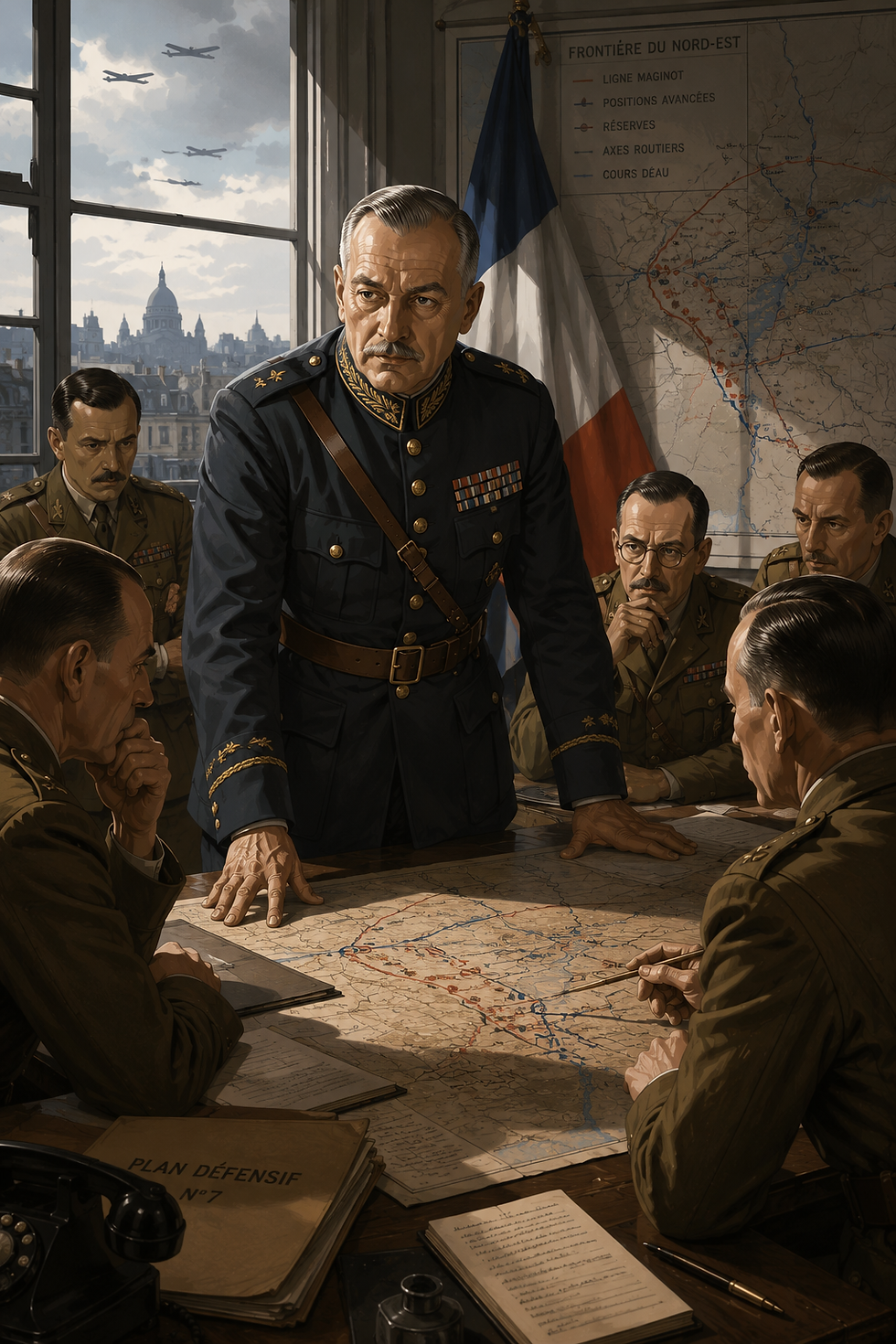
My Name is Maurice Gamelin: Commander-in-Chief of the French Army
I dedicated my life to serving France through military discipline, careful planning, and unwavering duty. I belonged to a generation of officers who witnessed both the triumphs and terrible costs of modern warfare. Throughout my career, I believed that a commander must think beyond today's battle and prepare his nation for the wars of tomorrow. Whether history judges my decisions kindly or harshly, I never doubted that my responsibility was to protect France.
A Soldier's Beginning
I was born on September 20, 1872, in Paris, only a year after France's defeat in the Franco-Prussian War. The memory of that loss shaped my generation. As a young man, I entered the prestigious Saint-Cyr Military Academy and devoted myself to studying strategy, logistics, and leadership. I believed that knowledge, discipline, and preparation were every bit as important as courage on the battlefield.
Learning the Hard Lessons of War
During the First World War, I served alongside some of France's greatest military leaders. I witnessed battles that consumed entire armies and cost hundreds of thousands of lives. Verdun, the Marne, and countless other struggles taught us that modern war demanded organization, patience, and careful planning. When the war finally ended in victory, I hoped such destruction would never again visit Europe, but I knew France had to remain prepared.
Preparing France for Another Conflict
In the years between the wars, I rose through the ranks until I became Commander-in-Chief of the French Army. France rebuilt its defenses, strengthened its alliances, and invested heavily in the Maginot Line along our eastern frontier. Many believed another war would resemble the last one, with strong defensive positions preventing catastrophic losses. Our planning reflected the painful lessons we had learned from the trenches of World War I.
The Storm Arrives
When Germany invaded Poland in 1939, Europe entered another great conflict. France declared war, yet for many months little fighting occurred on our western front. We strengthened our defenses while preparing for the campaign we expected would eventually come. Intelligence suggested several possible German attacks, and we believed our combined strength with Britain would withstand any major offensive.
The Fall of France
In May 1940, Germany launched an offensive unlike anything Europe had witnessed. Their armored divisions advanced rapidly through the Ardennes Forest, a region many believed unsuitable for such an attack. Communications broke down, units became isolated, and events unfolded faster than our command structure had anticipated. Long-established military assumptions were shattered within days. Before long, I was replaced as commander while France continued its desperate struggle against overwhelming momentum.
Watching My Nation Endure
Although I no longer held command, I watched with deep concern as France faced occupation and uncertainty. Soldiers, civilians, and leaders all confronted impossible choices during those difficult months. Some continued the fight abroad, others resisted from within occupied territory, and many simply struggled to protect their families. France's spirit, however, was never entirely defeated.
Years After Command
Following the collapse of France, I was held by German authorities until the end of the war. During those years, I reflected often upon leadership, preparation, and the unpredictable nature of war. Military history is filled with victories and defeats, but each generation must learn anew that no plan survives unchanged once battle begins.
My Message to You
If my life offers a lesson, it is that nations must prepare not only for the last war they remember but also for the next war they cannot yet imagine. Strong fortifications, experienced soldiers, and careful planning are valuable, but flexibility and adaptation are equally essential. I regret that I was unable to guide France through its darkest hour successfully, yet I hope future generations study both my achievements and my failures, for history teaches its greatest lessons through both triumph and defeat.
The Quiet Months: The Phoney War – Told by Maurice Gamelin
When Poland fell in the autumn of 1939, Britain and France were already at war with Germany. Many people expected massive battles to erupt immediately along Germany's western frontier. Instead, an unusual calm settled over much of Western Europe. Newspapers reported that a world war had begun, yet for many civilians near the French border, daily life continued with surprising normality. This strange period became known as the "Phoney War" because war had been declared, but little major fighting occurred on the Western Front.
Preparing Behind Strong Defenses
France entered the war believing that careful preparation offered the best chance for victory. Our army mobilized millions of soldiers and occupied defensive positions along the Maginot Line, a vast network of forts, underground tunnels, artillery positions, and reinforced bunkers stretching across much of our eastern border. These fortifications were designed to prevent another devastating invasion like the one France had suffered during the First World War. Many believed they would provide the time needed for Allied forces to organize and respond to any German attack.
Planning with Our Allies
British forces crossed the English Channel and joined us in northern France. Together we discussed how to defend Belgium if Germany invaded through the Low Countries, as it had done during the First World War. Detailed plans were prepared for moving Allied armies forward into Belgium to meet any attack before it reached French territory. We believed cooperation between Britain and France would strengthen our position and prevent Germany from gaining an easy victory.
Life Along the Front
For soldiers stationed along the frontier, these months were filled with waiting. Trenches were improved, equipment inspected, and patrols conducted, but large battles rarely occurred. Men spent long hours training, maintaining vehicles, and preparing defensive positions while wondering when the enemy would strike. Across the lines, German soldiers often experienced much the same routine. Although artillery occasionally fired and small patrols clashed, the enormous armies remained largely inactive.
The Saar Offensive
France did launch a limited operation into Germany's Saar region during September 1939 while much of the German Army fought in Poland. French forces advanced several miles into lightly defended territory before eventually withdrawing to their original positions. The offensive remained cautious and limited in scope. Some historians have since debated whether a larger Allied attack might have placed greater pressure on Germany during Poland's desperate struggle, though such decisions depended upon the military realities and information available at the time.
Confidence in Defensive Strategy
Many military leaders, myself included, believed that Germany would eventually have to attack prepared Allied defenses. We expected the conflict to become a long war of industry, resources, and endurance rather than one of rapid movement. France possessed a large army, Britain continued increasing its military strength, and we believed time favored the Allies. Our planning reflected the lessons learned during the First World War, when strong defensive positions had repeatedly halted offensive operations.
The Calm Before the Storm
While Western Europe waited, Germany was far from idle. Behind the apparent quiet, German commanders studied the Polish campaign, improved their plans, and prepared for a major offensive in the west. New strategies emerged, including an unexpected armored advance through the Ardennes Forest. To many observers, the quiet months appeared peaceful, but beneath the surface both sides continued preparing for a campaign that would soon determine the fate of Western Europe.
The Phoney War reminds us that the absence of battle does not mean the absence of danger. Periods of quiet often become the moments when nations prepare, reorganize, and make decisions that shape future events. Looking back, those months were not empty pages in history but the final chapter before one of the most dramatic military campaigns Europe had ever witnessed. Sometimes the greatest changes occur while the world is still waiting for the first shot to be fired.
My Name is Queen Wilhelmina: Queen of the Netherlands
A monarch's crown is not worn for personal glory but as a symbol of duty. From childhood, I understood that the well-being of my nation would always come before my own comfort. Though kingdoms may seem secure in peaceful years, their true strength is revealed only when storms arrive.
A Young Queen
I was born on August 31, 1880, into the House of Orange-Nassau. When my father, King William III, passed away, I became queen while still a child, and my mother, Queen Emma, wisely served as regent until I reached adulthood. She taught me that leadership required patience, humility, and careful judgment. As I matured, I accepted the responsibilities of ruling a nation whose people valued both liberty and hard work.
Guiding a Peaceful Nation
For many years, the Netherlands enjoyed peace while much of Europe experienced political rivalry and growing military competition. Our country valued neutrality, hoping to avoid becoming entangled in conflicts between larger powers. We strengthened our economy, maintained our overseas territories, and encouraged trade across the seas. I believed neutrality offered the best path for preserving our independence, just as it had during the First World War.
A Changing Europe
During the 1930s, I watched with growing concern as dictators expanded their influence across Europe. One nation after another found itself threatened by aggression and intimidation. Although we strengthened our defenses where possible, our resources were limited, and many still hoped that neutrality would once again spare the Netherlands from war. I prayed that reason would prevail over ambition, but events moved in another direction.
The German Invasion
On May 10, 1940, German forces invaded the Netherlands without warning. Airborne troops, armored columns, and relentless bombing quickly overwhelmed much of our defense. The destruction of Rotterdam demonstrated the terrible cost of modern warfare and convinced many that further resistance would bring even greater suffering to innocent civilians. It became clear that I could serve my people better by continuing the fight from abroad rather than allowing myself to be captured.
A Queen in Exile
I traveled to Great Britain, where I established the Dutch government-in-exile. From London, I addressed my people over the radio, encouraging them to remain steadfast despite occupation. I met with Allied leaders, supported Dutch forces serving overseas, and reminded the world that the Kingdom of the Netherlands had not surrendered its spirit. Though separated by the North Sea, I never stopped thinking of the men, women, and children enduring occupation at home.
Hope During Occupation
The years of occupation were filled with sorrow, courage, and quiet acts of resistance. Many Dutch citizens risked everything to oppose tyranny, protect their neighbors, and preserve their nation's honor. Our sailors, soldiers, airmen, and merchant mariners continued serving alongside the Allies across Europe and around the world. Every report of courage strengthened my belief that freedom would one day return.
Returning Home
When the war ended, I returned to a nation scarred by conflict yet determined to rebuild. Cities had been damaged, families had been separated, and countless lives had been changed forever. Rebuilding required not only bricks and timber but also hope, forgiveness, and perseverance. After several years, believing a younger generation should guide the future, I chose to abdicate in favor of my daughter, Juliana.
If my life leaves you with one lesson, let it be this: true leadership is measured not by comfort in peaceful times but by steadfastness during adversity. A nation may endure invasion, hardship, and loss, yet still preserve its character when its people remain faithful to one another. I regret only the suffering my beloved people endured during the war, but I never doubted that the spirit of the Netherlands would outlast those who sought to conquer it.
Germany Strikes the Low Countries – Told by Queen Wilhelmina
On the morning of May 10, 1940, the people of the Netherlands awoke to the sound of aircraft overhead and explosions across the country. Without a declaration of war, German forces crossed the borders of the Netherlands, Belgium, and Luxembourg in a carefully coordinated offensive. For many years our nation had remained neutral, hoping to avoid another European conflict as we had during the First World War. That hope disappeared within hours as the war arrived at our very doorstep.
A New Kind of Invasion
The attack was unlike anything Europe had previously experienced. German forces did not rely only upon advancing armies. Airborne troops parachuted behind our defensive lines while soldiers landed from transport aircraft near important bridges and airfields. Their mission was to seize key locations before Dutch defenders could organize an effective response. These operations allowed German armored forces advancing from the east to move forward more quickly than traditional military campaigns had ever allowed.
The Netherlands Under Attack
Dutch soldiers fought with determination despite facing overwhelming odds. Defensive positions along rivers and fortified lines delayed portions of the German advance, while engineers destroyed bridges in an effort to slow the attackers. Yet German air power, mechanized forces, and airborne assaults continually placed pressure on our defenders. Communications became increasingly difficult as battles erupted across multiple parts of the country at the same time. The speed of the invasion left little opportunity to regroup or establish new defensive lines.
Belgium and Luxembourg Drawn Into War
The invasion extended far beyond Dutch territory. Luxembourg, with only a small military force, was quickly occupied as German troops crossed the country on their way toward France. Belgium also came under heavy attack, including the famous assault on Fort Eben-Emael, one of Europe's strongest fortifications. German airborne troops used gliders to land directly on the fortress, employing shaped explosive charges to disable its defenses. The operation demonstrated that even impressive fortifications could be overcome through surprise and new technology.
The Experience of Ordinary People
For civilians, the invasion brought confusion and fear. Families hurried to gather belongings as roads filled with refugees seeking safety. Air raid sirens echoed through towns while bridges, railways, and military installations became targets of attack. Schools closed, businesses halted, and entire communities suddenly found themselves surrounded by the realities of modern war. Many who had believed neutrality would protect them now understood that geography alone could not guarantee peace.
The Fall of Dutch Resistance
Although Dutch forces continued resisting in several areas, the military situation became increasingly desperate. German control of key transportation routes and airfields allowed reinforcements to arrive rapidly. The devastating bombing of Rotterdam on May 14, combined with the threat of similar attacks against other cities, created an impossible situation for Dutch leaders. To prevent further destruction and civilian casualties, the Netherlands surrendered shortly afterward, though fighting continued elsewhere in Europe.
A Queen's Decision
As the invasion unfolded, I made the difficult decision to leave the Netherlands for Great Britain. This was not an act of surrender but one of continued leadership. From London, I established the Dutch government-in-exile and continued supporting our armed forces and our people throughout the war. Had I remained, I likely would have become a prisoner, unable to serve the nation during its darkest years.
The invasion of the Low Countries revealed how quickly modern warfare could overwhelm even well-prepared nations. Speed, surprise, and coordination transformed the battlefield in ways few had fully anticipated. Yet while armies may conquer territory in days, they cannot so easily conquer the determination of a free people. The Netherlands, Belgium, and Luxembourg endured occupation, but the courage of their citizens and soldiers remained an enduring part of their national story, proving that hope can survive even when a nation is temporarily overcome.
The Bombing of Rotterdam – Told by Queen Wilhelmina
By the middle of May 1940, the Netherlands had already endured several days of fierce fighting. Our soldiers continued resisting German advances, but the situation had become increasingly difficult. Rotterdam, one of Europe's busiest ports and an important center of trade and transportation, stood at the heart of the struggle. German commanders sought to capture the city quickly, believing that its fall would hasten the collapse of Dutch resistance.
Negotiations Amid Uncertainty
As fighting continued inside and around Rotterdam, Dutch and German officers attempted to negotiate the city's surrender. Communications were slow, and confusion surrounded the rapidly changing situation. While discussions were taking place, German bombers had already been dispatched toward the city. Although some attempts were made to signal the aircraft to turn back, not all of the bombers received or understood the orders before reaching their target.
The Bombing Begins
On the afternoon of May 14, 1940, German bombers released hundreds of bombs over central Rotterdam. Within minutes, buildings collapsed, fires spread rapidly through crowded neighborhoods, and entire streets disappeared beneath smoke and rubble. Strong winds carried the flames from one block to another until a massive firestorm engulfed much of the city's historic center. Thousands of homes, businesses, schools, churches, and public buildings were destroyed in only a short time.
The Human Cost
The bombing claimed the lives of hundreds of civilians, injured many more, and left nearly 80,000 people homeless almost overnight. Families became separated as they fled burning neighborhoods carrying only what they could hold in their hands. Hospitals struggled to care for the wounded while firefighters battled flames that continued spreading throughout the city. For those who survived, the destruction of Rotterdam became a lasting memory of how modern war could devastate civilian populations as completely as military forces.
More Than Physical Destruction
The bombing achieved more than the destruction of buildings. It demonstrated the terrifying power of aerial bombardment as a psychological weapon. German commanders warned that other Dutch cities might face similar attacks if resistance continued. The possibility of additional bombings weighed heavily upon Dutch leaders, who had to balance military honor with the responsibility of protecting innocent lives. The destruction of one city threatened the safety of many others.
The Decision to Surrender
Faced with the devastation of Rotterdam and the threat of further attacks against cities such as Utrecht, Dutch military leaders concluded that continued resistance would bring even greater suffering without changing the final outcome. On May 15, 1940, the Netherlands formally surrendered, although Dutch forces in some overseas territories continued fighting alongside the Allies. The decision was painful, but it reflected the harsh realities confronting a small nation facing overwhelming military power.
Resistance Begins
Although organized military resistance within the Netherlands came to an end, another kind of resistance was only beginning. Across the occupied country, ordinary citizens quietly refused to accept German rule. Underground newspapers appeared, secret intelligence networks formed, hidden radios carried news from London, and brave families sheltered those being hunted by the occupiers. Many Dutch men and women chose to resist not with tanks or artillery, but with courage, secrecy, and determination. Their efforts would grow stronger throughout the years of occupation.
The bombing of Rotterdam became one of the defining moments of the early Second World War. It reminded the world that cities and civilians had become direct targets in modern warfare and that fear itself could be used as a weapon. Yet it also revealed something stronger than destruction. While much of Rotterdam lay in ruins, the spirit of the Dutch people remained unbroken. The city would one day be rebuilt, and the resistance that began in those dark days would help restore freedom to the Netherlands.
Through the Ardennes: Germany Outflanks France – Told by Heinz Guderian
When Germany prepared its offensive against France and the Low Countries in the spring of 1940, many expected the main attack to follow the same route used during the First World War. Allied commanders believed that northern Belgium would once again become the principal battlefield, and they moved many of their strongest forces there. Instead, German planners adopted a far more daring approach. The heart of the attack would pass through the Ardennes Forest, a region that many considered too rugged and heavily wooded for a large armored force.
The Ardennes Challenge
The Ardennes was no easy road. Narrow winding roads, steep hills, dense forests, and limited bridges created enormous traffic problems for thousands of vehicles. Long columns of tanks, trucks, artillery, and supply vehicles stretched for miles. One blocked road or destroyed bridge could have delayed the entire advance. Success depended upon strict discipline, careful scheduling, and constant movement. Every commander understood that speed was essential, for if the columns became trapped, the offensive could quickly fail.
The Allies Look Elsewhere
The success of the operation depended not only upon movement but also upon surprise. While Allied armies advanced into Belgium expecting to meet the main German assault, our armored formations continued pressing through the Ardennes with relatively limited opposition. French commanders believed the difficult terrain would slow any major attack long enough for reinforcements to arrive. That assumption proved to be one of the most significant miscalculations of the campaign.
Crossing the Meuse River
The greatest obstacle before us was the Meuse River near Sedan. Rivers have long served as natural defensive barriers, and French forces prepared to defend the crossings. German engineers worked rapidly to construct bridges while infantry secured positions along the riverbanks. At the same time, the Luftwaffe launched concentrated air attacks against French defensive positions, disrupting communications and lowering morale. Once crossings had been established, armored units poured across the river before the defenders could fully reorganize.
Breaking the Defensive Line
After crossing the Meuse, our armored divisions advanced rapidly into the open countryside beyond the French defenses. Rather than pausing after each success, the objective was to maintain momentum. Every hour that passed increased confusion among opposing commanders. Headquarters struggled to determine where the main attack had occurred, while fast-moving armored columns continued driving westward toward the English Channel. The speed of the advance prevented many French units from establishing new defensive positions.
The Maginot Line Left Behind
Many people assume that German forces simply attacked the Maginot Line directly, but that is not what happened. The Maginot Line remained a powerful defensive system along much of France's eastern border. Instead of launching costly frontal assaults against its strongest fortifications, German armored forces bypassed much of the line by advancing through Belgium and the Ardennes. Once our forces had reached deep into France, many of the fortifications found themselves isolated, facing an enemy that had already moved around them.
The Race to the Coast
As armored formations continued westward, they separated many Allied armies in Belgium from the rest of France. This rapid advance eventually reached the English Channel, trapping large numbers of British and French troops in northern France. What had begun as an unexpected breakthrough through a forest had developed into one of the most decisive maneuvers of the entire campaign. The battlefield no longer resembled the slow-moving fronts of the First World War but a contest of speed, communication, and initiative.
The advance through the Ardennes demonstrated that victory often belongs to those who challenge accepted assumptions. Terrain considered impassable may become a pathway when careful planning, determination, and coordination are applied. Yet military success should never lead commanders to believe that one method guarantees victory forever. Every battlefield presents new conditions, and every opponent studies the lessons of previous campaigns. History continually reminds us that adaptation is one of the greatest weapons any army can possess.
The Collapse of the French Front – Told by Maurice Gamelin
When the German offensive began on May 10, 1940, France possessed one of the largest and best-equipped armies in Europe. We had experienced officers, modern artillery, capable tanks, and strong defensive fortifications. Britain stood beside us, and Belgium and the Netherlands formed part of our defensive planning. Few believed that France could be defeated in a matter of weeks. Yet history often reminds us that military strength alone does not guarantee victory when events unfold faster than expected.
A Plan Built on Earlier Experience
Our strategy was shaped by the lessons of the First World War. We expected Germany's main attack to pass through Belgium, just as it had in 1914. Accordingly, Allied armies advanced into Belgium to meet the invasion. At the same time, the Ardennes Forest was considered a less likely route for a major armored assault because of its difficult terrain. When German forces unexpectedly concentrated there, the balance of the campaign changed with remarkable speed.
The Challenge of Communication
One of our greatest difficulties was communication. Orders often moved through several levels of command before reaching units in the field. Telephone lines could be cut, messengers delayed, and reports sometimes arrived hours after the situation had already changed. German armored formations, equipped with widespread radio communications, adjusted rapidly as opportunities appeared. By the time some of our headquarters fully understood the location and strength of the breakthrough, German forces had already advanced many miles beyond earlier reports.
Command Decisions Under Pressure
Military commanders are required to make decisions based upon incomplete information, especially during fast-moving campaigns. Reports arriving from different sectors sometimes contradicted one another, making it difficult to determine where the main German effort was developing. Reinforcements had to be moved carefully to avoid exposing other parts of the front. As events accelerated, commanders faced increasingly difficult choices while the battlefield changed more quickly than many planning systems had been designed to manage.
Logistics and the Pace of War
Supplying a large army is a task that extends far beyond the battlefield itself. Fuel, ammunition, food, medical supplies, and replacement equipment must move continuously to the front. As German armored units advanced rapidly, roads became crowded with military vehicles, retreating units, refugees, and damaged equipment. Bridges were destroyed, transportation routes disrupted, and supply lines became increasingly difficult to maintain. An army that cannot move its supplies efficiently soon loses its ability to fight effectively.
The Human Side of Defeat
The collapse of the front did not occur because French soldiers lacked courage. Throughout the campaign, many units fought with determination against difficult odds. Tank crews launched counterattacks, infantry defended villages and river crossings, and artillery units continued firing until forced to withdraw. Countless soldiers fulfilled their duty honorably even as the overall military situation deteriorated. Their bravery deserves to be remembered alongside the larger story of France's defeat.
A Rapid Chain of Events
Once German armored forces crossed the Meuse River and drove toward the English Channel, they separated many Allied armies in Belgium from the rest of France. This created confusion across the front and forced commanders to respond to multiple crises simultaneously. Defensive plans carefully prepared over many years could no longer keep pace with the speed of events. What had begun as a breakthrough soon became a campaign of encirclement that overwhelmed the Allied position in northern France.
The fall of France remains one of history's most studied military campaigns because it demonstrates how technology, communication, planning, and leadership must work together under rapidly changing conditions. A strong army can still be defeated if it cannot adapt quickly enough to new methods of warfare. Looking back, I regret that we were unable to respond effectively to the challenges we faced. Yet I also hope future generations study this campaign carefully, for understanding failure can teach lessons every bit as valuable as understanding victory.
Dunkirk: Escape Across the Channel – Told by Maurice Gamelin
After German armored forces broke through the French front and advanced rapidly to the English Channel, the Allied armies in northern France found themselves in grave danger. British, French, and Belgian forces that had moved into Belgium according to our defensive plans were suddenly cut off from the rest of France. What had begun as an orderly campaign became a desperate struggle to avoid complete encirclement. Every passing day tightened the ring around hundreds of thousands of Allied soldiers.
The Last Open Port
As German forces advanced from multiple directions, the port city of Dunkirk became the Allies' final gateway to Britain. Roads leading toward the city filled with retreating military units, supply vehicles, refugees, and damaged equipment. The beaches soon became crowded with thousands of soldiers waiting under constant threat from artillery and air attack. Many wondered whether escape was still possible or whether the trapped armies would soon be forced to surrender.
Operation Dynamo Begins
On May 26, 1940, the British government launched Operation Dynamo, an ambitious evacuation directed from Dover Castle. Naval officers organized every available vessel capable of crossing the English Channel. Destroyers, ferries, merchant ships, fishing boats, tugboats, pleasure craft, and many other vessels joined the effort. The goal was simple but daunting: rescue as many soldiers as possible before German forces reached the beaches.
The Courage of the Little Ships
Among the most memorable participants were the civilian boats that later became known as the "Little Ships of Dunkirk." Many were privately owned pleasure boats, fishing vessels, lifeboats, and small commercial craft. Some were sailed by their civilian owners, while others were operated by Royal Navy crews. These smaller boats ferried soldiers from shallow beaches to larger ships waiting offshore, where deeper-draft vessels could not safely approach. Their contribution became a lasting symbol of courage, cooperation, and determination during one of Britain's darkest hours.
French Soldiers Hold the Line
While the evacuation continued, French troops fought determined defensive battles around Dunkirk to delay the German advance. Their resistance bought valuable time for thousands of Allied soldiers waiting on the beaches. Many French units remained in combat until ammunition and supplies were exhausted. Although much attention has focused on the British evacuation, the sacrifices made by French defenders played a vital role in making Operation Dynamo possible.
An Extraordinary Escape
Between May 26 and June 4, 1940, more than 338,000 Allied soldiers were successfully evacuated across the English Channel. Most of the heavy equipment—including tanks, artillery, trucks, and supplies—had to be abandoned, but the trained soldiers themselves survived. It was not a military victory, yet it prevented the destruction of Britain's professional army. Those experienced troops would later defend Britain and eventually return to Europe to continue the fight against Germany.
Why Dunkirk Mattered
The evacuation transformed the course of the war. Had the British Expeditionary Force been captured, Britain would have lost the core of its trained army at a critical moment. Such a disaster might have weakened Britain's ability to continue the war and altered future political decisions. Instead, the rescued soldiers became part of the forces that defended the British Isles, fought in North Africa, returned on D-Day, and helped liberate Western Europe several years later.
A Lesson from Dunkirk
Dunkirk reminds us that history is not shaped only by victories on the battlefield. Sometimes preserving an army is more important than winning a single campaign. The determination of soldiers, sailors, civilians, and commanders working together turned what seemed certain to become a complete disaster into one of the most remarkable evacuations in military history. Although France would soon face defeat, the successful rescue at Dunkirk ensured that the struggle for Europe's freedom would continue across the English Channel.
The Fall of France and a New Europe – Told by Queen Wilhelmina
By June 1940, the military campaign in Western Europe had reached a dramatic conclusion. In only a matter of weeks, Germany had conquered the Netherlands, Belgium, Luxembourg, and much of France. Few people had imagined that nations with experienced armies and long military traditions could be defeated so quickly. Across Europe, governments, soldiers, and ordinary citizens struggled to understand how the balance of power had changed with such astonishing speed.
France Signs an Armistice
On June 22, 1940, France signed an armistice with Germany in the Forest of Compiègne, the same location where Germany had accepted defeat at the end of the First World War. The symbolism was unmistakable. Northern and western France came under direct German occupation, while the southern portion of the country remained under a new French government based in the town of Vichy. Although this government governed parts of France, it operated under significant German influence and accepted many of Germany's demands.
A Continent Under Occupation
The victories of 1940 transformed the map of Europe. Norway, Denmark, the Netherlands, Belgium, Luxembourg, and much of France now lived under German occupation. Millions of people suddenly found themselves governed by foreign military authorities. Daily life changed dramatically as new laws, restrictions, rationing, censorship, and military controls became part of ordinary existence. Families faced uncertainty while many young men and women began quietly searching for ways to resist.
Governments Continue the Fight
Although several nations had lost control of their homelands, they did not surrender their independence. My own government continued its work from London after leaving the Netherlands. The governments of Poland, Belgium, Luxembourg, Norway, and other occupied nations also established governments-in-exile. From Britain, we coordinated military forces, supported resistance movements, and reminded the world that our countries remained determined to regain their freedom. A nation's government could continue even when its territory was occupied.
Resistance Begins Across Europe
Occupation did not silence the people of Europe. Underground newspapers circulated secretly, intelligence networks gathered valuable information, and courageous citizens helped downed Allied airmen, escaped prisoners, and families threatened by persecution. Small acts of resistance gradually developed into larger movements that would play important roles throughout the war. Though these efforts often remained hidden from public view, they demonstrated that freedom continued to live in the hearts of many Europeans.
Britain Stands Alone
With France defeated, Great Britain now stood as the only major Western European nation still actively fighting Germany. Across the English Channel lay the next great challenge. Germany understood that any future invasion of Britain would require control of the skies, while Britain prepared its air defenses for what seemed certain to come. The struggle that had begun on the plains of Poland and continued across Western Europe was about to enter a new phase.
The Road to the Battle of Britain
The fall of Western Europe gave Germany control of ports, airfields, factories, and coastlines stretching from Norway to the Bay of Biscay. These newly captured territories provided bases from which German aircraft and naval forces could operate against Britain. At the same time, Britain gained something equally important through the evacuation at Dunkirk: the survival of hundreds of thousands of experienced soldiers. Both sides now prepared for a conflict that would be decided not by tanks crossing forests, but by aircraft battling in the skies above southern England.
Hope Beyond Defeat
The summer of 1940 appeared to mark Germany's greatest triumph, yet history rarely ends where it seems most certain. Occupied nations continued resisting, governments-in-exile continued planning, and Britain refused to negotiate its surrender. I believed then, as I do now, that military victories alone cannot extinguish the desire for freedom. The fall of Western Europe was not the final chapter of the war but the beginning of a much larger struggle. It prepared the stage for the Battle of Britain, for resistance movements across occupied Europe, and ultimately for the long road that would one day lead to liberation.


Comments