

2. Heroes and Villains of the Modern Era: War on Terror: Afghanistan, Iraq, and America's Longest Conflicts


My Name is Pervez Musharraf: From Military General to President of Pakistan
I was born on August 11, 1943, in Delhi, British India. My childhood was shaped by one of the most significant events in South Asian history: the partition of British India in 1947, which created the independent nations of India and Pakistan. My Muslim family moved to Pakistan, where I grew up with a strong sense of national identity and patriotism. I also spent several years in Turkey, where my father worked as a diplomat. I believed that discipline, courage, and determination were essential qualities for a nation struggling to establish itself. At eighteen, I entered the Pakistan Military Academy, beginning a career that would eventually take me to the highest levels of military and political leadership.
Rising Through the Military (1961–1998)
My military career was built through decades of service, including fighting in the wars between Pakistan and India in 1965 and 1971. These conflicts taught me about military strategy, national security, and the dangerous rivalries that divided South Asia. I served in Pakistan's elite Special Services Group and gradually rose through the ranks. In 1998, Prime Minister Nawaz Sharif appointed me Chief of Army Staff, placing me in command of Pakistan's military. Our relationship soon deteriorated, particularly after the 1999 Kargil conflict with India. I believed Pakistan needed stronger leadership and a government capable of protecting its national interests.
Taking Control of Pakistan (1999–2001)
On October 12, 1999, while I was returning from an overseas visit, Prime Minister Sharif attempted to remove me from military command. Senior military officers rejected his orders, and the army overthrew his elected government. I assumed power as Pakistan's chief executive, arguing that corruption, economic problems, and political instability had brought the country to a dangerous crossroads. My opponents called the takeover an attack on democracy, while I maintained that extraordinary circumstances demanded extraordinary leadership. In June 2001, I became president of Pakistan, determined to strengthen the economy, modernize government institutions, and restore Pakistan's position internationally.
September 11 Changes Everything (2001)
On September 11, 2001, terrorists attacked the United States, and the consequences quickly reached Pakistan. President George W. Bush's administration demanded cooperation against al-Qaeda and the Taliban government in neighboring Afghanistan. Pakistan faced an extremely difficult decision. Our country had maintained relationships with the Taliban, but refusing cooperation with the United States risked international isolation and serious economic and military consequences. I chose to support the American-led War on Terror because I believed Pakistan's national interests required it. We provided logistical support, intelligence cooperation, and transportation routes for operations in Afghanistan. It was a strategic decision that would profoundly affect my country.
Fighting Terrorism Along Pakistan's Borders (2002–2006)
As American forces fought in Afghanistan, militants crossed into Pakistan's mountainous border regions, where weak government authority and difficult terrain complicated military operations. My government deployed Pakistani troops into areas where the army had rarely operated, and our intelligence services helped capture important al-Qaeda figures, including Khalid Sheikh Mohammed in 2003. But our cooperation with Washington was never simple. American officials questioned whether Pakistan was doing enough to prevent Taliban fighters from finding sanctuary, while many Pakistanis opposed our alliance with the United States. I survived assassination attempts by extremists who considered me a traitor. I believed Pakistan was fighting not only international terrorism but also a growing threat to its own survival.
A President Under Increasing Pressure (2007–2008)
By 2007, Pakistan faced rising militant violence, political protests, and demands for democratic reform. My decision to suspend Chief Justice Iftikhar Muhammad Chaudhry provoked demonstrations by lawyers and opposition groups. In July, Pakistani forces stormed Islamabad's Red Mosque after a confrontation with armed militants, intensifying tensions across the country. That November, I declared a state of emergency, suspended constitutional protections, and removed judges who challenged my authority. These actions drew widespread criticism. In December, opposition leader Benazir Bhutto was assassinated, deepening Pakistan's political crisis. Following opposition victories in the February 2008 elections and growing threats of impeachment, I resigned as president on August 18, 2008.
Exile, Legal Battles, and My Final Years (2008–2023)
After leaving office, I spent much of my time abroad, although I returned to Pakistan in 2013 hoping to resume my political career. Instead, I faced criminal charges connected to decisions made during my presidency, including accusations of violating the Constitution. In 2019, a special court sentenced me to death for high treason in a controversial ruling that was subsequently challenged. My declining health eventually took me to Dubai, where I received treatment for amyloidosis, a rare disease that can damage the body's organs. I died there on February 5, 2023, at the age of 79, leaving behind a deeply debated political legacy.
The Invasion of Afghanistan and Fall of the Taliban - Told by Pervez Musharraf
In September 2001, I was serving as president of Pakistan, a nation positioned between powerful regional interests and a neighboring Afghanistan ruled by the Taliban. For years, Pakistan had maintained relationships with the Taliban government, believing that a friendly government in Kabul would protect our western border and strengthen our regional security. Then came September 11, 2001. Terrorists from al-Qaeda attacked the United States, killing nearly 3,000 people. American intelligence identified Osama bin Laden and his organization, which operated from Afghanistan under Taliban protection, as responsible. Suddenly, Pakistan found itself at the center of a coming war. I understood that the decisions I made in the following days could determine my country's future.
The American Ultimatum: Choosing Sides
Within days of the attacks, American officials approached Pakistan with demands for cooperation. They wanted access to our airspace, intelligence sharing, logistical assistance, and an end to support for the Taliban. This was no ordinary diplomatic request. The United States was preparing for war, and Pakistan's location made our cooperation strategically valuable. On September 14, I agreed to the principal American requests after consultations with military commanders. Many Pakistanis opposed supporting an American attack on a neighboring Muslim country, while others feared that refusing cooperation would bring disastrous consequences. I explained to my people that Pakistan's national security must come first. We would cooperate with the United States, but I also warned that military operations should not create greater instability in Afghanistan.
October 7, 2001: Operation Enduring Freedom Begins
On October 7, American and British forces launched Operation Enduring Freedom, beginning with airstrikes against Taliban military installations, air defenses, and al-Qaeda facilities throughout Afghanistan. President George W. Bush declared that the Taliban had failed to meet American demands to surrender terrorist leaders and close their training camps. From Pakistan, I watched a powerful military coalition begin attacking our neighbor. American aircraft used advanced precision-guided weapons, while special operations teams and intelligence officers worked alongside Afghan opposition forces. The objective was to destroy al-Qaeda's operational bases and remove the Taliban government that sheltered them. What concerned me most was the possibility that a military victory could produce a political disaster if Afghanistan descended into another civil war.
The Northern Alliance and the Fall of Kabul
Afghanistan's Taliban government faced an enemy that had already been fighting it for years: the Northern Alliance, a coalition of Afghan commanders and ethnic groups opposed to Taliban rule. Supported by American airpower, intelligence, and Special Forces, these fighters began advancing across northern Afghanistan. On November 9, they captured the strategically important city of Mazar-e-Sharif, opening the way for further victories. On November 13, Northern Alliance forces entered Kabul after Taliban fighters withdrew. Images of the fallen government traveled around the world, and many Afghans celebrated the end of Taliban restrictions. Yet the Taliban's defeat presented another challenge. I worried that replacing a largely Pashtun-led government with one dominated by its former northern enemies could deepen Afghanistan's ethnic and political divisions.
The Taliban Retreat and the Battle for Kandahar
With Kabul lost, Taliban forces withdrew toward southern Afghanistan, particularly Kandahar, the movement's traditional stronghold. American military teams supported Afghan anti-Taliban fighters, including forces associated with Hamid Karzai, a Pashtun leader who would soon become Afghanistan's interim president. By early December, Taliban resistance around Kandahar was collapsing. On December 9, the Taliban's rule over the city had effectively ended, and its leader, Mullah Mohammed Omar, had disappeared from public view. In approximately two months, the American-led coalition and its Afghan allies had overthrown a government that had controlled most of Afghanistan since 1996. But overthrowing the Taliban did not mean its fighters had surrendered or that al-Qaeda had been destroyed.
Victory on the Battlefield, Uncertainty for the Future
By December 2001, Operation Enduring Freedom had achieved its immediate objective of removing the Taliban government, but Afghanistan remained dangerously unstable. Taliban and al-Qaeda fighters scattered into remote mountains, while some crossed the difficult border into Pakistan. Thousands of Afghan civilians had been displaced, and decades of conflict had left the country's economy and institutions devastated. At international negotiations in Bonn, Germany, Afghan representatives agreed to establish an interim government under Hamid Karzai. I supported the creation of a stable, representative Afghan government, but I understood that foreign military power could not solve every political problem. What had appeared to be a rapid military victory was becoming a long and uncertain struggle over Afghanistan's future.
Tora Bora and the Problem of an Enemy Without Borders - Told by Musharraf
In December 2001, I was serving as president of Pakistan when American forces and their Afghan allies began closing in on one of the most wanted men in the world: Osama bin Laden. The Taliban government had collapsed, Kabul had fallen, and many believed the War on Terror might soon reach a decisive turning point. But Afghanistan's rugged eastern mountains offered something that no ordinary military fortress could provide—thousands of hiding places, difficult mountain passes, and pathways leading directly into Pakistan. Intelligence suggested that bin Laden and hundreds of al-Qaeda fighters had gathered near Tora Bora, a mountainous region southeast of Jalalabad. I understood the danger immediately. If these militants escaped across our border, the war would no longer remain Afghanistan's problem. It would become Pakistan's problem as well.
The Battle of Tora Bora: December 2001
The battle began in earnest during December 2001, when American aircraft bombarded al-Qaeda positions hidden among Tora Bora's caves, ridges, and mountain valleys. American Special Forces and CIA officers worked alongside Afghan militia commanders to locate and defeat the militants. However, relatively few American ground troops participated directly, and much of the fighting depended on Afghan forces whose loyalties and objectives were not always identical to Washington's. The American military possessed extraordinary firepower, but destroying mountain positions was not the same as preventing men from escaping through hidden passes. By December 17, organized resistance around Tora Bora had largely collapsed. Yet bin Laden had not been captured. Evidence later examined by American investigators strongly indicated that he escaped toward Pakistan during the fighting. The most important target of the campaign had slipped away.
Pakistan's Impossible Border
To understand the difficulty we faced, one must understand the geography. Pakistan and Afghanistan share a border stretching approximately 1,600 miles, much of it through mountains, remote valleys, and tribal territories. The boundary, known as the Durand Line, had been established during British colonial rule in 1893, dividing communities whose families and tribal relationships extended across both sides. Many local residents moved through mountain passages that were difficult to monitor. Pakistan deployed security forces to important crossing areas, including during the Tora Bora campaign, but sealing every route was impossible. Militants could cross at night, blend into communities, or seek protection among sympathetic networks. American officials wanted us to prevent every escape, but I insisted they recognize the geographical and political realities confronting Pakistan.
Al-Qaeda Finds New Sanctuaries in Pakistan
As militants escaped Afghanistan, some entered Pakistan's Federally Administered Tribal Areas, particularly North and South Waziristan. These regions possessed longstanding traditions of local autonomy, and the central government's authority was limited. Foreign militants began establishing relationships with local armed groups, acquiring shelter, weapons, and assistance. Some used money or ideological connections to secure protection, while others intimidated communities into cooperating. This was particularly dangerous because al-Qaeda was no longer operating from a recognized government's territory. Instead, its members were dispersing into small networks that could move between countries. Pakistan had previously maintained relationships with the Taliban, and critics increasingly accused elements within our security establishment of tolerating Afghan Taliban sanctuaries. I defended our government's cooperation against al-Qaeda, but the distinction between fighting terrorism and managing Pakistan's regional interests became a source of growing international distrust.
Operation Anaconda and a War That Refused to End
In March 2002, American and allied Afghan forces launched Operation Anaconda in Afghanistan's Shah-i-Kot Valley, attempting to destroy another concentration of al-Qaeda and Taliban fighters. The battle involved intense fighting in freezing mountainous conditions, with militants using prepared positions and difficult terrain to resist coalition troops. Although American forces inflicted significant losses, surviving fighters again dispersed, with some escaping toward Pakistan. Our military increased deployments along the border and conducted operations against suspected militant networks. But the experience revealed a troubling reality: terrorist organizations did not need conventional armies, permanent headquarters, or clearly defined territory to survive. They needed only safe routes, willing supporters, and enough time to reorganize.
The Cost of Fighting an Enemy Without Borders
By the end of 2002, Pakistan had deployed tens of thousands of troops to strengthen security near Afghanistan, and our government faced growing pressure from Washington to take even more aggressive action. Meanwhile, extremist organizations threatened violence inside Pakistan, and public opposition to cooperation with the United States complicated our decisions. I believed Pakistan could not afford to allow international terrorist networks to establish permanent sanctuaries within its borders. Yet I also understood that military operations in tribal communities risked creating new enemies if they were not accompanied by political cooperation and local support. The escape from Tora Bora demonstrated that the fall of a government did not necessarily mean the destruction of the movement it had protected. What began as a military campaign in Afghanistan was developing into a regional struggle that would continue for decades. The mountains had concealed a fleeing enemy, but the consequences would eventually reach far beyond them.
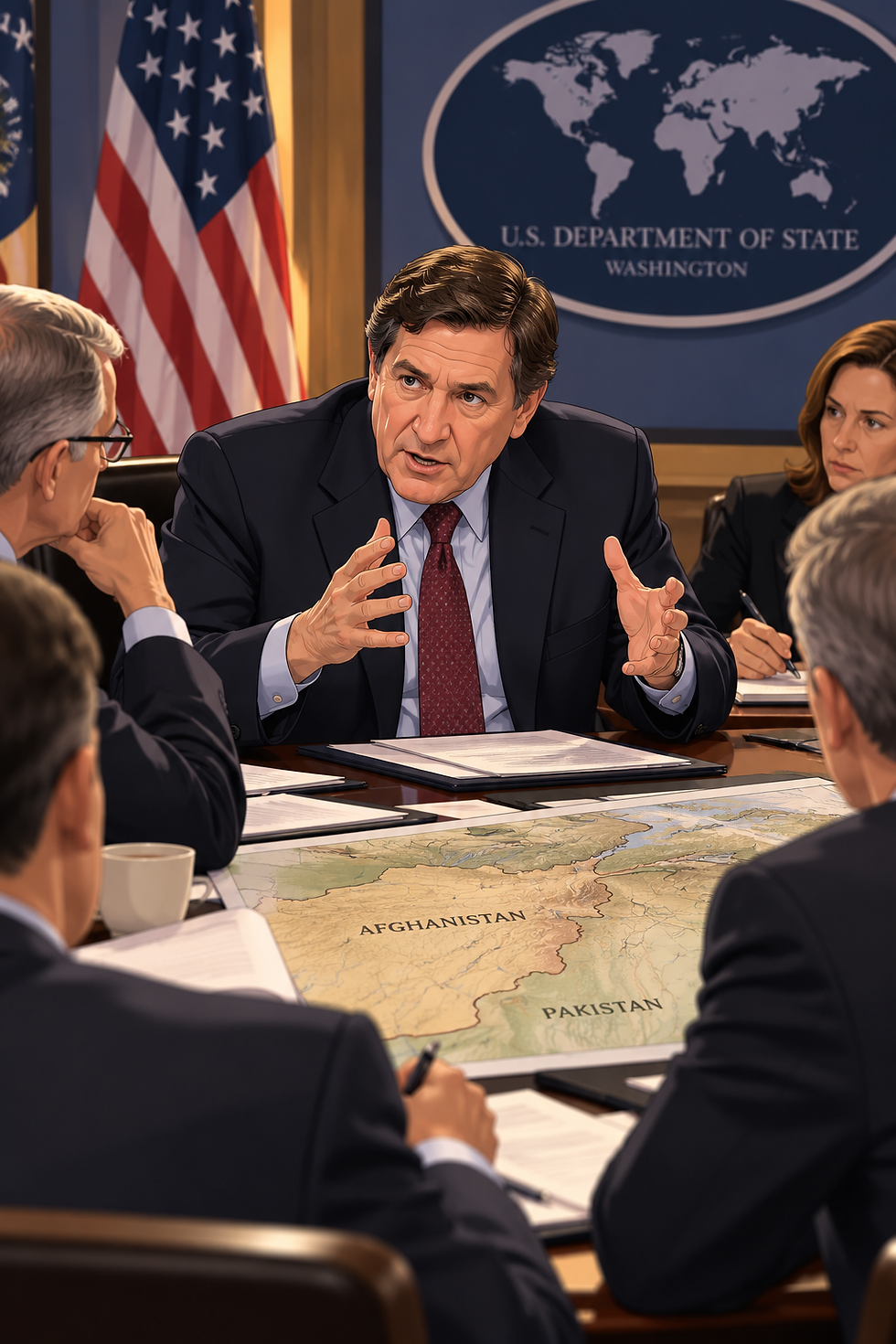
My Name is Richard Holbrooke: The American Diplomat Who Fought to End Wars
I was born on April 24, 1941, in New York City. My parents came from European Jewish families, and their experiences taught me that international conflicts could change the lives of entire generations. I grew up believing that America had both the power and the responsibility to influence world affairs. After graduating from Brown University in 1962, I entered the United States Foreign Service. I was ambitious, outspoken, and never particularly interested in remaining silent when difficult decisions needed to be made. Diplomacy, I believed, was not about attending ceremonies and exchanging pleasantries. It was about confronting problems and finding solutions.
Learning Diplomacy During the Vietnam War (1962–1972)
My first major assignment took me to Vietnam, where I witnessed the challenges of American involvement in a complicated foreign conflict. I worked with American officials and Vietnamese communities, learning that military strength alone could not create political stability. Later, I served on the American delegation involved in the Paris peace negotiations. Vietnam taught me an unforgettable lesson: understanding a country's political realities was just as important as understanding its battlefield conditions. I returned to Washington determined to make American foreign policy more effective, even if that meant challenging powerful officials and questioning established strategies.
Rising Through American Diplomacy (1977–1994)
In 1977, President Jimmy Carter appointed me Assistant Secretary of State for East Asian and Pacific Affairs. I became involved in major diplomatic developments, including the normalization of American relations with China. During the following years, I worked in journalism, international affairs, and private business. In 1993, President Bill Clinton appointed me United States Ambassador to Germany, where Europe was still adjusting to the end of the Cold War. I believed American leadership was essential to maintaining stability in a rapidly changing world. But my greatest diplomatic challenge was approaching in the war-torn Balkans.
Ending the War in Bosnia (1994–1995)
During the 1990s, the breakup of Yugoslavia produced terrible ethnic conflicts, particularly in Bosnia, where civilians endured massacres, displacement, and years of warfare. As Assistant Secretary of State for European and Canadian Affairs, I became America's chief negotiator in efforts to end the Bosnian War. I negotiated directly with regional leaders, including Serbian President Slobodan Milošević. I was demanding, persistent, and sometimes confrontational because I believed diplomacy without pressure accomplished very little. In November 1995, negotiations at Wright-Patterson Air Force Base near Dayton, Ohio, produced the Dayton Peace Accords, ending the war in Bosnia. It was one of the proudest achievements of my career.
Representing America at the United Nations (1999–2001)
In 1999, I became the United States Ambassador to the United Nations under President Clinton. I worked to strengthen America's relationship with the organization while addressing international conflicts, humanitarian emergencies, and global health concerns. I pushed for greater attention to HIV/AIDS, particularly in Africa, arguing that disease and poverty could threaten international stability just as surely as armed conflict. I believed diplomacy had to confront real problems rather than become trapped in speeches and bureaucratic procedures. When terrorists attacked America on September 11, 2001, I was no longer serving at the United Nations, but I understood that American foreign policy was entering another dangerous era.
Returning to Serve During the War on Terror (2009)
In January 2009, President Barack Obama and Secretary of State Hillary Clinton selected me as Special Representative for Afghanistan and Pakistan. After years of fighting, Afghanistan remained deeply unstable, while Taliban militants operated across the border regions of Pakistan. I argued that the United States could not solve Afghanistan's problems by military force alone. We needed regional diplomacy, economic development, functioning institutions, and cooperation with Pakistan. I traveled extensively, meeting with political leaders and military officials while pushing for a coordinated strategy. I believed the war could not be understood simply as a struggle between American soldiers and Taliban fighters. It was a regional political conflict requiring a regional solution.
My Final Diplomatic Mission (2009–2010)
As President Obama increased American troop deployments to Afghanistan, I worked to strengthen civilian reconstruction and diplomatic cooperation. Progress was painfully slow. Corruption weakened the Afghan government, Pakistan faced its own political and security challenges, and disagreements within Washington complicated our efforts. I argued that negotiations and political reconciliation needed to become part of the long-term strategy. My forceful personality sometimes created friction with colleagues, but I was determined to pursue a diplomatic solution. On December 13, 2010, I died in Washington, D.C., at the age of 69, following complications from surgery for a torn aorta. My final mission remained unfinished.
From Battlefield Victory to Nation-Building in Afghanistan - Told by Holbrooke
In December 2001, the Taliban government had collapsed, American forces had entered Afghanistan, and the world celebrated what appeared to be a remarkable military victory. But as a diplomat who had helped negotiate an end to the Bosnian War, I understood something that military commanders sometimes underestimated: defeating an enemy is not the same as building a peaceful nation. Afghanistan had endured more than two decades of warfare, beginning with the Soviet invasion in 1979, followed by civil war and Taliban rule. Its cities were damaged, government institutions were weak, and millions of Afghans had been displaced. The United States had helped remove the Taliban from power, but an enormous question remained. Who would govern Afghanistan, and could its people build a government capable of surviving without foreign military protection?
The Bonn Agreement: Building a Government from Nothing
On December 5, 2001, Afghan political representatives gathered in Bonn, Germany, under United Nations sponsorship to negotiate their country's future. The resulting Bonn Agreement established a process for forming a new government and appointed Hamid Karzai to lead an interim administration, which took office on December 22. The agreement called for a traditional Afghan national assembly, known as a loya jirga, to select a transitional government. It also established a path toward writing a constitution and holding national elections. This was an extraordinary undertaking. Afghanistan was not simply rebuilding damaged government offices; it was attempting to construct national institutions while powerful regional commanders still controlled much of the country. Just as importantly, the Taliban were excluded from the negotiations, leaving a major armed movement outside the new political settlement.
Peacekeepers, Warlords, and the Struggle for Security
In December 2001, the United Nations authorized the International Security Assistance Force, or ISAF, to help provide security in Kabul. Initially, these international troops operated primarily around the capital, while much of the countryside remained under the influence of local commanders, tribal leaders, and militias. In August 2003, NATO assumed command of ISAF, marking the alliance's first major military mission outside Europe and North America. Yet Afghanistan's greatest challenge was not simply keeping soldiers on the streets. It was establishing a government that ordinary people trusted. Many former militia commanders gained positions of authority, while corruption, criminal networks, and competition over territory weakened public confidence. I had learned from Bosnia that peace agreements could stop fighting, but only functioning institutions could prevent the next war.
A New Constitution and Afghanistan's First Presidential Election
In June 2002, an emergency loya jirga selected Hamid Karzai to lead Afghanistan's transitional administration. The next major milestone came in January 2004, when a constitutional assembly approved a new constitution establishing an Islamic republic with an elected president and national legislature. The constitution also recognized important rights, including equality before the law for men and women. On October 9, 2004, millions of Afghans participated in a presidential election, choosing Karzai to lead their country. Parliamentary elections followed in September 2005. These developments represented important steps toward representative government, but holding elections did not automatically produce political stability. Elections could establish authority on paper; making that authority meaningful in remote villages was a far more difficult undertaking.
Rebuilding Schools, Roads, and the Afghan Economy
Nation-building also required reconstruction. International organizations and foreign governments financed schools, hospitals, roads, water systems, and public institutions. Girls who had been largely excluded from formal education under Taliban rule returned to classrooms in growing numbers, although access remained sharply unequal and dangerous in some regions. American-led Provincial Reconstruction Teams combined military personnel and civilian specialists to support development and improve local security. Yet Afghanistan remained overwhelmingly rural, dependent on agriculture, and deeply affected by poverty. Opium poppy cultivation provided income for many farmers while also strengthening criminal networks and corruption. Foreign assistance created opportunities, but poorly coordinated projects and dependence on outside funding threatened to undermine long-term progress. A nation could not become stable merely because foreign governments spent money rebuilding it.

My Name is Ahmed Chalabi: Iraqi Opposition Leader Who Brought Down Saddam
I was born on October 30, 1944, in Baghdad, Iraq, into a wealthy and politically influential Shiite Muslim family. My father had served in Iraq's government, and I grew up surrounded by discussions of politics, power, and national leadership. But in 1958, a military revolution overthrew Iraq's monarchy, forcing my family into exile. I continued my education abroad, eventually studying mathematics at the Massachusetts Institute of Technology and earning a doctorate from the University of Chicago in 1969. Mathematics taught me to think strategically, but my greatest ambition was not academic success. It was to return to Iraq and help shape my country's future.
Becoming an Opponent of Saddam Hussein (1970–1991)
As Saddam Hussein consolidated power in Iraq, I became increasingly determined to oppose his government. Saddam ruled through fear, imprisoning political opponents, suppressing dissent, and using violence against communities he considered threats. I established a banking career in Jordan, but my financial affairs became controversial when Petra Bank collapsed in 1989. A Jordanian court later convicted me of financial crimes in my absence, charges I maintained were politically motivated. Meanwhile, Saddam's invasion of Kuwait in 1990 brought Iraq into direct conflict with the United States. I believed the international community had an opportunity to help Iraqis free themselves from dictatorship.
Building the Iraqi Opposition (1992–2001)
In 1992, I helped establish the Iraqi National Congress, an organization designed to unite opposition groups against Saddam Hussein. From exile, I worked tirelessly to persuade American politicians that removing Saddam was essential to Iraq's future and regional security. I met with members of Congress, government officials, and influential policymakers in Washington. My argument was straightforward: Saddam would never surrender power voluntarily, and the Iraqi people deserved a government that did not rule through terror. In 1998, Congress passed the Iraq Liberation Act, making support for efforts to remove Saddam's regime an official American policy. After years of political organizing, I believed the world was finally listening.
The Road to the Iraq War (2001–2003)
Following the September 11 attacks, American leaders began examining possible threats from Saddam Hussein's government. I argued that Iraq remained dangerous and that removing its dictator could transform the Middle East. My organization provided American officials and journalists with information from Iraqi defectors who claimed Saddam possessed weapons of mass destruction. These claims helped strengthen arguments for military intervention, although serious doubts existed about their reliability. When President George W. Bush ordered the invasion of Iraq in March 2003, I believed a historic opportunity had arrived. On April 9, American forces entered central Baghdad, and Saddam's government collapsed. After decades of exile, I could finally return to my homeland.
The Difficult Work of Rebuilding Iraq (2003–2005)
Removing Saddam Hussein proved much easier than rebuilding Iraq. American forces occupied the country, government institutions collapsed, and armed insurgencies began spreading. I became a member of the Iraqi Governing Council and supported de-Ba'athification, a policy intended to remove influential members of Saddam's Ba'ath Party from positions of authority. I argued that Iraq could not build a democratic future while leaving the dictatorship's powerful supporters in control. However, the policy excluded many experienced officials, intensified resentment, and contributed to political instability. Meanwhile, American investigators failed to find the active weapons stockpiles that had been central to the case for invasion. My credibility in Washington suffered, and my relationships with American leaders deteriorated.
Political Struggles in a Divided Nation (2005–2010)
In 2005, I became Iraq's deputy prime minister, continuing my efforts to influence the country's political future. Yet Iraq was descending into devastating sectarian violence between Sunni and Shiite communities, while insurgent groups attacked soldiers, civilians, and government officials. I believed former Ba'ath Party leaders remained a danger to the new political system, and I continued supporting efforts to exclude individuals associated with Saddam's regime. Critics argued that these policies deepened divisions and prevented national reconciliation. My political alliances shifted as I struggled to maintain influence, but I remained convinced that Iraq needed strong institutions capable of preventing another dictatorship.
The Road to the Iraq War: Saddam Hussein, WMD Intelligence, U.N. Inspections, and the Debate over Invasion (2001–2003) - Told by Ahmed Chalabi
For decades, I watched my homeland, Iraq, suffer under the dictatorship of Saddam Hussein. From exile, I organized opposition groups and worked to convince foreign governments that Saddam's removal was essential to Iraq's future. His government had invaded Iran in 1980, attacked Kuwait in 1990, and used chemical weapons against Kurdish civilians in Halabja in 1988. These were not imaginary crimes; they were documented acts of aggression and brutality. Following Iraq's defeat in the 1991 Gulf War, the United Nations imposed strict disarmament requirements, demanding that Saddam dismantle his chemical, biological, and nuclear weapons programs. But Saddam repeatedly clashed with international inspectors, creating uncertainty about what weapons remained. I believed his government would continue threatening Iraqis and neighboring countries unless it was removed from power.
September 11 Changes America's Priorities
After the terrorist attacks of September 11, 2001, President George W. Bush's administration began reconsidering the dangers posed by hostile governments in the Middle East. Although investigators did not establish that Saddam Hussein had directed the September 11 attacks, some American officials feared Iraq might eventually provide dangerous weapons to terrorists. My organization, the Iraqi National Congress, had spent years advocating Saddam's overthrow. We maintained relationships with American politicians and introduced defectors who claimed to possess information about Iraqi weapons programs. I argued that the United States had an opportunity to remove a dangerous dictator and help establish a democratic Iraq. However, critics questioned the reliability of some defectors and warned that Iraqi opposition leaders, including myself, had political reasons to encourage American intervention.
Weapons of Mass Destruction: Intelligence and Uncertainty
By 2002, the debate increasingly focused on weapons of mass destruction, commonly called WMDs. These included chemical, biological, and nuclear weapons, although Iraq had never successfully built a nuclear bomb. American and British intelligence assessments claimed that Saddam retained prohibited weapons capabilities and might possess dangerous stockpiles. In October 2002, the United States Congress authorized President Bush to use military force against Iraq. Yet intelligence reports contained serious uncertainties, and some information provided by Iraqi defectors proved unreliable. I believed Saddam's history justified confronting his government, but the American public was being asked to support a war partly on claims that had not been conclusively verified. The consequences of those intelligence judgments would become one of the greatest controversies of the entire conflict.
United Nations Inspectors Return to Baghdad
On November 8, 2002, the United Nations Security Council unanimously adopted Resolution 1441, giving Iraq a final opportunity to comply with its disarmament obligations. International weapons inspectors returned to Iraq later that month, led by Hans Blix of the United Nations Monitoring, Verification and Inspection Commission and Mohamed ElBaradei of the International Atomic Energy Agency. Their teams searched military installations, factories, laboratories, and suspected weapons facilities. Saddam's government provided access to many locations, although inspectors continued questioning incomplete documentation and unresolved weapons accounting. By March 2003, inspectors had not discovered evidence of active prohibited weapons programs, and ElBaradei reported no evidence that Iraq had revived its nuclear weapons program. Blix requested additional time to complete inspections. I remained convinced that Saddam should be removed, but many governments argued that inspections should continue before anyone considered invasion.
A World Divided Over Going to War
In early 2003, the disagreement became an international confrontation. President Bush and British Prime Minister Tony Blair argued that Saddam had repeatedly violated United Nations requirements and could not be trusted. On February 5, Secretary of State Colin Powell presented intelligence to the United Nations Security Council, including claims about Iraqi chemical and biological weapons and suspected mobile weapons laboratories. France, Germany, Russia, and other governments opposed launching an immediate invasion, arguing that inspectors had not exhausted peaceful alternatives. Millions of protesters demonstrated against the approaching war in cities around the world. Even within the United States, Americans debated whether military action would make their country safer or create dangerous instability. The Security Council did not adopt a new resolution explicitly authorizing the invasion. Nevertheless, the Bush administration concluded that military action was necessary.
March 2003: The Decision That Changed Iraq
On March 17, 2003, President Bush gave Saddam Hussein and his sons 48 hours to leave Iraq. Saddam refused. On March 19 in Washington, March 20 in Baghdad, American and coalition forces began military operations against Iraq. The invasion was intended to remove Saddam's government, eliminate suspected weapons threats, and establish conditions for a new Iraqi political system. I believed Iraqis would finally have an opportunity to escape decades of dictatorship. Yet the decision carried enormous risks. Iraq was a complicated nation divided by political, religious, and ethnic tensions, and removing its government would create a dangerous power vacuum. Subsequent American investigations found that Iraq had no active WMD stockpiles of the kind used to justify the invasion, revealing major failures in prewar intelligence. The central lesson of this period is one that every future leader must understand: even when confronting a brutal dictator, decisions about war must rest on reliable evidence, careful planning, and a full understanding of the consequences.

My Name is John McCain: A Life of Service, Sacrifice, and Fighting for America
I was born on August 29, 1936, at a United States naval air station in the Panama Canal Zone. I grew up in a family where serving your country was not simply a career choice—it was a responsibility. My father and grandfather were both four-star admirals in the United States Navy. As a young man, I was not always the best student, nor was I particularly interested in following every rule. But I believed in something greater than myself: the United States of America. In 1958, I graduated from the United States Naval Academy and began training to become a naval aviator.
Shot Down Over Vietnam (1967–1973)
In 1967, I was flying combat missions over North Vietnam when my plane was struck by a missile over Hanoi. I ejected, breaking both arms and a leg, and was captured by North Vietnamese forces. For more than five years, I endured imprisonment, torture, and isolation. When my captors learned that my father was a high-ranking American admiral, they offered me early release. I refused because other prisoners had been held longer than I had. My fellow prisoners and I had a code: those captured first should be released first. Those years taught me that courage does not mean being without fear. It means holding fast to your principles even when you are afraid.
From Prisoner of War to United States Senator (1973–2000)
When I returned home in 1973, I carried injuries that would remain with me for the rest of my life. After retiring from the Navy in 1981, I entered politics in Arizona, winning election to the House of Representatives in 1982 and the United States Senate in 1986. I believed government should defend America's security while remaining accountable to the people it served. I was a Republican, but I never believed loyalty to a political party should outweigh loyalty to the country. In 2000, I challenged George W. Bush for the Republican presidential nomination. I lost that contest, but I was not finished fighting for the ideas I believed in.
America Enters the War on Terror (2001–2003)
When terrorists attacked the United States on September 11, 2001, I knew our nation faced a serious and determined enemy. I supported military action against al-Qaeda and the Taliban government that had sheltered its leadership in Afghanistan. I also supported the 2003 invasion of Iraq, believing Saddam Hussein's government posed a danger to regional and international security. But winning battles was only the beginning. Removing a government is one thing; establishing a stable nation in its place is another. As the wars continued, I demanded stronger leadership, clearer objectives, and a strategy capable of achieving lasting results.
Fighting for a New Strategy in Iraq (2004–2008)
As Iraq descended into insurgency and sectarian violence, I became increasingly frustrated with how the war was being conducted. I supported the mission, but I believed we had too few troops to secure the country and protect civilians. I openly challenged the Bush administration's strategy and supported sending additional American forces into Iraq in 2007, a policy that became known as the Surge. Under General David Petraeus, American forces adopted new counterinsurgency strategies while working with Iraqi communities against extremist groups. Violence declined significantly, although serious problems remained. I believed America had an obligation to finish difficult missions responsibly, not simply abandon them when they became unpopular.
Running for President (2008)
In 2008, I became the Republican nominee for president, running against Democratic Senator Barack Obama. I campaigned on national security, government reform, and the importance of American leadership around the world. My running mate was Alaska Governor Sarah Palin. We disagreed sharply with our opponents, particularly over Iraq and the economy, but I believed Americans could disagree without treating one another as enemies. When Senator Obama won the election, I congratulated him and encouraged Americans to support their new president. Democracy demands that we respect the will of the voters, even when the results disappoint us.
Operation Iraqi Freedom and the Fall of Saddam Hussein (2003) - Told by McCain
Operation Iraqi Freedom began in March 2003, when the United States and its allies launched a military campaign to overthrow Saddam Hussein, Iraq's longtime dictator. My name is John McCain, and as a United States senator and veteran of the Vietnam War, I understood both the responsibilities and terrible costs of sending Americans into combat. Saddam had ruled Iraq through fear, invaded neighboring countries, and used chemical weapons against his own people. President George W. Bush argued that Iraq possessed weapons of mass destruction and posed a serious threat to international security. I supported removing Saddam from power, believing his government threatened stability in the Middle East. But I also understood a lesson that every military leader should remember: defeating an enemy's army is not the same as securing the peace that follows.
March 19–20, 2003: The Invasion Begins
On the evening of March 19 in Washington, March 20 in Baghdad, American forces launched their opening strikes against Iraqi leadership targets. Soon afterward, American and British ground forces crossed from Kuwait into southern Iraq. The military campaign combined overwhelming airpower, armored divisions, infantry, and special operations forces. American commanders hoped to move rapidly toward Baghdad, destroying Iraqi defenses before Saddam could organize prolonged resistance. The campaign included what became known as "shock and awe," a strategy intended to overwhelm the enemy through coordinated military force. As American troops advanced across the desert, they encountered Iraqi soldiers, Republican Guard units, and irregular fighters who resisted in towns and along vital supply routes. Our troops demonstrated extraordinary courage, but even during these early victories, the dangers of urban warfare and civilian casualties were becoming apparent.
The Race Toward Baghdad
Within days, coalition forces pushed north toward Iraq's capital, Baghdad, while British troops fought to secure the southern city of Basra. American armored units crossed difficult terrain, faced sandstorms, and battled Iraqi forces defending important roads, bridges, and cities. One of the most significant confrontations occurred near Karbala, where American troops overcame Republican Guard defenses protecting the approaches to Baghdad. By early April, American forces reached the capital. On April 5, elements of the U.S. Army's 3rd Infantry Division entered Baghdad in a powerful armored advance, demonstrating that Saddam's military could no longer defend the city effectively. I watched these developments with admiration for our service members, but military success also raised an urgent question: who would control Iraq once the old government disappeared?
April 9, 2003: The Fall of Saddam Hussein
On April 9, American forces entered central Baghdad, and the Iraqi government effectively collapsed. Television cameras captured the toppling of a large statue of Saddam Hussein in Firdos Square, an image that quickly became a symbol of the dictator's downfall. Some Iraqis celebrated the end of his rule, while others watched anxiously, uncertain what would come next. Saddam himself had escaped and remained in hiding. Across Baghdad, government offices, museums, businesses, and public buildings were looted as law enforcement and public authority disintegrated. The Iraqi military had been defeated, but the country's institutions were collapsing alongside it. The United States had demonstrated that it could overthrow a government in weeks; rebuilding order would prove far more difficult.
Mission Accomplished? The War Was Far from Over
On May 1, 2003, President Bush stood aboard the aircraft carrier USS Abraham Lincoln and announced that major combat operations in Iraq had ended. Behind him hung a banner reading "Mission Accomplished." The initial invasion had succeeded with remarkable speed, but I knew the military campaign was only one part of a much larger responsibility. American forces now faced the challenge of restoring electricity, protecting neighborhoods, rebuilding government institutions, and preventing armed resistance. Meanwhile, investigators searching for Saddam's alleged weapons of mass destruction were unable to find the stockpiles American intelligence had predicted. The intelligence failures raised serious questions about the justification for war. I continued supporting the removal of Saddam, but I believed our government had a duty to prepare for the difficult responsibilities that followed victory.
The Capture of Saddam Hussein and a New Conflict
On December 13, 2003, American soldiers discovered Saddam Hussein hiding in an underground shelter near Tikrit, his hometown. His capture was a tremendous psychological victory, but it did not end the growing Iraqi insurgency. Armed groups continued attacking coalition forces, Iraqi security personnel, and civilians. Some were former supporters of Saddam's regime, while others opposed the foreign occupation or pursued sectarian objectives. The conflict demonstrated that the collapse of a dictatorship could create opportunities for competing factions to fight for power. I would spend the following years arguing that America needed a more effective military strategy to secure Iraq. Operation Iraqi Freedom had achieved its first objective in a matter of weeks, but the struggle to build a stable Iraq would continue for years, at enormous human and financial cost. The lesson was unmistakable: winning a war requires more than defeating an army. It requires a realistic plan for the peace that follows.
Occupation, De-Ba'athification, and the Birth of the Insurgency - Told by Chalabi
In April 2003, I returned to Iraq after decades of exile, believing that my homeland had finally been liberated from Saddam Hussein's dictatorship. My name is Ahmed Chalabi, and I had spent much of my adult life organizing opposition to Saddam's government. American forces had captured Baghdad, and the dictator's regime had collapsed with remarkable speed. But what I witnessed was not the peaceful beginning of a new democracy. Government buildings were being looted, police officers had disappeared from the streets, and essential services were breaking down. Saddam had ruled Iraq through fear, and when his government fell, much of the nation's administrative structure fell with it. The Americans had won the military campaign, but a far more complicated struggle was beginning.
The American Occupation and the Coalition Provisional Authority
In May 2003, American diplomat L. Paul Bremer assumed leadership of the Coalition Provisional Authority, or CPA, which governed Iraq during the occupation. Its mission was to restore security, rebuild institutions, and prepare Iraq for a new government. However, the occupying authorities faced enormous difficulties. Electricity remained unreliable, unemployment was widespread, and armed groups began organizing against American forces. Many Iraqis welcomed Saddam's removal but resented foreign soldiers controlling their country. In July, I joined the newly established Iraqi Governing Council, a body intended to represent Iraq's major communities and help guide its political transition. I believed Iraqis needed to reclaim control of their future, but we first had to confront the question of what to do with the powerful organizations that had sustained Saddam's dictatorship.
De-Ba'athification: Removing the Old Regime
On May 16, 2003, Bremer issued CPA Order Number 1, establishing a policy called de-Ba'athification. It removed senior members of Saddam's Ba'ath Party from government positions and restricted their future public employment. I strongly supported preventing Saddam's political network from regaining control of Iraq, and I later played a leading role in overseeing the policy. However, Ba'ath Party membership had often been necessary for professional advancement, meaning that some teachers, administrators, and other public employees had joined for career reasons rather than ideological loyalty. As the purge expanded, many experienced Iraqis lost their positions. Critics warned that the policy was alienating Sunni Arab communities and weakening institutions that desperately needed experienced personnel. I argued that Iraq could not build a free future while allowing the old dictatorship's powerful supporters to retain control.
May 23, 2003: The Iraqi Army Is Dissolved
One week later, Bremer issued CPA Order Number 2, dissolving Iraq's army and several security and government organizations associated with Saddam's regime. Hundreds of thousands of former military personnel were left without their previous employment or positions in the armed forces. Many had weapons, military training, and growing resentment toward the occupation. American officials intended to construct new security institutions, but rebuilding an army would take considerable time. Meanwhile, former officers and soldiers were available for recruitment by armed opposition groups. I believed Saddam's military leadership could not simply be trusted to defend a new Iraq, but the dissolution created a serious security problem. Iraq now had foreign troops patrolling its cities while its own security forces were being rebuilt almost from nothing.
The Iraqi Insurgency Begins
During the summer and autumn of 2003, attacks against American soldiers and Iraqi government supporters intensified. Former regime loyalists, Sunni nationalist fighters, foreign jihadists, and other armed groups began conducting ambushes, bombings, and assassinations. Their motivations differed, but many shared an objective: forcing foreign troops out of Iraq or weakening the emerging government. On August 19, a truck bomb devastated the United Nations headquarters at Baghdad's Canal Hotel, killing 22 people, including senior U.N. representative Sérgio Vieira de Mello. Ten days later, a massive bombing at the Imam Ali Mosque in Najaf killed scores of worshippers and prominent Shiite leader Muhammad Baqir al-Hakim. These attacks demonstrated that the insurgency threatened not only American forces but also international aid workers, religious leaders, and ordinary Iraqi civilians.
Saddam Is Captured, but the Violence Continues
On December 13, 2003, American soldiers captured Saddam Hussein near Tikrit. His arrest was a historic victory, but it did not end the insurgency. During 2004, fighting intensified in cities such as Fallujah, while Shiite militias associated with Muqtada al-Sadr also confronted coalition forces. Iraqi civilians increasingly found themselves trapped between insurgent violence, military operations, and political uncertainty. In June 2004, the Coalition Provisional Authority transferred formal sovereignty to an Iraqi interim government, although American troops remained in the country. Elections followed in January 2005, providing an important step toward representative government. Nevertheless, the insurgency continued, fueled by political exclusion, resentment of foreign occupation, extremist ideology, and competition for power.
Two Wars Become Harder and Sectarian Conflict - Told by John McCain
By 2004, the United States was fighting two increasingly difficult wars, and I feared our military strategy was failing to recognize the dangers ahead. My name is John McCain, and as a United States senator and former prisoner of war, I understood that winning battles did not guarantee winning wars. In Iraq, Saddam Hussein had been removed, but insurgents were attacking American soldiers and the new Iraqi government. In Afghanistan, the Taliban had lost power but were reorganizing in remote regions and across the Pakistani border. Washington had expected relatively rapid victories, yet both conflicts were becoming prolonged struggles against enemies who blended into civilian populations. I supported our military missions, but I believed we needed clearer objectives, sufficient forces, and the determination to confront our mistakes.
The Battle of Fallujah: Fighting Street by Street
On March 31, 2004, insurgents in the Iraqi city of Fallujah ambushed and killed four American security contractors. Their bodies were mutilated, and images of the attack shocked the American public. In April, American Marines launched an offensive against insurgents controlling the city, but political pressure and concerns over civilian casualties led to a halt in the operation. By November, Fallujah had become a major insurgent stronghold. American Marines, Army soldiers, and Iraqi forces launched Operation Phantom Fury, one of the fiercest urban battles of the Iraq War. Soldiers fought through streets, buildings, and fortified positions while facing snipers, explosives, and determined resistance. Coalition forces regained control of the city, but Fallujah suffered extensive destruction, and many residents had fled their homes. The battle demonstrated American military strength while revealing the enormous difficulty of defeating an insurgency through combat alone.
Abu Ghraib: When America Betrayed Its Own Principles
In April 2004, photographs emerged showing American military personnel humiliating and abusing Iraqi prisoners at Abu Ghraib prison near Baghdad. The images included detainees being threatened, stripped, and subjected to degrading treatment. I was outraged. Having endured torture during more than five years of captivity in North Vietnam, I knew that cruelty was not merely morally wrong; it damaged America's credibility and endangered our soldiers. The scandal became a powerful recruiting tool for extremist organizations, which used the photographs to portray the United States as an occupying enemy. In 2005, I championed legislation prohibiting cruel, inhuman, or degrading treatment of detainees and establishing clearer interrogation standards. I argued that America must defeat terrorism without abandoning the principles that distinguished our nation from those we were fighting.
The Taliban Returns in Afghanistan
While Iraq dominated American attention, the situation in Afghanistan was deteriorating. By 2005 and 2006, Taliban fighters were conducting more frequent ambushes, bombings, and attacks against Afghan government forces and international troops. Militants operated from remote regions of Afghanistan and benefited from sanctuaries and support networks across the Pakistani border. In 2006, NATO expanded its military operations into southern Afghanistan, where British, Canadian, Dutch, American, and other coalition forces encountered intense resistance. The Taliban exploited corruption, weak government institutions, and resentment toward foreign forces to regain influence in rural communities. I believed we had made a serious strategic mistake by allowing Afghanistan to receive insufficient attention and resources while our military commitment in Iraq expanded. The enemy had not disappeared; it had used the intervening years to rebuild.
Sectarian Violence Threatens to Tear Iraq Apart
In Iraq, the insurgency was becoming something even more dangerous: a conflict increasingly divided along religious and political lines. Sunni Arab insurgents, Shiite militias, foreign extremists, and competing political organizations struggled for power. On February 22, 2006, militants bombed the al-Askari Mosque in Samarra, one of Shiite Islam's most important religious sites. The attack unleashed waves of retaliatory killings, militia violence, and sectarian attacks across Iraq. Baghdad neighborhoods became divided, families fled their homes, and civilians were murdered because of their religious identities. Al-Qaeda in Iraq deliberately sought to provoke sectarian conflict, while armed groups claiming to defend their communities committed terrible abuses of their own. Iraq was approaching civil war, and I believed the American strategy was failing to provide the security necessary to prevent the country from collapsing into chaos.
The Iraq Surge and the Anbar Awakening (2006–2008) - Told by John McCain
By the end of 2006, I feared that the United States was dangerously close to losing the war in Iraq. My name is John McCain, and as a United States senator and veteran of the Vietnam War, I had spent years warning that our military strategy in Iraq was inadequate. Baghdad was being torn apart by sectarian violence, American soldiers faced daily attacks, and terrorist organizations were exploiting the country's instability. Sunni and Shiite militias battled for control of neighborhoods, while innocent families fled their homes. I supported removing Saddam Hussein, but I refused to accept that our country should continue sacrificing American lives without a strategy capable of securing victory. I argued that we needed more troops, stronger leadership, and an entirely different approach to fighting the insurgency.
The Anbar Awakening: Iraqis Turn Against al-Qaeda
In September 2006, something remarkable began happening in Iraq's western Anbar Province. Sunni Arab tribal leaders, many of whom had previously opposed American forces, began organizing against al-Qaeda in Iraq. The terrorist organization had imposed brutal rules, murdered tribal members, interfered with local businesses, and attempted to dominate communities through fear. Sheikh Abdul Sattar Abu Risha emerged as a prominent leader of what became known as the Anbar Awakening. Working with American commanders, including Colonel Sean MacFarland in Ramadi, tribal fighters began confronting extremists and helping restore local security. This movement began before the American troop surge, but it demonstrated something enormously important: Iraqis themselves could become our strongest allies when they believed we would help protect their communities.
President Bush Announces the Surge
On January 10, 2007, President George W. Bush announced a major change in American strategy, committing more than 20,000 additional troops to Iraq, with further reinforcements bringing the increase to approximately 30,000. I strongly supported this decision, even though many Americans and members of Congress opposed sending more soldiers into an already unpopular war. General David Petraeus took command of American-led coalition forces in February 2007, while Lieutenant General Raymond Odierno directed important ground operations. The new strategy emphasized counterinsurgency, meaning soldiers would focus not simply on attacking enemy fighters but on protecting civilians, securing neighborhoods, and preventing insurgents from returning. I had argued for years that temporary military raids accomplished little if American forces immediately abandoned the areas they had cleared.
A New Way of Fighting: Protecting the Iraqi People
The most important change was how American and Iraqi soldiers operated. Rather than remaining primarily inside large military bases, troops established smaller security stations within Baghdad neighborhoods and other contested communities. Soldiers patrolled streets, worked with Iraqi police, gathered intelligence from residents, and attempted to separate civilians from insurgent organizations. The strategy was often described as clearing an area of militants, holding it securely, and creating conditions for rebuilding government and essential services. These operations remained dangerous, and American casualties rose during the initial months of the Surge. But I believed the new approach offered a better chance of success because ordinary Iraqis would be more willing to cooperate if they trusted that coalition forces could protect them from retaliation.
The Awakening Spreads Across Iraq
As security improved in parts of Anbar, American commanders expanded cooperation with Sunni tribal fighters and former insurgents elsewhere in Iraq. Many joined local security organizations that became known as the Sons of Iraq. By 2008, these groups included tens of thousands of Iraqis who helped guard neighborhoods, identify explosives, and provide intelligence about extremist networks. Al-Qaeda in Iraq lost influence in communities where it had once exercised considerable power. However, the movement faced serious challenges. Many Sunni fighters distrusted Iraq's Shiite-led government, and questions remained about whether these men would receive government employment or be integrated into official security forces. Sheikh Abdul Sattar Abu Risha was assassinated in September 2007, demonstrating that extremist organizations remained dangerous even as their territorial influence declined.
Violence Declines and a Nation Begins to Recover
During the second half of 2007, violence across Iraq fell significantly. American and Iraqi military operations, the Anbar Awakening, changing militia behavior, and growing cooperation from local communities all contributed to the improvement. In September, General Petraeus reported to Congress that the military objectives of the Surge were largely being achieved, although progress remained uneven. By 2008, some displaced Iraqis were returning to their communities, businesses were reopening, and Iraqi security forces were assuming greater responsibilities. In September 2008, American forces transferred primary security responsibility for Anbar Province to the Iraqi government. I considered this an important achievement, but I also understood that reduced violence did not mean Iraq's political, ethnic, and religious divisions had disappeared.
The Afghanistan Surge and Search for a New Strategy - Told by Richard Holbrooke
In January 2009, President Barack Obama appointed me Special Representative for Afghanistan and Pakistan, placing me at the center of one of America's most difficult foreign policy challenges. My name is Richard Holbrooke, and after decades negotiating international conflicts, including the Bosnian War, I knew that military victories meant little without lasting political solutions. Afghanistan had been at war for nearly eight years, yet the Taliban was growing stronger, corruption weakened the Afghan government, and American casualties were increasing. The United States had originally invaded to destroy al-Qaeda's terrorist sanctuary, but the mission had expanded into rebuilding an entire nation. I believed we needed more than another military offensive. We needed a comprehensive strategy involving diplomacy, economic development, regional cooperation, and the Afghan people themselves.
President Obama Announces the Afghanistan Surge
On December 1, 2009, President Obama addressed cadets at the United States Military Academy at West Point and announced the deployment of 30,000 additional American troops to Afghanistan. The reinforcements would raise American troop levels to approximately 100,000 during 2010, supported by tens of thousands of allied soldiers. General Stanley McChrystal, the American commander in Afghanistan, had warned that the Taliban was gaining influence and that additional forces were necessary to protect civilians and strengthen Afghan security forces. President Obama also announced that American troops would begin drawing down in July 2011. This created a difficult balancing act: demonstrate enough military strength to weaken the Taliban while preparing Afghanistan to assume responsibility for its own security. I supported a coordinated civilian and military strategy, but I insisted that no number of soldiers could substitute for effective political leadership.
The Battle for Helmand Province
In February 2010, American Marines, Afghan soldiers, and coalition forces launched Operation Moshtarak, a major offensive against Taliban strongholds in Marjah and surrounding areas of Helmand Province. The operation was designed to demonstrate a new approach to counterinsurgency. Rather than simply attacking Taliban fighters and withdrawing, troops would secure communities while Afghan authorities attempted to establish government services. Soldiers faced roadside bombs, hidden explosives, and fighters who knew the countryside intimately. Although coalition forces gained control of important territory, establishing effective local government proved far more difficult. Residents questioned whether Afghan officials could provide security, resolve disputes, and deliver basic services. I understood the problem clearly: military forces could capture a town, but only a government trusted by its citizens could hold it over the long term.
Pakistan: The Missing Piece of the Strategy
One of my greatest concerns was that the conflict could not be understood by looking at Afghanistan alone. Taliban leaders and other militant organizations operated through networks extending into neighboring Pakistan, where remote border regions offered places to hide, recruit, and reorganize. Pakistan was officially an American ally, yet its government faced competing security interests, domestic opposition, and longstanding concerns about India's influence in Afghanistan. I traveled repeatedly to Pakistan, meeting political and military leaders and emphasizing that instability threatened both nations. We worked to strengthen economic cooperation and civilian institutions, including through American assistance authorized under the 2009 Enhanced Partnership with Pakistan Act. I argued that Afghanistan and Pakistan were connected strategically, but each required policies that recognized its distinct history and national interests.
Building an Afghan Government That Could Survive
President Hamid Karzai's government faced enormous challenges, including corruption, weak administration, disputed elections, and public distrust. The August 2009 presidential election was marred by widespread fraud allegations, damaging confidence in Afghanistan's developing democracy. International efforts focused on strengthening government institutions, training Afghan soldiers and police, improving agriculture, and expanding economic opportunities. As a diplomat, I believed ordinary Afghans needed practical reasons to support their government rather than the Taliban. Farmers needed functioning markets, families needed schools, and communities needed courts that delivered justice without bribery. Yet foreign assistance sometimes disappeared into corrupt networks, while international officials struggled to coordinate their programs. We could build roads and train soldiers, but we could not manufacture political legitimacy. That had to come from the Afghan government itself.
The Search for a Political Settlement
By 2010, it had become increasingly clear that defeating every Taliban fighter was not a realistic strategy for ending the war. I believed diplomacy and political reconciliation would eventually be essential, although negotiations raised serious questions about security, human rights, and the future of Afghanistan's government. In June 2010, General David Petraeus replaced General McChrystal as the senior American commander, continuing the counterinsurgency campaign. Meanwhile, Afghan leaders explored possibilities for reintegrating insurgents willing to abandon violence and accept a political settlement. Negotiations were extraordinarily complicated because the Taliban was not a single unified political organization, and its leaders had little incentive to compromise while they believed foreign troops would eventually leave. My experience in Bosnia had taught me that negotiations required pressure, persistence, and a willingness to confront uncomfortable realities.
Ending America's Longest Wars: Drawdowns, Negotiations, Withdrawal, and the Taliban's Return (2011–2021) - Told by Pervez Musharraf and John McCain
An imagined historical conversation reflecting the two leaders' documented positions. McCain died in 2018, so his comments about events after that year are retrospective interpretations rather than statements he actually made.
The Beginning of the End: America Leaves Iraq (2011)
John McCain: By December 2011, the United States was withdrawing its remaining military forces from Iraq after nearly nine years of war. I had supported the 2007 troop surge because I believed America needed to secure the country before bringing our soldiers home. President Obama completed the withdrawal under an agreement negotiated during President Bush's administration. But I worried that leaving without a residual American military force would weaken Iraq's security and encourage extremists to return. Saddam Hussein was gone, and Iraq possessed an elected government, yet deep political divisions remained. We had sacrificed enormously to help establish stability, and I feared that withdrawing too quickly could endanger those hard-won achievements.
Pervez Musharraf: Senator McCain, I understood your concerns, but foreign armies cannot remain in another country indefinitely. As Pakistan's former president, I had witnessed the consequences of prolonged military interventions in our region. The withdrawal from Iraq represented an important transition, but Iraq's leaders still needed to overcome sectarian divisions and establish effective national institutions. When ISIS captured Mosul and large territories in 2014, the United States returned to support Iraqi forces. That demonstrated a fundamental problem: military victories can weaken extremist organizations, but without political reconciliation, those organizations may exploit divisions and return.
Afghanistan's Dangerous Transition (2011–2014)
John McCain: Afghanistan presented an even more difficult challenge. Beginning in 2011, President Obama reduced American troop levels while attempting to strengthen Afghan security forces. By the end of 2014, NATO had formally concluded its main combat mission and transitioned to a smaller training and assistance operation. I supported transferring responsibilities to Afghan forces, but only when those forces possessed the equipment, leadership, and logistical support necessary to defend their country. The Taliban remained active, and militants continued operating through networks extending into Pakistan. I warned that decisions about troop levels must reflect conditions on the ground, not simply political deadlines established in Washington.
Pervez Musharraf: Afghanistan's geography and political history made such a transition extremely complicated. The Taliban had reorganized after their defeat in 2001, using rural networks, local grievances, and sanctuaries along the Afghan-Pakistani border. Pakistan faced its own deadly insurgencies while American officials accused elements of our security establishment of tolerating Afghan Taliban activities. I believed Afghanistan needed a political settlement involving its major communities, regional neighbors, and Muslim leadership. A government supported primarily by foreign soldiers and international financial assistance would face enormous difficulties surviving independently. Security required more than military training; it required political legitimacy.
Negotiating with the Taliban: The Doha Agreement (2018–2020)
Pervez Musharraf: By 2018, the United States was pursuing direct negotiations with the Taliban, recognizing that nearly seventeen years of warfare had failed to eliminate the movement. Pakistan helped facilitate contacts, and American representatives negotiated with Taliban leaders in Doha, Qatar. On February 29, 2020, President Trump's administration signed an agreement establishing a timetable for American withdrawal in exchange for Taliban counterterrorism commitments and promises to pursue Afghan peace negotiations. Yet the Afghan government had not participated directly in negotiating that agreement, and the Taliban had not accepted a comprehensive ceasefire, though after this agreement the Taliban attacks decreased significantly, which I would give President Trump credit. Interesting story, in 2019, Trump met with Taliban leaders and while in conversations, he brought out a satellite phone and showed them the Taliban leader’s own home in the crosshairs. I believed negotiations were necessary, but excluding important Afghan representatives from the initial settlement created serious dangers.
John McCain: I had spent years warning against withdrawing American forces without sufficient guarantees that Afghanistan would not again become a sanctuary for international terrorism. Before my death in August 2018, I argued that our military strategy should focus on defeating terrorist threats, strengthening reliable partners, and establishing conditions for lasting security. Negotiation itself was not surrender, but any agreement needed credible enforcement and protection for those Afghans who had supported democratic institutions. The United States also had responsibilities to its service members and allies. A timetable could establish when soldiers would leave, but it could not guarantee what would happen afterward. Andy yes, I would give Trump credit to nearly 18 month without one U.S. casualty due to working with Taliban leaders on a ceasefire, that is until Biden’s disastrous withdrawal in late 2021.
The Taliban Returns to Kabul (2021)
Pervez Musharraf: Yes, in April 2021, President Joe Biden announced that American forces would complete their withdrawal from Afghanistan. As foreign troops departed, the Taliban launched a major offensive, capturing provincial capitals while Afghan government forces surrendered or collapsed. On August 15, Taliban fighters entered Kabul, and President Ashraf Ghani fled the country. The speed of the government's collapse astonished much of the world. Despite twenty years of international military assistance, Afghan security forces remained dependent on foreign support, while corruption and weak leadership had damaged their effectiveness. The Taliban's return demonstrated that a government's survival ultimately depends upon its institutions, leadership, and the willingness of its people and armed forces to defend it.
John McCain: Looking at the collapse through the principles I defended during my lifetime, I would have regarded it as a profound strategic failure, and so does the majority of military analysts. American soldiers had fought courageously, and many Afghan men and women had risked their lives supporting a different future for their country. The fall of Kabul did not erase their sacrifices, but it exposed serious failures in the assumptions underlying our strategy. I had consistently argued that political leaders must listen to military realities rather than promise outcomes unsupported by conditions on the ground. Afghanistan showed how dangerous it could be to confuse the existence of a trained army with the presence of a strong, self-sustaining nation. Because of poor judgement, women’s and human rights were taken away, thousands were murdered or imprisoned, and a free Afghanistan fell in a matter of weeks.
The Final Evacuation and America's Longest War Ends (August 2021)
Pervez Musharraf: That is true, as Kabul fell, desperate crowds rushed toward the international airport, hoping to escape Taliban rule. American forces organized an enormous evacuation, transporting more than 120,000 people from Afghanistan during the final weeks. On August 26, an ISIS-K suicide bomber attacked the airport's Abbey Gate, killing 13 American service members and approximately 170 Afghans. On August 30, the final American military aircraft departed, ending twenty years of direct American warfare in Afghanistan. The Taliban controlled the country once again, while millions of Afghans faced uncertainty about their security, rights, and economic future. America had ended its longest war, but the struggle for Afghanistan's future had not ended.
The Lessons of Twenty Years of War
John McCain: The conflicts in Iraq and Afghanistan demonstrated the tremendous courage of American service members, but also the extraordinary responsibilities carried by those who send them into battle. I believed America must confront terrorism and defend its allies, yet I also knew that wars require realistic objectives, effective leadership, and a strategy for what follows military victory. Political leaders must be willing to challenge failing strategies rather than repeat them simply to protect their reputations. The greatest tribute we can pay to those who served is to learn from the consequences of our decisions.
Pervez Musharraf: I agree that military strength has its place, Senator, but lasting stability requires political understanding, regional cooperation, and institutions trusted by the people. Pakistan's experience also demonstrated how dangerous it was to distinguish between militant groups considered useful for strategic purposes and those considered direct threats. Such policies contributed to regional instability and prolonged human suffering. Both our countries made consequential decisions, and not all produced the results we intended. The lesson I would leave students is that winning a battle is an accomplishment, but creating a lasting peace is an entirely different responsibility. History will judge leaders not simply by the enemies they defeat, but by the future they leave behind.


Comments