

5. Heroes and Villains of World War II: Friends and Foes of America and the Allies (1930s–1940s)

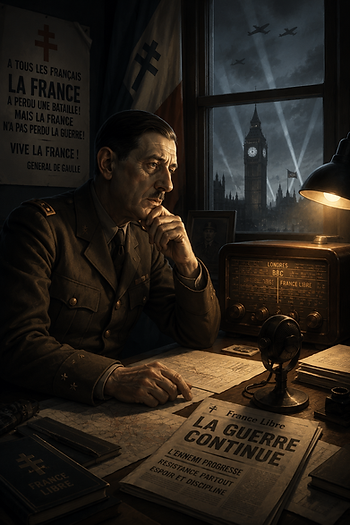
My Name is Charles de Gaulle: Leader of Free France
I was born in Lille, France, in 1890, into a family that valued education, patriotism, and faith. From a young age, I believed France was destined for greatness, but greatness required courage and discipline. I chose the life of a soldier because I believed the defense of my country was among the highest callings. During the First World War, I fought against Germany, was wounded several times, and spent years as a prisoner of war. Those difficult years strengthened my conviction that France must never surrender its spirit, even when its armies were defeated.
Preparing for a Different Kind of War
After the Great War, I studied history, military strategy, and the changing nature of warfare. While many leaders placed their confidence in defensive fortifications and the lessons of the past, I argued that future wars would be decided by speed, armored divisions, and coordinated air power. My ideas were often dismissed, and I remained an officer whose warnings were largely ignored. Yet I believed that a nation unwilling to prepare for tomorrow's battles was already placing tomorrow's freedom at risk.
The Fall of France
In 1940, Germany launched its invasion of France with overwhelming speed. Much of what I had feared came to pass as German armored forces swept around defenses thought to be secure. I briefly served in the French government, but I refused to accept that France's defeat on the battlefield meant the end of France itself. While others chose surrender, I believed our nation still possessed honor, allies, and the determination to continue the struggle.
The Voice of Free France
I traveled to Britain, where I delivered a radio address calling upon the French people to continue resisting German occupation. Few heard those words on the day they were spoken, yet they became a symbol of hope for many who refused to believe France was finished. From London, I organized the Free French movement, gathering soldiers, sailors, airmen, and civilians from around the world who wished to fight beneath the French flag rather than submit to occupation. A nation is not defined only by the land it temporarily loses but by the people who refuse to abandon it.
Leading Through Doubt and Conflict
The years that followed were filled with difficult decisions. I worked alongside Britain and later the United States, though our relationships were not always easy. I insisted that France should be treated not merely as a nation rescued by others but as one determined to reclaim its own place among the free nations of the world. Many questioned my stubbornness, but I believed that preserving France's dignity was essential if our people were to rebuild their confidence after the humiliation of defeat.
The Liberation of France
As Allied armies returned to France in 1944, Free French forces marched beside them. Paris was liberated, and I entered the capital not as a conqueror but as a Frenchman returning home. The celebration belonged not to one man but to millions who had endured occupation, resisted oppression, and sacrificed for liberty. Rebuilding the nation required more than restoring buildings; it required restoring faith that France could once again govern itself and stand proudly among the nations.
Europe Divides into Camps (1936–1939) – Told by Charles de Gaulle
There are moments in history when nations quietly drift apart, and there are moments when they deliberately choose different roads. The years between 1936 and 1939 were among the most decisive I have ever witnessed. Across Europe, governments faced difficult questions. Should they preserve liberty, even if it required sacrifice? Should they place their faith in powerful rulers who promised order and national greatness? Or should they remain outside the growing conflict altogether? These choices shaped the future of millions before the first great battles of the Second World War were even fought.
The Democracies Hold to Freedom
The democratic nations believed that governments should answer to their people through elections, representative institutions, and the rule of law. Britain, France, Belgium, the Netherlands, the Scandinavian democracies, and several smaller nations sought to preserve peace while protecting individual freedoms. Yet democracies often moved slowly. Debates filled their legislatures, elections influenced policy, and leaders sometimes disagreed over how best to respond to growing threats. Critics called democracy weak, but its supporters believed that freedom was worth defending, even when decisions took longer to reach.
The Rise of Dictatorships
Elsewhere, a different philosophy was gaining strength. Dictators promised swift action instead of debate and obedience instead of disagreement. Germany under Adolf Hitler, Italy under Benito Mussolini, and several other governments embraced authoritarian rule. These leaders argued that national unity required strong central authority and that individual rights should give way to the needs of the state. Massive military parades, carefully controlled newspapers, youth organizations, and constant propaganda encouraged citizens to believe that their nation's future depended upon unquestioning loyalty. Many people accepted these promises because they longed for stability after years of economic hardship and political unrest.
The Choice to Remain Neutral
Not every nation wished to join one side or the other. Countries such as Switzerland, Sweden, Ireland, Portugal, and others pursued neutrality for different reasons. Some hoped that staying out of political disputes would spare them from another devastating war. Others depended upon trade with many countries and feared that taking sides would damage their economies. Neutrality was not always simple. Neutral governments often found themselves balancing diplomacy, military preparedness, and economic relationships while watching powerful neighbors grow increasingly aggressive.
Why Europe Became So Divided
The divisions that appeared across Europe did not emerge overnight. The First World War had left deep wounds, and the Great Depression brought unemployment, poverty, and uncertainty to millions of families. Many people lost confidence in traditional governments, believing they had failed to provide security or prosperity. At the same time, fear of communism spread among many Europeans, while others feared fascism even more. National pride, economic competition, old territorial disputes, and resentment over the Treaty of Versailles all contributed to a growing sense that compromise was becoming impossible. As nations searched for security, they increasingly viewed one another with suspicion instead of trust.
The Spanish Civil War: A Warning to Europe
The Spanish Civil War became more than a struggle for Spain itself. Germany and Italy supported General Francisco Franco, while the Soviet Union backed the Republican government. Volunteers from dozens of countries traveled to Spain to fight for causes they believed would shape Europe's future. Many of the weapons, tactics, and political divisions that would soon dominate the Second World War first appeared on Spanish battlefields. Those who paid close attention recognized that Europe was already fighting a rehearsal for a much larger conflict.
The Failure of Peaceful Solutions
Many leaders desperately wished to avoid another world war. Conferences were held, negotiations continued, and concessions were offered in the hope that peace could be preserved. Yet each territorial demand that went unanswered encouraged further demands. Each successful act of aggression convinced ambitious dictators that the democratic nations might continue yielding rather than fighting. Peace requires both diplomacy and the willingness to defend it. Without both, agreements become little more than words on paper.
Looking back, it is easy to see that Europe had already divided itself before armies crossed borders in 1939. Democracies sought to preserve freedom, dictatorships pursued expansion and centralized power, and neutral nations struggled to remain outside an increasingly dangerous rivalry. Every government believed it was protecting its future, but many underestimated how quickly events would overtake them. The camps had already formed. The alliances had begun to harden. Soon, decisions made in cabinet rooms and diplomatic meetings would be tested on battlefields across the world, changing history forever.
Why Countries Chose Germany – Told by Charles de Gaulle
Why Countries Chose Germany – Told by Charles de Gaulle. One of the greatest mistakes a student of history can make is to assume that every nation supporting Germany did so because it fully embraced Adolf Hitler's ideology. The truth is far more complicated. Governments make decisions based upon fear, opportunity, geography, economics, military realities, and political survival. During the late 1930s and early years of the Second World War, many European countries found themselves facing impossible choices. Some willingly aligned with Germany, while others believed they had little choice at all. To understand this period, we must examine not only what nations did, but why they believed those decisions served their interests.
Fear of Communism
Perhaps the greatest force pushing many governments toward Germany was fear of communism. The Russian Revolution of 1917 and the rise of the Soviet Union convinced many political leaders that communist revolutions could spread across Europe. Landowners feared losing their property, business leaders feared nationalization, churches feared state-sponsored atheism, and conservative governments feared violent uprisings. Germany presented itself as the strongest barrier against Soviet expansion. Nations such as Hungary, Romania, Slovakia, and others increasingly viewed Germany as a powerful ally against what they considered an even greater danger coming from the east.
Dreams of Regaining Lost Lands
Territory has always influenced international politics. After the First World War, many national borders were redrawn, leaving some countries dissatisfied with the settlements. Governments hoped that cooperation with Germany might allow them to reclaim regions they believed rightfully belonged to them. Hungary sought to recover lands lost under the Treaty of Trianon. Romania hoped to protect or expand its borders depending on changing circumstances. Bulgaria desired territory it had lost in earlier conflicts. Germany often encouraged these ambitions, promising support when doing so strengthened its own influence across Europe. For several nations, joining Germany seemed to offer a chance to reverse what they viewed as historic injustices.
Economic Dependence
Economic hardship also shaped political decisions. The Great Depression weakened economies throughout Europe, leaving governments desperate for markets, raw materials, and stable trading partners. Germany became one of the continent's largest industrial economies and established extensive trade agreements with neighboring countries. Many nations grew increasingly dependent upon German purchases of agricultural products, oil, metals, and manufactured goods. As economic ties deepened, political independence sometimes became more difficult to maintain. A government reluctant to anger its largest customer often found itself making diplomatic compromises that might once have seemed unthinkable.
The Weight of Military Power
Sometimes nations aligned with Germany because they believed resistance was impossible. By the late 1930s, Germany possessed one of the strongest and most modern militaries in Europe. Rapid victories in Austria and Czechoslovakia demonstrated both its strength and the reluctance of other powers to intervene. Smaller countries carefully watched these events and understood that standing alone against such military power could lead to occupation or destruction. Some governments chose cooperation in hopes of preserving a measure of independence rather than risking complete conquest. Others simply yielded to overwhelming political and military pressure.
Leaders Seeking Survival
Individual leaders also played an important role. Every government faced different internal pressures. Some hoped that cooperating with Germany would preserve their own authority. Others believed that aligning with the strongest power in Europe would keep their nations safe until the conflict passed. Still others genuinely admired authoritarian government and believed democracy had failed. Rarely was there only one reason behind a country's decision. Political survival, personal ambition, ideological sympathy, and national interest often became intertwined in ways that made simple judgments impossible.
As I watched Europe divide, I learned that fear can become as powerful a force in history as hope. Fear of invasion, fear of economic collapse, fear of revolution, and fear of isolation led many governments to choose paths they might never have considered during peaceful times. Yet history also teaches that decisions made out of fear often carry consequences that extend far beyond the moment. Some countries gained temporary advantages, while others found themselves increasingly controlled by the very power they had hoped would protect them.

My Name is Joseph Stalin: Leader of the Soviet Union
I was born Ioseb Jughashvili in 1878 in the town of Gori, Georgia, then part of the Russian Empire. My childhood was marked by poverty, hard labor, and a strict household. My mother hoped I would become a priest, and I spent several years studying in a seminary. Instead, I found myself drawn to revolutionary ideas. I came to believe that the old order could not be reformed—it had to be destroyed and replaced with a new society built by workers and peasants.
The Revolutionary Years
As a young man, I joined the Bolshevik movement led by Vladimir Lenin. I adopted the name "Stalin," meaning "Man of Steel," because I wanted my name to reflect strength rather than weakness. I organized strikes, distributed illegal literature, robbed banks to help finance the revolution, and was arrested and exiled numerous times. These experiences convinced me that power belonged to those willing to seize it and hold it with determination.
Taking Control of the Soviet Union
After Lenin died in 1924, a struggle for leadership followed. Many believed others were better known or more gifted speakers, but I understood that lasting authority was built through organization, patience, and control of the Communist Party itself. One by one, my rivals were removed from positions of influence until I stood at the head of the Soviet Union. I believed that our nation could not survive unless it became stronger, richer, and more industrialized than its enemies.
Building an Industrial Power
I ordered enormous changes across the Soviet Union. Factories rose where fields had once stretched, railroads expanded across vast distances, and millions of workers labored to transform an agricultural nation into an industrial giant. The cost was severe. Collectivization, forced policies, famine, and political purges brought suffering to millions. I considered these sacrifices necessary to strengthen the state, believing that weakness invited invasion. History continues to debate whether such costs could ever be justified.
A Pact for Time
As Europe drifted toward war, I distrusted both Nazi Germany and the Western democracies. In 1939, I agreed to the Molotov-Ribbentrop Pact with Germany. It was not an alliance built on friendship or shared beliefs but a calculation. The agreement bought time for the Soviet Union while Europe fought. Secret arrangements divided territories in Eastern Europe, including Poland. I expected conflict eventually, but I intended to choose the moment if I could.
The Great Patriotic War
In June 1941, Germany shattered the agreement by invading the Soviet Union during Operation Barbarossa. The war became a struggle not merely for territory but for survival itself. Cities burned, millions died, and entire regions were devastated. Yet the Soviet people endured. Factories were moved east, soldiers fought with relentless determination, and victories at Moscow, Stalingrad, and Kursk turned the tide. The Soviet Union bore an enormous share of the war's human cost, and our armies ultimately marched all the way to Berlin.
After Victory
When the war ended, I was determined that the Soviet Union would never again face such a devastating invasion. Communist governments were established across much of Eastern Europe, creating a protective buffer between Moscow and the West. To my supporters, these actions secured peace through strength. To my critics, they marked the beginning of another great conflict—the Cold War. I believed security required firm control, even when others called it domination.
The Axis Alliance Forms – Told by Joseph Stalin
Long before armies clashed across Europe and Asia, governments were already choosing sides. The alliance that came to be known as the Axis was not created because every member nation shared identical goals. Rather, it was a coalition of governments that believed they could gain security, territory, or influence by standing together. As I watched these developments from Moscow, I understood that alliances are rarely permanent friendships. They are arrangements based upon national interests, and interests can change as quickly as fortunes on the battlefield.
Germany Takes the Lead
Germany became the driving force behind the Axis under Adolf Hitler. After rebuilding its military in violation of the Treaty of Versailles, Germany sought to overturn the post-First World War settlement and expand its territory. Hitler promised to unite German-speaking peoples, restore national pride, and secure what he called "living space" for the German nation. Through rapid rearmament, diplomatic pressure, and increasingly bold military actions, Germany emerged as the dominant power around which the Axis alliance would revolve. Other nations looked to Berlin not only for leadership but also for military protection and political influence.
Italy Joins Its Ambitions with Germany
Italy, under Benito Mussolini, had already embraced Fascism before Germany became Europe's dominant military power. Mussolini dreamed of restoring Italy as a great Mediterranean empire, expanding into Africa and southeastern Europe. Although Germany and Italy sometimes pursued different goals, they increasingly found common ground in opposing the existing international order and resisting the influence of Britain, France, and later the Soviet Union. Their cooperation was formalized through agreements such as the Pact of Steel in 1939, strengthening the partnership between the two dictatorships.
Japan Expands in Asia
While Germany and Italy focused primarily on Europe and the Mediterranean, Japan pursued its own ambitions in East Asia and the Pacific. Japanese leaders sought access to natural resources, industrial materials, and strategic territory that they believed were necessary for their nation's future. Although separated by great distances, Germany, Italy, and Japan shared a willingness to use military force to expand their influence. In 1940, the three nations signed the Tripartite Pact, creating the foundation of what most people recognize as the Axis Powers.
Hungary, Romania, and Slovakia
Several smaller European nations eventually aligned themselves with Germany, though each did so for its own reasons. Hungary hoped to recover territory it had lost after the First World War and viewed German support as the best path toward that goal. Romania possessed valuable oil fields that Germany desperately needed to fuel its military, and Romanian leaders sought protection against both territorial rivals and Soviet expansion. Slovakia, created after the breakup of Czechoslovakia in 1939, relied heavily upon German political and military support to maintain its independence. Each government believed that cooperation with Berlin would secure advantages that might otherwise remain out of reach.
Bulgaria's Careful Choice
Bulgaria also joined the Axis, motivated largely by regional concerns and the hope of recovering lands lost in previous wars. Bulgarian leaders believed that cooperation with Germany would strengthen their position in the Balkans without requiring direct conflict against every Allied nation. Although Bulgaria became an Axis member, its wartime policies differed in important ways from those of some other partners. Like many governments during this period, Bulgarian leaders attempted to balance national interests against the realities of an increasingly dangerous war.
An Alliance of Different Goals
From Moscow, I never believed that the Axis alliance was built upon perfect unity. Germany sought domination in Europe, Italy pursued Mediterranean ambitions, Japan focused upon Asia and the Pacific, while Hungary, Romania, Slovakia, and Bulgaria each hoped to secure their own national objectives. What united them was not identical ideology or identical plans, but the belief that Germany's growing strength offered opportunities they could not achieve alone. Such alliances often appear powerful while victories continue, yet they become strained when setbacks reveal that each nation ultimately places its own survival first.
Neutral Nations During the War – Told by Charles de Gaulle
During the Second World War, Europe often appeared divided into two armed camps, yet not every nation entered the conflict as a combatant. Some governments chose neutrality, hoping to protect their people, preserve their independence, and avoid the destruction that had consumed much of the continent during the First World War. Neutrality, however, did not mean isolation. These countries continued to trade, negotiate, gather intelligence, care for refugees, and defend their borders. Remaining neutral in a world at war required constant diplomacy and careful judgment.
Switzerland: Armed Neutrality
Switzerland had maintained a tradition of neutrality for centuries, but neutrality did not mean weakness. As war spread across Europe, the Swiss mobilized hundreds of thousands of soldiers and prepared mountain fortifications designed to make any invasion extremely costly. Surrounded by Axis-controlled territory for much of the war, Switzerland continued to function as an important financial center and served as a meeting place for diplomats, humanitarian organizations, and intelligence agents from many nations. It also became a refuge for thousands fleeing persecution, though its refugee policies have remained the subject of historical debate because many others seeking safety were turned away.
Sweden: Balancing Survival and Independence
Sweden also remained officially neutral, though its position was far from simple. The country possessed valuable iron ore that Germany depended upon for its steel industry, and trade with Germany continued during much of the war. At the same time, Sweden strengthened its own military, provided refuge to many fleeing occupied Europe, and gradually increased support for the Allied cause as the balance of the war shifted. Swedish diplomacy reflected the difficult reality faced by smaller nations located near powerful neighbors whose armies could not easily be ignored.
Portugal: A Historic Alliance and Careful Diplomacy
Portugal declared neutrality under Prime Minister António de Oliveira Salazar, but its long-standing alliance with Britain remained important throughout the conflict. Portugal continued trading with both sides during part of the war, particularly through exports of tungsten, a metal essential for manufacturing military equipment. Later, Portugal permitted the Allies to use air bases in the Azores, greatly assisting operations in the Atlantic Ocean. Portuguese neutrality therefore combined official non-participation with selective cooperation shaped by national interests and historic relationships.
Ireland and the Defense of Independence
Ireland remained neutral throughout the war in what its government referred to simply as "The Emergency." Having only recently gained independence from Britain after generations of conflict, Irish leaders believed neutrality demonstrated that Ireland would determine its own foreign policy. The government strengthened internal security, censored wartime information, and avoided joining either alliance. Yet neutrality did not prevent quiet cooperation in certain areas. Weather reports from Ireland aided Allied planning, and many Irish citizens voluntarily served in the British armed forces despite the government's official position.
Turkey and the Changing Balance of Power
Turkey pursued neutrality for most of the conflict while carefully observing events around its borders. Situated between Europe, Asia, and the Middle East, Turkey held enormous strategic importance. Leaders in Ankara strengthened the military while negotiating with both the Allies and the Axis to avoid becoming another battlefield. As the war turned decisively against Germany, Turkey reduced economic ties with the Axis and declared war on Germany and Japan in February 1945. Although Turkish forces saw almost no combat, this decision positioned the country among the nations participating in the creation of the postwar international order.
Spain's Limited Neutrality
Spain presents one of the most interesting examples of wartime neutrality. Having just emerged from the devastating Spanish Civil War in 1939, General Francisco Franco understood that Spain lacked the resources for another major conflict. Although his government was sympathetic to Germany and Italy, Spain officially remained non-belligerent for much of the war before later describing its position as neutral. Spanish volunteers fought alongside German forces against the Soviet Union in the Blue Division, while the government also traded with both sides and occasionally provided intelligence cooperation. Franco sought to benefit from relations with Germany without exposing Spain to the destruction of a wider war.
Neutrality Was Never Simple
From my perspective as a leader of Free France, I often wished every nation would join the struggle against tyranny. Yet history teaches us that governments must weigh geography, military strength, economic survival, and the safety of their citizens. Neutral nations walked a narrow path between competing powers, constantly adjusting to changing military fortunes and diplomatic pressures. Their experiences remind us that neutrality is rarely a matter of doing nothing. It is often an active, difficult policy requiring constant negotiation, preparation, and compromise. Even those who remained outside the battlefield were deeply affected by a war that reached nearly every corner of the world.

My Name is Vidkun Quisling: Head of Norway's Collaboration Government
I was born in 1887 in the Norwegian village of Fyresdal, where my father served as a Lutheran minister and scholar. My family valued discipline, learning, and service, and I excelled in mathematics and military studies. From an early age, I believed that order and strong leadership were essential for a nation's survival. Those beliefs would guide my decisions throughout my life, though history would judge them far more harshly than I ever imagined.
A Soldier and Diplomat
I entered the Norwegian Military Academy and graduated near the top of my class. My work eventually took me beyond Norway, including humanitarian and diplomatic missions in Russia during years of revolution and famine. There I witnessed political violence, economic collapse, and the rise of Bolshevism. Those experiences left a deep impression on me. I became convinced that communism threatened not only Russia but the future of Europe itself, and I believed nations needed firm governments to resist it.
Entering Politics
In time, I entered public life and served as Norway's Minister of Defense. Yet I grew frustrated with parliamentary politics, believing that debates and political compromises weakened national unity. In 1933, I founded the Nasjonal Samling, or National Unity Party. I hoped to build a disciplined, nationalist movement that would strengthen Norway, but it never gained widespread public support. Most Norwegians rejected my vision long before war reached our shores.
The German Occupation
When Germany invaded Norway in April 1940, I believed resistance was hopeless and that cooperation would spare the country greater destruction. I announced that I was assuming authority over the government, expecting that order could be maintained through collaboration. The Germans soon placed Norway under occupation, and I eventually became the head of a collaboration government that operated under German control. I argued that I was protecting Norway's future, though many of my countrymen believed I had surrendered its independence.
Life Under Occupation
During the occupation, my government worked alongside German authorities. Policies were introduced to reshape Norwegian society according to National Socialist ideals, and opposition was met with arrests and repression. Many Norwegians joined the resistance instead, risking imprisonment or death rather than cooperate. While I believed discipline and cooperation would preserve stability, countless citizens saw those same actions as betrayal. The divide between my government and the Norwegian people grew wider with each passing year.
A Name That Became a Symbol
As the war continued, my name took on a meaning I had never intended. Across Europe and beyond, "Quisling" became another word for someone who betrays his own country by assisting an occupying enemy. It is rare for a person's name to enter the language itself, and rarer still for it to carry such lasting condemnation. Whatever my intentions may have been, history remembered the result more than the reasoning behind it.
The Nazi Movement Beyond Germany – Told by Vidkun Quisling
Many people imagine that National Socialism was confined to Germany, but the movement's influence reached far beyond its borders during the 1930s and early years of the Second World War. Across Europe, political parties, organizations, and individuals watched Germany's rapid recovery from economic hardship with great interest. Some admired its promises of national unity, strong government, and economic revival. Others saw Germany as a powerful ally against communism. Although these movements differed from one country to another, they shared the belief that Europe needed a new political direction after the instability that followed the First World War and the Great Depression.
The Growth of Fascist Parties
Authoritarian political movements appeared in many European countries during the interwar years. Italy's Fascist Party had already demonstrated that democratic governments could be replaced by dictatorship, and Germany's National Socialist Party inspired similar groups elsewhere. Britain had the British Union of Fascists led by Oswald Mosley. Belgium saw the rise of Rexism under Léon Degrelle. Romania's Iron Guard blended nationalism with religious symbolism, while Hungary's Arrow Cross Party promoted an extreme nationalist agenda. My own party in Norway, Nasjonal Samling, sought to establish a nationalist government, though it never gained broad electoral support before Germany invaded Norway in 1940.
Pro-German Organizations
Not every organization that supported Germany was a formal political party. Throughout Europe, numerous cultural groups, youth organizations, newspapers, veterans' associations, and civic organizations encouraged closer ties with Berlin. Some admired Germany's military strength, while others believed economic cooperation would benefit their nations. In occupied countries, German authorities often encouraged or created organizations that promoted collaboration and loyalty to the occupation government. These groups attempted to persuade citizens that cooperation with Germany would bring order, prosperity, or protection from communism.
Different Nations, Different Motives
The reasons people supported Germany varied widely. Some genuinely embraced Nazi racial ideology and authoritarian government. Others viewed Germany primarily as a shield against the Soviet Union and the spread of communism. In countries dissatisfied with the post-First World War treaties, Germany appeared willing to revise borders and restore what some believed had been unfairly taken away. Economic struggles also played a role. During years of unemployment and political instability, promises of national renewal and decisive leadership appealed to many citizens who had grown frustrated with parliamentary governments that seemed unable to solve mounting crises.
The Limits of Public Support
Despite the visibility of pro-German movements, it is important to remember that they often represented only a minority of the population. In many democratic nations, fascist parties performed poorly in elections. Even where authoritarian movements attracted significant followings, large numbers of citizens continued supporting democratic institutions, socialist parties, Christian democratic movements, or conservative governments that rejected Nazi ideology. Public opinion was rarely unanimous. Families, communities, and entire nations often found themselves deeply divided over the future they wished to pursue.
Occupation Changed Everything
When Germany occupied much of Europe, political choices became even more complicated. Some individuals collaborated with occupation authorities, believing cooperation would reduce suffering or preserve their country's institutions. Others joined resistance movements, risking imprisonment or death. Many simply tried to survive. Under occupation, support for Germany could result from genuine ideological agreement, personal ambition, fear, coercion, or the belief that no realistic alternative remained. Historians continue to study these difficult choices because simple explanations rarely capture the complexity of life during wartime.
Propaganda and Persuasion
Germany devoted enormous effort to spreading its message across Europe. Newspapers, radio broadcasts, films, public rallies, and carefully designed posters presented Germany as the defender of European civilization against communism and national decline. At the same time, censorship limited opposing viewpoints in occupied territories. Propaganda alone could not create lasting loyalty, but it shaped public debate and influenced many who were already searching for solutions to economic hardship or political instability. Modern students should remember that persuasive messages are often most effective when they build upon existing fears and frustrations.

My Name is Charles Lindbergh: Aviator and American Public Figure
I was born in Detroit, Michigan, in 1902 and grew up in Minnesota, where I developed a fascination with machines, engines, and the open sky. Flying was still a dangerous new frontier, and every flight demanded careful preparation and confidence. I learned to fly as a barnstormer, carrying passengers and performing aerial demonstrations before becoming an airmail pilot. Those years taught me that success belonged to those who remained calm under pressure and trusted both their training and their judgment.
Across the Atlantic
In 1927, I accepted a challenge that many believed could not be accomplished. Flying alone in the Spirit of St. Louis, I crossed the Atlantic Ocean nonstop from New York to Paris. After more than thirty-three exhausting hours in the air, I landed before cheering crowds and discovered that my life had changed forever. Overnight I became one of the most recognized people in the world. To many, the flight proved that aviation had entered a new era and that distances separating nations could be overcome by human ingenuity.
Fame and Personal Tragedy
Fame brought opportunities, but it also brought burdens I had never expected. My family lived beneath constant public attention, and in 1932 our young son was kidnapped and murdered in a crime that shocked the nation. The endless publicity surrounding the investigation made ordinary life nearly impossible. Seeking privacy, my wife Anne and I spent years living in Europe, where I continued studying aviation and observed the growing military strength of several European nations.
Watching Europe Prepare for War
As I traveled through Europe, I witnessed remarkable advances in military aircraft and modern warfare. Germany's air power impressed me with its rapid development, and I warned American leaders that air strength would shape future conflicts. My observations were technical rather than emotional; I believed it was important to understand an opponent's capabilities honestly. At the same time, I feared that another European war would become even more destructive than the last.
America First
When I returned to the United States, I became one of the leading voices of the America First movement. I argued that America should strengthen its own defenses while avoiding direct involvement in another European war. I believed the Atlantic and Pacific Oceans still provided significant protection and that entering the conflict would bring terrible costs. Many Americans agreed with me before Pearl Harbor, while others believed the growing threat from Nazi Germany demanded earlier action. The debate was fierce because both sides believed they were acting in the nation's best interest.
A Nation at War
Everything changed after the attack on Pearl Harbor in December 1941. Once the United States entered the war, I accepted that the national decision had been made. Although I was not restored to active military service, I contributed as a civilian consultant, helping improve aircraft performance and flying combat missions in the Pacific with permission from military commanders. Whatever disagreements had existed before the war, I believed Americans should unite once the nation was committed to the fight.
A Life Beyond Aviation
After the war, my interests broadened beyond flight. I became increasingly concerned with conservation, scientific research, and protecting the natural world. Aviation had shown me the beauty and fragility of the Earth from above, and I believed future generations carried a responsibility to preserve it. I continued writing, speaking, and encouraging technological progress balanced with respect for nature and humanity.
The Nazi Movement in America – Told by Charles Lindbergh
Before the attack on Pearl Harbor, the United States was deeply divided over its place in a world moving toward war. Most Americans opposed dictatorship and valued democratic government, yet many also remembered the terrible losses of the First World War and wanted to avoid another conflict overseas. In that atmosphere, several organizations emerged with very different goals and beliefs. Some openly supported Nazi Germany, while others simply argued that America should remain out of another European war. Understanding the difference between these groups is essential, because history often becomes misleading when every opponent of intervention is placed into the same category.
The German-American Bund
The most visible pro-Nazi organization in the United States was the German-American Bund. Founded in the 1930s, it openly admired Adolf Hitler and attempted to promote National Socialist ideas among Americans of German ancestry and others willing to listen. Members organized rallies, youth camps, parades, and public events featuring American flags displayed alongside Nazi symbols. The Bund claimed it was encouraging patriotism while supporting Germany, but its admiration for Hitler's government drew widespread criticism from Americans across the political spectrum. Although its rallies attracted attention, the organization represented only a tiny fraction of the American population and never gained broad political influence.
The America First Committee
The America First Committee was a very different organization. Established in 1940, it became one of the largest anti-war movements in American history, attracting hundreds of thousands of supporters from many political backgrounds. Its members argued that the United States should strengthen its own defenses while avoiding direct involvement in Europe's war. They believed the Atlantic and Pacific Oceans offered protection and feared that entering another foreign conflict would cost countless American lives. Many respected public figures joined the organization, and while opinions varied within its membership, its official purpose was to oppose American entry into the war rather than to promote Nazi ideology.
Isolationism Was Not the Same as Nazism
One of history's most important distinctions is the difference between isolationism and support for National Socialism. Isolationists believed America should avoid foreign wars regardless of which nations were fighting. Many had lost family members during the First World War or believed European conflicts should remain Europe's responsibility. By contrast, supporters of Nazi ideology admired Germany's political system, authoritarian leadership, or racial doctrines. While a small number of individuals belonged to both groups, most isolationists did not support Hitler's government. Confusing these positions oversimplifies a far more complicated public debate that shaped American politics before 1941.
Americans Who Sympathized with Germany
Some Americans nevertheless viewed Germany favorably during the 1930s. Their reasons varied. A few admired Germany's economic recovery after the Great Depression. Others strongly opposed communism and saw Germany as the principal barrier against Soviet expansion. Some Americans of German heritage felt cultural or family ties to their ancestral homeland, even while remaining loyal citizens of the United States. There were also individuals who accepted antisemitic ideas or believed authoritarian government offered greater stability than democracy. These viewpoints existed, but they represented only a minority within American society and were frequently challenged by newspapers, churches, civic organizations, and political leaders.
Public Opinion Changes
Everything changed after Japan attacked Pearl Harbor on December 7, 1941. Germany declared war on the United States just days later, ending much of the national debate over intervention. The America First Committee dissolved almost immediately, encouraging its members to support the nation's war effort. Even many who had opposed entering the war accepted that once the United States had been attacked and war declared, national unity became more important than previous political disagreements. Americans from every background entered military service, worked in factories, and contributed to the enormous effort required to defeat the Axis Powers.
Americans Who Served Germany – Told by Vidkun Quisling
When people think of the Second World War, they often picture Americans fighting against Germany, and rightly so. More than sixteen million Americans served in the United States Armed Forces, and the overwhelming majority fought to defeat the Axis Powers. Yet history is rarely without exceptions. A very small number of American citizens or former citizens chose to assist Germany in various ways. Their reasons differed, their numbers were small, and their actions remain among the most controversial chapters in the history of the war.
German-American Volunteers
Some individuals with American citizenship or strong family ties to Germany traveled to Europe before or during the war and volunteered to serve German interests. A number had been born in Germany before immigrating to the United States, while others were descendants of German immigrants who felt a cultural connection to their ancestral homeland. Some returned before the United States entered the war, believing they were defending Germany rather than opposing America. Others became involved after war had already begun, though such cases were extremely rare. Their decisions reflected personal loyalties and political beliefs rather than the views of most German Americans, who overwhelmingly remained loyal to the United States and served with distinction in its armed forces.
Voices Over the Airwaves
Germany also sought to influence Americans through radio broadcasts. Several English-speaking broadcasters, including a few American citizens, delivered programs intended to weaken Allied morale and persuade listeners that Germany's cause was justified. These broadcasts criticized American leaders, questioned the purpose of the war, and encouraged listeners to oppose continued fighting. The best-known broadcasters, such as Mildred Gillars—later nicknamed "Axis Sally"—became symbols of wartime propaganda. Although these programs attracted attention, studies conducted after the war concluded that they had little measurable effect on American public opinion or military morale.
Collaboration Beyond the Battlefield
Not everyone who aided Germany wore a military uniform. Some individuals provided intelligence, spread propaganda, or assisted German operations in occupied Europe. Others worked for German-controlled governments or organizations. These collaborators often believed they were helping defeat communism, protecting their own interests, or supporting what they considered a stronger political system. In some instances, personal ambition, financial reward, or fear also influenced their choices. After the war, many collaborators faced criminal prosecution or lasting public condemnation because their actions had assisted an enemy government during wartime.
Prisoners of War Who Changed Sides
Among the millions captured during the war, a very small number of Allied prisoners agreed to cooperate with Germany. Some appeared in propaganda broadcasts or signed statements criticizing their own governments. Others accepted better treatment in exchange for cooperation or hoped such actions might improve their chances of survival. Genuine defections by American prisoners remained exceptionally uncommon. Historians caution that many prisoners acted while enduring harsh conditions, isolation, or psychological pressure, making it important to distinguish between voluntary ideological support and actions taken under coercion.
Why Did Some Americans Choose Germany?
There was no single explanation for why a handful of Americans sided with Germany. Some admired Germany's opposition to communism. Others believed Nazi propaganda that portrayed Germany as defending Western civilization. A few embraced antisemitic or authoritarian ideas, while others were influenced by family ties, nationalism, or personal grievances. Some made their choices before the full extent of Nazi persecution and genocide became widely known outside Europe. Whatever their motivations, these individuals represented only a tiny fraction of American society, whose citizens overwhelmingly rejected Nazi ideology and supported the Allied war effort.
The Larger Picture
It is important not to let extraordinary exceptions distort the broader history. Millions of Americans served honorably in Europe, North Africa, the Pacific, and on the home front, sacrificing greatly to defeat Nazi Germany and its allies. The few who chose the opposite path stand out precisely because their decisions were so unusual. Their stories remind us that every society contains individuals who make unexpected or deeply controversial choices, even during times of national unity.
The Nazi-Soviet Pact (1939) – Told by Joseph Stalin
Few diplomatic agreements have surprised the world more than the treaty signed between the Soviet Union and Nazi Germany on August 23, 1939. Many believed such an agreement was impossible. Germany openly condemned communism, while the Soviet Union denounced fascism. Our governments stood at opposite ends of the political spectrum. Yet international politics often follows national interests more closely than political ideals. I did not sign the agreement because I trusted Adolf Hitler. I signed it because I believed the Soviet Union needed time to prepare for a war that I considered increasingly inevitable.
The Molotov-Ribbentrop Pact
The agreement became known as the Molotov-Ribbentrop Pact after our foreign minister, Vyacheslav Molotov, and Germany's foreign minister, Joachim von Ribbentrop. Publicly, it was presented as a non-aggression treaty. Both governments promised not to attack one another and agreed to settle disputes peacefully. For Germany, the treaty reduced the danger of fighting simultaneously in the east and west. For the Soviet Union, it delayed what I expected would eventually become a direct conflict with Germany. Neither government viewed the agreement as a lasting friendship. It was a temporary arrangement based upon strategic calculation rather than mutual trust.
The Secret Protocols
Hidden from public view were additional agreements that remained unknown to most of the world until after the war. These secret protocols divided much of Eastern Europe into German and Soviet spheres of influence. The Baltic States of Estonia, Latvia, and Lithuania, along with parts of Finland, Poland, and Romania, were assigned to areas where one side or the other would enjoy greater influence. These understandings reflected the harsh realities of great-power diplomacy during that era, when smaller nations often found their futures discussed without their participation or consent.
The Division of Poland
Only days after the pact was signed, Germany invaded Poland from the west on September 1, 1939. Britain and France declared war on Germany, marking the beginning of the Second World War in Europe. On September 17, Soviet forces entered eastern Poland. The Polish state, already collapsing under Germany's assault, was divided according to the secret agreements. German and Soviet troops advanced from opposite directions until they met along an agreed boundary. For Poland, the result was catastrophic. The nation disappeared from the map once again, its people living under two occupying powers whose political systems differed greatly but whose control over Poland was equally real.
Strategic Calculations in Moscow
From my perspective, the Soviet Union faced an extremely dangerous international situation. Germany had rebuilt its military at remarkable speed, while Japan threatened Soviet interests in the Far East. I also questioned whether Britain and France were prepared to confront Hitler effectively. Negotiations with the Western democracies had produced little progress, and I believed they hoped Germany and the Soviet Union might weaken one another through war. By signing the pact, I intended to push the Soviet frontier farther west, create a greater buffer between Moscow and Germany, and gain valuable time to strengthen our military industries and armed forces.
Time Bought at a Heavy Cost
For nearly two years, the agreement appeared to serve its immediate purpose. The Soviet Union expanded westward into eastern Poland and later incorporated the Baltic republics while fighting Finland during the Winter War. Yet beneath the appearance of stability, distrust remained. Germany continued preparing for future conflict, and Soviet intelligence repeatedly warned that an invasion might come. I believed there was still time before Hitler would attack. On that point, I proved mistaken.
Operation Barbarossa Ends the Pact
On June 22, 1941, Germany launched Operation Barbarossa, the largest military invasion in history. Millions of German and Axis soldiers crossed into Soviet territory without warning. The non-aggression pact ended instantly. Whatever temporary security the agreement had provided disappeared beneath the advancing German armies. The Soviet Union now faced a war for its very survival, and the conflict became one of the bloodiest campaigns ever fought.
History's Judgment
The Nazi-Soviet Pact remains one of the most debated diplomatic decisions of the twentieth century. Supporters argue that it bought the Soviet Union valuable time to prepare for war and delayed a conflict for which our military was not fully ready. Critics point to the secret protocols, the partition of Poland, and the suffering imposed upon millions living in territories divided between two powerful states. History often reminds us that agreements made for strategic advantage may achieve short-term objectives while creating profound long-term consequences. The pact delayed war between Germany and the Soviet Union, but it could not prevent the immense struggle that soon followed.
Russia Changes Sides (1941) – Told by Joseph Stalin
The agreement between Germany and the Soviet Union was never built upon trust. It was a temporary arrangement designed to delay a conflict that I believed would eventually come. For nearly two years, both governments publicly honored the Molotov-Ribbentrop Pact while preparing for uncertain futures. Trade continued, diplomats met, and outwardly the treaty remained in force. Yet behind the scenes, Europe was changing rapidly. Germany conquered one nation after another, and it became increasingly clear that Adolf Hitler's ambitions extended far beyond Western Europe.
Operation Barbarossa
On the morning of June 22, 1941, Germany shattered every promise contained in the non-aggression pact. Without declaring war, more than three million German and Axis soldiers crossed the Soviet border in Operation Barbarossa, supported by thousands of tanks, artillery pieces, and aircraft. It was the largest military invasion in human history. German armies advanced across a front stretching from the Baltic Sea to the Black Sea, capturing vast territories with astonishing speed. Entire Soviet armies were surrounded, and millions of soldiers were killed or taken prisoner during the opening months of the campaign.
A Nation Fighting for Survival
The invasion transformed the conflict into what became known within the Soviet Union as the Great Patriotic War. This was no longer a struggle over diplomacy or territory alone. It became a fight for the survival of our nation. I addressed the Soviet people by calling upon workers, farmers, soldiers, and civilians to defend every city, every village, and every field. Factories were dismantled and transported east beyond the Ural Mountains, where production resumed even as the fighting continued. Millions of ordinary citizens joined the war effort, building defenses, producing weapons, and serving in the armed forces under extraordinary hardship.
From Enemies to Allies
Before June 1941, Britain and the Soviet Union viewed one another with deep suspicion. The United States had not yet entered the war but watched events closely. Germany's invasion changed everything. British Prime Minister Winston Churchill, despite his long opposition to communism, immediately declared support for the Soviet Union because defeating Nazi Germany had become the overriding priority. After the Japanese attack on Pearl Harbor in December 1941 brought the United States into the war, cooperation among Britain, the Soviet Union, and the United States expanded dramatically. Former rivals now found themselves united by a common enemy.
The Enemy of My Enemy
History often produces unlikely partnerships. The phrase "the enemy of my enemy is my friend" captures this moment, though the reality was more complicated. Britain remained a parliamentary democracy, the United States a constitutional republic, and the Soviet Union a communist state. Our political systems differed greatly, and disagreements remained throughout the war. Yet all three governments recognized that none could afford Germany's victory. Military cooperation, intelligence sharing, industrial production, and coordinated strategy became more important than ideological differences while the war continued.
Turning the Tide
The German invasion did not bring the quick victory Hitler expected. Soviet resistance stiffened before Moscow in the winter of 1941, preventing the capture of the capital. Later victories at Stalingrad and Kursk destroyed Germany's hopes of conquering the Soviet Union. Enormous sacrifices by soldiers and civilians gradually pushed the German armies westward. As Soviet forces liberated occupied territory and entered Eastern Europe, the balance of the war shifted decisively against the Axis Powers.
Victory and New Tensions
By the time Soviet soldiers raised their flag over Berlin in 1945, Germany had been defeated, but the alliance that won the war was already beginning to weaken. The same political differences temporarily set aside during the conflict quickly returned. Questions about the future of Eastern Europe, postwar governments, and global influence produced growing tensions between the Soviet Union and the Western Allies. The cooperation that had been forged out of necessity would soon give way to the Cold War.
Building the Grand Alliance – Told by Charles de Gaulle
History has often shown that nations with very different governments and beliefs can unite when confronted by a common danger. During the Second World War, the alliance that eventually defeated the Axis Powers was not built upon perfect agreement or lasting friendship. It was forged through necessity. Democracies, constitutional monarchies, communist governments, governments-in-exile, and nations from nearly every inhabited continent discovered that defeating Nazi Germany, Fascist Italy, and Imperial Japan required cooperation on a scale the world had never before witnessed.
Britain Refuses to Stand Alone
In 1940, after France had fallen to German invasion, Britain stood virtually alone in Western Europe against Hitler. Under relentless bombing during the Battle of Britain and the Blitz, the British people refused to surrender. Their navy protected vital shipping routes, while the Royal Air Force prevented Germany from gaining control of the skies. Britain also became a refuge for governments forced into exile and provided a base from which many resistance movements, including my own Free French forces, continued the fight. Without Britain's determination during those difficult months, the course of the war might have been very different.
The Soviet Union Joins the Fight
Germany's invasion of the Soviet Union in June 1941 transformed the war. Despite years of distrust between the Soviet Union and the Western democracies, Germany's attack made cooperation unavoidable. The Eastern Front became the largest and bloodiest theater of the war, where millions of soldiers fought across vast distances under unimaginable conditions. Soviet victories at Moscow, Stalingrad, and Kursk weakened Germany's military strength and prevented Hitler from achieving his goal of conquering the East. Whatever political disagreements existed among the Allies, the Soviet Union's contribution to Germany's defeat was enormous.
The United States Becomes the Arsenal of Democracy
The United States had already provided important economic assistance to Allied nations through programs such as Lend-Lease before officially entering the war. After the attack on Pearl Harbor in December 1941, America committed its immense industrial capacity, scientific innovation, and military power to the Allied cause. American factories produced ships, aircraft, tanks, trucks, weapons, and supplies on an unprecedented scale. Millions of American service members fought across Europe, North Africa, the Atlantic, and the Pacific. The combination of American industry and military strength became one of the decisive factors in the Allied victory.
Free France Continues the Struggle
Although France had been occupied in 1940, France itself had not ceased to exist. From London and later North Africa, the Free French movement organized soldiers, sailors, pilots, colonial forces, and resistance fighters determined to continue the war. Across occupied France, members of the Resistance gathered intelligence, sabotaged German operations, assisted escaped prisoners, and prepared for the day liberation would come. When Allied armies returned to France in 1944, Free French forces fought beside them, demonstrating that our nation had never abandoned the struggle for its freedom.
China Holds the Line in Asia
Long before much of Europe entered the war, China had already been resisting Japanese expansion. Beginning with the full-scale outbreak of the Second Sino-Japanese War in 1937, Chinese soldiers and civilians endured years of invasion, occupation, and terrible hardship. Their continued resistance tied down large numbers of Japanese troops that might otherwise have been deployed elsewhere in Asia or the Pacific. China's role is sometimes overlooked in discussions of the European theater, yet it formed an essential part of the broader Allied effort against the Axis powers.
A Truly Global Coalition
The Allied alliance extended far beyond its most famous members. Canada trained pilots and supplied enormous quantities of food and equipment. Australia and New Zealand fought across Europe, North Africa, and the Pacific. India, then part of the British Empire, contributed one of the largest volunteer armies in history. Poland, Norway, the Netherlands, Belgium, Greece, Yugoslavia, Czechoslovakia, and many other occupied nations continued fighting through governments-in-exile, resistance movements, and military units serving alongside Allied forces. Countries throughout Latin America, Africa, and the Middle East also contributed resources, strategic bases, or military support as the war expanded across the globe.
Unity Through a Common Purpose
The Grand Alliance was never free from disagreement. Britain, the Soviet Union, the United States, Free France, China, and the other Allied nations often argued over military strategy, political goals, and the shape of the postwar world. Yet they shared one essential objective: defeating the Axis Powers before those disagreements could be addressed. Their cooperation demonstrated that nations with different cultures, governments, and beliefs can work together when confronted by a threat greater than their differences. That lesson remains one of the most enduring legacies of the Second World War.
Resistance, Collaboration, and Survival – Told by Charles de Gaulle
When armies conquer a nation, the fighting does not always end. For millions of civilians across Europe, occupation brought a different kind of struggle—one fought not only with weapons, but with choices. Every family faced difficult questions. Should they resist? Should they cooperate to protect their loved ones? Should they remain silent and simply survive? These decisions were rarely simple. They were made under constant danger, where a single act could determine whether someone lived or died.
The Rise of the Resistance
Across occupied Europe, ordinary citizens became extraordinary defenders of freedom. Teachers, farmers, factory workers, students, priests, railroad employees, and former soldiers formed resistance movements that operated in secret. In France, members of the Resistance printed underground newspapers, gathered intelligence on German troop movements, sabotaged railways and communication lines, and helped Allied airmen escape capture. Similar organizations arose in Poland, Norway, the Netherlands, Belgium, Yugoslavia, Greece, Denmark, and many other occupied lands. Though often small and poorly equipped, these groups constantly reminded the occupiers that military conquest could never fully conquer a determined people.
Governments That Refused to Disappear
Occupation did not erase every government. Several countries established governments-in-exile, continuing to represent their nations from abroad. The Polish government operated from London after Poland's defeat. Norway, the Netherlands, Belgium, Luxembourg, Czechoslovakia, and my own Free French government also continued functioning outside their occupied homelands. These governments coordinated resistance activities, maintained diplomatic recognition, supported military forces fighting alongside the Allies, and prepared for the day when their nations would be liberated. They demonstrated that a government is more than territory—it is also the continued loyalty of its people.
The Partisans in the Mountains and Forests
In many regions, resistance grew into organized military forces known as partisans. These fighters operated behind enemy lines in forests, mountains, and rural areas where occupying armies found it difficult to maintain control. Yugoslavia's partisan movement became one of the largest resistance armies in Europe, while similar groups fought throughout Eastern Europe, Italy, Greece, and the Soviet Union. Partisans destroyed bridges, attacked supply convoys, rescued prisoners, and forced Axis forces to divert thousands of soldiers away from the front lines. Their campaigns demonstrated that even powerful armies could be challenged through determination, local knowledge, and persistence.
Those Who Chose Collaboration
Not everyone resisted. Some individuals and governments chose to collaborate with the occupying powers. Their reasons varied greatly. Some believed cooperation would reduce suffering and prevent greater destruction. Others hoped to preserve their positions of authority or protect their communities. A number genuinely supported Nazi or fascist ideology, while others feared harsh punishment if they refused to cooperate. Collaboration took many forms, from serving in occupation governments and police forces to providing intelligence or assisting German administration. After the war, these choices often became the subject of intense legal proceedings and national debate.
The Difficult Question of Survival
History is rarely divided neatly between heroes and villains. Many civilians neither actively resisted nor willingly collaborated. Their daily lives revolved around finding food, protecting their children, caring for elderly relatives, and surviving shortages, bombings, and constant uncertainty. A shopkeeper might sell goods to occupying soldiers simply to keep a business open. A railway worker might quietly pass information to the Resistance while continuing to perform assigned duties. A family might hide refugees while outwardly appearing loyal to occupation authorities. Under such conditions, moral decisions became extraordinarily complex, and judging them from the safety of peace requires great humility.
Courage in Ordinary People
One lesson stands above all others. The greatest acts of courage during the occupation were often carried out by ordinary people whose names rarely appear in history books. Families hid Jewish neighbors despite the threat of execution. Students distributed illegal newspapers. Farmers sheltered escaped prisoners of war. Clergy protected children, doctors treated resistance fighters in secret, and railroad workers delayed enemy transports at enormous personal risk. Many paid for these actions with imprisonment or death, yet they continued because they believed some principles were worth defending regardless of the cost.
Why Nations Chose Their Side – A Roundtable Discussion
Four men from very different nations sit around a table, each carrying the experiences of his country through one of history's greatest conflicts. Charles de Gaulle speaks for Free France. Joseph Stalin speaks for the Soviet Union. Vidkun Quisling speaks for Norway's collaboration government. Charles Lindbergh speaks as an American public figure representing the debate within the United States before its entry into the war. Though they rarely agree, each explains why nations chose the paths they did during the turbulent years leading into the Second World War.
Geography
Charles de Gaulle: "Geography often decides a nation's problems long before its leaders do. France stood beside Germany, and every generation remembered invasions crossing our shared frontier. We could not simply move our borders farther away from danger. Britain enjoyed the protection of the English Channel, while Switzerland hid behind mountains. Geography gave some nations time to choose carefully. Others, like Poland and France, had little luxury. Our location forced us to confront decisions that distant countries could postpone."
Joseph Stalin: "The Soviet Union stretched across thousands of miles, but our western plains offered few natural barriers against invasion. Napoleon came through them, and later Hitler did the same. I believed our security depended upon creating greater distance between Moscow and potential enemies. Geography taught Russia harsh lessons, and our policies reflected those lessons."
Vidkun Quisling: "Norway's long coastline and strategic ports made our country valuable to Germany and Britain alike. We sat beside the North Sea and controlled access to important shipping routes and Swedish iron ore exports. Geography placed Norway in the path of competing great powers. Some believed resistance was our duty. Others believed cooperation offered the only practical way to preserve what remained."
Charles Lindbergh: "The United States viewed geography differently. Two vast oceans separated us from Europe's battlefields. Many Americans believed those oceans still offered protection, as they had during earlier wars. Geography encouraged the belief that Europe could settle its own disputes while America concentrated on defending the Western Hemisphere."
Economics and National Interests
Charles de Gaulle: "Economic hardship after the Great Depression left governments searching for stability. Trade relationships, industrial production, and access to raw materials became matters of national survival. Some nations concluded that cooperation with Germany promised economic recovery. Others believed preserving political independence mattered more than commercial gain."
Joseph Stalin: "Economics and national interests cannot be separated. Every government must ask whether its industries can support war, whether its people have enough food, and whether its military can obtain the resources it needs. The Soviet Union industrialized rapidly because I believed economic strength determined whether a nation survived. Weak economies invite stronger neighbors to impose their will."
Vidkun Quisling: "Smaller countries often lack the freedom to ignore powerful trading partners. Germany became the largest market for many European exports. Leaders feared losing those markets as much as they feared military conflict. Some concluded that maintaining economic ties required political cooperation. Whether history judged that choice kindly is another matter."
Charles Lindbergh: "Many Americans believed our national interests were best served by avoiding Europe's war altogether. They argued that our economy should supply our own people, strengthen our own defenses, and avoid another costly foreign conflict. Others believed American prosperity ultimately depended upon preventing dictators from dominating Europe. Both sides appealed to national interest, though they reached different conclusions."
Ideology and Fear
Charles de Gaulle: "Ideas shaped this conflict as surely as armies did. Democracies defended representative government, while dictatorships promised order through centralized authority. Yet fear often amplified ideology. Citizens frightened by unemployment, revolution, or instability sometimes accepted governments that offered certainty instead of liberty."
Joseph Stalin: "Fear influenced every government. Many European leaders feared communism more than fascism. Others feared fascism more than communism. Germany portrayed itself as Europe's defender against Bolshevism. My government believed capitalist nations hoped Germany and the Soviet Union would destroy one another. Suspicion shaped diplomacy as much as ideology."
Vidkun Quisling: "Many who supported Germany believed they were defending their countries against communist revolution rather than embracing every part of Nazi ideology. That distinction mattered to them, though history has judged many of those decisions by their consequences rather than their intentions."
Charles Lindbergh: "In America, fear took another form. Millions feared repeating the terrible losses of the First World War. They believed intervention overseas would cost countless American lives. It is important to distinguish those fears from sympathy for Nazi ideology. Most Americans opposed dictatorship even while disagreeing over whether the nation should enter another European war."
Military Threats, Colonial Ties, and Leadership
Charles de Gaulle: "Military strength often forced decisions before diplomacy had finished speaking. Nations facing immediate invasion rarely enjoyed the luxury of prolonged debate. Colonial ties also shaped the conflict, bringing soldiers and resources from Africa, Asia, Canada, Australia, New Zealand, India, and countless other parts of the world into the Allied cause. Leadership mattered because individuals ultimately decided whether nations resisted, surrendered, or sought compromise."
Joseph Stalin: "Leaders must make decisions with incomplete information and enormous consequences. A single diplomatic agreement or military order can alter the fate of millions. Whether those decisions prove wise is judged only after history reveals the outcome."
Vidkun Quisling: "Leadership can also become deeply controversial. Some leaders believed cooperation would preserve lives and institutions under occupation. Others believed only resistance could preserve national honor. Wartime rarely offers choices without terrible costs."
Charles Lindbergh: "Democratic leadership includes public debate, and before Pearl Harbor Americans argued vigorously about the nation's future. Once war came, those debates largely ended because the country's priorities changed. Leadership is not only about making decisions—it is also about recognizing when circumstances have changed enough to require a different course."
Closing Reflections
Charles de Gaulle: "History teaches that nations rarely choose sides for a single reason. Geography, economics, ideology, fear, military necessity, and leadership all combine to shape decisions that later generations often oversimplify."
Joseph Stalin: "Governments act first to preserve their states. Alliances, treaties, and partnerships are usually tools for survival rather than expressions of permanent friendship."
Vidkun Quisling: "The choices made during times of crisis may seem logical to those making them, yet history ultimately measures them by the lives they affect and the freedoms they preserve—or destroy."
Charles Lindbergh: "Students should resist simple explanations. The Second World War reminds us that nations are guided by many competing forces, and understanding those forces allows us to study history with greater wisdom rather than merely judging it from a distance."


Comments