

14. Heroes and Villains of the Roaring 20's: Farmers, Workers, and Hidden Struggles


My Name is Andrew Mellon: Banker, Industrialist, and Secretary of the Treasury
I was one of the wealthiest businessmen in America and the Secretary of the Treasury during the Roaring Twenties. I helped build banks, invest in growing industries, and shape the nation's economic policies. Many people praised me for helping create prosperity, while others blamed me for favoring the wealthy. For much of my life, I believed deeply that economic success came from hard work, investment, and allowing businesses to grow without too much government interference.
Growing Up in Business
I was born in Pittsburgh, Pennsylvania, in 1855. My father was a successful businessman, and from an early age I learned how money, banks, and investments worked. Instead of becoming a politician first, I became a banker and investor. I helped finance industries involving steel, aluminum, oil, and other growing sectors of the American economy. By the early twentieth century, I had become one of the most successful businessmen in the country.
Entering Public Service
In 1921, President Warren G. Harding asked me to serve as Secretary of the Treasury. I remained in that position under Presidents Calvin Coolidge and Herbert Hoover. I believed the government should spend carefully, reduce debt, and lower taxes. In my view, when businesses and investors succeeded, the entire nation would benefit from greater economic growth and job creation.
My Economic Philosophy
Many people today call my ideas "trickle-down economics," though that phrase was not commonly used during my time. I believed that high taxes discouraged investment and expansion. If successful businesses kept more of their earnings, they would build factories, create jobs, and strengthen the economy. To me, this seemed obvious. The booming economy of the 1920s appeared to prove that these policies were working exactly as intended.
Why Critics Opposed Me
What often puzzled me was why so many farmers, workers, and reformers disagreed with my views. I saw rising production, new technologies, and growing industries. They saw falling farm prices, dangerous workplaces, and widening gaps between rich and poor. I believed prosperity was spreading throughout the nation. My critics argued that too much wealth was accumulating in the hands of a small group of people. At the time, I felt they failed to appreciate how much economic growth had been achieved.
The Controversies Around My Policies
Some of my most controversial positions involved tax reductions for higher-income Americans and limited government involvement in economic problems. When farmers struggled with debt and low crop prices, I generally opposed large federal intervention programs. When workers demanded stronger protections, I often believed private industry could solve these challenges more effectively than government regulations. Many Americans viewed these positions as favoring the wealthy over ordinary citizens, but I believed I was protecting economic freedom and encouraging long-term growth.
The Crash and a Changing View
When the stock market crashed in 1929 and the Great Depression followed, many people blamed the policies of the 1920s. Suddenly, the prosperity that had seemed so strong revealed hidden weaknesses. Businesses failed, banks collapsed, and unemployment soared. Although I continued to believe in many of my economic principles, I began to understand why so many Americans had felt left behind during the years of apparent prosperity. Economic growth alone could not guarantee that everyone shared in its benefits.
Looking Back
As I look back on my life, I remain proud of my efforts to strengthen American industry and government finances. Yet I also recognize that numbers on balance sheets do not tell the whole story of a nation. Prosperity can hide struggles that are not immediately visible. One lesson from my life is that leaders must listen carefully to those who disagree with them, because sometimes warning signs appear long before a crisis arrives. The voices of farmers, workers, and struggling families deserved more attention than I gave them during the height of the Roaring Twenties.
The Uneven Recovery After World War I (1919-1920) - Told by Andrew Mellon
When World War I ended in November 1918, Americans celebrated what they hoped would be the beginning of a peaceful and prosperous future. Millions of soldiers returned home from Europe expecting jobs, stability, and opportunity. Factories that had spent years producing weapons, ammunition, uniforms, and military supplies suddenly faced a new challenge: finding customers in a peacetime economy. Across the nation, people believed prosperity was just around the corner, but the transition from war to peace would prove far more complicated than many expected.
The Sudden Economic Shock
During the war, the federal government had spent enormous amounts of money purchasing supplies and supporting military operations. When those wartime contracts ended, many businesses saw orders disappear almost overnight. Factories reduced production, workers were laid off, and unemployment increased. At the same time, inflation had driven prices higher, making everyday goods more expensive for American families. In 1920 and 1921, the United States entered a sharp but relatively short economic downturn that surprised many citizens who had expected immediate prosperity.
Why Some Industries Struggled
Not every part of the economy recovered at the same pace. Farmers faced some of the greatest difficulties. During the war, high demand from Europe encouraged farmers to borrow money, buy land, and purchase new equipment. Once the war ended and European agriculture began recovering, demand for American crops fell sharply. Crop prices collapsed, but many farmers were still burdened with large debts. While city newspapers often focused on booming businesses, many rural communities were already experiencing serious financial hardship.
The Industries That Prospered
At the same time, several industries began laying the foundation for the prosperity that would define much of the 1920s. Automobile manufacturing expanded rapidly as companies found new ways to produce cars more efficiently and at lower costs. Oil production, road construction, household appliances, and electrical utilities all benefited from growing consumer demand. As Americans purchased cars, refrigerators, radios, and other modern conveniences, businesses connected to these products experienced remarkable growth.
A Nation of Winners and Losers
One of the most important lessons of this period is that economic recovery did not happen equally for everyone. Investors in growing industries often saw new opportunities and increasing profits. Skilled workers in expanding sectors frequently enjoyed rising wages. Yet many farmers, coal miners, and workers in older industries struggled to keep pace. Beneath the surface of national optimism, millions of Americans worried about debts, declining incomes, and uncertain futures.
The Beginning of the Roaring Twenties
By the early 1920s, much of the nation's economy had begun to recover, setting the stage for the famous Roaring Twenties. New technologies, consumer spending, and industrial growth would help create one of the most dynamic decades in American history. Yet the uneven recovery after World War I left behind important warning signs. Some industries moved forward at incredible speed while others were left behind. Understanding these differences helps explain why the prosperity of the 1920s looked very different depending on where Americans lived, what jobs they held, and how closely they were connected to the nation's changing economy.
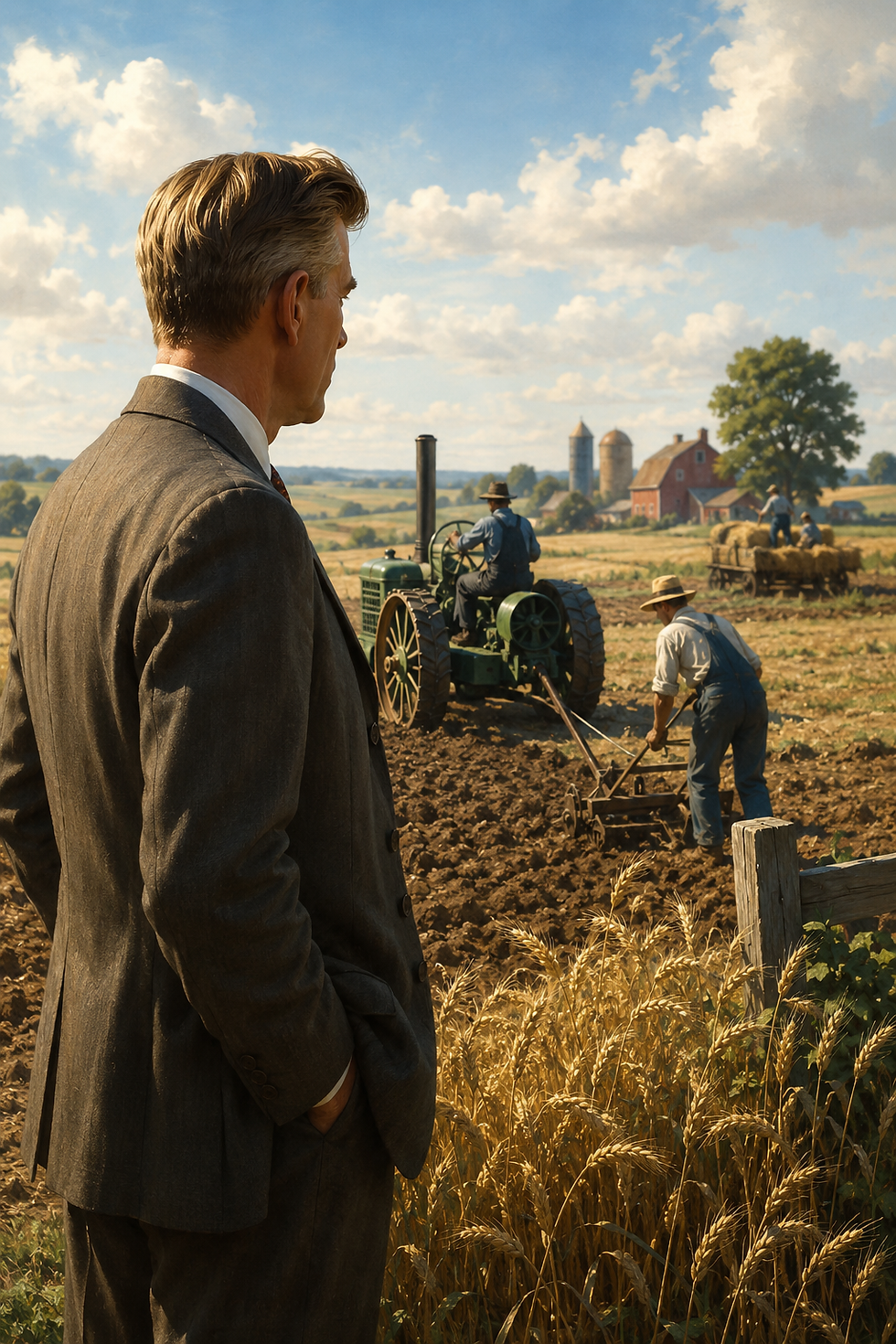
My Name is Henry A. Wallace: Farmer, Editor, Scientist, and Vice President
I spent much of my life trying to understand how farming, science, and government could work together to improve people's lives. I was an agricultural editor, an inventor, a Secretary of Agriculture, and eventually Vice President of the United States. Throughout my career, I believed that careful planning and scientific knowledge could solve many of society's problems. While some Americans admired my ideas, others thought they were unrealistic or even dangerous.
Growing Up Among Farmers
I was born in Iowa in 1888 into a family deeply involved in agriculture. My father and grandfather were both respected agricultural leaders. From a young age, I learned about crops, soil, weather, and the challenges facing farm families. I became fascinated with agricultural science and believed farmers could dramatically improve production through research and innovation. Many people viewed farming as a tradition, but I saw it as a science that could continually improve.
Studying the Farm Crisis
During the 1920s, I watched farmers struggle while much of America celebrated prosperity. Crop prices fell, debts increased, and many rural communities faced hardships that city residents often ignored. Through my work as editor of Wallaces' Farmer magazine, I warned about overproduction and declining farm incomes. I often wondered why more political leaders did not recognize the seriousness of these problems. To me, the warning signs were obvious.
Bringing Science to Agriculture
I believed that science could transform farming. I experimented with hybrid corn and supported new agricultural methods that increased yields. Many farmers welcomed these innovations, but others were skeptical of changing practices that had been used for generations. I found it difficult to understand why anyone would reject ideas that could help produce more food and improve efficiency. My confidence in science sometimes made me impatient with those who preferred tradition.
Serving in Government
When President Franklin D. Roosevelt appointed me Secretary of Agriculture, I finally had the opportunity to put many of my ideas into action. During the Great Depression, I helped create programs designed to raise farm prices and stabilize agricultural markets. Some Americans supported these efforts, while others criticized the government for becoming too involved in the economy. I believed strongly that action was necessary and often struggled to understand why critics preferred inaction during such difficult times.
My Most Controversial Views
As the years passed, my views expanded beyond agriculture. I supported greater cooperation between nations, stronger protections for workers, racial equality, and government programs designed to reduce poverty. During and after World War II, I advocated for peaceful cooperation with the Soviet Union when many Americans viewed the country as a growing threat. I believed that misunderstanding and fear could lead to unnecessary conflict. Many of my opponents saw my ideas as naïve, while I often felt they were allowing fear to cloud their judgment.
The 1948 Election and Isolation
My political views eventually placed me outside the mainstream of both major political parties. In 1948, I ran for president under the Progressive Party banner. I believed I was offering practical solutions and promoting peace, but many Americans viewed my campaign with suspicion because of its positions on foreign policy and its willingness to work with groups that others distrusted. I found it frustrating that so many people seemed unwilling to consider ideas that I thought would benefit humanity.
Looking Back
As I reflect on my life, I remain proud of my efforts to improve agriculture and promote scientific thinking. Yet I also recognize that intelligence and good intentions do not guarantee that others will agree with your conclusions. Sometimes I was so certain of my own reasoning that I failed to fully appreciate why others had concerns. One lesson from my life is that progress often requires both conviction and humility. Even when we believe we have found the right answer, we must remember to listen carefully to those who see the world differently.
The Farm Depression Begins (1920-1921) - Told by Henry A. Wallace
As many Americans entered the 1920s celebrating peace and prosperity, farmers across the nation were experiencing a very different reality. Long before the stock market crashed and the Great Depression began, rural America was already facing an economic crisis. During the war years, farmers had been encouraged to produce as much food as possible to feed American troops and Allied nations overseas. For a time, high demand brought strong prices and optimism. Many farmers believed the good times would continue for years to come.
The Wartime Boom
During World War I, European farms had been disrupted by fighting, leaving many countries dependent on American agricultural products. Wheat, corn, cotton, and livestock sold at high prices. To take advantage of this opportunity, many farmers borrowed money to buy additional land, tractors, combines, and other modern equipment. Banks were eager to lend because agricultural profits appeared strong. Across the countryside, families invested heavily in expanding their operations, expecting future harvests to pay for those debts.
The Sudden Collapse
When the war ended, everything changed far more quickly than most people expected. European nations gradually rebuilt their farms and once again produced much of their own food. As foreign demand for American crops declined, farm prices fell sharply. Wheat prices dropped dramatically, cotton prices tumbled, and many agricultural products lost much of their value within a short period of time. Farmers who had borrowed money during the boom years suddenly found themselves earning far less than they had planned.
Debt Becomes a Heavy Burden
The greatest problem was not simply lower prices—it was debt. Farmers still owed money on land purchases, equipment loans, and mortgages taken out during the war. Their payments remained the same even as their income declined. Many families worked just as hard as before but earned far less for every bushel of grain or pound of cotton they sold. Some farmers lost their land through foreclosure, while others spent years struggling to stay afloat financially.
A Crisis Hidden from the Cities
One reason the farm depression receives less attention today is that many urban areas were beginning to prosper. Manufacturing industries expanded, consumer goods became more popular, and stock prices generally moved upward during much of the decade. To many Americans living in cities, the nation appeared to be thriving. Yet in farming communities throughout the Midwest, South, and Great Plains, economic hardship had already become a daily reality. The prosperity celebrated in newspapers often felt very distant to rural families.
The Warning Sign Before the Great Depression
Looking back, the farm depression of 1920-1921 was one of the earliest warning signs that not all parts of the American economy were healthy. While investors and consumers enjoyed many of the benefits of the Roaring Twenties, farmers continued to struggle throughout much of the decade. Their difficulties revealed an important truth: when one major part of the economy suffers for years, the effects can eventually spread far beyond the countryside. The troubles facing farmers in the early 1920s foreshadowed larger economic challenges that would emerge across the nation before the decade ended.
Falling Crop Prices and Rising Debt - Told by Henry A. Wallace
During World War I, American farmers were told that they were helping feed the world. Europe was at war, millions of acres of farmland had been damaged, and food was desperately needed. Crop prices rose to levels many farmers had never seen before. Wheat, corn, cotton, and livestock brought strong profits, and optimism spread across rural America. Farmers believed that demand would remain high for many years, and many planned their futures around that expectation.
Borrowing to Expand
With prices climbing, farmers looked for ways to produce even more. Banks eagerly offered loans, and many families borrowed money to purchase additional land, modern tractors, harvesting equipment, and other machinery. New technology promised larger harvests and greater efficiency. Land values increased rapidly, and many farmers believed that buying more acreage was a wise investment. Across the countryside, debt grew because people expected future profits to easily cover their payments.
When the Market Changed
The problem was not that farmers stopped producing. In fact, they became more productive than ever. The problem was that demand began to fall after the war ended. European nations gradually rebuilt their farms and no longer needed as much American food. At the same time, American farmers continued producing large harvests. As more crops entered the market than buyers needed, prices began to decline. What had once seemed like a temporary adjustment soon became a serious economic problem.
The Debt Trap
Many farmers discovered that falling prices could be devastating. Their loans remained the same even though their income shrank. A farmer who had borrowed money expecting wheat to sell at wartime prices now had to repay those loans with much lower earnings. Some families found themselves working harder than ever but making less money each year. Equipment payments, land mortgages, taxes, and other expenses continued to arrive regardless of how much crops sold for.
Foreclosures and Hardship
As financial pressure mounted, thousands of farmers struggled to keep their land. Some fell behind on loan payments and faced foreclosure. Others sold equipment, livestock, or portions of their farms simply to stay afloat. Entire communities felt the impact as local businesses lost customers and rural banks became increasingly vulnerable. While many city residents enjoyed the excitement of the Roaring Twenties, countless farming families were already living through years of economic hardship.
A Warning Few Listened To
One of the most important lessons from this period is that debt can become dangerous when built upon expectations that may not last. During the wartime boom, many decisions seemed reasonable because prices were high and demand appeared endless. When conditions changed, those same debts became overwhelming burdens. The struggles of farmers during the early 1920s revealed weaknesses in the American economy that many people ignored. Long before the stock market crash of 1929, rural America was already warning the nation that prosperity was not reaching everyone equally.
Overproduction on America's Farms - Told by Henry A. Wallace
Most people assume that producing more food is always a good thing. During the 1920s, however, many American farmers learned that too much production could create serious economic problems. Across the country, farmers worked harder, used better equipment, and harvested larger crops than ever before. Yet instead of becoming wealthier, many found themselves earning less money each year. The very success that allowed them to grow more wheat, corn, cotton, and other crops helped create one of the greatest challenges facing rural America.
The Push to Produce More
During World War I, farmers were encouraged to increase production to help feed Allied nations. High crop prices rewarded those efforts. Farmers purchased tractors, combines, and other machinery that allowed them to cultivate more acres and harvest larger yields. New farming techniques improved efficiency, and many families expanded their operations. When the war ended, however, most farmers continued producing at these high levels because they hoped to maintain their income and repay the debts they had accumulated during the expansion.
Too Many Crops, Too Few Buyers
The problem was simple but powerful. As American farmers produced more food, demand did not keep pace. European agriculture gradually recovered after the war, reducing the need for imported crops. At the same time, American farms continued to increase production. Soon, markets were flooded with wheat, corn, cotton, and other agricultural products. When supplies become greater than demand, prices usually fall. This basic economic principle affected nearly every farming region in the country.
The Price Collapse
As crop supplies increased, prices began to decline. Farmers who once received high prices for their harvests suddenly found buyers offering much less. Unfortunately, producing even more crops often seemed like the only way to make up for lost income. Many farmers planted additional acreage in hopes of selling larger harvests. Instead, the increased production added even more supply to the market, pushing prices lower still. It became a difficult cycle that many farming families struggled to escape.
The Impact on Rural Communities
Overproduction affected more than individual farmers. Entire communities felt the consequences. When farm income declined, local businesses sold fewer goods, banks faced greater risks, and rural towns experienced economic slowdowns. Schools, churches, and community organizations often struggled as families had less money to spend. While many urban areas enjoyed the prosperity of the Roaring Twenties, countless farming regions faced years of financial uncertainty and hardship.
A Lesson in Supply and Demand
The story of overproduction teaches an important lesson about economics. Hard work and increased efficiency do not always guarantee prosperity if supply grows faster than demand. American farmers became victims of their own success. Their ability to produce record harvests helped feed millions of people, but it also contributed to falling prices that hurt farming communities throughout the decade. Long before the stock market crash of 1929, overproduction on America's farms revealed that serious weaknesses already existed beneath the surface of the nation's prosperity.
Rural Poverty Across America - Told by Henry A. Wallace
When many people think of the 1920s, they picture booming cities, new automobiles, radios, jazz music, and rising prosperity. Yet for millions of Americans living in rural communities, the decade looked very different. While urban areas often enjoyed economic growth and modernization, many farming regions struggled with falling incomes, declining opportunities, and persistent poverty. The prosperity celebrated in newspapers and magazines did not reach every corner of the nation.
Life After the Farm Crisis Began
The agricultural depression that began in 1920 left many rural families facing difficult choices. Crop prices remained low throughout much of the decade, reducing the income farmers earned from their harvests. Families often worked long hours yet found it increasingly difficult to pay mortgages, purchase equipment, or improve their homes. Many households delayed repairs, postponed purchases, and relied heavily on producing their own food simply to make ends meet.
Modernization Arrives Slowly
One of the greatest differences between urban and rural America involved access to modern conveniences. During the 1920s, city residents increasingly enjoyed electric lights, refrigerators, telephones, indoor plumbing, and improved transportation systems. In many rural areas, however, these changes arrived much more slowly. Large numbers of farm families still lacked electricity and modern utilities. Daily chores often required far more time and physical labor than similar tasks in cities.
Education and Opportunity
Rural poverty also affected education. Many country schools operated with limited funding, fewer resources, and shorter school terms than schools in urban areas. Students frequently traveled long distances to attend class and were often expected to help with farm work before or after school. Although many rural families valued education, economic realities sometimes limited opportunities for young people seeking advanced schooling or professional careers.
The Challenges of Isolation
Distance created additional hardships. Many farming communities were located far from hospitals, major markets, and government services. Poor roads could make travel difficult, especially during bad weather. Farmers often depended on local merchants, banks, and transportation networks that were themselves struggling financially. This isolation made it harder for rural families to benefit from the economic and technological advances transforming other parts of the country.
Strength in the Face of Hardship
Despite these challenges, rural communities demonstrated remarkable resilience. Families supported one another through churches, schools, community organizations, and neighborly cooperation. People shared equipment, exchanged labor during harvest seasons, and helped one another during difficult times. These strong community ties became one of the defining characteristics of rural America during the decade.
A Warning Hidden in Plain Sight
The persistence of rural poverty revealed an important truth about the Roaring Twenties: prosperity was not evenly distributed. While stock prices rose and consumer spending increased in many cities, millions of rural Americans continued to struggle. Their experiences served as an early warning that significant weaknesses existed within the nation's economy. Long before the Great Depression affected the entire country, many rural families were already facing the challenges that would soon become familiar to Americans everywhere.
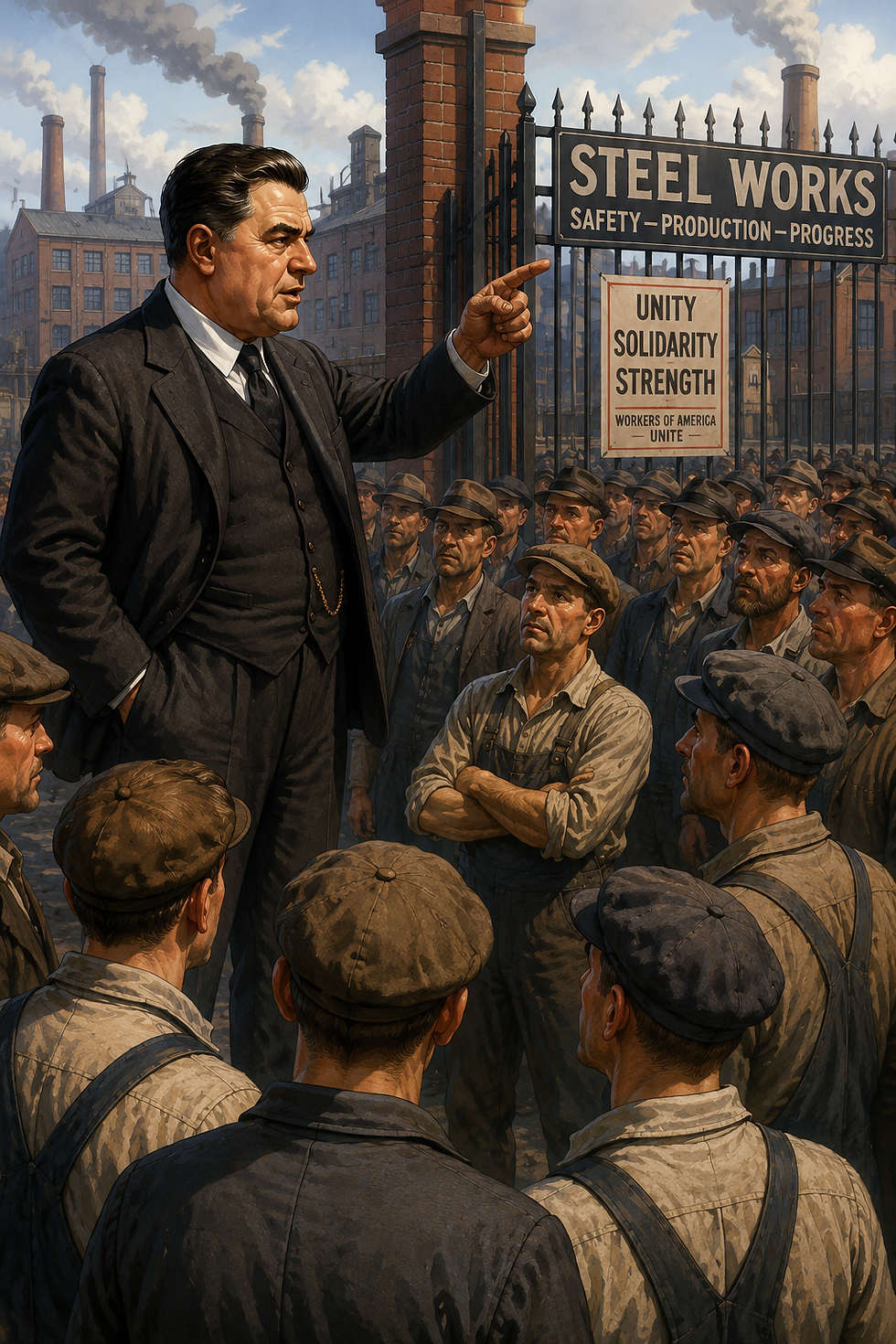
My Name is Robert M. La Follette Sr.: Progressive Reformer and U.S. Senator
Though many people simply called me "Fighting Bob." I spent my life challenging powerful interests, defending ordinary citizens, and pushing for political reforms that I believed would make America more fair. I served as Governor of Wisconsin and later as a United States Senator. To many Americans, I was a champion of democracy. To others, I was a troublemaker who challenged traditions and powerful institutions too aggressively.
A Small-Town Beginning
I was born in Wisconsin in 1855 and grew up in a farming community where I learned the value of hard work and self-reliance. As a young man, I studied law and entered politics. Early in my career, I believed government should serve the people rather than wealthy interests. As I watched large corporations gain more influence over politics, I became increasingly convinced that reforms were necessary to protect democracy.
Taking on Political Machines
As governor of Wisconsin, I fought against political bosses and special interests that controlled much of government. I promoted direct primaries, allowing voters rather than party leaders to choose candidates. I supported regulations on railroads and large corporations. Many citizens supported these changes, but powerful business leaders accused me of interfering with free enterprise. I often struggled to understand why anyone would oppose giving more power directly to voters.
The Progressive Movement
My ideas became part of the broader Progressive Movement that sought to reform government, improve working conditions, and reduce corruption. I believed government should act as a referee when powerful economic interests threatened the public good. Critics claimed I wanted too much government involvement in private affairs. From my perspective, I was simply trying to ensure that ordinary citizens had the same opportunities and protections as the wealthy and well-connected.
Speaking Out During World War I
One of my most controversial positions came during World War I. While many Americans supported the war effort, I questioned some government policies and expressed concerns about restrictions on free speech. I believed citizens should be able to debate important issues even during wartime. Many people viewed my stance as unpatriotic. I was criticized heavily and sometimes treated as though I were opposing the nation itself. I found it difficult to understand why defending constitutional rights angered so many Americans.
Fighting for Farmers and Workers
Throughout my career, I advocated for farmers struggling with debt and workers facing dangerous conditions. I warned about growing economic inequality and the increasing power of large corporations. During the prosperous 1920s, many people celebrated economic growth, but I believed serious problems remained hidden beneath the surface. I often wondered why so many political leaders focused on stock market gains while ignoring the struggles of rural communities and industrial laborers.
A Presidential Campaign
In 1924, I ran for president as the candidate of the Progressive Party. My campaign called for stronger protections for workers, government oversight of monopolies, and reforms designed to make the economy more fair. Many Americans embraced my message, but others feared my proposals would give government too much authority. I believed my ideas would strengthen democracy, and I often could not understand why opponents viewed them as radical.
Looking Back
As I reflect on my life, I remain proud of my efforts to challenge corruption and defend ordinary Americans. Yet I also recognize that not every disagreement came from bad intentions. Sometimes those who opposed me genuinely feared that reforms could create new problems. One lesson from my life is that meaningful change requires both courage and patience. Fighting for a cause is important, but understanding why others disagree is equally necessary if lasting progress is to be achieved.
The Growing Gap Between Rich and Poor - Told by Robert M. La Follette Sr.
The 1920s are often remembered as a decade of prosperity, innovation, and rising standards of living. New automobiles rolled off assembly lines, stock prices climbed, and consumer goods filled store shelves. Yet beneath this image of success was a reality that many Americans experienced every day: prosperity was not shared equally. While some individuals accumulated enormous fortunes, millions of workers and farmers struggled to keep pace. The gap between rich and poor widened throughout much of the decade, creating economic divisions that would have lasting consequences.
The Rise of Great Wealth
The growth of large corporations helped create immense wealth for business owners, investors, and executives. Industries such as automobiles, oil, banking, electricity, and consumer manufacturing generated substantial profits. Many Americans purchased stocks and hoped to share in the nation's prosperity. However, ownership of businesses and stocks remained concentrated among a relatively small portion of the population. As corporate profits increased, much of the financial gain flowed toward those who already possessed significant wealth.
Workers and Wages
Many workers benefited from rising wages during the decade, particularly in growing industries. However, wage increases often failed to match the rapid growth of corporate earnings and investment profits. Factory workers, miners, laborers, and service employees frequently worked long hours for modest pay. While some families could afford new consumer products, many others struggled to save money or build financial security. The economic gains of the decade were distributed unevenly across the workforce.
The Struggles of Rural America
Farmers experienced some of the greatest challenges. As crop prices fell after World War I, farm incomes declined sharply. Many rural families faced debt, foreclosure, and financial uncertainty throughout the decade. While city newspapers celebrated economic growth, large portions of rural America were already facing conditions that felt much closer to a depression than a boom. This difference between urban prosperity and rural hardship became one of the defining economic stories of the era.
Why Wealth Became Concentrated
Several factors contributed to the growing concentration of wealth. Advances in technology and mass production allowed large companies to increase profits dramatically. Tax policies, investment opportunities, and expanding financial markets often benefited those who already possessed capital to invest. At the same time, workers and farmers generally relied on wages or crop sales, which did not grow at the same pace as corporate earnings. As a result, a larger share of the nation's wealth accumulated in fewer hands.
A Hidden Economic Weakness
Many Americans viewed rising stock prices as proof that the economy was healthy. Yet growing inequality created vulnerabilities beneath the surface. When wealth becomes concentrated, fewer people have the purchasing power needed to sustain long-term economic growth. Millions of families lacked the savings necessary to withstand economic hardship. This imbalance did not immediately cause the Great Depression, but it reflected deeper weaknesses that would become more visible as the decade came to an end.
The Lesson Beneath the Prosperity
The story of the growing gap between rich and poor reminds us that economic growth alone does not guarantee widespread prosperity. A nation can experience rising production, technological innovation, and increasing wealth while still leaving many citizens behind. During the Roaring Twenties, impressive success stories often captured public attention, but the struggles of workers, farmers, and lower-income families revealed that the benefits of prosperity were not reaching everyone equally. Understanding this imbalance helps explain why the economic system proved more fragile than many Americans realized.
Big Business and Corporate Consolidation - Told by Robert M. La Follette Sr.
The Roaring Twenties were not only an era of jazz music, automobiles, and stock market excitement. They were also a time when some of the largest corporations in American history expanded their influence across the nation. Advances in manufacturing, transportation, communication, and finance allowed companies to grow far beyond anything earlier generations had imagined. For many Americans, these corporations symbolized progress and prosperity. For others, they raised serious questions about who truly controlled the nation's economy.
How Corporations Grew So Large
By the 1920s, many industries had become dominated by a handful of major companies. Automobile manufacturers, oil producers, utility companies, banks, and retail chains benefited from economies of scale. Large businesses could often produce goods more cheaply, distribute products more efficiently, and attract greater investment than their smaller competitors. Through mergers, acquisitions, and expansion, many corporations increased their market share and influence throughout the decade.
The Benefits of Consolidation
Corporate growth brought real advantages. Large companies helped make automobiles, household appliances, radios, and other consumer products more affordable. Mass production techniques increased efficiency and lowered costs for millions of Americans. Businesses created jobs, invested in new technologies, and helped fuel economic growth. Many citizens viewed these developments as proof that modern capitalism was delivering unprecedented prosperity.
Concerns About Economic Power
Despite these benefits, some observers worried about the concentration of economic power. When fewer companies controlled larger portions of an industry, competition often declined. Smaller businesses sometimes struggled to survive against powerful national corporations. Critics feared that large companies could influence prices, limit consumer choices, and exercise significant influence over public policy. The question was no longer simply whether businesses should succeed, but how much power any single company should possess.
Business and Politics
One of the greatest concerns involved the relationship between corporate power and government. Large corporations often had the financial resources to support political campaigns, lobby lawmakers, and influence public opinion. Reformers argued that government should serve the interests of all citizens rather than a small group of powerful business leaders. They worried that concentrated economic power could eventually lead to concentrated political power as well.
The View from Main Street
In many communities, local business owners watched national chains and large corporations expand into markets that had once been served by independent merchants. While consumers often benefited from lower prices and greater selection, some small businesses struggled to compete. This tension between efficiency and local control became an important issue throughout the decade. Americans debated whether economic progress justified the decline of smaller enterprises.
A Question That Endures
The rise of big business during the 1920s raised questions that remain relevant today. How large should corporations be allowed to become? How can innovation and competition be balanced? What role should government play in preventing excessive concentrations of economic power? The growth of corporate America helped fuel the prosperity of the Roaring Twenties, but it also sparked debates about fairness, competition, and democracy. Understanding these debates helps us see that economic success often brings new challenges alongside new opportunities.
My Name is John L. Lewis: Labor Leader and Champion of Industrial Workers
I spent much of my life fighting for the rights of working men and women. I became one of the most powerful labor leaders in American history, serving as president of the United Mine Workers and helping organize millions of industrial workers. To many workers, I was a fearless defender of fairness and dignity. To many business leaders, I was a dangerous agitator who threatened economic growth and stability.
Growing Up in a Mining Community
I was born in Iowa in 1880 and grew up in a family connected to the coal mining industry. From an early age, I saw the difficult lives miners lived. Mining was dangerous, exhausting, and often poorly paid. Workers risked injury and death every day to support their families. These experiences convinced me that workers needed strong organizations to protect their interests because few others were willing to do so.
Entering the Labor Movement
As a young man, I worked in the mines and became active in labor unions. I quickly learned that individual workers had little power when dealing with large companies. Through collective action, however, workers could negotiate for better wages and safer conditions. To me, this was simple common sense. I often struggled to understand why company owners opposed workers organizing together when the goal was simply fair treatment.
Leading the United Mine Workers
I eventually became president of the United Mine Workers of America. Under my leadership, the union grew stronger and more influential. I negotiated contracts, organized strikes, and challenged powerful corporations. My critics accused me of being too aggressive and disruptive. I believed that many business leaders only listened when workers demonstrated their strength. From my perspective, standing firm was often the only way to achieve meaningful change.
Building Industrial Unions
One of my most controversial decisions was helping create the Congress of Industrial Organizations, known as the CIO. Unlike many traditional unions, the CIO sought to organize entire industries, including factory workers who had often been ignored. I believed millions of workers deserved representation. Some labor leaders opposed my approach, and many employers fought it fiercely. I found it difficult to understand why expanding opportunities for workers created so much resistance.
My Political Battles
During the Great Depression, I supported many of President Franklin D. Roosevelt's programs because they strengthened workers' rights. However, I was never afraid to disagree with political leaders, even those I generally supported. Later, I opposed Roosevelt's decision to seek a third term and criticized certain wartime labor policies. Many people were surprised by these positions, but I believed loyalty should always be to workers rather than politicians.
A Divisive Figure
Throughout my career, I became known for my strong personality and blunt opinions. Some people admired my determination, while others viewed me as stubborn and confrontational. I often believed that my opponents failed to appreciate the hardships faced by ordinary workers. When critics complained about strikes disrupting business, I wondered why they seemed more concerned about profits than the lives and safety of the people doing the work.
Looking Back
As I reflect on my life, I remain proud of the gains workers achieved through organization and perseverance. Yet I also recognize that not every disagreement was motivated by greed or selfishness. Some people genuinely feared that labor unrest could damage the economy or create new problems. One lesson from my life is that standing up for others requires courage, but lasting progress also requires understanding the concerns of those who oppose you. Strength and compromise must often work together to build a better future.
Industrial Workers Behind the Boom - Told by John L. Lewis
When people remember the Roaring Twenties, they often think of soaring stock prices, new automobiles, dazzling skyscrapers, and modern inventions. Yet behind every factory, railroad, steel mill, coal mine, and assembly line stood millions of workers whose labor made that prosperity possible. The economic boom of the decade was not powered by machines alone. It was powered by men and women who worked long hours producing the goods that transformed American life.
Life on the Factory Floor
Factories became the heart of America's industrial economy. Workers assembled automobiles, manufactured radios, produced household appliances, and created countless consumer products. In many factories, assembly lines increased production dramatically by dividing tasks into small, repetitive steps. This system allowed goods to be produced faster and more cheaply. However, many workers spent their days performing the same motions hour after hour, often under strict supervision and demanding production schedules.
The World Beneath the Ground
Coal miners faced some of the most difficult working conditions in the nation. Deep underground, miners worked in darkness, dust, and dangerous environments to provide the fuel that powered factories, railroads, homes, and businesses. Cave-ins, explosions, and accidents remained constant risks. Although mining helped drive industrial growth, many mining communities struggled financially as coal demand fluctuated and competition from newer energy sources increased.
The Long Workday
While conditions improved in some industries during the 1920s, many workers still labored long hours. Six-day workweeks remained common in numerous occupations. Industrial jobs often required physical endurance, concentration, and exposure to heat, noise, chemicals, or dangerous machinery. Missing work due to illness or injury could place enormous financial strain on a family because social safety nets were limited or nonexistent.
A Nation Built by Immigrants and Migrants
America's industrial workforce included people from many backgrounds. Immigrants from Europe, African Americans participating in the Great Migration, and workers moving from rural communities all sought opportunities in growing industrial centers. Cities such as Detroit, Pittsburgh, Chicago, and Cleveland became hubs of manufacturing activity. These workers brought skills, determination, and labor that helped fuel the nation's remarkable economic expansion.
Prosperity with Limits
Some industrial workers benefited from rising wages and greater access to consumer goods. For the first time, many families could purchase products such as radios, automobiles, and electric appliances. Yet not everyone shared equally in the prosperity. Wages often grew more slowly than corporate profits, and workers in struggling industries frequently saw little improvement in their financial situations. The economic boom was real, but its benefits were unevenly distributed.
The People Behind the Growth
The story of the Roaring Twenties cannot be fully understood by looking only at business leaders, inventors, or investors. The decade's prosperity depended upon millions of workers who mined coal, forged steel, assembled automobiles, operated machinery, and transported goods across the nation. Their labor built the factories, products, and infrastructure that defined the era. Understanding their daily lives reminds us that behind every economic boom are ordinary people whose hard work makes extraordinary growth possible.
Dangerous Working Conditions - Told by John L. Lewis
The economic growth of the 1920s was built upon the labor of millions of workers, but that prosperity often came with serious risks. Every day, men and women entered factories, mines, steel mills, rail yards, and construction sites knowing that injury or death was a possibility. While new technologies increased production and profits, workplace safety did not always improve at the same pace. For many workers, earning a living meant accepting dangers that would be difficult to imagine today.
The Dangers Beneath the Earth
Coal mining was among the most hazardous occupations in America. Miners worked deep underground where cave-ins, explosions, toxic gases, and flooding posed constant threats. Coal dust filled the air, damaging lungs and contributing to long-term illnesses. A single spark could ignite methane gas, causing devastating explosions that trapped or killed entire crews. Mining disasters regularly made headlines, yet thousands of workers continued entering the mines because their families depended on the income.
Hazards on the Factory Floor
Factories presented a different set of dangers. Workers operated powerful machines with moving belts, gears, blades, and presses. Safety guards were often limited or absent, and accidents could result in crushed limbs, severe injuries, or death. Long shifts and repetitive tasks sometimes caused workers to lose focus, increasing the risk of accidents. In some industries, employees were also exposed to harmful chemicals, dust, and extreme heat without adequate protection.
Steel Mills, Railroads, and Construction Sites
Industrial hazards extended far beyond mines and factories. Steelworkers handled molten metal at extremely high temperatures. Railroad workers faced dangers from moving trains, heavy equipment, and switching operations. Construction workers erected bridges, buildings, and infrastructure while working at significant heights with limited safety equipment. Across many industries, the physical demands of the job combined with dangerous conditions to create a constant risk of injury.
Limited Protections for Workers
During the 1920s, workplace safety laws and government oversight were far less developed than they are today. Some companies invested in safety improvements, but many industries lacked consistent standards. Workers injured on the job often received little assistance and could lose their livelihoods if they were unable to return to work. There was no federal agency equivalent to today's workplace safety regulators, and many protections that modern workers expect had not yet been established.
The Push for Safer Conditions
Labor unions became some of the strongest advocates for workplace safety. Workers organized to demand better equipment, improved training, safer procedures, and compensation for injuries. Employers sometimes resisted these demands because safety improvements could increase costs. Nevertheless, public awareness of workplace accidents gradually grew, leading to pressure for reforms. Many of the protections workers enjoy today were shaped by decades of advocacy from labor organizations and reformers.
A Legacy Written in Hardship
The story of dangerous working conditions reminds us that industrial progress often came at a human cost. The factories, railroads, mines, and industries that powered the American economy were built and operated by workers who faced significant risks every day. Their experiences helped inspire future safety regulations, labor reforms, and workplace standards. Understanding their sacrifices provides a fuller picture of the challenges hidden behind the prosperity of the Roaring Twenties.
Labor Unions in a Difficult Decade - Told by John L. Lewis
The Roaring Twenties are often remembered as a decade of economic growth, rising production, and technological innovation. Yet for labor unions, the decade was far less successful. After reaching significant strength during and immediately after World War I, many labor organizations found themselves losing members and influence. At a time when factories were producing record numbers of goods and businesses were reporting strong profits, unions faced some of the greatest challenges in their history.
The Aftermath of Wartime Labor Unrest
The years following World War I were marked by major strikes across the country. Workers in steel mills, coal mines, railroads, and other industries demanded higher wages and better conditions. However, many Americans grew concerned about labor unrest, especially during the Red Scare. Some people began associating strikes and union activism with radical political movements, even though most union members simply sought better treatment and fair compensation. This public skepticism made it more difficult for unions to gain support.
The Open Shop Movement
Many employers actively worked to discourage union membership. One of the most important efforts was the promotion of the "open shop," which allowed businesses to hire workers regardless of union affiliation. Supporters argued that workers should have the freedom to choose whether to join a union. Critics believed the movement weakened labor organizations by reducing their bargaining power. Throughout the decade, many companies invested significant resources in preventing unions from organizing their workforce.
Prosperity Changes Worker Priorities
Economic growth also affected union membership. Workers in some industries experienced wage increases and improved living standards during the 1920s. As families gained access to automobiles, radios, and other consumer goods, some workers felt less urgency to join labor organizations. For those benefiting from the economic expansion, the need for collective action sometimes appeared less immediate than it had during earlier periods of hardship.
Challenges in New Industries
The American economy was changing rapidly. Traditional unions had often been strongest in skilled trades, but many of the fastest-growing industries relied on large numbers of unskilled or semi-skilled workers. Organizing these massive workforces proved difficult. Automobile factories, electrical manufacturing plants, and other modern industries employed thousands of workers, yet unions struggled to establish a strong presence in many of these workplaces during the decade.
The Coal Industry's Struggles
Even industries with strong union traditions faced difficulties. Coal mining experienced declining demand as oil, natural gas, and electricity became more common. Competition among mining companies increased, wages came under pressure, and labor disputes became more frequent. Many mining communities faced economic uncertainty despite the efforts of unions to protect workers' interests.
Preparing for a New Era
Although union membership declined during much of the 1920s, the labor movement did not disappear. Many labor leaders continued organizing, educating workers, and preparing for future opportunities. The economic hardships that emerged during the Great Depression would eventually create new momentum for labor organizations. The struggles unions faced during the Roaring Twenties demonstrated how difficult it could be to maintain worker solidarity during periods of rapid economic and social change, but they also laid the groundwork for major labor victories in the years ahead.
Weak Safety Nets for American Families - Told by Robert M. La Follette Sr.
When people look back at the 1920s, they often assume that Americans who lost their jobs could rely on government assistance until they found work again. In reality, the United States of the Roaring Twenties had very few of the social programs that later generations would consider normal. There was no Social Security program for retired workers, no nationwide unemployment insurance for those who lost their jobs, and only limited government assistance for struggling families. For many Americans, financial security depended almost entirely on their ability to keep working.
When a Job Disappeared
Losing a job in the 1920s could be devastating. A worker who was laid off from a factory, mine, railroad, or construction project often had little protection. Without unemployment benefits, families were forced to rely on personal savings, relatives, churches, local charities, or community organizations. If savings ran out, there were few alternatives. Many workers searched desperately for new employment because the loss of a paycheck could quickly lead to financial hardship.
The Challenges of Old Age
Retirement was another major concern. Today, many Americans receive support through Social Security, but that system did not exist during the 1920s. Older workers often continued working as long as their health allowed. Those who could no longer work frequently depended on family members for support. Some employers offered pensions, but these programs were limited and unavailable to most workers. Growing old without savings could place enormous strain on both individuals and their families.
Injury, Illness, and Financial Risk
Workplace injuries and illnesses created additional challenges. Dangerous jobs in mines, factories, railroads, and construction sites exposed workers to significant risks. While some states had workers' compensation programs, coverage varied and was often limited. A serious injury could prevent a worker from earning a living, leaving families with reduced income and mounting expenses. Medical care itself could also be costly, adding to the burden.
Farmers and Rural Families
Farm families faced their own difficulties. When crop prices collapsed after World War I, many farmers struggled to pay debts and support their households. There were few government programs designed to provide direct financial relief. Rural communities often relied on cooperation among neighbors, churches, and local organizations to help families weather difficult times. These networks were important, but they could not always meet the needs of everyone facing hardship.
Why Safety Nets Were Limited
Many Americans of the era believed that individuals, families, local communities, and private charities should provide assistance rather than the federal government. Others worried that government aid might become too expensive or create dependence. As a result, proposals for broader social welfare programs often faced strong opposition. While some reformers called for greater protections, large-scale national programs remained uncommon during the decade.
Lessons from an Unprotected Era
The story of weak safety nets helps explain why economic downturns could be so devastating during the 1920s and early 1930s. Without unemployment insurance, Social Security, or many other forms of assistance, millions of families lived one job loss, injury, or financial setback away from hardship. The experiences of these Americans would later influence the creation of programs designed to provide greater economic security. Understanding the limited protections of the Roaring Twenties reveals how vulnerable many families remained, even during a decade remembered for prosperity.
Warning Signs Beneath the Prosperity - Told by Robert M. La Follette Sr.
To many Americans, the late 1920s appeared to be a golden age. Stock prices climbed steadily, factories produced record amounts of goods, and consumer spending fueled economic growth. Newspapers celebrated rising fortunes, new technologies, and expanding opportunities. The nation seemed more prosperous than ever before. Yet beneath the excitement and optimism, several warning signs suggested that the economy was not as strong as it appeared.
Farmers Were Already Struggling
One of the clearest warning signs came from rural America. Farmers had faced falling crop prices and growing debt since the early 1920s. While cities often enjoyed economic growth, many farming communities experienced financial hardship throughout the decade. Foreclosures increased, incomes declined, and many rural families struggled to keep their farms. The fact that such a large portion of the population remained in distress should have raised concerns about the nation's economic health.
Unequal Distribution of Wealth
Another weakness was the growing concentration of wealth. Although many Americans benefited from economic expansion, a significant share of the nation's income and wealth accumulated among a relatively small group of individuals and corporations. Millions of workers earned enough to survive but had limited savings. This meant that many families lacked a financial cushion if economic conditions suddenly changed. Prosperity was real, but it was not shared equally.
Consumer Debt on the Rise
The decade saw a dramatic increase in installment buying. Americans purchased automobiles, radios, furniture, and household appliances using credit. This allowed families to enjoy modern conveniences immediately rather than waiting to save enough money. However, it also meant that many households accumulated debt. As long as wages remained steady, these payments could be managed. If incomes declined, however, many families would face serious financial pressure.
Stock Market Speculation
The booming stock market attracted millions of investors. Many people believed stock prices would continue rising indefinitely. Some investors purchased stocks using borrowed money through a practice known as buying on margin. This allowed individuals to control larger investments with only a small amount of their own money. While profits could be substantial, losses could be devastating if stock prices fell. The growing culture of speculation created risks that many investors underestimated.
Industries Producing More Than Consumers Could Buy
Factories became increasingly efficient and productive during the 1920s. In some industries, however, production began to outpace demand. Businesses continued manufacturing large quantities of goods, assuming consumers would keep buying. If sales slowed, companies could be left with excess inventory and declining profits. This imbalance between production and consumption represented another weakness hidden beneath the appearance of prosperity.
The Importance of Looking Beyond the Headlines
The story of the late 1920s teaches an important lesson: strong headlines and rising stock prices do not always tell the whole story of an economy. Beneath the surface, farmers were struggling, wealth was becoming concentrated, debt was increasing, and speculation was growing. Many Americans overlooked these warning signs because prosperity seemed so widespread and convincing. Understanding these weaknesses helps explain why the nation was more vulnerable than it appeared when economic trouble finally arrived in 1929.
Government Policies and Economic Confidence - Told by Andrew Mellon
The 1920s were marked by a remarkable sense of economic optimism. After the difficulties that followed World War I, many Americans became convinced that the nation was entering a new era of prosperity. Businesses expanded, factories increased production, and consumers eagerly purchased new products. Confidence became one of the most powerful forces driving the economy. People invested, borrowed, spent, and built because they believed the future would be even more prosperous than the present.
A Different View of Government
During this period, many political leaders believed that the federal government should play a limited role in the economy. Rather than directing business activity, they generally preferred allowing private companies and markets to make their own decisions. Supporters of this philosophy argued that businesses were more efficient and innovative when government interference was kept to a minimum. The belief was that economic growth would occur naturally if individuals and companies were given the freedom to pursue opportunities.
The Push for Lower Taxes
One of the most important economic policies of the decade involved tax reductions. Many leaders, including myself as Secretary of the Treasury, believed that lower tax rates would encourage investment, entrepreneurship, and business expansion. The idea was that when individuals and corporations kept more of their earnings, they would invest those resources into new factories, equipment, and jobs. Tax reforms during the 1920s reduced rates for many taxpayers, particularly those with higher incomes, with the expectation that economic growth would benefit the broader economy.
Balancing the Federal Budget
Another major goal of economic policy was maintaining responsible government finances. Policymakers worked to reduce federal spending and pay down portions of the national debt that had accumulated during World War I. Many Americans viewed balanced budgets as a sign of stability and sound management. Confidence in the government's financial condition helped strengthen public trust in the nation's economic future.
Business Expansion and Investment
These policies coincided with rapid growth in industries such as automobiles, electricity, consumer appliances, chemicals, and communications. Investors poured money into expanding companies, and stock ownership became increasingly popular. Many business leaders viewed the economic policies of the decade as creating a favorable environment for innovation and growth. As profits increased and markets expanded, confidence continued to rise.
The Power of Optimism
Economic confidence often reinforced itself. When people believed the economy was strong, they spent more money, invested more aggressively, and took greater risks. Businesses responded by increasing production and hiring additional workers. This cycle of optimism contributed significantly to the prosperity of the Roaring Twenties. However, confidence could sometimes encourage people to overlook potential risks or assume that growth would continue indefinitely.
A Philosophy Put to the Test
The economic philosophy of the 1920s reflected a strong faith in private enterprise, limited government intervention, lower taxes, and continued growth. For much of the decade, these ideas appeared to be working as the economy expanded and living standards improved for many Americans. Yet the events that followed would spark intense debate about the proper role of government in managing economic challenges. Understanding the policies and confidence of the 1920s helps explain both the successes of the era and the questions that emerged when prosperity unexpectedly came to an end.
America on the Edge: 1928-1929 - Told by Andrew Mellon, Robert M. La Follette Sr., John L. Lewis, and Henry A. Wallace
A Nation Filled with Confidence
Andrew Mellon: By 1928, the United States appeared stronger than ever before. Factories were producing enormous quantities of goods, stock prices continued to rise, and many Americans believed prosperity would last indefinitely. New technologies, expanding businesses, and growing consumer spending created an atmosphere of confidence. To many observers, the nation's economic future seemed bright, and there was little reason to expect a major crisis on the horizon.
The Struggles Hidden in Rural America
Henry A. Wallace: While investors celebrated rising stock prices, many farmers were facing a very different reality. Farm incomes had been declining for much of the decade. Wheat, corn, cotton, and other crop prices remained low because farmers were producing more than markets could absorb. Rural families carried heavy debts, foreclosures continued, and many communities struggled to survive. The farm crisis that began in 1920 never truly ended for large portions of rural America.
Workers and Uneven Prosperity
John L. Lewis: Industrial production was booming, but not every worker shared equally in the prosperity. Some employees enjoyed rising wages and access to new consumer goods, yet many others worked in dangerous conditions with limited job security. Coal miners, textile workers, and laborers in struggling industries often faced uncertain futures. Economic growth was real, but its benefits were distributed unevenly across the workforce.
The Growing Concentration of Wealth
Robert M. La Follette Sr.: One of the most troubling trends was the growing concentration of wealth and economic power. Corporate profits increased substantially, and many investors accumulated fortunes through the stock market. Yet millions of Americans possessed little savings and remained vulnerable to economic setbacks. When wealth becomes concentrated among a small percentage of the population, it can create imbalances that weaken the broader economy over time.
The Rise of Speculation
Andrew Mellon: The stock market became one of the most visible symbols of prosperity. Millions of Americans purchased stocks, hoping to share in the nation's success. Some investors borrowed money to buy additional shares, believing prices would continue climbing indefinitely. As confidence grew, speculation increased. Many people focused on potential profits while paying less attention to the risks that accompanied such rapid market growth.
Warning Signs Beneath the Surface
Henry A. Wallace: Agriculture was not the only sector facing challenges. Overproduction existed in several industries, and some factories were producing goods faster than consumers could purchase them. Farmers had already experienced what happened when supply exceeded demand. Unfortunately, many Americans viewed agricultural struggles as isolated problems rather than warning signs of broader economic weaknesses.
A Fragile Foundation
John L. Lewis: Workers were also carrying increasing amounts of debt. Many families purchased automobiles, appliances, and other goods through installment plans. These purchases helped fuel economic growth, but they also meant that countless households depended on steady wages to meet their obligations. If unemployment rose or wages fell, many families would face immediate financial difficulties.
Different Perspectives on the Future
Robert M. La Follette Sr.: Some reformers warned that the nation was becoming too dependent on speculation and uneven economic growth. They argued that rural distress, concentrated wealth, and weak protections for workers revealed deeper problems. Yet these concerns were often overshadowed by the excitement surrounding rising markets and expanding industries. Prosperity made it easy to overlook warning signs.
Standing at the Edge
Andrew Mellon: Looking back, it is clear that America in 1928 and 1929 stood at a crossroads. The nation had achieved remarkable growth, technological innovation, and industrial expansion. Yet beneath the surface were farm distress, worker challenges, debt, overproduction, unequal wealth distribution, and speculative investments. These issues did not immediately stop the prosperity of the Roaring Twenties, but they weakened the foundation upon which that prosperity rested. The stage was now set for one of the most dramatic economic events in American history—the stock market crash of 1929 and the difficult years that would follow.


Comments