

13. Heroes and Villains of the Globalization Era: Genocide, Civil War, and Humanitarian Intervention (1991–1999)


My Name is Boutros Boutros-Ghali: The Diplomat Who Faced a World in Crisis
I was born on November 14, 1922, in Cairo, Egypt, into a prominent Coptic Christian family. My grandfather had served as Egypt's prime minister before his assassination in 1910. Politics, international relations, and public service were part of my family's heritage. As a young man, I witnessed a world struggling through colonialism, nationalism, and global war. I studied law at Cairo University before traveling to Paris, where I earned my doctorate in international law in 1949. I became convinced that international cooperation, supported by law and strong institutions, was essential to maintaining peace.
The Professor Who Entered Politics (1949–1977)
For nearly three decades, I taught international law and international relations at Cairo University. I studied the relationships between powerful nations and developing countries, particularly those emerging from European colonial rule. I believed that smaller nations deserved a meaningful voice in international affairs, rather than simply accepting decisions made in Washington, Moscow, London, or Paris. My work eventually drew me into Egyptian politics, where I would exchange academic debates for the difficult negotiations of international diplomacy.
Negotiating Peace Between Enemies (1977–1991)
In 1977, I became Egypt's Minister of State for Foreign Affairs. The Middle East had experienced decades of warfare, and Egypt's relationship with Israel remained deeply hostile. I participated in the diplomatic efforts surrounding the 1978 Camp David negotiations, which helped produce the Egyptian-Israeli Peace Treaty in 1979. This agreement demonstrated that even nations divided by war could negotiate a settlement. But diplomacy requires compromise, patience, and political courage. During the following years, I represented Egypt in international organizations, developing the experience that would eventually take me to the highest diplomatic office in the world.
Becoming Secretary-General of the United Nations (1992)
On January 1, 1992, I became the sixth Secretary-General of the United Nations and the first person from Africa to hold that position. The Cold War had ended, and many believed that a new age of international cooperation was beginning. I presented my ambitious Agenda for Peace, advocating preventive diplomacy, peacekeeping, and post-conflict reconstruction. But I understood something fundamental: the United Nations was not a world government. It possessed no independent army capable of imposing its decisions. Our success depended upon the political will, resources, and cooperation of member nations, particularly the powerful countries represented on the Security Council.
A World Descending into Violence (1992–1995)
Almost immediately, my administration confronted devastating conflicts. Somalia descended into civil war and famine, prompting international intervention. In Bosnia, ethnic cleansing and warfare threatened European stability. Then came Rwanda in 1994, where extremist leaders organized the slaughter of Tutsis and moderate Hutus. I appealed for stronger international action, but member governments frequently disagreed over the risks and responsibilities involved. The tragedy of these conflicts exposed a fundamental contradiction: nations demanded international peace, yet often hesitated to provide the soldiers, money, and authority necessary to defend it.
The Price of Independent Diplomacy (1996–2016)
By 1996, disagreements with the United States had become increasingly serious. Although most Security Council members supported another term, the United States vetoed my reappointment, making me the only UN Secretary-General denied a second term through such opposition. I departed office in December 1996, but my commitment to international diplomacy continued. I subsequently served as Secretary-General of the International Organization of La Francophonie and advocated democratic participation and cooperation among nations. I died in Cairo on February 16, 2016, at the age of 93.
Somalia Collapses: Civil War, Warlords, and Famine - Told by Boutros-Ghali
When I became Secretary-General of the United Nations in January 1992, Somalia was already descending into catastrophe. To understand this tragedy, we must return to January 1991, when President Mohamed Siad Barre was overthrown after more than two decades of authoritarian rule. Barre had seized power in 1969, governing through military authority while exploiting divisions among Somalia's clans. His departure should have offered an opportunity for national reconstruction. Instead, the government collapsed, leaving no functioning central authority capable of maintaining order. Rival armed movements that had fought against Barre now turned their weapons against one another. Government institutions disintegrated, soldiers joined clan-based militias, and ordinary citizens found themselves trapped in a struggle for power. Somalia was becoming a country without an effective national government.
The Warlords Divide Mogadishu (1991–1992)
Two powerful figures emerged from the chaos: Ali Mahdi Mohamed, who claimed the presidency, and General Mohamed Farrah Aidid, a military commander who rejected his authority. Their competing factions fought for control of Mogadishu, Somalia's capital. By late 1991, neighborhoods had become battlefields, with artillery fire striking residential areas and armed militias controlling streets, checkpoints, and transportation routes. Elsewhere, additional factions competed for territory and resources. In May 1991, leaders in northern Somalia declared the independence of Somaliland, further demonstrating the fragmentation of the country. Somalia's traditional clan identities were increasingly manipulated by political and military leaders seeking power. Yet this was not simply a conflict between clans. It was a struggle involving political ambition, weapons, resources, and the collapse of national institutions.
When Civil War Turned into Famine (1992)
The consequences were devastating. Somalia was already suffering from drought, but warfare transformed food shortages into widespread famine. Farmers abandoned their fields, livestock died or were stolen, markets collapsed, and armed factions disrupted the transportation of agricultural supplies. In southern Somalia, entire communities faced starvation. Children became severely malnourished, while families fled their homes in desperate searches for food and safety. International relief organizations attempted to deliver grain and medicine, but armed groups looted warehouses, attacked supply convoys, and demanded payments for passage through their territory. United Nations estimates indicated that approximately 4.5 million Somalis faced severe malnutrition and related diseases, while historical estimates placed deaths from the combined catastrophe in the hundreds of thousands. The world possessed food that could save lives, yet insecurity prevented much of it from reaching those who desperately needed it.
The United Nations Faces an Impossible Choice (1992)
As Secretary-General, I confronted a fundamental question: how could the international community deliver humanitarian assistance when there was no functioning government capable of protecting relief workers? In January 1992, the United Nations Security Council imposed an arms embargo against Somalia. Negotiations produced a ceasefire agreement in March, and in April the Security Council established the United Nations Operation in Somalia, known as UNOSOM I. Its mission was to monitor the ceasefire and help protect humanitarian deliveries. But agreements signed by faction leaders did not guarantee obedience from armed men on the streets. Aid shipments continued to encounter violence, and relief organizations struggled to reach isolated communities. The United Nations could provide food, medicine, and diplomatic assistance, but delivering these supplies required security that Somalia's warring factions could not guarantee.
A Humanitarian Disaster Demands International Action (Late 1992)
By the closing months of 1992, Somalia had become one of the world's most urgent humanitarian emergencies. Photographs of starving children and displaced families brought international attention to the disaster. In some affected areas, thousands were dying while desperately needed supplies remained inaccessible. On December 3, the Security Council adopted Resolution 794, authorizing member nations to use necessary military force to establish a secure environment for humanitarian relief. President George H. W. Bush responded by organizing an American-led multinational intervention, Operation Restore Hope, which began deploying forces to Somalia on December 9. It was an extraordinary development: international soldiers were entering a country not to conquer territory, but to create conditions in which humanitarian workers could deliver lifesaving assistance.

My Name is Richard Holbrooke: American Diplomat Who Negotiated Peace
I was born on April 24, 1941, in New York City. My parents were European immigrants who understood the dangers of political persecution and war. Growing up during the aftermath of World War II, I witnessed America's emergence as a global superpower. I attended Brown University, where I studied history and developed a fascination with international affairs. I was convinced that American diplomacy could shape world events, but only if our representatives possessed the courage to confront difficult realities. Diplomacy was not simply about attending conferences and exchanging polite statements. It was about achieving results.
Learning Diplomacy in Vietnam (1962–1972)
After graduating from Brown University in 1962, I joined the United States Foreign Service in 1963 and was assigned to South Vietnam. There, I encountered the brutal realities of guerrilla warfare, political instability, and American military intervention. I traveled through the countryside, worked with Vietnamese officials, and witnessed the limitations of American influence. Later, I served in Washington and participated in the Paris peace negotiations concerning Vietnam. The experience taught me that military power, however impressive, could not automatically produce political stability. Negotiations required an understanding of the people involved, their ambitions, and the pressures influencing their decisions.
Representing America on the World Stage (1977–1993)
In 1977, President Jimmy Carter appointed me Assistant Secretary of State for East Asian and Pacific Affairs. At just 35, I became one of the youngest officials to hold such a senior position. I participated in efforts to normalize diplomatic relations between the United States and Communist China, a major transformation in international politics. After leaving government in 1981, I entered investment banking while remaining involved in foreign policy. When President Bill Clinton entered office in 1993, I returned to public service as America's ambassador to Germany. Europe was changing rapidly, and another terrible conflict was emerging in the Balkans.
Confronting the Horrors of Bosnia (1994–1995)
In 1994, I became Assistant Secretary of State for European and Canadian Affairs. By then, Bosnia had descended into a devastating civil war following the breakup of Yugoslavia. Bosnian Serb forces had besieged cities, expelled civilian populations, and committed widespread atrocities. In July 1995, Bosnian Serb forces murdered more than 8,000 Bosniak men and boys at Srebrenica. I believed the international community could not continue responding with declarations while civilians were being slaughtered. Negotiations had to be supported by credible military pressure. NATO airstrikes against Bosnian Serb military positions helped change the circumstances on the battlefield, creating an opportunity for serious peace negotiations.
The Dayton Peace Agreement (1995)
In November 1995, I brought the leaders of Serbia, Croatia, and Bosnia together at Wright-Patterson Air Force Base near Dayton, Ohio. My negotiating style was direct, persistent, and sometimes confrontational. I understood that men who had spent years fighting would not suddenly agree because a diplomat politely requested peace. We negotiated borders, constitutional arrangements, military withdrawals, and the future of Bosnia itself. After three difficult weeks, we reached the Dayton Peace Agreement, formally signed in Paris on December 14, 1995. The agreement ended the Bosnian War, though it left a complicated political system and deep ethnic divisions. I later described these negotiations in my book To End a War.
Kosovo and the Threat of Another War (1998–1999)
Peace in Bosnia did not mean peace throughout the Balkans. In Kosovo, fighting between Serbian security forces and ethnic Albanian insurgents threatened another humanitarian catastrophe. In 1998, I negotiated an agreement with Yugoslav President Slobodan Milošević intended to reduce the violence and permit international monitoring. But the agreement failed to produce lasting peace. By March 1999, diplomatic efforts had collapsed, and NATO launched an air campaign against Yugoslavia. The intervention was controversial, particularly because it lacked explicit authorization from the United Nations Security Council. Nevertheless, I believed that military pressure was necessary to confront Milošević's policies and prevent further violence against civilians.
The Final Diplomatic Mission (1999–2010)
In 1999, I became America's ambassador to the United Nations, where I worked to strengthen American engagement with international institutions and resolve disagreements over unpaid United States contributions. Nearly a decade later, President Barack Obama appointed me Special Representative for Afghanistan and Pakistan in 2009. The assignment involved insurgency, regional instability, and difficult relationships with political leaders. I approached these challenges with the same determination that had guided my negotiations in Bosnia. On December 13, 2010, I died in Washington, D.C., at the age of 69, following complications from a torn aorta. My diplomatic career had spanned nearly five decades.
Bosnia's Civil War Begins: Ethnic Nationalism - Told by Richard Holbrooke
When I began confronting the wars of the former Yugoslavia as an American diplomat, I understood that this was not simply another territorial dispute. It was a struggle over national identity, political power, and the future of Europe. After World War II, Yugoslavia had united six republics under the communist leadership of Josip Broz Tito. Bosnia and Herzegovina was among the most diverse, containing three major ethnic communities: Muslim Bosniaks, Orthodox Christian Serbs, and Catholic Croats. These populations had shared cities, neighborhoods, and sometimes families for generations. But when Tito died in 1980, economic difficulties and growing political nationalism gradually weakened Yugoslavia's unity. Ambitious leaders began using historical grievances and ethnic fears to gain support. By 1991, the federation was breaking apart, and Bosnia was approaching a dangerous crossroads.
Nationalism Turns Neighbors Against Each Other (1991–Early 1992)
In June 1991, Slovenia and Croatia declared independence from Yugoslavia, triggering armed conflicts that demonstrated how violently the federation could unravel. Serbian President Slobodan Milošević supported efforts to keep Serb-populated territories connected to Serbia, while Croatian leaders pursued their own nationalist ambitions. Bosnia presented a particularly difficult challenge because its population was so thoroughly mixed. Approximately 44 percent identified as Bosniak, 31 percent as Serb, and 17 percent as Croat. Bosnian President Alija Izetbegović supported independence, while Bosnian Serb leader Radovan Karadžić opposed separation from Yugoslavia. Karadžić and other nationalist leaders warned that Serbs would face persecution in an independent Bosnia. These political warnings helped intensify fear, turning disagreements over government into questions of survival.
The Vote That Ignited a War (February–April 1992)
On February 29 and March 1, 1992, Bosnia held a referendum on independence. Most Bosniaks and Croats supported separation from Yugoslavia, while most Bosnian Serbs boycotted the vote. The overwhelming majority of participating voters favored independence, and Bosnia soon declared itself an independent nation. International recognition followed in early April. Yet political independence did not bring peace. Bosnian Serb forces, supported by the Yugoslav People's Army and the Serbian government, launched military operations to seize territory. Karadžić's political leadership and the military forces increasingly directed by General Ratko Mladić sought to establish a separate Serb-controlled state. What had begun as a constitutional dispute was becoming an organized war, and civilians were about to pay the greatest price.
Sarajevo Becomes a City Under Siege (April 1992)
Sarajevo, Bosnia's capital, had long represented the country's cultural diversity. Mosques, churches, markets, and universities reflected generations of shared history. In April 1992, however, Bosnian Serb forces positioned artillery and snipers in the surrounding hills, beginning a siege that would last nearly four years. Residents who had once walked freely through their neighborhoods now risked death simply crossing a street. Artillery struck apartment buildings, businesses, and civilian gathering places. Food, electricity, water, and medical supplies became increasingly scarce. Families sheltered in basements as explosions echoed through the streets. I later came to understand that Sarajevo represented more than a military battlefield. It demonstrated how quickly civilized life could collapse when political leaders permitted violence to replace negotiation.
Ethnic Cleansing: Removing People to Control Territory (1992)
As the fighting spread beyond Sarajevo, a particularly disturbing strategy emerged. Bosnian Serb forces and associated paramilitary groups systematically expelled Bosniaks and Croats from territories they intended to control. The practice became known as ethnic cleansing: using intimidation, imprisonment, violence, and murder to remove populations because of their ethnic or religious identity. In places such as Prijedor, Foča, and Zvornik, civilians were driven from their homes, separated from relatives, and subjected to terrible abuses. Detention camps, including Omarska and Trnopolje, became internationally known in 1992. Bosnian Croat and Bosniak forces also committed crimes against civilians, although the initial large-scale campaign of territorial conquest and ethnic cleansing was predominantly conducted by Bosnian Serb forces. This was not merely warfare between armies. Civilians themselves had become deliberate targets.
The World Watches as Bosnia Burns (Late 1992)
By the end of 1992, Bosnian Serb forces controlled much of Bosnia's territory, and enormous numbers of civilians had been displaced. The United Nations imposed sanctions against the Federal Republic of Yugoslavia, consisting of Serbia and Montenegro, while humanitarian organizations struggled to reach besieged communities. International journalists exposed detention camps, shattered towns, and refugees fleeing across Europe. Yet outside governments disagreed over how far intervention should go. Some favored negotiations and humanitarian relief, while others argued that stronger military action was necessary to stop the violence. I would later become deeply involved in efforts to end this war, but its first year had already demonstrated a disturbing reality: international recognition of a country's independence offered little protection when heavily armed forces were determined to destroy it.
Operation Restore Hope and Black Hawk Down - Told by Boutros Boutros-Ghali
Operation Restore Hope began in December 1992, when the United States led an international military intervention into Somalia to confront a humanitarian catastrophe. As Secretary-General of the United Nations, I had witnessed the country's descent into civil war, famine, and political collapse. Armed militias controlled major roads, stole humanitarian supplies, and threatened relief workers while thousands of civilians faced starvation. On December 3, the United Nations Security Council authorized military action to establish security for humanitarian assistance. President George H. W. Bush responded by sending American forces, and on December 9, U.S. Marines landed near Mogadishu. Soldiers from more than twenty nations participated in the operation. Their mission was extraordinary: protect food deliveries, restore access to suffering communities, and prevent further deaths from famine.
Saving Lives in a Country Without a Government (1992–1993)
The American-led intervention initially achieved important humanitarian successes. Soldiers secured airports, seaports, and distribution centers, allowing relief organizations to transport food and medicine into previously inaccessible regions. International assistance helped reduce famine-related deaths, and families who had faced starvation began receiving emergency supplies. Yet beneath this progress remained a dangerous political reality. Somalia possessed no effective central government, no reliable national police force, and no unified military. Powerful warlords, including General Mohamed Farrah Aidid, continued controlling armed factions. I understood that feeding Somalia's population was only the beginning. Lasting peace required rebuilding political institutions, disarming militias, and persuading rival leaders to accept a common national government.
From Humanitarian Relief to Armed Confrontation (May–June 1993)
In May 1993, the American-led force transferred primary responsibility to a larger United Nations mission known as UNOSOM II. Its responsibilities extended beyond protecting food deliveries to restoring stability and supporting Somalia's reconstruction. Unfortunately, efforts to disarm the militias brought international peacekeepers into direct confrontation with armed factions. On June 5, fighters associated with Aidid's organization attacked Pakistani peacekeepers in Mogadishu, killing twenty-four soldiers. The Security Council demanded action against those responsible, and UN forces launched military operations against Aidid's militia. Fighting intensified, civilians suffered casualties, and humanitarian intervention increasingly resembled an armed campaign. What had begun as an effort to protect starving families was becoming a struggle against one of Somalia's most powerful warlords.
Black Hawk Down: The Battle of Mogadishu (October 3–4, 1993)
On October 3, 1993, American Army Rangers and Delta Force soldiers launched a raid into Mogadishu to capture senior members of Aidid's organization. The operation was expected to be brief, but Somali fighters armed with rocket-propelled grenades shot down two American Black Hawk helicopters. American soldiers rushed to protect the crash sites, only to encounter fierce resistance in narrow streets surrounded by heavily armed militiamen. The fighting continued through the night as trapped soldiers struggled to survive. Pakistani and Malaysian forces, alongside American troops, helped conduct a desperate rescue operation. By the following morning, eighteen American soldiers had been killed, dozens wounded, and hundreds of Somalis killed or injured. One American helicopter pilot, Michael Durant, was captured and later released. The battle became internationally famous as Black Hawk Down, a symbol of the terrible dangers facing foreign forces operating in Somalia's civil war.
The Images That Changed American Foreign Policy (October 1993–1994)
The consequences extended far beyond Mogadishu. Television networks broadcast disturbing images of Somali crowds dragging the bodies of American soldiers through the streets. Americans who had originally supported a mission to feed starving civilians now questioned why their soldiers were fighting and dying in a foreign civil war. President Bill Clinton announced that American forces would withdraw by March 31, 1994. The disaster also influenced Washington's approach to future humanitarian interventions. In May 1994, the Clinton administration issued Presidential Decision Directive 25, establishing more restrictive criteria for American participation in United Nations peacekeeping operations. Somalia's experience contributed to American reluctance to undertake another dangerous African intervention, a hesitation that would have grave implications when genocide erupted in Rwanda.
A Humanitarian Victory Without Political Peace (1994–1995)
American combat forces withdrew in March 1994, but United Nations peacekeepers remained, attempting to support humanitarian relief and political reconciliation. Despite negotiations among Somali faction leaders, no lasting national settlement emerged. In March 1995, the United Nations ended its peacekeeping operation and withdrew its remaining military personnel. The intervention had helped save an estimated quarter of a million lives through humanitarian operations, yet it failed to establish a functioning national government or permanently end the civil war. Somalia demonstrated that military forces could secure airports, protect relief convoys, and deliver emergency assistance, but they could not simply manufacture political unity in a divided country.
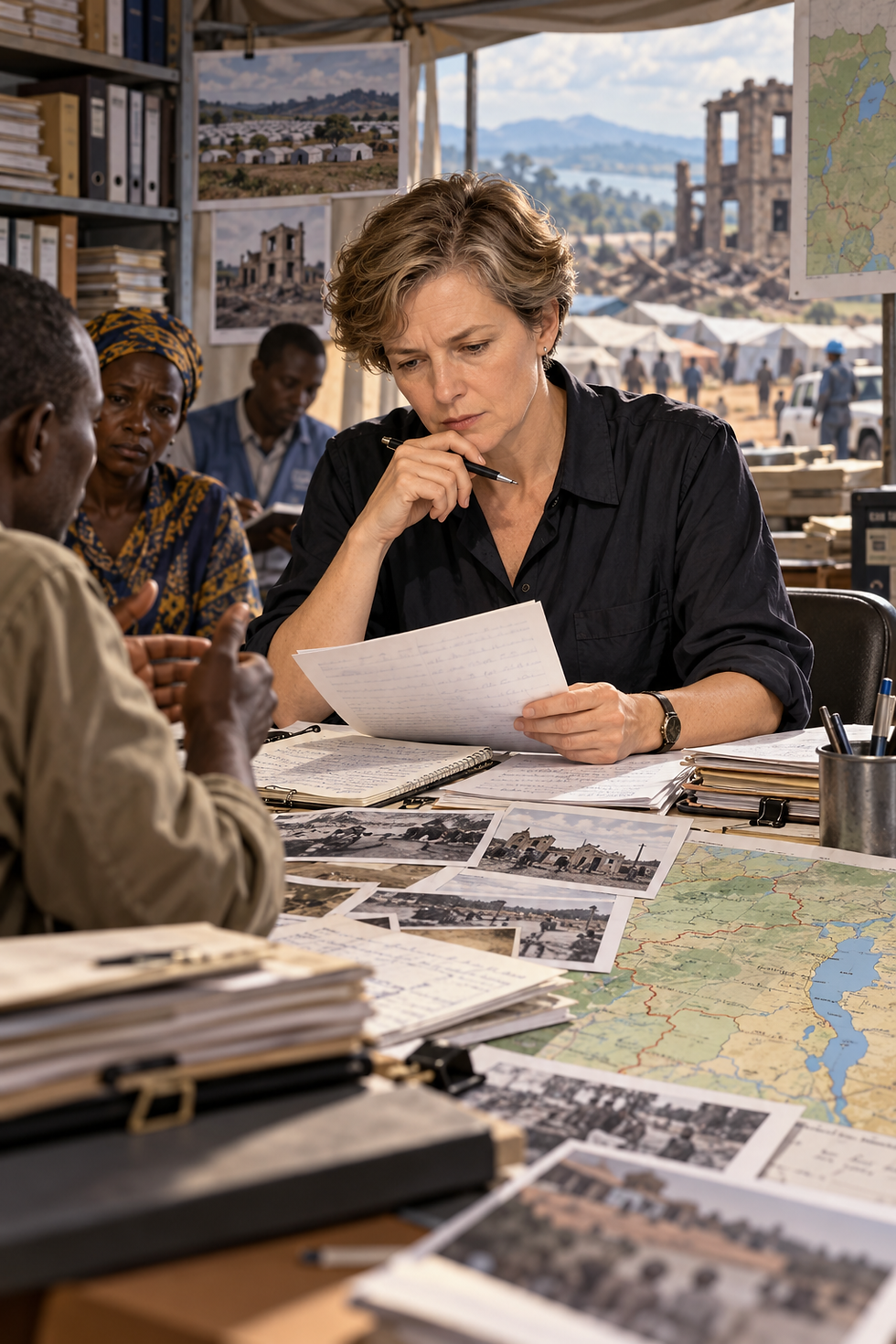
My Name is Alison Des Forges: The Historian Who Exposed the Rwandan Genocide
I was born in 1942 in Schenectady, New York. Growing up in America, I developed a fascination with history, particularly how governments acquire power and how political decisions affect ordinary people. I attended Radcliffe College, graduating in 1964, before continuing my studies at Yale University. I was drawn to the history of Africa, a continent experiencing tremendous political changes as nations gained independence from European colonial powers. I believed that understanding history required more than studying powerful leaders. We must also examine the lives of ordinary people, whose experiences are too frequently overlooked.
Discovering Rwanda's Troubled History (1964–1990)
At Yale, I concentrated on Rwanda, a small Central African nation with a complicated history of colonial rule and ethnic division. I earned my doctorate in 1972, examining the political structures of Rwanda's past. Belgian colonial policies had reinforced distinctions between Hutus and Tutsis, contributing to tensions that continued after independence in 1962. Over the following decades, I studied Rwanda's political development, learning from historical documents, government records, and the testimony of Rwandans themselves. As political tensions increased during the late 1980s, I became increasingly concerned that the country's unresolved conflicts could produce terrible violence.
Warning the World About Genocide (1990–1994)
In 1990, civil war erupted between Rwanda's government and the Rwandan Patriotic Front, a rebel movement composed largely of Tutsi exiles. As the fighting continued, extremist political leaders encouraged hatred against Tutsis, while militias began organizing attacks against civilians. Working with Human Rights Watch and other investigators, I documented abuses and helped expose the growing danger. An international commission investigating human rights violations published its findings in 1993. We warned that organized massacres and government-supported violence threatened Rwanda's future. I believed the international community possessed sufficient information to recognize the danger. Unfortunately, recognizing a threat and acting to prevent it are two very different things.
One Hundred Days of Horror (1994)
On April 6, 1994, the airplane carrying Rwandan President Juvénal Habyarimana was shot down near Kigali. Extremist leaders rapidly began carrying out a planned campaign of mass murder. Over approximately one hundred days, hundreds of thousands of Tutsis and moderate Hutus were slaughtered. Families were attacked in their homes, churches, and schools. As the genocide unfolded, I contacted diplomats, international officials, and journalists, urging immediate action. I also helped persuade diplomats to protect several threatened Rwandans. Yet foreign governments hesitated, and the United Nations peacekeeping force was reduced when civilians desperately needed protection. This was not an unpredictable explosion of ancient hatred. Political leaders had deliberately organized and encouraged mass murder.
Gathering the Evidence of Genocide (1994–1999)
After the genocide ended, I devoted myself to documenting what had happened. Working with survivors, witnesses, and investigators, I collected testimony and examined records revealing how the killing had been organized. In 1999, Human Rights Watch published my extensive investigation, Leave None to Tell the Story: Genocide in Rwanda. The report demonstrated how political authorities, military officers, and extremist organizations had coordinated violence against civilians. I insisted upon careful documentation because accusations alone were insufficient. Justice required evidence that could withstand examination in a court of law. That same year, I received a MacArthur Fellowship recognizing my research and humanitarian work.
Justice Must Apply to Everyone (1999–2008)
My investigations did not end with the defeat of Rwanda's genocidal government. I testified as an expert witness in international and national trials, helping prosecutors explain the historical and political background of the killings. But I also investigated abuses committed by the victorious Rwandan Patriotic Front and criticized violations of human rights under Rwanda's new leadership. This position was unpopular with some officials who considered criticism of the government an attack upon those who had stopped the genocide. I rejected that argument. Human rights cannot depend upon which political movement holds power. In 2008, the Rwandan government barred me from entering the country following criticism of its justice system.
A Life Dedicated to Truth (2009)
On February 12, 2009, my life ended unexpectedly when Continental Connection Flight 3407 crashed near Buffalo, New York. I was 66 years old. My research, however, continued to influence historians, international prosecutors, and human rights investigators. The thousands of pages of evidence gathered about Rwanda helped establish a historical record that could not easily be denied. I had spent decades demonstrating that the protection of human dignity requires persistence, independence, and a willingness to confront uncomfortable facts, even when powerful governments would prefer silence.
Rwanda's Road to Genocide: Ethnic Division and Politics - Told by Des Forges
When I began studying Rwanda as a historian, I discovered that the country's terrible political divisions had roots extending back generations. Rwanda was home to three principal population groups: Hutu, Tutsi, and Twa. Although these communities shared a language, traditions, and a common homeland, political power had historically been concentrated among a Tutsi monarchy and its elites. German colonial authorities, followed by Belgian administrators after World War I, strengthened ethnic classifications and favored Tutsi elites in education and government for much of the colonial period. In the 1930s, Belgian officials introduced identity cards recording ethnic classifications, making distinctions increasingly rigid. During the political upheavals beginning in 1959, Hutu leaders challenged the monarchy, violence drove many Tutsis into exile, and Rwanda became independent in 1962 under Hutu political leadership. These events created grievances that later politicians would exploit with devastating consequences.
Civil War Returns to Rwanda (1990–1992)
On October 1, 1990, the Rwandan Patriotic Front, or RPF, invaded Rwanda from neighboring Uganda. Its forces included many descendants of Tutsi refugees who had fled earlier persecution, and its leaders demanded political reform and the right of refugees to return home. President Juvénal Habyarimana, who had ruled Rwanda since 1973, responded militarily while portraying the invasion as a threat to the country's Hutu majority. Government officials increasingly accused Tutsi civilians of secretly supporting the rebels, even when no evidence existed. Thousands were arrested, and attacks against Tutsi communities intensified. As an investigator, I understood the dangerous significance of these accusations. A government facing an armed rebellion was encouraging its supporters to view an entire civilian population as the enemy. The distinction between fighting insurgents and persecuting innocent people was being deliberately destroyed.
Propaganda Becomes a Weapon (1992–1993)
While soldiers fought in Rwanda's countryside, another campaign unfolded through newspapers, political speeches, and eventually radio broadcasts. The extremist newspaper Kangura spread hostility toward Tutsis, portraying them as dangerous outsiders determined to dominate Rwanda. In 1993, Radio Télévision Libre des Mille Collines, commonly known as RTLM, began broadcasting messages that intensified ethnic fear and political hatred. Meanwhile, extremist political organizations recruited young men into armed militias, particularly the Interahamwe. These groups intimidated opposition supporters and attacked civilians. During investigations, my colleagues and I documented how inflammatory propaganda was accompanied by actual violence. In March 1992, massacres in the Bugesera region demonstrated how fabricated rumors could mobilize attacks against Tutsi families. Propaganda was no longer merely expressing prejudice. It was helping prepare ordinary citizens to accept and participate in organized violence.
The Arusha Peace Accords Offer Hope (1992–August 1993)
Despite the growing violence, negotiations offered Rwanda an opportunity to avoid further catastrophe. In 1992, representatives of Habyarimana's government and the RPF began peace discussions in Arusha, Tanzania. On August 4, 1993, the parties signed the Arusha Peace Agreement, establishing a framework for a transitional government, power-sharing arrangements, integration of military forces, and the return of refugees. The United Nations subsequently authorized a peacekeeping mission, UNAMIR, commanded by Canadian General Roméo Dallaire, to help implement the agreement. Yet extremists surrounding Habyarimana feared losing political authority, while distrust between the government and the RPF remained profound. The agreement promised peace on paper, but powerful factions were preparing to resist its implementation.
The Warning Signs the World Could See (1993–Early 1994)
By 1993, the evidence of approaching catastrophe was increasingly difficult to dismiss. I participated in an international human rights investigation that documented massacres, arbitrary arrests, and government involvement in attacks against Tutsis and political opponents. Our report, released in March 1993, identified serious abuses and warned of the potential for genocide. We found that approximately 2,000 Tutsis had already been killed in organized attacks since 1990. Meanwhile, extremist groups continued distributing propaganda, recruiting militia members, and preparing for further violence. In January 1994, General Dallaire informed United Nations officials about intelligence concerning militia preparations, weapons caches, and plans to attack civilians and peacekeepers. International governments possessed substantial warnings, yet decisive preventive measures failed to materialize. The evidence suggested that Rwanda's danger was not hidden; it was unfolding before international observers.
A Nation Standing at the Edge of Disaster (April 1994)
By early April 1994, Rwanda existed in a state of extraordinary tension. The Arusha agreement remained largely unimplemented, armed extremists opposed political compromise, and radio broadcasts continued encouraging hostility toward Tutsis and moderate Hutus. On the evening of April 6, President Habyarimana's airplane was shot down as it approached Kigali, killing everyone aboard, including Burundi's president, Cyprien Ntaryamira. The identity of those responsible remains disputed. Extremists within Rwanda's political and military establishment quickly used the assassination as the occasion to unleash organized mass killing. The fragile peace process collapsed, and Rwanda entered one of the darkest chapters of modern history. What followed was not an unavoidable eruption of ancient tribal hatred, but a campaign of genocide organized by political and military leaders who had prepared the ground for years.
Rwandan Genocide: One Hundred Days of Mass Murder - Told by Des Forges
On the evening of April 6, 1994, an airplane carrying Rwandan President Juvénal Habyarimana was shot down near Kigali, killing everyone aboard. Within hours, Rwanda descended into organized violence. As a historian and human rights investigator who had studied Rwanda for decades, I recognized that this was no spontaneous uprising. Extremist Hutu political and military leaders had already prepared militias, spread hatred through propaganda, and identified people they considered enemies. Soldiers and armed militiamen established roadblocks throughout Kigali, checking identity cards and searching homes. Prime Minister Agathe Uwilingiyimana, a moderate Hutu who might have helped preserve constitutional government, was murdered on April 7. Ten Belgian United Nations peacekeepers assigned to protect her were also killed. The assassination of the president had become the opportunity for extremists to launch a campaign of extermination.
The Machinery of Mass Murder (April 1994)
The killing spread with terrifying speed. Government soldiers, the Interahamwe militia, and local officials organized attacks against Tutsi civilians and Hutus who opposed the extremist leadership. Radio broadcasts encouraged participation, while officials distributed instructions and directed armed groups toward targeted communities. Families who had lived peacefully beside their neighbors suddenly found themselves hunted. Churches, schools, and government buildings, traditionally places of refuge, became scenes of mass murder. In Kigali and surrounding villages, thousands were killed with machetes, clubs, rifles, and grenades. Women and girls suffered widespread sexual violence. My investigations later demonstrated how ordinary government institutions, including local administrative offices, had been transformed into instruments of genocide. This was not an uncontrollable outbreak of ancient hatred. It was a deliberate political campaign carried out through organized authority and widespread civilian participation.
The World Turns Away (April–May 1994)
As reports of mass murder reached international officials, I worked with Human Rights Watch to alert governments and journalists. We demanded that the killings be recognized for what they were: genocide. Yet the response was painfully inadequate. General Roméo Dallaire, commander of the United Nations peacekeeping mission, struggled to protect civilians with limited personnel and authority. Following the murder of the Belgian peacekeepers, Belgium withdrew its contingent. On April 21, the United Nations Security Council reduced the mission from more than 2,000 troops to approximately 270. Foreign governments evacuated many of their own citizens while Rwandans remained trapped. The United States, still influenced by its disastrous experience in Somalia, resisted another dangerous military commitment. On May 17, the Security Council authorized additional peacekeepers, but their deployment was severely delayed. Meanwhile, the killing continued.
The Courage of Those Who Refused to Participate (April–June 1994)
Even amid this organized brutality, individuals demonstrated extraordinary courage. Some Hutu families concealed Tutsi neighbors, shared food, or helped threatened people escape, knowing that discovery could mean death. Human rights activist Monique Mujawamariya survived after hiding while armed men searched her neighborhood, and I worked to draw international attention to her desperate situation. At sites protected by remaining United Nations peacekeepers, thousands of frightened civilians found temporary safety. These acts of resistance were especially significant because the genocidal authorities demanded obedience and punished those who refused to participate. Not every person accepted the propaganda, and not every official followed murderous instructions. The actions of those who protected others demonstrated that individual moral choices remained possible even when government institutions had become instruments of persecution.
The Genocide Comes to an End (July 1994)
While the massacres continued, the Rwandan Patriotic Front, led by Paul Kagame, advanced against government forces. Its soldiers captured Kigali on July 4 and gained control of most of Rwanda by mid-July, ending the organized genocide. Yet victory brought another humanitarian emergency as enormous numbers of Hutus, including civilians and perpetrators of the massacres, fled toward neighboring countries. The RPF also committed serious abuses against civilians during its military campaign, crimes that demanded investigation and accountability. By the time the genocide ended, estimates indicate that between 500,000 and one million people, overwhelmingly Tutsis, had been murdered in approximately one hundred days. Entire communities had been destroyed, families separated, and countless children left without parents. Rwanda faced the immense challenge of rebuilding a country devastated by deliberate mass killing.
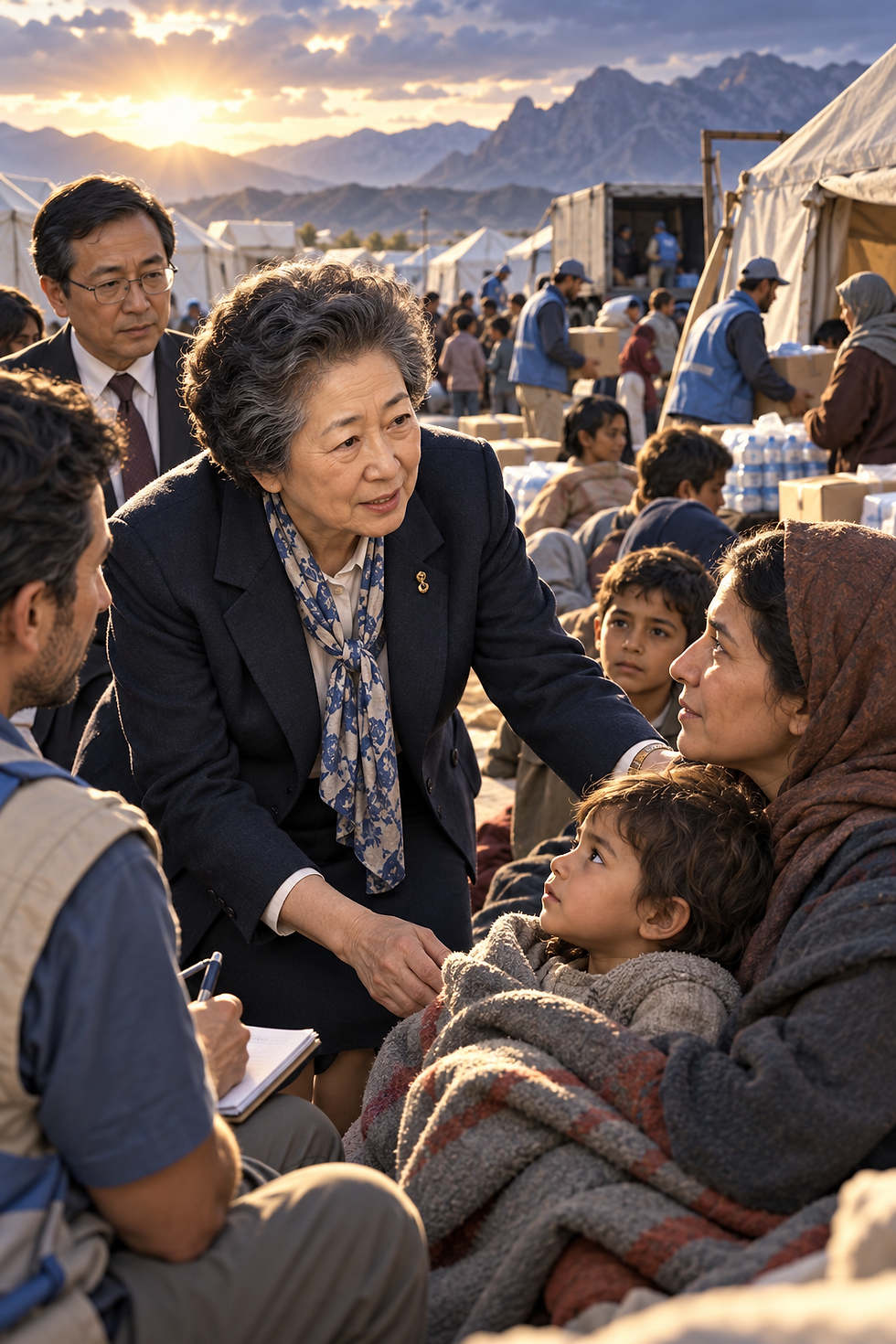
My Name is Sadako Ogata: Woman Who Refused to Abandon the World's Refugees
I was born on September 16, 1927, in Tokyo, Japan, into a family deeply involved in international diplomacy. My father's diplomatic assignments took our family to the United States and China, exposing me to different cultures at an early age. In 1932, my great-grandfather, Japanese Prime Minister Tsuyoshi Inukai, was assassinated by naval officers during a period of rising militarism. His death demonstrated how political extremism could threaten democratic government. When World War II devastated Japan, I became determined to understand why nations resorted to violence and how international cooperation might prevent future catastrophes.
From University Classrooms to the United Nations (1945–1990)
Following the war, I studied at the University of the Sacred Heart in Tokyo before traveling to America, where I earned a master's degree in international relations from Georgetown University and a doctorate in political science from the University of California, Berkeley. I became a professor, studying diplomatic history and international politics. In 1976, I joined Japan's mission to the United Nations, eventually serving in leadership positions involving UNICEF and human rights. I believed international organizations had a responsibility to protect vulnerable populations, but I also understood that humanitarian ideals required practical action. A resolution passed in a conference room meant little unless it improved someone's life.
Leading the World's Refugee Agency (1991)
In February 1991, I became the first woman and first Japanese national to serve as United Nations High Commissioner for Refugees. The Cold War was ending, but peace was not arriving everywhere. Civil wars, ethnic conflicts, and collapsing governments were forcing millions from their homes. My organization, UNHCR, faced enormous financial and logistical challenges. We needed food, transportation, medical supplies, and cooperation from governments that often disagreed politically. I insisted that humanitarian operations must respond to actual conditions on the ground. Refugees could not survive on diplomatic promises alone.
The Humanitarian Nightmare in Bosnia (1992–1995)
When war erupted in Bosnia, entire communities were driven from their homes through violence and ethnic cleansing. Families were trapped in besieged cities, while winter threatened those without food or shelter. Under my leadership, UNHCR coordinated enormous humanitarian operations, including the Sarajevo airlift, delivering essential supplies despite dangerous conditions. Some questioned whether humanitarian workers should operate in active war zones. But withdrawing assistance would have placed countless civilians in even greater danger. We could not stop the fighting through humanitarian work alone, yet we could help people survive until political and military solutions emerged.
Rwanda and the Refugee Crisis (1994–1996)
In 1994, genocide devastated Rwanda, where extremist Hutu forces murdered hundreds of thousands of Tutsis and moderate Hutus. As the violence unfolded and the Rwandan Patriotic Front advanced, enormous numbers of people fled into neighboring countries. Refugee camps became overwhelmed by disease, hunger, and insecurity. Among the displaced were innocent families, but also armed men implicated in the genocide who sought to control the camps. This presented one of our greatest moral and operational challenges. We could not deny protection to vulnerable civilians, yet we could not ignore the armed groups threatening their safety. Humanitarian assistance required difficult decisions under extraordinarily dangerous circumstances.
Kosovo and the Continuing Struggle for Peace (1998–2000)
Near the end of my tenure, conflict in Kosovo produced another massive refugee emergency. Hundreds of thousands of ethnic Albanians fled or were expelled during the fighting, requiring urgent international assistance. Our workers helped organize shelter, transportation, and emergency supplies while NATO conducted military operations against Yugoslavia. I continually emphasized that humanitarian assistance could not substitute for political solutions. By the time I left UNHCR in December 2000, our organization had expanded significantly, responding to crises across several continents. I had learned that protecting refugees was inseparable from international security.
A Lifetime Dedicated to Human Security (2001–2019)
After leaving the United Nations, I continued promoting peace and reconstruction, including assistance to Afghanistan. In 2003, I became president of the Japan International Cooperation Agency, directing development programs intended to help vulnerable communities achieve greater stability. I championed the principle of human security: protecting people not merely from war, but also from poverty, hunger, and conditions that threaten their dignity. I retired from that position in 2012 and died on October 22, 2019, at the age of 92.
Refugee Camps and Humanitarian Crisis in Central Africa - Told by Sadako Ogata
When the Rwandan genocide began to end in July 1994, many believed the worst of the suffering was finally over. As United Nations High Commissioner for Refugees, I knew that a new humanitarian emergency was rapidly developing. The Rwandan Patriotic Front had defeated the forces responsible for the genocide, but the advancing army triggered an enormous movement of frightened civilians. Some feared retaliation, while others were encouraged or forced to flee by the defeated government's leaders. More than two million Rwandans eventually sought refuge in neighboring Zaire, now the Democratic Republic of the Congo, Tanzania, Burundi, and Uganda. Many crossed borders carrying only their children and whatever possessions they could hold. The challenge before us was unprecedented: how could the international community feed, shelter, and protect millions of displaced people while Rwanda itself remained devastated by mass murder?
A Million Refugees Cross into Zaire (July 1994)
In mid-July, one of the largest and most sudden refugee movements in modern history overwhelmed the border town of Goma in eastern Zaire. More than one million people crossed into the surrounding region within days. Families crowded onto rocky volcanic terrain where adequate sanitation, clean water, and shelter were almost nonexistent. Our humanitarian teams worked desperately to establish camps, distribute food, and provide emergency medical assistance. Then cholera spread through the overcrowded settlements, accompanied by dysentery and severe dehydration. Thousands died, sometimes faster than humanitarian workers could bury them. Estimates suggest that as many as 50,000 refugees perished within several weeks. International governments organized emergency airlifts, bringing water equipment, medicines, food, and medical personnel. When I visited Goma, I witnessed an operation struggling against extraordinary conditions. We could not permit the scale of suffering to overwhelm our responsibility to respond.
The Enormous Challenge of Saving Lives (1994)
Providing assistance required an international effort involving UN agencies, humanitarian organizations, local authorities, and military logistical support. Aircraft transported supplies into crowded regional airports, while relief workers established water systems, medical stations, and food distribution centers. In Tanzania, hundreds of thousands of refugees required similar assistance following an enormous border crossing in April. By August, the crisis had spread across Central Africa, placing tremendous pressure on countries already facing economic and political difficulties. Although emergency relief gradually reduced deaths from disease and starvation, humanitarian operations could not simply continue indefinitely. Food deliveries had to be organized, families registered, children protected, and supplies distributed fairly. In August 1994, I reported that conditions in Goma remained serious, but the cholera epidemic was being brought under control. This represented genuine progress, although the underlying political crisis remained unresolved.
When the Refugee Camps Became Armed Strongholds (Late 1994)
One of our most disturbing discoveries was that the refugee camps sheltered not only innocent civilians, but also members of the former Rwandan army and Interahamwe militias responsible for genocide. These armed groups gradually established control over portions of the camps, intimidated refugees, diverted humanitarian supplies, and threatened those who wished to return home. Some used the settlements to reorganize military forces and prepare attacks against Rwanda's new government. This presented an extraordinary dilemma. International humanitarian law required us to protect refugees, but military leaders were exploiting that protection for political purposes. We repeatedly requested international assistance to separate armed combatants from civilian refugees. Without effective security, humanitarian organizations risked providing supplies that strengthened the very groups responsible for Rwanda's destruction. I insisted that humanitarian assistance must never become a substitute for political responsibility.
The Dangerous Road Back to Rwanda (1995)
By early 1995, our attention increasingly turned toward helping refugees return home voluntarily. Yet Rwanda remained deeply unstable. Survivors of the genocide feared renewed violence, while returning Hutu refugees feared imprisonment, retaliation, and accusations of participation in atrocities. Homes had been destroyed or occupied, farms abandoned, and local institutions shattered. In April 1995, Rwandan government soldiers killed hundreds of internally displaced people at Kibeho, further undermining confidence in safe return. Meanwhile, armed leaders inside refugee camps discouraged families from leaving through intimidation and misinformation. We worked with regional governments to improve camp security, including arrangements for Zairian security personnel supported by international advisers. But genuine repatriation required more than transportation across a border. Returning families needed safety, access to their homes, functioning schools, and confidence that justice would replace revenge.
A Humanitarian Emergency Without a Simple Solution (Late 1995)
By the end of 1995, humanitarian organizations had prevented countless additional deaths, yet more than a million Rwandans remained outside their homeland. The refugee camps continued placing pressure on neighboring communities, while armed extremists threatened regional stability. Governments debated how to manage these enormous populations, and humanitarian workers struggled to maintain assistance while encouraging voluntary return. The crisis demonstrated that ending a civil war or genocide does not automatically restore peace. Refugees cannot rebuild their lives merely because the fighting has stopped. They require security, economic opportunity, and a government willing to protect their rights. Without these conditions, displacement can continue for years and threaten the stability of entire regions.
The Srebrenica Genocide and the Failure of UN Safe Areas - Told by Sadako Ogata
In 1993, the United Nations declared Srebrenica, a predominantly Bosniak town in eastern Bosnia, a protected safe area. As United Nations High Commissioner for Refugees, I understood the importance of this promise. Thousands of Muslim civilians had fled surrounding villages after Bosnian Serb forces launched campaigns of ethnic cleansing, seeking shelter in a town surrounded by hostile territory. United Nations peacekeepers were stationed there, while humanitarian organizations attempted to deliver food, medicine, and essential supplies. Yet the designation of a safe area did not guarantee actual security. Bosnian Serb forces repeatedly obstructed humanitarian convoys, and civilians endured shortages of food and medical care. I warned that without reliable access and meaningful protection, these enclaves could become traps rather than sanctuaries. A declaration of safety meant little if the international community lacked the determination to enforce it.
The Fall of Srebrenica (July 6–11, 1995)
On July 6, 1995, Bosnian Serb forces under General Ratko Mladić launched a major offensive against Srebrenica. Artillery struck surrounding communities, driving terrified civilians toward the town. Several hundred Dutch United Nations peacekeepers, known as Dutchbat, attempted to maintain their positions but lacked the military strength and effective support necessary to stop the advancing army. Requests for NATO air support produced only limited intervention. On July 11, Bosnian Serb forces captured Srebrenica. Approximately 25,000 frightened civilians gathered around the United Nations compound at nearby Potočari, desperately seeking protection. Families crowded together in unbearable conditions, uncertain whether the blue helmets of international peacekeepers could save them. The international community had promised protection, but that promise was collapsing before the world's eyes.
Families Separated and Thousands Murdered (July 12–16, 1995)
What followed was one of Europe's most terrible atrocities since World War II. Bosnian Serb soldiers separated Bosniak men and boys from women, children, and elderly civilians. Thousands of women and children were forced onto buses and transported into Bosnian government-controlled territory. The men and boys faced a different fate. Many were imprisoned in warehouses, schools, and other detention locations before being transported to execution sites. Others were captured while attempting to escape through surrounding forests. More than 8,000 Bosniak men and boys were murdered in the genocidal operation. Their bodies were buried in mass graves, some later disturbed to conceal evidence of the killings. International courts subsequently established that these crimes constituted genocide. The victims were not simply casualties of battle. They were deliberately targeted because of their identity.
The Desperate Search for Missing Families (July 1995)
As survivors arrived in Tuzla, our humanitarian workers faced scenes of extraordinary suffering. Mothers searched for missing sons, wives demanded information about their husbands, and children asked when their fathers would return. Many arrived exhausted, dehydrated, and traumatized, carrying little more than the clothes they wore. UNHCR coordinated emergency assistance with the Bosnian government, United Nations agencies, and humanitarian organizations, providing food, medical attention, and temporary shelter. On July 19, I publicly demanded access to detained men and appealed for information about their whereabouts. We began gathering testimony from displaced families to establish lists of the missing. But humanitarian assistance presented a painful limitation: we could shelter survivors and document disappearances, yet we could not recover those already murdered.
The Failure of International Protection (July–August 1995)
Srebrenica exposed a fundamental weakness in international peacekeeping. The United Nations had established safe areas without consistently providing the military resources, authority, or political commitment necessary to defend them. Humanitarian convoys had been obstructed, peacekeepers threatened, and civilians abandoned to forces determined to remove them. The fall of nearby Žepa later in July demonstrated that Srebrenica was not an isolated danger. Meanwhile, international pressure for stronger action increased. On August 28, another deadly attack on Sarajevo's Markale marketplace killed dozens of civilians. NATO subsequently launched Operation Deliberate Force on August 30, striking Bosnian Serb military positions. These operations, together with battlefield developments and diplomatic negotiations, helped create conditions for the Dayton peace settlement later that year. But for Srebrenica's murdered families, international action had come too late.
NATO Airstrikes and the Dayton Peace Agreement - Told by Richard Holbrooke
By August 1995, Bosnia had endured more than three years of brutal warfare. As America's Assistant Secretary of State for European and Canadian Affairs, I had grown increasingly frustrated with diplomatic efforts that produced agreements but failed to stop the killing. Bosnian Serb forces had besieged Sarajevo, expelled civilian populations, and committed atrocities, including the murder of more than 8,000 Bosniak men and boys at Srebrenica in July. On August 28, a mortar attack on Sarajevo's Markale marketplace killed 43 civilians. The international community faced a decision: continue negotiating without meaningful consequences or demonstrate that further aggression would carry a military price. I believed diplomacy required more than persuasive arguments. It required leverage, determination, and the credible possibility of force.
NATO Strikes Back: Operation Deliberate Force (August–September 1995)
On August 30, NATO launched Operation Deliberate Force, an air campaign targeting Bosnian Serb military positions, communications facilities, and ammunition depots. The operation, coordinated with the United Nations, sought to end attacks against Sarajevo and other protected areas. NATO aircraft struck military targets while Bosnian government and Croatian forces conducted ground offensives that further altered the balance of power. By mid-September, Bosnian Serb leaders faced increasing pressure to negotiate. Military action alone did not produce peace, but it changed the calculations of those who had previously believed they could achieve their objectives through continued fighting. This was the essential connection between military pressure and diplomacy: negotiations become more productive when the parties recognize that refusing an agreement carries consequences.
The Diplomatic Mission That Nearly Ended in Disaster (August–October 1995)
While NATO increased military pressure, I led an American diplomatic initiative involving representatives of Bosnia, Croatia, and Serbia. Our negotiations were complicated by decades of grievances, territorial claims, and personal hostility among political leaders. On August 19, tragedy struck our delegation when an armored vehicle traveling along a dangerous mountain road near Sarajevo plunged down a mountainside. Three American colleagues—Robert Frasure, Joseph Kruzel, and Nelson Drew—were killed. Their deaths reinforced my determination to complete the mission. Working with Secretary of State Warren Christopher and other American officials, we pursued a settlement involving Serbian President Slobodan Milošević, Croatian President Franjo Tuđman, and Bosnian President Alija Izetbegović. By October, a ceasefire had taken effect, creating an opportunity for comprehensive negotiations.
Three Presidents Behind Closed Doors at Dayton (November 1995)
On November 1, 1995, we brought the three presidents to Wright-Patterson Air Force Base near Dayton, Ohio. I deliberately favored an isolated military installation over a glamorous international conference center. There would be fewer opportunities for political theater and greater pressure to concentrate on negotiations. For twenty-one days, we argued over maps, territorial boundaries, constitutional arrangements, and the future of Bosnia. Milošević negotiated on behalf of Bosnian Serb interests, Tuđman defended Croatian priorities, and Izetbegović fought to preserve Bosnia's sovereignty. At several moments, negotiations approached collapse. I used deadlines, intensive private meetings, and direct confrontation to keep the participants engaged. On November 21, we finally announced an agreement. The guns had not been silenced by goodwill alone, but by a combination of diplomacy, military developments, and difficult political compromises.
The Agreement That Ended the Bosnian War (December 1995)
On December 14, 1995, the Dayton Peace Agreement was formally signed in Paris. Bosnia and Herzegovina would remain one internationally recognized country, divided internally into two principal entities: the Federation of Bosnia and Herzegovina and Republika Srpska. The agreement established a complicated power-sharing government, provisions for refugee returns, and commitments to protect human rights. NATO would deploy an international Implementation Force of approximately 60,000 troops to help enforce the military provisions. For the first time in years, the people of Bosnia could begin imagining a future without daily artillery attacks and armed checkpoints. Yet the settlement was imperfect. Ethnic divisions remained deeply embedded in the political system, and many displaced families could not immediately return home. Nevertheless, the agreement achieved its central objective: ending the war.
Kosovo War: Serbian Crackdowns and NATO Intervention - Told by Holbrooke
When I helped negotiate the Dayton Peace Agreement in 1995, I believed we had prevented Bosnia's destruction. But another dangerous conflict was developing in Kosovo, a province of Serbia with a predominantly ethnic Albanian population. In 1989, Serbian leader Slobodan Milošević began dismantling Kosovo's autonomy, placing its institutions under increasingly direct Serbian control. Many ethnic Albanians lost positions in government, education, and public institutions. For years, Kosovo Albanian leader Ibrahim Rugova advocated peaceful resistance, organizing parallel schools and political institutions. But frustration grew among those who believed peaceful methods had accomplished little. By the late 1990s, some ethnic Albanians were preparing to fight for independence. Having witnessed the destruction of Bosnia, I understood that unresolved ethnic grievances, authoritarian government, and armed nationalism could once again bring catastrophe to southeastern Europe.
The Kosovo Liberation Army Takes Up Arms (1997–1998)
The Kosovo Liberation Army, known as the KLA, emerged as an armed Albanian separatist movement seeking independence from Serbia. Its fighters attacked Serbian police and government targets, challenging Belgrade's authority. In February and March 1998, Serbian security forces launched major operations against suspected KLA strongholds, particularly in the Drenica region. The fighting intensified after Serbian forces killed KLA commander Adem Jashari and dozens of others, including members of his family, in March. Serbian and Yugoslav operations increasingly involved attacks on villages, destruction of homes, and the displacement of civilians. The KLA also committed kidnappings and attacks against civilians. By the end of 1998, more than 300,000 people had been driven from their homes. Kosovo was becoming another humanitarian disaster, and the international community could no longer dismiss the violence as a local security problem.
My Negotiations with Slobodan Milošević (October 1998)
In October 1998, I traveled to Belgrade to negotiate directly with Yugoslav President Slobodan Milošević. I knew him from the Bosnian peace negotiations and understood his ability to bargain under pressure while resisting concessions he considered dangerous to his power. NATO was threatening airstrikes unless Serbian and Yugoslav forces reduced their operations in Kosovo. After intensive discussions, Milošević agreed to withdraw some security forces, permit international monitors, and facilitate the return of displaced civilians. The Organization for Security and Co-operation in Europe subsequently deployed observers to verify compliance. For a brief period, the agreement reduced tensions. But both sides violated the ceasefire, and the underlying political dispute remained unresolved. Diplomacy had created an opportunity for peace, but it had not yet produced the political settlement necessary to sustain it.
The Massacre That Reignited International Outrage (January 1999)
On January 15, 1999, Serbian security forces killed approximately 45 Kosovo Albanians in the village of Račak. International observers investigating the scene reported evidence of unlawful killings, while Yugoslav authorities disputed their conclusions and claimed the dead were KLA fighters. The incident intensified international demands for intervention. Meanwhile, Serbian and Yugoslav forces continued military operations, and KLA fighters remained active. Secretary of State Madeleine Albright and European diplomats pushed for comprehensive peace negotiations. I understood the challenge: Milošević insisted upon preserving Serbian sovereignty, while many Kosovo Albanians increasingly demanded independence. Neither side trusted the other, and every new attack made compromise more difficult. Without a meaningful agreement, the fighting threatened to expand into another prolonged Balkan war.
The Failure of the Rambouillet Peace Talks (February–March 1999)
In February 1999, representatives of Serbia and Kosovo's ethnic Albanian leadership gathered at Rambouillet, France, for internationally sponsored negotiations. The proposed settlement would establish substantial self-government for Kosovo while preserving its formal place within Yugoslavia during an interim period. NATO-led peacekeepers would supervise security arrangements. The Kosovo Albanian delegation initially hesitated, but ultimately accepted the proposal in March. Belgrade rejected the agreement, particularly the presence of NATO forces. I traveled again to meet Milošević in March, making one final effort to persuade him to accept an international settlement. He refused. The diplomatic process had reached an impasse. NATO governments now faced the decision they had repeatedly postponed: whether to use military force against Yugoslavia.
NATO Launches Operation Allied Force (March–June 1999)
On March 24, 1999, NATO launched Operation Allied Force, beginning an aerial bombing campaign against Yugoslav military installations, air defenses, communications networks, and infrastructure. President Bill Clinton argued that intervention was necessary to stop repression and prevent further humanitarian catastrophe. However, the operation proceeded without explicit authorization from the United Nations Security Council, producing serious international controversy. Russia and China opposed the bombing, while critics questioned its legality and humanitarian consequences. As the campaign continued, Serbian and Yugoslav forces intensified expulsions and violence against Kosovo Albanians, driving hundreds of thousands into neighboring countries. NATO bombing also killed civilians and damaged infrastructure, raising difficult questions about the conduct of the intervention. After 78 days, growing military pressure and diplomacy involving Russia and European governments helped produce an agreement. On June 10, NATO suspended its bombing campaign as Yugoslav forces began withdrawing from Kosovo.
Kosovo's Refugee Emergency and the Difficult Road to Peace - Told by Ogata
In March 1999, as NATO launched its bombing campaign against Yugoslavia, another humanitarian catastrophe unfolded in the Balkans. As United Nations High Commissioner for Refugees, I watched with growing alarm as hundreds of thousands of ethnic Albanians were forced from their homes in Kosovo. Serbian and Yugoslav security forces conducted widespread expulsions, accompanied by violence, intimidation, and the destruction of property. Families were driven onto trains, crowded into vehicles, or forced to walk toward neighboring countries. Some arrived at border crossings without identification papers, which had been confiscated or destroyed. Mothers carried frightened children, while elderly refugees struggled through cold weather and exhaustion. By early May, approximately 700,000 people had fled Kosovo. These were not ordinary movements of people seeking better opportunities. They were the consequences of systematic persecution and forced displacement.
The Refugee Camps Overwhelm Neighboring Countries (April 1999)
Albania and Macedonia, then officially known internationally as the former Yugoslav Republic of Macedonia, suddenly found themselves hosting enormous refugee populations. In Albania, families opened their homes to strangers, while humanitarian organizations established emergency shelters and food distribution centers. In Macedonia, officials feared that a massive influx might destabilize the country's delicate ethnic and political relationships. Thousands of refugees waited at border crossings, uncertain whether they would be permitted to enter. I traveled to the region to meet government officials, inspect humanitarian operations, and encourage greater international cooperation. Our immediate responsibilities were clear: provide shelter, food, clean water, medical treatment, and protection. Yet the speed of the refugee movement repeatedly overwhelmed available resources. The suffering was immense, but the determination of local families and international relief workers demonstrated that compassion could still prevail amid political catastrophe.
An International Operation to Save Lives (April–June 1999)
UNHCR coordinated emergency relief with international humanitarian organizations, local authorities, and NATO forces providing logistical assistance. Military aircraft transported supplies, engineers helped construct refugee camps, and transportation networks moved vulnerable families away from dangerous border areas. Working with the International Organization for Migration, we organized humanitarian evacuations from Macedonia to countries willing to provide temporary protection. Special attention was given to separated children, elderly refugees, and families requiring urgent medical assistance. Registration became particularly important because many refugees had lost their identity documents, making family reunification and eventual return more difficult. By June, well over 850,000 people had fled Kosovo since the previous spring. Our operation was enormous, but I continually emphasized that humanitarian relief could not resolve the fundamental cause of their suffering. Refugees needed more than temporary safety. They needed the opportunity to return home without fear.
NATO Peacekeepers Enter Kosovo (June 1999)
On June 10, 1999, NATO ended its bombing campaign following an agreement requiring Yugoslav military and security forces to withdraw from Kosovo. That same day, the United Nations Security Council adopted Resolution 1244, authorizing an international security presence and establishing a temporary international administration. NATO-led peacekeepers, known as KFOR, began entering Kosovo on June 12. Their mission included establishing security, supporting humanitarian operations, and creating conditions for displaced civilians to return. For hundreds of thousands of refugees, news of the withdrawal brought tremendous relief. Families who had spent weeks in crowded camps began preparing to travel home, often before humanitarian organizations could organize their return. I welcomed this development, but I also understood its dangers. A military withdrawal did not guarantee that roads were safe, homes remained standing, or communities could immediately resume ordinary life.
Returning Home to a Landscape of Destruction (Summer–Autumn 1999)
The return of Kosovo's refugees occurred with extraordinary speed. Within weeks, hundreds of thousands of ethnic Albanians crossed back into the province, eager to recover their homes and reunite with missing relatives. Many encountered burned villages, damaged schools, destroyed bridges, and fields contaminated with landmines or unexploded ammunition. Humanitarian workers distributed emergency building materials, food, and medical supplies while international organizations began reconstructing essential infrastructure. Yet another troubling crisis emerged. As ethnic Albanians returned, many ethnic Serbs and Roma faced intimidation, attacks, and forced displacement. Up to 200,000 Serbs fled Kosovo during and after the conflict, according to figures I discussed later that year. I insisted that protecting one population could never justify the persecution of another. International peacekeepers had to defend all civilians, regardless of ethnicity.
The Difficult Road from War to Peace (Late 1999)
By the end of 1999, most ethnic Albanian refugees had returned to Kosovo, but genuine reconciliation remained distant. Families struggled to rebuild homes before winter, unemployment remained widespread, and political institutions required reconstruction. The United Nations Mission in Kosovo assumed responsibility for temporary civilian administration, while NATO peacekeepers continued maintaining security. Humanitarian organizations increasingly shifted their attention from emergency relief toward reconstruction and long-term protection. Nevertheless, attacks against minorities demonstrated that the cycle of ethnic hostility had not disappeared. Kosovo's future political status remained unresolved, and the challenge was no longer simply bringing refugees home. It was establishing a society where different ethnic communities could live without fear.
Lessons from Kosovo's Humanitarian Crisis
Kosovo demonstrated both the possibilities and limitations of international humanitarian intervention. We helped protect hundreds of thousands of displaced people and supported one of the fastest refugee returns in modern history. Yet I regret that we could not prevent the original expulsions or adequately protect every civilian during the difficult months that followed. The intimidation of Serbs and Roma after the war was especially troubling, reminding us that victims of persecution must never become perpetrators themselves. My experience taught me that peace cannot be measured simply by the withdrawal of soldiers or the return of refugees. Genuine peace exists when families can rebuild their homes, children can attend school, and every community enjoys protection under the law. Our responsibility does not end when refugees cross back over a border. It ends only when they can live safely, freely, and with dignity.


Comments