

12. Lesson Plans from the Great Depression: Friends and Foes: Nations That Turned Toward Fascism

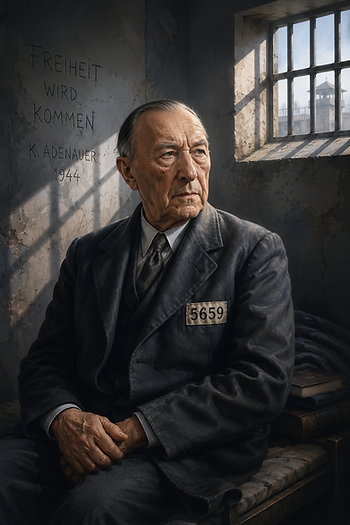
My Name is Konrad Adenauer: Mayor of Cologne and Democracy Defender
I was born in Cologne, Germany, in 1876, and from a young age I believed that strong communities were built through careful planning, hard work, and responsible government. As I entered public service, I devoted myself to improving my city. I helped modernize transportation, expand housing, and improve public services because I believed Germany's future depended upon practical leadership instead of empty promises.
Leading Through Difficult Times
After the First World War, Germany struggled with defeat, inflation, and political violence. As Mayor of Cologne, I believed democracy offered the best path forward, even though many people around me had lost confidence in it. I often argued that Germany needed stability, cooperation, and patience. I never understood why so many people were willing to throw away constitutional government in exchange for leaders who promised quick solutions. To me, rebuilding took time, and many simply refused to wait.
Standing Against Extremism
When Adolf Hitler and the National Socialist Party gained influence, I saw danger where others saw hope. Many Germans believed Hitler would restore jobs, national pride, and order. I could not understand why so many intelligent people accepted speeches filled with anger and division instead of reason and law. Some criticized me for refusing to cooperate with the new movement, believing I was standing in the way of Germany's recovery. I believed they were sacrificing liberty for promises that could never truly last.
Losing Everything
In 1933, after Hitler became Chancellor, I was removed from my position as mayor. My family and I faced uncertainty, and I was forced into hiding at different times to avoid arrest. Later, I was imprisoned for opposing the Nazi government. Even then, I believed Germany's future depended upon restoring lawful government rather than giving more power to dictators. Watching friends disappear, freedoms vanish, and fear replace open discussion only strengthened my convictions.
My Own Controversial Views
Not everyone agreed with my own ideas either. Throughout my career I often favored strong regional governments, close cooperation with Catholic political leaders, and practical compromise instead of fiery speeches. Some believed I was too cautious, too willing to negotiate, or too focused on western Germany instead of the nation as a whole. I rarely understood those criticisms. From my perspective, compromise prevented conflict, and careful planning built lasting success. I believed many of my opponents confused patience with weakness.
Looking Back
When the Second World War ended, Germany lay in ruins, and millions had suffered because dictatorship replaced democracy. Looking back, I realized that many people who supported authoritarian rule truly believed they were saving their country, even though they helped create unimaginable destruction. I never believed surrendering freedom would solve Germany's problems, and history proved those fears justified. In the end, I also recognized that rebuilding trust required more than proving I had been right—it required helping former enemies and divided neighbors find a path toward peace together.
Europe After the Great Depression (1930–1933) – Told by Konrad Adenauer
When people think of the Great Depression, they often picture empty factories and long lines of unemployed workers. I saw something even more dangerous. I watched confidence disappear. Across Europe, businesses that had stood for generations suddenly closed their doors. Families who had worked hard all their lives found themselves unable to buy food or pay rent. Every week seemed to bring another bank failure, another factory shutdown, and another reason for ordinary citizens to wonder whether their governments were capable of protecting them. It was not just an economic crisis—it was a crisis of faith in democracy itself.
Germany's Struggle
As Mayor of Cologne, I witnessed the hardship firsthand. Germany had already suffered through crushing inflation during the 1920s, and now another disaster arrived before many families had fully recovered. International loans disappeared after the American stock market crash, factories slowed production, and unemployment climbed into the millions. Men who once proudly provided for their families stood in endless lines hoping for work, while shopkeepers wondered whether anyone would ever walk through their doors again. Fear became almost as common as hunger.
The Search for Someone to Blame
Hard times have a way of changing how people think. Many citizens grew tired of hearing politicians debate while their lives became more difficult. They wanted immediate answers, not long discussions. Some blamed bankers, others blamed foreign nations, and still others blamed political parties they believed had failed them. Across Europe, voices promising simple solutions became louder every month. Many people stopped asking whether those promises were realistic and instead asked only whether someone appeared confident enough to solve their problems.
Democracy Under Pressure
Democratic governments were designed to allow debate, elections, and compromise, but compromise can seem painfully slow when families are struggling simply to survive. Throughout Europe, extremists on both the political left and right claimed that democracy was weak and ineffective. They argued that one strong leader could accomplish more than elected officials working together. I disagreed with that conclusion, but I understood why frightened citizens found those arguments attractive. Economic suffering often makes certainty sound more convincing than careful reasoning.
A Dangerous Opportunity
While many honest leaders searched for practical solutions, others saw opportunity in the chaos. Political movements that had once attracted only small crowds suddenly filled meeting halls. They promised jobs, national pride, security, and quick action. Many people believed these leaders because they desperately wanted hope. Few stopped to ask what freedoms might disappear if those promises were accepted. History has shown that when fear becomes greater than freedom, nations can unknowingly surrender both.
The Lesson Europe Learned
Looking back, I believe the Great Depression did more than empty wallets—it tested the strength of democratic societies across an entire continent. Economic hardship alone did not destroy freedom, but it created the conditions where millions became willing to exchange liberty for promises of stability. That is why understanding these years is so important. Before Europe marched toward war, it first walked through years of uncertainty, desperation, and difficult choices that changed the course of history forever.

My Name is Thomas Mann: German Novelist and Defender of Freedom
I was born in Lübeck, Germany, in 1875, into a family of merchants that valued hard work, education, and culture. As a young man, I discovered that stories could reveal truths about people and nations better than speeches or political slogans. My novels explored ambition, family, morality, and the struggles of modern society. When I published Buddenbrooks, it brought me international recognition and eventually helped earn me the Nobel Prize in Literature.
My Early Beliefs
When I was younger, I held opinions that many people today would find controversial. During the First World War, I defended Germany and believed its traditions and culture deserved protection against what I viewed as excessive foreign influence. I often questioned liberal democracy, believing that artists and intellectuals should guide society more than politicians. I did not understand why critics thought my defense of German culture encouraged nationalism. In my mind, I was defending civilization rather than attacking freedom.
Watching Germany Change
As the years passed, I watched Germany struggle through economic collapse, political violence, and growing anger. Many ordinary citizens became convinced that democracy had failed them. They welcomed Adolf Hitler because he promised jobs, stability, and national pride. I could not understand why so many people were willing to exchange independent thought for obedience to a single leader. To me, a nation that abandoned free discussion would eventually lose far more than it gained.
Leaving My Homeland
When the Nazis came to power in 1933, remaining silent was impossible. My books were condemned, my ideas attacked, and my family faced increasing danger. I chose exile rather than surrender my beliefs. Leaving Germany broke my heart because I loved my homeland deeply. Yet I believed loving one's country did not mean accepting every government that claimed to represent it. Sometimes true loyalty required speaking against those in power.
Speaking to the German People
From Switzerland and later the United States, I continued writing and speaking to Germans through radio broadcasts and essays. I urged my countrymen to reject hatred, propaganda, and dictatorship. Some people accused me of betraying Germany by criticizing its government from abroad. I never understood that accusation. In my eyes, remaining silent while freedom disappeared would have been the real betrayal. I believed Germany's greatest traditions included learning, reason, music, literature, and moral responsibility—not fear and persecution.
Looking Back
As I reflected on my life, I realized that I had not always understood the value of democratic government when I was younger. Experience taught me that culture and freedom cannot flourish without open discussion, independent institutions, and respect for human dignity. The tragedy of Nazi Germany showed me how quickly fear and anger can overwhelm wisdom. If I regretted anything, it was that I had not recognized sooner how important it was to defend democracy before it stood on the edge of collapse.
Why Many Citizens Wanted Strong Leaders – Told by Thomas Mann
There are moments in history when people begin to doubt everything they once believed. During the early 1930s, I watched that happen across Germany and much of Europe. Families who had worked faithfully suddenly lost their jobs. Savings disappeared as businesses failed, and millions wondered whether tomorrow would be any better than today. In such times, fear often speaks louder than reason. People no longer asked only, "What is right?" They began asking, "Who can rescue us?" That question would change history.
The Frustration with Democracy
Democratic governments are designed to move carefully. Laws must be debated, compromises reached, and elections held before major changes occur. Those safeguards protect freedom, but they can appear painfully slow during a national emergency. Many citizens became frustrated watching political parties argue while unemployment rose and factories remained silent. They concluded that endless debate accomplished nothing. To them, a single determined leader seemed far more capable of acting quickly than a parliament filled with disagreement.
The Appeal of Confidence
One lesson I learned is that confidence can be more persuasive than wisdom. Leaders who spoke with certainty attracted enormous crowds. They offered simple explanations for complicated problems and promised rapid solutions that sounded almost impossible to refuse. Many citizens found comfort in hearing someone speak with absolute conviction. They believed strength alone could overcome economic collapse, political division, and national humiliation. Few paused to ask whether those promises could actually be fulfilled.
Fear Opens Dangerous Doors
Fear has an unusual power over human judgment. When families worry about feeding their children or keeping their homes, they naturally seek security above almost everything else. That desire is understandable. Yet fear can also make people willing to surrender freedoms they once treasured. Freedom of speech, free elections, independent newspapers, and open debate can begin to look like obstacles instead of protections. I watched many educated, thoughtful people slowly convince themselves that temporary limits on liberty were a reasonable price to pay for stability.
The Cost of Following One Voice
As time passed, I saw how dangerous that thinking became. A government led by one powerful individual could certainly act faster than a democracy, but speed is not always wisdom. Without independent courts, opposing political parties, or a free press, mistakes became far more difficult to challenge. Citizens who once believed they were gaining order gradually discovered they had also lost the ability to question those making decisions on their behalf. By then, speaking out carried enormous personal risk.
A Lesson Worth Remembering
Looking back, I understand why so many ordinary people longed for a strong leader during those difficult years. Their hopes grew from genuine hardship rather than simple ambition. Yet history reminds us that the greatest strength of a nation is not found in one powerful individual but in institutions that protect liberty while allowing citizens to participate in their own government. The story of the 1930s teaches us that freedom is often surrendered gradually, one fearful decision at a time, making it all the more important to guard it carefully.
Hitler Becomes Chancellor (1933) – Told by Konrad Adenauer
Many people imagine that Adolf Hitler seized power by force alone, but that is not how it began. On January 30, 1933, President Paul von Hindenburg legally appointed Hitler as Chancellor of Germany. The appointment followed months of political deadlock, weak coalition governments, and repeated elections that failed to produce lasting stability. Many conservative politicians believed they could control Hitler by surrounding him with experienced leaders. They believed they were making a practical political compromise. They were terribly mistaken.
A Democracy Growing Weaker
Before Hitler became Chancellor, Germany was already struggling. The Great Depression had devastated the economy, unemployment had reached millions, and confidence in the Weimar Republic had steadily declined. Political parties argued constantly while extremist groups on both the left and right gained support. Many Germans did not necessarily want dictatorship—they simply wanted a government that appeared capable of making decisions. The democratic system had become so divided that many citizens were willing to accept almost any alternative that promised order.
The Reichstag Fire
Only weeks after Hitler entered office, an event shocked the nation. On February 27, 1933, the German parliament building, known as the Reichstag, caught fire. The government quickly blamed communist revolutionaries, although historians continue to debate every detail surrounding the event. Hitler used the crisis to persuade President Hindenburg to issue the Reichstag Fire Decree, which suspended many constitutional freedoms. Freedom of speech, freedom of the press, privacy protections, and the right to peaceful assembly were sharply limited in the name of national security. Temporary emergency powers soon became permanent tools of control.
The Enabling Act
The greatest turning point came in March 1933 with the passage of the Enabling Act. Members of parliament voted under tremendous political pressure, while many opposition leaders had already been arrested or intimidated. The law allowed Hitler's government to pass legislation without the approval of the Reichstag or even the President. Germany still appeared to have democratic institutions, but real power had shifted almost entirely into Hitler's hands. A constitutional republic had begun transforming into a dictatorship through laws passed within its own legal system.
The End of Political Freedom
Once those new powers were secured, the changes came rapidly. Opposition political parties were dissolved or banned, labor unions were eliminated and replaced with government-controlled organizations, and newspapers critical of the regime were silenced. Judges, teachers, civil servants, and local officials were expected to demonstrate loyalty to the new government. As Mayor of Cologne, I watched democratic institutions disappear piece by piece. The change did not happen overnight, but each new law made it harder for anyone to resist the next one.
A Warning from History
Looking back, I believe one of history's greatest lessons is that democracies rarely disappear in a single dramatic moment. More often, they are weakened gradually as citizens accept small losses of liberty in exchange for promises of security or stability. Hitler did not begin his rule as a king or military conqueror. He became Chancellor through constitutional procedures and then used the powers of government to dismantle the very democracy that had placed him in office. That is why understanding 1933 is so important—it reminds us that protecting democratic institutions requires constant vigilance long before they are in danger of disappearing.
The End of German Democracy – Told by Konrad Adenauer
I often tell people that democracies do not usually disappear all at once. Instead, they fade through a series of decisions that seem temporary at the time. One of those moments came on the evening of February 27, 1933, when the Reichstag, Germany's parliament building, was consumed by fire. The flames lit up the Berlin sky, and before the smoke had even cleared, the government declared that Germany faced an immediate communist threat. Fear spread rapidly across the nation, and many citizens accepted extraordinary government actions because they believed the country was in danger.
Emergency Powers Become Everyday Power
The very next day, President Paul von Hindenburg signed the Reichstag Fire Decree at Adolf Hitler's request. The decree suspended many of the civil liberties guaranteed by Germany's constitution. Police gained expanded authority to search homes, censor newspapers, monitor communications, and arrest individuals without the normal legal protections. The government insisted these measures were temporary and necessary for public safety. Many Germans accepted those explanations because they believed restoring order was more important than protecting individual freedoms.
The Enabling Act Changes Germany
Only a few weeks later, on March 23, 1933, another law permanently changed the course of German history. The Enabling Act allowed Hitler's cabinet to pass laws without approval from the Reichstag and even without following parts of the German Constitution. The vote took place while many communist deputies had already been arrested and members of the Nazi paramilitary forces surrounded the building, creating an atmosphere of intimidation. Although the law passed through legal procedures, it effectively transferred legislative authority from elected representatives to Hitler's government. Germany still appeared to have a parliament, but real democratic power had largely disappeared.
Silencing the Opposition
Once these new powers were secured, opposition became increasingly dangerous. Political parties other than the Nazi Party were dissolved or banned, independent labor unions were eliminated, and newspapers critical of the government were shut down or placed under strict control. Political opponents, journalists, religious leaders, and community figures who resisted the new regime risked arrest or imprisonment. As Mayor of Cologne, I witnessed colleagues removed from office simply because they would not pledge loyalty to the new government. Open political debate, once a foundation of democracy, slowly vanished.
The Loss of Local Government
The changes reached far beyond Berlin. Local governments across Germany lost much of their independence as the Nazi government centralized authority. Experienced civil servants were dismissed and replaced with officials loyal to the regime. Communities that had once elected leaders to represent local interests found those decisions increasingly directed by the national government. I was removed from my own office because I refused to support the policies of the new leadership. The message became unmistakable: loyalty to the Nazi Party mattered more than loyalty to democratic institutions.
A Lesson That Still Matters
Looking back, I believe the collapse of German democracy teaches one of history's most important lessons. Freedom was not destroyed in a single battle or by one dramatic decree alone. It disappeared step by step through emergency measures, expanded executive authority, weakened legislatures, and the gradual removal of political opposition. Each action seemed justified by those in power, yet together they dismantled a constitutional republic that many believed would endure. Understanding how democracy ended in Germany reminds us that protecting liberty requires defending both the rights of individuals and the institutions that preserve them, especially during times of fear and uncertainty.

My Name is Winston Churchill: British Statesman and Defender of Democracy
I was born in 1874 into a prominent British family, but I wanted to earn my own reputation. I became a soldier, a war correspondent, and later a politician. Adventure took me to Cuba, India, Sudan, and South Africa, where I witnessed war firsthand. Those experiences convinced me that courage, determination, and leadership mattered most when nations faced their greatest trials.
A Life in Politics
My political career was filled with victories, defeats, and unexpected turns. I served in several important government positions and changed political parties more than once, causing some people to question my loyalty. I never understood why they focused on party labels instead of principles. I believed leaders should support what they thought was best for their country, even if it meant standing apart from old allies or making unpopular decisions.
My Controversial Views
Many of my opinions sparked fierce debate. I believed the British Empire was a force for stability and progress, while many others argued that people around the world deserved independence from British rule. I opposed granting greater self-government to India during much of my career and openly criticized leaders such as Mahatma Gandhi. I did not understand why so many people viewed the Empire mainly through its failures instead of what I believed were its achievements. I thought preserving Britain's global influence would benefit both Britain and its territories.
Warning About Hitler
During the 1930s, while many people hoped peace could be preserved through compromise, I warned that Adolf Hitler was rebuilding Germany for war. My speeches were often dismissed as alarmist or old-fashioned. I could not understand why so many leaders believed promises made by dictators who had already broken earlier agreements. To me, preparing for danger was not warmongering—it was the surest way to prevent an even greater conflict.
Leading Britain Through War
When Germany invaded Poland and war spread across Europe, I became Prime Minister in Britain's darkest hour. I promised no easy victories, only hard work, sacrifice, and determination. I believed free nations could overcome tyranny if they refused to surrender. The courage shown by ordinary citizens during the Battle of Britain and throughout the war convinced me that democracy, though imperfect, possessed a strength dictators could never fully understand.
Looking Back
As I grew older, I recognized that history would judge both my successes and my failures. Some of my decisions and beliefs remained deeply controversial, and not everyone experienced the British Empire as I believed they had. Although I never stopped believing that resisting Nazi Germany was necessary, I came to understand that great nations must also examine their own mistakes with honesty. Leadership is not measured only by winning wars, but also by learning from history so future generations may build a more peaceful world.
Economic Recovery Under Nazi Germany – Told by Winston Churchill
When I observed Germany during the 1930s, I understood why many people believed Adolf Hitler had accomplished something remarkable. Only a few years earlier, Germany had been crippled by unemployment, political division, and economic despair brought on by the Great Depression. By the middle of the decade, factories were becoming busier, construction projects stretched across the countryside, and unemployment had fallen dramatically. To many Germans, it appeared that their nation had finally found the leadership capable of restoring prosperity. It was precisely this appearance of success that made Hitler's government so dangerous.
Building Roads and Creating Jobs
One of the Nazi government's most visible achievements was an ambitious public works program. Thousands of workers helped construct highways known as the Autobahn, while bridges, public buildings, and other infrastructure projects expanded across the country. These projects provided employment for many who had struggled to find work during the Depression. For families that had experienced years of hardship, receiving a steady paycheck again was life changing. Many citizens naturally credited Hitler's government for improving their daily lives.
The Hidden Engine Behind Recovery
Yet public construction was only part of the story. Behind the scenes, Germany was rapidly rebuilding its military, despite the restrictions imposed by the Treaty of Versailles after the First World War. New factories produced aircraft, tanks, artillery, ammunition, and military equipment. Hundreds of thousands of men entered military service or found work supporting Germany's growing armed forces. This enormous expansion fueled industrial production and reduced unemployment, but it was an economy increasingly preparing for war rather than long-term peace. Prosperity built upon rearmament carried consequences that would soon become clear.
Why So Many Believed
For millions of ordinary Germans, the evidence seemed impossible to ignore. More people held jobs, businesses received government contracts, and national pride appeared to return after years of humiliation and uncertainty. Many concluded that Hitler had succeeded where earlier democratic governments had failed. Few citizens could fully see the hidden costs behind these improvements. Political freedoms had been stripped away, labor unions had been replaced by government-controlled organizations, and those who criticized the regime risked imprisonment. Economic progress often overshadowed these losses in the minds of many citizens.
Success with a Heavy Price
As I warned throughout the 1930s, Germany's recovery came with a dangerous foundation. Military spending can stimulate an economy for a time, but weapons and armies must eventually be used or continually expanded to justify their enormous expense. Hitler's government was not simply rebuilding Germany—it was preparing to reshape Europe by force. The economic gains that impressed so many observers were closely tied to ambitions that threatened the peace of the entire continent. A nation that arms itself at such a pace rarely intends to remain at peace indefinitely.
Looking Beyond the Numbers
History teaches us that economic statistics alone cannot measure the health of a nation. Falling unemployment, busy factories, and new highways certainly mattered to struggling families, but they did not tell the whole story. True prosperity rests upon both economic opportunity and the preservation of liberty. Germany's apparent recovery convinced millions that their government was succeeding, yet beneath that recovery lay censorship, political persecution, and an expanding military machine. The lesson is clear: a nation may appear stronger on the surface while quietly sacrificing the very freedoms that give lasting prosperity its greatest value.
Why Some People Supported Hitler – Told by Thomas Mann
One of the most difficult questions people ask is how millions of ordinary Germans came to support Adolf Hitler. It is tempting to believe that everyone who supported him shared the same motives, but history is rarely that simple. Germany in the early 1930s was a nation wounded by war, burdened by economic collapse, and divided by political conflict. To understand those years, we must examine the hopes and fears that influenced people, not merely judge them from a distance.
The Desire to Restore National Pride
Many Germans felt deeply humiliated after the First World War. The Treaty of Versailles imposed territorial losses, military restrictions, and heavy reparations that many believed treated Germany unfairly. Hitler promised to restore the nation's honor, rebuild its military, and make Germany respected again. These promises appealed to citizens who longed to see their country recover from years of defeat and embarrassment. For many, supporting Hitler seemed like supporting Germany itself.
Promises of Stability and Prosperity
Economic hardship shaped countless political decisions. The Great Depression left millions unemployed, businesses failed, and families struggled simply to survive. When Hitler's government expanded public works projects, increased military production, and unemployment declined, many people believed they were witnessing real progress. Whether they agreed with every policy or not, they saw visible improvements in their daily lives. To those who had experienced years of uncertainty, stability became an attractive promise.
Fear of Communism
Another powerful influence was the fear of communism. The Russian Revolution and later the Soviet Union convinced many Europeans that communist movements could lead to revolution, violence, and the loss of private property. In Germany, communist and nationalist groups often clashed in the streets during the final years of the Weimar Republic. Hitler presented himself as the strongest barrier against communist revolution. Many business owners, religious leaders, farmers, and middle-class families supported him because they believed he would prevent Germany from following the path of Soviet Russia.
The Power of Propaganda and Fear
The Nazi government understood that controlling information could shape public opinion. Newspapers, radio broadcasts, films, schools, and mass rallies constantly celebrated Hitler while presenting the government as Germany's only hope. At the same time, criticism became increasingly dangerous. Political opponents were arrested, independent newspapers disappeared, and many people learned to remain silent. Some citizens genuinely admired Hitler, while others outwardly supported the government because they feared the consequences of speaking against it. Propaganda and intimidation often worked together to strengthen public support.
Lessons from a Difficult Past
As I watched these events unfold, I realized that fear, pride, hope, and uncertainty can profoundly influence a nation's choices. Most people who supported Hitler believed they were helping Germany recover rather than leading it toward catastrophe. Tragically, many did not recognize the cost until freedom had vanished and Europe stood on the edge of war. History reminds us that citizens should carefully examine promises that seem too simple, leaders who discourage criticism, and governments that ask people to surrender liberty in exchange for security. Those lessons remain just as important today as they were during the troubled years of the 1930s.
Italy Under Benito Mussolini – Told by Winston Churchill
Before Adolf Hitler transformed Germany, another nation had already taken a different political path. Italy became the world's first fascist state under Benito Mussolini. After the First World War, Italy faced economic hardship, labor strikes, political violence, and growing dissatisfaction with its government. Many Italians believed that democratic leaders were unable to restore order. Into this uncertainty stepped Mussolini, promising strength, unity, and national greatness. His rise would influence political movements across Europe for years to come.
The March on Rome
In October 1922, Mussolini organized what became known as the March on Rome. Although the event suggested a military takeover, it was largely a political demonstration intended to pressure the Italian government. King Victor Emmanuel III chose not to declare martial law and instead invited Mussolini to become Prime Minister. Like Hitler's later appointment in Germany, Mussolini entered office through legal means rather than by overthrowing the government outright. Once in power, however, he steadily weakened democratic institutions and expanded his authority.
Building a Fascist Government
Mussolini believed that the interests of the nation should always come before the rights of the individual. Opposition political parties were suppressed, newspapers faced censorship, and critics risked intimidation or imprisonment. Schools encouraged loyalty to the state, and youth organizations promoted discipline and obedience. Mussolini cultivated the image of a tireless leader who alone could guide Italy toward prosperity and restore the glory of the ancient Roman Empire. Many citizens admired his confidence during a period of instability.
A Model for Other Movements
Leaders throughout Europe carefully watched Italy's transformation. Fascist movements appeared in several countries, often borrowing Mussolini's methods of mass rallies, uniforms, patriotic symbolism, and centralized authority. Adolf Hitler openly admired aspects of Mussolini's rise to power, especially his ability to unite supporters and weaken democratic opposition. Although Nazism and Italian Fascism differed in important ways, Mussolini demonstrated that an authoritarian government could replace a parliamentary democracy without an immediate revolution. His success encouraged others who believed democracy had failed.
Successes and Serious Consequences
During the 1920s and early 1930s, some observers believed Mussolini had restored stability to Italy. Public works projects expanded, transportation improved, and political violence initially declined after he consolidated power. Yet these achievements came at the cost of political freedom. Independent newspapers disappeared, elections lost their meaning, and citizens had little opportunity to criticize the government openly. Later, Mussolini's aggressive foreign policy, including the invasion of Ethiopia in 1935 and his growing alliance with Nazi Germany, placed Italy on a dangerous path toward global conflict.
Lessons from Fascist Italy
Looking back, I believe Mussolini's Italy offers an important lesson about how authoritarian governments gain support. Many Italians did not initially seek dictatorship; they sought stability after years of disorder. Mussolini convinced them that freedom could be limited temporarily in exchange for security and national pride. Yet history shows that governments which silence opposition and concentrate power rarely stop there. Italy became the first major example of fascism in Europe, inspiring similar movements elsewhere and helping shape the troubled road that ultimately led to the Second World War.

My Name is Clare Boothe Luce: Journalist, Congresswoman, and Diplomat
I was born in New York City in 1903, and from an early age I dreamed of doing something extraordinary. I worked as a model, wrote short stories, and eventually found my place in journalism. My curiosity about people and world events led me to become an editor for Vanity Fair, where I learned that asking difficult questions often revealed more truth than accepting easy answers.
Finding My Voice
Writing became my greatest tool. I enjoyed observing politics, culture, and the changing world around me. As Europe drifted toward conflict during the 1930s, I paid close attention to the rise of dictators and the growing tension between democratic nations and authoritarian governments. I believed Americans needed to understand what was happening overseas because events across the Atlantic could eventually shape our own future.
Speaking My Mind
I never hesitated to express strong opinions, and that often made me a controversial figure. Some people admired my willingness to challenge powerful leaders, while others thought I was too outspoken, too conservative, or too willing to criticize government policies. I honestly did not understand why people expected women to remain quiet while men debated the future of nations. If I believed something was important, I intended to say it plainly, whether people approved or not.
Serving My Country
During the 1940s I was elected to the United States Congress, becoming one of the relatively few women serving at that time. I believed America had a responsibility to stand firmly against totalitarian governments and later became a strong supporter of resisting the spread of communism after the Second World War. Some critics believed my anti-communist views were too forceful or that I saw communist influence where none existed. I believed the lessons of the 1930s showed what could happen when free societies ignored dangerous ideologies until they became powerful.
Representing America Abroad
Later, I served as the United States Ambassador to Italy, becoming one of the first women to hold such an important diplomatic position. I worked to strengthen the friendship between Italy and the United States during the Cold War. I believed democracy required constant effort and strong leadership to survive. Although diplomacy often required compromise, I never believed that freedom should be negotiated away simply to avoid difficult conversations.
Looking Back
As I reflect on my life, I understand that not everyone agreed with my political beliefs or my outspoken personality. There were times when my confidence may have sounded like certainty, even when complicated problems deserved greater humility. Yet I never stopped believing that free people must be willing to speak openly, defend democracy, and participate in public life. If history taught me anything, it is that silence in the face of growing threats is rarely the safest choice, and wisdom comes from listening as carefully as we speak.
Spain and the Spanish Civil War (1936–1939) – Told by Clare Boothe Luce
When Americans looked across the Atlantic during the 1930s, few conflicts captured the world's attention more than the Spanish Civil War. Spain was deeply divided by political, economic, and social tensions. Republicans, who supported the elected government, included liberals, socialists, communists, and others with differing goals. Opposing them were the Nationalists, a coalition of conservative military leaders, monarchists, many Catholics, and other groups who believed Spain needed stronger, more traditional leadership. What began as a struggle within one nation quickly became a conflict watched by the entire world.
The Rise of Francisco Franco
In July 1936, several military officers launched an uprising against Spain's elected Republican government. Among them was General Francisco Franco, an experienced officer who gradually emerged as the Nationalists' principal leader. As the war continued, Franco united much of the Nationalist movement under his command. He argued that only firm leadership could restore stability after years of political violence, labor unrest, and growing polarization. By the end of the war in 1939, Franco had established himself as Spain's head of state and would remain in power for decades.
The World Joins the Fight
Although the war took place in Spain, it quickly became an international struggle. Nazi Germany and Fascist Italy supplied Franco's Nationalist forces with aircraft, tanks, weapons, military advisers, and troops. The Soviet Union provided aid to the Republican government, while thousands of volunteers from many countries joined the International Brigades to fight for the Republic. Britain, France, and the United States officially adopted policies of non-intervention, hoping to prevent the conflict from spreading into a larger European war. In reality, the war became a testing ground where foreign powers experimented with new weapons and military tactics.
A Warning for Europe
As I followed these events through journalism and public discussion, it became increasingly clear that Spain represented far more than a civil war. The conflict exposed the growing struggle between democratic governments, authoritarian movements, and revolutionary communism. Cities such as Guernica suffered devastating aerial bombardments that shocked the world and demonstrated the destructive potential of modern warfare. The Spanish conflict revealed how quickly ideological divisions could lead to widespread violence and how outside powers could transform a domestic conflict into an international crisis.
Why Spain Mattered
Many historians now view the Spanish Civil War as a rehearsal for the Second World War. German pilots who bombed Spanish cities would later fly missions across Europe. Military strategies developed during the conflict appeared again only a few years later. The war also demonstrated that the major powers were deeply divided over how to respond to aggression. While democratic nations debated their options, authoritarian governments acted decisively to support their allies. Those choices influenced the balance of power long before the global war officially began.
Lessons Beyond the Battlefield
Looking back, Spain teaches us that political division can become dangerous when compromise disappears and opposing sides begin viewing one another as enemies rather than fellow citizens. The conflict also reminds us that events within a single country can affect the entire world when foreign governments choose to intervene. By understanding the Spanish Civil War, we gain insight into why Europe moved ever closer to global conflict during the late 1930s and why the struggle between democracy and authoritarianism became one of the defining challenges of the twentieth century.
Hungary, Romania, and the Shift Toward Germany – Told by Winston Churchill
When people study the rise of Nazi Germany, they often focus only on Germany itself. Yet the story was much larger. Throughout the 1930s, several nations in Eastern Europe gradually drew closer to Berlin. Hungary, Romania, and others did not all share the same goals, but many faced similar pressures. Economic uncertainty, political instability, territorial disputes, and fear of Soviet communism led their governments to believe that cooperation with Germany offered the best chance for security and national advancement. These decisions would reshape Europe in the years leading to the Second World War.
Hungary's Hope for Lost Lands
Hungary carried deep resentment after the First World War. The Treaty of Trianon, signed in 1920, stripped Hungary of roughly two-thirds of its territory and millions of ethnic Hungarians suddenly found themselves living in neighboring countries. Restoring at least some of these lost lands became a major national objective. Adolf Hitler recognized this desire and used it to strengthen relations with Hungary. Through agreements such as the First and Second Vienna Awards, Germany supported Hungarian territorial gains at the expense of neighboring states. Many Hungarian leaders believed cooperation with Germany offered the greatest chance to reverse what they viewed as historic injustice.
Romania's Difficult Position
Romania faced a different set of challenges. The country possessed valuable oil fields, particularly around Ploiești, making it strategically important to every major power in Europe. During the late 1930s, Romania lost territory to the Soviet Union, Hungary, and Bulgaria, creating political turmoil and weakening confidence in its government. Germany became Romania's largest trading partner and increasingly relied upon Romanian oil to fuel its military. At the same time, many Romanian leaders feared Soviet expansion more than German influence. Those economic ties and security concerns gradually pulled Romania closer to Berlin, even though many citizens remained divided about that direction.
Fear of Communism
One force that united many governments across Eastern Europe was fear of communism. The Bolshevik Revolution in Russia and the creation of the Soviet Union convinced many political leaders that communist movements threatened private property, religion, and existing governments. Germany presented itself as the strongest barrier against Soviet expansion. For some leaders, cooperation with Hitler seemed less dangerous than risking communist influence from the east. History reminds us that governments often choose alliances not because they admire one another, but because they fear a common opponent even more.
Economic Dependence and Political Pressure
Germany also used economic influence to strengthen its position. As Europe's largest industrial economy recovered, many neighboring countries relied heavily on German markets to sell agricultural products, raw materials, and industrial goods. Trade agreements increased economic dependence while German diplomatic pressure encouraged political cooperation. In many cases, governments believed that maintaining favorable relations with Berlin was essential to protecting their economies. Economic interests, territorial ambitions, and military concerns became tightly connected, making it increasingly difficult for smaller nations to resist German influence.
Lessons from Eastern Europe
Looking back, the experiences of Hungary and Romania remind us that history is rarely shaped by simple choices between good and evil. Their leaders faced genuine concerns about security, economics, and national survival, yet the decisions they made gradually strengthened the influence of Nazi Germany across Europe. The lesson is an important one: nations under pressure may accept dangerous alliances when they believe no better alternatives exist. By understanding why these countries shifted toward Germany, we gain a clearer picture of how Europe became divided into competing camps before the outbreak of the Second World War.
Propaganda, Youth Organizations, and Government Control – Told by Mann
Many people believe dictators maintain power only through soldiers and police. I learned that an even greater source of power is the ability to shape what people believe. Before a government can control a nation, it often seeks to influence how citizens think, what they hear, what they read, and even what they imagine. During the 1930s, Nazi Germany built an enormous system of propaganda that reached into nearly every part of daily life. The goal was not simply to inform the public but to persuade millions that only one way of thinking was acceptable.
Controlling the News
One of the first changes came through newspapers and radio. Independent newspapers that criticized the government were shut down or taken over, while editors who remained were expected to publish only approved information. Radio became especially important because it could carry the government's message directly into people's homes. Affordable radios were produced so more families could hear speeches and official broadcasts. Citizens often heard the same ideas repeated day after day, making it increasingly difficult to encounter different viewpoints or question official claims.
The Power of Film and Art
The Nazi government also recognized that stories and images could influence people just as effectively as speeches. Films, posters, books, music, and public exhibitions celebrated the government, encouraged loyalty, and presented carefully crafted images of German society. Works that criticized the regime or challenged its ideology were banned. Authors, artists, actors, and filmmakers faced intense pressure to support government policies or risk losing their careers. As a writer, I understood that when creativity is placed under political control, a nation loses part of its ability to think freely.
Teaching the Next Generation
Perhaps the greatest effort focused on children and young adults. Schools revised textbooks, teachers were expected to promote Nazi ideology, and classroom lessons increasingly reflected government priorities. Outside the classroom, many young people joined organizations such as the Hitler Youth and the League of German Girls. These groups offered camping trips, sports, uniforms, and community activities, but they also taught loyalty to Adolf Hitler and encouraged obedience to the state above all else. By shaping young minds early, the government hoped to secure support for generations to come.
Silencing Different Voices
Propaganda worked most effectively when competing ideas disappeared. Books considered dangerous to the regime were removed from libraries and publicly burned. Public criticism became risky as censorship expanded and government agencies monitored speech. Journalists, professors, clergy, and political opponents who questioned official policies often faced dismissal, arrest, or imprisonment. Many people remained silent not because they believed every government message, but because speaking openly could place themselves or their families in danger. Fear and propaganda became powerful partners.
The Importance of Independent Thought
Looking back, I believe one of history's greatest lessons is that freedom depends not only on the right to speak but also on the opportunity to hear many different voices. Education should encourage curiosity, newspapers should investigate rather than merely repeat official statements, and literature should invite readers to ask difficult questions. When governments control information, they begin shaping not only public opinion but the future itself. That is why preserving free thought, open discussion, and independent learning remains one of democracy's greatest responsibilities.
How Democracies Responded – Told by Clare Boothe Luce
As I watched events unfold across Europe during the 1930s, one question seemed to overshadow every headline: how should democratic nations respond to the growing power of dictators? Britain, France, and the United States all recognized that Germany, Italy, and other authoritarian governments were becoming more aggressive. Yet memories of the First World War remained painfully fresh. Millions had died only a generation earlier, and ordinary citizens desperately hoped that diplomacy could prevent another catastrophe. Few people wanted to believe the world was moving toward another global conflict.
Britain Searches for Peace
Britain faced difficult choices. Many leaders believed the country's military was not yet prepared for another major war, while the economy was still recovering from the Great Depression. Prime Minister Neville Chamberlain became closely associated with the policy later known as appeasement. He believed that negotiating with Adolf Hitler and addressing some of Germany's grievances might preserve peace. Some British leaders, including Winston Churchill, warned that Germany's military expansion posed a growing danger. The nation debated whether diplomacy alone would be enough or whether stronger action was necessary.
France Guards Its Borders
France carried deep scars from the First World War. Much of the fighting had taken place on French soil, and the memory of destroyed towns and enormous casualties remained vivid. French leaders invested heavily in defensive preparations, including the construction of the Maginot Line along the German border. Political divisions and changing governments made it difficult to develop a consistent foreign policy. Like Britain, France hoped diplomacy could prevent another war, but many also recognized that peace depended upon Germany honoring international agreements.
America Watches from Across the Atlantic
In the United States, many citizens believed the nation should avoid becoming involved in another European conflict. Isolationist sentiment remained strong throughout much of the 1930s. Congress passed a series of Neutrality Acts intended to reduce the chances of America being drawn into foreign wars. At the same time, journalists, diplomats, and political leaders closely followed developments overseas. Americans debated whether events in Europe threatened only distant nations or whether they would eventually affect the United States as well. The answers to those questions would become increasingly important as the decade progressed.
Debating the Right Course
The democratic nations did not all agree on the best response because they faced competing priorities. Leaders wanted to preserve peace, protect their economies, rebuild their militaries, and respect the wishes of citizens who feared another devastating war. Every aggressive move by authoritarian governments forced difficult discussions about whether to negotiate, impose sanctions, strengthen defenses, or prepare for military action. Those decisions were rarely simple, and history reminds us that leaders often had to act without knowing what the future would bring.
Lessons from the 1930s
Looking back, I believe the response of the democracies teaches us that preserving peace requires both wisdom and resolve. The desire to avoid war was sincere and understandable after the horrors of the First World War. Yet history also shows that diplomacy is most successful when backed by credible strength and a willingness to defend international agreements. The debates of the 1930s remain important because they remind us that democratic governments must constantly balance the hope for peace with the responsibility to confront growing threats before they become far more dangerous.
The World at the Edge of War (1939) – Told by Winston Churchill
By the beginning of 1939, Europe stood at a crossroads unlike any I had witnessed in my lifetime. Throughout the previous decade, dictators had grown stronger while democratic governments struggled to preserve peace. Germany had reoccupied the Rhineland, united with Austria in the Anschluss, and absorbed the Sudetenland after the Munich Agreement. Soon afterward, Hitler occupied the rest of Czechoslovakia, proving that his ambitions extended far beyond the promises he had made. It became increasingly difficult to believe that diplomacy alone could prevent another great war.
The Balance of Power Changes
Across Europe, the political landscape had changed dramatically. Germany dominated Central Europe through military strength and diplomacy. Italy had firmly aligned itself with Hitler through the Pact of Steel. Spain emerged from its civil war under General Francisco Franco's authoritarian government, while Hungary, Romania, Slovakia, and several other nations increasingly cooperated with Germany for reasons ranging from territorial ambitions to economic dependence and fear of Soviet communism. Democratic governments found themselves surrounded by an expanding network of authoritarian regimes whose interests increasingly overlapped.
The Search for Security
Britain and France faced decisions that no responsible government wished to make. Their citizens remembered the terrible losses of the First World War and hoped another conflict could still be avoided. At the same time, military leaders recognized that Germany's armed forces had grown remarkably powerful through years of rearmament. Diplomacy remained important, but so did preparing for the possibility that negotiations might fail. Every new German demand forced democratic governments to decide whether compromise would preserve peace or merely encourage further aggression.
The Pact That Shocked the World
In August 1939, one of the most surprising developments occurred when Germany and the Soviet Union signed the Molotov-Ribbentrop Pact, a non-aggression agreement between two governments that had publicly denounced one another for years. Hidden within the agreement was a secret protocol dividing parts of Eastern Europe into spheres of influence. The pact meant that Germany no longer feared fighting a war on two fronts if it invaded Poland. Across Europe, many observers realized that the final barriers preventing a major conflict had begun to disappear.
The Invasion of Poland
On September 1, 1939, German forces invaded Poland using coordinated attacks by aircraft, artillery, tanks, and infantry. The speed and effectiveness of the assault stunned much of the world. Britain and France had guaranteed Poland's independence and demanded that Germany withdraw. When those demands were ignored, both countries declared war on Germany on September 3. The hopes that diplomacy alone could preserve peace had finally come to an end. Europe's long period of uncertainty gave way to the beginning of the Second World War.
The Lesson Before the Storm
Looking back, I believe 1939 teaches us that history is often shaped by years of gradual change before a single dramatic event captures the world's attention. The invasion of Poland did not occur in isolation. It followed years of economic hardship, political instability, expanding dictatorships, broken international agreements, and repeated warnings that many hoped would never prove true. Understanding the world at the edge of war reminds us that peace requires both patient diplomacy and the determination to defend freedom when it comes under threat.


Printed a stack of word search puzzles for adults for our long flight. Kept the four of us quiet and happy for three hours.