

12. Heroes and Villains of the Roaring 20's: Science vs. Tradition: The Scopes Trial


My Name is H. L. Mencken: Journalist, Critic, and Commentator of American Life
I was born in Baltimore, Maryland, in 1880 and spent most of my life there. From a young age, I loved books, newspapers, and strong opinions. While many people followed traditions without question, I was constantly asking why things were done a certain way. Journalism gave me the perfect opportunity to observe society, challenge assumptions, and write about the world around me.
Finding My Voice
As a reporter and editor, I developed a writing style that was sharp, humorous, and often critical. I disliked dishonesty, hypocrisy, and what I considered blind conformity. My articles attracted readers across the country because I was willing to say things others would not. At the same time, my criticism often angered people. I frequently found it difficult to understand why so many Americans accepted popular opinions without questioning whether those ideas were actually true.
A Critic of Politics and Society
Over the years, I criticized politicians, reformers, religious leaders, and even the public itself. I believed that many government programs promised more than they could deliver and that people too often trusted authority figures without skepticism. These views made me controversial. Some admired my independence, while others believed I was arrogant or disrespectful. I saw myself as a defender of honest debate and free inquiry, and I often wondered why criticism made so many people uncomfortable.
Religion and Modern America
One of my most controversial positions involved religion. I frequently criticized religious fundamentalism and argued that scientific knowledge should not be limited by religious doctrine. To me, modern society benefited from reason, evidence, and open discussion. I struggled to understand why some people viewed scientific discoveries as threats to their faith. In my mind, progress required the freedom to question ideas, no matter how old or respected they might be.
The Scopes Trial
In 1925, I traveled to Dayton, Tennessee, to cover the Scopes Trial. What I expected to be a local court case became a national spectacle. Reporters filled the town, and Americans followed every development through newspapers and radio broadcasts. I wrote articles that criticized fundamentalist opposition to evolution and often portrayed the conflict as a struggle between modern knowledge and traditional beliefs. My reporting made me one of the most recognized journalists associated with the trial.
A Controversial Observer
Many readers enjoyed my wit, but others felt I unfairly mocked people who disagreed with me. Looking back, I can see why some believed my writing was too harsh. At the time, however, I thought I was exposing ideas that deserved criticism. I often failed to understand why so many Americans sympathized with positions that seemed outdated to me. My confidence in my own conclusions sometimes prevented me from fully appreciating the concerns of those on the other side of the debate.
Looking Back on My Career
As I grew older, I remained proud of my work as a journalist and commentator. I believed writers should challenge society to think more carefully and question accepted ideas. Yet with age came a greater awareness that intelligence and sincerity can exist on all sides of an argument. While I never abandoned my belief in free thought and open inquiry, I eventually recognized that some of my sharpest criticisms overlooked the deeply held convictions of others. Understanding those convictions, even when disagreeing with them, is often one of the hardest lessons a writer can learn.
America Enters the Modern Age (Early 1920s) - Told by H. L. Mencken
When Americans stepped into the 1920s, they entered a world that seemed to be changing faster than at any time in the nation's history. The horrors of World War I had ended, and many people wanted to leave the struggles of the past behind. New inventions, expanding industries, and growing cities promised opportunity and excitement. Everywhere I looked, Americans were embracing a future filled with machines, electricity, and ideas that would have seemed impossible only a generation earlier.
The Machine Age Arrives
Factories hummed with activity as assembly lines produced goods faster than ever before. Automobiles rolled off production lines by the millions, allowing families to travel farther and faster than previous generations could imagine. Telephones connected homes and businesses across great distances, while electric power transformed daily life. For many Americans, technology was becoming a symbol of progress. Yet not everyone welcomed these changes. Some worried that the nation was moving too quickly and leaving important traditions behind.
New Ideas Challenge Old Beliefs
The changes were not limited to machines and inventions. Scientific discoveries were reshaping how many people understood the world. Universities expanded their research, and new theories gained attention. Many educated Americans embraced modern thinking and believed science could solve many of society's problems. At the same time, others feared that these ideas were weakening religious faith and challenging long-standing moral values. The growing disagreement between modernism and traditionalism became one of the defining struggles of the decade.
Cities and Small Towns Grow Apart
America was becoming increasingly divided between urban and rural life. Large cities grew rapidly as immigrants and workers moved in search of jobs and opportunities. City residents were often exposed to new cultures, new entertainment, and new ideas. In many small towns, however, people remained deeply connected to traditional community values and religious teachings. These differences created misunderstandings, and each side often viewed the other with suspicion. The cultural gap between city and countryside widened throughout the decade.
A New Culture Emerges
Radio broadcasts carried music, news, and entertainment into millions of homes. Motion pictures created national celebrities, while magazines and newspapers spread ideas across the country at remarkable speed. Americans increasingly shared common experiences regardless of where they lived. Yet this new culture also challenged older customs and expectations. Debates over education, religion, morality, and the role of science became more common as people struggled to decide what parts of the past should be preserved and what parts should change.
The Road to Conflict
As the decade progressed, these tensions grew stronger. Many Americans celebrated progress and embraced the modern age with enthusiasm. Others believed the nation was losing its moral foundation. The disagreements did not begin with the famous Scopes Trial, but they helped create the conditions that made such a trial possible. The 1920s were not simply a decade of prosperity and excitement—they were a time when Americans were deciding what kind of nation they wanted to become. Those debates would shape the country's future for generations to come.

My Name is John T. Scopes: Teacher and Defendant in the Scopes Trial
I was born in Kentucky in 1900 and grew up during a time when America was changing rapidly. New inventions, new discoveries, and new ideas seemed to appear every year. I enjoyed learning about science and mathematics, and after attending college, I became a teacher and coach in Dayton, Tennessee. Like many young people of my generation, I believed that education should help students understand the world through observation, evidence, and reason.
A Different Way of Looking at the World
As I studied science, I became convinced that theories such as evolution helped explain the natural world. To me, scientific discoveries were not attacks on religion but attempts to understand how life developed over long periods of time. I often struggled to understand why so many people viewed these ideas as dangerous. The evidence presented in some textbooks and scientific studies seemed persuasive to me, and I believed students should have the opportunity to learn about these concepts and decide for themselves what to think.
The Growing Debate
During the 1920s, many Americans worried that modern ideas were weakening traditional values. Churches, schools, and communities debated what should be taught in classrooms. When Tennessee passed the Butler Act, which prohibited public school teachers from teaching that humans evolved from monkeys or lower forms of life, I was surprised. I believed education should explore scientific theories openly. I could not fully understand why lawmakers wanted to restrict what teachers could discuss with their students.
Becoming the Center of a National Controversy
In 1925, local leaders and supporters of academic freedom decided to challenge the law in court. I agreed to participate and became the defendant in what would soon be called the Scopes “Monkey” Trial. What began as a local case quickly attracted national attention. Reporters arrived from across the country, and suddenly I found myself at the center of one of the most famous debates in American history. I viewed the trial as a question of education and freedom, while many others saw it as a defense of faith and tradition.
Facing My Opponents
As the trial unfolded, I listened to arguments from people who strongly opposed the teaching of evolution. Men such as William Jennings Bryan sincerely believed they were protecting moral values and religious truth. At the time, I found it difficult to understand their perspective. To me, scientific inquiry and education seemed obviously beneficial. I often wondered why so many people feared ideas that could be examined, questioned, and debated in a classroom setting.
The Verdict and What Followed
The jury found me guilty, and I was fined for violating the law. Although the verdict favored the prosecution, many observers believed the trial had brought greater attention to the debate over academic freedom. Afterward, I moved on with my life and pursued other careers outside the classroom. Yet the trial remained attached to my name, and people continued discussing its meaning for decades.
Looking Back
As I grew older, I began to appreciate that the conflict was more complicated than I had once believed. Many of those who disagreed with me were not simply opposed to science; they feared losing traditions and beliefs that gave meaning to their lives. While I never abandoned my support for education and scientific inquiry, I eventually understood that lasting progress often requires listening as well as teaching. The Scopes Trial taught me that disagreements about ideas are rarely just about facts—they are also about values, identity, and the future people hope to build.
New Scientific Discoveries Challenge Old Assumptions - Told by John T. Scopes
When I taught science in Tennessee during the 1920s, I lived in an age when scientists were uncovering discoveries that challenged ideas people had accepted for generations. New concepts from biology, geology, and archaeology was revealing a world far older and more complex than many Americans had imagined. For scientists, these discoveries were exciting because they answered old questions and raised many new ones. For others, however, these convepts seemed to challenge long-held beliefs about the origins of life and human history.
Biology and the Study of Life
One of the most influential scientific fields was biology. Building upon the work of Charles Darwin and other researchers, scientists studied plants, animals, fossils, and living organisms from around the world. They observed similarities between species and examined how living things adapted to different environments. Advances in genetics, especially after the rediscovery of Gregor Mendel's work on inheritance around 1900, helped scientists better understand how traits were passed from one generation to the next. These discoveries strengthened scientific interest in evolution and the development of life over long periods of time.
Geology Reveals an Ancient Earth
Geologists were also transforming humanity's understanding of the planet. By studying rock layers, mountain formations, erosion, and fossils, they found possible evidence suggesting that Earth was far older than many people had previously believed. Ancient rock formations revealed a history stretching back millions of years. Fossils discovered in different layers of rock suggested that plants and animals had changed over vast periods of time. These findings encouraged scientists to view Earth's history as a long process rather than a series of recent events.
Archaeology Opens Windows into the Past
At the same time, archaeologists were making remarkable discoveries across the globe. Excavations in Egypt, Mesopotamia, Greece, and other ancient regions uncovered cities, temples, artifacts, and written records that had been buried for centuries. The discovery of the tomb of Pharaoh Tutankhamun in 1922 captured worldwide attention and demonstrated how much of human history remained hidden beneath the ground. These discoveries expanded knowledge of ancient civilizations and helped people better understand humanity's long and complex past.
Debates Beyond the Classroom
As scientific discoveries accumulated, they often sparked public debates. Remember the word Theory, this is not evidence or proof but a possible truth. In history, hundreds, if not thousands of theories have been proven false or partly true, but scientists as always fighting to find truth.
Many Americans welcomed new theories and believed science helped explain the natural world. Others worried that some scientific theories conflicted with religious teachings or challenged traditional values. These disagreements were especially noticeable in schools, where teachers and communities sometimes disagreed about what students should learn. The debates were not simply about facts; they reflected larger questions about faith, education, and the role of science in society.
A New Understanding of the World
By the 1920s, discoveries in biology, geology, and archaeology had changed the way many people viewed life, Earth, and human history. Scientists continued to search for evidence, test ideas, and revise conclusions as new information emerged. Whether people agreed with every scientific theory or not, these discoveries encouraged Americans to ask important questions and explore the world with greater curiosity. The conversations they inspired would eventually help set the stage for one of the most famous educational debates in American history: the Scopes Trial.
Charles Darwin and the Theory of Evolution - Told by John T. Scopes
When students hear the name Charles Darwin, they often think immediately of evolution, but his story began with curiosity about the natural world. In the 1830s, Darwin traveled aboard the HMS Beagle, visiting South America, islands in the Pacific, and many other locations. During his journey, he carefully observed plants, animals, fossils, and geological formations. These observations led him to ask an important question: Why were living things so different from one place to another, and how had they come to exist in their present forms?
The Idea of Evolution
Darwin eventually proposed that species change gradually over long periods of time through a process called natural selection. In simple terms, individuals within a species are not exactly alike. Some possess traits that help them survive and reproduce more successfully. Over many generations, these useful traits become more common. Darwin argued that this process could explain the diversity of life found on Earth. In 1859, he published his ideas in his famous book, On the Origin of Species, which became one of the most influential scientific works ever written.
Evidence from Nature
Darwin's theory was based on information he gathered from observations, fossils, anatomy, and the geographic distribution of species. Scientists who followed him continued to collect additional evidence from biology, genetics, geology, and paleontology. Fossils revealed extinct creatures that appeared different from modern animals, while studies of inheritance helped explain how traits could be passed from parents to offspring. As more discoveries were made, many scientists viewed evolution as a useful explanation for patterns they observed in nature.
Was Darwin Attacking Religion?
One of the most common misunderstandings about Darwin is that he set out to attack Christianity or religion in general. Historically, that was not his purpose. Darwin's goal was to explain how species changed over time based on observations of the natural world. His book focused on scientific questions rather than theological arguments. While his ideas raised difficult questions for some religious believers, Darwin was not writing a book intended to disprove God, Christianity, or other faiths. He was attempting to understand and explain natural processes as a scientist.
Why the Theory Became Controversial
Despite Darwin's intentions, two theories that came from his discoveries: evolution and adaptation. Evolution quickly became controversial. Some people believed the theory conflicted with a literal interpretation of religious creation accounts. Others worried that teaching evolution would weaken faith or moral values. At the same time, many religious individuals and denominations found ways to accept both their faith and scientific discoveries. The debate was not always between science and religion as a whole, but often between different interpretations of how science and faith could fit together.
The Debate Reaches America's Schools
By the early 1900s, evolution was appearing in many science textbooks. As students learned about biology, questions arose about whether evolution should be taught in public schools. Some communities welcomed the subject, while others strongly opposed it. These disagreements eventually led to laws restricting the teaching of evolution in certain states. It was within this larger debate that the famous Scopes Trial took place in Tennessee during 1925.
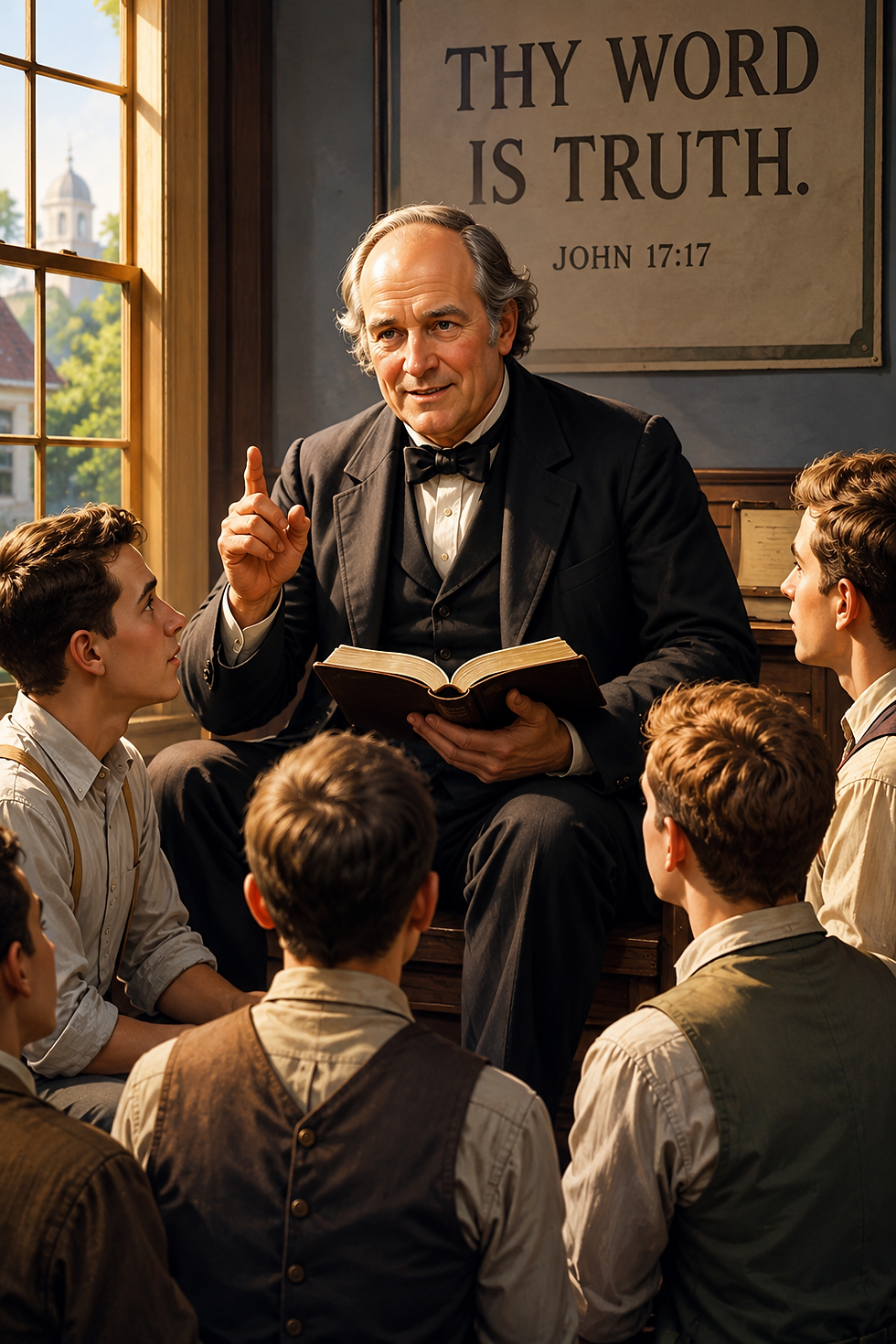
My Name is William Jennings Bryan: Statesman and Defender of Traditional Values
I was born in Illinois in 1860, just before the Civil War. My parents taught me the importance of faith, honesty, and public service. As a young man, I studied law, but I soon discovered that my greatest talent was speaking. I loved standing before crowds and explaining why I believed ordinary citizens deserved a stronger voice in government.
The Great Commoner
As I entered politics, I became known as a champion of farmers, laborers, and working families. My famous "Cross of Gold" speech made me one of the most recognized political figures in America. I ran for president three times and traveled thousands of miles speaking to citizens. I believed government should protect the people rather than powerful financial interests. I often struggled to understand why many wealthy leaders opposed reforms that seemed fair and beneficial to ordinary Americans.
Faith and Public Life
Throughout my career, my Christian faith guided many of my decisions. I believed moral principles should influence public policy and that faith provided a foundation for a healthy society. Some critics claimed religion should remain separate from public debates, but I could not understand why beliefs that shaped a person's character should be excluded from discussions about the nation's future.
Controversial Causes
I supported several causes that brought criticism. I strongly supported Prohibition because I believed alcohol harmed families and communities. I also opposed certain theories of evolution being taught in schools when they appeared to challenge biblical teachings and human dignity. To me, these positions seemed like common-sense efforts to protect society. I often wondered why so many educated people viewed these concerns as unreasonable or outdated.
A Nation in Transition
By the 1920s, America was changing rapidly. New scientific discoveries, new technologies, and new cultural attitudes were transforming daily life. While many people celebrated these changes, I worried that some Americans were abandoning important moral foundations. I did not oppose science itself, but I feared that scientific theories were sometimes being used to weaken faith and traditional values. I believed the nation could embrace progress without discarding its religious heritage.
The Scopes Trial
In 1925, I joined the prosecution in the Scopes Trial in Dayton, Tennessee. The case focused on whether a teacher had violated state law by teaching evolution. Newspapers often portrayed me as an enemy of science, a description I believed was unfair. God was science, creating it and controlling it. I saw myself as defending the rights of citizens to decide what public schools taught their children. As the trial unfolded, I found it difficult to understand why so many reporters and intellectuals mocked beliefs that millions of Americans sincerely held.
The Final Chapter
The trial became one of the most famous legal battles in American history. Shortly after it ended, my health declined, and I passed away only days later. Looking back, I still believed deeply in the causes I defended. Yet with time, I came to recognize that many of my opponents were also motivated by sincere convictions about truth and education. While we disagreed sharply, I learned that understanding another person's perspective is often more difficult—and more important—than winning an argument.
Religion, Faith, and the Bible in American Life - Told by William Jennings Bryan
For much of American history, Christianity played a central role in the daily lives of millions of citizens. Churches were often more than places of worship; they served as community centers, schools, gathering places, and sources of moral guidance. In small towns and large cities alike, Sunday services brought families together and connected neighbors through shared beliefs. By the early 1920s, the vast majority of Americans identified with a Christian denomination, making faith one of the strongest influences on the nation's culture and values.
The Bible in Everyday Life
The Bible held a special place in many American homes. Families often read Scripture together, churches taught biblical lessons to children, and many public leaders openly referenced biblical principles in speeches and writings. Whether people were discussing honesty, charity, responsibility, or justice, they frequently turned to biblical teachings for guidance. For many Americans, the Bible was not simply a religious text but a foundation for understanding right and wrong.
A Changing America
The years following World War I brought enormous changes to American society. New technologies, scientific discoveries, growing cities, and expanding universities introduced ideas that previous generations had rarely encountered. Radio programs carried new voices into homes, newspapers spread information rapidly, and young people were exposed to different ways of thinking. While many Americans welcomed these developments, others worried that traditional beliefs were being pushed aside in favor of newer and untested ideas.
Concerns About Modern Beliefs
Some Christians became concerned that certain modern trends challenged long-standing religious teachings. Scientific theories such as evolution, new interpretations of Scripture, and changing social values led many believers to ask whether America was moving away from its religious foundations. These concerns were especially strong in communities where faith had long served as a guide for family life, education, and civic responsibility. Many church leaders encouraged their congregations to defend what they saw as essential truths.
The Rise of Fundamentalism
In response to these concerns, a movement known as Christian Fundamentalism gained strength during the early twentieth century. Fundamentalists emphasized core Christian doctrines and often defended a literal interpretation of the Bible. They believed that preserving biblical teachings was necessary to maintain moral order in society. Their efforts were not simply reactions to one scientific theory or one social trend; they reflected broader fears about the direction of American culture and the future of religious belief.
Faith and Public Debate
As debates over education, science, and culture intensified, religion became an important part of public discussions. Questions arose about what schools should teach, how scientific discoveries should be understood, and what role faith should play in public life. These disagreements often divided communities, but they also demonstrated how deeply Americans cared about the future of their nation. People on all sides believed they were protecting something valuable, whether it was scientific inquiry, religious faith, or both.
A Lasting Influence
The debates of the 1920s remind us that religion has long been an important force in American history. Christianity influenced laws, education, charitable work, and community life across the country. Even as society changed, faith continued to shape how millions of Americans viewed the world. Understanding the role of religion during this period helps us better understand why issues involving science, education, and belief became some of the most important and controversial topics of the decade.
Fundamentalism and the Defense of Traditional Values - Told by William Bryan
During the early twentieth century, many Americans believed their nation was changing at a remarkable pace. New scientific theories, growing cities, modern entertainment, and shifting social values created excitement for some and concern for others. Among many Protestant Christians, these changes raised an important question: How could they preserve the beliefs they considered essential to their faith? Out of this concern grew a movement that became known as Fundamentalism, one of the most influential religious movements of the 1920s.
What Fundamentalists Believed
The name "Fundamentalism" came from a desire to defend what supporters considered the fundamental teachings of Christianity. These believers emphasized doctrines such as the authority of the Bible, the divinity of Jesus Christ, His resurrection, and other core Christian teachings. They believed these truths should remain unchanged regardless of new social trends or intellectual movements. For many Fundamentalists, protecting these beliefs was not merely a religious duty—it was a responsibility to future generations.
Challenges from the Modern World
Fundamentalism grew in response to what many Christians saw as growing challenges to traditional faith. Universities and seminaries increasingly discussed new interpretations of Scripture. Scientific theories, especially evolution, attracted widespread attention. Some religious scholars suggested that portions of the Bible should be understood symbolically rather than literally. To many Fundamentalists, these developments seemed to weaken confidence in Scripture and create uncertainty about beliefs that had guided Christians for centuries.
The Power of Revival and Evangelism
Fundamentalist leaders used revival meetings, churches, books, magazines, and radio broadcasts to spread their message. Evangelists traveled across the country preaching to large crowds and encouraging Americans to return to what they viewed as biblical foundations. These gatherings often attracted thousands of people and helped create a nationwide network of believers who shared concerns about the direction of society. The movement was especially strong in rural communities and smaller towns, though it also had supporters in major cities.
Education Becomes a Battleground
One of the most important issues for Fundamentalists involved education. Many believed public schools should reinforce moral values rather than challenge them. As evolution appeared in more science textbooks, debates emerged over whether students should be taught ideas that some Christians believed conflicted with Scripture. These disagreements were not simply about science. They reflected larger concerns about parental authority, religious liberty, and the role schools should play in shaping the beliefs of young people.
The Public Debate Intensifies
By the 1920s, Fundamentalists had become a significant force in American public life. Their efforts influenced elections, legislation, church life, and educational policy. Critics often portrayed them as opponents of progress, while supporters viewed themselves as defenders of timeless truths. The conflict between modernism and traditionalism became one of the defining cultural struggles of the decade, setting the stage for national debates such as the famous Scopes Trial.
Education Becomes a Battleground - Told by John T. Scopes
For much of American history, schools were viewed as places where communities passed knowledge, values, and traditions to the next generation. By the 1920s, however, education had become one of the most debated subjects in the nation. Rapid scientific discoveries, changing social attitudes, and new ideas about history and society led many Americans to ask an important question: What should students be taught? The answer was not as simple as it had once seemed.
A New Generation of Knowledge
The late nineteenth and early twentieth centuries brought remarkable advances in science, medicine, archaeology, and technology. Universities expanded their research, and new textbooks introduced students to ideas that previous generations had never encountered. Subjects such as biology included discussions of evolution, while history classes examined cultures and civilizations from around the world. Many educators believed schools should teach students the latest knowledge available, preparing them for a rapidly changing world.
Parents and Communities Speak Up
Not everyone agreed on what belonged in the classroom. Public schools were funded and supported by local communities, and many parents believed they should have a voice in what their children learned. Some welcomed modern subjects and scientific theories, while others worried that certain lessons conflicted with their religious beliefs or moral values. Across the country, school board meetings, church gatherings, and public discussions became places where citizens debated the purpose of education.
The Evolution Controversy
No issue generated more attention than the teaching of evolution. Supporters argued that evolution was an important scientific theory supported by evidence and should be included in biology classes. Opponents feared that teaching evolution could undermine religious teachings about creation and weaken students' faith. What began as a scientific discussion soon became a larger debate about authority, values, and who should decide what children learn in school.
State Governments Enter the Debate
As disagreements grew, some state legislatures became involved. Several states considered laws that would restrict or prohibit the teaching of evolution in public schools. Supporters of these laws argued that taxpayers had the right to determine what was taught in government-funded classrooms. Critics argued that limiting scientific instruction interfered with education and academic freedom. These disputes turned education into a political issue that attracted national attention.
Teachers in the Middle
Teachers often found themselves caught between competing expectations. They were expected to follow state laws, respect community values, and teach subjects included in approved textbooks. In many cases, educators had little control over the larger debates unfolding around them. Yet their classrooms became the place where these disagreements played out. What students learned in school had become a matter of public concern far beyond the walls of the classroom.
A Debate That Reached the Nation
By the middle of the 1920s, education had become one of the most important battlegrounds in America's cultural struggles. Questions about science, religion, parental rights, government authority, and academic freedom all converged in the nation's schools. These tensions eventually led to the famous Scopes Trial in Tennessee, but the trial itself was only one chapter in a much larger story. The debate over what students should learn would continue long after the courtroom proceedings ended, influencing American education for generations.
Tennessee Passes the Butler Act (1925) - Told by William Jennings Bryan
By the mid-1920s, Americans were deeply divided over what should be taught in public schools. Scientific discoveries were gaining attention, and evolution had begun appearing in many biology textbooks. At the same time, millions of Americans remained committed to traditional Christian teachings about creation. These disagreements eventually reached state legislatures, where elected representatives were asked to decide whether certain subjects should be taught in publicly funded classrooms. In Tennessee, this debate led directly to the passage of the Butler Act in 1925.
What the Butler Act Said
The Butler Act made it unlawful for teachers in Tennessee's public schools to teach that humans had descended from lower forms of life if that teaching contradicted the biblical account of creation as presented in the Book of Genesis. The law did not ban all discussion of science, nor did it prohibit the study of animals, plants, geology, or other scientific subjects. Instead, it focused specifically on the teaching of human evolution in state-supported schools.
Why Supporters Backed the Law
Many citizens supported the Butler Act because they believed public schools should reflect the values of the communities that funded them. They worried that students might be taught ideas that directly contradicted beliefs taught at home and in church. For these supporters, the issue was not simply about science. It involved questions about parental authority, religious freedom, and the responsibility of public institutions to respect the convictions of local communities. They viewed the law as a way to protect teachings they believed were important to both faith and morality.
Understanding the Other Side
At the same time, I understood why many teachers, scientists, and educators wanted students to learn about evolution. They believed schools should expose students to scientific theories and allow them to examine evidence for themselves. Many did not see evolution as an attack on religion but as part of a broader effort to understand the natural world. They argued that students benefit from hearing different viewpoints and learning about the ideas being discussed in universities and scientific communities around the world.
Why Concerns Remained
Even while recognizing these arguments, many supporters of the Butler Act remained concerned. They feared that evolution would not simply be presented as one theory among many but as an unquestionable explanation that would gradually replace traditional beliefs in the minds of students. Some worried that young people might conclude that religious teachings were outdated or unimportant. Whether those fears were justified or not, they were sincerely held by many parents and church leaders throughout Tennessee and beyond.
A National Controversy Begins
The passage of the Butler Act immediately attracted attention across the country. Supporters praised Tennessee for defending traditional values, while critics argued that the law restricted academic freedom and limited scientific education. What had begun as a state education policy soon became part of a much larger national conversation about science, religion, and the purpose of public schools. Newspapers across America followed the debate closely.
The Stage Is Set
The Butler Act did more than create a new law—it set the stage for one of the most famous court cases in American history. Within months, a young teacher named John T. Scopes would be charged with violating the law, and the nation would turn its attention to a small Tennessee courtroom. The debate over evolution was no longer just a discussion in churches, schools, and legislatures. It had become a question that Americans everywhere were eager to answer.
The Search for a Test Case - Told by John T. Scopes
When Tennessee passed the Butler Act in 1925, the law immediately attracted attention far beyond the state's borders. Many citizens supported the measure, believing it protected traditional religious values in public education. Others viewed the law as a restriction on what teachers could discuss in the classroom. Among those concerned were civil-liberties advocates, scientists, educators, and organizations that believed the law should be challenged in court. They wanted a legal case that could determine whether such restrictions were appropriate in a public school system.
The American Civil Liberties Union Steps In
One of the most active groups was the American Civil Liberties Union, often called the ACLU. Shortly after the Butler Act became law, the organization announced that it would support a teacher willing to challenge the statute. Their goal was not simply to defend one individual but to create a court case that would allow judges to examine the law itself. They believed the issue involved academic freedom and the right of educators to teach accepted scientific ideas.
A Small Town Sees an Opportunity
The search for a test case eventually led to Dayton, Tennessee, a small town in the eastern part of the state. Several local business leaders realized that a highly publicized trial could bring national attention to their community. Among them was local engineer and businessman George Rappleyea, who discussed the possibility of challenging the law with other town leaders. They believed that hosting such a case would place Dayton on the national map and stimulate local interest and economic activity.
The Choice of a Defendant
I was a young teacher and athletic coach in Dayton at the time. During conversations with local leaders, it became clear that I could serve as the defendant in the proposed test case. While I had used a state-approved biology textbook that included evolution, there was uncertainty about exactly how much of the material had been taught in class. Nevertheless, I agreed to participate. The purpose was not to hide what was happening but to openly create a legal challenge that could be reviewed by the courts.
Building the Case
Once the plan was in motion, local authorities formally charged me with violating the Butler Act. The arrangement was unusual because many of the people involved—including some community leaders—wanted the case to move forward. Lawyers began preparing arguments, newspapers took notice, and organizations across the country started paying attention. What had begun as a local discussion was rapidly becoming a national event.
National Attention Arrives
Reporters soon traveled to Dayton from major newspapers around the United States. The case attracted interest because it involved far more than one teacher or one lesson. It touched on questions about science, religion, education, government authority, and the rights of local communities. Americans from many different backgrounds saw the case as a chance to defend principles they considered important.
The Stage Is Set for History
By the summer of 1925, the search for a test case had succeeded beyond anyone's expectations. A challenge to the Butler Act was ready for court, famous attorneys were becoming involved, and the nation was watching. What started as a deliberate effort by local leaders and civil-liberties supporters to test a new law would soon become one of the most famous legal battles in American history: the Scopes Trial.
The Arrest of John Scopes - Told by John T. Scopes
In the spring of 1925, Dayton, Tennessee, was a quiet community nestled among the hills of eastern Tennessee. Most Americans had never heard of the town, and few would have expected it to become the center of a national debate. Yet the recent passage of the Butler Act, which prohibited the teaching of human evolution in Tennessee public schools, created an opportunity that would soon place Dayton in newspaper headlines across the country.
A Challenge Takes Shape
After the American Civil Liberties Union announced it would support a legal challenge to the Butler Act, several local leaders in Dayton began discussing how such a case might be organized. Businessmen, educators, and community members believed that a court case could both test the law and bring attention to their town. During these discussions, I agreed to serve as the defendant. The goal was not to create a secret violation of the law but to openly challenge it through the courts.
The Formal Charge
On May 25, 1925, I was formally charged with violating the Butler Act. The accusation centered on my use of a state-approved biology textbook that included lessons on evolution. Although the charge itself was straightforward, everyone involved understood that the case represented something much larger. The question was no longer simply whether a teacher had taught a lesson from a textbook. It had become a debate about science, religion, education, and the role of government in public schools.
News Spreads Across America
What surprised many people was how quickly the story spread. Newspapers from major cities began covering the case almost immediately. Journalists recognized that the dispute reflected larger cultural tensions that were emerging throughout the nation. Americans were already debating scientific discoveries, religious beliefs, and the rapid social changes of the 1920s. My arrest became a symbol of those broader disagreements, and readers everywhere followed developments with great interest.
Famous Names Join the Fight
As attention grew, nationally known figures became involved. The prosecution would eventually include William Jennings Bryan, one of the most famous political and religious voices in America. The defense team would attract Clarence Darrow, one of the nation's most recognized attorneys. Their involvement transformed what might have been a small local trial into a legal and cultural showdown watched by millions of Americans.
Dayton Becomes the Center of Attention
Within weeks, Dayton was flooded with visitors, reporters, photographers, and curious spectators. Hotels filled with guests, newspapers published daily updates, and radio broadcasts carried news of the case to audiences across the nation. The town became a gathering place for people with strong opinions on both sides of the debate. What had begun as a carefully planned legal challenge was rapidly becoming one of the most publicized events of the decade.
From Local Dispute to National Controversy
My arrest marked the moment when a disagreement over a state education law became a national controversy. Americans who had never visited Tennessee suddenly found themselves debating questions about faith, science, academic freedom, and public education. The charge against one schoolteacher was no longer the central issue. Instead, the nation was preparing for a courtroom battle that would symbolize one of the most important cultural conflicts of the Roaring Twenties.

My Name is Clarence Darrow: Lawyer and Defender of Civil Liberties
I was born in Ohio in 1857 and grew up in a family that encouraged independent thinking. My father often questioned accepted beliefs, and I learned early that ideas should be examined rather than accepted without challenge. As a young man, I became fascinated with law because it seemed to be one of the few professions where a person could stand up to powerful institutions and defend those who had little power of their own.
Choosing the Side of the Underdog
After becoming a lawyer, I built a reputation for defending workers, labor leaders, and people who were unpopular or misunderstood. Many attorneys preferred wealthy clients, but I often chose cases involving individuals who faced overwhelming opposition. I believed that every person deserved a fair defense. I never fully understood why so many people were willing to condemn someone before hearing all the facts or considering the circumstances that shaped their actions.
Questioning Traditional Beliefs
Throughout my life, I became known for questioning authority, religious dogma, and social conventions. Some people viewed me as a skeptic or even a troublemaker. I believed that human progress depended on asking difficult questions and challenging old assumptions. To me, science, reason, and open debate offered the best path forward. I often found it difficult to understand why others feared questioning long-held beliefs or viewed disagreement as a threat.
Famous and Controversial Cases
My legal career placed me at the center of some of the nation's most controversial trials. I defended labor organizer Eugene Debs, represented the McNamara brothers, and later argued against the death penalty in several famous murder cases. Critics accused me of excusing criminal behavior, but I believed that understanding human circumstances was essential to justice. I often argued that poverty, environment, and opportunity influenced behavior more than many people wanted to admit.
The Fight for Free Thought
By the 1920s, debates over science, religion, and education were growing more intense. I believed schools should encourage learning and inquiry rather than restrict ideas. When Tennessee prosecuted John Scopes for teaching evolution, I saw the case as much larger than one teacher or one law. To me, it was about whether knowledge could be limited by government or public pressure.
The Scopes Trial
In 1925, I joined the defense team for John Scopes. The courtroom became a stage for a national debate over science and tradition. My questioning of William Jennings Bryan became one of the trial's most memorable moments. Many Americans viewed me as a champion of academic freedom, while others believed I was attacking religion itself. I never saw it that way. I believed people should be free to hold religious beliefs while still allowing scientific ideas to be taught and examined.
Looking Back
As I grew older, I remained committed to free speech, civil liberties, and open inquiry. Yet I also came to understand that many of my opponents were motivated by sincere concerns about morality, faith, and the future of society. While I rarely changed my views, I eventually recognized that most public conflicts are not battles between good and evil, but disagreements between people who genuinely believe they are protecting something important. That realization did not weaken my convictions, but it did give me a greater appreciation for the complexity of human beliefs.
Clarence Darrow Joins the Defense - Told by Clarence Darrow
When I first learned about the case against John Scopes, it was clear to me that this was not simply a dispute involving a single teacher in a small Tennessee town. The charges against Scopes stemmed from the Butler Act, a law that prohibited the teaching of human evolution in public schools. While the case focused on one classroom lesson, the larger issue concerned whether government could limit the ideas that teachers and students were allowed to discuss. That question transformed the trial into something far greater than a local legal matter.
Why I Became Involved
By 1925, I had spent much of my career defending individuals whose rights I believed were threatened by powerful institutions or popular opinion. The Scopes case attracted my attention because it involved freedom of thought and the role of education in a democratic society. I believed that schools should encourage inquiry and discussion rather than restrict the exploration of ideas. Whether one agreed with evolution or not, I felt that students should have the opportunity to learn about important scientific theories and examine the evidence for themselves.
A Growing National Debate
The controversy surrounding evolution had already spread far beyond Tennessee. Across the country, communities were debating science, religion, education, and the rapid social changes of the 1920s. Many Americans supported laws restricting the teaching of evolution because they believed such laws protected traditional values and religious beliefs. Others argued that scientific knowledge should not be limited by legislation. As these disagreements intensified, the Scopes Trial became a symbol of a much larger national conversation.
Freedom of Thought in the Classroom
One of the central questions raised by the trial was whether public schools should be places where students are exposed to a variety of ideas, including those that some people find controversial. Supporters of the Butler Act argued that communities had the right to determine what was taught in publicly funded schools. Critics argued that education depends upon the free exchange of knowledge and that limiting scientific instruction could hinder learning. The trial brought these competing viewpoints into direct conflict.
The Arrival of Famous Figures
As the case gained attention, nationally known individuals joined both sides. William Jennings Bryan agreed to assist the prosecution, while I joined the defense team. The involvement of such prominent figures attracted reporters from around the world. What might have been a brief legal proceeding suddenly became one of the most closely watched courtroom battles in American history. Newspapers, magazines, and radio broadcasts carried daily updates to millions of people.
More Than Science Versus Religion
Many people later described the trial as a simple battle between science and religion, but the issues were more complicated. Questions about academic freedom, local control of schools, parental influence, and the purpose of public education were all part of the discussion. Citizens on both sides believed they were defending important principles. This complexity helped make the trial one of the most fascinating legal and cultural events of the decade.
The Road to a Historic Courtroom Battle
My decision to join the defense helped elevate the case from a state legal challenge to a national test of ideas. Americans followed every development because the outcome seemed to touch on issues that affected the entire country. By the time the trial began, the nation was no longer focused solely on John Scopes. Instead, people were asking larger questions about knowledge, belief, education, and the freedoms that should exist in American classrooms.
The Scopes “Monkey” Trial Begins - Told by Clarence Darrow
When the Scopes Trial opened in July 1925, Dayton, Tennessee, was transformed almost overnight. What had once been a quiet town became crowded with reporters, photographers, attorneys, religious leaders, tourists, and curious spectators. Newspapers from across the United States and around the world sent correspondents to cover the proceedings. Vendors sold souvenirs on the streets, and radio broadcasts carried updates to audiences who eagerly followed every development. The trial quickly became one of the most publicized legal events in American history.
The People at the Center
At the center of the case stood John T. Scopes, the young teacher accused of violating Tennessee's Butler Act by teaching human evolution. Yet much of the public attention focused on the lawyers. Representing the prosecution was William Jennings Bryan, a three-time presidential candidate and one of the nation's most famous defenders of traditional religious values. I joined the defense team because I believed the case raised important questions about academic freedom and education. The clash between Bryan and me became a major attraction for journalists covering the trial.
Inside the Courtroom
The trial began in the Rhea County Courthouse before Judge John T. Raulston. The basic facts of the case were not seriously disputed. Scopes had used a state-approved biology textbook that included evolution. The real battle centered on the meaning and fairness of the Butler Act itself. The prosecution argued that the law had been properly passed by the state legislature and should be enforced. The defense argued that restricting the teaching of scientific ideas raised serious concerns about freedom of thought and education.
The Eyes of the Nation
One reason the trial attracted so much attention was that Americans saw it as more than a local legal dispute. The case touched on larger debates taking place throughout the country. Questions about science, religion, modern culture, education, and government authority were all connected to the proceedings. Many people believed the outcome would reveal whether America was moving toward a more modern society or holding firmly to traditional values.
An Unusual Courtroom Atmosphere
The courtroom itself was often crowded and hot during the summer proceedings. Reporters filled every available space, taking notes on each argument and exchange. Among them was journalist H. L. Mencken, whose colorful articles helped shape public perceptions of the trial. The intense media attention turned nearly every statement into national news, making the participants some of the most discussed figures in America during those weeks.
A Battle of Ideas
Although the trial involved a specific law, many observers viewed it as a contest between competing visions of the future. Some saw evolution as an important scientific concept that students should learn. Others believed public schools should protect traditional religious teachings and community values. These disagreements gave the trial significance far beyond the courtroom walls and helped explain why millions followed the proceedings so closely.
The Stage for History
As the opening days unfolded, it became clear that the Scopes Trial would be remembered long after the verdict was announced. The combination of famous personalities, national media coverage, and powerful cultural debates created a courtroom drama unlike any America had seen before. What began as a challenge to a state law had become one of the defining events of the Roaring Twenties, with the entire nation watching to see what would happen next.
Bryan and Darrow Face Off - Told by Clarence Darrow
By the summer of 1925, the Scopes Trial had already become national news, but the attention grew even greater because of the two men leading opposite sides of the case. William Jennings Bryan was one of the most famous political figures in America, known for his speeches, religious faith, and defense of traditional values. I had spent much of my career defending civil liberties and challenging ideas that I believed limited freedom of thought. When we met in Dayton, Tennessee, many Americans saw more than two attorneys—they saw two competing visions of the nation's future.
More Than a Legal Dispute
The trial officially focused on whether John Scopes had violated Tennessee's Butler Act by teaching evolution. Yet many observers understood that larger issues were at stake. Rapid scientific discoveries, changing social attitudes, and new educational ideas were transforming American society. At the same time, millions of Americans wanted to preserve religious beliefs and traditions that had guided their communities for generations. The courtroom became a stage where these larger cultural disagreements played out before the entire nation.
The Trial Moves Outdoors
One of the most remarkable moments occurred near the end of the trial. Because of the summer heat and the enormous crowds, proceedings were moved outdoors onto the courthouse lawn. There, surrounded by spectators and reporters, I called Bryan to the witness stand as an expert on the Bible. The unusual scene attracted tremendous attention. Rarely had a courtroom proceeding drawn such public interest or featured such a dramatic confrontation between two nationally known figures.
Questioning Bryan
During my questioning, I asked Bryan about various passages and stories found in the Bible. The purpose was not to attack religion itself but to explore whether every passage should be interpreted literally. Bryan defended his faith and answered questions about topics such as the age of the Earth, the story of Jonah, and the creation account in Genesis. The exchange quickly became the most famous part of the trial and was reported in newspapers around the world.
A Symbol of a Larger Conflict
Many people viewed the questioning as a contest between modern scientific thinking and traditional religious belief. Supporters of Bryan admired his willingness to defend his convictions before a large audience. Supporters of the defense believed the exchange highlighted the importance of examining ideas openly and critically. Regardless of which side people favored, the event became one of the most memorable public debates of the 1920s.
The Nation Watches Closely
Reporters recorded nearly every word, and newspapers published detailed accounts of the encounter. Citizens across the country discussed the arguments in homes, churches, schools, and workplaces. For many Americans, the exchange between Bryan and me represented broader questions about education, science, religion, and the direction of American culture. The trial had become far more than a legal proceeding—it had become a national conversation.
A Moment Remembered in History
Although the legal verdict would ultimately focus on whether the law had been violated, the public remembered the confrontation between Bryan and me more than almost any other part of the trial. The exchange symbolized the tensions that many Americans felt as the nation entered a modern age while still holding tightly to long-standing traditions. More than a century later, the debate remains one of the most famous courtroom encounters in American history because it captured questions that people continue to discuss today.
Newspapers, Radio, and Public Opinion - Told by H. L. Mencken
The Scopes Trial might have remained a small legal dispute in a Tennessee courthouse if it had occurred a generation earlier. Instead, it unfolded during the 1920s, an era when newspapers reached millions of readers and radio was becoming one of the most powerful forms of communication in America. Because the case involved science, religion, education, and famous public figures, journalists quickly realized they were witnessing a story that would capture the nation's attention. What followed was one of the most remarkable media events of the decade.
Reporters Descend on Dayton
As the trial approached, reporters traveled to Dayton, Tennessee, from across the United States and even from foreign countries. Major newspapers sent some of their best writers to cover the proceedings. Telegraph lines carried stories from Dayton to newspaper offices around the nation, allowing readers to follow events almost as they happened. For many journalists, the trial offered more than legal arguments—it provided colorful personalities, dramatic confrontations, and a debate that reflected larger cultural struggles taking place throughout America.
The Radio Revolution
The Scopes Trial occurred at a time when radio was transforming how Americans received information. For the first time in history, many citizens could hear reports from a major trial without waiting for the next day's newspaper. Radio stations broadcast updates and commentary to listeners from coast to coast. This helped create a shared national experience, as millions of people followed the same story regardless of where they lived. The trial demonstrated the growing power of radio to shape public understanding of important events.
Famous Personalities Draw Attention
The involvement of William Jennings Bryan and Clarence Darrow guaranteed public interest. Bryan was one of the most recognizable political and religious figures in America, while Darrow was among the nation's most famous defense attorneys. Their courtroom exchanges became headline news. Readers and listeners were drawn not only to the legal questions but also to the personalities involved. In many ways, the trial became a contest between two well-known public figures representing different views of society.
Shaping Public Opinion
Media coverage did more than report events—it influenced how people interpreted them. Different newspapers emphasized different aspects of the trial depending on their editorial viewpoints. Some portrayed the proceedings as a defense of traditional values, while others highlighted issues of scientific inquiry and academic freedom. Editorial cartoons, opinion columns, and feature stories helped shape public discussions. As a result, many Americans formed strong opinions about the trial even if they never read the court transcripts themselves.
Dayton Becomes a National Stage
For several weeks, the small town of Dayton became one of the most discussed places in the country. Photographers captured images of the crowds, vendors sold souvenirs, and visitors poured into the community. The trial became a cultural event as much as a legal one. Newspapers often devoted front-page coverage to developments in the case, ensuring that Americans everywhere knew what was happening in Tennessee.
One of the Most Famous Events of the Decade
By the time the trial ended, the Scopes case had become far more than a dispute over a state education law. Through newspapers, radio broadcasts, photographs, and commentary, it evolved into a national conversation about science, religion, education, and the future of American society. The extensive media coverage ensured that the trial would be remembered long after the verdict was announced, making it one of the defining public events of the Roaring Twenties.
The Verdict and the Legacy of the Trial - Told by H. L. Mencken
The Verdict Is Announced
H. L. Mencken: On July 21, 1925, the jury returned its verdict after only a short period of deliberation. John Scopes was found guilty of violating the Butler Act and was fined $100. To many observers, the verdict seemed straightforward because the facts of the case were not seriously disputed. Yet despite the conviction, people across the nation immediately began debating who had truly won. The legal outcome was clear, but the cultural and intellectual consequences were far more complicated.
William Jennings Bryan: The verdict represented the enforcement of a law that had been passed by the elected representatives of Tennessee. Many citizens believed the decision affirmed the right of local communities to determine what was taught in their public schools. For supporters of the Butler Act, the trial demonstrated that democratic government could protect values that communities considered important. They saw the ruling not as a rejection of science, but as a defense of local control and parental influence over education.
A Trial That Refused to End
H. L. Mencken: Although the courtroom proceedings ended, the debate itself continued to grow. Newspapers published editorials for weeks, scholars wrote articles, and citizens argued about the meaning of the trial. The Scopes case had become a symbol. People were no longer discussing only one teacher in Tennessee. They were discussing science, religion, modernity, and whether schools should encourage the examination of controversial ideas.
William Jennings Bryan: Many Americans continued to believe that faith and morality deserved an important place in public life. The trial did not eliminate concerns about how scientific theories might influence students' beliefs. Parents, ministers, and educators remained deeply interested in what was being taught in classrooms. For them, the questions raised by the trial were not temporary controversies but issues that would shape future generations.
The Courts Revisit the Case
H. L. Mencken: Less than a year later, the Tennessee Supreme Court reviewed the conviction. The court upheld the constitutionality of the Butler Act but overturned Scopes's conviction on a technical legal matter because the fine had been set by the judge rather than the jury. The decision ended the specific case, but it left the larger questions unresolved. The law itself remained in effect, ensuring that the debate would continue.
William Jennings Bryan: Even after the legal proceedings concluded, Americans on both sides remained committed to their positions. Some sought greater protection for academic freedom, while others continued to defend traditional religious teachings. The trial demonstrated how strongly citizens felt about education and how difficult it could be to balance competing values within a diverse society.
A Legacy Beyond the 1920s
H. L. Mencken: Decades later, the issues raised in Dayton continued to influence public discussions. Debates over science education, curriculum standards, religious expression, and academic freedom appeared in new forms throughout the twentieth century and beyond. Court cases, school board meetings, and legislative debates often revisited questions that had been publicly displayed during the Scopes Trial.
William Jennings Bryan: The trial also reminded Americans that disagreements over education often reflect larger concerns about culture, morality, and identity. Citizens may disagree about specific policies, but many share a desire to prepare young people for responsible lives. The challenge has always been determining which ideas should be emphasized and how differing viewpoints should be addressed in public education.
The Lasting Lesson
H. L. Mencken: Looking back, the Scopes Trial remains one of the most famous legal and cultural events in American history because it captured a nation wrestling with change. Scientific discoveries were advancing rapidly, while many citizens sought to preserve traditions that had guided their communities for generations.
William Jennings Bryan: The legacy of the trial is not simply a story of winners and losers. It is the story of Americans grappling with difficult questions about truth, belief, education, and freedom. Those discussions did not end in 1925, and they continue today. The trial's greatest significance may be that it encouraged citizens to think deeply about how a free society balances knowledge, faith, and the responsibility of educating future generations.


Comments