

12. Heroes and Villains of the American Revolution: The Declaration of Independence

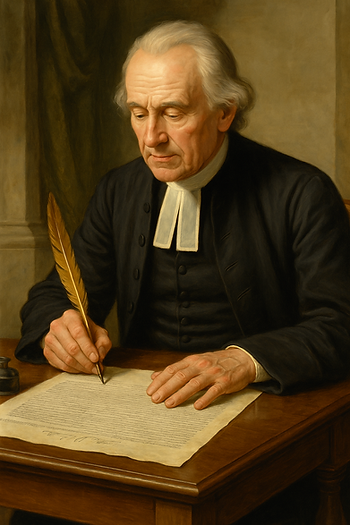
My Name is John Witherspoon: Minister, Educator, and Signer of the Declaration of Independence
I was born on February 5, 1723, in the parish of Yester, East Lothian, Scotland. My father, Reverend James Witherspoon, was a devout minister of the Church of Scotland, and from him, I inherited both faith and discipline. My mother, Anne Walker, was known for her strength of character and keen intellect. From an early age, I was steeped in scripture, logic, and moral philosophy. My childhood was filled with study and prayer, for I believed that knowledge was a divine gift meant to illuminate the path of duty.
Education and the Call to Ministry
At the University of Edinburgh, I pursued theology and philosophy with zeal, studying the works of Calvin, Locke, and the great moral philosophers of the Enlightenment. I came to see that faith and reason were not enemies, but partners in the search for truth. After earning my Master of Arts, I was ordained as a Presbyterian minister in 1745, during a time of both religious fervor and political unrest in Scotland. My sermons, grounded in conviction and clarity, drew many listeners. I preached of moral integrity, self-government, and the duty of man to God—a theme that would later echo in a faraway land.
Trials and Growth in Scotland
I married Elizabeth Montgomery, a woman of grace and wisdom who stood beside me through every hardship. Together we raised a large family, and she became my constant support. My years in Scotland were marked by both teaching and ministry. I served as pastor in Beith and later in Paisley, where I confronted the challenges of both spiritual apathy and political division. I was imprisoned briefly after the Jacobite Rebellion of 1745, as my support for the Presbyterian cause was seen as opposition to the Stuart monarchy. That experience deepened my conviction that freedom of conscience must never be surrendered to the will of rulers.
A New World Calls
In 1768, an unexpected invitation reached me from across the Atlantic. The College of New Jersey, later known as Princeton University, sought a president who could restore its finances and strengthen its mission. At first, I refused. The journey was perilous, and America seemed a distant frontier. But Providence has its own designs. After much prayer and persuasion, I accepted the call, bringing my wife and children with me to begin anew in the colonies. When I arrived in Princeton, I found a struggling institution but also a nation awakening to the ideas of liberty and learning.
Building Princeton and Shaping Minds
At Princeton, I devoted myself to molding the minds of young men who would one day lead their new country. I broadened the curriculum, added studies in science and philosophy, and emphasized moral reasoning as the foundation of leadership. Among my students were future statesmen such as James Madison, who would help frame the Constitution years later. I taught that an educated citizenry was essential for self-government and that freedom could not endure without virtue. My lectures combined faith with reason, teaching that the moral law of God was the true compass of political life.
The Call to Revolution
As the conflict with Britain deepened, I found myself drawn once again into the currents of political struggle. Though I was a man of peace, I could not remain silent while the rights of conscience and liberty were trampled. In 1776, I was elected as a delegate from New Jersey to the Continental Congress. Many of my fellow ministers believed rebellion to be sinful, but I saw it differently. “To serve God and my country,” I declared, “is the same act.” When the question of independence came before us, I gave my full support. I signed the Declaration of Independence, adding a minister’s hand to a document of human freedom. It was, to me, both a sacred and civic covenant.
Faith in the Midst of War
The years of revolution were harsh. The British ravaged New Jersey, and Princeton itself became a battlefield. I returned to my college to find it in ruins, yet I refused to despair. My sermons became a rallying cry for endurance and hope. I urged Americans to remember that liberty required both courage and moral restraint. Faith, I taught, must sustain freedom, for without virtue, liberty would soon devour itself. Even in the darkest years, I trusted that the hand of Providence was guiding our cause.
Return to Education and Public Service
After the war, I resumed my work at Princeton, rebuilding what had been destroyed. My duties as a teacher, preacher, and patriot intertwined as I continued to shape a generation of leaders. I also served in New Jersey’s state legislature and helped draft the state’s first constitution. I spoke often against tyranny, whether imposed by monarchs or by men who abused power under the guise of democracy. I urged for balance—between reason and faith, liberty and order, conscience and law. My influence was not found in armies or wealth, but in the classrooms and pulpits where I labored for the future.
British Retaliation and the Last Efforts for Reconciliation – Told by Witherspoon
The year was filled with uncertainty, and though my heart was devoted to liberty, I could not help but tremble at the force gathering against us. Britain had not sat idle as our colonies debated their future. Retaliation came in waves—ships upon our shores, soldiers upon our lands, and decrees from Parliament that struck like thunderclaps across the Atlantic. Boston had already felt the heavy hand of British might, its harbor closed, its people punished for daring to resist. Now, that same hand reached toward every colony that spoke of self-governance. To the British Crown, we were not subjects pleading for fair treatment; we were rebels defying divine order.
The Voice of the Pulpit and the Plea for Peace
As a minister, I urged patience, faith, and reason, even as I watched the red coats patrol the colonies. Many among us still believed reconciliation was possible. Letters were penned to the King, respectful yet firm, seeking understanding rather than war. The Olive Branch Petition, as we called it, carried the hopes of many who still cherished the name of Englishmen. Even in Congress, the air was thick with division—some prayed for peace, others prepared for war. I reminded my brethren that our cause must be just in the eyes of both God and man, for if we were to resist, it must be for righteousness, not revenge.
The Rejection and the Realization
But when the King cast aside our plea, refusing even to read our petition, all doubts began to fade. His proclamation branded us traitors, enemies of the Crown. The bonds of kinship between England and her colonies were severed not by our defiance but by his disdain. It was then that many who had long wavered began to see what I had feared—that reconciliation, though noble in intent, was no longer possible. A nation cannot stand upon hope alone when its pleas are met with cannon fire.
Faith Amidst the Breaking of Ties
In those dark moments, I turned again to Scripture. The Israelites, too, had sought freedom from tyranny, and God had not forsaken them. So too, I believed, would Providence not abandon us. British retaliation had hardened our resolve, and their rejection of peace had lit the path toward independence. What began as a plea for justice would soon become a declaration for liberty. I prayed that our hearts remain steadfast—not filled with hatred, but with purpose—that we might rise as one people, bound not by vengeance, but by conviction that freedom, once kindled, can never again be extinguished.

My Name is Thomas Jefferson: Author of the Declaration of Independence
I was born on April 13, 1743, at Shadwell, my family’s plantation in the rolling hills of Albemarle County, Virginia. My father, Peter Jefferson, was a self-made man—an explorer, surveyor, and planter of great strength and intellect. My mother, Jane Randolph Jefferson, came from one of Virginia’s most distinguished families. From both of them I inherited a love for learning and the land. As a boy, I explored the forests and streams that surrounded our home, my curiosity as boundless as the Virginia sky. Books became my companions, and I devoured every subject I could find—classics, science, mathematics, history, and philosophy.
Education and the Love of Knowledge
At the age of sixteen, I entered the College of William and Mary in Williamsburg. There, I found a world of ideas that opened my mind to new possibilities. Under the mentorship of Dr. William Small, I studied the Enlightenment thinkers—Locke, Bacon, Newton—and came to believe that reason and liberty were the twin lights that could guide mankind to progress. I spent long nights by candlelight reading, often playing the violin to rest my thoughts. After my studies, I turned to the law, studying under George Wythe, one of the finest legal minds in the colonies. He taught me that the law is not merely a set of rules, but a reflection of justice itself.
Becoming a Lawyer and Statesman
My career as a lawyer began in Virginia, where I took on cases that often challenged established traditions. Yet, my heart was drawn more to writing and public service than to argument in the courtroom. The growing tension between Britain and the colonies stirred my conscience. By the 1770s, I found myself part of Virginia’s House of Burgesses, where I argued not for rebellion, but for reason, representation, and natural rights. My pen became my weapon, crafting essays that called for a return to the principles of liberty our ancestors cherished.
The Road to Revolution
When the colonies met in Philadelphia for the Second Continental Congress, I was appointed as one of the younger delegates. Though I was not a great speaker, my colleagues recognized my skill with the written word. It was there, in the summer heat of 1776, that I was asked to draft what would become our nation’s most sacred document—the Declaration of Independence. I wrote for days at a small desk, surrounded by the noise of the city outside, trying to capture the spirit of an entire people longing to be free. “We hold these truths to be self-evident,” I wrote, “that all men are created equal.” Those words were my prayer for the future—a statement not of what we were, but of what we ought to become.
The Declaration and Its Meaning
When my draft was presented to Congress, the debates were long and spirited. Many of my words were changed or cut, and though I felt the sting of revision, I knew that what mattered most was the idea itself—that liberty was not granted by kings, but by the Creator. On July 4, 1776, the Declaration was adopted, and the birth of a new nation was proclaimed. As the bells of Philadelphia rang out, I felt both triumph and trepidation, for I knew the war ahead would test every conviction we held dear.
Governor, Diplomat, and Philosopher
After independence, I returned to Virginia and served as its governor during the Revolution, guiding my state through the turmoil of war. Later, I was sent abroad as Minister to France, where I witnessed the first sparks of another revolution inspired by our own. I dined with philosophers, scientists, and reformers, and saw the power of ideas to move nations. Yet, I also saw how easily those same ideas could turn to chaos when liberty was not tempered by virtue. France deepened my love for art and architecture, and when I returned home, I began building Monticello—my refuge and experiment in design and self-sufficiency.
Vice President and President of the United States
I reluctantly accepted public office again, serving first as Secretary of State under George Washington, then as Vice President under John Adams. In 1801, I became the third President of the United States after one of the most bitterly contested elections in our young nation’s history. My presidency was guided by simplicity and restraint. I reduced government debt, abolished unnecessary offices, and sought peace with all nations. The Louisiana Purchase in 1803 doubled the size of our republic and opened vast new lands for exploration and settlement. Though criticized for stretching constitutional bounds, I believed the opportunity was too vital to ignore. The Lewis and Clark Expedition soon followed, fulfilling my dream of extending science and discovery across a continent.
The Influence of Enlightenment Thought on Colonial Minds – Told by Jefferson
I was a young man when the ideas of Europe began to stir our colonial hearts. The Enlightenment was not merely a movement of scholars in Paris or philosophers in London—it was a flame that crossed oceans. In coffeehouses and libraries, men and women spoke of reason, nature, and the rights of man. These ideas questioned authority, challenged divine-right monarchy, and proposed that government was not the master of the people, but their servant. I devoured the writings of Locke, Montesquieu, and Rousseau, finding in their words the logic of freedom. They argued that liberty was not granted by kings but endowed by the Creator Himself—a truth that would soon echo in every corner of the colonies.
The Mind of the Colonist Awakened
In the American colonies, these ideas found fertile ground. Here, we had already learned to think and act for ourselves. Distance from Britain had bred a spirit of independence long before we spoke of revolution. Farmers, merchants, ministers, and lawyers—each had come to believe that the dignity of man demanded a voice in his own government. Enlightenment thought gave structure to what we had long felt: that tyranny could not coexist with reason, and that free men should live under laws of their own making. The pulpit, the press, and the assembly hall became classrooms where philosophy met faith, and the concept of natural rights became more than an abstraction—it became our cause.
The Power of Reason Over Obedience
It was reason that emboldened us to question centuries of unquestioned power. The Enlightenment taught that knowledge was not dangerous but liberating. It called upon every thinking man to weigh justice with his own mind, to seek truth through evidence rather than tradition. To obey without thought was no longer a virtue—it was a surrender of the soul. I often reflected that a people enlightened cannot long remain enslaved. For when one knows his rights, the heart can no longer tolerate chains, no matter how gilded they appear.
The Bridge Between Thought and Revolution
By the time the colonies stood on the brink of separation, these philosophies were no longer foreign—they were American. We spoke of social contracts, of equality before the law, and of the pursuit of happiness as inherent rights. These were not empty words to adorn parchment; they were the moral foundation upon which our new nation would stand. The Enlightenment had given us the courage to see ourselves not as subjects, but as citizens. And as I took up my pen to draft our Declaration, I knew that I was not merely writing for one generation, but giving voice to the universal principle that all men, wherever they dwell, are born free and equal in the eyes of Nature and of Nature’s God.

My Name is Richard Henry Lee: The Voice Who Called for Independence
I was born on January 20, 1732, into the proud Lee family of Virginia, at our ancestral home of Stratford Hall. My family had deep roots in the colony, tracing back to the first settlers who crossed the Atlantic in pursuit of new beginnings. My father, Thomas Lee, was a respected planter and statesman, and from him, I learned the value of honor, service, and duty. Growing up among the rolling fields of Virginia’s Northern Neck, I was taught that a man’s worth was measured not by wealth or title, but by his devotion to principle and his service to the common good.
Education and Early Aspirations
My education took me from the quiet lands of Virginia to the classrooms of Yorkshire, England, where I learned the classics, history, and philosophy that would later shape my political thought. Living in the land that ruled over my own colony gave me both admiration for British institutions and growing awareness of their flaws. I admired Britain’s constitution and its devotion to liberty—but I could already see the seeds of corruption and tyranny that would one day threaten that very freedom. When I returned to Virginia, I brought with me both knowledge and resolve. I joined the House of Burgesses in my mid-twenties, eager to make a difference in the governance of our colony.
A Rising Voice for Liberty
In the years following the French and Indian War, Britain began to tighten its grip upon her colonies. Taxes and regulations—the Stamp Act, the Townshend Duties—fell upon us without our consent. I could not stand silent. In 1765, I rose in the House of Burgesses to denounce the Stamp Act as an assault on the natural rights of Englishmen. I proposed that the colonies had the exclusive right to tax themselves—a notion that would echo across America. My words found both friends and enemies, but my conscience was clear. Liberty, I believed, was not a gift granted by Parliament but an inheritance from God.
Committees of Correspondence and Colonial Unity
By the early 1770s, it became clear that the colonies needed to unite in both spirit and purpose. I took part in forming the Committees of Correspondence, which allowed each colony to communicate with the others and share the growing concerns over British oppression. It was through these letters—these written lifelines of rebellion—that we began to see ourselves not as separate colonies, but as one people. I worked alongside men like Patrick Henry and Thomas Jefferson to organize resistance and to remind our countrymen that the liberties of Virginia and Massachusetts were one and the same cause.
The First Continental Congress
When the Intolerable Acts closed Boston’s harbor, I knew we could no longer rely on petitions alone. I journeyed to Philadelphia in 1774 as a delegate to the First Continental Congress. There, I found men of every temperament and opinion—some cautious, some bold—but all aware that our future was in peril. I spoke for firm measures, for organized resistance, and for unity. The Congress agreed to a boycott of British goods and issued a declaration of rights, yet many still hoped for reconciliation. I too wished for peace, but not at the cost of our dignity. The colonies could no longer bend beneath unjust rule.
The Road to Independence
As war erupted at Lexington and Concord, the question of independence grew impossible to ignore. The time for petitions had passed; the time for action had arrived. In June of 1776, I stood before the Second Continental Congress and introduced a motion that would change the world. “Resolved,” I declared, “that these United Colonies are, and of right ought to be, free and independent States.” The words came not from pride but from conviction. I had seen too much—taxation without consent, soldiers quartered in our homes, the King’s disregard for justice. Freedom was no longer a dream. It was a duty.
The Lee Resolution and the Birth of a Nation
My resolution ignited debate like wildfire. Some delegates feared it was too soon; others believed it was already too late. Yet, after long deliberation, Congress appointed a committee to draft a formal declaration, entrusting that sacred duty to young Thomas Jefferson and others. I had to return to Virginia to tend to urgent matters and could not witness the adoption of my own motion. But when news reached me that, on July 2, 1776, the Congress had voted for independence, I felt a surge of gratitude to Providence. Two days later, the Declaration was approved—an echo of my resolution and the collective courage of a people ready to govern themselves.
A Life in the Service of the Republic
Following independence, I continued to serve the cause I had long championed. In the Continental Congress, I helped shape the Articles of Confederation, striving to preserve the balance between liberty and unity. I later served as President of Congress in 1784, a position that demanded diplomacy and patience. I loved my country but remained wary of centralized power. When talk arose of a new Constitution, I opposed it at first, fearing that it might endanger the very freedoms we had fought for. Only the promise of a Bill of Rights reconciled me to it, for I believed that government must always remain a servant to the people, not their master.
The Push for a United Voice Among the Colonies – Told by Richard Henry Lee
In the early days of our struggle, the colonies were like brothers living in separate houses—bound by blood and burden, yet speaking with different tongues. Each had its own customs, governors, and fears. Massachusetts felt the lash first, and though her cries reached Virginia, Georgia, and the Carolinas, many hesitated to answer. It was not cowardice that held them back but uncertainty. Could thirteen distinct provinces, scattered along a vast coast, truly stand together as one people? That question weighed heavily upon us all, for without unity, resistance would crumble before it began.
The Seeds of Cooperation
The first Congress in Philadelphia was not born of convenience but of necessity. The Coercive Acts had made it clear that Britain intended not to reason, but to rule. When I walked into that hall, I saw men from all corners of America—some fiery, some cautious, yet all aware that the times demanded courage. We spoke of trade, of rights, of grievances, but beneath it all pulsed a deeper thought: we must act not as Virginians, or New Yorkers, or Carolinians, but as Americans. In letters and speeches, I urged my fellow delegates that our strength lay in the unity of purpose. Only a shared voice could pierce the deafness of the Crown.
From Debate to Brotherhood
The debates were long and spirited. Some feared that joining together meant losing their colony’s independence. Others, like myself, saw that we must sacrifice a measure of self-interest for the greater good. I reminded them that liberty unguarded in one province would soon be lost in all. Gradually, trust began to take root. When we shared our bread, our news, and our fears, we began to see not strangers, but allies. The colonies learned to speak in concert—to vote, to petition, and to act as one body rather than thirteen. That transformation was slow, yet it was the very soil from which independence would later grow.
The Birth of a Common Cause
By the time I rose to present my resolution for independence, the spirit of union was no longer a dream—it was our strength. We had come to understand that tyranny does not divide its victims; it consumes them all. To survive, we had to stand as one. The push for a united voice among the colonies was not merely political—it was a moral awakening. It taught us that freedom demanded fellowship, and that no colony, however small, should be left behind. In that unity, I saw the promise of a nation yet unborn—a people ready to speak with one voice for liberty and for destiny.

My Name is Caesar Rodney: The Midnight Rider for Independence
I was born on October 7, 1728, in Kent County, Delaware, when it was still a colony under British rule. My family had come from England and built a life on the fertile lands near Dover. My father, Caesar Rodney Sr., was a planter and judge, respected for his fairness and independence. When I was only seventeen, both my parents died, leaving me to care for my younger siblings and manage the family estate. It was a heavy burden for a young man, but it taught me responsibility, patience, and the quiet strength that life on the frontier demanded.
Education and Early Public Service
Though I never attended college, I was a devoted student of life, reading history, philosophy, and law in my private hours. I soon began to serve my community, first as sheriff of Kent County and later in the colonial assembly. Delaware was a small province divided by loyalty—some leaned toward the Crown, others toward independence. From my earliest days in government, I believed that freedom was the natural right of all men, but I also knew that such convictions came with great risk. My service in the militia during the French and Indian War deepened my understanding of courage, unity, and the high price of liberty.
The Stirring of Revolution
By the 1760s, the colonies were restless under British taxation and control. The Stamp Act and Townshend Duties were felt even in small Delaware, and I was among those who spoke out against them. I joined the Delaware Committee of Correspondence, which linked our colony to others in sharing news of resistance. I was not a man of loud words, but of steady conviction. While others shouted in the streets, I worked quietly to prepare our people for the challenges ahead, knowing that the storm of rebellion could not be avoided forever.
The Illness That Shadowed My Days
All through my adult life, I suffered from a painful and disfiguring cancer on my face. It made me self-conscious and often weak, yet I never let it still my purpose. I wore a green scarf to conceal the wound and continued to serve in public office despite the suffering. My illness reminded me daily that life is fleeting, but duty endures. I believed that while the body may fail, the spirit of a man—if guided by courage and faith—can endure any hardship.
Delegate to the Continental Congress
When the colonies began to unite in defiance of the British Crown, Delaware elected me as one of its delegates to the Continental Congress. I joined men like Jefferson, Adams, and Lee in Philadelphia, where the air buzzed with arguments and hopes for liberty. Delaware was deeply divided: one delegate favored independence, another opposed it, and I stood as the deciding voice. I longed to see my homeland free, but I also knew that the decision would require all my strength and loyalty. For a time, my health forced me back home, where I continued to serve in our local militia as brigadier general.
The Midnight Ride to Philadelphia
The event that would define my life came in the summer of 1776. News reached me late one July evening that a vote for independence was to be taken the next day—and that Delaware’s delegation was deadlocked. Without my vote, our colony would remain divided. I was more than eighty miles away, sick, exhausted, and battling the infection that plagued my face. Yet there was no hesitation in my heart. I mounted my horse and rode through the night, through wind and rain, over rough roads and swollen streams. By dawn, I arrived in Philadelphia—mud-splattered, weary, and unsteady—but in time to cast my vote. Delaware’s voice was now for independence. That single vote broke the deadlock, and I thank God that He gave me the strength to make that journey.
Signing the Declaration of Independence
When I signed the Declaration of Independence, I did so with trembling hands but unwavering faith. I knew that if our cause failed, my name—and the names of all who signed—would be branded as traitors. Yet I also knew that freedom was worth such a price. To sign that parchment was to bind one’s life to an idea greater than self: that all men are endowed by their Creator with certain unalienable rights. It was the proudest act of my life, though it brought years of hardship and exile. The British would soon invade Delaware, and my home was often in danger.
War and Sacrifice
During the war, I served as President of Delaware, guiding the state through some of its darkest years. The British army occupied parts of our land, and loyalists sought to divide us from within. Supplies were scarce, and many doubted the survival of our cause. I used every ounce of strength and will to keep Delaware true to the Union, even while my own health worsened. I spent sleepless nights balancing the needs of the army and the pleas of my people, often going without food or rest. Leadership in those times meant endurance as much as courage.
Return to Private Life
When peace finally came, I was too ill to continue in public office. I retired to my farm near Dover, where I lived simply, surrounded by the familiar fields and woods of my youth. I found comfort in faith and family, though my body continued to fail me. I had given all that I could to my country, and I accepted my final years with quiet dignity. The independence we had fought for was secure, and that knowledge eased my pain. I passed from this life in 1784, content that the nation born from our struggle would live on.
Caesar Rodney’s Ride to the Continental Congress – Told by Caesar Rodney
The summer air of 1776 was thick with both heat and uncertainty when the message reached me in Dover. Delaware’s delegation was divided—one vote for independence, one against—and mine would decide the future of our colony. Word came that the vote would take place the next day in Philadelphia. There was no time to spare. My health was poor, my body weakened by years of illness, yet the thought of Delaware’s silence in that historic moment weighed heavier than any infirmity. I mounted my horse before the sun had fully risen, determined to ride through storm and darkness if that was what liberty required.
Through Storm and Struggle
The journey stretched nearly eighty miles, and the sky soon turned violent. Thunder cracked like cannon fire, and the rain fell in sheets that blurred the path ahead. My cloak clung to my shoulders, and the wind bit at my face. Each mile seemed longer than the last, yet I pressed on. The thought of my fellow countrymen—farmers, merchants, and patriots—strengthened my resolve. I knew that if Delaware failed to join in unity with her sister colonies, our voice would be lost to fear, and the cause might falter. So I rode through that long, merciless night, guided only by flashes of lightning and the conviction that freedom was worth every hardship.
Arrival at Dawn
As dawn broke over the cobblestones of Philadelphia, I rode into the city soaked and exhausted, my horse trembling beneath me. Congress was already in heated debate. I entered the chamber without ceremony, still wearing the dust of my journey. My colleagues looked upon me with surprise, for they knew the effort such a ride demanded. I took my seat and, when the vote was called, raised my voice for independence. With that single act, Delaware joined the chorus of freedom, and the colonies stood one step closer to declaring themselves a nation.
The Price and the Purpose
I have often reflected that a man’s worth is not measured by his comfort but by his courage when comfort is denied. That night’s ride was not born of glory, but of duty. I knew the risk—we were branding ourselves traitors in the eyes of the Crown—but I also knew that silence would be a greater betrayal still. The ride to Philadelphia was but one thread in the grand tapestry of liberty, yet it proved what every patriot must learn: that freedom demands sacrifice, and sometimes a single voice, raised at the right moment, can change the destiny of a people.
Lee’s Resolution for Independence (June 7, 1776) – Told by Richard Henry Lee
It was on the seventh day of June, in the year of our Lord 1776, that I rose before the Continental Congress and gave voice to what many had long felt but feared to declare. The colonies had suffered every indignity the Crown could devise—taxation without consent, armies quartered among us, the spilling of American blood on American soil. The time for petitions had passed. I looked upon my fellow delegates and spoke the words that would change the course of history: “That these United Colonies are, and of right ought to be, free and independent States.” The chamber fell silent. Though brief, the resolution struck like thunder upon the hearts of all who heard it.
The Weight of the Words
I knew well that such a declaration was no light matter. It was treason in the eyes of the King, yet truth in the eyes of Providence. Some among us still hesitated, fearing the wrath of Britain and the uncertain future that lay beyond independence. But I believed that hesitation was the only true danger. The colonies had already been treated as enemies; it was time to claim openly the rights for which we were already dying. My resolution was not born of ambition but of necessity. We could no longer pretend loyalty to a crown that denied us justice and peace.
Debate and Division
The days that followed were filled with fierce debate. Some colonies demanded instructions from home before committing to so bold a step. Others wished to delay until alliances could be secured. I did not condemn their caution, for the path I urged was perilous indeed. Yet I reminded them that freedom waits for no man’s convenience. The will to be free must come from within, not from the promise of safety or support. Congress appointed a committee to draft the words that would enshrine the spirit of my resolution—a task that fell to my friend, Thomas Jefferson. His pen would soon give form to the fire we all carried in our hearts.
A Nation in the Making
Though I was called away to attend my ailing wife before the final vote, I knew in my soul that the cause would prevail. When Congress later adopted the Declaration, it was not merely my resolution that triumphed, but the collective courage of a people who had chosen liberty over fear. June 7th marked more than a proposal—it marked the birth of conviction. In that moment, thirteen colonies began to see themselves not as subjects, but as a nation destined to stand among the free. I thanked God then, as I do now, that I was granted the honor to give words to the spirit of American independence.
The Appointment of the Committee of Five – Told by Thomas Jefferson
When Congress accepted Richard Henry Lee’s resolution that the colonies ought to be free and independent, we all knew that words would soon be required to match the courage of that proposal. A declaration must be drafted—something clear, persuasive, and true to the spirit of our cause. It was decided that a committee should be appointed for this solemn duty. The choice fell upon five men: John Adams of Massachusetts, Benjamin Franklin of Pennsylvania, Roger Sherman of Connecticut, Robert Livingston of New York, and myself, representing Virginia. It was a balance of regions and temperaments, for in unity lay our strength, and in measured words, our hope for the future.
The Burden of the Pen
We gathered to discuss the structure and purpose of this declaration. Adams, ever forceful and eloquent, urged that the writing fall to me. Franklin, with a wry smile, supported the notion, and the others agreed. I hesitated, for I felt Adams was better suited to the task, but he would have none of it. “You can write ten times better than I can,” he told me, and so the duty became mine. I retired to my lodgings on Market Street with little more than parchment, ink, and the weight of history pressing on my mind.
Guided by Reason and Experience
The committee’s charge was not to invent new principles, but to give form to those we already lived by. The rights of man, the equality of all, the natural laws of liberty—these were truths familiar to every thinking colonist. Yet they needed to be spoken plainly, so that the world might know our cause was just and our intentions honorable. I wrote for several days, revising by candlelight, guided by reason, conscience, and the examples of philosophers whose works had shaped my youth. The language came not from passion but from conviction, each line meant to stir both the heart and the mind.
From Committee to Congress
When I presented the draft to the committee, we made few changes. Franklin offered his gentle humor and wise suggestions; Adams lent his clarity of purpose. Together, we refined the message before submitting it to Congress. I watched as my words were debated, edited, and sometimes softened, yet the spirit remained. What began as the effort of five men became the voice of an entire people. In that collaboration, I saw not compromise, but harmony—a union of thought that gave birth to the expression of a new nation’s soul. Though history would remember me as the author, I have always known the Declaration was the child of many minds, bound together by one common dream: freedom.
Jefferson’s Task: Writing the First Draft – Told by Thomas Jefferson
When the committee placed upon me the duty of drafting our Declaration, I felt both honored and burdened. It was a task that demanded precision of mind and purity of purpose. I withdrew from the bustle of Philadelphia to a small rented room on Market Street, where I could work undisturbed. The streets outside hummed with the life of a city at war’s edge, yet within those walls, there was only silence, paper, and thought. I sat before my writing table and began to form the words that would give voice to the conviction of a people yearning to be free.
The Principles That Guided My Pen
I sought not to invent new ideas but to express the spirit already alive in the hearts of Americans. The principles of natural rights and just government, long spoken of by philosophers such as Locke and Montesquieu, had taken root in our soil. I believed, as did many of my countrymen, that all men are created equal and that liberty is their birthright, not a favor granted by kings. Every phrase I wrote aimed to capture this universal truth—not as rebellion, but as reason. The document had to show the world that our cause was lawful, moral, and guided by justice, not ambition.
Shaping Words for the World
I wrote for several days, revising by candlelight. The ink dried slowly in the humid air, and my thoughts moved between logic and emotion. I began with a preamble to declare our natural rights, followed by a list of grievances against the King to show the necessity of separation. Each word was measured carefully, for it would speak not only to our fellow colonists but to nations abroad whose friendship we would soon seek. I knew that once written, these words would stand as a testament for generations to come, and so they had to be both clear and timeless.
A Draft Born of Conviction
When at last the first draft was complete, I read it through once more in the soft light of morning. I felt no triumph, only humility. It was not my voice alone that filled the pages—it was the collective cry of the colonies, distilled into words. I handed the draft to the committee knowing that revisions would come, yet confident that the spirit would remain. In truth, the Declaration’s power was never in the elegance of its language, but in the truth it carried: that a people, once resolved to be free, can never again return to bondage. My task was done, but the work of liberty had only just begun.
Foundations: Natural Rights and Government by Consent – Told by Witherspoon
From my earliest studies in both Scripture and philosophy, I came to see that liberty is not the invention of man, but the design of the Creator. The very laws that govern the heavens also govern the affairs of mankind. These are the laws of nature and of nature’s God—unwritten yet undeniable. They tell us that every human being is born with a moral sense, a conscience that recognizes justice and recoils from tyranny. Such truths were not born in rebellion but in reason, and they became the firm foundation upon which our cause for independence was built.
The Meaning of Natural Rights
When we spoke of natural rights, we spoke of those gifts which no king or parliament could rightfully take away. Life, liberty, and the pursuit of happiness are not mere phrases of rhetoric; they are the essence of what it means to be human. A government’s purpose, if it is just, is to protect these rights, not to endanger them. This was the great insight that separated our thinking from that of the Old World. Monarchs claimed divine authority to rule; we claimed divine authority to be free. For if all men are made in the image of God, then all are equal before Him, and none may rule without the consent of the governed.
Consent: The Sacred Covenant
Government by consent is no idle notion. It is a covenant between rulers and the ruled—a trust that must never be broken. Power is a dangerous instrument, and when wielded without accountability, it corrupts both the heart and the nation. The people, therefore, must be ever watchful. They grant authority to their leaders, not as servants to a master, but as free men appointing stewards. If that trust is betrayed, it is not rebellion to resist; it is obedience to justice. I taught my students and colleagues that loyalty to tyrants is disloyalty to God’s moral law.
Faith and Reason United
In our age, faith and reason were not enemies but companions. The Enlightenment gave us the tools of inquiry, while Scripture gave us the compass of righteousness. Together, they led us to understand that liberty is not chaos, but order born of justice. When Jefferson wrote that governments derive their just powers from the consent of the governed, he did not merely pen a political statement—he declared a truth as ancient as Eden. It is this harmony between divine principle and human reason that gave the Declaration its moral power. For a people guided by conscience and united by faith in liberty need no king to command them; they need only the courage to govern themselves.
Editing and Debating the Declaration in Congress – Told by Richard Henry Lee
When the draft of Mr. Jefferson’s Declaration was placed before Congress, we all knew we were handling more than parchment and ink. It was a document that would speak for a people, not a province, and every word carried the weight of liberty itself. The chamber filled with murmurs as delegates took their seats, each man aware that what we decided in those days would echo through generations. The text was read aloud, and for a moment there was silence, as if we all felt the gravity of what had been set before us.
The Spirit and the Scrutiny
Thomas Jefferson’s words were bold and elegant, and yet, in a hall filled with men of such diverse temperaments, no document could escape revision. We debated line by line—phrases were softened, clauses adjusted, entire passages struck out. Some feared the text was too severe toward the British people; others argued it was not severe enough toward the Crown. I, too, offered my thoughts, though always with admiration for Jefferson’s pen. There was one passage, condemning the King for the slave trade, that stirred much division. It was true in both conscience and fact, yet several southern delegates could not abide it. The words were removed, and though I grieved the omission, I understood that unity must prevail over perfection.
The Fire of Conviction
The debates grew heated at times, but they were honest. Each man spoke from the depth of conviction, not ambition. We were not merely crafting a statement—we were defining what it meant to be a nation. Even as we struck and altered words, we never lost sight of the heart of the document. The principles of equality, natural rights, and the legitimacy of government by consent remained untouched. When doubts arose, I reminded my fellow delegates that the world was watching. Our strength lay not in our arms but in our ideas, and those ideas must be clear, reasoned, and just.
The Final Form of Freedom
After days of editing and argument, the Declaration emerged leaner, but no less powerful. The changes had not weakened its meaning—they had refined it, giving it the precision a great cause deserves. When at last we voted, the room held no more contention, only resolve. I looked upon Jefferson, weary but calm, and saw in him the satisfaction of a man who had written not for himself, but for mankind. Thus, through debate and revision, the colonies found one voice. And when that voice at last spoke, it declared to all the nations of the earth that liberty, once written in the hearts of men, could now be read by all the world.
The Spirit in Philadelphia: Fear, Faith, and Resolve – Told by Richard Henry Lee
In those tense summer days of 1776, the air in Philadelphia was thick with both heat and expectation. The city bustled with merchants, soldiers, and messengers, yet within the halls of Congress, a deeper tension prevailed. Each man knew the peril of what we were attempting. If we failed, the gallows awaited us; if we succeeded, the world would never be the same. The walls seemed to whisper of treason, and yet no one turned back. I saw fear in the eyes of many—an honest fear, born not of cowardice but of understanding. For to defy the might of Britain was to challenge the greatest empire on earth with little more than conviction and courage.
The Faith That Carried Us
In the midst of that fear, faith became our strength. Many among us, myself included, turned often to prayer. We did not seek victory for pride’s sake but for justice and peace. Ministers preached in the city’s meetinghouses that Providence guided our cause, and I found comfort in that belief. I recall John Witherspoon reminding us that liberty and virtue were bound together, that freedom without morality was but another form of tyranny. His words struck deeply, for we knew our task was not only political—it was spiritual. We were fighting not just for our lives, but for the right of all men to live according to conscience and reason.
The Resolve of the Delegates
Though doubt sometimes crept into our hearts, resolve always returned stronger. Late nights in the Assembly were marked by weary faces and whispered discussions, yet the fire within us did not fade. Caesar Rodney’s arrival after his arduous ride reminded us that courage was more powerful than fear. Jefferson’s calm, Franklin’s wit, Adams’s fierce determination—all these spirits lifted the room when hope grew dim. Each man had his own way of facing the danger, but together we found unity in purpose.
The Birth of an Unbreakable Spirit
By the time the Declaration was read aloud, the fear that once hung over us had transformed into resolve. The signing was not triumphant—it was solemn, almost sacred. We were not celebrating rebellion; we were affirming a belief in the dignity of man. When I looked around that hall, I saw not rebels, but founders—ordinary men made extraordinary by conviction. The spirit in Philadelphia was one of trembling courage, steady faith, and unyielding resolve. It was there, in that fragile yet determined gathering, that a nation first drew breath.
The Removal of the Anti-Slavery Passage – Told by Richard Henry Lee
When Jefferson first presented his draft of the Declaration to Congress, it contained a passage that struck like lightning through the chamber. In it, he condemned the King for perpetuating the slave trade—a cruel commerce that stained both the colonies and the empire. He wrote that the Crown had “waged cruel war against human nature itself,” accusing it of violating the most sacred rights of life and liberty. The language was fierce and true, and it reflected the moral courage that burned within Jefferson’s heart. But as soon as the words were read, I could sense the storm they would bring.
The Clash of Conscience and Politics
The debate that followed was not merely political—it was deeply personal. Delegates from the southern colonies, whose economies depended upon the labor of the enslaved, protested with passion. They argued that such an accusation would divide us when unity was our greatest need. Northern merchants, too, felt unease, for some among them profited from the trade their ships had carried for years. Jefferson, pale and solemn, defended his words with reason and conviction. He reminded us that liberty, to be pure, must extend to all men, that hypocrisy would haunt any nation founded on freedom yet built upon bondage. His argument was powerful, and many of us admired his resolve, even as we feared the consequences.
The Pain of Compromise
In the end, unity prevailed over conscience. The passage was struck out, not because it lacked truth, but because the colonies were not ready to face that truth. I remember the heavy silence that filled the room after the decision. Jefferson sat quietly, his eyes fixed upon the parchment before him. There was no anger in his face, only sorrow. He knew that something vital had been lost—a statement that could have set us upon a more righteous path from the beginning. Yet he did not protest further, for he understood, as did we all, that independence itself must come before reform.
The Shadow That Remained
Even as we celebrated the birth of our new nation, the omission lingered like a wound. Jefferson’s words, though removed from the document, remained alive in spirit. They reminded us that freedom’s work was not complete, that the promise of equality we declared on that July day had not yet reached every soul within our borders. I have often reflected that Jefferson’s deleted passage was not erased—it was deferred, awaiting a generation brave enough to finish what we had begun. And though the ink of compromise sealed that omission, the conscience of a free people would one day demand that his words be restored in deed, if not in text.
The Shadow of an Omission
In the years since, I have often reflected upon that omission. It has haunted our nation as surely as it once haunted that chamber. The ideals we declared—life, liberty, and the pursuit of happiness—were meant for all, though not all yet enjoyed them. I do not regret writing those words; I only regret that we were not yet ready to live by them. The passage may have been removed from the Declaration, but it cannot be removed from the conscience of America. One day, I trust, our descendants will complete what we began and redeem the promise that liberty, once proclaimed, must belong to all mankind.
July 2: The Vote for Independence – Told by Richard Henry Lee
The morning of July second dawned heavy with anticipation. The delegates gathered in the State House, their faces solemn, their voices low. After weeks of debate, delay, and doubt, the moment had come to decide whether the thirteen colonies would remain tied to Britain or stand as free and independent states. Though I had introduced the resolution for independence nearly a month earlier, I was forced by illness and family duty to leave Philadelphia before the vote. Yet even from afar, I felt the weight of that day pressing upon my heart. I knew that within those walls, the fate of a nation yet unborn was being written.
The Division and the Daring
The colonies were not of one mind. Some clung to hope of reconciliation; others were already resolved to fight. The question before Congress was simple in words but profound in consequence: should we sever all political connection with Great Britain? Debate flared anew even as the hour approached. Yet beneath the disagreements lay a shared weariness of tyranny and a yearning for dignity. Delaware’s delegation stood divided until Caesar Rodney’s heroic ride through storm and night brought his decisive vote for freedom. South Carolina, once hesitant, joined in unity, and even Pennsylvania, whose delegation had been divided, found its courage. When the votes were tallied, twelve colonies stood for independence, and New York abstained, awaiting word from its assembly. The measure had passed—America was free in spirit, though still bound in war.
The Quiet After the Storm
Those who were present told me later that the chamber, after the vote, fell into a deep and reverent silence. No cheers, no applause—only the realization of what had been done. Each man knew the cost. By their signatures and voices, they had pledged their lives, their fortunes, and their sacred honor to a cause that could bring either liberty or ruin. Yet in that solemn quiet, courage stirred. A great calm settled over them, the kind that comes when a man steps into danger fully aware of its price. The colonies were no longer petitioners but patriots.
The Birth of a New Spirit
When word of the vote reached me in Virginia, I felt a mixture of triumph and humility. The resolution I had proposed was now reality. The colonies had cast off the chains of dependence and declared themselves a new people. July second, I have always believed, was the true birthday of the United States of America—the day we chose destiny over fear. Though history would come to celebrate the fourth, it was on the second that freedom took root. From that hour, there was no turning back. We were no longer Englishmen, but Americans, bound together by the boldest act of self-determination the world had ever seen.
July 4: Congress Approves the Declaration – Told by Thomas Jefferson
The morning of July fourth began like any other, though none of us mistook it for an ordinary day. The heat hung thick over Philadelphia, and the streets outside the State House were alive with rumor and restless expectation. Inside, we gathered once more to complete the work that had consumed us for weeks. The edits and debates were over; what remained was to give our final approval to the Declaration of Independence. The draft had been examined line by line, its words weighed by reason and conscience alike. As the clerk read it aloud, the room grew still, for we all felt the gravity of the moment.
The Moment of Approval
When the reading ended, Congress took its vote. No thunderous applause followed, no immediate celebration. The act was too solemn, too great, to meet with cheers. We had declared to the world that a new nation now stood among the powers of the earth. Each man present knew what he had done—he had signed, in spirit if not yet in ink, his own death warrant should our cause fail. Yet none faltered. The vote was unanimous among the colonies, and in that unity, a sense of quiet strength filled the room. For the first time, we could truly call ourselves Americans.
The Weight of the Words
As I looked upon the finished document, I felt no pride, only humility. My hand had shaped its language, but the thoughts were those of all who longed for freedom. The Declaration was not the voice of one man or one colony—it was the voice of an entire people, bound by the conviction that liberty was the birthright of mankind. The phrases about equality and natural rights were more than philosophy; they were a covenant between the governed and the governing, between this generation and those yet unborn. I prayed that the world would understand not only our reasons for separation, but the justice of our cause.
The Birth of a Nation
That afternoon, the document was ordered to be printed and distributed throughout the colonies. Bells rang across Philadelphia, and crowds gathered to hear the words read aloud. I watched from the window as men and women listened in silence, their faces reflecting awe, hope, and resolve. In that moment, I felt the first breath of a new nation stirring. We had cast our lot with freedom, not knowing what trials lay ahead, but certain that the cause was righteous. July fourth would be remembered not for the ink upon the page, but for the spirit it set free—the spirit of a people determined to govern themselves under the light of liberty.
The Public Reading: Bells, Cheers, and Tears – Told by Caesar Rodney
When the news reached Delaware that Congress had declared our independence, I knew the moment had come for the people to hear the words that would define their future. Across the colonies, towns prepared for public readings of the Declaration. In Philadelphia, the crowd gathered in the square before the State House on July eighth. The sun blazed high above, and yet no one seemed to mind. Men, women, and children pressed close together, their faces lifted toward the balcony where Colonel John Nixon stood, the parchment of our new nation in his hands. I stood among them, weary from travel but filled with an emotion I cannot rightly name—a blend of relief, pride, and awe.
The Words Take Flight
When the first lines were read, a hush fell over the crowd. “When in the course of human events…” The words flowed like a current, carrying with them the weight of sacrifice and the promise of liberty. Every phrase struck deep—each grievance, each declaration, each solemn pledge. I saw tears glisten on the faces of mothers and fathers who had lost sons to the war already begun. Some bowed their heads in prayer; others clenched their fists in determination. And when the final words were spoken—our pledge of “lives, fortunes, and sacred honor”—the silence broke. Cheers rose like thunder, rolling across the city as church bells pealed in answer.
The Sound of Freedom
The ringing of those bells—how they filled the air!—was unlike anything I had ever heard. They tolled not in mourning, but in triumph. Philadelphia’s great bell tower echoed the sound of deliverance, and from one end of the square to the other, people embraced as though chains had fallen from their shoulders. The soldiers in uniform stood straighter, and the shopkeepers, apprentices, and farmers shouted until their voices grew hoarse. We were no longer divided by province or pride—we were one people. I confess, my own eyes brimmed with tears. The long road, the sleepless nights, the peril of defiance—all of it seemed worth that single moment of unity and joy.
The Weight Behind the Joy
Yet beneath the celebration, I sensed the burden that still lay ahead. War was not over; in truth, it had scarcely begun. The ink on the Declaration would not shield us from the musket or the gallows. But as I looked around at the faces of my countrymen, I saw something greater than fear—I saw resolve. Those bells, cheers, and tears were not the sounds of an ending, but of a beginning. That day, as the echo of liberty spread from city to city, we became more than colonies bound by a common enemy. We became a nation, bound forever by a shared dream: that freedom, once claimed, would never again be surrendered.
The Reaction of the People: From Hope to Uncertainty – Told by John Witherspoon
When word spread that Congress had declared independence, the colonies seemed to erupt with joy. Bells rang from church steeples, cannons thundered from the harbors, and men shouted themselves hoarse in the streets. In New Jersey, Pennsylvania, and Virginia alike, the people embraced one another as if a great burden had been lifted. I too felt that surge of hope, for I believed, as many did, that Providence had smiled upon our endeavor. The Declaration was not merely a political act—it was a moral awakening. For the first time, we stood as a people united under principles of liberty and equality, and that knowledge filled hearts with pride and gratitude.
The Quiet After the Celebration
Yet as the days passed, the shouts of celebration gave way to quieter voices of doubt. The enormity of what we had done began to settle upon the people. Independence was not victory; it was a promise yet to be fulfilled. The British army was still powerful, their navy unmatched, and their resolve unshaken. Farmers whispered about the loss of trade, merchants fretted over their ships, and mothers prayed for sons who would soon march to war. I walked among them and saw both pride and fear reflected in their faces. The Declaration had given them faith in the cause, but faith alone could not feed a family nor shield a town from the enemy’s advance.
Faith in the Midst of Fear
In my sermons and conversations, I urged my countrymen not to let uncertainty extinguish the light of hope. Every great act of righteousness is born in trial, and liberty, like faith, must be tested before it is proven. I reminded them that freedom is not granted all at once—it is cultivated through courage and endurance. God had not brought us to this moment only to abandon us in it. The path ahead would be difficult, yet the same Providence that guided our founders’ pens would also strengthen the arms of our soldiers.
The Endurance of the Spirit
As the weeks wore on, the people’s spirits began to steady. They learned that freedom was not an inheritance but a calling, one that demanded sacrifice as well as celebration. The uncertainty that once clouded their hearts became the soil in which resolve took root. I saw it in the faces of young men who left their plows for muskets, and in the quiet prayers of women who kept faith at home. The Declaration had kindled a flame that neither fear nor hardship could extinguish. Though the people’s joy had turned to unease, that unease was not despair—it was the solemn awareness of destiny. For every generation that dares to be free must first pass through the valley of uncertainty before reaching the mount of triumph.
The Declaration Reaches London – Told by Thomas Jefferson
When our Declaration was signed and distributed across the colonies, we knew it would not remain within our shores for long. Ships carried it swiftly across the Atlantic, and before the summer’s end, the words we had written in Philadelphia found their way into the hands of the British people and their King. Some Londoners read it with curiosity, others with outrage. The pamphlet printers, ever eager for controversy, spread it throughout the city. In the coffeehouses and parlors of Britain, men debated our cause—were we brave defenders of liberty or insolent subjects turned traitor? I could almost picture them there, reading the opening lines, “all men are created equal,” and wondering what madness had seized the colonies they once governed so easily.
The King’s Response
But the Crown’s reaction was swift and severe. George III did not see in our Declaration a statement of reasoned justice; he saw only open rebellion. When he issued his Proclamation of Rebellion, he denounced us as seditious conspirators, enemies of his realm, and called upon all loyal subjects to crush the insurrection. The language was cold and resolute. The King spoke of bringing his “deluded subjects” to obedience, as though liberty itself were a crime against nature. His proclamation left no room for reconciliation—it was the final severing of ties between sovereign and subject, between Britain and America.
The Shock in Britain
Many in Parliament supported the King without hesitation, though a few—men like Edmund Burke and Charles James Fox—spoke in our defense, lamenting that wisdom had yielded to vengeance. Yet their voices were drowned by the roar of those who demanded war. Troops were raised, ships armed, and the might of empire gathered to reclaim what it believed was rightfully its own. Still, reports reached us that some common Britons, reading our words, admired the courage of our stand even as they feared its consequences. In their hearts, they recognized the same yearning for self-government that had once stirred their own ancestors.
The End of Illusions
When word of the King’s proclamation reached our shores, there was little surprise, though much sorrow. Any lingering hope for peaceful reconciliation vanished. We understood now that there was no middle path between submission and freedom. Britain had chosen to rule by force, and we had chosen to stand by principle. As I reflected upon those days, I saw clearly that the Declaration had done more than divide us from the Crown—it had revealed to the world who we were and what we believed. The King’s rejection, harsh though it was, only confirmed what we had already declared: that the right to liberty does not depend on royal favor, but upon the eternal laws of nature and of nature’s God.
The Moral Battle: Liberty Versus Obedience to Authority – Told by Witherspoon
From the moment the first shots were fired at Lexington and Concord, a question troubled the conscience of every man who called himself both Christian and patriot: when does obedience to authority yield to the higher duty of liberty? For centuries, subjects had been taught that loyalty to the crown was loyalty to God Himself. Yet in our time, that teaching was being tested against the weight of reason and the witness of injustice. As a minister, I wrestled with this conflict more deeply than most. The Scriptures call us to honor those in authority, yet they also declare that rulers are ordained to serve the cause of good. When government becomes the enemy of righteousness, obedience ceases to be a virtue.
The Nature of True Authority
Authority, properly understood, is not the tyranny of one man’s will over another, but the order that preserves justice and peace. I taught my students at Princeton that power is a trust, not a possession. A king may rule by decree, but he remains accountable to the same divine law that binds every soul. When the British crown began to trample the natural rights of the colonists—taxing without consent, quartering soldiers in private homes, and denying trial by jury—it ceased to be a protector and became an oppressor. In that moment, submission to such power became submission to wrongdoing, and resistance became a moral duty.
The Voice of Conscience
Many in the colonies feared that rebellion would offend Heaven, but I urged them to look beyond mere appearances. It was not rebellion to defend liberty—it was obedience to conscience. The Lord did not create man to be the slave of another, nor did He grant rulers the right to destroy what He Himself had endowed. I often reminded my congregation that even Christ’s apostles defied the authorities of their day when commanded to act against truth, saying, “We must obey God rather than men.” The same principle now guided our struggle: that fidelity to divine justice outweighed blind submission to earthly power.
The Triumph of Moral Courage
The moral battle between liberty and obedience was not fought only with muskets but within the hearts of men. To choose liberty was to choose risk—to face the wrath of the empire, the uncertainty of war, and even the judgment of one’s own neighbors. Yet I believed, and still believe, that courage guided by righteousness is the highest form of obedience. The authority of conscience, illuminated by divine truth, must always stand above the authority of kings. Thus, in fighting for liberty, we were not casting off duty but fulfilling it. We sought not an end to order, but a restoration of it—a world where power serves justice, and obedience is owed only to the laws of God and of reason.
The Legacy Begins: Unity and the Birth of a Nation – Told by Caesar Rodney
When the last debates had ended and the Declaration was approved, a great stillness seemed to fall over Philadelphia. It was as though the whole city paused to catch its breath. The ink was dry, the words chosen, and yet we all sensed that something far greater had been set in motion than any one man could comprehend. The colonies—once scattered and quarrelsome—had spoken as one. The old order had fallen away, and a new nation was being born, fragile yet full of promise. I remember standing outside the State House that morning, the bells silent for the moment, and feeling both pride and awe. The work ahead would be long and perilous, but for the first time, we truly belonged to one another.
The Strength Found in Unity
The power of our independence lay not in our armies nor our wealth but in our unity. Thirteen colonies—each with its own ways, its own doubts—had joined hands for a single purpose. That was no small miracle. The years leading to that moment had tested our patience and our faith. Yet when it mattered most, men from the farthest reaches of the continent stood shoulder to shoulder, pledging their lives for one cause. Even those who disagreed on particulars found common ground in principle. That unity was not born of convenience, but of conviction. It was proof that a people who share belief in liberty can overcome every difference of place, fortune, and creed.
The Courage That Carried Us
I often think of the faces of those who signed that declaration—men who knew they were risking everything. Courage, I have learned, is not the absence of fear but the mastery of it. Each of us had families, homes, and lives worth protecting, yet we understood that freedom demanded sacrifice. Some would lose their property, others their lives. Yet not one withdrew his name. In that courage, I saw the soul of our new nation—a spirit that refused to bow, even in the face of the world’s mightiest empire. It was that same spirit that carried our soldiers through the snows of winter and sustained our people through the years of war that followed.
The Birth of a Legacy
The legacy of that time is not written only in documents or battles, but in the hearts of those who believed in what we began. We had no map for what lay ahead, no certainty of success. But from the courage of a few arose the freedom of many. The Declaration was our promise to one another and to the generations yet unborn—that liberty is worth every cost. As I reflect upon those days, I see not the peril but the purpose. The birth of our nation was not a single event, but a living commitment, renewed by every act of unity and every moment of courage. And so the legacy continues, for as long as Americans cherish freedom, the spirit of that July will never die.


Comments