

13. Heroes and Villains of the Westward Expansion: The Presidents Who Continued the Expansion Westward


My Name is Millard Fillmore: Thirteenth President of the United States
I was born on January 7, 1800, in a small log cabin in Cayuga County, New York. My parents were poor, and my childhood was marked by hard labor rather than privilege. I worked on farms and apprenticed in a cloth-dressing mill. Books were scarce, but I hungered for knowledge. With determination, I educated myself, borrowing volumes wherever I could and studying by candlelight. I believed that learning was the great equalizer in America — a nation where a boy born in a cabin might rise to high office through discipline and effort.
Education and the Law
Though my schooling was limited, I persisted. I studied law while working and was admitted to the bar in 1823. As a young attorney in western New York, I built a reputation for diligence and fairness. The growing communities of the frontier required institutions, laws, and leadership. I found myself drawn to public service, convinced that the strength of the Union depended on steady governance rather than fiery rhetoric.
Entering National Politics
My political career began in the New York State Assembly, and later I was elected to the United States House of Representatives as a member of the Whig Party. I supported internal improvements, economic development, and a stable national banking system. I believed the federal government had a role in fostering infrastructure and commerce to bind the nation together. Sectional tensions over slavery were rising, but I sought practical solutions rather than ideological extremes.
Vice President and an Unexpected Presidency
In 1848, I was elected Vice President under President Zachary Taylor. Our administration inherited a nation unsettled by the vast lands gained from Mexico. The question of whether slavery would expand into those territories threatened to tear the Union apart. In July 1850, President Taylor died suddenly, and I was sworn in as President. The burden of preserving the Union fell squarely upon me.
The Compromise of 1850
The crisis before us was grave. California sought admission as a free state, Southern leaders demanded protections for slavery, and talk of secession echoed in Congress. After careful consideration, I chose to support and sign into law the measures known as the Compromise of 1850. These included admitting California as a free state, organizing Utah and New Mexico with popular sovereignty, settling Texas’s boundaries, abolishing the slave trade in Washington, D.C., and strengthening the Fugitive Slave Act. I believed compromise was necessary to prevent civil war. It was not a perfect solution, but I believed it bought time for the Union.
The Fugitive Slave Act and Its Consequences
Of all the provisions, the Fugitive Slave Act proved the most controversial. I felt bound by the Constitution to enforce the law, believing that obedience to law was essential to national survival. Yet its enforcement inflamed Northern opposition and deepened moral outrage. I saw clearly that compromise, while delaying conflict, could not extinguish the growing divide over slavery’s future.
Foreign Policy and Opening to the World
My administration also turned its eyes outward. We sought expanded trade opportunities and strengthened naval presence in the Pacific. Commodore Matthew Perry’s expedition to Japan began during my presidency, setting in motion the opening of that nation to American trade. I believed the United States must look beyond its borders, expanding commerce and influence in a rapidly changing world.
The End of My Presidency
When the election of 1852 approached, divisions within my own party weakened my prospects. The Whig Party fractured under sectional pressures, and I was not nominated for another term. My presidency had been consumed by crisis management. Though I had hoped compromise would restore harmony, it merely postponed the inevitable reckoning.
Later Years and National Uncertainty
In later years, I remained active in public life but never again held the presidency. I witnessed the dissolution of the Whig Party, the rise of new political factions, and the steady march toward civil war. When war finally came in 1861, I supported the preservation of the Union. Though history would judge my presidency with mixed opinions, I believed firmly that my decisions were guided by duty to the Constitution and the hope of preserving national unity.
The Treaty of Guadalupe Hidalgo (1848) – Told by Millard Fillmore
Though the treaty was concluded before I assumed the presidency, its consequences defined much of the turmoil I later faced. With a single document signed in the aftermath of the Mexican-American War, the United States acquired an immense territory stretching from Texas to California and northward into what would become New Mexico, Arizona, Nevada, Utah, and parts of Colorado and Wyoming. It was one of the largest territorial expansions in our nation’s history. The map of America changed almost overnight. Yet while the land was vast and promising, the political questions it raised were even larger. Expansion did not simply bring opportunity; it brought uncertainty, responsibility, and danger to the delicate balance of our Union.
The Land Cession and Its Promise
The treaty required Mexico to cede more than 500,000 square miles of territory in exchange for financial compensation and the settling of certain claims. Many Americans celebrated this as the fulfillment of continental destiny. Rich farmland, mineral wealth, ports on the Pacific, and new routes for commerce lay within our grasp. Soon after the treaty, gold was discovered in California, accelerating migration westward and transforming the region with astonishing speed. But territory alone does not build a nation. Law must follow settlement. Governance must follow migration. The question was not whether these lands were valuable, but how they would be organized and under what principles they would be governed.
Citizenship and the Rights of Inhabitants
The treaty also addressed the rights of the Mexican citizens who remained in the ceded territories. They were promised the protection of property and the opportunity to become citizens of the United States. This provision reflected our nation’s commitment to constitutional order, yet its implementation proved complex. Language, culture, land claims, and legal traditions differed greatly from those of the eastern states. The federal government faced the task of incorporating diverse populations into the American system without stripping them of their lawful rights. It was a reminder that expansion was not merely geographic; it required the careful extension of constitutional guarantees across new frontiers.
The Slavery Question in the New Territories
Most explosive of all was the question that followed immediately upon the treaty’s ratification: Would slavery expand into these newly acquired lands? The Constitution did not explicitly dictate how slavery should be treated in territories, and Congress found itself divided. Some argued that slavery must be excluded from the new lands to preserve free labor. Others insisted that Southern citizens had equal rights to settle with their property, including enslaved persons. The balance between free and slave states, already fragile, now hung in the balance. The treaty had concluded a foreign war, but it ignited a domestic struggle that would intensify with each passing year.
A Constitutional Crisis Unfolding
As I later assumed the presidency, I witnessed how the territorial question threatened to fracture the Union itself. California’s rapid population growth demanded statehood. Debates raged over whether Congress possessed the authority to restrict slavery in territories gained through the treaty. Sectional distrust deepened. The acquisition of land, which many had believed would strengthen the nation, instead tested its constitutional foundations. It became clear that expansion without agreement on principle could not secure peace.
Looking back, the Treaty of Guadalupe Hidalgo marked both triumph and trial. It extended our nation to the Pacific and opened avenues of commerce and settlement that would shape America’s future. Yet it also forced us to confront unresolved constitutional questions regarding federal authority, state sovereignty, and human bondage. The land we gained was vast, but so too were the divisions it exposed. I believed then, and continue to believe, that preservation of the Union required measured compromise and fidelity to law. The treaty ended one war, but it began a struggle within our own borders that would demand wisdom, restraint, and ultimately, sacrifice.
The Gold Rush and California Statehood (1848–1850) – Told by Millard Fillmore
When gold was discovered at Sutter’s Mill in early 1848, few could have predicted how swiftly it would transform the United States. News traveled slowly at first, but once confirmed, it spread like wildfire. By 1849, ships crowded the harbors, wagon trains crossed the plains, and men from every state and many foreign lands rushed toward California in search of fortune. The territory we had only recently acquired from Mexico was suddenly alive with settlers. What had been distant frontier became the focus of national attention. This migration was not gradual; it was explosive. And with such growth came urgent political consequences.
A Territory Overwhelmed by Population
Before the Gold Rush, California’s population was sparse and scattered. Afterward, it swelled with astonishing speed. Within two years, tens of thousands had arrived. Mining camps became towns; towns aspired to cities. Lawlessness threatened to overtake order, and settlers demanded the protections of structured government. Normally, territories passed through a gradual process before seeking statehood. California did not wait. Its population had grown large enough to justify immediate admission to the Union, and its leaders drafted a constitution that prohibited slavery. This single decision would reverberate throughout Congress.
Sectional Balance Disrupted
At the time California petitioned for statehood, the balance between free and slave states in the Senate stood evenly divided. That balance was no mere statistic; it was the fragile mechanism by which sectional peace had been maintained. The admission of California as a free state would tip that balance in favor of the North. Southern leaders feared a loss of political influence and demanded safeguards. They argued that the lands gained from Mexico should remain open to slavery if settlers so chose. Thus, what began as a rush for gold became a crisis over constitutional authority and regional power.
Presidential Responsibility in a Time of Crisis
When I assumed the presidency in July 1850, following the death of President Taylor, the California question stood at the center of national debate. Congress was deeply divided. Some spoke openly of disunion. I believed that delay would only deepen the danger. California had established a government and demonstrated the will of its people. Denying admission would risk chaos in the West and signal that political balance mattered more than self-government. Yet admitting California without broader concessions would inflame the South. It became clear that statehood could not be considered in isolation; it had to be part of a larger settlement.
Compromise and Admission
The resolution came through what became known as the Compromise of 1850. California was admitted as a free state, but other measures sought to address Southern concerns, including organizing Utah and New Mexico territories with the principle of popular sovereignty and strengthening the Fugitive Slave Act. I signed these measures into law because I believed preserving the Union required concession on all sides. California entered the Union not merely as a product of gold, but as the centerpiece of a delicate political arrangement designed to prevent civil war.
The Crisis of 1850 and Sectional Breakdown – Told by Millard Fillmore
When I assumed the presidency in July of that year, the Union stood in a condition of alarming instability. The vast territories acquired from Mexico had reopened the most volatile question in American politics: whether slavery would expand westward. California sought admission as a free state, upsetting the delicate balance between North and South in the Senate. Southern leaders warned that exclusion from the territories would render them politically powerless. Northern leaders insisted that slavery must not extend further into lands they believed should be reserved for free labor. What had once been spirited debate had hardened into suspicion, and suspicion was fast becoming hostility.
The Western Territories and the Slavery Question
The lands of Utah and New Mexico, newly organized but not yet admitted as states, stood at the heart of the storm. The Constitution did not plainly settle whether Congress could prohibit slavery in the territories. Some held that Congress possessed full authority to regulate territorial institutions. Others argued that the territories were common property of all the states and must remain open to citizens from both free and slaveholding regions. Beneath these legal arguments lay deeper anxieties: the North feared the expansion of a system it considered morally wrong; the South feared the erosion of its political equality within the Union. Each side viewed concession as surrender, and compromise as weakness.
Threats of Disunion
By 1850, the language of secession was no longer whispered but spoken openly in certain quarters. Southern conventions debated their rights should Congress admit California as a free state without equivalent safeguards. Northern abolitionists, emboldened by moral conviction, rejected any measure that strengthened slavery’s hold. The halls of Congress were charged with emotion. Speeches rang with warning. It was not merely policy that was at stake, but the survival of the constitutional framework itself. I understood that if the Union fractured, it would not be repaired without bloodshed.
The Necessity of Compromise
When President Taylor died and I took the oath of office, I believed it my solemn duty to calm the crisis rather than inflame it. I did not view compromise as betrayal of principle, but as a practical instrument to preserve the nation. No region could claim total victory; no region could afford total defeat. The country required a settlement that acknowledged the fears of both North and South while maintaining constitutional order. My approach was guided by a conviction that the Union must endure, even if the solution satisfied no one completely.
Setting the Stage for Resolution
The debates that followed were intense and prolonged. Leaders in Congress proposed measures addressing California’s admission, the organization of remaining territories, the settlement of Texas’s boundary claims, the slave trade in the District of Columbia, and the enforcement of fugitive slave laws. I signaled my willingness to support a comprehensive solution, believing that piecemeal measures would only prolong uncertainty. The crisis of 1850 was not a single dispute but a convergence of grievances, and only a broad agreement could restore stability.
Though compromise would ultimately pass, I knew even then that it offered temporary relief rather than permanent reconciliation. Sectional breakdown had revealed how deeply the nation was divided over slavery and expansion. The arguments of 1850 were rooted in questions the Constitution had left unresolved at the nation’s founding. Yet I believed that preserving the Union, even temporarily, was worth the effort. The crisis demanded patience, courage, and restraint. In that turbulent year, I sought not triumph for one side, but survival for the Republic itself.
The Compromise of 1850 (1850) – Told by Millard Fillmore
When I entered the presidency in July of that year, the Union stood strained to its limits. The territories gained from Mexico had reopened the great question of slavery’s expansion, and California’s petition for statehood forced Congress to confront it directly. Sectional suspicion had hardened into open threats. It became clear that only a broad and carefully balanced settlement could prevent disunion. The measures that came to be known collectively as the Compromise of 1850 were not a single law, but a series of enactments designed to address multiple grievances at once. I signed them because I believed the survival of the Union required decisive action.
California as a Free State
Foremost among the provisions was the admission of California as a free state. Its population had swelled rapidly after the discovery of gold, and its citizens had drafted a constitution prohibiting slavery. Denying statehood would have created instability in the West and undermined self-government. Yet admitting California without consideration of Southern concerns would have upset the delicate sectional balance in the Senate. I believed that honoring the will of California’s people was consistent with republican principles, even though it altered political equilibrium. The Union could not hold if lawful petitions for statehood were refused for purely sectional reasons.
Utah and New Mexico Organized
To address Southern anxieties, the territories of Utah and New Mexico were organized without immediate restriction on slavery. Instead, the principle of popular sovereignty was applied, allowing settlers to determine the matter when forming state governments. This approach deferred the question rather than resolving it outright. Some saw it as a fair compromise; others viewed it as postponement of inevitable conflict. I regarded it as a constitutional method of allowing local self-government while maintaining federal order during territorial development.
The Texas Boundary and Financial Settlement
Another pressing matter involved Texas, whose claimed boundaries extended deep into lands also claimed by New Mexico. The dispute threatened conflict between state and territory. Under the compromise, Texas agreed to a revised boundary in exchange for federal assumption of certain debts. This settlement prevented potential violence and clarified jurisdiction in the Southwest. Though less dramatic than debates over slavery, boundary disputes could destabilize regions just as surely as moral controversies. Resolving Texas’s claims brought practical stability to the frontier.
The Slave Trade in the Nation’s Capital
The compromise also abolished the slave trade in the District of Columbia, though not slavery itself. For many in the North, the public buying and selling of enslaved persons within sight of the Capitol had become a source of national embarrassment. Ending the trade in the federal district signaled that Congress recognized the symbolic weight of its own seat of government. Yet retaining slavery there reassured Southerners that the federal government was not prepared to interfere directly with the institution where it already existed.

My Name is Harriet Beecher Stowe: Author and Abolitionist Voice of Conscience
I was born on June 14, 1811, in Litchfield, Connecticut, into a household where faith and moral conviction shaped every conversation. My father, Lyman Beecher, was a prominent minister, and my siblings would go on to become reformers, educators, and advocates. From childhood, I was surrounded by discussion of sin, salvation, and the responsibilities of Christians in society. Yet I was also encouraged to read widely and think deeply. Books were my companions, and words became the tools through which I learned to understand the world.
Education and the Power of the Mind
I attended the Hartford Female Seminary, founded by my sister Catharine, where young women were taught subjects often reserved for men. I studied literature, languages, and composition, and I began writing at an early age. Education gave me confidence, but it also gave me responsibility. I came to believe that women, though barred from political office, could influence the moral direction of the nation through intellect and expression. I did not yet know how far that belief would carry me.
Marriage and Life in the West
In 1836, I married Calvin Ellis Stowe, a scholar and professor. We moved to Cincinnati, Ohio, a city perched on the border between free and slave states. There I witnessed the tension firsthand. Across the river lay Kentucky, a slave state. Escaped enslaved people passed through our region seeking freedom. I heard their stories. I saw families separated, fear in their eyes, hope trembling against despair. Those years awakened something in me. Slavery was no longer an abstract debate; it was a human tragedy unfolding before me.
The Fugitive Slave Act and a Call to Write
In 1850, Congress passed the Fugitive Slave Act as part of the Compromise of 1850. The law required citizens in free states to assist in returning escaped enslaved people to bondage. It shook me profoundly. I felt that the moral conscience of the North was being tested. Could a nation claim liberty while enforcing such a law? I prayed, wrestled with doubt, and finally resolved to write. I would tell a story that would awaken hearts.
Uncle Tom’s Cabin and a Nation Stirred
In 1851, my novel Uncle Tom’s Cabin began appearing in serialized form. In 1852, it was published as a book. I wrote not merely to condemn slavery, but to portray the humanity of the enslaved — mothers, fathers, children, people of faith and feeling. The response was overwhelming. The book spread rapidly across the United States and abroad. Some praised it as a moral revelation. Others denounced it as dangerous propaganda. I had intended to touch consciences; instead, I had ignited debate across a divided nation.
Praise, Criticism, and Controversy
With fame came criticism. Southern writers accused me of misrepresentation. I responded with further writings, defending my sources and documenting the realities of slavery. I understood that fiction had become a force in politics. Though I held no office, my words had entered the national conversation. I believed literature could shape history, not by legislation, but by awakening empathy.
The Approach of War
As the 1850s progressed, the nation grew more divided. Violence in Kansas, court decisions like Dred Scott, and rising sectional bitterness signaled that compromise was failing. When Abraham Lincoln was elected president in 1860 and Southern states began to secede, war seemed unavoidable. I met President Lincoln during the war, and though our conversation was brief, I sensed that the conflict was larger than any single book or speech. It was a reckoning long in the making.
After Emancipation
When the Civil War ended and slavery was abolished, I felt relief but not triumph. Freedom on paper did not erase prejudice or hardship. I continued writing, advocating education and opportunity for formerly enslaved people. The nation had survived, but its moral journey was not complete. Reform required patience and persistence.
The Fugitive Slave Act and National Tension – Told by Harriet Beecher Stowe
When Congress passed the Fugitive Slave Act in 1850, it did not confine slavery to the distant plantations of the South; it carried its reach into the homes and streets of the North. Under this law, citizens in free states were compelled to assist in the capture and return of men, women, and children who had fled bondage. Federal commissioners were empowered to decide cases without jury trials, and the alleged fugitive was denied the right to testify on his or her own behalf. To many in Northern communities, the law forced participation in a system they believed unjust. It was no longer possible to say that slavery belonged only to another region. The law demanded that conscience itself stand trial.
Human Faces Behind Legal Words
I had already heard stories from those who had escaped slavery—stories of broken families, brutal punishments, and desperate flights toward freedom. Yet the Fugitive Slave Act gave those stories immediate urgency. Mothers feared that even in states that had outlawed slavery, they could be seized and returned southward. Free Black citizens lived under the constant threat of false accusation. Communities that had offered shelter were now legally bound to betray those seeking refuge. The law clothed injustice in the garments of legality, and that troubled me deeply. A statute may bear the seal of Congress, but it cannot erase the moral weight of its consequences.
Northern Communities in Moral Conflict
In towns across the North, ministers preached sermons, citizens gathered in protest, and some states passed personal liberty laws attempting to soften or resist enforcement. Yet division ran through neighborhoods and even families. Some insisted that obedience to federal law was the highest civic duty. Others argued that no law could command cooperation with what they saw as a moral wrong. I witnessed a growing tension between legal authority and moral conviction. The Union itself seemed to be straining under the question of whether justice required compliance or resistance.
From Outrage to Expression
For me, the Fugitive Slave Act was not an abstract political measure but a summons to act. I believed that hearts must be awakened before laws could be changed. If people in the North could see the humanity of those enslaved—if they could feel the anguish of separation and the longing for freedom—they might reconsider what they were being asked to enforce. My response was not to take up arms or hold office, but to write. Through storytelling, I sought to give voice to those whose cries were often silenced. The law compelled me to put pen to paper, convinced that moral imagination could stir where political debate had grown hardened.
National Tension Intensified
Rather than quieting sectional disputes, the Fugitive Slave Act deepened them. Each enforcement action became a spectacle. Each arrest rippled through newspapers and pulpits. The law strengthened abolitionist resolve in the North even as it reinforced Southern insistence on constitutional guarantees. What had been framed as a compromise measure within the Compromise of 1850 instead magnified distrust between regions. It revealed that the conflict over slavery was not merely economic or political—it was profoundly moral.
Uncle Tom’s Cabin and the Cultural War (1852) – Told by Harriet Beecher Stowe
When I began writing what would become Uncle Tom’s Cabin, I did not imagine I was stepping onto a battlefield. Yet by 1852, America was already engaged in a cultural war over the meaning of freedom and the future of slavery in the expanding West. The Fugitive Slave Act had stirred outrage in Northern communities, and debates over the territories acquired from Mexico intensified sectional suspicion. Politicians argued in Congress, but I believed that the deeper struggle was unfolding in the hearts of ordinary citizens. If people could see slavery not as an abstraction but as a human tragedy, perhaps the nation’s conscience might awaken.
Literature as Moral Witness
I chose fiction not because facts were scarce, but because stories could travel where speeches could not. Through the character of Uncle Tom and others whose lives were torn by bondage, I sought to portray the suffering, faith, and humanity of enslaved people. I wanted readers in Boston parlors and Midwestern farmhouses to feel the anguish of a mother separated from her child, to see the cruelty that law permitted, and to confront the moral implications of national policy. Literature became my instrument of witness. It allowed me to speak across state lines and social boundaries, entering homes that political pamphlets might never reach.
A Book That Stirred the Nation
When Uncle Tom’s Cabin was published in book form in 1852, its reception was immediate and extraordinary. Thousands of copies were sold within weeks, and translations soon carried it abroad. In the North, many readers wept, prayed, and reconsidered their stance on slavery’s expansion. Churches discussed it; families debated it. In the South, it was denounced as exaggeration and slander. Counter-novels were written in response, defending the institution of slavery. The cultural war sharpened. My book did not create division; it revealed and amplified divisions already present.
Expansion and the Western Question
At the time, the nation’s attention was fixed on the western territories. Would new states be free or slave? Would slavery spread alongside railroads and settlements, or would the West become a domain of free labor? Though my novel focused on individual lives, it inevitably entered this political arena. If slavery was seen as cruel and dehumanizing, how could it be extended into new lands? If readers believed that bondage violated Christian and republican principles, they would resist its expansion. Thus, a work of fiction became intertwined with debates over legislation and territorial governance.
Accusation and Defense
Critics accused me of inflaming sectional hostility. Some claimed that a woman’s pen had no place in political controversy. Yet I did not write as a partisan strategist but as a moral observer. I gathered testimony, read accounts, and grounded my narrative in realities I had encountered. I believed that silence would have been a greater offense than expression. If literature stirred discomfort, perhaps that discomfort signaled a truth too long ignored.
The Power and Limits of Words
I understood that a novel alone could not resolve the conflict tearing at the Union. Laws would still be debated, compromises attempted, and passions heightened. Yet I came to see that cultural influence could shape political outcomes. Stories mold imagination, and imagination shapes public will. Uncle Tom’s Cabin became part of a broader movement in which sermons, newspapers, speeches, and songs joined in contest over the nation’s future. The struggle was not only for territory but for moral authority.
Looking back, I recognize that my work entered a moment when the American conscience was already under strain. Expansion westward forced citizens to decide whether slavery would define the nation’s growth. Through literature, I sought to place a human face upon that decision. If my words unsettled complacency and encouraged reflection, then they served their purpose. In a time of cultural war, the pen became both shield and sword, not to wound individuals, but to challenge a system that demanded scrutiny. My hope was not to divide the nation further, but to urge it toward justice before division became irreparable.
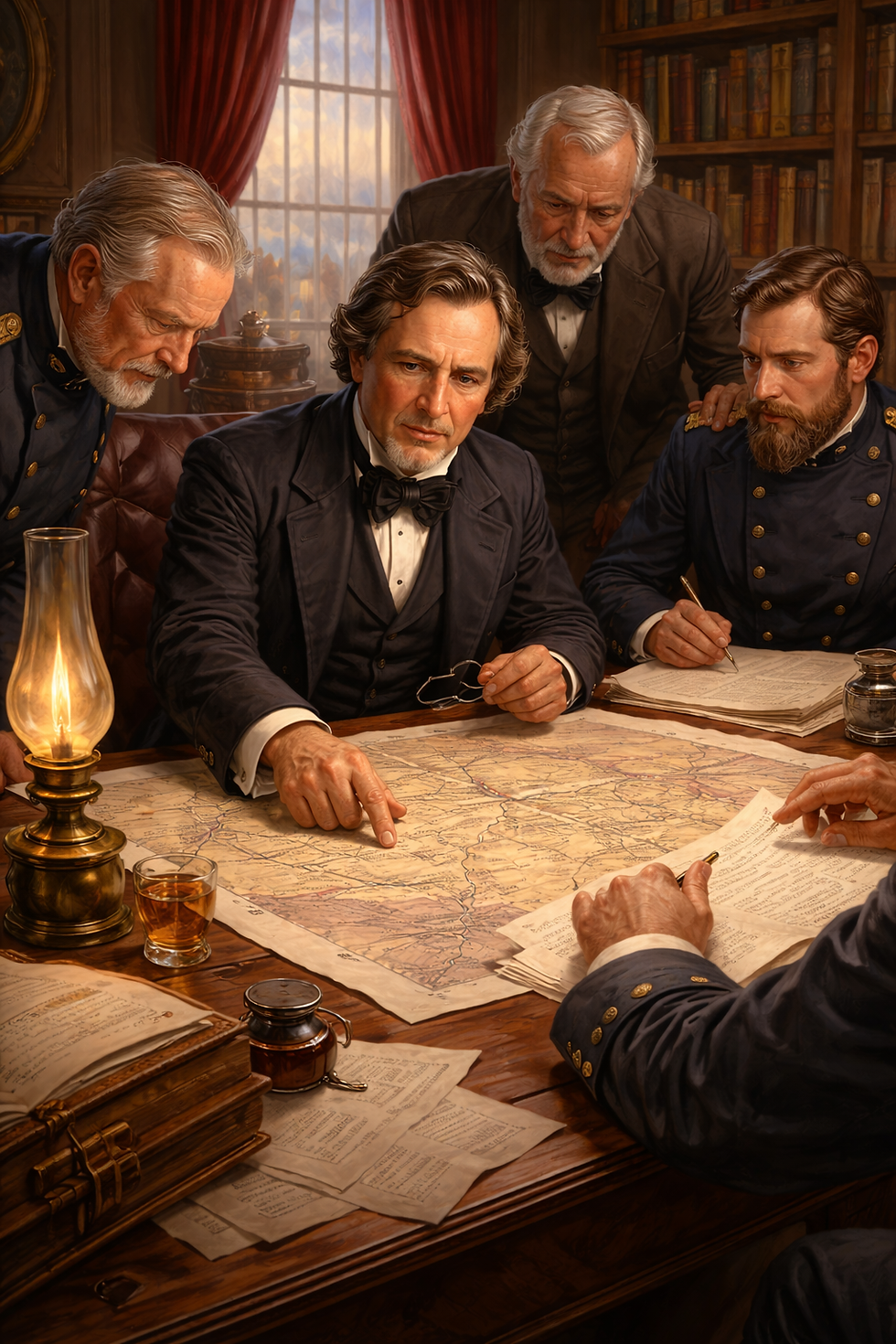
My Name is Jefferson Davis: Soldier, United States Senator, Secretary of War, and President of the Confederate States
I was born on June 3, 1808, in Christian County, Kentucky, the youngest of ten children in a family that would move often in pursuit of opportunity. Though born in Kentucky, I was raised largely in Mississippi, a land of cotton fields and expanding frontiers. My upbringing was shaped by the values of the Southern planter class — honor, duty, and a belief in states’ rights. From an early age, I was prepared for leadership, though I could not have foreseen how turbulent that leadership would become.
West Point and Military Formation
In 1824, I entered the United States Military Academy at West Point. Discipline, engineering, and the science of war became my studies. Though not the most distinguished cadet, I graduated in 1828 and was commissioned into the army. My early service took me to frontier posts, where I witnessed firsthand the expansion of the United States into Native American lands. I participated in the Black Hawk War and developed a firm belief in national strength and territorial growth.
Plantation Life and Political Awakening
After resigning from the army in 1835, I settled into plantation life in Mississippi. Cotton and enslaved labor formed the economic backbone of my world. I entered politics, first as a Democratic representative in the U.S. House of Representatives in 1845. I believed deeply in expansion — in the idea that America must stretch westward, strengthening its influence and securing its future. When the Mexican-American War broke out, I resigned from Congress to serve once more as a soldier.
The Mexican-American War and Rising Reputation
As colonel of the Mississippi Rifles, I fought with distinction at the Battle of Buena Vista. The war expanded America’s territory dramatically, but it also opened fierce debate about whether slavery would expand into those lands. After the war, I returned to public life and was appointed to the United States Senate. The question of sectional balance dominated our debates, and I emerged as a strong defender of Southern interests.
Secretary of War and National Expansion
In 1853, I became Secretary of War under President Franklin Pierce. In that role, I worked to modernize the army, improve coastal defenses, and expand infrastructure. I supported efforts for a southern route for a transcontinental railroad and encouraged exploration and surveying of western lands. I believed that expansion would strengthen the nation — but I also believed that the Southern states must retain equal footing within that expansion.
The Sectional Divide Deepens
As tensions over slavery intensified during the 1850s, I defended the constitutional right of states to maintain their institutions, including slavery. The debates over the Kansas-Nebraska Act, the Dred Scott decision, and the rise of the Republican Party convinced many in the South that their political influence was waning. I believed the Union was a compact among sovereign states, and that those states retained ultimate authority over their own destiny.
Secession and Confederate Leadership
When Abraham Lincoln was elected in 1860, Southern states began to secede. Mississippi left the Union in January 1861, and I resigned from the U.S. Senate. Soon after, I was elected President of the Confederate States of America. I accepted the role with solemn gravity, believing I was defending the rights and independence of my region. The Civil War that followed tested every resource and conviction I possessed.
War, Strain, and Defeat
Leading the Confederacy was a burden unlike any I had known. We faced shortages, internal disagreements, and the overwhelming industrial strength of the North. I appointed generals, coordinated strategy, and sought foreign recognition, but the tide gradually turned against us. Cities fell, armies surrendered, and in April 1865, the Confederacy collapsed. I was captured shortly thereafter and imprisoned for two years without trial.
The Gadsden Purchase (1853) – Told by Jefferson Davis
When I served as Secretary of War under President Franklin Pierce, the question of continental expansion had not ended with the Treaty of Guadalupe Hidalgo. Though that treaty had extended our boundaries to the Pacific, certain practical matters remained unsettled, particularly along the southern border near present-day Arizona and New Mexico. The land acquired in 1848 proved ill-suited in places for the construction of a southern transcontinental railroad. Surveys revealed mountainous terrain that would complicate engineering and inflate costs. If the United States were to bind its Atlantic and Pacific coasts by iron rails, we required a more suitable route. Thus arose the negotiations that would result in what became known as the Gadsden Purchase.
Railroads and the Future of Expansion
In the 1850s, railroads represented more than transportation; they symbolized national unity and economic power. A transcontinental line would connect eastern industry to western resources, accelerate settlement, and secure our Pacific coastline. Yet fierce sectional debate surrounded the question of where such a railroad should run. Northern interests favored a route through the upper territories. Southern leaders, myself included, supported a southern line that would pass through Texas and the lower Southwest. Geography, commerce, and climate all influenced these arguments. I believed that the South deserved equal access to the benefits of western expansion and that infrastructure should reflect the interests of all sections of the Union.
Negotiating the Purchase
James Gadsden was appointed minister to Mexico and tasked with negotiating the acquisition of land necessary for a viable southern railroad corridor. The resulting agreement in 1853 transferred approximately 30,000 square miles of territory to the United States in exchange for payment. Though modest in size compared to earlier acquisitions, this land resolved boundary uncertainties and provided a practical route for rail development. To some, the purchase seemed a minor adjustment. To those of us concerned with continental strategy, it was a crucial refinement that completed the southern outline of our national map.
Southern Vision and Sectional Equality
My support for the Gadsden Purchase reflected a broader Southern vision for continental expansion. We believed that the growth of the United States must not marginalize Southern influence or economic participation. Cotton, trade, and agricultural enterprise depended upon transportation networks that linked our region to western markets. A southern railroad would encourage migration, stimulate commerce, and ensure that expansion did not become solely a Northern enterprise. Expansion, in our view, was not simply territorial enlargement but the balanced development of a continental republic in which each section retained equal opportunity and standing.
Controversy and Suspicion
Yet even this relatively small acquisition could not escape the shadow of the slavery debate. Critics in the North suspected that southern leaders sought new lands to extend slaveholding interests. While the territory itself was largely desert and sparsely settled, the broader context of sectional rivalry colored every action. Expansion had become inseparable from suspicion. Measures intended for infrastructure and national growth were interpreted through the lens of political balance. The Gadsden Purchase, though practical in purpose, existed within a climate of distrust.
Completing the Continental Frame
In retrospect, the Gadsden Purchase represented the final significant continental acquisition within the contiguous United States. It rounded out our southwestern border and solidified the vision of a nation stretching from the Atlantic to the Pacific. For me, it symbolized determination to secure and organize our territory in a manner that would strengthen national defense and commerce. Yet it also illustrated how even pragmatic measures were entangled in sectional conflict. Expansion promised greatness, but it required careful navigation of regional interests and constitutional interpretation.
Expansion and the Gathering Storm
While I believed firmly in continental development and southern participation in that development, I could not ignore the growing divisions that accompanied every territorial question. The purchase itself did not cause those divisions, but it unfolded within an era when expansion and slavery were inseparably linked in public debate. The southern vision of growth through infrastructure and settlement stood alongside northern fears of imbalance. Thus, the Gadsden Purchase was both a strategic achievement and a reminder that America’s expansion westward was occurring under the shadow of an approaching storm.
Railroad Expansion and the Future of the West – Told by Jefferson Davis
In the middle decades of the nineteenth century, the question before the United States was not merely how far we would expand, but how we would bind together what we had already claimed. Vast territories stretched from the Mississippi River to the Pacific Ocean, rich in resources yet distant from established centers of commerce and governance. Without reliable transportation, these lands would remain isolated and vulnerable. The railroad promised to conquer distance itself. Iron rails could carry settlers, goods, mail, and soldiers across mountains and deserts with a speed previously unimaginable. To my mind, infrastructure was not a secondary matter; it was the very instrument by which continental power would be secured.
Sectional Competition Over Routes
Yet even the placement of rails became a subject of fierce sectional rivalry. Northern leaders favored a route that would run through the upper territories, linking Chicago and the Great Lakes region to the Pacific coast. Southern advocates, myself included, supported a line that would pass through Texas and the lower Southwest, benefiting our climate, commerce, and strategic interests. Geography alone did not determine these preferences; political influence did. The location of a transcontinental railroad would shape migration patterns, economic development, and future state formation. Whichever section secured the principal route would enjoy increased population, wealth, and political strength. Thus, debates over engineering surveys and appropriations carried implications far beyond steel and timber.
Infrastructure as an Instrument of Power
Railroads were engines of more than transportation; they were engines of influence. Towns sprang up where tracks were laid. Trade flowed along the lines that connected farms to ports. Military logistics depended upon swift movement across long distances. A southern railroad would stimulate agriculture, encourage settlement in the Southwest, and ensure that our region remained integral to the nation’s expansion. Without such investment, we risked allowing the West to develop in ways that favored one section disproportionately. I believed firmly that national unity required balanced growth, and balanced growth required deliberate infrastructure planning.
The Surveys and Strategic Planning
During my tenure as Secretary of War, extensive surveys were conducted to determine feasible routes across the continent. Engineers examined terrain, climate, water sources, and elevation. The challenge was immense. Mountains rose sharply; deserts stretched relentlessly. Yet progress required persistence. Each report reinforced the necessity of thoughtful planning. The choice of route would not only determine construction costs but also shape economic alliances and regional loyalties. Infrastructure decisions, though technical in appearance, were profoundly political in effect.
Expansion Entwined With Sectional Tension
By the 1850s, it had become impossible to separate railroad debates from the broader conflict over slavery and territorial organization. Some in the North suspected that a southern route would facilitate the expansion of slaveholding influence into new territories. Southerners, in turn, feared exclusion from the benefits of western growth. Every appropriation bill and survey authorization carried undertones of sectional anxiety. Thus, a project meant to bind the nation physically often revealed how divided it had become politically.
The West as the Nation’s Future
Despite these tensions, I remained convinced that the future of the United States lay in fully integrating the West into our economic and defensive systems. A transcontinental railroad would transform remote territories into thriving states, accelerate commerce with Asia through Pacific ports, and strengthen our ability to defend distant frontiers. Expansion without connection would invite fragmentation. Connection through infrastructure would secure permanence. The rails were to be the ligaments of the Republic, holding together its vast frame.

My Name is Stephen A. Douglas: U.S. Senator and Architect of Popular Sovereignty
I was born on April 23, 1813, in Brandon, Vermont, but my life’s work would unfold far from New England. My father died when I was just a child, and I learned early what it meant to labor and strive. I apprenticed as a cabinetmaker before turning my attention to the law. The nation was young and expanding, and I felt drawn toward its restless western energy. In 1833, I moved west to Illinois, a land still shaping itself, where ambition and opportunity walked side by side. I studied law, began practicing, and quickly entered politics, believing deeply that America’s future lay in its expanding frontier.
Rise in Illinois Politics
Illinois was a proving ground. I served as a state’s attorney, a member of the Illinois legislature, Secretary of State for Illinois, and later as a judge on the Illinois Supreme Court. My political ascent was rapid, and some called me the “Little Giant” — small in stature but large in voice and determination. I believed in democracy as a living force, shaped by the people themselves. In 1843, I was elected to the U.S. House of Representatives, and by 1847 I became a United States Senator. The Senate would be my battlefield, and westward expansion would be the great question of my time.
Champion of Expansion and Union
I believed that America’s destiny lay westward. The lands acquired after the Mexican-American War opened vast possibilities, but they also opened fierce debates over slavery. I supported expansion because I believed it strengthened the Union, but I also believed that Congress should not impose its will on the territories regarding slavery. Instead, I argued that settlers themselves should decide. This principle, which I called popular sovereignty, became the foundation of my political life. I believed it was the most democratic solution — letting the people govern themselves.
The Compromise Spirit and the Crisis of 1850
When the nation trembled over California’s admission and the balance between free and slave states, I supported measures that would hold the Union together. Though others shaped the original framework of the Compromise of 1850, I helped guide its passage through Congress after President Taylor’s death. I believed compromise was not weakness, but survival. The Union had to endure, and if concessions were necessary to prevent disunion, then we must make them.
The Kansas-Nebraska Act and Popular Sovereignty
In 1854, I introduced the Kansas-Nebraska Act. I sought to organize the remaining Louisiana Territory for settlement and to facilitate the building of a transcontinental railroad. But doing so required addressing the Missouri Compromise line that had restricted slavery north of 36°30′. I proposed that the settlers of Kansas and Nebraska determine the issue themselves. I believed I was strengthening democracy. Instead, the nation erupted. Violence broke out in Kansas. Northerners accused me of opening the door to slavery’s expansion. Southerners questioned my loyalty when events did not unfold in their favor. I had tried to let democracy decide — but democracy itself became the battleground.
Bleeding Kansas and a Nation Divided
The territory of Kansas became soaked in blood as pro-slavery and anti-slavery settlers clashed. My principle of popular sovereignty was tested in fire. I argued that federal intervention should remain limited and that lawful territorial processes should prevail. Yet the violence revealed how deeply sectional passions had grown. What I had seen as a procedural solution became a symbol of national division.
The Lincoln-Douglas Debates
In 1858, I faced a formidable challenger for my Senate seat: Abraham Lincoln. Our debates across Illinois became a national spectacle. Lincoln argued that the nation could not endure permanently half slave and half free. I countered that local self-government must be preserved, and that uniformity imposed from Washington would destroy liberty. Though I won reelection to the Senate, the debates elevated Lincoln to national prominence. They also revealed how close the country stood to fracture.
The Dred Scott Decision and Party Fracture
When the Supreme Court declared in the Dred Scott decision that Congress had no authority to prohibit slavery in the territories, my doctrine of popular sovereignty faced new complications. I attempted to reconcile the ruling with my belief that territorial settlers could effectively exclude slavery through local legislation. This position angered many Southern Democrats. The Democratic Party, once a broad national coalition, began to splinter.
The Election of 1860
In 1860, I became the Northern Democratic candidate for President after the party split along sectional lines. Southern Democrats nominated another candidate. Lincoln led the Republicans. I campaigned across the country, urging preservation of the Union and warning against secession. I believed compromise and constitutional processes could still save the Republic. But the electorate was divided, and Lincoln prevailed.
Final Days and Loyalty to the Union
After Lincoln’s election and the secession of Southern states, I did not join calls for disunion. Though we had been political rivals, I pledged my support to President Lincoln in defense of the Union. I believed that whatever our disagreements, the preservation of the United States stood above party or sectional loyalty. In June 1861, only months after the Civil War began, I died at the age of forty-eight. My life had been consumed by the effort to balance expansion, democracy, and union.
The Kansas-Nebraska Act (1854) – Told by Stephen A. Douglas
By the early 1850s, vast stretches of the Louisiana Purchase north of Texas remained unorganized territory. Settlers were moving westward, railroads were pressing toward the frontier, and the federal government could no longer postpone the creation of structured territorial governments. I believed it essential to organize Kansas and Nebraska in order to promote settlement, secure transportation routes, and extend American institutions across the plains. A nation that expands must govern what it acquires. Delay invited lawlessness and stagnation; organization promised growth and order.
The Principle of Popular Sovereignty
Yet no territorial bill could escape the great issue of the age—slavery. I had long argued that the people of each territory should decide the question for themselves when forming a state constitution. This principle, which I called popular sovereignty, rested upon the foundation of local self-government. I believed Congress should not impose a uniform policy upon distant communities. The settlers who braved the hardships of frontier life ought to determine their own domestic institutions. In my mind, this approach honored democracy and preserved the Union by removing slavery from the halls of Congress and placing it in the hands of local voters.
The Missouri Compromise Reconsidered
However, the Missouri Compromise of 1820 had drawn a line across the Louisiana Territory, prohibiting slavery north of 36°30′ latitude except in Missouri. Kansas and Nebraska lay north of that line. If they were organized without revisiting the earlier compromise, slavery would be barred by statute. I concluded that the Missouri Compromise had been superseded by later measures, particularly the Compromise of 1850, which had embraced the principle of popular sovereignty in new territories acquired from Mexico. To apply one rule in the Southwest and another in the Plains would create inconsistency and injustice. Therefore, the Kansas-Nebraska Act effectively repealed the Missouri Compromise line, allowing settlers in those territories to decide the matter for themselves.
Sectional Reaction and Political Upheaval
I understood that repealing a long-standing compromise would provoke controversy, yet I believed the logic of self-government would prevail. Instead, the reaction was swift and fierce. In the North, many viewed the repeal as a betrayal, arguing that a sacred agreement had been overturned to advance slaveholding interests. In the South, support for the bill was strong, though expectations ran high that popular sovereignty would permit expansion of slavery. The act did more than organize territories; it reorganized American politics. Old party alignments fractured, and new political movements arose in response.
From Legislation to Violence
I had hoped that placing the decision in the hands of settlers would calm national agitation. Instead, Kansas became the scene of bitter conflict. Pro-slavery and anti-slavery factions rushed into the territory, determined to shape its future. Elections were contested, governments rivaled one another, and violence erupted. What I envisioned as peaceful democratic determination became known as Bleeding Kansas. The act intended to remove slavery from national debate had instead transported the debate directly onto the frontier, where passions ran high and law was fragile.
Defending the Democratic Principle
Despite the turmoil, I continued to defend popular sovereignty as the most just and constitutional solution. I maintained that the principle itself was sound, even if its execution encountered disorder. The alternative—Congress dictating the domestic institutions of territories—threatened to centralize power and deepen sectional resentment. I believed that if citizens could not trust local majorities to govern their own affairs, then republican government itself was in peril.
Looking back, I recognize that the Kansas-Nebraska Act marked a turning point. It reopened questions many thought settled and accelerated sectional polarization. Yet my intention was not to inflame division but to strengthen democratic practice and facilitate western development, including the expansion of railroads and settlement. I sought consistency in territorial policy and fairness among sections of the Union. Whether history views the act as catalyst or calamity, it stands as an effort to reconcile expansion with self-government at a moment when the nation struggled to hold both in balance.
Bleeding Kansas (1854–1856) – Told by Stephen A. Douglas
When I authored the Kansas-Nebraska Act, my aim was to apply the principle of popular sovereignty—to allow the settlers of a territory to determine for themselves whether slavery would exist within their borders. I believed this approach would remove the question from the halls of Congress and place it in the hands of those most directly affected. Kansas, newly organized and rich with promise, was to become a model of democratic self-rule on the frontier. Instead, it became a battleground. What I envisioned as orderly political determination descended into strife, and the territory’s name became synonymous with bloodshed.
Migration and Manipulation
The violence did not arise in isolation. Kansas was not settled by neutral pioneers alone; it became the focus of organized efforts from both pro-slavery and anti-slavery advocates. Emigrant aid societies in the North encouraged Free-Soil settlers to move into the territory. At the same time, Missourians crossed the border to influence elections in favor of slavery. The question of local self-rule was overwhelmed by national passion. Elections were contested, fraud alleged, and rival governments formed. Instead of allowing settlers gradually to shape their institutions, Kansas became the arena in which broader sectional forces sought victory.
From Ballots to Bullets
What troubled me most was how swiftly political disagreement turned to violence. Towns were attacked, homes burned, and lives lost. The sack of Lawrence and retaliatory killings deepened bitterness. Men who should have been debating constitutions instead carried rifles. The press amplified every outrage, presenting Kansas not as a local dispute but as proof that the nation itself was unraveling. I maintained that the principle of popular sovereignty was not inherently violent; rather, it was the intrusion of outside agitation that distorted the process. Yet I could not deny that the experiment had become chaotic.
The Strain on Democratic Faith
Critics argued that popular sovereignty had failed—that allowing settlers to decide had produced anarchy rather than order. I contended that democracy requires patience and lawful procedure. When external actors flood a territory to force outcomes, the spirit of self-government is compromised. Kansas was young, unsettled, and vulnerable to manipulation. The violence revealed how deeply sectional distrust had penetrated American life. The problem was not merely territorial governance; it was the national inability to trust opposing sections to act in good faith.
National Consequences
Bleeding Kansas reverberated far beyond the prairie. In Congress, tempers flared; in newspapers, accusations multiplied. Political parties fractured, and new alliances formed. What had begun as a territorial question became a symbol of national division. The events in Kansas hardened attitudes in both North and South, making compromise more difficult and suspicion more intense. My hope had been that popular sovereignty would preserve harmony by respecting local choice. Instead, the territory became a warning of how combustible the slavery question had become.
Defending Principle Amid Turmoil
Even amid the turmoil, I continued to assert that the underlying principle remained sound. Self-government is not invalidated because it faces challenge. The alternative—federal imposition of policy—risked centralizing authority and deepening resentment. I believed that if Kansas were allowed to proceed through lawful processes, stability would eventually prevail. The violence, while tragic, reflected the passions of a nation already divided rather than the failure of democratic doctrine itself.
The Rise of the Republican Party (Mid-1850s) – Told by Harriet Beecher Stowe
In the years following the passage of the Kansas-Nebraska Act, I watched as the moral agitation that had stirred pulpits, parlors, and newspapers began to reshape the political landscape itself. What had once been a debate confined to speeches and pamphlets now reorganized parties and allegiances. The repeal of the Missouri Compromise line convinced many in the North that slavery was no longer content to remain where it existed but sought expansion into the western territories. This realization transformed private unease into public action. Conscience, once expressed in prayer meetings and reform societies, began to seek expression at the ballot box.
From Moral Protest to Political Organization
For years, abolitionists and reformers had labored outside the dominant political parties, appealing to the nation’s sense of justice. Yet the events of the mid-1850s persuaded many that moral opposition required political structure. Former Whigs, Free-Soilers, anti-slavery Democrats, and citizens disillusioned with existing parties gathered under a new banner. They called themselves Republicans, (not to be confused with the earlier Democratic-Republican Party) invoking the founding ideals of the Republic. Their central conviction was that slavery must not expand into the territories of the West. They did not all agree on immediate abolition where slavery already existed, but they were united in resisting its spread. Thus, a moral argument became the foundation of a new political coalition.
The West as the Moral Battleground
The western territories were no longer distant landscapes; they had become the testing ground of national character. If slavery advanced westward, it would shape the social and economic order of future states. Many in the North believed that free labor—where men and women worked for wages and advancement—should define new communities. They feared that the expansion of slavery would limit opportunity and entrench inequality. The Republican Party framed the contest over Kansas and other territories not merely as a sectional dispute, but as a struggle over the future direction of American society. In this way, moral opposition to slavery reorganized politics around the vision of what the West ought to become.
Literature, Press, and Public Sentiment
As a writer, I observed how literature and journalism contributed to this political awakening. Stories of violence in Kansas, accounts of fugitive slave cases, and reflections upon the human cost of bondage circulated widely. Public meetings multiplied. Sermons echoed themes of justice and liberty. The rise of the Republican Party did not occur in isolation from this cultural ferment; it was nourished by it. Citizens who had once felt powerless discovered that collective political action could give shape to their convictions. Words, whether spoken or written, had prepared the ground for organization.
Resistance and Polarization
The emergence of the Republican Party also intensified sectional polarization. Southern leaders viewed it as a direct threat to their institutions and political influence. They interpreted its platform as hostile, even revolutionary. The old national parties, which had once bridged North and South, fractured under strain. What replaced them was more distinctly regional in character. Political competition became sharper, and trust between sections diminished further. The moral argument against expansion had become inseparable from political identity.
A Nation Redefined
In the rise of the Republican Party, I perceived both hope and danger. Hope, because citizens were aligning their political affiliations with deeply held principles regarding human freedom. Danger, because the reorganization revealed how far apart the sections had grown. When politics becomes the vessel for moral conflict, compromise becomes more difficult. Yet I believed that silence in the face of injustice was not a viable alternative. The West represented the nation’s future, and many concluded that its character must be determined now.
Conscience Enters the Ballot Box
The mid-1850s demonstrated that moral sentiment could reshape the machinery of government. The Republican Party arose not solely from economic calculation or regional rivalry, but from a conviction that slavery’s expansion contradicted the nation’s founding ideals. Whether one agreed or disagreed with its platform, its formation marked a turning point. The struggle over the western territories had transformed American politics into a forum for moral reckoning. In that transformation, I saw evidence that the conscience of a people, once stirred, does not remain confined to private reflection but seeks expression in the public life of the Republic.
The Dred Scott Decision (1857) – Told by Jefferson Davis
By 1857, the nation had endured years of agitation over slavery in the territories. Violence in Kansas, the collapse of old political parties, and constant accusations between North and South had strained the Union. When the Supreme Court delivered its ruling in the case of Dred Scott v. Sandford, many in the South regarded it not as a provocation, but as a long-awaited constitutional clarification. The Court declared that persons of African descent, whether enslaved or free, were not citizens under the Constitution and therefore could not sue in federal court. It further held that Congress lacked authority to prohibit slavery in the territories. For many Southerners, this decision affirmed principles we believed had always been embedded within the constitutional framework.
Property Rights and Constitutional Interpretation
From a Southern constitutional perspective, slavery was recognized implicitly within the Constitution as lawful property under state authority. The framers had acknowledged the institution through clauses concerning representation and fugitive persons. If enslaved individuals were recognized as property under state law, then, in our view, the federal government had no right to strip citizens of that property when they moved into common territories. The territories, we argued, belonged jointly to all the states. Therefore, Southern citizens had equal claim to settle there with their lawful property. The Court’s ruling that Congress could not ban slavery in the territories aligned with this interpretation. It was seen not as the creation of new doctrine, but as the affirmation of constitutional equality among the states.
Rejection of Congressional Overreach
For decades, Southerners had resisted what we perceived as increasing attempts by Congress to restrict our rights within the territories. The Missouri Compromise line and later debates over territorial organization were viewed by many in the South as infringements upon equal access. The Dred Scott decision declared the Missouri Compromise unconstitutional, reinforcing the belief that earlier restrictions had exceeded federal authority. In our eyes, the Court had restored balance by reminding the nation that the Constitution limited congressional power and protected minority rights against majoritarian encroachment.
Northern Outrage and Deepening Division
Yet while many in the South received the ruling with approval, the reaction in the North was swift and indignant. Critics contended that the Court had extended slavery’s reach and denied fundamental rights to an entire class of people. They feared that if Congress could not regulate slavery in the territories, the institution might spread unchecked. The decision, rather than calming sectional strife, intensified it. What we considered constitutional vindication, others interpreted as moral catastrophe. Thus, the ruling that was intended to settle debate instead magnified distrust between regions.
The Limits of Judicial Settlement
The Dred Scott case revealed the limits of judicial authority in resolving deeply rooted political and moral conflicts. While the Court spoke with constitutional authority, it could not command public acceptance. Many in the South believed that adherence to the decision was essential to preserving the rule of law. If Supreme Court rulings were disregarded when unpopular, constitutional government itself would be imperiled. Yet opponents argued that no court could legitimize injustice. The nation found itself divided not only over slavery but over the meaning of constitutional fidelity.
A Turning Point in the Sectional Struggle
In retrospect, the Dred Scott decision stands as a turning point. It solidified Southern confidence in constitutional arguments for territorial equality, while simultaneously fueling Northern determination to resist what was perceived as the nationalization of slavery. The controversy surrounding the ruling further weakened the bonds of compromise and strengthened emerging political movements opposed to its implications. For many Southerners, the decision represented lawful protection of rights. For many Northerners, it symbolized the capture of federal power by slaveholding interests.
The Lecompton Constitution Crisis (1857–1858) – Told by Stephen A. Douglas
When I advanced the doctrine of popular sovereignty, I did so with the firm conviction that the people of a territory must decide their own institutions freely and fairly. Kansas had already endured violence and turmoil as pro-slavery and anti-slavery factions struggled for influence. Yet I believed that, in time, lawful procedures would prevail and the majority’s will would be clearly expressed. The controversy surrounding the Lecompton Constitution became the most severe test of that belief and of my own political alliances.
The Drafting at Lecompton
In 1857, a convention meeting at Lecompton drafted a constitution for Kansas that protected slavery. The process by which this constitution emerged was deeply disputed. Many Free-Soil settlers boycotted earlier territorial elections, claiming fraud and intimidation by pro-slavery forces. As a result, the convention did not reflect the full voice of the territory’s inhabitants. When the proposed constitution was submitted to a limited vote that did not allow a clear rejection of slavery itself, critics argued that the process was fundamentally flawed. For me, the central issue was not whether Kansas would be slave or free, but whether its people had been permitted an honest choice.
Breaking with My Party
President Buchanan and many Southern Democrats supported admitting Kansas under the Lecompton Constitution. They argued that lawful procedures had been followed and that further delay would perpetuate instability. Yet I could not endorse a constitution that, in my judgment, did not represent the genuine will of the majority. Popular sovereignty required more than a technical vote; it required legitimacy. I publicly opposed the administration’s position, insisting that Kansas be allowed a fair and comprehensive referendum. In doing so, I broke with powerful members of my own party and invited severe political consequences.
Fractures Within Expansion Policy
The Lecompton controversy revealed deep fractures within Democratic ranks and within the broader policy of territorial expansion. My earlier support for the Kansas-Nebraska Act had earned Southern favor because it repealed the Missouri Compromise line. Now, by opposing Lecompton, I was accused of betrayal. To some in the South, any obstacle to Kansas’s admission as a slave state signaled hostility to their interests. To many in the North, my stand demonstrated independence from pro-slavery pressure. The same principle I had championed—local self-government—was now dividing former allies. Expansion policy could no longer mask sectional distrust.
Congressional Struggle and Resolution
The debate in Congress was fierce. Speeches thundered, alliances shifted, and accusations flew. Ultimately, Congress required that the Lecompton Constitution be resubmitted to Kansas voters under fairer terms. When it was put to a clearer vote, the constitution was rejected, and Kansas did not enter the Union as a slave state at that time. The immediate crisis subsided, but the political damage endured. The Democratic Party’s unity was weakened, and sectional lines hardened further.
Personal and National Consequences
My opposition to Lecompton preserved my standing with many Northern Democrats, but it alienated Southern leaders whose support I would later need in national contests. The episode demonstrated that compromise within a single party was becoming as difficult as compromise between sections. For the nation, the crisis showed that the doctrine of popular sovereignty could not function without mutual trust and fair administration. Where suspicion reigned, even democratic mechanisms were questioned.
John Brown’s Raid and the Collapse of Compromise (1859) – Told by Davis
In October of 1859, news spread that a band of armed men had seized the federal arsenal at Harpers Ferry, Virginia, led by John Brown, a man already known for his violent actions in Kansas. His aim, as later revealed, was to incite a widespread slave insurrection throughout the South. Though the raid was swiftly suppressed by United States forces, its significance far exceeded its military failure. To many in the South, this was not the act of a lone fanatic; it was evidence that sectional hostility had advanced from words to weapons. John Brown was a insurrectionist and fought to stir up a war between the South and the North. The fragile peace sustained by compromise appeared to be crumbling before our eyes.
From Agitation to Armed Assault
For years, Southerners had listened to Northern criticism of slavery in newspapers, sermons, and political speeches. While we disagreed profoundly with abolitionist rhetoric, many still believed that constitutional mechanisms could contain disagreement. John Brown’s raid altered that perception. An armed attempt to seize federal property and provoke violent uprising struck at the very foundations of order. If such actions were tolerated or quietly applauded in the North, what security remained for Southern communities? The raid transformed abstract fear into immediate alarm. It suggested that opposition to slavery might no longer be confined to ballots and pamphlets, but might seek expression through insurrection.
Southern Reaction and Rising Fear
The South responded with outrage and apprehension. Militia units strengthened patrols; legislatures debated defensive measures. Brown’s trial and execution did not quiet anxiety. What unsettled many was the reaction in portions of the North, where some voices portrayed him as a martyr rather than a criminal. To Southern observers, this reaction signaled a widening moral gulf. If an attack designed to incite slave rebellion could inspire sympathy, then sectional peace rested upon unstable ground. Trust between regions diminished further, and suspicion hardened into conviction that our security within the Union could not be guaranteed indefinitely.
The Failure of Compromise
The Compromise of 1850, the Kansas-Nebraska Act, and other legislative efforts had been attempts—however imperfect—to maintain balance. Yet Brown’s raid seemed to reveal that compromise had not resolved underlying tensions. Each new settlement had postponed rather than extinguished disagreement. By 1859, it appeared that constitutional argument alone could not reconcile opposing visions of the nation’s future. The South increasingly questioned whether its rights and institutions could remain protected within a Union where hostility toward slavery was intensifying.
The Election of 1860 Approaches
As the presidential election of 1860 approached, sectional divisions sharpened. The Democratic Party itself was fracturing along regional lines, and the Republican Party stood firmly opposed to the expansion of slavery. Brown’s raid deepened Southern distrust of Northern political movements, even those that rejected violence. Many Southerners feared that a Republican victory would embolden further encroachments upon their constitutional rights. The raid thus became intertwined with electoral politics, reinforcing the belief that the South’s position within the Union was increasingly precarious.
A Turning Point Toward Secession
In my view, John Brown’s raid marked a decisive turning point. It convinced many in the South that peaceful coexistence under existing arrangements was failing. While not the sole cause of subsequent secession, it crystallized anxieties that had been building for years. The prospect of slave insurrection, aided by Northern sympathizers, touched a nerve deeply embedded in Southern society. It suggested that sectional conflict had crossed from debate into direct confrontation.
A Nation at the Edge
Looking back upon that moment, I see how the raid exposed the depth of mistrust that compromise had failed to heal. It revealed a Union strained by irreconcilable interpretations of liberty, property, and constitutional authority. For some, Brown was a misguided zealot; for others, a symbol of moral resistance. For many in the South, he was a warning that our safety and sovereignty were no longer secure. The events at Harpers Ferry did not by themselves dissolve the Union, but they illuminated how near the nation stood to fracture, setting the stage for the tumultuous election of 1860 and the choices that followed.


Comments