

10. Heroes and Villains of the Globalization Era: Nintendo, PlayStation, Pokémon, and the Video Game Revolution

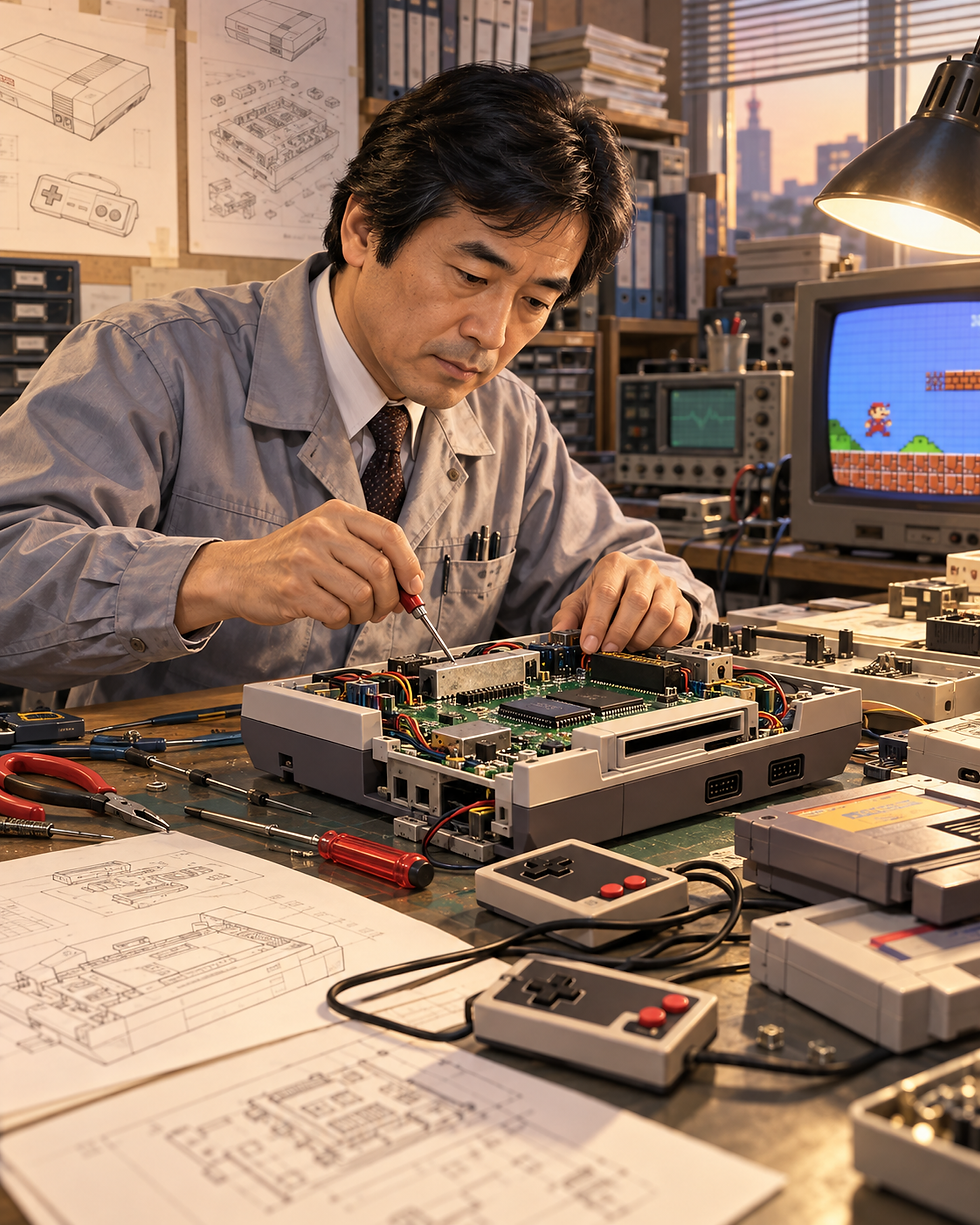
My Name is Masayuki Uemura: The Engineer Behind Nintendo's Home Consoles
When people look back at Nintendo, they often remember Mario, colorful cartridges, controllers, and families gathered around televisions. I usually saw something different. I saw circuits, processors, wires, manufacturing costs, and a long series of engineering problems that had to be solved before any of those games could appear on the screen.
Learning to Think Like an Engineer
I was born in Tokyo in 1943 and grew up during the difficult years surrounding the end of World War II. Japan was rebuilding, and technology fascinated me because machines could be understood by taking them apart, studying how they worked, and then trying to make them work better. I studied electronic engineering at the Chiba Institute of Technology. Engineering taught me an important habit: when you do not know whether something is possible, sometimes the best answer is to build it and find out.
Finding My Way to Nintendo
Before joining Nintendo, I worked at Sharp, where I dealt with electronic components and technology such as solar cells. Through that work I came into contact with Nintendo, which at the time was changing from a traditional toy and playing-card company into something much more electronic. I joined Nintendo in 1971. Few people could have guessed where electronic entertainment was heading, and certainly none of us had a complete blueprint. That was part of what made the work interesting.
The Challenge from President Yamauchi
One day Nintendo president Hiroshi Yamauchi contacted me with a challenge. Nintendo's Game & Watch products were successful, but he believed that success would not continue forever. He wanted a machine that families could connect to their televisions and use with interchangeable games. There was no detailed specification waiting on my desk. We had to determine what this machine should actually be. I eventually asked a much more useful engineering question: could we create a home system capable of running something like Donkey Kong? That gave us a real target instead of a collection of numbers on paper.
Building the Family Computer
Our engineers worked with Ricoh to develop the hardware that became the Family Computer, or Famicom. We had to balance performance against price. A machine could be technically impressive and still fail if families could not afford it. We therefore simplified certain things while protecting the parts that actually made games enjoyable. I have always believed that engineering is not simply putting the most advanced technology into a box. It is deciding which technology matters and making all the pieces work together.
From Japan to the Nintendo Entertainment System
The Famicom was released in Japan in 1983 and eventually became an enormous success. A redesigned version became the Nintendo Entertainment System in North America. Suddenly, the circuits we had designed were sitting under television sets thousands of kilometers from Kyoto. Games such as Super Mario Bros. showed how much could be accomplished with that little machine. Interestingly, I was so occupied thinking about Nintendo's next hardware projects that I did not even know Super Mario Bros. was being developed at first. That was often the life of an engineer: while everyone celebrated what existed, I was already worrying about what came next.
Building the Next Generation
Technology never waits. By the late 1980s, competing machines were becoming more powerful, and Nintendo needed another system. I led development work on the Super Famicom, known internationally as the Super Nintendo Entertainment System. It offered improved graphics, sound, processing capabilities, and controllers while still following an important principle: hardware existed to serve the game. The Super Nintendo entered the 1990s as one of the machines that helped turn video gaming into a major international form of entertainment.
Watching an Industry Transform
During the 1990s, the industry changed much faster than it had during my early years at Nintendo. Sega challenged us, Sony entered with the PlayStation, three-dimensional graphics became increasingly important, and video games developed into a worldwide business. Engineers could no longer think only about what a machine could calculate. We had to think about price, controllers, developers, manufacturing, competitors, and what players would actually enjoy. The best technology was not necessarily the technology with the largest numbers printed on the box.
Teaching the Next Generation
After leaving my full-time position at Nintendo, I became an adviser and later taught at Ritsumeikan University, where I studied video-game history and passed what I had learned to younger generations. Nintendo itself eventually became something worth studying historically. I found that rather amusing. When we were building those early machines, we were not thinking about creating history. We were trying to make the circuits work before the deadline.
16-Bit Generation: Nintendo Brings the Super NES to America - Told by Masayuki
By the end of the 1980s, the video-game world was changing quickly. The Nintendo Entertainment System had been enormously successful, but technology was advancing and competitors were growing stronger. Sega had introduced the Genesis in North America in 1989, promoting its faster 16-bit hardware and trying to convince players that the next generation had already arrived. At Nintendo, we knew we could not simply continue relying on the success of the NES. We needed a new machine capable of producing richer graphics, better sound, larger games, and more sophisticated worlds.
Designing the Super Famicom
I led the hardware development of what became the Super Famicom in Japan and the Super Nintendo Entertainment System in North America. The challenge was not simply to make a machine more powerful. Anyone can add features if cost does not matter. Our task was to create a system powerful enough to feel new while still being affordable enough for families. The machine used a 16-bit processor, expanded color capability, improved audio, and specialized graphics features that allowed developers to create effects the NES could never have handled.
Why the Controller Changed
One of the most visible changes was the controller. The NES controller had two main action buttons, but games were becoming more complicated. We added four face buttons and shoulder buttons to give developers more possibilities. At first glance, this may seem like a small change, but controllers determine what kinds of games designers can build. If the player's hands cannot communicate easily with the machine, additional processing power is wasted.
Mode 7 and the Illusion of Depth
One feature that attracted attention was what became known as Mode 7. It allowed the system to rotate and scale a background layer, creating the illusion that players were moving across a three-dimensional surface. Games such as F-Zero used this effect to make racing environments appear to stretch into the distance. It was not true three-dimensional graphics in the modern sense, but it demonstrated how clever hardware design could create an experience that felt far more advanced than the raw specifications might suggest.
The Super Famicom Arrives in Japan
The Super Famicom launched in Japan in November 1990. Demand was intense. Super Mario World was one of the system's launch titles and quickly demonstrated what the new machine could do. The game retained the familiar movement of earlier Mario titles while adding larger environments, more detailed animation, new mechanics, and Yoshi. For an engineer, a launch title like this is important because it shows customers why the new hardware exists.
Bringing the System to America
The American version arrived in 1991 as the Super Nintendo Entertainment System, or Super NES. Its appearance was redesigned for North America, but beneath the plastic case was the same basic hardware philosophy. Nintendo entered a market where Sega was already aggressively competing for older children and teenagers. This became one of the defining console rivalries of the early 1990s.
Nintendo Versus Sega
The competition was not only technological. Sega marketed the Genesis as faster, more rebellious, and more mature, while Nintendo relied heavily on its established characters and game franchises. Sonic the Hedgehog became Sega's answer to Mario. The rivalry encouraged both companies to improve their games, advertising, hardware, and relationships with developers. From an engineering perspective, competition is useful because it forces everyone to examine assumptions they might otherwise leave unchallenged.
Games Became Larger and More Ambitious
The Super NES helped developers create games with more detailed artwork, richer music, and larger worlds. Titles such as The Legend of Zelda: A Link to the Past, Super Metroid, Final Fantasy titles, and Donkey Kong Country demonstrated how much could be accomplished with the system over time. One of the most interesting things about console hardware is that developers often discover techniques years after launch that the engineers who built the machine never imagined.
Why 16-Bit Mattered
People often remember the early 1990s as the “16-bit era,” but the number itself does not explain why the period mattered. What mattered was that developers suddenly had much more room to create. Games could tell longer stories, produce more convincing environments, use better music, and introduce more complicated systems. Players began expecting home consoles to deliver experiences that once would have seemed possible only in arcades.
What I Learned from the Super NES
The Super NES taught me again that technology succeeds when it serves creativity. A processor, graphics chip, or sound system is only potential. The real achievement comes when game designers use that potential to make something people remember years later. By 1991, Nintendo had entered a new generation of gaming, but for us engineers, the work was already moving forward. The moment a machine reaches the public is often the moment an engineer begins wondering what must come next.
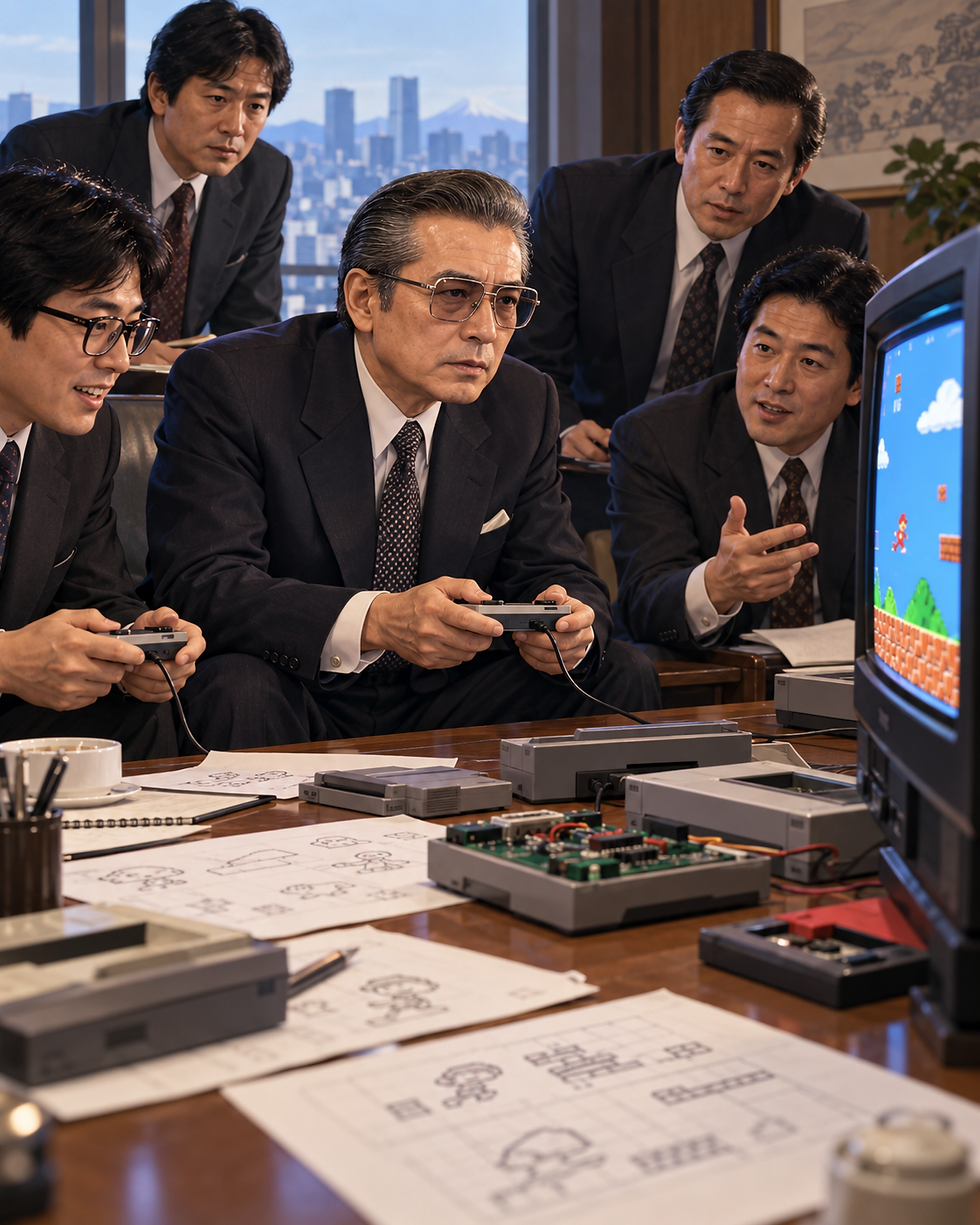
My Name is Hiroshi Yamauchi: The President Who Transformed Nintendo
When I became president of Nintendo, there was no Mario, no Game Boy, no Nintendo Entertainment System, and certainly no worldwide video-game empire. Nintendo was a playing-card company in Kyoto. My responsibility was not to preserve what Nintendo had been. My responsibility was to decide what Nintendo could become.
A Young President
I was born in Kyoto in 1927 and was raised largely by my grandparents after my father left our family. I entered Waseda University to study law, but in 1949 my grandfather, Nintendo president Sekiryo Yamauchi, suffered a stroke. At only twenty-one years old, I was called back to take control of the company. I knew older employees would doubt me. I therefore made one thing clear: Nintendo would have one leader, and I intended to lead it.
Playing Cards Were Not Enough
Nintendo had survived by making hanafuda and other playing cards, but I could see limits to that business. We licensed Disney characters for playing cards and discovered that families and children represented a much larger market than traditional card players alone. We experimented with several other businesses, some successful and some not. I was not interested in tradition merely because it was tradition. A company that refuses to change eventually gives its competitors permission to replace it.
Finding People Who Could Create
One of my most important responsibilities was recognizing talent. I noticed the work of engineer Gunpei Yokoi, whose mechanical ideas helped Nintendo enter toys and electronic entertainment. Later, I gave a young designer named Shigeru Miyamoto an opportunity to work on an arcade game. That project became Donkey Kong and introduced the character who would eventually become Mario. A president does not need to design every product himself. He must recognize the people capable of creating something the public has never seen before.
Bringing Nintendo Into the Home
Electronic games were growing, and I wanted Nintendo inside people's homes. I told engineer Masayuki Uemura to develop a home video-game machine. The result became the Family Computer, or Famicom, released in Japan in 1983. Abroad it became the Nintendo Entertainment System. We did not need the most complicated machine imaginable. We needed a machine families could afford and games they would want to play repeatedly. Uemura later remembered that I warned him Nintendo's successful Game & Watch business would not last forever. I was already thinking about what came next.
Quality Had to Be Controlled
The American video-game industry had suffered badly in the early 1980s after consumers were overwhelmed by poor-quality games. I had no intention of allowing Nintendo's machines to become dumping grounds for anything a developer wanted to sell. We limited releases and established strict controls over software for Nintendo systems. Some companies disliked those rules. That was their concern. My concern was protecting the reputation of Nintendo and making certain customers believed that buying a Nintendo game meant something.
Winning Through Entertainment
During the late 1980s and early 1990s, Nintendo became one of the world's most powerful entertainment companies. The NES, Super Nintendo, Game Boy, Mario, Zelda, and other products reached millions of people. Yet I never believed that success came simply from having the newest technology. Technology is useful only when it creates entertainment. Years later I argued that cutting-edge technology and additional functions do not automatically make something more enjoyable. The purpose of the machine was always the experience it delivered.
Competition Arrives
The 1990s brought serious competitors. Sega challenged Nintendo aggressively, and Sony entered the market with the PlayStation. Nintendo answered with the Super Nintendo, Game Boy, Nintendo 64, and eventually Pokémon. Competition was not something to fear. It was something to understand. I rarely believed Nintendo should simply imitate another company. If everyone competed by building the same machine with slightly larger numbers, there would be little reason for Nintendo to exist.
Pokémon and Another Unexpected Success
Pokémon became one of Nintendo's greatest successes during the late 1990s. Its success demonstrated something I had believed for years: an older technology can become enormously valuable when someone discovers a new kind of entertainment for it. The Game Boy was hardly the most technologically advanced machine by then, yet Pokémon helped give it another remarkable period of life. People did not buy entertainment because engineers told them the specifications were impressive. They bought it because they wanted to play.
Leaving Nintendo
I remained president until 2002, after fifty-three years in charge, and selected Satoru Iwata as my successor. I later stepped away from the company while remaining an important shareholder and adviser. Nintendo had changed from a Kyoto playing-card manufacturer into an international entertainment business whose characters and machines were recognized around the world. I died in 2013 at the age of eighty-five.
Nintendo vs. Sega and the First Great Console War - Told by Hiroshi Yamauchi
By 1991, Nintendo was the dominant name in home video games, but dominance creates enemies. Sega had introduced the Genesis in North America in 1989, and by the early 1990s it had become far more aggressive. Sega did not want to be another company selling games beside Nintendo. It wanted to replace us. Its advertisements mocked Nintendo directly, its machines were promoted as faster, and its executives targeted older children and teenagers who might begin thinking Nintendo was too childish.
Sonic Challenges Mario
Then Sega found the character it needed. Sonic the Hedgehog appeared in 1991, and he was designed to communicate speed, attitude, and a different personality from Mario. Mario was already one of the most recognizable characters in the industry, so Sega needed something equally memorable. Sonic became the symbol of the Genesis, while Mario remained the face of Nintendo. What followed was larger than a competition between two mascots. Children began arguing over entire companies as though they were sports teams.
The Super Nintendo Enters the Fight
Nintendo released the Super Nintendo Entertainment System in North America in 1991. We had stronger graphics, richer sound, established franchises, and a large audience, but Sega already had momentum. We could not assume that families would automatically purchase our next console simply because they had owned the previous one. Every generation had to earn its place again. That lesson is uncomfortable for successful companies, but it is necessary.
The Battle Was Fought in Advertising
The console war became famous because both companies understood that marketing mattered nearly as much as hardware. Sega promoted what it called “blast processing” and frequently compared its system directly with Nintendo. Nintendo emphasized its games, characters, and reputation for quality. Commercials became louder, sharper, and more competitive. Children watching television were being asked not simply which game they liked, but which side they belonged to.
Exclusive Games Became Weapons
Hardware alone could not win this competition. The real weapons were games. Nintendo had Mario, Zelda, Metroid, F-Zero, and other established series. Sega had Sonic and increasingly strong arcade conversions. Both companies worked to secure developers and exclusive titles because a console without desirable games is merely an expensive piece of plastic. The strength of a platform depends on what people can do with it after they bring it home.
Mortal Kombat Changes the Debate
In 1993, the rivalry became tangled with a national argument over violent video games. Mortal Kombat was released on both the Genesis and Super Nintendo, but the versions were different. Nintendo required graphic blood and some violent finishing moves to be altered, while Sega allowed players to access a bloodier version through a code. Sega's version sold better. The episode showed how rapidly the audience was changing and how companies were beginning to compete not only over technology but also over image and age appeal.
The Government Begins Watching
That same period brought congressional hearings about violence in video games, particularly titles such as Mortal Kombat and Night Trap. Parents, lawmakers, and industry executives debated whether games required clearer age ratings. These debates helped push the industry toward the creation of the Entertainment Software Rating Board in 1994. The console war had helped make gaming so culturally important that governments were now paying attention to what appeared on the screen.
Competition Makes the Industry Stronger
Sega's challenge forced Nintendo to compete more aggressively. Sega could no longer be dismissed, and Nintendo could no longer behave as though its previous success guaranteed future success. Prices, advertising, game quality, release schedules, and developer relationships all became more important. The rivalry also expanded public interest in gaming. Millions of people who might never have cared about processors or cartridges suddenly knew the names Nintendo and Sega.
There Was No Permanent Victory
By 1993, neither company could claim the contest was finished. Sega had gained substantial market share in North America, while Nintendo remained enormously powerful worldwide. More importantly, another competitor was preparing to enter the industry. Sony's PlayStation would soon change the rules again. That is the nature of business: just when two companies believe they understand the battlefield, someone else arrives with a different strategy.
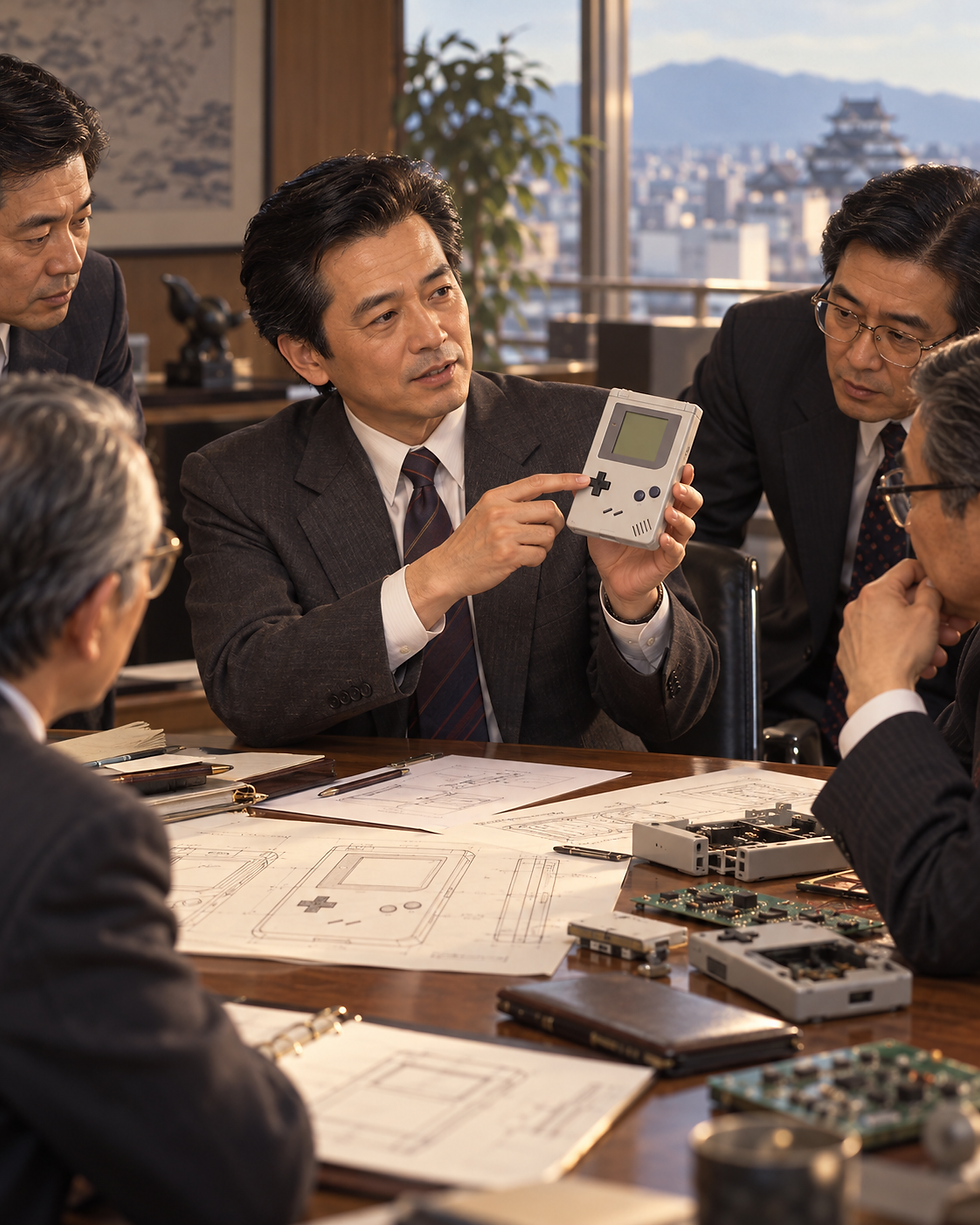
My Name is Gunpei Yokoi: The Quiet Inventor Behind the Game Boy
I never thought of myself as someone trying to build the most powerful machine in the world. I preferred to look at ordinary technology and ask a simpler question: what new kind of fun can be created from something that already exists? That way of thinking guided nearly everything I made.
A Quiet Beginning
I was born in Kyoto in 1941 and studied electronics at Doshisha University. After graduating, I joined Nintendo in 1965. At that time, Nintendo was still best known for playing cards. I was not hired as a famous inventor. I worked maintaining machines in the factory. It was quiet work, and I was comfortable with that. I liked observing how things functioned, finding small problems, and thinking privately about how they might be improved.
An Accidental Invention
During spare moments, I built a simple extending mechanical arm for amusement. President Hiroshi Yamauchi noticed it and asked whether it could become a product. That small experiment became the Ultra Hand, one of Nintendo's early successful toys. It taught me something important: an invention does not always begin with a grand plan. Sometimes it begins because someone is curious enough to play with an idea that others might ignore.
Learning to Create Fun Simply
I went on to work on toys and electronic products such as the Love Tester, light-gun games, and other devices. My philosophy gradually became what people later called "lateral thinking with withered technology." The phrase sounds complicated, but the idea is simple. Do not always chase the newest and most expensive technology. Mature technology is cheaper, better understood, and often more reliable. The creative challenge is finding an unexpected way to use it.
Game & Watch Changes Everything
One day I noticed a businessman on a train passing time by pressing buttons on a calculator. That observation helped inspire the Game & Watch handheld systems. We used inexpensive liquid-crystal displays and simple controls to create games people could carry anywhere. The technology itself was not revolutionary. The way we used it was. Game & Watch became enormously successful and helped Nintendo understand that video games did not have to remain attached to televisions or arcade cabinets.
Inventing the Directional Pad
As our handheld games became more complicated, they needed better controls. I helped develop the cross-shaped directional pad, or D-pad, first used on certain Game & Watch systems and later on Nintendo controllers. It looked almost too simple to be important, but that was exactly the point. A good control should disappear beneath the player's fingers. People should think about the game, not about how difficult the controller is to use.
The Game Boy
My team began developing what became the Game Boy during the 1980s. Competitors could produce machines with more advanced screens, but I believed portability required compromise. The Game Boy used a monochrome display, modest hardware, replaceable cartridges, and batteries that lasted much longer than many competitors. It was released in Japan in 1989 and quickly became a worldwide success. Players did not care that the screen lacked color when games such as Tetris made them want to keep playing.
Connecting Players Together
One of the Game Boy's most important features was its Link Cable, which allowed two systems to communicate. At first, it was simply another useful feature. Years later, Pokémon used that connection in a much more imaginative way by allowing players to trade creatures between games. I appreciated that kind of thinking. Technology becomes interesting when someone discovers a use for it that the original engineer could not completely predict.
Success, Failure, and the Virtual Boy
Not every idea worked. I also helped develop the Virtual Boy, released in 1995. It attempted to create stereoscopic three-dimensional images using red displays positioned close to the player's eyes. The machine sold poorly and was discontinued quickly. People often connect my departure from Nintendo with its failure, although I had already been considering a new direction. An inventor must accept that experimentation sometimes produces a machine the public simply does not want.
Starting Again
I left Nintendo in 1996 after more than thirty years and founded a new company called Koto Laboratory. I wanted to continue developing toys and electronic entertainment on a smaller scale. One project I worked on helped lead to Bandai's WonderSwan handheld system. I was returning to something I enjoyed: smaller teams, practical engineering, and the freedom to experiment without needing every idea to become a worldwide phenomenon.
A Life Cut Short
In October 1997, I died in a traffic accident at the age of fifty-six. My career ended much earlier than I expected, but many of the ideas my teams developed continued. The Game Boy survived for years, the D-pad became a standard part of game controllers, and the principle of using familiar technology creatively influenced generations of designers.
Game Boy and the Revolution in Portable Gaming - Told by Gunpei Yokoi
When the Game Boy entered the 1990s, its greatest advantage was not power. It was freedom. Players no longer needed an arcade cabinet or a television set. They could carry a game on a bus, in a car, on vacation, or into another room of the house. That may sound ordinary today, but at the time it changed the relationship between people and video games. Gaming was becoming something you could take with you.
Why We Did Not Chase the Best Screen
Some competitors believed the future of handheld gaming required color screens and more impressive technology. I did not agree that the most advanced technology automatically made the best product. The Game Boy used a monochrome liquid-crystal display because it was affordable, reliable, and required far less battery power. Four AA batteries could provide many hours of play, while some rival systems consumed batteries much more quickly. Portability is not very useful if the machine dies before the journey is over.
Tetris Changes Everything
One game helped prove the idea immediately: Tetris. Nintendo bundled Tetris with many Game Boy systems in North America and Europe, and it was an excellent match for portable hardware. The rules were simple to understand, the game could be played for a few minutes or much longer, and it appealed to adults as well as children. Tetris demonstrated that handheld gaming did not need to be a smaller imitation of console gaming. It could develop its own kind of experience.
The Link Cable Makes Gaming Social
The Game Boy also included a communication port that allowed two machines to connect using a Link Cable. At first, this was useful for multiplayer games such as competitive Tetris. But the idea was more important than any single game. Two people holding separate machines could make those machines communicate directly. Years later, Pokémon would use this feature for trading and battling creatures, turning an engineering decision into a social experience that helped reshape handheld gaming.
Competition Arrives in Color
The early 1990s brought serious competitors. Atari released the Lynx, and Sega introduced the Game Gear. Both offered color displays and, in some respects, more technically impressive hardware. The Game Gear especially benefited from Sega's growing strength in home consoles. But color came with costs: higher power consumption, greater expense, and shorter battery life. Consumers had to decide whether visual sophistication mattered more than convenience.
Simple Hardware, Strong Games
The Game Boy succeeded because its software library kept expanding. Super Mario Land, Kirby's Dream Land, The Legend of Zelda: Link's Awakening, Metroid II, and many other titles showed that handheld games could be substantial experiences. Developers learned how to work within the system's limitations rather than treating them only as weaknesses. When hardware remains on the market for several years, skilled developers often discover possibilities the original engineers never anticipated.
Portable Gaming Becomes a Habit
By the early 1990s, millions of Game Boys had been sold around the world. Children traded cartridges at school, families carried systems on trips, and adults played puzzle games during spare moments. This was an important cultural change. Video games were no longer tied to one place. They could fill the small empty spaces of everyday life—the waiting room, the train ride, the back seat of a car.
Why Restraint Can Be an Advantage
Engineers are often tempted to prove themselves by adding more technology. Sometimes restraint is more difficult. With the Game Boy, we accepted limitations deliberately because those limitations made the machine inexpensive, durable, and practical. A product does not succeed because every specification is superior. It succeeds because its design choices work together.
The Revolution Was Only Beginning
Between 1990 and 1994, portable gaming became a permanent part of the video-game industry. The Game Boy survived challenges from machines that appeared more advanced because people valued battery life, affordability, strong games, and convenience. I found that satisfying because it confirmed something I had believed for years: mature technology, used creatively, can defeat more impressive technology when it better serves the player.
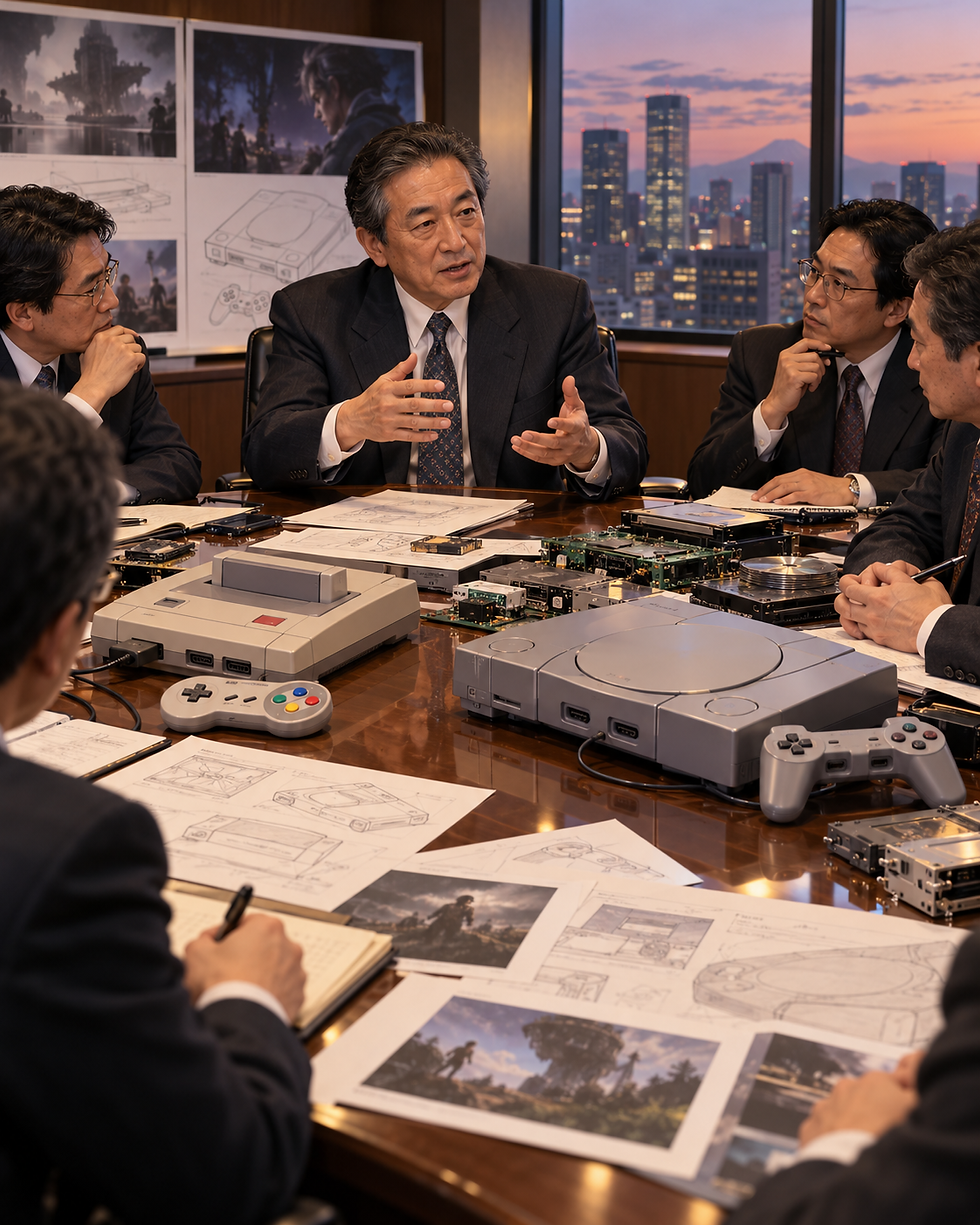
My Name is Nobuyuki Idei: Leading Sony into the Digital Age
I spent much of my career asking one question: what happens when technology, entertainment, and communication begin to merge? Sony had built its reputation on remarkable electronics, but by the 1990s I believed the future would demand something larger. A company could no longer think only about the television, the music player, or the game console sitting in someone's home. We had to think about how all of these experiences would eventually connect.
Growing Up in a Changing Japan
I was born in Tokyo in 1937 and grew up during a period when Japan was rebuilding itself after war. I later studied at Waseda University and joined Sony in 1960. Sony was still young then, but it already possessed an unusual culture. The company wanted to make products people had never imagined needing until they saw them. I worked through different parts of the organization, including audio, home video, and communications, learning that technology succeeds only when it changes the way people actually live.
Learning Sony from the Inside
I spent decades moving through Sony rather than arriving from outside as a professional executive. That mattered. I saw engineers create products, marketers introduce them to the world, and consumers decide whether our ideas deserved a place in their homes. Sony became famous for products such as televisions, audio equipment, and the Walkman. But success can be dangerous if it convinces a company that tomorrow will resemble yesterday.
Becoming President
In 1995, I became Sony's sixth president. It was an extraordinary moment to assume leadership. Personal computers were spreading, digital technology was improving rapidly, the internet was emerging, and the PlayStation had just entered the game business. Sony was no longer simply an electronics manufacturer. We owned music and motion-picture businesses, and now we were becoming an important force in interactive entertainment as well. My job was to make these different pieces begin thinking like parts of one company.
The PlayStation Changes Sony
The original PlayStation was launched shortly before I became president, but its rise happened during my leadership. It demonstrated something extremely important: Sony could create not only machines but entire entertainment platforms. A game console brought together hardware, software, developers, characters, music, and storytelling. That was a model for the future. Consumers would increasingly care less about which division created something and more about whether the total experience was enjoyable.
Becoming Digital Dream Kids
I described Sony's future with the phrase “Digital Dream Kids.” I wanted our people to retain the curiosity of children discovering a new technology for the first time. Digital technology was advancing quickly, but simply placing the word “digital” on a product was meaningless. Our products had to be unique and enjoyable to use. The most dangerous company is one that becomes so proud of its past inventions that it stops being fascinated by the future.
The Network Was Coming
I believed networks would fundamentally change Sony. Music, movies, games, computers, and communication would increasingly move through digital connections. We reorganized parts of the company and invested more heavily in software, networks, and information technology. When I became CEO in 1998, this transformation became an even greater part of my responsibility. The question was no longer simply what device Sony should manufacture next. The question was how Sony's devices and entertainment businesses could exist together in a connected world.
Success Was Never Permanent
Sony experienced tremendous success, but we also made mistakes. We had created the portable-music revolution with the Walkman, yet later we moved too slowly as MP3 players transformed that market. We also struggled with changes in television technology and with tensions created by trying to unite very different businesses. These experiences reinforced something I already understood: large companies can possess enormous technical ability and still be defeated by changes in consumer behavior.
Moving Beyond Sony
I remained CEO until 2005. After leaving Sony's leadership, I founded Quantum Leaps, where I worked with entrepreneurs, established companies, and younger business leaders. I remained interested in transformation because I believed Japan's large corporations needed stronger connections with new companies and new ideas. A successful organization should not merely protect what it has built. It should create room for the people who will replace its assumptions.
The End of My Journey
I died in Tokyo in June 2022 at the age of eighty-four. By then, many of the changes we discussed during the 1990s had become ordinary life. Games were connected through networks, entertainment moved digitally across devices, and Sony had become known as much for PlayStation and entertainment as for traditional electronics. The boundaries between hardware, software, and content had become increasingly difficult to see.
CDs, 3-D Graphics, and the Race for the Next Generation - Told by Nobuyuki Idei
By 1993, the video-game business was moving toward a turning point. For years, cartridges had defined home gaming, but they were expensive to manufacture and limited how much data developers could store. At the same time, arcade games were proving that polygon-based 3-D graphics could create experiences very different from the flat, side-scrolling worlds of the 1980s. Companies across Japan were asking the same question: what would the next generation of gaming require?
Why the Compact Disc Mattered
Sony already understood optical media through music and electronics. A compact disc could hold far more data than most game cartridges of the time and could be manufactured relatively cheaply once a game was finished. That extra space allowed developers to use larger soundtracks, spoken dialogue, full-motion video, and more detailed game assets. CDs also carried one disadvantage: loading data from a disc could be slower than reading from a cartridge. Every technology creates new possibilities and new problems at the same time.
Sony's Broken Partnership with Nintendo
Sony's path into gaming was not originally intended to create a direct competitor to Nintendo. Sony engineer Ken Kutaragi had already helped create the sound chip used in the Super Nintendo. Sony and Nintendo then worked on plans involving a CD-ROM expansion for Nintendo's system. But the relationship broke down publicly in 1991 when Nintendo pursued a different arrangement with Philips. Sony could have simply abandoned the game business. Instead, the failure helped push our company toward developing an independent console.
A Machine Built for 3-D
The project that became PlayStation was strongly shaped by the belief that three-dimensional graphics would define the next era. Rather than designing primarily for traditional 2-D games, Sony's engineers emphasized polygon processing and texture-mapped 3-D environments. This mattered because developers were beginning to imagine games in which players moved around objects, explored spaces from changing camera angles, and experienced worlds with a greater sense of depth.
Arcades Showed Us the Future
The arcade business provided a preview. Games such as Virtua Fighter demonstrated that polygon characters could become commercially exciting, while racing games showed how convincing 3-D movement could feel. Sega understood this as well and was developing the Saturn. Nintendo was preparing what would become the Nintendo 64. The next console war would therefore not simply be about faster versions of familiar machines. It would be a contest over how games themselves should look and behave.
The PlayStation Arrives
Sony released the original PlayStation in Japan in December 1994. The system used CD-ROMs and hardware designed to handle 3-D graphics efficiently. Sony also worked aggressively to attract outside developers. This was crucial. A game machine without software is only hardware sitting beneath a television. By making development attractive and using inexpensive discs, Sony gave publishers strong reasons to support the platform.
A Different Kind of Audience
Sony also approached gaming with a somewhat different image. Nintendo remained enormously popular with families and younger players, while Sony marketed PlayStation heavily toward teenagers and young adults as well. The design, advertising, music, and game selection all helped present gaming as part of modern entertainment culture rather than merely a children's pastime. That shift would become increasingly important during the second half of the decade.
America Becomes the Next Battlefield
The PlayStation launched in North America in September 1995. Sega's Saturn had already arrived, and Nintendo's next system was still being prepared. Suddenly, consumers were choosing among companies with different strategies. Sega had arcade experience, Nintendo had unmatched characters and franchises, and Sony brought electronics expertise, optical media, and a willingness to court third-party developers aggressively.
Why 1993–1995 Changed Gaming
This period marked the transition from one technological era to another. CDs expanded what could fit inside a game. Three-dimensional graphics changed how players moved through virtual worlds. Competition between Sony, Sega, and Nintendo forced each company to reconsider hardware, software, pricing, and audiences. The industry was becoming more complex, more expensive, and far more ambitious.
The Race Had Only Started
From Sony's perspective, entering video games was a risk. We were challenging companies that understood the business far better than we did. But technological change often creates openings for outsiders because the old advantages become less certain. By 1995, nobody could safely assume that yesterday's leader would remain tomorrow's leader. The next generation had arrived, and the contest would now be fought in three dimensions.
Sony PlayStation Changes the Competition - Told by Nobuyuki Idei
In 1995, the video-game industry already had powerful names. Nintendo had Mario, Zelda, the Game Boy, and years of experience. Sega had Sonic, successful arcade games, and an aggressive reputation. Sony was the newcomer. Yet newcomers sometimes have an advantage: they are not bound by all the assumptions of the established companies. The PlayStation had launched in Japan in December 1994, and during 1995 we prepared to prove that Sony could become a major force in gaming.
I Take the Presidency at a Critical Moment
On April 1, 1995, I became president and chief operating officer of Sony. Norio Ohga remained chairman and CEO, while I assumed responsibility for helping guide the company into a rapidly changing digital era. Sony was already involved in electronics, music, motion pictures, and now computer entertainment. The PlayStation therefore represented more than another product. It suggested that hardware, software, music, images, and interactive entertainment were beginning to converge.
The Price Announcement That Got Everyone's Attention
One of the most remembered moments came at the first Electronic Entertainment Expo, or E3, in Los Angeles in May 1995. Sega had announced that its Saturn console would sell in the United States for $399. Sony Computer Entertainment America president Steve Race walked onto the stage during Sony's presentation and gave an extraordinarily short announcement: "$299." That $100 difference immediately became part of the competition. Sony was signaling that PlayStation intended to fight aggressively for American consumers.
The American Launch
PlayStation officially launched in North America on September 9, 1995. The machine used CD-ROMs rather than traditional cartridges and was designed around the growing importance of polygon-based 3-D graphics. Games such as Ridge Racer, Battle Arena Toshinden, and later Tekken demonstrated the type of experience Sony wanted associated with the system. The objective was not simply to reproduce the 16-bit generation with improved graphics. We wanted consumers to feel that gaming itself was changing.
Winning Developers Was as Important as Winning Players
One of Sony's most important advantages was its relationship with outside game developers and publishers. CDs were relatively inexpensive to manufacture compared with cartridges and offered much greater storage capacity. That reduced some of the financial barriers associated with producing physical games. Sony also encouraged third-party developers rather than depending entirely on internally controlled franchises. If talented developers believed PlayStation offered them opportunity, their games would give consumers reasons to buy the machine.
Gaming Was Growing Up with Its Audience
Sony also marketed PlayStation differently. Video games had long been strongly associated with children, but many people who had grown up playing Atari, Nintendo, and Sega were now teenagers or young adults. Sony's advertising frequently targeted this older audience, connecting PlayStation with music, nightlife, fashion, and contemporary youth culture. We were not arguing that games should stop being enjoyed by children. We were arguing that people did not have to stop playing merely because they grew older.
Nintendo and Sega Suddenly Faced a Different Rival
Nintendo and Sega were accustomed to fighting one another, but Sony entered from a different direction. We had expertise in consumer electronics, compact discs, audio, entertainment, and international marketing. Sega still had the Saturn, while Nintendo was preparing the Nintendo 64. Each company was making a different technological bet: Sega pursued powerful arcade-style hardware, Nintendo remained committed to cartridges, and Sony placed enormous faith in CDs and 3-D gaming.
The PlayStation Becomes Part of a Larger Strategy
Sony's ambitions extended beyond one successful console. In our 1995 annual report, we spoke about combining digital technology with computers and telecommunications while strengthening connections between electronics and entertainment. The PlayStation fit naturally into that direction. It was a piece of hardware that depended upon software, creative content, and an expanding community of developers. That combination would become increasingly important throughout Sony's future.
The Competition Had Permanently Changed
By the end of 1995, Sony had established itself as a serious participant in an industry where many people once assumed Nintendo and Sega would remain the principal rivals. PlayStation did not succeed merely because it used CDs or produced polygons. Its strength came from combining technology, pricing, developers, marketing, and entertainment into one platform. The lesson was larger than gaming: when an industry enters a technological transition, established leadership can disappear surprisingly quickly.
What 1995 Taught Sony
When I became Sony's president, I believed our future depended on creating new forms of enjoyment through hardware and software together. The success of PlayStation helped demonstrate that principle. Sony had entered the decade primarily known for televisions, stereos, and the Walkman. We were leaving 1995 with something new: a place at the center of interactive entertainment. And from my perspective, the most interesting question was no longer whether Sony belonged in video games. It was how far this new form of entertainment could go.
Nintendo Experiments: Virtual Boy, Nintendo 64, and Innovation - Told by Yokoi
By 1995, the video-game industry was changing so quickly that standing still was its own kind of risk. Sony had entered the market with the PlayStation, Sega had launched the Saturn, and three-dimensional graphics were becoming the new frontier. Nintendo responded in more than one way. One experiment was the Virtual Boy, a machine I helped develop. Another was the Nintendo 64, a far more powerful home console that would carry Nintendo into the 3-D era. The two projects would have very different futures.
The Idea Behind Virtual Boy
The Virtual Boy was built around the idea of stereoscopic depth. A player looked into a visor mounted on a stand and saw red images created by rapidly scanning LED displays. Each eye received a slightly different image, producing the illusion of three-dimensional space. The technology was unusual and technically clever, but clever engineering is not enough. A product must also be comfortable, affordable, easy to understand, and supported by strong software.
A Machine That Asked Too Much of the Player
Virtual Boy launched in 1995, but it quickly ran into problems. The red-and-black display was visually distinctive but limited. The tabletop design made the machine awkward to use, and some players complained of discomfort or eye strain. Nintendo also warned users to take regular breaks and advised that young children should not use the 3-D feature because of concerns about developing eyesight. Most importantly, the system never received a large library of games. Without enough compelling software, even unusual hardware has little chance to survive.
A Short Life in the Market
The Virtual Boy sold poorly and was discontinued after less than a year in most markets. It became one of Nintendo's most famous commercial failures. People later associated me closely with that failure because I had led the development group behind it, but the product existed within a much larger corporate process involving cost, schedules, marketing, manufacturing, and executive decisions. Innovation is rarely the responsibility of one person, whether the result succeeds or fails.
Meanwhile, Nintendo 64 Was Approaching
While Virtual Boy struggled, Nintendo was preparing a much more important machine: the Nintendo 64. Developed in cooperation with Silicon Graphics technology, the console was designed around advanced 3-D graphics and a 64-bit processor. Unlike Sony and Sega, however, Nintendo chose to continue using cartridges rather than CD-ROMs. Cartridges offered fast loading and durability, but they were more expensive to manufacture and held far less data than CDs.
The Controller Had to Change Again
Three-dimensional games demanded a new way to move. The Nintendo 64 controller included an analog stick, allowing players to control direction and speed with far greater precision than a traditional D-pad alone. This became especially important in Super Mario 64, where Mario could walk, run, turn, and explore large 3-D spaces. The controller looked strange because it had three grips, but its analog control helped establish a design idea that would become standard across the industry.
Super Mario 64 Shows What 3-D Could Be
Nintendo 64 launched in Japan in June 1996 and in North America in September. Super Mario 64 became one of its defining games. Instead of moving mainly from left to right, players explored open environments, controlled a camera, jumped through three-dimensional spaces, and chose different objectives within the same level. It was not simply a prettier Mario game. It helped establish a new language for how console games could work in three dimensions.
Innovation Can Succeed and Fail at the Same Time
The contrast between Virtual Boy and Nintendo 64 was striking. One experiment disappeared quickly, while the other became central to Nintendo's future. Yet both came from the same desire to rethink how players interacted with games. That is important. Companies often tell stories as if success comes from perfect foresight. It does not. Real innovation produces dead ends as well as breakthroughs.
Why Failure Matters
Engineers learn from machines that fail because failure exposes assumptions. Virtual Boy showed that novelty alone was not enough. Nintendo 64 showed that a new form of control, strong software, and familiar characters could help players accept a radical change in how games were played. The lesson was not to avoid risk. The lesson was to understand which risks serve the player and which merely impress the engineer.
Pokémon Arrives in Japan and Revives the Game Boy - Told by Hiroshi Yamauchi
By early 1996, many people believed the Game Boy was nearing the end of its useful life. It had been on the market since 1989, newer systems were appearing, and attention was shifting toward advanced home consoles and three-dimensional graphics. Then, on February 27, 1996, Nintendo released Pokémon Red and Pokémon Green in Japan. Their beginning was quiet. Even people close to the project later remembered that the launch gave little indication of what was about to happen.
Six Years of Development
Pokémon had not appeared suddenly. Planning began around 1990, and development continued for roughly six years. Game Freak, led creatively by Satoshi Tajiri, built the idea around collecting creatures, raising them, battling them, and exchanging them with other players. By the time the games were finally ready, there was concern that they had arrived too late. The Game Boy itself seemed old. Yet sometimes an old machine becomes new again when someone discovers a reason to use it differently.
The Link Cable Becomes the Secret Weapon
One of Pokémon's most important ideas was its use of the Game Boy Link Cable. Players could connect two systems and trade Pokémon or battle one another. This was more than a technical feature. Different versions contained different Pokémon, so no single player could easily obtain everything alone. To complete the collection, children were encouraged to find other players. Nintendo had sold a portable machine, but Pokémon turned that machine into a social network that could fit into a schoolbag.
Red and Green Were Designed to Work Together
Pokémon Red and Green were similar games, but the Pokémon available in each version differed. That difference made trading useful rather than optional decoration. A child who owned Red might need a friend with Green. This simple design encouraged conversation, cooperation, negotiation, and competition between players. Nintendo's own descriptions of the original games emphasized collecting Pokémon as well as exchanging and battling them with other players.
Success Grew Slowly—and Then Rapidly
Pokémon did not begin with the enormous advertising campaign people might imagine today. Sales grew through word of mouth as players told friends about the strange creatures they had discovered and the battles they could have together. Interest also grew around Mew, a hidden Pokémon that became the subject of magazine promotions and playground rumors. Instead of disappearing after its launch period, the game kept selling. That was unusual and very valuable.
The Game Boy Comes Back to Life
This was one of the most important effects of Pokémon. The Game Boy had seemed to be approaching retirement, yet Pokémon gave players a new reason to buy and carry it. Nintendo executives later described the games as arriving just as there was a sense that the Game Boy might have reached the end of its shelf life. Pokémon effectively caught the "last train" and then helped extend the life of the entire platform.
A Game Becomes Something Larger
The success did not stop with Red and Green. In October 1996, the Pokémon Trading Card Game appeared in Japan. In April 1997, the television anime began broadcasting. Pokémon was becoming more than software. It was developing into a system of games, cards, characters, television, merchandise, and eventually films. What had begun as a Game Boy project was turning into an entertainment property capable of moving across many different businesses.
Why Pokémon Was Different
From a business perspective, Pokémon was fascinating because its success did not depend on having the most advanced graphics. The Game Boy was technically modest compared with the new machines appearing in 1996. Pokémon succeeded because its basic idea was strong. Players wanted to discover creatures, build teams, trade with friends, and see what someone else had found. The technology served the idea rather than replacing it.
An Old Lesson Returns
Nintendo had learned this lesson before. The most advanced hardware does not automatically produce the strongest entertainment. Pokémon demonstrated it again with remarkable clarity. A seven-year-old handheld system could suddenly become exciting because developers had discovered a new form of play perfectly suited to its limitations. The Game Boy did not need to become more powerful. It needed a game that gave people a new reason to turn it on.
The Beginning of Something Much Larger
In 1996, we could see that Pokémon was becoming successful in Japan, but even then the full scale of what followed would have been difficult to imagine. It would expand internationally, reach television screens, trading-card tables, theaters, toys, and future generations of Nintendo hardware. The lesson was simple: never assume a product is finished merely because it is old. Sometimes one extraordinary idea can give an aging machine an entirely new life.
Nintendo 64 and the Leap into 3-D Worlds - Told by Masayuki Uemura
By 1996, video games were changing in a way that was much deeper than simply improving graphics. For years, most home games had been built around two-dimensional movement. Players moved left, right, up, or down on a flat screen. Now developers wanted to create spaces that felt three-dimensional. That meant the hardware, the controller, the camera, and even the way players understood movement all had to change at the same time.
Nintendo Builds for 3-D
The Nintendo 64 was designed to handle this new generation of games. Nintendo worked with Silicon Graphics technology as the system took shape, and the finished console used a 64-bit processor and custom graphics hardware intended to produce polygon-based 3-D environments. The machine launched in Japan in June 1996 and in North America that September. Its name itself announced Nintendo's technological ambition.
The Strange-Looking Controller Had a Purpose
Many people remember the Nintendo 64 controller because it had three grips. It looked unusual, but it was designed for a transition period when games might still use a traditional directional pad while newer games needed analog control. The center grip held an analog stick, allowing players to move a character with much greater precision. In a 3-D world, that mattered. A character could walk slowly, run quickly, turn gradually, or move in many directions instead of only following fixed digital inputs.
Super Mario 64 Explains the Machine
No game demonstrated the system more clearly than Super Mario 64. Instead of moving through flat stages from one side of the screen to the other, Mario could run around castles, hills, water, tunnels, and open areas in three dimensions. Players also had to control or understand a moving camera. That may sound simple now, but in 1996 it required people to learn an entirely new way of playing.
The Camera Became Part of the Game
Three-dimensional worlds created a problem that two-dimensional games rarely had: where should the player look? In Super Mario 64, the camera was represented by Lakitu following Mario with a camera. This was partly playful, but it also taught players that the viewpoint itself could move. Developers had to begin thinking not only about level design, but also about visibility, camera angles, and how to prevent the player from becoming disoriented.
Cartridges Versus CDs
Nintendo made one controversial decision by continuing to use cartridges while Sony's PlayStation and Sega's Saturn used optical discs. Cartridges loaded data quickly and were durable, but they held much less information and were more expensive to manufacture. CDs offered far greater storage capacity and lower production costs. This difference influenced which developers supported each system and became one of the most important business decisions of the generation.
Developers Learned to Think Differently
The move into 3-D forced game designers to rethink almost everything. Enemies could approach from more directions. Players could explore spaces rather than follow a single path. Objects needed depth, lighting, and perspective. Controls had to be more precise. Even simple actions such as jumping became harder because players had to judge distance in three dimensions. The technology was impressive, but the larger challenge was teaching people how to use it naturally.
More Games Prove the Idea
During 1997, the Nintendo 64 library began expanding. Mario Kart 64 brought racing into three-dimensional environments, while Star Fox 64 used 3-D movement, voice acting, and the new Rumble Pak accessory to make the controller vibrate during gameplay. GoldenEye 007, released later that year, demonstrated that a first-person shooter could work successfully on a home console and became especially famous for its four-player split-screen multiplayer.
Four Players Around One Television
Nintendo 64 also included four controller ports directly on the console. That decision made local multiplayer easier. Games could bring several people together in one room without requiring additional adapters. This became one of the system's strongest identities. The console was not only about entering 3-D worlds alone; it was also about sharing those worlds with friends sitting beside you.
What the Leap into 3-D Really Meant
The Nintendo 64 did more than increase processing power. It helped establish rules that later players would take for granted: analog movement, controllable cameras, 3-D exploration, vibration feedback, and multiplayer built directly into the hardware. Not every decision was perfect, and the cartridge format created real limitations, but the system demonstrated something engineers understand well: when technology changes the dimensions of a problem, you cannot simply improve the old solution. You must learn how to design again.
Pokémon Becomes an International Cultural Phenomenon - Told by Yamauchi
By 1997, Pokémon was no longer behaving like an ordinary video game. In Japan, Pokémon Red and Green had already become major successes, but something more important was happening. The characters were moving beyond the Game Boy. The Pokémon television anime began broadcasting in Japan in April 1997, giving children another way to enter the world of Pokémon. Pikachu, Ash, and the idea of catching and training Pokémon could now reach children who had never touched the original games.
Television Changes the Strategy
When Pokémon was prepared for the United States, the approach was unusual. In Japan, the games had come first, followed by the card game and then the animated series. For America, the television anime was used as an introduction to the characters before and alongside the games. The Pokémon Company later explained that this strategy helped American children become familiar with the creatures and stories very quickly. Television could create curiosity; the games then allowed children to enter that world themselves.
Pokémon Comes to America
In September 1998, the television episode Pokémon, I Choose You! began airing through 111 U.S. television stations. That same month, Pokémon Red and Pokémon Blue were released for the Game Boy in the United States. Nintendo suddenly had something far larger than another successful game. Children were watching Pokémon on television, talking about the characters at school, and then carrying those same characters with them on their Game Boys.
The Game Boy Finds a New Generation
This success was remarkable because the Game Boy itself was already old by video-game standards. The machine had been released in 1989, yet Pokémon gave millions of children a new reason to want one almost a decade later. Nintendo also introduced the Game Boy Color in 1998. Rather than disappearing beneath the growing excitement over 3-D consoles, handheld gaming was suddenly at the center of one of the largest youth crazes of the decade. Nintendo later described Pokémon as creating a nationwide American craze to “Catch 'em All!”
Trading Cards Move Pokémon onto the Playground
Then Pokémon escaped the electronic screen entirely. The Pokémon Trading Card Game had already appeared in Japan in 1996, and the U.S. release followed in January 1999. Children could now collect physical Pokémon, build decks, trade cards, and compete face-to-face. Rare cards became prized possessions. The basic concept that had made the Game Boy titles successful—collecting, trading, and comparing what you had found—worked just as effectively with cardboard as it did with computer code.
Pikachu Becomes an International Face
The television series gave Pokémon something even the games could not provide as easily: personality. Pikachu became especially recognizable because the animated series placed the character beside its main human hero. Children who might not remember the statistics of a particular game could recognize Pikachu immediately. Pokémon was beginning to operate like the great entertainment properties of earlier generations, with characters moving among games, television, toys, cards, and other merchandise.
The Movie Proves the Craze Has Become Something Larger
Pokémon reached movie theaters in Japan in 1998, and Pokémon: The First Movie opened in the United States in November 1999. By then, the franchise was no longer simply something sold in game stores. Children could watch it in theaters, collect the cards, buy toys, follow the television series, and continue playing on their Game Boys. Each form of entertainment encouraged interest in the others.
A Business Had to Be Built Around the Phenomenon
The rapid growth also required organization. In April 1998, Nintendo, Creatures, and Game Freak jointly established Pokémon Center Co., Ltd., the predecessor of The Pokémon Company. Pokémon Center Tokyo also opened that year. The franchise had become large enough that managing stores, products, licensing, and the expanding brand required a more formal business structure.
Why Children Wanted to Participate
The strength of Pokémon was participation. A child did not merely watch Pikachu. The child could catch Pokémon in the game, trade them with friends, battle another player, collect cards, discuss the television episodes, and search for creatures someone else did not have. Pokémon gave children reasons to interact with one another. That social element helped transform the franchise from entertainment into a shared playground culture.
When a Video Game Becomes Culture
By the end of 1999, Pokémon had demonstrated how dramatically the video-game business was changing. A successful game could now become television, cards, movies, merchandise, and an international community almost simultaneously. After its American success, Pokémon expanded further into Europe, Latin America, Oceania, and Asia. For Nintendo, the lesson was unmistakable: the most valuable entertainment property might not be the one that simply sells the most cartridges. It may be the one that children carry into every part of their lives.
Gaming Becomes a Permanent Part of Global Culture - Told by Nobuyuki Idei
By 1998, it was becoming difficult to describe video games as a temporary craze. Children and teenagers around the world were growing up with consoles, handheld systems, recognizable characters, and favorite game series. PlayStation had become a major international platform, Nintendo remained enormously influential, and Pokémon was spreading across television, cards, toys, and games. Gaming was becoming part of ordinary youth culture rather than a separate hobby understood only by enthusiasts.
PlayStation Reaches a Much Larger Audience
Sony benefited from this change because PlayStation appealed to both younger players and an older teenage audience. By the late 1990s, games such as Final Fantasy VII, Gran Turismo, Metal Gear Solid, Resident Evil, and Tekken had shown that console games could offer cinematic presentation, complex stories, realistic racing, and mature themes. The audience was expanding because the kinds of experiences available were expanding. A game console was becoming a general entertainment machine.
Pokémon Shows the Power of Shared Culture
Pokémon demonstrated another side of this transformation. Children could play the games, watch the television series, trade cards, exchange Pokémon with friends, and recognize the same characters across many products. This was important because youth culture is often built around shared references. When millions of children understand the same characters, rules, jokes, and goals, a game becomes more than software. It becomes a common language.
Gaming Moves Beyond the Bedroom
Games also became increasingly social. Nintendo 64 was especially known for four-player local games, while PlayStation supported a growing range of competitive and cooperative experiences. Arcades still mattered, but home consoles now offered many of the experiences young people once had to leave home to find. Multiplayer gaming turned living rooms, dormitories, and bedrooms into gathering places. The machine under the television was becoming part of social life.
The Game Boy Refuses to Disappear
Handheld gaming remained just as important. The Game Boy Color appeared in 1998, and Pokémon helped give Nintendo's portable systems extraordinary new life. Children could take games to school, on family trips, or to a friend's house. This portability changed when and where gaming happened. Entertainment was no longer limited to scheduled television programs or a console connected in one room.
Games Become More Cinematic
The growth of CD-based systems also changed expectations. Larger storage capacity allowed developers to include recorded music, voice acting, video sequences, and more elaborate stories. Games increasingly borrowed techniques from movies while remaining interactive. For a company like Sony, which operated in electronics, music, motion pictures, and games, this convergence was especially significant. The boundaries between different forms of entertainment were becoming less distinct.
Advertising Changes Too
Video-game marketing during these years increasingly treated players as part of a lifestyle rather than simply children asking their parents for toys. Advertisements appeared alongside music, fashion, sports, and youth-oriented television. Companies wanted their consoles to represent identity. Owning a PlayStation, Nintendo 64, or Game Boy could become part of how young people described their interests and even their friendships.
A Global Industry Takes Shape
The late 1990s also made clear that gaming was global. Japanese-designed systems and games became major successes in North America and Europe, while Western developers increasingly created influential titles of their own. Characters such as Mario, Pikachu, Lara Croft, and Crash Bandicoot became internationally recognizable. Games were crossing national borders with remarkable speed.
The Next Generation Was Already Coming
By 1999, Sony was preparing PlayStation 2, while Sega had introduced the Dreamcast. Nintendo was planning its next system as well. The industry had reached a point where companies could no longer treat each console as an isolated product. Players expected continuing generations of hardware, familiar franchises, improved graphics, and new forms of connection. Gaming had become a permanent industry built around repeated technological change.
What the Turn of the Century Revealed
By 2000, the important question was no longer whether video games would survive. They had already become embedded in global youth culture. The real question was what would happen when games became more connected, more cinematic, and more integrated with the internet. From my perspective at Sony, the future was becoming clear: hardware, software, media, and networks were beginning to converge, and video games were no longer standing at the edge of entertainment. They were moving toward its center.


Comments