

10. Heroes and Villains from World War II: Japanese Expansion, Pearl Harbor, and America's Entry into WWII


My Name is Admiral Isoroku Yamamoto: Commander-in-Chief of the U.S. Fleets
I was born in 1884 in Nagaoka, Japan, the son of a former samurai. Though the age of the samurai had ended, their values remained in my home. Honor, discipline, and loyalty to one's nation were not merely lessons—they were expectations. From an early age I believed that Japan could become a great modern power, but only if its people combined courage with learning.
Learning the Ways of the Sea
As a young man I entered the Imperial Japanese Naval Academy. The sea became my classroom, and I devoted myself to studying navigation, engineering, and leadership. During the Russo-Japanese War, I fought at the Battle of Tsushima, where our navy achieved a remarkable victory over Russia. I lost two fingers in that battle, a reminder that success in war always carries a painful cost.
Seeing America with My Own Eyes
Unlike many officers, I spent years studying in the United States. I attended Harvard University, traveled widely, and later served as a naval attaché in Washington. I admired America's factories, industries, and enormous natural resources. I believed many of my countrymen underestimated the strength of the United States. If Japan ever entered a long war against such an industrial giant, I feared the odds would steadily turn against us.
Preparing Japan's Navy
Upon returning home, I became one of Japan's strongest supporters of naval aviation. Many senior officers still believed battleships would always rule the seas, but I saw the growing power of aircraft carriers and naval airplanes. I pushed for better pilots, stronger carriers, and careful training. Technology was changing warfare, and our navy had to change with it or fall behind.
A Dangerous Assignment
As tensions grew between Japan and the Western powers, I was appointed Commander-in-Chief of the Combined Fleet. Political leaders and military commanders increasingly believed that conflict with the United States was becoming unavoidable because of embargoes, shrinking supplies of oil, and Japan's expanding empire. I understood the risks better than most, yet my duty was not to decide national policy. My responsibility was to prepare the fleet to win the first battles if war came.
Planning Pearl Harbor
I developed an operation unlike anything attempted before. Our aircraft carriers would cross thousands of miles of open ocean in complete secrecy before launching a surprise attack on Pearl Harbor. The objective was to cripple the American Pacific Fleet long enough for Japan to secure vital territories throughout the Pacific. It was a daring gamble that required months of planning, strict secrecy, and extraordinary training by our sailors and aviators.
Victory and Uncertainty
On December 7, 1941, our forces struck Pearl Harbor with tremendous success. Battleships burned, aircraft were destroyed, and the attack shocked the world. Many celebrated the operation as one of Japan's greatest military achievements. Yet even in those early hours, I knew the attack had not solved our greatest problem. America's factories, shipyards, and people remained untouched, and I understood how quickly such a nation could recover.
Japan's Expanding Empire, 1931–1941 – Told by Admiral Isoroku Yamamoto
Japan is a nation of islands with limited natural resources. Our industries depended upon imported oil, iron ore, rubber, and many other materials that had to travel across long sea routes. As our population grew and our factories expanded, many leaders feared that Japan's future could be threatened if those supplies were cut off. To them, securing resources was not simply about increasing wealth—it was about ensuring the nation's survival and independence in an increasingly competitive world.
The Occupation of Manchuria
In 1931, following the Mukden Incident, Japanese forces occupied Manchuria in northeastern China. The region was rich in coal, iron, farmland, and other valuable resources that many believed Japan desperately needed. A new state called Manchukuo was established under Japanese control. While Japan argued that the occupation would bring stability and development to the region, much of the international community viewed it as an act of aggression. The disagreement damaged Japan's relationships with many Western nations.
War Spreads Across China
By 1937, fighting expanded into a full-scale war between Japan and China. Our military captured many major cities, but Chinese forces continued resisting despite enormous losses. The conflict became far longer and more costly than many Japanese leaders had expected. Vast numbers of soldiers became tied down in China, while supplies and equipment were consumed at a tremendous rate. Rather than ending quickly, the war became a long struggle that influenced every decision Japan made afterward.
Looking South to French Indochina
As the war in China continued, Japan sought to prevent supplies from reaching Chinese forces through neighboring territories. In 1940 and 1941, Japanese troops moved into French Indochina, today's Vietnam, Laos, and Cambodia, taking advantage of France's weakness after its defeat in Europe. This new position also brought Japan closer to the oil fields, rubber plantations, and mineral resources of Southeast Asia. Military planners believed these resources would strengthen Japan's ability to continue fighting and secure its future.
The Search for Resources
Few decisions during these years were discussed more often than access to raw materials. Japan produced very little oil of its own and relied heavily upon imports, especially from the United States. As economic sanctions and embargoes increased, military and political leaders feared that the nation could eventually run out of fuel for its navy, army, and industries. Without oil, ships could not sail, aircraft could not fly, and factories could not operate. Many leaders concluded that acquiring resource-rich territories had become a matter of national necessity.
Why Many Leaders Supported Expansion
It is important to understand the thinking of the time, even if history judges it differently today. Many Japanese leaders believed their nation deserved equal standing among the world's great powers. They looked at the colonial empires controlled by Britain, France, the Netherlands, and others and argued that Japan should possess its own sphere of influence in Asia. They also believed that controlling neighboring territories would provide security against foreign powers and reduce dependence upon nations that could restrict vital supplies.
A Path That Led to Greater Conflict
Yet expansion brought increasing opposition rather than lasting security. Each new occupation deepened tensions with China, the United States, Britain, and other nations. Economic sanctions grew stronger, diplomatic negotiations became more difficult, and military preparations accelerated on every side. What many hoped would strengthen Japan instead moved the nation closer to a conflict far larger than anyone could fully control. These years remind us that decisions made in pursuit of security can sometimes create even greater dangers if diplomacy fails to keep pace with ambition.

My Name is Cordell Hull: Secretary of State of the United States
I was born in 1871 in the hills of Tennessee, where hard work, honesty, and respect for one's neighbors shaped daily life. My family believed that public service was an honorable calling, and I carried those lessons with me as I studied law and entered politics. From the beginning, I believed that patient discussion could often accomplish what anger and threats could not.
Learning the Work of Government
I first served in the Tennessee legislature before representing my state in the United States Congress for many years. There I developed a strong interest in taxation, trade, and constitutional government. I found that successful legislation rarely came through loud speeches alone. It required careful listening, thoughtful compromise where possible, and an unwavering commitment to principles that served the nation over personal ambition.
Believing in Peace Through Trade
Throughout my career, I became convinced that nations which traded fairly with one another were less likely to settle disputes by force. As Secretary of State under President Franklin Roosevelt, I worked to negotiate reciprocal trade agreements with many countries. My hope was that expanding commerce would strengthen friendships, improve prosperity, and reduce the causes that too often led nations toward conflict.
Representing America Abroad
Serving as Secretary of State placed me at the center of international affairs during one of history's most uncertain periods. Across Europe and Asia, dictators expanded their power while democratic nations struggled to preserve peace. My responsibility was to represent the interests of the United States with firmness, caution, and dignity. Diplomacy demanded measured words, for every statement carried consequences that could reach far beyond the conference table.
Negotiations with Japan
As Japan expanded across China and Southeast Asia, relations between our nations became increasingly strained. The United States opposed aggression and responded with economic sanctions and restrictions designed to encourage peaceful solutions. My colleagues and I continued meeting with Japanese representatives, believing that every reasonable opportunity for negotiation should be explored before accepting that war had become unavoidable. Even when discussions grew difficult, diplomacy required patience until every avenue had been examined.
The Day Diplomacy Ended
On December 7, 1941, while diplomatic conversations were still underway in Washington, news arrived that Japanese forces had attacked Pearl Harbor. The attack transformed the situation in a single morning. Diplomacy could no longer prevent the conflict that had begun. My attention turned immediately to supporting the President, consulting with Congress, and working alongside our allies as the United States entered a global war.
Building a Better Peace
Although much of my service is remembered because of war, I always believed that diplomacy should ultimately seek peace. During the later years of the conflict, I strongly supported plans for an international organization where nations could resolve disputes through discussion rather than battle. Those efforts contributed to the creation of the United Nations, an institution founded upon the hope that cooperation might prevent future generations from enduring another world war.
America Responds with Sanctions and Embargoes – Told by Secretary Hull
When disagreements arise between nations, military force is not the only instrument available. Long before armies meet on the battlefield, governments often turn to diplomacy and economic policy in an effort to influence events. During the late 1930s and early 1940s, as Japan expanded its military operations across East Asia, the United States sought to discourage further aggression through economic measures rather than immediate armed conflict. We believed these actions might persuade Japan to reconsider its course while preserving peace.
Restricting Strategic Materials
One of the earliest responses involved limiting exports of materials considered essential for war. Scrap iron and scrap steel, much of which Japan imported from abroad, were valuable for producing ships, tanks, aircraft, and weapons. As concerns grew over Japan's military campaigns in China, the United States imposed increasingly strict export controls on these strategic materials. These restrictions signaled that economic relationships could not remain separate from international conduct.
The Oil Embargo
No resource was more important than petroleum. Japan imported the overwhelming majority of its oil, and much of it came from the United States. In 1941, after Japanese forces occupied southern French Indochina, the United States joined with Britain and the Netherlands in placing severe restrictions on oil exports to Japan. The decision was not taken lightly. We understood that oil powered fleets, aircraft, transportation, and industry. Limiting access to it placed enormous pressure upon Japan's government to reconsider its policies.
Freezing Japanese Assets
Economic pressure extended beyond trade. The United States also froze Japanese financial assets held within American banks. This action greatly limited Japan's ability to conduct international business using American financial institutions and made purchasing essential goods increasingly difficult. By restricting both money and materials, we hoped to encourage negotiations while demonstrating that continued expansion carried serious economic consequences.
Diplomacy Continued
Even as sanctions increased, diplomatic discussions never ceased. Japanese representatives continued meeting with American officials in Washington, and I remained committed to exploring every reasonable opportunity for a peaceful settlement. Diplomatic conversations are often slow and careful, requiring both patience and precision. Although disagreements were profound, it remained our duty to continue talking for as long as there remained any realistic possibility of avoiding war.
When Economics Became a Weapon
Sanctions and embargoes illustrate how economics can become an instrument of foreign policy. Instead of employing soldiers, nations may use trade, finance, and access to critical resources to influence another government's decisions. Such measures are intended to alter behavior without resorting immediately to armed conflict, though they also carry risks. If the targeted nation views these actions as intolerable, economic pressure may harden positions rather than soften them.
History demonstrates that diplomacy, economics, and military affairs are closely connected. The sanctions imposed against Japan reflected a belief that peaceful pressure offered a better alternative than immediate war. Whether such measures succeed depends upon the circumstances, the willingness of both sides to negotiate, and the choices made by national leaders. In the months before Pearl Harbor, economics became a battlefield of its own, showing that decisions made in banks, factories, and government offices can influence history just as surely as those made on distant battlefields.
The Last Negotiations Before War – Told by Secretary of State Cordell Hull
During 1941, representatives of the United States and Japan met repeatedly in Washington, hoping to resolve a crisis that had been building for years. The discussions were formal, careful, and often lengthy. Both governments understood that the decisions made in those meeting rooms could determine whether the Pacific remained at peace or descended into war. Despite the seriousness of the situation, diplomacy continued because every peaceful solution deserved to be explored.
What Each Nation Wanted
The negotiations revealed just how far apart our governments had grown. The United States insisted that nations should respect the sovereignty of other countries and withdraw military forces from territories taken by force, particularly in China and French Indochina. Japanese leaders, however, argued that their military operations were necessary for national security, access to vital resources, and the establishment of what they called a stable order in East Asia. These fundamentally different goals made compromise extremely difficult.
The Hull Note
On November 26, 1941, I presented what became known as the Hull Note. It outlined the principles that the United States believed should guide future relations between our countries. Among its key points were the withdrawal of Japanese forces from China and French Indochina, respect for the territorial integrity of all nations, and peaceful trade conducted without coercion. From the American perspective, these were principles designed to preserve international law. Many Japanese leaders, however, viewed the document as requiring concessions they believed their nation could not accept.
Japanese Diplomacy Under Pressure
While negotiations continued in Washington, Japanese diplomats faced an increasingly difficult assignment. They worked under strict instructions from Tokyo while military leaders prepared for the possibility that diplomacy might fail. Some diplomats genuinely hoped an agreement could still be reached, but decisions were no longer being shaped by diplomacy alone. Political leaders, military commanders, and the pressures of time all influenced Japan's course as the crisis deepened.
Why Peace Efforts Collapsed
The negotiations ultimately failed because neither government was willing to abandon what it considered essential national interests. The United States refused to recognize territorial expansion achieved through military force, while Japan was unwilling to surrender gains it believed were necessary for its security and survival. Economic sanctions increased the pressure on Japan, while military preparations on both sides reduced confidence that compromise remained possible. By late November, events were moving faster than diplomacy could restrain them.
Misunderstandings and Miscalculations
History also reminds us that nations sometimes misunderstand one another's intentions. American leaders underestimated how urgently many Japanese officials viewed access to oil and other resources. At the same time, many Japanese leaders underestimated the determination of the United States to oppose further expansion and the resolve that an attack would awaken among the American people. Such miscalculations made peaceful solutions even more difficult to achieve.
As negotiations continued in Washington, Japanese naval forces were already crossing the Pacific toward Hawaii. The diplomats seated across the conference table did not control every decision unfolding thousands of miles away. On December 7, 1941, the attack on Pearl Harbor ended the negotiations forever. Looking back, these final diplomatic meetings stand as a solemn reminder that peace depends not only upon words spoken across a table, but also upon the willingness of nations to act upon them before time runs out.
Planning Operation Hawaii – Told by Admiral Isoroku Yamamoto
By 1941, many leaders in Japan believed that war with the United States had become increasingly likely. If conflict could not be avoided, I believed Japan's greatest chance lay in striking first. I did not expect that Japan could win a long industrial war against the United States, whose factories and resources far exceeded our own. Instead, I sought a plan that might delay American intervention long enough for Japan to secure defensive positions throughout the Pacific. It was an enormous gamble, one that depended upon speed, secrecy, and surprise.
The Power of the Aircraft Carrier
For generations, battleships had been considered the masters of the sea. I believed that age was ending. Aircraft carriers could launch waves of airplanes hundreds of miles from an enemy fleet, striking targets long before battleships came within firing range. Rather than sending our carriers to support battleships, I placed the carriers at the center of the operation. Six fleet carriers, carrying hundreds of aircraft, would become the striking force that sailed toward Hawaii.
Crossing the Pacific in Secret
The voyage itself was one of the most difficult parts of the plan. Our carrier force had to travel thousands of miles across the cold northern Pacific without being discovered. Strict radio silence was maintained so that enemy listeners could not track our movements. Ships followed carefully planned routes that avoided normal commercial traffic, while weather and timing were studied closely. If American scouts found us before the attack, the entire operation might fail before the first airplane ever took off.
Preparing Every Pilot and Sailor
Success depended upon preparation. Naval aviators practiced flying from carriers under demanding conditions, while bomber crews rehearsed coordinated attacks against ships and airfields. Torpedo pilots trained to operate in the relatively shallow waters of Pearl Harbor, requiring modifications to their weapons so they would not plunge into the harbor floor. Every crew member studied maps, target locations, and attack schedules until their roles became second nature. Months of careful training stood behind the few hours of combat that followed.
The Importance of Surprise
Surprise was the foundation of the entire operation. If American defenses were fully alert, aircraft could be dispersed, anti-aircraft batteries manned, and warships prepared for battle. A surprise attack, however, offered the possibility of crippling the Pacific Fleet before it could respond effectively. Every decision—from the route across the Pacific to the timing of the first wave—was designed to preserve that element of surprise until the very last moment.
The Risks I Accepted
No military plan is free from risk, and this operation carried many. Our carriers would be operating far from home with limited opportunities for reinforcement or repair. If they were discovered or defeated, Japan would lose much of its naval striking power at the very beginning of the war. There was also uncertainty about whether all important American targets would be present, particularly the aircraft carriers, whose locations could change. I understood these dangers, but I believed the risks of inaction were, in the minds of Japan's leaders, even greater.
A Victory with Unanswered Questions
The attack achieved tactical surprise and inflicted heavy damage upon the American fleet at Pearl Harbor. Yet some of the most important objectives—including the American aircraft carriers, fuel storage facilities, repair yards, and submarine base—remained intact. Those resources would prove critical as the war continued. Planning Operation Hawaii demonstrated how innovation, secrecy, and careful preparation could produce a remarkable military success, but it also showed that even the most carefully designed operation cannot determine the outcome of an entire war.

My Name is Admiral Husband E. Kimmel: Commander of the U.S. Pacific Fleet
I was born in Henderson, Kentucky, in 1882, into a family that believed deeply in service to the nation. As a young man, I sought a life of purpose and discipline, earning an appointment to the United States Naval Academy at Annapolis. There I learned that leadership demanded steady judgment, careful preparation, and a willingness to accept responsibility when lives depended upon your decisions.
Learning the Navy's Traditions
After graduating from the Naval Academy, I spent many years serving aboard battleships, destroyers, and other naval vessels as the United States expanded its presence across the world's oceans. I studied navigation, gunnery, engineering, and fleet operations. Every assignment taught me that a successful navy depended not only upon powerful ships but also upon skilled officers and disciplined sailors working together as one team.
Climbing Through the Ranks
Promotion in the Navy came through experience, performance, and trust. During the First World War, I helped protect American interests and gained valuable experience managing large naval operations. As the years passed, I held increasingly important commands and staff positions. I believed careful planning, rigorous training, and professional leadership were the foundation of a strong fleet prepared to meet any challenge.
Taking Command of the Pacific Fleet
In 1941, I was appointed Commander-in-Chief of the United States Pacific Fleet. It was one of the Navy's greatest responsibilities. Tensions with Japan had grown steadily as events unfolded across Asia and the Pacific. Our fleet had been stationed at Pearl Harbor as both a defensive measure and a demonstration of American resolve. We trained constantly while balancing limited resources, intelligence reports, and the many demands placed upon our forces.
Life Before the Storm
Although we recognized that war with Japan was possible, there remained great uncertainty about where an attack might come. Many believed the Philippines, Southeast Asia, or other American territories were more likely targets. Intelligence information arrived in pieces, often incomplete or difficult to interpret. Like many commanders of the time, I expected that if war began, there would be warning enough to place the fleet on full alert.
The Morning of December 7
On the morning of December 7, 1941, that belief vanished. Japanese aircraft appeared over Pearl Harbor without warning, attacking battleships, airfields, and military installations. Sailors raced to their battle stations while ships fought desperately to defend themselves. The courage displayed that morning by officers, enlisted men, nurses, doctors, and civilians remains one of the finest examples of American determination I ever witnessed.
The Weight of Command
Within days of the attack, I was relieved of my command. Throughout my life, I maintained that I had not received all of the intelligence available in Washington before the attack and that important information had not reached those responsible for defending Pearl Harbor. Even so, I understood that commanders bear responsibility for what happens under their command. History would continue debating the decisions made before that day, but the burden of command is one that every military leader accepts when taking the oath to serve.
Pearl Harbor Before Sunrise – Told by Admiral Husband E. Kimmel
Before the sun rose on December 7, 1941, Pearl Harbor was one of the busiest naval bases in the world. Battleships rested along Battleship Row, destroyers and cruisers occupied nearby berths, and support ships carried out the daily work of keeping the fleet supplied and ready. Sailors prepared for another Sunday at sea or ashore, while mechanics repaired equipment, cooks prepared breakfast, and officers reviewed schedules for the coming week. It appeared to be an ordinary morning.
Life in the Pacific Fleet
Service in Hawaii followed a demanding routine. Crews trained regularly in navigation, gunnery, damage control, engineering, and fleet maneuvers. Aircraft practiced reconnaissance flights, while ships conducted exercises in the surrounding waters. The Pacific Fleet existed to deter aggression and to respond quickly if conflict arose. Although life included recreation and liberty for sailors, every member of the fleet understood that preparation was part of everyday duty.
How the Fleet Was Positioned
Many of the fleet's battleships were moored close together along Ford Island because the harbor offered protection and simplified maintenance. Fuel, ammunition, repairs, and supplies could be delivered efficiently when ships were grouped in this manner. Aircraft at nearby Army airfields were also parked close together to make them easier to guard against possible sabotage. These arrangements reflected the threats military planners believed were most likely at the time, even though they later proved vulnerable to an air attack.
The Warnings We Received
It would be incorrect to say that we expected no danger at all. Relations with Japan had steadily worsened throughout 1941, and numerous intelligence reports warned that war might come soon. However, the information reaching commanders in Hawaii did not identify Pearl Harbor as the likely target. Most assessments suggested that Japan's first moves would probably be directed against the Philippines, British Malaya, Thailand, or the Dutch East Indies, where valuable resources lay closer to Japan's expanding empire.
Why Hawaii Seemed Safe
Distance itself influenced our thinking. Hawaii lay more than 3,000 miles from Japan, farther than any carrier strike force had ever attempted to launch a surprise attack. Many believed such an operation would be too difficult to organize, too dangerous to sustain, and too likely to be discovered before reaching its objective. Radar technology was still new, long-range aerial surveillance was limited, and the vast Pacific Ocean seemed to provide a natural shield against surprise.
Readiness and Its Limits
The fleet was not completely unprepared, but it was not operating at full wartime alert. Ammunition was not always immediately available, many anti-aircraft guns were not fully manned before dawn, and numerous aircraft and ships were following normal peacetime routines. Readiness exists in degrees, and military commanders must balance preparation against available resources, intelligence, and the demands of daily operations. On that Sunday morning, the level of readiness reflected what we believed was the most probable threat—not the one that actually arrived.
The Lessons of the Morning
Pearl Harbor reminds every generation that assumptions deserve constant examination. Military leaders must prepare not only for the most likely course of events but also for those that appear unlikely. Intelligence is valuable only when it is complete, properly shared, and correctly interpreted. Before sunrise on December 7, Pearl Harbor seemed secure. Within a matter of hours, the world had changed, and the lessons learned there would influence military planning for generations to come.
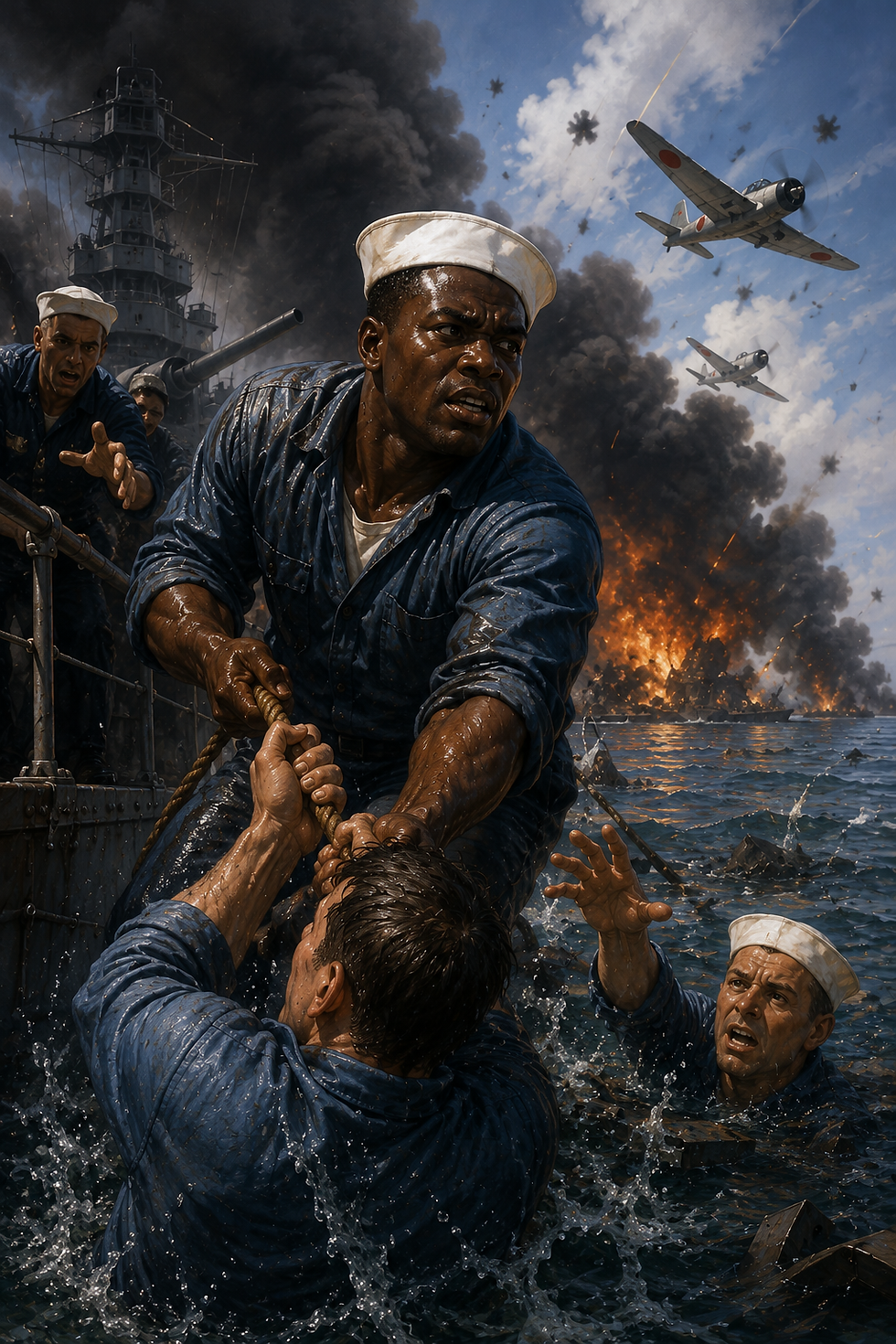
My Name is Doris Miller: United States Navy Sailor
I was born in 1919 in Waco, Texas, where my family worked hard and believed in treating people with respect. We did not have great wealth, but we had faith, strong family ties, and a willingness to help our neighbors. As a young man, I enjoyed sports and farm work, and I learned that a person's character is measured more by what he does than by what he says.
Joining the Navy
When I enlisted in the United States Navy in 1939, opportunities for African Americans were limited. Most of us were assigned to the Messman Branch, where we cooked meals, cleaned, and served officers instead of being trained for many combat duties. I accepted those responsibilities because I wanted to serve my country. Like many others, I hoped that if I worked hard and proved myself, greater opportunities would eventually come.
Life Aboard the West Virginia
I was assigned to the battleship USS West Virginia, where life followed a steady routine of work, drills, and preparing for whatever challenges might come. My job was in the ship's dining facilities, but every sailor understood that if danger appeared, everyone had a duty to protect the ship and help their fellow crew members. We trusted one another regardless of our assigned jobs.
The Morning Everything Changed
On the morning of December 7, 1941, I heard explosions and rushed onto the deck. Japanese aircraft filled the sky over Pearl Harbor, dropping bombs and firing machine guns. Smoke rose from the harbor as ships caught fire around us. I first helped carry wounded sailors to safety, doing whatever needed to be done. There was no time to think about fear. There were only people who needed help.
Stepping Into the Fight
Although I had never been officially trained to operate one of the ship's anti-aircraft guns, I was directed to one during the attack. With guidance from others, I fired at the enemy aircraft as they swept over the harbor. I cannot say with certainty whether I brought down any airplanes, but I did my best to defend my ship and my fellow sailors. In moments like those, rank, race, and job titles mattered far less than doing what duty required.
An Unexpected Honor
After the attack, people began speaking about what I had done that morning. To my surprise, I was awarded the Navy Cross for my actions, becoming the first African American to receive that decoration. I appreciated the honor, but I never believed I was the only hero at Pearl Harbor. Many brave sailors, soldiers, nurses, doctors, and civilians risked everything that day, and many gave their lives without ever receiving widespread recognition.
Continuing to Serve
I remained in the Navy because the war was far from over. I traveled across the Pacific aboard the escort carrier USS Liscome Bay, continuing to serve alongside men from many backgrounds. I believed that every sailor had a part to play, whether on the bridge, in the engine room, in the galley, or on the flight deck. Victory would require every one of us working together.
In November 1943, the Liscome Bay was struck by an enemy torpedo and sank during operations near the Gilbert Islands. My life ended far sooner than I ever expected, but I hope people remember more than the medal I received. I hope they remember that courage often comes from ordinary people who simply choose to do the next right thing. If my story helped open doors for others to serve equally in our nation's military, then my service became part of something much larger than myself.
December 7, 1941: The Attack Begins – Told by Doris Miller
Sunday mornings aboard the USS West Virginia were usually quieter than the rest of the week. December 7, 1941, began no differently. The harbor was calm, the Hawaiian air was warm, and many of us were preparing for breakfast or carrying out our regular duties. I served in the Messman Branch, so my work normally involved helping in the officers' dining area. Around the harbor, sailors were cleaning decks, checking equipment, and looking forward to church services, shore leave, or another ordinary day. No one imagined that within minutes our peaceful harbor would become one of the most famous battlefields in American history.
The First Explosions
Without warning, a loud explosion shook the ship. At first, many of us struggled to understand what had happened. Training accidents sometimes occurred, and a few men wondered if that was the cause. Then came another explosion, followed by the unmistakable roar of low-flying aircraft. Looking toward the sky, we saw airplanes diving through the clouds with bright red circles painted on their wings. Someone shouted that they were Japanese planes. In an instant, confusion turned into certainty—we were under attack.
Bombs and Torpedoes Strike
The attackers came in fast and low. Torpedo bombers skimmed just above the water before releasing their weapons toward the battleships lined along Battleship Row. Others climbed high before dropping armor-piercing bombs onto the decks below. The West Virginia was struck by multiple torpedoes along her side, causing the entire ship to shudder violently. Water rushed into damaged compartments while bombs exploded nearby. Thick black smoke rolled across the harbor as flames spread from ship to ship. Every direction I looked, another explosion lit the morning sky.
Helping the Wounded
There was no time to think about my assigned job. Men were injured everywhere. Some had been thrown to the deck by explosions. Others struggled through smoke-filled passageways or lay wounded near shattered equipment. I helped carry injured sailors toward safer parts of the ship, lifting and supporting anyone who needed help. Doctors, corpsmen, and sailors worked side by side, often while bombs continued falling around us. Every person who could help did so, whether it was carrying stretchers, moving supplies, or pulling trapped men from dangerous areas.
Taking Up a Machine Gun
As the attack continued, I found myself near an anti-aircraft machine gun. Although I had never received formal training to operate it, the battle left little room for hesitation. An officer directed me toward the weapon, and with guidance from nearby sailors, I began firing at the attacking aircraft as they swept overhead. Japanese dive bombers and fighters raced across the harbor at tremendous speed, making them difficult targets. I cannot honestly say how many, if any, aircraft I struck. My purpose was simple—to defend my ship and give my fellow sailors every chance to survive.
The Harbor Becomes a Battlefield
The attack spread across Pearl Harbor with astonishing speed. The battleship Arizona disappeared in a massive explosion after a bomb ignited her forward ammunition magazine. A towering fireball rose hundreds of feet into the air, followed by thick smoke that covered much of the harbor. Nearby ships such as the Oklahoma, California, and Nevada fought desperately while trying to survive their own damage. Aircraft at nearby airfields were destroyed on the ground, hangars burned, and anti-aircraft guns filled the air with smoke and shell bursts. What had been one of America's safest naval bases had become a scene of destruction unlike anything most of us had ever imagined.
Saving Lives Until the End
Even after the attacking aircraft began leaving the harbor, the danger did not end. Fires continued burning aboard damaged ships. Flooding compartments trapped sailors below decks, while others searched desperately for missing friends. Rescue crews climbed through twisted steel, cut into damaged compartments, and searched smoke-filled spaces hoping to find survivors. Every life saved became a victory amid overwhelming loss. The teamwork I witnessed that morning remains one of the greatest examples of courage I have ever known.
Ordinary Men Facing Extraordinary Circumstances
People later spoke about medals and acts of heroism, but that morning did not feel extraordinary while we were living it. Sailors from every background performed duties far beyond what anyone expected of them. Men who had never fired a weapon defended their ships. Mechanics became rescue workers. Cooks carried ammunition. Medical personnel treated the wounded under constant danger. No one asked who held what job before deciding to help. We simply did what needed to be done.
A Morning That Changed America Forever
When the attack finally ended, more than 2,400 Americans had lost their lives, over 1,000 had been wounded, and much of the Pacific Fleet lay damaged or sinking. The harbor that had been peaceful only hours earlier was filled with smoke, burning oil, shattered ships, and exhausted rescue crews. For those of us who survived, December 7, 1941, became a day we would never forget. It reminded us that history can change in a single morning, and that in the darkest moments, ordinary people often discover extraordinary courage within themselves.
December 7, 1941: The Attack Begins – Told by Admiral Isoroku Yamamoto
When the attack on Pearl Harbor began on December 7, 1941, I was not flying over Hawaii, nor was I aboard one of the aircraft carriers that launched the strike. My headquarters remained aboard the battleship Nagato in Japanese waters, where I directed the Combined Fleet. The battle unfolded far beyond my sight, and like many commanders throughout history, I experienced it through radio reports, operational messages, and the steady flow of information from officers carrying news from the front. Though I had planned the operation, others carried it out.
Months of Preparation
For many months before that morning, the fleet had prepared in extraordinary secrecy. Pilots practiced launching from carriers under difficult conditions. Torpedo crews trained repeatedly so their weapons could function in the shallow waters of Pearl Harbor. Navigators studied weather patterns, ocean currents, and the safest route across the North Pacific. Every captain understood that discovery before the attack would almost certainly end the mission. We depended upon silence, discipline, and careful timing more than sheer numbers.
The Long Voyage East
The carrier strike force sailed through cold northern waters, maintaining strict radio silence. Six fleet carriers formed the heart of the task force, escorted by battleships, cruisers, destroyers, submarines, and supply ships. Few naval operations in history had attempted such a long-range carrier attack. Every day the crews faced rough seas, freezing temperatures, and the possibility that an American merchant ship or patrol aircraft might discover them. Had that happened, the entire operation could have changed before the first airplane ever left its carrier deck.
The Signal to Begin
Before dawn, the carriers turned into the wind to launch their aircraft. One after another, fighters, dive bombers, torpedo bombers, and level bombers lifted from the flight decks and formed into organized groups over the Pacific. Their leaders carried carefully prepared maps showing every target, every approach route, and every objective. The pilots had practiced these maneuvers countless times. Now there would be no rehearsal, only the reality of combat.
News Reaches Headquarters
Hours later, messages began reaching my headquarters. The first reports indicated that surprise had been achieved. The strike force had reached Hawaii without detection, and the opening attacks had inflicted heavy damage upon the American fleet. As additional reports arrived, we learned that battleships had been hit, aircraft destroyed on the ground, and military installations damaged. Every commander studies battle reports carefully, knowing that early information is often incomplete and sometimes inaccurate. Even successful operations require cautious evaluation.
What Our Pilots Encountered
The pilots later described scenes unlike anything they had ever witnessed. Battleships lay anchored in orderly rows, making them visible targets from the air. Anti-aircraft fire, though initially scattered, quickly intensified as American sailors rushed to their battle stations. Smoke soon covered much of the harbor, making later attacks increasingly difficult. Pilots reported seeing ships firing every available gun, even as bombs exploded nearby and torpedoes struck their hulls. They encountered determined resistance from men who had been caught by surprise but responded with remarkable speed.
Courage on Both Sides
Military history often remembers strategies and weapons, yet battles are ultimately fought by individuals. Japanese aviators carried out a mission requiring skill, discipline, and precise coordination after flying hundreds of miles over open ocean. At the same time, American sailors, many awakened from their bunks or interrupted during breakfast, rushed through smoke and explosions to rescue wounded shipmates, fight fires, man anti-aircraft guns, and save damaged vessels. Courage belongs neither to one nation nor another. It appears wherever ordinary people face extraordinary danger.
The Mission's Success—and Its Limits
As more detailed reports arrived, it became clear that the attack had achieved many of its immediate objectives. Several American battleships had been sunk or heavily damaged, and numerous aircraft had been destroyed. Yet important targets had escaped destruction. The American aircraft carriers were not in port. Fuel storage facilities remained largely untouched. Repair docks, machine shops, and submarine facilities survived. These were not small details. They would help the United States rebuild its strength far more quickly than many expected.
The Decision Not to Launch Another Strike
The commander of the striking force, Admiral Chuichi Nagumo, faced a difficult decision after the second wave returned. Some officers urged a third attack against fuel tanks, repair facilities, and other shore installations. Others warned that American carriers were still unlocated, that Japanese aircraft losses were increasing, and that remaining near Hawaii greatly increased the danger to our own carriers. Nagumo chose to withdraw. His primary mission had been to cripple the Pacific Fleet, and he judged that preserving Japan's valuable carrier force was the wiser course.
A Day That Changed the Pacific
As the operation concluded, there was recognition within headquarters that we had won a remarkable tactical victory. Yet I could not ignore the larger picture. The attack had damaged the American fleet, but it had also united the American people in a way few events could have accomplished. The industrial strength I had observed during my years in the United States still weighed heavily on my mind. Pearl Harbor had opened the war we believed we needed to fight, but it also began a contest whose outcome would depend not upon a single morning's success, but upon years of production, endurance, and determination on both sides. History remembers December 7 not simply because the attack succeeded, but because it marked the beginning of a conflict that would reshape the world.
The Damage to the Pacific Fleet – Told by Admiral Husband E. Kimmel
When the sounds of bombs and gunfire finally faded on December 7, 1941, Pearl Harbor was almost unrecognizable. Thick columns of black smoke drifted high above the harbor, fires continued to burn aboard damaged ships, and oil spread across the water in dark, burning patches. Rescue boats moved from vessel to vessel searching for survivors while medical teams worked without rest to care for the wounded. The attack had lasted only a short time, but its destruction would take months—and in some cases years—to repair.
Battleship Row in Ruins
The greatest damage was centered along Battleship Row. The USS Arizona had suffered the most devastating blow when an armor-piercing bomb exploded inside her forward ammunition magazine. The tremendous explosion tore the ship apart and claimed the lives of more than 1,100 officers and sailors, making it the single greatest loss of life during the attack. Nearby, the USS Oklahoma was struck by multiple torpedoes and rolled completely onto her side, trapping hundreds of men inside. The USS West Virginia settled onto the harbor bottom after being struck by several torpedoes and bombs, while the USS California slowly filled with water before sinking into the shallow harbor.
Ships That Refused to Sink
Not every battleship was completely lost. The USS Nevada, despite being struck by bombs and a torpedo, managed to get underway during the attack. Her crew hoped to escape into open water, but realizing she might sink and block the harbor entrance, she was intentionally beached to prevent greater disaster. The USS Tennessee and USS Maryland suffered damage but remained afloat, though they were trapped alongside damaged vessels. Even the USS Pennsylvania, located in dry dock, came under attack but survived with less severe damage than many expected.
Beyond the Battleships
Although the battleships drew much of the attention, many other vessels were also damaged. Destroyers, cruisers, minelayers, and auxiliary ships suffered bomb hits, fires, or flooding. The destroyer USS Shaw exploded dramatically while in dry dock, sending a massive fireball into the air. The light cruiser USS Helena, the minelayer USS Oglala, and several support vessels also required extensive repairs. Across the harbor, nearly every ship faced some level of danger, whether from direct attack, nearby explosions, or spreading fires.
The Destruction in the Air
The Japanese attack was aimed not only at ships but also at American air power. At Army airfields such as Hickam, Wheeler, Bellows, and Ford Island, aircraft had been parked closely together to make them easier to guard against sabotage. This arrangement made them vulnerable to bombing and strafing attacks. More than 180 American aircraft were destroyed, while many others were heavily damaged. Fighters, bombers, reconnaissance aircraft, and training planes burned across the runways before many pilots ever had the opportunity to take off. Even so, a handful of American pilots managed to get airborne and engaged the attacking aircraft despite overwhelming odds.
The Human Cost
No report can fully capture the suffering experienced that day. More than 2,400 Americans lost their lives, including sailors, soldiers, Marines, airmen, nurses, and civilians. Over 1,100 others were wounded. Entire gun crews disappeared in explosions, and many sailors remained trapped below decks as flooding spread through damaged compartments. Rescue teams spent days cutting through steel, pumping out flooded spaces, and searching for survivors. Some trapped men tapped on the hulls for hours before help reached them, while others could not be saved. The greatest loss suffered that day was not measured in ships, but in lives.
What Survived the Attack
Despite the destruction, several vital parts of the Pacific Fleet escaped serious damage. Most importantly, America's aircraft carriers were not in Pearl Harbor that morning. The USS Enterprise, USS Lexington, and USS Saratoga were all away from the harbor on other assignments. These carriers would soon become the backbone of the Navy's offensive operations. Just as significant, Pearl Harbor's large fuel storage tanks, repair facilities, dry docks, submarine base, and machine shops remained largely untouched. These installations allowed damaged ships to be repaired without requiring them to sail back to the continental United States.
An Immediate Change in Naval Warfare
The attack demonstrated that the age of the battleship as the unquestioned ruler of the seas was ending. Aircraft launched from carriers had struck devastating blows against ships once considered nearly invincible. Naval commanders around the world quickly recognized that future sea battles would increasingly depend upon aircraft carriers, naval aviation, submarines, and coordinated air power rather than battleships alone. Pearl Harbor became one of history's greatest lessons in the changing nature of warfare.
The Fleet Begins to Recover
Even while smoke still rose from the harbor, work to rebuild had already begun. Salvage crews patched holes, pumped water from flooded compartments, and extinguished stubborn fires. Divers entered dangerous wrecks searching for bodies, recovering equipment, and preparing ships for salvage. Many battleships that had settled on the harbor floor—including the West Virginia, California, and Nevada—would eventually be repaired and return to combat. The speed of these recovery efforts surprised even many Japanese planners.
Heroes of Pearl Harbor – Told by Doris Miller
On the morning of December 7, 1941, thousands of us woke expecting nothing more than another Sunday in paradise. Some sailors were eating breakfast, others were cleaning decks, while many looked forward to church services or a few hours of liberty. In hospitals, nurses prepared for a normal day of caring for patients. Around Pearl Harbor, civilians opened businesses, worked on the docks, or spent time with their families. None of us knew that before breakfast was over, every ordinary person would be asked to make extraordinary decisions.
Courage Without Waiting for Orders
When the attack began, there was no time to wonder whose job it was to act. Sailors ran through smoke-filled passageways carrying ammunition. Firefighters charged toward burning ships instead of away from them. Mechanics left their workshops to help rescue trapped shipmates. Cooks abandoned their kitchens to fight fires. Clerks picked up stretchers and carried the wounded. Many men found themselves operating weapons they had never officially been trained to use because those who normally manned them had been killed or injured. In those moments, rank mattered less than determination.
The Sailors Who Refused to Quit
Across the harbor, countless sailors continued fighting long after their ships had been heavily damaged. On the USS Nevada, crews managed to get the battleship underway while bombs continued falling around them. Realizing she might sink in the channel and block the harbor, they deliberately beached the ship, saving Pearl Harbor from an even greater disaster. Aboard the USS West Virginia, sailors struggled through flooding compartments to rescue trapped crewmates while anti-aircraft guns continued firing overhead. On many ships, men remained at their battle stations until explosions or fire forced them to abandon their positions.
Heroes Beneath the Decks
Not every act of bravery happened where others could see it. Engineers remained below decks to keep pumps operating as water flooded engine rooms. Electricians worked in darkness to restore power for emergency equipment. Damage control teams sealed watertight doors, sometimes knowing they might trap themselves inside to save the rest of the ship. Others searched smoke-filled compartments for wounded sailors while risking suffocation themselves. Many of these men never received public recognition because few survived to tell their stories.
The Nurses Who Never Stopped Working
At Pearl Harbor's hospitals, Army and Navy nurses suddenly found themselves treating hundreds of casualties arriving almost all at once. Broken bones, severe burns, shrapnel wounds, and smoke inhalation overwhelmed the medical staff. Nurses worked hour after hour without rest, comforting frightened patients while assisting doctors in emergency surgeries. Many donated blood themselves when supplies ran low. They brought calm into places filled with fear, proving that courage can be just as powerful in a hospital ward as on a battlefield.
Civilians Who Joined the Fight
The attack did not affect only military personnel. Civilian workers at the naval shipyard rushed toward burning ships to help rescue survivors. Families opened their homes to stranded service members. Doctors and nurses from Honolulu reported to hospitals without being asked. Firefighters battled blazes started by bombs while police officers directed traffic and protected damaged neighborhoods. Even local residents who had little military experience volunteered to donate blood, prepare meals, transport supplies, and assist wherever they were needed. Pearl Harbor became a community effort as much as a military one.
The Pilots Who Took to the Sky
Many American aircraft were destroyed before they could leave the ground, yet a small number of pilots managed to get airborne during the attack. Flying from damaged runways with little warning, they challenged the Japanese attackers despite being greatly outnumbered. Their efforts could not stop the attack, but they demonstrated remarkable determination under impossible circumstances. They reminded all of us that courage is measured not by the odds of success but by the willingness to fight anyway.
Those Who Received Medals
Some heroes received national recognition. Captain Mervyn Bennion of the USS West Virginia continued directing his crew after being mortally wounded and later received the Medal of Honor. Lieutenant Commander Samuel G. Fuqua of the USS Arizona calmly organized firefighting and rescue efforts amid catastrophic destruction, earning the Medal of Honor as well. Captain Cassin Young defended the repair ship USS Vestal under heavy attack and also received the Medal of Honor. Many others received the Navy Cross, Silver Star, Bronze Star, and other decorations. I was honored to receive the Navy Cross, becoming the first African American awarded that medal, but I always believed I represented countless others whose bravery deserved equal respect.
Why Japan Did Not Achieve Complete Victory – Told by Admiral Yamamoto
When the reports from Pearl Harbor reached my headquarters, there was little doubt that the opening operation had achieved remarkable tactical success. Battleships had been sunk or heavily damaged, aircraft destroyed, and the American Pacific Fleet had suffered a stunning surprise. Around Japan, many celebrated what appeared to be one of the greatest naval victories in our nation's history. Yet military commanders must look beyond the first reports. A battle may be won while a war grows more difficult. As I studied the details arriving from Hawaii, I searched not only for what had been accomplished, but also for what had been missed.
The Ships We Could Not Find
Our greatest concern soon became clear. The principal targets I most wished to destroy—the American aircraft carriers—had not been in Pearl Harbor. The USS Enterprise was returning from delivering aircraft to Wake Island. The USS Lexington had been transporting aircraft to Midway. The USS Saratoga remained on the West Coast completing maintenance. Battleships had long represented naval power, but I believed carriers would determine the future of warfare at sea. Their absence meant that America's most valuable offensive weapons remained untouched.
A Changing Age of Naval Warfare
Some observers judged Pearl Harbor by counting damaged battleships, but I measured success differently. Battleships were powerful, yet they could fire only as far as their guns could reach. Aircraft carriers projected power hundreds of miles beyond the horizon. Their airplanes could strike ships, ports, and airfields long before opposing fleets ever saw one another. If America's carriers survived, then the United States retained the means to challenge Japan across the Pacific much sooner than many expected.
The Fuel That Kept the Fleet Alive
Another opportunity remained untouched. Pearl Harbor stored millions of barrels of fuel in large tank farms overlooking the harbor. Those reserves supplied ships, submarines, aircraft, and repair operations throughout the central Pacific. Destroying those fuel depots might have forced the United States Navy to withdraw much of its fleet to bases on the American mainland for refueling, greatly slowing future operations. Instead, the tanks stood almost entirely unharmed, allowing the Pacific Fleet to continue operating from Hawaii far sooner than we anticipated.
The Shipyards That Never Stopped Working
Equally important were the repair facilities. Pearl Harbor possessed floating dry docks, machine shops, foundries, warehouses, and highly skilled civilian workers capable of repairing damaged warships. Many vessels that appeared lost on December 7 were eventually raised, rebuilt, and returned to service because these facilities survived. Battleships such as the West Virginia, California, and Nevada fought again later in the war. Had those repair yards been destroyed, the damaged fleet would have faced a far longer journey back to the West Coast before restoration could even begin.
The Silent Threat Beneath the Water
Another force escaped almost untouched: America's submarine fleet. While public attention focused on the damaged battleships, submarines remained one of the greatest future threats to Japan. Throughout the war, American submarines would attack Japanese merchant shipping, sink tankers carrying desperately needed oil, and isolate Japanese garrisons scattered across the Pacific. Because submarine facilities at Pearl Harbor remained operational, those undersea attacks began sooner and became increasingly effective as the war progressed.
The Decision to Withdraw
After the second wave returned, Vice Admiral Chuichi Nagumo faced a difficult decision. Some officers argued for launching a third strike against fuel storage tanks, repair docks, submarine facilities, and other shore installations. Others warned that American carriers remained somewhere in the Pacific, their location unknown. Every additional hour near Hawaii increased the chance that our own carriers might be discovered and attacked. Japanese aircraft had also suffered losses, and recovering them safely aboard moving carriers was becoming more difficult. Nagumo concluded that preserving the striking force outweighed the uncertain benefits of another attack.
A Tactical Victory, A Strategic Question
Military history distinguishes between tactical victories and strategic victories. Tactically, Pearl Harbor succeeded beyond many expectations. Strategically, however, the attack failed to eliminate America's ability to wage war. Industrial factories across the United States remained untouched. Shipyards from California to Virginia continued building new carriers, battleships, cruisers, destroyers, submarines, and thousands of aircraft. The attack delayed American operations, but it did not destroy the nation's capacity to replace every loss—and eventually surpass them many times over.
Awakening a Powerful Nation
There was another consequence impossible to measure with maps or battle reports. Before Pearl Harbor, opinion within the United States remained divided over direct involvement in the war. After the attack, that division disappeared almost overnight. Volunteers flooded recruiting stations. Factories shifted to wartime production. Shipbuilders, engineers, scientists, and workers united behind a common purpose. The surprise attack achieved military success, yet it also awakened the determination of a nation whose industrial strength I had personally witnessed during my years in America.
America Declares War – Told by Secretary of State Cordell Hull
On the afternoon of December 7, 1941, the State Department was transformed from a place of diplomatic discussion into the center of an international crisis. Reports from Hawaii confirmed that Japanese aircraft had launched a surprise attack on Pearl Harbor while diplomatic conversations between our governments were still underway in Washington. The consequences became immediately clear. The discussions that had occupied so much of our attention for months had come to an abrupt end. War had begun, not through a formal declaration delivered before hostilities, but through armed attack.
The Final Diplomatic Meeting
Only hours before the attack became known, Japanese diplomats arrived at the State Department to present their government's final communication. By then, however, Japanese aircraft were already attacking American forces across the Pacific. The message itself did not formally declare war. Instead, it announced that further negotiations had become impossible. I understood at once that diplomacy had been overtaken by events. Years of negotiations, agreements, proposals, and careful discussions had been swept aside by a few hours of military action.
Preparing the Nation's Response
That evening, officials throughout Washington worked with remarkable speed. Military leaders gathered reports from Hawaii, the Philippines, Guam, Wake Island, and other American territories. Members of Congress were notified that an emergency session would be held the following day. Government departments coordinated military, diplomatic, and economic actions while communications flowed constantly between the White House, Congress, the War Department, and the Navy Department. Every hour brought new reports of additional Japanese attacks across the Pacific.
The President Addresses Congress
On the morning of December 8, President Franklin D. Roosevelt appeared before a joint session of Congress. His address was brief, direct, and carefully written. He described December 7 as "a date which will live in infamy" and explained the surprise nature of the attack. Rather than dwelling on anger alone, he laid before Congress the facts as they were understood and formally requested a declaration recognizing that a state of war already existed between the United States and the Empire of Japan. His words reflected both determination and constitutional responsibility, leaving the final decision to the representatives of the American people.
Congress Acts Quickly
Following the President's address, debate in Congress was remarkably brief. Members from both political parties recognized the seriousness of the situation and the necessity of responding. The Senate voted unanimously in favor of declaring war. In the House of Representatives, only one member, Representative Jeannette Rankin of Montana, voted against the declaration because of her long-held pacifist beliefs. The overwhelming vote reflected the unity of Congress in the face of an attack upon the nation. Within hours, the President signed the declaration, and the United States formally entered the Second World War.
The American People Respond
Perhaps no change was more dramatic than the response of ordinary Americans. Before Pearl Harbor, many citizens hoped to avoid direct involvement in another overseas war. The memory of the First World War remained fresh, and isolationist views held considerable influence. After the attack, however, those divisions largely disappeared. Newspapers across the nation carried bold headlines describing the assault. Radio broadcasts interrupted regular programming to deliver updates. Families gathered around their radios, churches filled with people praying for loved ones, and communities organized blood drives, relief efforts, and civil defense activities almost immediately.
Diplomacy Gives Way to War
For those of us who had devoted our careers to diplomacy, the transition was sobering. Negotiation depends upon communication, compromise where possible, and a shared desire to avoid violence. Once bombs fall and armies move, diplomacy no longer occupies the leading role. Ambassadors return home, embassies reduce operations or close entirely, and military commanders assume responsibilities that diplomats once carried. Our work did not disappear completely, for alliances still had to be maintained and international cooperation remained essential, but the focus shifted decisively from preventing war to helping win it.
A Nation Unites
The attack produced a level of national unity rarely seen in American history. Men volunteered for military service in extraordinary numbers. Women entered factories, hospitals, and government service to support the war effort. Businesses converted from producing automobiles and household goods to building tanks, aircraft, ships, and ammunition. Schools organized scrap drives, neighborhoods collected rubber and metal, and families accepted rationing as part of their contribution to victory. The response reached every state, every city, and nearly every household.
The Beginning of a Global Struggle
Although the declaration of war addressed Japan, the conflict quickly expanded. American forces were already defending the Philippines, Guam, Wake Island, and other territories against Japanese attacks. Diplomatic communications with allies intensified as governments coordinated military strategy across multiple continents. Within days, events in Europe would further widen the conflict, ensuring that the United States would fight not only in the Pacific but also across the Atlantic and Europe.
Germany and Italy Declare War on the United States – Told by Secretary Hull
In the days immediately following the attack on Pearl Harbor, the attention of nearly every American official was fixed upon the Pacific. Reports flowed into Washington describing Japanese attacks not only against Hawaii but also against the Philippines, Guam, Wake Island, Hong Kong, Malaya, and other territories across Asia and the Pacific. We expected a difficult war against Japan. Yet within only a few days, another development transformed what had begun as a Pacific conflict into a truly global war.
The Alliance Behind the Axis
Long before Pearl Harbor, Germany, Italy, and Japan had drawn closer together through a series of agreements. In September 1940, they signed what became known as the Tripartite Pact. This agreement pledged cooperation among the three nations and warned other countries against entering the war against any of them. Although each nation pursued its own military objectives, the pact demonstrated that the Axis powers viewed themselves as partners in reshaping the international order. Even so, the treaty did not automatically require Germany or Italy to declare war if Japan initiated hostilities.
Questions in Washington
After Pearl Harbor, many officials in Washington wondered how Germany would respond. The United States had already been assisting Britain through programs such as Lend-Lease and had become increasingly involved in protecting shipping across the Atlantic. American and German naval vessels had exchanged fire on several occasions during 1941, though no formal declaration of war existed. Some believed Adolf Hitler might avoid expanding the conflict further, allowing the United States to concentrate its military strength entirely against Japan.
Hitler's Decision
Those expectations proved incorrect. On December 11, 1941, Adolf Hitler addressed the Reichstag in Berlin and formally declared war on the United States. He accused America of violating neutrality by supplying Britain and engaging in naval actions against German submarines in the Atlantic. Hitler also believed the United States was already effectively participating in the European war and that a formal declaration merely recognized the existing reality. Whatever his reasoning, his decision fundamentally changed the course of the conflict.
Italy Follows Germany
On that same day, Benito Mussolini and the Kingdom of Italy also declared war on the United States. With those announcements, all three principal Axis powers stood openly at war with America. Within hours, the United States Congress responded by approving declarations of war against both Germany and Italy. Once again, Congress acted swiftly and with overwhelming support, reflecting the belief that the nation now faced a broad international conflict requiring a unified response.
The War Becomes Truly Global
Until December 11, many Americans viewed Pearl Harbor primarily as the beginning of a war in the Pacific. Germany's declaration erased that distinction almost immediately. The United States now found itself engaged in military operations stretching from the Atlantic Ocean to the Pacific, from the Arctic convoy routes to the islands of Southeast Asia. Never before had our nation confronted such a vast geographic challenge. Every ocean, every shipping lane, and every industrial resource suddenly carried strategic importance.
Fighting in Two Great Theaters
Military planners divided the conflict into two major theaters of war. In the Pacific, American forces faced Japan across thousands of islands and immense stretches of ocean. Aircraft carriers, submarines, Marines, and naval aviation would become the dominant forces there. In Europe and North Africa, however, the struggle centered on defeating Germany and Italy through cooperation with Britain, the Soviet Union, and other Allied nations. Different geography, different enemies, and different military strategies demanded careful coordination from America's armed forces.
The "Germany First" Strategy
Although Japan had attacked Pearl Harbor, American and British leaders concluded that Germany represented the greater long-term threat because of its industrial strength, technological capabilities, and domination of much of Europe. During meetings between Allied leaders, they adopted what became known as the "Germany First" strategy. This did not mean the Pacific War would be neglected. Rather, it meant that the greatest share of Allied resources would ultimately be directed toward defeating Germany while still maintaining strong operations against Japan. Balancing those priorities required constant planning throughout the war.
Diplomacy Becomes Alliance Building
My work as Secretary of State changed significantly after these declarations. Before the war, diplomacy had focused on preventing conflict through negotiation. Now diplomacy centered upon strengthening alliances, coordinating resources, supporting governments resisting Axis aggression, and helping establish unified political objectives among nations fighting together. Conferences, agreements, and communications became just as essential as military operations, for victory depended upon dozens of countries acting in concert rather than pursuing separate goals.
A Nation Forever Changed – Told by Secretary Hull and Doris Miller
The Shock That United a Nation
Cordell Hull: In Washington, the reports arrived one after another, each more troubling than the last. The attack had not been limited to Pearl Harbor alone. American forces across the Pacific were also under assault. The work of diplomacy immediately gave way to the demands of national defense. Political debates that had divided the country for years suddenly became less important than the shared responsibility before us.
Doris Miller: Out in Hawaii, we did not need newspapers or speeches to understand what had happened. We saw burning ships, wounded friends, and smoke covering the harbor. We knew life would never return to what it had been only hours before. The attack reminded every sailor that the war had come to us, and every survivor understood that America would answer.
The Spirit of Volunteerism
Cordell Hull: Within days, recruiting stations throughout the country filled with young men eager to serve. Many who had never considered military service now stepped forward without hesitation. Colleges, businesses, farms, and factories watched students and workers leave to join the Army, Navy, Marine Corps, Coast Guard, and Army Air Forces. It was one of the largest volunteer movements in our nation's history.
Doris Miller: Some volunteers had brothers already serving. Others wanted to defend their hometowns or honor friends lost at Pearl Harbor. Many simply believed that when their country called, it was their turn to answer. Those who could not serve in uniform found other ways to help, proving that patriotism is shown through action as much as words.
A Country Working Together
Cordell Hull: Unity became one of America's greatest strengths. Citizens from every region, occupation, and political background recognized that victory would require cooperation. Governors worked with federal officials, businesses coordinated with the military, and communities organized civil defense programs. Though disagreements still existed, the common purpose of defending the nation brought Americans together in remarkable ways.
Doris Miller: The men I served beside came from farms, cities, factories, ranches, and neighborhoods all across the country. Some had never traveled far from home before joining the Navy. After Pearl Harbor, those differences mattered far less. We depended upon one another, and that same spirit spread throughout the country as Americans worked toward the same goal.
The Arsenal of Democracy
Cordell Hull: Winning the war required far more than soldiers. American factories rapidly shifted from producing automobiles, refrigerators, and household appliances to building tanks, aircraft, warships, trucks, artillery, and ammunition. Shipyards expanded around the clock, and assembly lines operated day and night. The nation's tremendous industrial capacity became one of its greatest military advantages.
Doris Miller: Behind every sailor at sea stood thousands of workers back home. Welders built ships faster than anyone thought possible. Factory workers assembled airplanes by the thousands. Railroad crews delivered supplies across the continent, while farmers produced food for troops stationed around the world. Every victory at sea or on land depended upon millions of people whose names would never appear in history books.
Families Carry Their Share of the Burden
Cordell Hull: No declaration of war affects only those who wear uniforms. Families watched sons, daughters, husbands, brothers, and fathers depart for military service, often not knowing when—or if—they would return. Parents saved newspaper clippings, children learned geography by following battles on maps, and neighbors gathered to read letters arriving from overseas. Every household felt the war in some way.
Doris Miller: Families waited by their mailboxes, hoping for letters that sometimes took weeks to arrive. Mothers and fathers worried every time they heard reports from distant battlefields. Wives raised children while their husbands served overseas. Children collected scrap metal, planted victory gardens, and purchased war bonds with their allowance. The war became part of everyday life for people far from the fighting.
Opportunity and Change
Cordell Hull: The war also brought significant changes to American society. Women entered industries and professions in unprecedented numbers, proving themselves in shipyards, aircraft factories, laboratories, and government offices. African Americans served with distinction despite the military remaining segregated during much of the war, and their service helped strengthen later efforts toward greater equality. The demands of wartime gradually reshaped American society in lasting ways.
Doris Miller: I understood those changes personally. Before Pearl Harbor, African American sailors were often assigned to limited duties. During the attack, many of us performed responsibilities far beyond our assigned roles because the situation demanded it. Courage does not depend upon rank, assignment, or background. The bravery shown that day by Americans of every race and occupation helped challenge old assumptions about who could serve and lead.


Comments