

6. Heroes and Villains of Ancient Greece: Colonization and Expansion (c. 750–600 BC)


My Name is Tiglath-Pileser III: King of the Neo-Assyrian Empire
I was not born into quiet times. Assyria was fracturing, its provinces slipping into rebellion, its armies losing their edge, and its kings growing weak. Even as a young man of the royal household, I watched governors act like kings and enemies encroach on territories that once trembled before our name. I learned early that an empire survives only when its ruler refuses to let it fall asleep.
Seizing the Throne and Reforging Power
When the moment came for me to rise, I did so with purpose. The old order had grown brittle, and Assyria needed strength, not hesitation. Once I ascended the throne, I reshaped everything: the army, the provinces, even the way we counted our taxes. No longer would officials grow fat on corruption. No longer would the armies march only when nobles wished it. I created a professional fighting force—soldiers loyal not to a governor or clan, but to the throne.
Conquests That Redefined the World
With discipline restored, I pushed outward. To the north, I shattered the kingdoms that had tested us. To the west, I marched into the Levant, bringing cities like Damascus and Arpad to heel. My armies met resistance, but none could withstand our new strength. Each victory was a message: Assyria had awakened. As we secured trade routes and subdued rebellious lands, our influence stretched farther than ever before. The Mediterranean powers—Phoenicians, Israelites, even wandering Greeks—felt the pull of our presence.
Rebuilding the Empire From Within
An empire is not held by force alone. I reorganized our territories into provinces, each governed by officials I appointed and watched closely. I built roads for armies, merchants, and messengers. I ensured that grain and wealth flowed to the capital, strengthening the heart of the empire. I recorded every campaign, every tribute, every achievement on stone, not for vanity, but so future generations would understand the work required to keep an empire alive.
Legacy of a King Who Refused Decline
When I look back on my reign, I see a kingdom reshaped by determination. I did not allow Assyria to fade into memory. I restored its power, expanded its borders, and created a system strong enough to endure long after my death. Others would build upon what I forged, but it was I who rekindled the flame. My life’s work was simple and absolute: to ensure that Assyria remained the greatest force of its age.
The Rise of the Neo-Assyrian Empire (c. 750–745 BC) – Told by Tiglath-Pileser III
When I first looked upon Assyria as a young man of the royal household, I saw a kingdom with a mighty past but a fragile present. Governors acted as independent rulers, provinces slipped into rebellion, and the army—once feared across continents—had grown disorganized and sluggish. The great power built by my ancestors teetered on the edge of ruin. If Assyria was to survive, the old ways could no longer stand.
Reforming an Empire from Its Foundations
When I ascended the throne, I knew that strength alone would not restore Assyria. I needed to rebuild its very structure. I replaced the fragmented provincial system with a centralized administration that answered directly to the crown. Corrupt officials were removed, and loyal governors took their place. For the first time in decades, the lines of authority were clear, and the throne once again commanded respect.
Creating a New Kind of Army
An empire cannot rise without a disciplined military, and ours had grown complacent. I transformed it into a professional force—one that was trained, supplied, and paid by the state itself. Soldiers were no longer tied to noble families but to Assyria as a whole. We developed specialized units, from archers to cavalry, each serving a strategic purpose. With every reform, our strength became more than numbers; it became unity and precision.
Expanding Influence Through Strategy and Power
As new order took hold within our borders, I turned my focus outward. We marched into rebellious territories, reclaiming lands that had slipped away. In the Levant, we broke the ambitions of rival kings and secured the trade routes that sustained the region. These victories were not mere displays of dominance; they were statements that Assyria had awakened from its long slumber. The world felt our presence once more, and alliances shifted in our favor.
Reshaping the Near East Through Stability
My reforms did more than strengthen Assyria—they reshaped the world around us. Smaller kingdoms, once bold enough to challenge our authority, now sought protection or alliance. Trade expanded, economies shifted, and cultural exchanges flowed through the territories we secured. Our empire became the central power around which much of the Near East revolved. What began as a struggle for survival transformed into a revival that influenced every land within our reach.
The Dawn of a Renewed Empire
By the end of these crucial years, Assyria stood transformed. The weaknesses that once threatened us had become foundations for future greatness. I did not simply expand borders; I rebuilt the heart of the empire. This rise was not sudden, nor was it accidental—it was the result of deliberate, unwavering reform. And it marked the beginning of an age in which Assyria would dominate the Near Eastern world with a strength it had not seen for generations.
Assyria’s Expansion Into the Levant and Mediterranean Trade – Told by Tiglath
When I turned my gaze westward, I saw regions wavering between loyalty and rebellion. The Levant was a patchwork of kingdoms—some ambitious, some fearful, all critical to the trade routes that connected empires. If Assyria wished to remain strong, we could not allow instability so close to our borders. My campaigns were not born of conquest alone, but of necessity. A secure frontier meant a secure empire.
Breaking the Coalition of Western Kings
Several Levantine rulers believed they could stand against us by forming alliances. They mistook our recent weakness for permanent decline. I led my armies into their lands to show that Assyria’s strength had returned. City after city fell, not because they lacked courage, but because they underestimated the precision and discipline of our newly reformed forces. As their resistance collapsed, the political landscape shifted. Kings who once challenged us now sought our favor or tribute.
Gaining Control of the Mediterranean Gateways
The Levant’s importance was not measured merely in territory. It held the gateways to the Mediterranean—the sea that carried goods, ideas, and influence across distant lands. The Phoenicians, with their nimble ships and skilled merchants, controlled these coastal routes. By bringing their cities under Assyrian authority, I ensured that the wealth flowing through their harbors contributed to our empire rather than enriching rivals. Control of the coast meant control of the sea’s offerings.
Influencing Greek and Phoenician Trade Networks
Our expansion did not go unnoticed by the Greeks, who increasingly looked eastward for trade and settlement opportunities. When Assyria commanded the Levant, every exchange—timber, metals, luxury goods, and knowledge—passed through lands shaped by our policies. Phoenician merchants, once independent players, operated under our oversight. The balance of power shifted, and the Mediterranean world adjusted to the presence of a reinvigorated empire whose reach extended far beyond its landlocked heart.
Stabilizing the Region Through Strength
With our authority firmly established, the Levant entered a period of stability it had not known for decades. Trade thrived because the roads were secure, the ports were protected, and the kings no longer quarreled without considering Assyria’s response. Order creates prosperity, and prosperity enriches all who participate in it. By enforcing stability, I ensured that commerce could flourish for every people tied to the Mediterranean coast.
A New Era of Influence for Assyria
Our expansion into the Levant was not merely a series of military victories; it was a strategic transformation. Through decisive action, we shaped the political and economic currents of the entire Mediterranean region. The Phoenicians adjusted their routes to align with our interests, the Greeks navigated a world increasingly influenced by our presence, and smaller kingdoms recognized that Assyria had become the central axis of their fortunes. In these years, our empire did not simply grow—it became a force whose influence touched every shore the Mediterranean waves could reach.
Overpopulation, Land Hunger, and Rivalry (c. 750–730 BC) – Told by Tiglath
When I looked westward from Assyria, I saw not only kingdoms and trade routes, but entire peoples shifting under the weight of change. The Greeks, scattered across the rugged lands of the Aegean, lived in small city-states pressed between mountains and sea. Their world was not yet the one that later generations would know. It was a world hungry for space, strained by competition, and stirred by forces beyond their borders—including the rising power of my own empire.
Pressures of Growing Populations
Greek cities expanded rapidly in these years. Families multiplied, but the land did not. Fields that once sustained a household could no longer feed the next generation. In Assyria, we had vast territories to cultivate; in Greece, they had stony soil and limited farmland. As their populations rose, survival demanded difficult choices. The young, the ambitious, or the desperate often looked beyond their homeland for opportunity.
Land Scarcity and Internal Strain
A Greek city-state was more than a community—it was a delicate balance of status, wealth, and political order. When land became scarce, rivalries intensified. Aristocrats clung to their holdings, farmers struggled to provide for their families, and those left with nothing had little hope of rising. This tension was a spark that ignited many colonial ventures. A new settlement offered land, autonomy, and the chance to build a life free from the conflicts of home.
Rivalries Among City-States
Greek cities competed fiercely with one another. Corinth, Athens, Chalcis, Megara—each sought influence, trade, and access to resources. These rivalries pushed them to claim new lands before their neighbors could do the same. Colonization became not only a solution to internal pressures but a weapon in the struggle for prestige. Whoever established a successful colony gained new allies, new trade routes, and a stronger position in the shifting politics of the Aegean.
Assyrian Influence Beyond the East
Though we did not command the Greek world directly, our actions shaped their choices. When Assyria strengthened its hold over the Levant and beyond, established trade networks shifted. Phoenician merchants, operating under our authority, altered the flow of goods and alliances across the Mediterranean. Greek cities, sensing new opportunities and challenges, pushed outward to secure their share of wealth and influence. The rise of my empire created currents that carried them farther than they had ever gone before.
A World Preparing for Expansion
By the time my campaigns reshaped the Near East, the Greeks were already setting sail. Their pressures—population growth, limited land, and fierce rivalry—drove them into the wider Mediterranean. They founded settlements from Italy to Asia Minor, transforming the region. Their journeys were not isolated acts of desperation but part of a larger movement unfolding across nations. And as Assyria rose, the Greeks, too, were carving their future on distant shores.

My Name is Numa Pompilius: King of Early Rome
I was not born seeking a throne. My life began in the quiet hills of Sabine country, where I preferred study, reflection, and the rhythms of nature over the ambitions that drive most men. Yet after the death of Romulus, Rome needed peace more desperately than conquest. The people looked beyond their own fierce warriors and called upon me, a man known not for battles, but for wisdom. I accepted the crown only because I believed Rome must learn the strength found in harmony.
Bringing Peace to a Restless City
Rome was young and wild when I arrived. Its foundations were built on war, and its people knew victory but not tranquility. My first task was to quiet the constant hunger for battle. I reshaped the calendar, giving sacred order to the year, and I taught the people the value of days set aside for worship rather than warfare. I forged alliances with neighboring tribes not through force, but through understanding. In time, the sword rested, and Rome learned to breathe.
Building Rome’s Sacred Traditions
To guide the people toward a more virtuous life, I established priesthoods, rites, and ceremonies that bound the city to the gods. I created the office of Pontifex Maximus to preserve our rituals with precision. Some say I learned these teachings from the nymph Egeria, who whispered divine counsel beside the springs of the forest. Whether myth or truth, I carried her lessons into Rome, shaping a people who looked to heaven for guidance as much as to their leaders.
Establishing Laws That Strengthened the State
Without just laws, no city can endure. I introduced codes that protected families, defined responsibilities, and ensured fair dealings among citizens. I reformed land distribution and encouraged agriculture, believing a nation rooted in productive labor would remain stable. My goal was not glory, but balance—a Rome strong enough to defend itself, yet wise enough not to seek unnecessary conflict.
A Legacy Written in Peace, Not War
My reign lasted more than four decades, and in that time not a single war scarred Rome. That, above all, is the legacy I leave. Others would one day expand Rome’s borders with armies and triumphs, but I gave Rome something just as vital: identity, discipline, and reverence. When I stepped away from this world, I hoped that the city I shaped would remember that greatness is not born from conquest alone, but from the order and virtue that hold a people together.
Foundation of Pithekoussai and First Wave of Greek Colonies – Told by Pompilius
In the early days of my reign, when Rome was still shaping its identity, news spread of strangers arriving by sea. They were Greeks from Euboea, skilled sailors and eager traders who sought opportunity beyond their crowded homeland. Their first great foothold in the west was the island of Pithekoussai, off the coast of what is now Campania. Though distant from Rome, their presence marked the beginning of a new age for the Italian peninsula.
Why the Greeks Sailed Westward
The Greeks did not come in conquest. They came because their homeland strained under pressure—too many mouths to feed, too little land to farm, and rivalries that pushed ambitious men to seek fortunes elsewhere. The western seas held promise. Our lands were rich in metals, fertile in places, and connected to networks of peoples who welcomed commerce. The Greeks saw opportunity where their own mountains and narrow valleys offered none.
Pithekoussai: A Gateway Settlement
Pithekoussai was unlike any settlement we Italians had seen. It was a place of craftsmen, merchants, and adventurers, not warriors seeking dominion. There they made pottery, mined resources, and forged ties with the communities along our coasts. The Greeks brought their customs, their language, and their skill in trade. In return, they learned from the peoples of Italy—Etruscans, Latins, and others—exchanging goods and ideas in ways that shaped both worlds.
Early Encounters Between Greeks and Italians
Though Rome did not yet hold the strength it would one day command, we still felt the influence of these newcomers. Their goods reached our markets, their stories reached our ears, and their presence encouraged our own people to look outward. The exchange was not only material but cultural. From them we learned new techniques, patterns of art, and the value of carefully cultivated trade. They, in turn, discovered the wealth of Italy and the character of its people.
The Spread of Colonies Across Western Lands
Pithekoussai was only the beginning. From that island sprang other colonies—Cumae among them—which would grow into powerful cities that touched the lives of all who lived in Italy. These foundations became bridges between worlds. The Greeks brought their gods, their songs, and their ambitions, and through them the Mediterranean became more connected than ever before.
The Dawn of a More Connected Peninsula
As Rome strengthened under my guidance, we did so in a world now defined by movement and exchange. The Greeks who settled at Pithekoussai helped shape the future of Italy long before Rome rose to greatness. Their early colonies introduced new ideas, broadened horizons, and set in motion relationships that would influence centuries to come. I watched this transformation quietly, knowing that Rome’s destiny would unfold alongside the many peoples who touched our shores.
Roman Expansion and Regal Period Social System (c. 700 BC) – Told by Pompilius
When I assumed the throne after Romulus, Rome was still a restless settlement, fierce in spirit but lacking order. Its people were divided by clan, driven by ambition, and quick to raise arms. My task was not to expand by conquest, but to shape the foundations that would allow the city to grow from within. Expansion begins not with armies, but with structure, harmony, and shared purpose.
Building a Social System for a New Nation
Rome’s early society needed form. I organized the people into tribes and curiae, giving them a sense of belonging beyond their families. These divisions were not meant to separate them, but to give structure to their duties—political, religious, and military. By creating clear roles and responsibilities, I helped transform a gathering of warriors into a functioning community where decisions could be made with order and predictability.
Strengthening Rome Through Ritual and Law
I believed that a city without shared values would tear itself apart. Thus, I established laws that governed daily life, encouraged fairness, and restrained the impulses that had once led to constant conflict. I also introduced sacred rituals, priesthoods, and festivals that bound the people together through devotion. These traditions brought calm to a society accustomed to warfare and taught Romans to seek wisdom before violence.
Expansion Through Diplomacy and Integration
Though my reign is remembered for peace, Rome did expand during these years. But our expansion took a different form than conquest. We strengthened ties with neighboring communities, forged alliances, and integrated families from other tribes. Rome grew by welcoming new peoples and by proving itself a stable, reliable partner. As our reputation spread, nearby settlements sought connection with us rather than opposition.
Preparing Rome for the Challenges Ahead
The social system I built was not merely for my own time—it was meant to support Rome for generations. By fostering unity and shared identity, I prepared the city for the growth that would come long after my reign. The fierce warriors of Romulus’s day became citizens bound by custom, law, and common belief. In this unity, true expansion became possible.
Internal Strength as the Foundation for Future Greatness
While the Greeks sailed westward to find new lands and the Mediterranean world reshaped itself through colonization, Rome quietly strengthened its roots. Our growth was slower, steadier, and grounded in institutions rather than exploration. But these foundations were essential. The Rome known to future ages—the one that would span seas and continents—began with the peaceful order established during these early years. My reign built the framework upon which that greatness would rise.
Religious & Cultural Reform in Early Rome (c. 715–672 BC) – Told by Pompilius
When I took the throne after Romulus, Rome was known more for its strength in battle than for its unity in spirit. The people were courageous, but their passions burned hot and often uncontrolled. I believed that for Rome to survive and grow, it needed not only warriors, but wisdom, discipline, and harmony. Thus began my work of shaping the city through religious and cultural reform.
Establishing Sacred Foundations for Civic Life
I introduced rites, festivals, and priesthoods that brought structure to Rome’s spiritual life. The offices of the Pontifex Maximus, the Vestal Virgins, and the flamines gave religious authority a permanent place in governance. These institutions did more than honor the gods—they created order. When the people knew which days were sacred and which actions were forbidden, they found stability in daily life. Rituals became a guide that shaped behavior, encouraged cooperation, and reduced conflict.
Transforming Rome Through Peaceful Practices
I believed that peace was not simply the absence of war, but a cultivated state of mind. Through sacrifices, ceremonies, and communal observances, Romans learned restraint. Festivals brought families together, rites honored the gods of hearth and field, and oaths were taken with the understanding that the divine witnessed all. These practices softened old rivalries and encouraged Romans to think of themselves as one people under shared customs.
Building Rome’s Reputation Among Neighboring Peoples
Our reforms reached beyond the city’s walls. Neighboring tribes—Sabines, Latins, and others—saw that Rome had become more than a fortress of warriors. It was now a city of laws, sacred traditions, and orderly governance. Many who once feared or distrusted Rome began to respect it. This respect opened doors to alliances, intermarriage, and cooperation. Where weapons had once spoken, diplomacy now found fertile ground.
Cultural Order as a Path to Expansion
By reducing internal strife and strengthening Rome’s identity, our reforms laid the foundation for future expansion. A city united in purpose stands ready to grow. When the time came for later kings to extend Rome’s influence, they did so with a people who understood discipline, shared belief, and civic duty. The cultural stability established during my reign allowed Rome to act with confidence in the decades that followed.
A Legacy Rooted in Harmony and Devotion
My wish was not to make Rome the mightiest of cities, but the most balanced. Through religious and cultural reform, I transformed a turbulent settlement into a community guided by tradition and reverence. This transformation shaped how others saw us and how we saw ourselves. Long before Rome conquered distant lands, it conquered chaos within. That victory, quiet though it was, prepared the city for all the greatness that lay ahead.

My Name is Cypselus of Corinth: Tyrant and Builder of a Trading Empire
My story begins long before I held power, with a prophecy whispered through Corinth: that a child of my line would overturn the ruling Bacchiadae clan. To protect themselves, they sought to end my life before it began. But fate intervened. My mother hid me in a chest—an object that later became a symbol of my survival and my destiny. From that moment, I understood that my life was tied not to fear, but to purpose.
Breaking the Power of the Bacchiadae
As I grew, so did Corinth’s frustration with the aristocrats who ruled for themselves rather than for the people. When the time came, I led the citizens in casting off the Bacchiadae. I did not deny that my rule was firm, but it was firm in the service of Corinth’s future. A city cannot prosper while held hostage by a few. I seized power not to oppress, but to sweep aside corruption and open new paths for growth.
Transforming Corinth Into a Commercial Power
My reign focused on expanding Corinth’s strength across the seas. I encouraged trade with distant lands and ensured that our craftsmen, shipbuilders, and merchants had the support they needed. Under my leadership, Corinth grew wealthy—its pottery coveted, its ships swift and reliable, its harbors busy from dawn until nightfall. Wealth flowed into the city because I guided it outward first.
Founding Colonies and Extending Influence
Corinth could not remain confined to its narrow isthmus. I established colonies in the Adriatic and beyond, ensuring that Corinthian culture, trade, and power reached new shores. Each colony served as a gateway for commerce, a shield for our interests, and a promise that our influence would not fade. These settlements strengthened the mother city and connected us to a wider Mediterranean world.
Ruling Firmly but for the City’s Prosperity
Some called my rule harsh, and perhaps at times it needed to be. But tyranny, in its truest form, is not cruelty—it is decisive leadership when old systems fail. I ruled without the burdens of divided councils or feuding families, and through that unity of command, Corinth flourished. My authority ensured stability, and stability allowed the city to rise to heights unseen before my reign.
A Legacy Secured for the Next Generation
As my life drew on, I prepared my son Periander to continue what I had built. The prosperity of Corinth would not end with me. My legacy was not merely the overthrow of a ruling class, but the creation of a powerful trading empire whose reach stretched across the Mediterranean. I began my life hidden in a chest, but I ended it with a city transformed—proof that destiny favors those bold enough to shape it.
Greek Colonization of the Black Sea (c. 675 BC) – Told by Cypselus
Long before I ruled Corinth, the Greek world was already looking outward. The lands of the Northern Aegean and the distant Black Sea seemed far to most, but to sailors and traders they represented opportunity. Crowded cities, growing rivalries, and the hunger for wealth pushed many Greeks to explore these distant shores. Their journeys laid the foundation for a network of colonies that reshaped our influence across the seas.
Why Greeks Ventured to the Northern Aegean
The Northern Aegean was rich in resources—timber, metals, and fertile plains—far more generous than the rocky soil many of our cities endured. Greek communities facing land scarcity saw these regions as salvation. Colonists founded settlements where they could farm, trade, and create new opportunities unavailable at home. Even before my time, Corinth watched these movements carefully, knowing that every new colony could become a partner or a rival.
The Allure of the Black Sea
The Black Sea, though perilous to reach, was even more promising. Its shores held vast grain fields and thriving trade networks. For cities hungry for food and commerce, this region offered abundance. Greek sailors, once hesitant to brave its unpredictable waters, soon learned the routes and returned with stories of wealth. With every voyage, the once-mysterious sea transformed into a new frontier for Greek prosperity.
Corinthian Interests and Influence
While Corinth did not establish the earliest colonies in these regions, our involvement in trade connected us to them. We provided pottery, luxury goods, and manufactured items in exchange for raw materials the colonies acquired. Our merchants learned the value of outward expansion, and these early settlements taught us how vital it was to maintain strong networks across the seas. Their success inspired the strategies I would later employ as ruler, strengthening Corinth’s commercial reach.
Shaping Regional Relations Through Colonies
The new settlements in the Northern Aegean and Black Sea affected more than the Greeks themselves. Local peoples—Thracians, Phrygians, and others—encountered Greek culture, goods, and political influence in ways never seen before. These interactions brought cooperation at times and conflict at others, but they always expanded the Greek presence in lands once distant and unfamiliar. Each colony became a point of connection between worlds.
A Foundation for Future Expansion
By the time I rose to power in Corinth, these early colonies had already created a network that extended far beyond the Aegean. Their success proved that the Greeks were no longer confined to their narrow valleys and towns. They had become a seafaring people with ambitions stretching across the known world. It was on this foundation that cities like mine built future influence, confident that new horizons would always bring new possibilities.
Corinth as a Rising Trade Power (c. 700–650 BC) – Told by Cypselus of Corinth
Even before I rose to power, Corinth possessed a gift that few other Greek cities enjoyed: a place at the crossroads of the Mediterranean world. Resting on the narrow isthmus between the Aegean and the Ionian Seas, our city stood as a bridge between East and West. Ships from distant lands passed near us, merchants sought safe harbors, and travelers carried news of opportunity. Corinth was destined for trade, though it needed strong guidance to realize its full potential.
Harnessing the Power of Geography
Our city’s location allowed us to control land routes that linked northern Greece with the Peloponnese. We also developed the diolkos, a stone trackway that enabled ships or their cargo to be moved across the isthmus. This innovation saved time, reduced risk, and drew traders from every corner of the Greek world. By charging fees for passage and offering skilled workers to assist, we turned geography into wealth.
Craftsmanship That Drew the World’s Attention
Corinthian artisans played a major role in our rise. Our pottery became highly prized throughout the Mediterranean for its fine designs and craftsmanship. These goods traveled to Italy, the Aegean, Egypt, and beyond, carrying our reputation with them. A city known for beautiful and reliable goods earns the loyalty of merchants, and Corinth soon became the center of a thriving commercial network.
Rivalries That Encouraged Innovation
Competition with other Greek cities, especially Athens and Megara, pushed us to refine our trade practices. We improved shipbuilding, strengthened harbor facilities, and supported merchants who ventured across the seas. Every rival inspired us to work harder and think more boldly. Rather than shy away from competition, we used it to sharpen our strengths.
My Role in Unifying Corinth’s Economic Power
When I took control of the city, Corinth was already rising, but its prosperity was held back by the self-serving interests of the ruling elite. I broke the grip of the Bacchiadae clan and redirected Corinth’s focus toward shared progress. By stabilizing the government, supporting merchants, and encouraging colonial ventures, I ensured that wealth flowed through all parts of the city rather than stagnating in the hands of a few.
Becoming the Heart of East–West Exchange
Under my leadership, Corinth emerged as a major connector of worlds. Goods from Asia Minor, Phoenicia, and the Levant met the products of Italy, Sicily, and the western seas. Our harbors bustled with activity, our markets flourished, and our influence expanded far beyond our city walls. We became the meeting point of civilizations, a place where cultures mingled and fortunes were made.
The Transformation of Corinth’s Destiny
The years between 700 and 650 BC marked the forging of Corinth’s identity as a commercial powerhouse. With each passing decade, trade shaped our politics, our culture, and our ambitions. This foundation allowed me to pursue greater influence through diplomacy, commerce, and colonization. The Corinth I inherited was promising; the Corinth I helped build was essential to the growing network of the Mediterranean world.
Syracuse, Corcyra, Ambracia, and More (c. 734–650 BC) – Told by CypselusBefore my rise to power, Corinth’s people already understood that our city’s prosperity depended on the sea. We possessed skill, ambition, and an ideal position for trade. But the lands of Greece could sustain only so many, and opportunities abroad promised wealth, influence, and relief from political pressures at home. This is why Corinth, more than many other cities, became a leader in colonization. Our settlements were not accidents of fate—they were deliberate steps toward a broader destiny.
Syracuse: A Jewel of the Western Seas
Long before my rule, Corinth sent settlers to the island of Sicily, founding Syracuse around 734 BC. It soon grew into one of the greatest Greek cities of the western world. The land was fertile, the harbors excellent, and the location ideal for trade with native peoples and other Greek colonies. Syracuse became a beacon of Corinthian influence, proving that our citizens could build thriving cities far from the homeland. Its success inspired later generations, including my own, to continue establishing new settlements.
Corcyra: A Strategic Outpost of Power
Another important colony was Corcyra, established not long after Syracuse. Positioned along key trade routes to Italy and the Adriatic, it offered Corinth a foothold in a region where influence meant survival. Yet Corcyra was not always obedient. Its location gave it independence, and tensions often flared between colony and mother city. Still, its founding strengthened our presence in the western seas and shaped our commercial expansion for generations.
Ambracia and the Northern Frontier
As time passed, Corinthian ambition extended northward. Ambracia, founded in the mid-7th century BC, demonstrated our desire to secure influence near the entrance to the Adriatic. With its fertile lands and strategic position, it became a vital point of connection between western Greece and the wider world. These northern colonies offered access to metals, timber, and trade routes that enriched Corinth and strengthened our network of allies.
Other Settlements That Expanded Our Reach
Corinth’s influence stretched even farther: to Leucas, Anactorium, and other settlements that reinforced our presence along the coasts of Epirus and Acarnania. Each colony served a purpose—some supported trade, others secured naval routes, and all helped Corinth maintain a balance of power in a competitive Greek world. These foundations were stepping stones in a chain of influence that connected eastern and western seas.
How Colonization Strengthened Corinth Itself
Every colony we founded returned wealth and prestige to the mother city. Their harbors welcomed Corinthian traders, their markets demanded our goods, and their loyalties—though sometimes strained—provided allies in times of conflict. Colonization also eased tensions at home by offering land and opportunity to those who felt constrained by the rivalries and limitations of life in Greece. In this way, expansion strengthened Corinth both externally and internally.
A Legacy That Shaped My Own Reign
By the time I seized power, the foundations laid by these early colonies had transformed Corinth’s identity. We were no longer merely a Greek city-state—we were the head of a growing network of sister cities spread across seas and shores. Their success emboldened me to drive Corinth even further into commercial and political prominence. The colonies of Syracuse, Corcyra, Ambracia, and others were not simply outposts—they were the seeds of Corinth’s rise as a force in the Mediterranean world.
Rise of Greek Tyrants and Shifts in City-State Power (c. 630 BC) – Told by Cypselus
In the decades before my rule, Greek city-states faced great pressures—growing populations, economic inequality, and feuding aristocratic families who governed for themselves rather than for the people. This turmoil created fertile ground for a new kind of leader: the tyrant. Though the word later carried bitterness, in my time it meant something different. A tyrant was a man who seized power not by inheritance, but by seizing opportunity to restore order and reshape his city’s future.
The Failures of Aristocratic Rule
The old clans, including the Bacchiadae who ruled Corinth before me, held power through birthright. They claimed to guide the city, yet their decisions often served only their own interests. Agriculture, trade, and public life suffered under their competing ambitions. As discontent spread among merchants, farmers, and craftsmen, many cities sought someone strong enough to break the grip of the elite. The people wanted leaders who listened—not rulers who hoarded privilege.
My Own Path to Power
In Corinth, I knew that the Bacchiadae had grown blind to the needs of the city they controlled. Their refusal to adapt threatened our rising prosperity. When the time was right, I acted. With the support of the common people and those who recognized the necessity of change, I overthrew the ruling clan. My ascent was not born of chaos but of purpose. Corinth needed a firm hand to unify its ambitions and restore balance.
Why Tyrants Gained Popular Support
Many tyrants across Greece rose because they offered what aristocrats had denied: stability, fairness, and opportunity. The people did not fear us—they welcomed the chance to escape the stagnation of old systems. Under tyrants, trade expanded, infrastructure improved, and laws were enforced more consistently. We broke the power of narrow elites and brought new voices into the life of the city.
Shifts in Power Across the Greek World
My rise was not an isolated event. In Athens, Megara, Sicyon, and other city-states, leaders emerged who challenged old families and reshaped local politics. These shifts altered alliances, strengthened economies, and opened pathways for expansion. Cities once controlled by tradition became dynamic forces in the Mediterranean. The age of tyrants marked a turning point from rigid aristocracy to new experiments in authority and governance.
The Impact on Corinth’s Future
With the Bacchiadae silenced and Corinth united under my direction, I pursued ambitious reforms that turned our city into a major commercial and naval power. My rule laid the groundwork for further prosperity under my son, Periander. The rise of tyrants did not weaken Greece; it transformed it. We broke old structures so new forms of leadership could emerge—forms that would eventually give rise to more complex political systems in later generations.
A Legacy of Change and Renewal
The years between 660 and 630 BC were an age of renewal across the Greek world. Tyrants like myself reshaped the political landscape, challenged entrenched elites, and set the stage for the growth of powerful city-states. Though history may judge us with mixed opinions, our impact cannot be denied. We brought order where there was division and strength where there was decay. And in doing so, we helped guide Greece into a new era of possibility.
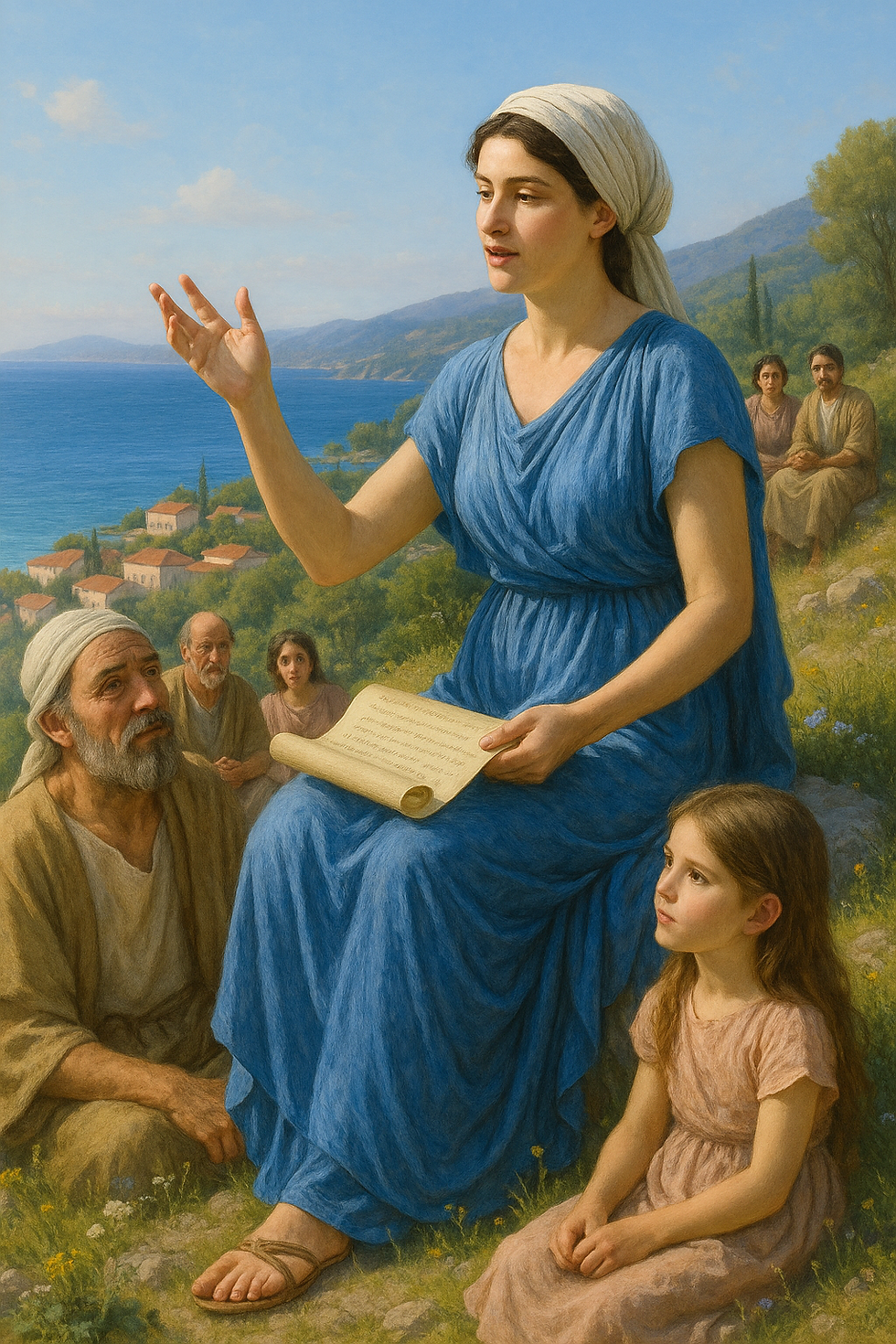
My Name is Sappho: Poet and Teacher of the Lyre
I was born on the island of Lesbos, a place where the sea carried stories and the wind carried music. From a young age, I listened more deeply than I spoke. The rhythms of language, the softness of emotion, and the rise and fall of melodies shaped my earliest memories. My family belonged to the aristocracy, and with that privilege came education. I learned the lyre, the structure of verse, and the power that a well-chosen word could hold. These early lessons became the foundation of my life.
Finding My Voice Through Poetry
As I grew older, my love for poetry became something deeper—a calling. I composed verses not for kings or warriors, but for the heart. My poems spoke of longing, joy, friendship, and the subtle storms that stirred within the soul. Students gathered around me, young women seeking refinement in music and expression. Together we sang beneath the bright Lesbian sky. In those moments, I felt the world expand, not through conquest, but through beauty.
A Marriage That Brought Stability and Joy
Though many remember me only for my poetry, my life also held love and partnership. I married a wealthy merchant, a man whose travels brought stories from distant lands. His success gave me stability, and our companionship brought me comfort. From our union came my daughter, whom I named Cleis. She became a light in my life. Many of my verses—though only fragments remain—were written with her in mind, capturing the tenderness a mother feels when watching her child grow.
Political Tensions That Shadows Could Not Hide
Yet even a poet cannot remain untouched by the storms of politics. Lesbos was divided by rival aristocratic families, each seeking influence over the island. My family aligned itself with a faction that stood against the rising power of Pittacus, a man of great ambition and considerable support among the people. As tensions deepened, the rivalries grew sharper. Songs could not drown out the whispers of conflict.
Exile from the Island I Loved
In time, our faction fell. Pittacus rose to rule, and those who opposed him were forced into exile. My husband, my daughter, and I fled from the island that had shaped every part of my being. Exile is a wound that leaves no visible scar but aches deeply within the heart. I felt torn from my roots, from the students I taught, from the familiar rhythms of the waves against the shore. Yet even far from home, poetry remained my refuge. It allowed me to carry Lesbos within me.
Finding Strength in Distance
Life in exile taught me resilience. I learned that identity is not bound to land alone, but to the memories, values, and loves that one carries forward. Though I longed for my homeland, I continued to write, teaching wherever I found willing students. My daughter grew, and her laughter softened the ache of displacement. Over time, the political landscape shifted, and the intensity of resentment faded. But the memory of exile left an imprint on my poetry—a longing that shaped my later works.
A Legacy of Emotion and Song
Though much of my writing has been lost to time, what remains continues to stir hearts centuries beyond my life. I did not seek fame; I sought truth in emotion. My poems captured the quiet moments that others overlooked—the tremble of affection, the pain of parting, the warmth of companionship. These were the gifts I left behind, shaped by my joys, my losses, and the path that led me from the halls of aristocracy to the uncertain road of exile. My life was woven from music and upheaval, but through it all, poetry remained the thread that held me together.
Cultural Exchanges Across the Mediterranean: Art, Music, & Language – Told by Sappho
In my lifetime, the Mediterranean was not simply a body of water—it was a living path of connection. Every ship that sailed brought not only goods, but ideas, melodies, designs, and stories. Colonies founded generations before my birth had woven distant peoples together, and by the time I began to teach and compose, the world around me shimmered with influences from faraway lands.
Art Shaped by Many Hands
The pottery and sculptures of my youth bore traces of many cultures. Greek artisans learned new techniques from craftsmen of Egypt, Phoenicia, and the East. Patterns once unfamiliar adorned our vessels, and styles once foreign became part of our own artistic language. When I held a painted cup, I held a story shaped by travelers, merchants, and the mingling of traditions across countless harbors.
Music That Echoed Across Shores
Music, too, traveled with ease. The lyre I played may have been Greek in design, but the rhythms and modes that inspired me came from a world much larger than Lesbos. Songs of Lydia, Phoenician melodies, and even distant Egyptian harmonies influenced the way we composed and performed. When we sang, we participated in a chorus older than any one people. The sea stitched our voices together.
Clothing That Reflected a Shared World
The garments worn in my time spoke silently of exchange. Women draped themselves in fabrics dyed with colors that originated far beyond our borders. Patterns from the East blended with local styles, creating clothing that reflected both tradition and exploration. Jewelry carried designs borrowed and reimagined from lands across the water. To dress oneself was to display the beauty of a connected world.
Languages That Met and Mingled
Words themselves became travelers. Traders brought phrases from Phoenicia, Egypt, and Anatolia, and some of these words settled permanently into our speech. Even as I taught young women the art of lyric poetry, I heard echoes of distant tongues in the names of instruments, spices, and garments. Language shifted gently under the influence of every encounter, enriching how we expressed our thoughts and emotions.
A Tapestry Woven Through Encounter
By the time I walked the streets of Mytilene or gathered students beneath the sunlit trees, the Mediterranean was already a tapestry of shared culture. Colonization had carried Greek voices outward, and in return brought countless influences inward. What some might call foreign, I saw as a gift—a reminder that we are shaped not only by our homeland, but by every life and idea we meet along the way.
The Beauty of a Blended World
In these years, the arts, music, clothing, and language of the Mediterranean revealed a truth I cherished: beauty grows when cultures meet. My poetry was born from this world of mingling inspirations. Every verse I wrote carried hints of places I had never seen, brought to me through stories, songs, and the graceful movement of people across the sea. Through cultural exchange, our world became richer—and so did the hearts of those who lived within it.
The Role of Women in Expanding Greek Society (c. 650–600 BC) – Told by Sappho
In my time, the Greek world was expanding—not only through colonies and trade, but through the quiet, constant work of women. Though our names were rarely carved in stone, we shaped families, communities, and traditions that allowed Greek society to grow. As cities flourished and new lands welcomed settlers, women carried with them the skills, knowledge, and values that defined our culture.
Mothers, Teachers, and Keepers of Tradition
A woman’s first classroom was often her own home. Mothers taught their children the stories of the gods, the proper way to honor guests, and the customs that held our people together. These teachings traveled with every family that left the Greek mainland to settle in distant lands. Whether in Sicily, Asia Minor, or the Black Sea, it was women who ensured that Greek identity survived beyond the waves.
Women and the Strength of the Household
The growth of Greek society depended not only on bold explorers and ambitious traders, but on stable households. Women managed these homes with wisdom and discipline. They organized supplies, oversaw servants or laborers, and maintained order while men traveled or fought. A colony could not survive without such foundations. The strength of many distant settlements rested on the steady work of women who turned unfamiliar places into thriving communities.
Creativity and Cultural Influence
Women also shaped culture in ways that reached far beyond their homes. They wove designs inspired by stories and landscapes, sang songs that traveled from island to island, and created adornments that reflected shifting influences from across the Mediterranean. In my own circle, young women learned poetry and music—arts that expressed joy, sorrow, longing, and devotion. These creations enriched Greek life and helped shape the character of our expanding society.
Roles in Religion and Community Life
Women held important roles in sacred rituals and festivals that united communities. As priestesses, attendants, and participants in ceremonies, they helped maintain the spiritual bonds that tied people together. When colonies were founded, women brought these rituals with them, ensuring that the gods were honored and that new settlements carried the blessings of familiar traditions. Religious stability was essential for any community, and women ensured it endured.
Personal Bonds That Strengthened Society
Friendship among women also played a quiet but powerful role in the expansion of Greek culture. Through shared learning, mutual support, and emotional connection, women fostered networks that strengthened local communities. My own experiences teaching and composing poetry showed me how deeply women influenced one another—and how these bonds enriched the fabric of Greek society.
A Perspective Often Left Unspoken
Though men wrote most of our histories, women lived them too. Our contributions may not have always been celebrated, but they were essential. As Greek society expanded, it did so on the foundations laid by women—foundations of tradition, unity, creativity, and resilience. Through our daily efforts, we helped shape a world that reached far beyond our homes. And in every new city born across the sea, traces of women’s influence lived quietly within its walls.
Identity and Daily Life in a Growing Mediterranean World – Told by Sappho
In my lifetime, the Mediterranean was alive with movement. Traders crossed the seas, colonists founded new homes, and distant cultures brushed gently against one another. This changing world shaped how people understood themselves. Identity was no longer rooted only in one valley or one city, but in the broader tapestry of peoples who shared the sea. As life expanded outward, so too did the ways we expressed who we were.
Honor as a Guiding Light of Conduct
Among Greeks, honor remained the measure of a life well lived. It shaped how men spoke, how women carried themselves, and how families were remembered. But in a world of increasing encounter, honor began to take on new meanings. To show respect to foreigners, to welcome guests from distant coasts, and to uphold fairness in trade became as important as the old ideals of bravery and loyalty. The values of our ancestors blended with the necessities of a connected world.
Daily Life at the Center of Change
Though the world around us grew wider, daily life still revolved around the familiar rhythms of home. Women tended households, taught children, wove garments, and prepared food. Men farmed, crafted, debated, or traveled for commerce. But even in these simple tasks, the influence of distant lands appeared. A foreign spice in a stew, a new fabric pattern, a borrowed melody—all reminded us that our lives were touched by those beyond our shores.
Learning Through Encounters
As people from different regions met, they exchanged more than goods. They shared ideas about beauty, courage, friendship, and the gods. These exchanges shaped identity in ways subtle yet lasting. Young people, especially, grew curious about the stories and customs of other lands. This curiosity fueled creativity and broadened the way we understood ourselves within the world. It was in this atmosphere that my poetry found inspiration, drawing from the emotions and experiences of a changing generation.
The Harmony and Tension of Growth
Expansion brought opportunities, but also challenges. As cultures intertwined, some feared the loss of tradition, while others welcomed the blending. This tension shaped discussions in homes and marketplaces. Should we hold tightly to old ways, or embrace the new influences arriving at our harbors? I saw value in both—the grounding comfort of familiar customs and the inspiration that came from foreign encounters. Identity, to me, was not fixed but shaped gently over time.
The Heart’s Role in a Wider World
Even as cities grew more connected, the emotions that guided our lives remained constant. Love, longing, joy, and sorrow continued to shape our choices. Honor mattered, but so did the bonds of affection and friendship that tied people together. In my teaching and writing, I tried to capture these feelings, for they were the threads that bound individuals to their communities and helped them navigate a world in motion.
Finding Ourselves Amid Expansion
By the turn of the century, the Mediterranean world was larger than ever, rich with voices from countless shores. Yet amid all this, each person still sought a sense of belonging. Identity was found not only in birthplace or ancestry, but in the choices we made, the people we loved, and the values we upheld. In this blended and bustling world, honor guided our steps, and daily life—simple yet profound—remained the place where true meaning took root.
The Legacy of Early Colonization and Its Impact on Later Classical Civilizations (by 600 BC) – Told by Sappho and Cypselus
Sappho: By the time my generation came of age, the Mediterranean was no longer a collection of isolated communities. Colonies stretched from the coast of Asia Minor to the shores of Italy, Sicily, and the distant Black Sea. These settlements were the threads weaving together a world that would shape later ages. Every poem I composed, every melody I taught, echoed within a society transformed by the movements of those who came before me.
Cypselus: And from a statesman’s view, those colonies were not mere outposts but foundations of power. They shifted alliances, created new markets, and extended the influence of cities like Corinth. Through them, Greek civilization expanded far beyond its birthplace, planting seeds that later generations—Athenians, Spartans, and even the rising Romans—would build upon.
Cultural Bridges Across the Seas
Sappho: Colonization carried culture as gently as the waves themselves. Greek language, art, and customs reached foreign shores, while ideas from distant peoples flowed back into our homes. This blending enriched our daily life, inspiring new forms of expression, music, and storytelling. The colonies became places where identities met, mingled, and grew.
Cypselus: And it was not only culture that traveled. Trade networks flourished. Pottery, metals, wine, textiles—these goods moved along routes strengthened by colonial ties. Cities like mine became powerful because we connected East and West. These exchanges set the stage for the classical economies that would later define the Greek world.
Political Transformations Inspired by Expansion
Cypselus: The old aristocracies could not survive unchanged in a world transformed by colonization. As new wealth flowed in and new opportunities emerged, tensions rose within many cities. It was in such times that leaders like me—tyrants, as history calls us—rose to power. We broke rigid systems and reshaped our cities to meet the demands of a more connected and ambitious world.
Sappho: And these political shifts affected everyday people as well. When power structures changed, so did the expectations of citizenship, community, and responsibility. Colonization encouraged people to think not only of their local village or city but of a larger Greek identity—shared, evolving, and expanding.
Foundations for Later Great Civilizations
Sappho: When people speak of classical Greece, they often think of poets, philosophers, and playwrights who lived long after my time. But the world that nurtured them was formed by the early colonies that sent Greeks across the sea. Without that expansion, the later blossoms of thought and art would have lacked their fertile soil.
Cypselus: And consider Rome, still a young power during our lifetimes. The colonies in Italy introduced Greek goods, stories, and customs that the Romans absorbed eagerly. Later, as Rome grew into a mighty civilization, it built upon systems of trade, governance, and cultural exchange that early Greek settlers helped establish. Our influence reached far beyond our own shores.
A World Prepared for Greatness
Sappho: By 600 BC, the Mediterranean had become a chorus of voices—Greek, Phoenician, Etruscan, Anatolian—each one shaping the world I lived in. The harmony and tension among these cultures gave rise to new ideas, new arts, and new ways of life. Colonization had not merely spread people across the sea; it had transformed the very nature of human connection.
Cypselus: And because of this transformation, the stage was set for the great dramas of history that followed—wars, alliances, philosophies, and innovations that would define the classical age. The early colonies were not just distant settlements; they were the first steps toward a Mediterranean civilization that would influence the world for millennia.
A Shared Legacy Across Generations
Sappho: I witnessed the cultural richness that early colonization brought into daily life.Cypselus: And I shaped the political and economic power that colonization made possible.Together, our perspectives reveal a truth: the world of 600 BC was not an ending, but a beginning. The legacy of early colonization laid the groundwork for everything the later Greeks—and the Romans after them—would become.


Comments