

2. Heroes and Villains of the American Melting Pot: Slavery in Early America: Institutionalization of Slavery

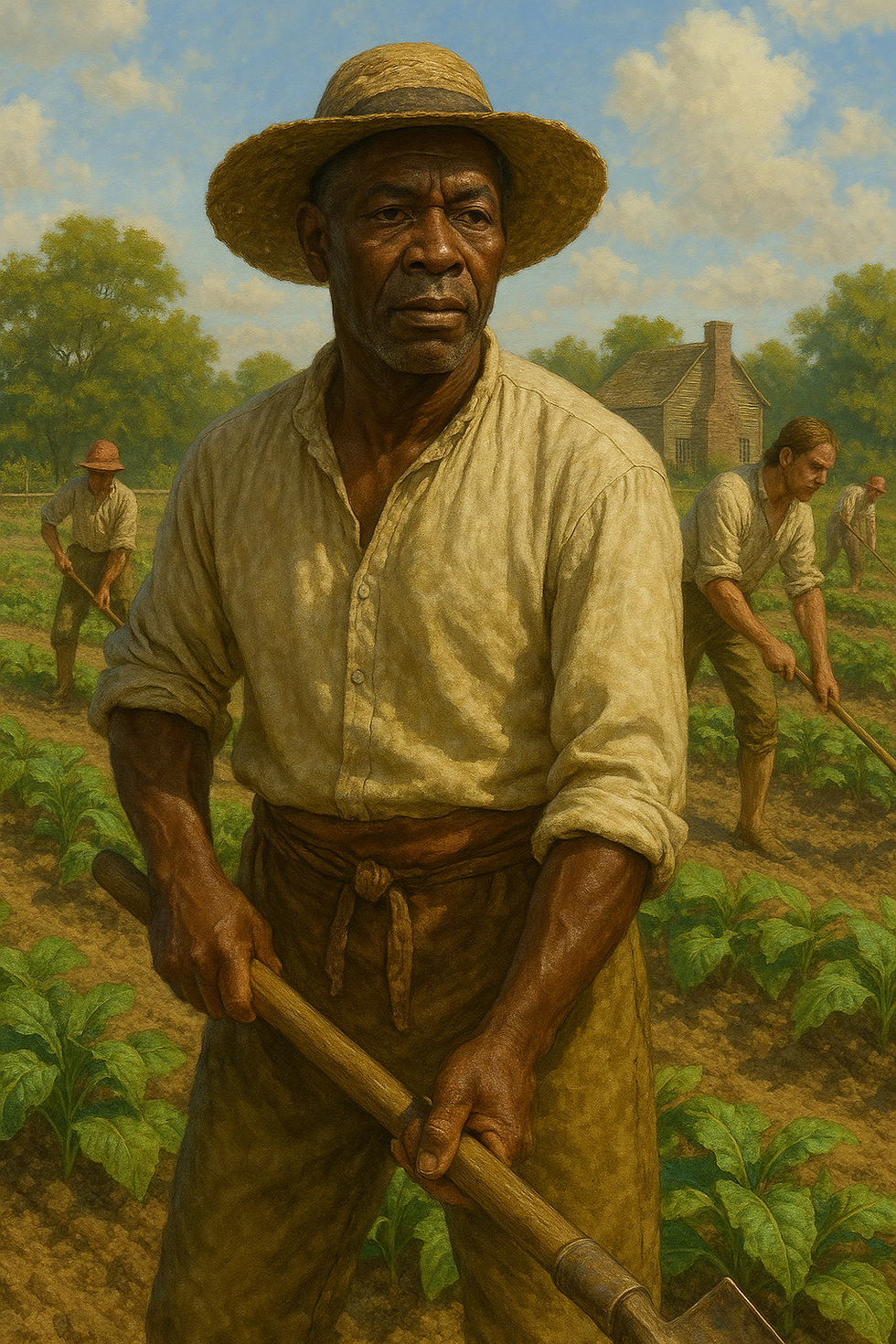
My Name is Anthony Johnson: A Man Who Lived Before Slavery Became LawMy name is Anthony Johnson, and I came to the English colony of Virginia long before anyone imagined laws that would bind Africans in perpetual slavery. I did not come by choice. I was torn from my homeland in the early 1600s, forced onto a ship, and carried across the Atlantic in chains. When I arrived in Virginia around 1621, I was not called by my African name but was given the name “Antonio” by the English. I entered a world where the lines between indentured servitude and slavery were not yet fixed. Africans, Europeans, and even some Native people served terms of labor. Hardship was everywhere, but so too were small chances for survival.
Surviving the Early Years
The early colony was a brutal place. Disease, hunger, and violence shaped our days. I worked on a tobacco plantation owned by the Bennett family, rising with the sun and laboring far into the night. In 1622, the Powhatan launched a massive attack on English settlements. Many servants died, but by fortune or providence, I survived. Afterward, the colony tightened its controls, and work grew even harsher. Yet, in these years, those of us who lived through the misery gained a certain measure of respect as survivors. My time as an indentured servant eventually came to an end, and I claimed the small freedoms that came with completing my term.
Building a Family and a Future
When my service ended, I was no longer Antonio the servant but Anthony Johnson, a free man. I married Mary, who had also completed her term of servitude. Together, we began building a life that few Africans in the colony yet possessed. We worked hard, acquired livestock, and leased land near the Pungoteague River on Virginia’s Eastern Shore. Over time, through perseverance and the opportunities the colony still allowed free people of African descent, we expanded our holdings. Eventually, I acquired 250 acres through the headright system, a reward for supporting the colony and bringing over workers.
Success in a Changing World
By the mid-1600s, my family was one of the most prosperous African families in Virginia. I had servants and laborers, both African and European. I even went to court to defend my right to the labor of John Casor, a man who had worked under me and served his time as an indentured servant. In 1655, the court ruled in my favor—Casor was to serve me for life. It was a strange and bitter victory, one that history would later judge harshly, but in my time the boundaries of race and status were shifting. Free Africans like me were navigating a world that was becoming increasingly hostile to our rights and freedoms. What had once been a society with fluid lines was hardening into one that measured worth by skin color.
Losing Ground as the Laws Hardened
As the decades passed, the colony’s laws changed sharply. Africans who had once lived as I did—farmers, landowners, free men and women—found their rights stripped away piece by piece. Restrictions on movement, marriage, property, testimony, and inheritance grew. What had been a society of mixed statuses became a racial caste system. My children and grandchildren faced a future that looked very different from the one Mary and I had struggled to build. Even my own property was challenged after my death, seized on the claim that a “Negro” could not hold land in perpetuity. The life I carved out during my years of freedom represented a world the colony no longer wished to acknowledge existed.
My Legacy and the World That Followed
I lived at a time before slavery in America had fully taken shape, when Africans could earn freedom, own land, marry, raise families, and defend their rights in court. My life shows that racial slavery was not inevitable—it was invented, piece by piece, as laws changed to meet the desires of powerful planters. I navigated those shifting currents as best I could, striving for survival, dignity, and opportunity. My story stands now as a window into a forgotten moment, a time before the chains of institutional slavery closed tightly around my descendants.
The Arrival of the First Africans in 1619 – Told by Anthony Johnson
I remember the murmurs before we ever saw the ship—voices whispering of a strange vessel approaching Point Comfort in the late summer of 1619. The colony was still young then, uncertain in its fortunes and fragile in its survival. I was already in Virginia by that time, part of a workforce that included Europeans and Africans alike, all serving under different conditions but laboring side by side. When word spread that a Dutch privateer had anchored offshore with “twenty and odd Africans,” none of us yet knew how their arrival would alter the shape of this land.
A Meeting of Worlds
When these Africans came ashore, I saw men and women weariness etched into their faces, but also dignity that no ordeal could erase. They had been taken from their homeland, traded between ships, and brought here not as free travelers but as captives. Yet the colony did not immediately know what to make of them. English law had no fixed place for people taken in such a way. Some were treated almost as indentured servants, expected to work for a term before gaining some measure of freedom. Others faced harsher conditions. Their status was not yet written in iron or law. It was a time of uncertainty, where one’s fate depended on the will of masters, the customs of the colony, and the desperate need for labor.
Laboring in an Uncertain System
Those new arrivals joined fields already full of people struggling to survive. We labored together under the watchful eyes of planters, clearing land and tending tobacco—the crop that fed the colony’s hunger for profit. In those days, the distinctions between African and European workers were not as rigid as they would later become. Some Africans worked under terms that resembled servitude, receiving clothing, food, and the dim promise of eventual release. Yet beneath this seeming opportunity lay a growing unease. The colony was changing, and the need for permanent labor pressed heavily upon the ambitions of the powerful.
A Turning Point Unseen at the Time
No one among us understood then that the arrival of those “twenty and odd” marked a turning point. We did not know that the flexible, uncertain status of Africans would harden into something far more oppressive. At the time, we recognized only that more hands meant heavier yields of tobacco and a more secure colony. But beneath the surface, the arrival of these men and women began shaping new ideas—ideas about labor, race, and ownership that would slowly transform Virginia from a place of mixed servitude into one defined by chattel slavery. The first Africans’ arrival did not create slavery overnight, but it planted seeds that would grow into a system none of us could fully imagine in that moment.
A Moment That Echoed Through Generations
Looking back, I see the arrival of those first Africans as the spark that set in motion the changes that shaped my lifetime. They stepped onto these shores at a time when their fate was not yet sealed, when freedom and bondage existed in shifting forms. Their arrival marked the beginning of a story far larger than any one person—a story of struggle, survival, and transformation. It was the beginning of an era whose consequences would reach far beyond 1619, shaping the world my children and grandchildren would inherit.
The Arrival of the First Africans in 1619 – Told by Anthony Johnson
The year 1619 brought a new tide to the colony of Virginia, one that many did not yet understand. When word reached us that a foreign ship had anchored near Point Comfort carrying Africans taken from distant lands, the colony paused with curiosity more than certainty. At that time, the settlement was still struggling—its fields thin, its people fewer than the leaders hoped, and its plans for profit fragile. News of new laborers stirred interest, but no one yet knew what rules or customs would shape their future. I remember watching colonists debate their status even before the newcomers stepped onto the land.
Men and Women Without a Defined Place
When the Africans disembarked, they entered a world that did not yet have clear legal boundaries for them. English law spoke of servants, apprentices, debtors, and prisoners of war, but it had no fixed category for people taken by force and delivered across an ocean. The colony needed workers, and so these newcomers were put to labor in the tobacco fields, but the conditions under which they labored varied from household to household. Though they were to be treated in ways similar to European servants, as per law, some faced harsher demands. Their status rested less on law and more on the inclinations of those who purchased their labor.
Life Within the Early Workforce
In those years, Africans, Europeans, and others worked side by side. The farms were still rough, the dwellings simple, and the land demanded much from everyone. Hardship made little distinction between backgrounds, though treatment often depended on the character of the planter. The system was not yet the rigid institution it would later become, and this uncertainty gave rise to many different outcomes. Some Africans lived among servants who hoped for eventual release, while others found themselves tied to their masters for longer terms. There was no single rule guiding their fate.
A Beginning Without Clarity
At the time, none of us could see how the arrival of these men and women would shape the colony’s future. They came during a moment when Virginia was experimenting with many forms of labor, and the colony’s leaders were still trying to secure stability and profit. Because no single law defined their role, their presence left space for both opportunity and danger. Some colonists saw them as valuable workers who could share the burdens of building the colony. Others saw them as property to be held indefinitely. That uncertainty would, in time, give way to harsher decisions that reshaped the society entirely.
An Event That Marked a New Direction
Looking back, the arrival of the first Africans did not immediately create the system that later ruled the lives of people like me. Instead, it marked the beginning of a long shift. It introduced new questions about status, labor, and identity—questions the colony would answer in ways that future generations would find increasingly severe. In 1619, the fate of these first Africans was not yet sealed, but their arrival set the colony on a path that would one day turn uncertainty into strict laws and flexible roles into permanent bondage. Their coming marked a moment that shaped all that followed.
Indentured Servitude vs. Lifetime Bondage (1620s–1650s) – Told by Johnson
In the early decades of Virginia, all of us—Africans, Europeans, and others—lived in a colony that depended heavily on labor simply to survive. The fields were rough, the settlements thin, and the mortality high. To keep the colony running, planters relied on a system of indentured servitude that bound people to work for a set number of years. Many came willingly from England, hoping that their term would end with land and opportunity. Others, like myself and those taken from Africa, arrived through force or coercion, but we still entered a world where one’s status was not yet fixed for life.
Contracts That Promised an Ending
Indentured servitude rested on the idea of a contract. A person would serve a master for four, five, or seven years, depending on the agreement. During that time, the servant owed labor and obedience, while the master owed food, clothing, and shelter. When the term ended, a servant often received “freedom dues,” which might include tools, clothing, or even land. This system, though harsh and often cruelly enforced, allowed some to rise in status once their term concluded. Many of Virginia’s early free farmers had once been indentured servants who worked their way into independence.
The Unclear Status of Africans in These Years
For Africans, however, the situation was far less certain. Some of us served limited terms similar to Europeans, while others faced conditions that resembled permanent bondage. The colony had no established laws defining our status, and so our fate depended on the practices of individual planters and the evolving needs of the land. I lived during a time when an African might complete a period of service and then own property or employ workers, while another African might be held indefinitely because no rule prevented it. Our futures lacked the guarantee that contracts provided for Europeans.
The Gradual Drift Toward Permanence
By the 1640s and 1650s, I began to see changes taking root. The demand for labor grew as tobacco profits increased, and planters preferred workers they could hold for life rather than release after a few years. Some Africans were kept far beyond what seemed a reasonable term, while harsh punishments and long extensions of service became more common. At the same time, legal disputes appeared in the courts, revealing the tensions over our status. These cases began to shape the colony’s understanding of whether Africans were temporary servants or something different—something more permanent.
A Society Standing at a Crossroads
During these decades, Virginia stood between two systems. Indentured servitude remained the backbone of labor, but the seeds of lifetime bondage had begun to take root. No single law declared Africans enslaved for life, yet many planters acted as though this were natural and increasingly expected. Opportunities for Africans to become free still existed, as my own experiences showed, but these opportunities were shrinking. What had once been a flexible system was slowly tightening into a structure that would soon define generations.
The Slow Shift Toward a New Order
Looking back, the early 1600s were a time when the colony experimented with many forms of labor, creating outcomes that varied widely. Some Africans, like me, gained freedom and land, while others lost any hope of it. But as the decades passed, the lines between indenture and bondage grew sharper, and lifetime servitude for Africans became less the exception and more the expectation. These years marked the turning point between a society where labor contracts shaped one’s future and one where race began to dictate a person’s fate.
The Case of John Punch (1640): The First Legal Lifetime Slave in English America – Told by Anthony Johnson
The year 1640 brought a case that many of us in Virginia spoke about for months afterward, though at the time we did not understand how deeply it would shape the colony’s future. Three servants—two Europeans and one African named John Punch—attempted to escape their harsh conditions. When they were captured and brought before the Virginia governor’s council, the colony faced a question it had not yet clearly answered: how should different people be punished for the same act?
A Judgment That Drew New Lines
The council delivered a decision that startled many. The two European servants were sentenced to extended terms of service, but John Punch, the African among them, received a punishment far more severe. He was ordered to serve his master for life. This ruling created a distinction that had not been formally declared before. Until that moment, servants of various backgrounds could expect similar consequences for their actions. The ruling against Punch was the first time the colony’s leaders openly tied a man’s fate to the color of his skin.
A Turning Point Hidden in Plain Sight
At first, some saw the decision as merely a stern example meant to deter runaways. But beneath the surface, it revealed a larger shift in thinking. The colony’s leaders had quietly begun to separate Africans from Europeans in matters of law and punishment. While all three men committed the same offense, only one was condemned to perpetual labor. This was not written as a formal statute, yet it carried the weight of legal precedent. Those of us who observed the decision sensed that a new, troubling pattern was emerging.
A Future Shaped by a Single Judgment
After the case, planters became more confident in holding Africans for longer terms, even without explicit laws stating they could do so. The decision emboldened the idea that Africans could be bound for life, while Europeans were still protected by the expectations of limited servitude. This legal separation did not immediately transform the colony into one governed by racial slavery, but it created the foundation upon which such a system could be built. The distinction that began in the courtroom slowly seeped into daily practices and expectations.
The Community’s Uneasy Response
Among the working people of the colony, the ruling caused mixed reactions. Some wondered whether courts would continue to treat cases unevenly. Others recognized that Africans now stood on more fragile ground. A few even feared that this ruling hinted at a future where race, not contract, determined one’s condition. For those of us still navigating our own place within the colony, the case of John Punch served as a warning that the law was beginning to shift in ways not favorable to Africans.
The Quiet Birth of a Harsh System
Looking back, the 1640 decision marked one of the earliest steps toward a system that would later become entrenched. The ruling set a precedent that Africans could be sentenced to lifetime servitude even when their European companions were not. It demonstrated how racial distinctions were being woven into the legal fabric of Virginia. This moment, though small in appearance, paved the way for harsher laws that would follow. It was here, in the judgment of John Punch, that the colony first signaled that an African’s path would not be the same as that of others who labored beside him.
The Case of Anthony Johnson vs. John Casor (1655) – Told by Anthony Johnson
The dispute between myself and John Casor did not begin as something meant to shape the laws of Virginia. It began as a disagreement within my own household and fields. Casor had worked for me for several years, but he insisted that his time of service should end. I, however, had reason to believe that he was bound to me for a longer term. In those days, the colony’s rules about the service of Africans were still shifting, unclear, and often left to the interpretation of masters and courts. When Casor fled and took refuge with a neighboring planter, I sought legal remedy—not realizing the broader consequences that would follow.
The Courtroom Decision
When the case reached the Northampton County Court in 1655, the judges weighed the testimony of all involved. They examined the agreements, the behavior of those who had taken Casor in, and the circumstances of his service. The ruling they delivered surprised many. The court declared that John Casor was to serve me for the duration of his life. This judgment did not simply settle a dispute—it marked one of the first official acknowledgments in Virginia that an African could be held in lifetime servitude not as punishment, but as a matter of civil ruling.
A Precedent I Did Not Foresee
At the time, I sought only to resolve what I believed to be an injustice. I had worked to build my home, my farm, and my family’s livelihood, and I believed Casor owed further service under the terms we understood. Yet the court’s decision reached far beyond the boundaries of my land. By ruling that Casor must serve me for life, the judges created a legal precedent that others soon used to justify holding Africans in perpetual bondage. This shift had little to do with my intentions and much to do with the direction the colony was already moving toward.
The Colony’s Changing Intentions
Virginia’s leaders, hungry for stable and permanent labor, took note of the court’s ruling. They saw that the law had begun to bend toward the idea that Africans could be treated differently—held for life, inherited as property, and denied the expectations of release that Europeans still possessed. My case became one more weight on the scale tipping the colony toward a system that no longer relied on indentures but sought lifetime laborers whose children would inherit their status. What had been uncertain in the early years was becoming more defined with each legal decision.
A Decision That Echoed Beyond My Time
In the years that followed, the colony built upon rulings like mine, crafting laws that further restricted the freedoms of Africans. Though I had lived as a free man and held property, the opportunities that existed for me would not remain open to those who came after. The legal world was tightening, and race was becoming the deciding factor in one’s fate. My case against Casor, unintended as it was, became part of the foundation for a harsher system that would endure long after I was gone.
A Reflection on an Unintended Legacy
Looking back, I see how the disputes of individuals can become the turning points of an entire society. My conflict with Casor was personal, but the colony seized upon the court’s ruling as guidance for the future. In those days, none of us fully understood the path Virginia was taking. But this case—my case—became one of the moments that nudged the colony toward legalized, race-based lifetime slavery. It stands now as evidence of a time when laws were being shaped, tested, and hardened into the system that would define generations to come.
The Shift to Race-Based Slavery in Law (1660s–1670s) – Told by Anthony Johnson
As the 1660s arrived, I could feel the colony transforming in ways that were difficult to ignore. When I first earned my freedom, Virginia was a place where some Africans, though few, could own property, complete service terms, and stand before the courts. But as the years passed, the atmosphere tightened. Wealthy planters sought greater control over labor, and the laws began moving in a direction that favored their ambitions. What had once been uncertain was becoming more rigid, and the shift affected every African in Virginia.
Laws That Spoke More Clearly Than Before
New acts passed by the Virginia Assembly began to create distinctions that had not been formally written down in earlier years. One law declared that a child’s status would follow that of the mother, a rule that ensured the children of enslaved women would themselves be enslaved. Another stated that baptism, once a symbol of equality before God, no longer changed one’s condition in life. Still others began defining the service of African laborers as lifelong by default. These laws did not simply appear—they reflected a changing mindset that saw Africans as permanent laborers rather than temporary servants.
Freedom Narrowing for My People
I watched as the freedom some of us had carved out became harder for others to achieve. The rights that once allowed Africans to petition courts, gain land, or negotiate terms of service grew limited. Planters grew more confident in treating Africans as lifetime property. The small path to independence that had existed in earlier decades was closing behind us, step by step. Even free Africans found themselves burdened with new restrictions—higher taxes, doubts about their property claims, and suspicion from officials who preferred a society divided by race.
The Growing Divide Between Europeans and Africans
During these years, a clear line began to form—one that separated European servants from African laborers in the eyes of the law. European indentured servants still received the promise of release after their term, while Africans increasingly faced rules that bound them for life. Punishments differed, opportunities differed, and expectations differed. This divide was not merely custom; it was becoming the official stance of the colony. The courts and assemblies were crafting a social order that placed Africans at the bottom, not by circumstance but by design.
A System Taking Shape Before My Eyes
With each new law, the colony moved further away from the early days when status was uncertain and sometimes negotiable. By the end of the 1670s, the framework of race-based slavery was firmly in place. Africans were no longer simply workers whose terms varied—they were a category defined by law as permanently enslaved. These changes did not happen in a single moment but accumulated over years, tightening the boundaries of freedom until only a narrow few could slip through.
Witnessing the Birth of a Harsh Order
As I grew older, I understood that I had lived at a crossroads. I had known a Virginia where Africans might still hope for freedom, but I watched as the colony turned toward a harsher future. The laws of the 1660s and 1670s ensured that race, not labor contract, determined one’s fate. This shift laid the foundation for a system that would endure for generations. I saw the doors that had once opened for some Africans close firmly behind me, shaping a world that my descendants would inherit with far fewer choices than I once had.
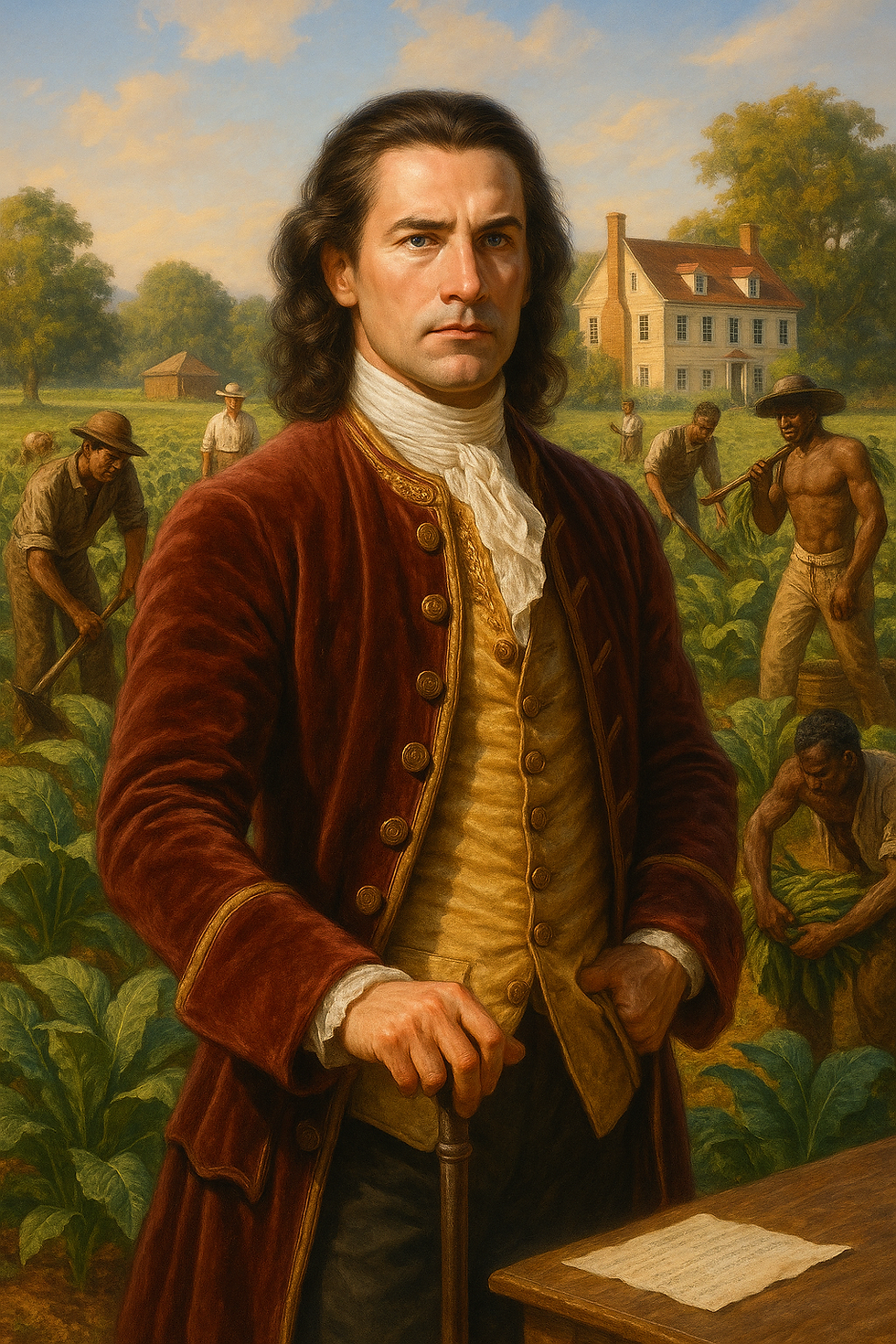
My Name is William Byrd II: A Virginia Planter and Colonial Statesman
My name is William Byrd II, and I was born into the world of Virginia’s elite planter class, a society built on land, wealth, and the labor of enslaved Africans. I entered life in 1674 at my family’s estate, Westover, along the James River. From the beginning, I was groomed for influence. My father, William Byrd I, was a powerful tobacco planter and merchant, and he ensured that I received the finest education. At seven years old, I was sent across the Atlantic to England, where I studied language, literature, and law—an upbringing far removed from the daily toil that sustained our estate.
An English Education and Ambition
My years in England shaped me deeply. I learned the manners and expectations of the British gentry, forging friendships with men who moved through the highest circles of English society. I studied law at the Middle Temple and cultivated interests in science, philosophy, and history. I hoped for a grand career within the empire, and for a time I sought appointments in London. Yet despite my ambitions, I found doors to high office closed to colonial-born men, no matter how refined or educated. Thus, in 1705, I returned home to Virginia with both pride and disappointment in my heart.
Master of Westover Plantation
Upon my return, I inherited the vast Westover estate after my father’s death. Here, I became a true Virginia gentleman, managing hundreds of enslaved laborers who tended tobacco fields, maintained livestock, and supported the daily operations of our plantation. My diaries are filled with details of plantation life—weather notes, business accounts, personal reflections, and the constant labor of those whose bondage sustained our prosperity. Though I prided myself on refinement and intellect, I was also a man shaped by a system that relied on the exploitation of others, a truth as undeniable as the river that flowed past Westover’s lawns.
A Leader in Colonial Society
My position carried responsibilities beyond the estate. I served in the House of Burgesses, the Governor’s Council, and acted as an agent for Virginia in London. My writings, which I kept faithfully, capture the tensions between colony and empire, between the ambitions of men like myself and the limits imposed by imperial authority. I also undertook important surveying missions, including the famous expedition to map the boundary between Virginia and North Carolina. That journey tested my endurance and sharpened my observations of frontier life, nature, and the diverse peoples who inhabited the region.
A Gentleman of Letters and Curiosity
I took pride in being not only a planter but also a man of learning. My library at Westover—one of the finest in colonial America—reflected my passion for books, science, and classical knowledge. I corresponded with scholars and kept journals full of wit, introspection, and sharp commentary on daily affairs. Whether writing of grand political matters or my morning walks, I tried always to observe the world with a disciplined mind. My writings would long outlive me, offering future generations a window into the social order and attitudes of my time.
The Virginia Slave Codes of 1705 & the Codification of Chattel Slavery – By William Byrd II
By the early years of the eighteenth century, Virginia had grown from a fragile outpost into a thriving plantation society, its prosperity resting heavily upon the labor of enslaved Africans. As a member of the colony’s gentry and a man involved in governance, I watched as concerns about control, property, and social stability prompted lawmakers to consolidate scattered customs into a single, sweeping code. In 1705, these efforts resulted in a comprehensive body of laws that defined the condition of Africans and their descendants in a manner more complete and unyielding than ever before.
Defining People as Property
The new codes left no ambiguity about the colony’s intentions. Enslaved Africans were declared real estate, their status bound permanently to servitude, and their children after them. The law placed them alongside land and livestock in matters of inheritance and ownership. This codification ensured that the wealth of planters—my own included—could rest securely on generations of laborers who would never know freedom. It created a framework that protected the interests of men like myself while stripping away any remaining path for those held in bondage to seek liberty through the courts or custom.
Expanding Control Over Daily Life
The codes did more than define slavery as a permanent condition—they dictated nearly every aspect of life for the enslaved. They restricted movement, forbade the carrying of weapons, and outlined punishments for resistance. The law required that white men serve as patrols to monitor enslaved people, reflecting the colony’s fear of rebellion. Even small acts of defiance could be met with harsh consequences. These rules were intended to assure planters that their investment in human labor would remain stable and uncontested.
Separating Communities by Race
Just as importantly, the slave codes drew sharp lines between Africans and Europeans, regardless of status. Even free Africans found their rights curtailed, subject to higher taxes, limited opportunities, and new restrictions meant to remind them of their difference from the ruling class. Interactions between the races were carefully policed, and the law discouraged any mixing that might blur the hierarchy the colony relied upon. The codes cemented social divisions that placed white colonists at the top and people of African descent firmly at the bottom.
Protecting the Interests of Planters
As a planter, I understood the reasoning behind these laws. The plantation economy demanded a consistent labor force, and the fear of losing that labor motivated the assembly to create clarity where there had once been uncertainty. By defining enslaved Africans as property and ensuring their bondage for life, the codes served to protect the wealth and security of families like mine. They aligned the colony’s laws with the economic reality that had already taken root across Virginia.
The Lasting Structure of an Unequal Society
Looking back, I saw how these laws formalized a system that had been gradually developing for decades. The Virginia Slave Codes of 1705 did not invent slavery, but they transformed it into a firmly structured institution backed by the full power of the law. The divisions they established shaped the social order for generations. The codes ensured that the prosperity enjoyed by the planter class rested on the continued exploitation of enslaved Africans, creating a society deeply dependent on inequality.
Plantation Labor Systems: Tobacco, Rice & Early Cotton – Told by William Byrd II
Life on a Virginia plantation revolved around the unending cycle of labor, and as a planter, I observed firsthand how the success of our estates depended entirely upon the hands of those we enslaved. The crops we raised—tobacco in my region, rice in the southern colonies, and the early plantings of cotton—each carried their own burdens and rhythms. In managing these operations, I came to understand the immense coordination required to keep a plantation running and the heavy toll that labor exacted from those forced to perform it.
Tobacco: The Lifeblood of Virginia
In my own fields, tobacco was king. Its cultivation required constant attention from the moment the seeds were planted. Enslaved workers tended to the delicate seedlings, transplanted them into prepared fields, and spent long months hoeing, pruning, and weeding under the heat of the Virginia sun. The harvesting and curing demanded yet more skill—each leaf had to be handled carefully to ensure quality. Tobacco made many planters wealthy, myself included, but that wealth rested on the disciplined and relentless labor of the enslaved, whose efforts were carefully recorded in my diaries and account books.
Rice: A Crop of Expertise and Endurance
While tobacco dominated Virginia, farther south the rise of rice plantations brought their own forms of labor. I visited such estates and marveled at the knowledge enslaved Africans brought from their homelands—knowledge of irrigation, dikes, and the careful flooding of fields. Rice cultivation was grueling, the paddies filled with water, insects, and disease. Yet the crop thrived because the enslaved possessed skills that no planter could claim as his own. Their expertise shaped the economy of entire regions, even as their names rarely appeared in official records.
The First Steps of Cotton
Though cotton had not yet risen to the prominence it would hold in later generations, I witnessed its early planting in some parts of the colonies. It required patience in picking the fiber from its sharp pods and labor in cleaning the seeds by hand. Without the mechanical inventions that would later transform the crop, cotton remained a modest enterprise during my time. Still, the work demanded precision, and enslaved laborers bore the strain of experiments and expansion as planters sought to diversify their fields.
The Rhythm of Labor and Control
Across all crops, the plantation required strict organization. Overseers supervised the tasks, assigned work gangs, and enforced discipline. The calendar of labor was unyielding: plowing in spring, tending crops in summer, harvesting in autumn, repairing tools and preparing fields in winter. My diaries reveal the constant calculations—how many hands were needed, how weather affected yield, how to manage sickness or resistance among the enslaved. Every aspect of plantation life depended on maintaining control over the labor force, for without their toil, the estates would collapse.
The Machinery Behind Colonial Prosperity
When I consider the prosperity enjoyed by Virginia’s gentry, I cannot deny the foundation upon which it rested. The plantation system was not simply a collection of fields but an entire social and economic structure built on forced labor. Tobacco, rice, and cotton brought wealth to the colonies, but they demanded unceasing work from those who had no claim to the fruits of their labor. Plantation records, including my own, reveal a world where every task, every hour, and every body was measured for its contribution to the harvest. In understanding these systems, one understands the true machinery of colonial success.
Native Americans and Enslavement in the Colonial South – Told by William Byrd II
In my dealings across the southern colonies, I encountered not only fellow planters and enslaved Africans but also the many Native nations whose presence shaped our frontier. Their societies were diverse, and their relations with the English ranged from trade and alliance to conflict and fear. As I traveled and wrote my observations, I came to understand that the institution of bondage extended beyond the plantations of Virginia and into the interactions between Native peoples, colonists, and the shifting forces of war and commerce.
Indigenous Peoples and the Practice of Captivity
Long before the English arrived, many Native nations practiced their own forms of captivity. Taken in warfare, captives could be adopted, ransomed, or compelled to serve within a community. These practices differed greatly from the chattel slavery we codified under English law, yet they sometimes intersected with our own ambitions. Over time, as trade networks expanded and colonial pressures increased, some Native groups began exchanging captives with colonists. These captives—often taken during conflicts between tribes—could be sold into servitude in colonial households or plantations, where they were treated much like African laborers.
Colonists and the Trade in Native Captives
During my lifetime, especially in the southern regions, the trade in Native captives became a profitable enterprise for certain colonists. Wars, such as those fought in the Carolinas, provided opportunities for colonial leaders to seize Indigenous people and export them to Caribbean markets. Others were kept in the colonies, where their labor supplemented that of Africans and indentured Europeans. Though the practice became less common in Virginia over time, the early decades revealed a willingness among planters to exploit Native labor wherever it could be obtained. I chronicled some of these interactions, noting both the tensions they caused and the economic incentives that drove them.
Native Americans and Indentured Labor
It is also true that not all interactions between Native peoples and colonial labor followed the path of enslavement. In some places, Indigenous individuals hired themselves out as indentured laborers or entered into contracts with colonists for temporary service. These arrangements varied, reflecting the autonomy some Native people maintained despite colonial encroachment. The lines were never simple; some Natives worked voluntarily for wages or goods, while others, taken in conflict, were forced into conditions that mirrored our own systems of forced labor.
A Shifting Balance of Influence and Control
As colonial expansion pressed deeper into Indigenous lands, the balance of power shifted. The growing English population, along with increasing dependence on African slavery, reduced the role of Native labor in many regions. Yet the legacy of Native enslavement lingered, shaping relations between tribes and colonists for decades. My own writings recorded both the pride and resentment expressed by Native leaders during negotiations. They saw the changes we brought, and many resisted our demands, even as others sought alliances that would secure their survival.
A World Bound by Exchange and Exploitation
Looking back, I recognize that the colonial South was a region marked by layered systems of power. European planters, including myself, depended on the labor of others, whether African or Indigenous. Native peoples navigated these pressures, sometimes engaging in trade, sometimes resisting domination, and sometimes becoming victims of the very forces that reshaped their world. The story of labor and bondage in the colonies cannot be told without acknowledging the role of Native Americans—both as participants in their own systems of captivity and as people caught in the expanding reach of colonial enslavement.
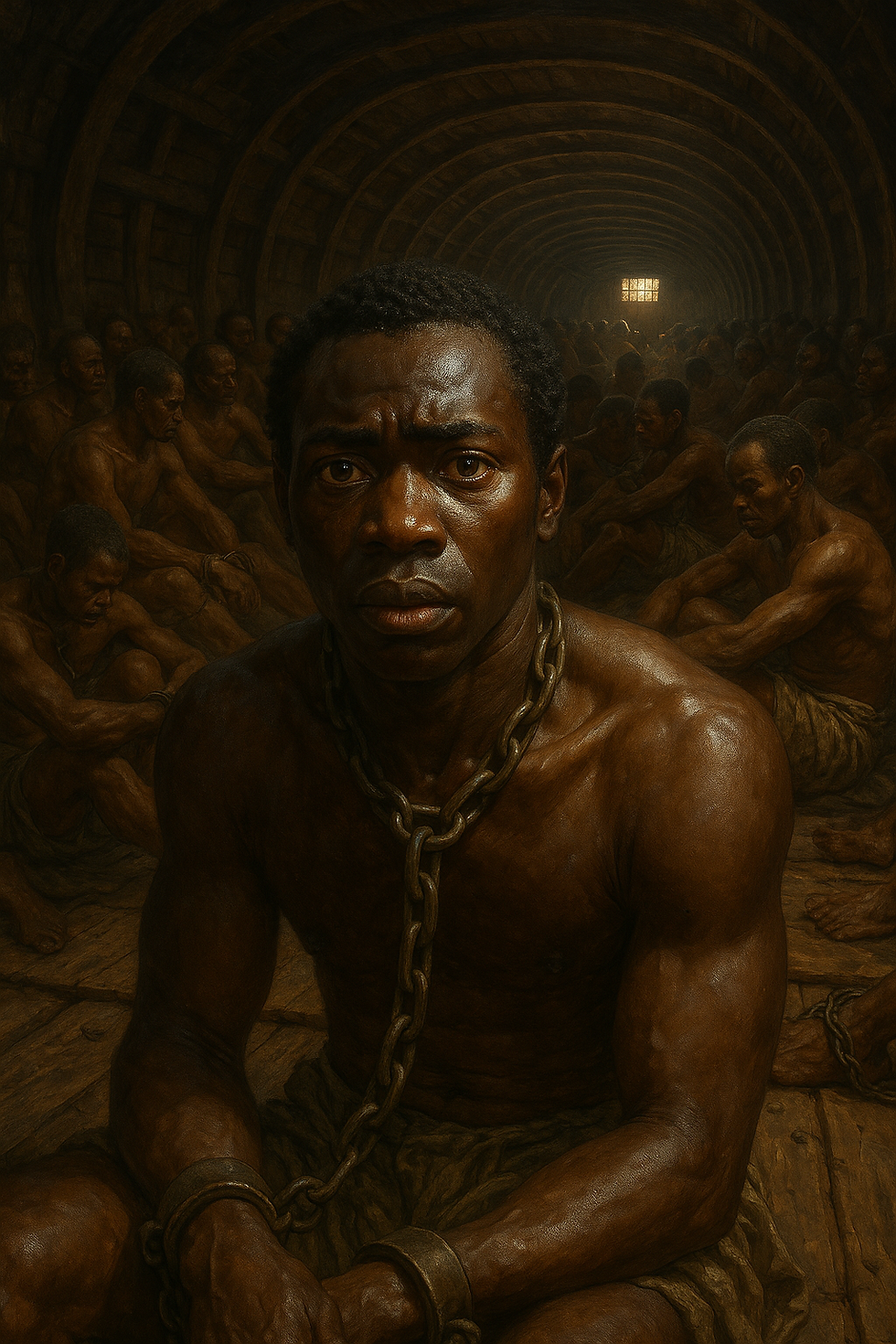
My Name is Olaudah Equiano: A Survivor of Slavery and a Voice for Freedom
My name is Olaudah Equiano, and before the world knew me as a writer and abolitionist, I was a child of the Igbo people in what is now Nigeria. I was born around 1745, into a family that valued tradition, honor, and community. My early years were filled with the rhythms of village life—learning our customs, playing with friends, helping my family, and listening to the stories of my elders. I knew nothing of the dangers that lurked beyond our lands, nor could I imagine how suddenly my childhood would be stolen from me.
The Night I Was Taken
My life changed forever when I was about eleven years old. Men raided our village, seizing my sister and me. We were torn from our family, our home, and every familiar comfort we had ever known. For months, we were marched and traded from one African settlement to another. I saw the fear in the eyes of other captives and felt it in my own heart. Though I was separated from my sister, I carried the hope that somehow we would be reunited. But each step brought me closer to the coast—and to a world of suffering I could never have imagined.
The Horror of the Middle Passage
Once we reached the sea, I was forced onto a slave ship bound for the West Indies. The darkness, the stench, the chains, and the cries of despair still haunt my memory. The hold was packed with men, women, and children, chained together with scarcely room to move. Disease spread quickly, and many died before ever reaching land. I felt as though I had been cast into another world, one where cruelty ruled and hope seemed a distant dream. My firsthand experience of the Middle Passage would later become the most powerful testimony in my fight against the slave trade.
Learning the World of the English
When we landed, I was sold to an English naval officer named Michael Pascal. Under his ownership, I traveled across the Atlantic and spent years aboard British ships. Though I was enslaved, I was also taught to read and write in English, a gift that would one day give me the power to speak against the very system that oppressed me. I saw the world through the eyes of sailors, soldiers, and merchants. I learned the ways of the sea, the customs of Europeans, and the contradictions of a society that praised liberty while holding thousands in bondage.
Buying My Freedom
After years of labor and careful saving, I earned enough money to purchase my freedom. The moment my papers were signed, I felt a transformation inside me. No longer property, I became a man with the right to shape my own future. I worked as a sailor, merchant, and explorer, traveling to the Caribbean, the American colonies, Turkey, and even the Arctic. My life became a journey of understanding—of the world, of human cruelty, and of the possibilities of justice.
Writing My Story for the World
As I grew older, I realized that the greatest weapon I possessed was my voice. In 1789, I published my autobiography, The Interesting Narrative of the Life of Olaudah Equiano, a book that told the truth of slavery through my own eyes. I wrote of the Middle Passage, of the lives of enslaved people, of the hypocrisy of those who claimed to be Christians yet profited from human misery. My words traveled across Britain and beyond, stirring the hearts of abolitionists and forcing the public to confront the horrors of the slave trade.
My Work in the Cause of Freedom
I dedicated the latter part of my life to fighting slavery. I spoke at gatherings, wrote letters to leaders, and worked with abolitionist groups to expose the cruelty that so many tried to hide. My testimony became part of a larger movement, one that would eventually push Britain to abolish the slave trade in 1807, ten years after my death. Though I did not live to see that victory, I knew that my efforts helped bring it closer.
The Transatlantic Slave Trade & Triangular Trade Economy – Told by Equiano
When I look back upon the years that shaped my early life, I see not only the suffering of individuals but a great system that stretched across continents. The transatlantic slave trade was not the work of a single nation or a single ship—it was a vast network binding Africa, the Americas, and Europe in a cycle of profit and human misery. I was taken up in this tide as a child, but as I grew older, I came to understand the machinery that made such cruelty possible.
Africa: The First Link in the Chain
The trade began in Africa, where European merchants exchanged goods for human lives. Firearms, cloth, metal tools, and rum flowed into African ports, creating powerful incentives for some leaders and traders to capture or sell their rivals, neighbors, or even their own subjects. While Africa held many kingdoms with rich traditions, the lure of European goods and the growing pressures of war and competition drew more people into the trade. The captives—men, women, and children—were forced from their homelands and marched to the coast, where forts and factories awaited them.
The Middle Passage: The Heart of the System
It was here, in the crossing from Africa to the Americas, that I personally felt the full cruelty of the trade. The Middle Passage was a journey of unimaginable torment. Captives were packed tightly into the holds of slave ships, chained and deprived of air and space. Disease swept through the decks, and the cries of suffering echoed through the darkness. Many died before reaching land. I remember the stench, the heat, the despair. No words can fully express the anguish of those days, yet this brutal voyage formed the central link in the triangular trade.
The Americas: Labor That Fed the System
Once the ships reached the Americas, the captives were sold to plantations and mines, where their labor fueled the colonial economies. Sugar in the Caribbean, tobacco in Virginia, rice in the Carolinas, coffee in Brazil—each crop demanded relentless toil. The lives of the enslaved were spent under the lash, their bodies and spirits pushed to exhaustion. The products they harvested were then shipped across the Atlantic to Europe, where they enriched merchants, investors, and governments. Every plantation, every barrel of sugar, was tied to the suffering of countless enslaved people.
Europe: Profit That Drove the Trade
In Europe, the goods produced by enslaved labor brought great wealth. Factories turned sugar into refined products; distillers made rum from molasses; merchants used their gains to purchase more goods for trade in Africa. Thus, the triangle turned again—manufactured items flowed back to the coastlines of Africa, restarting the cycle. The trade provided fortunes for shipowners, dockworkers, investors, and even ordinary citizens who consumed the results. To many, it seemed a system of endless profit. To those of us captured within it, it was a system of endless grief.
A Cycle Sustained by Greed and Suffering
Throughout my life, I never ceased to reflect on the vastness of this system and how many lived blind to the human cost. Each corner of the triangular trade depended on the others: Africa supplied captives, the Americas consumed their labor, and Europe reaped the rewards. It was a cycle driven not by necessity but by desire—desire for wealth, luxury, and power. My own story was but one thread in this enormous tapestry, yet I carried the memories of the Middle Passage with me to remind the world that beneath the trade routes and profits lay millions of stolen lives.
Bearing Witness to the Truth
When I later wrote my narrative, I sought to expose this system to the eyes of those who had never felt its weight. I wanted readers to understand that the transatlantic trade was not a distant enterprise of ships and markets, but a human tragedy repeated across generations. By revealing the workings of the triangular trade, I hoped to break its hold on the world and awaken a conscience that had long been silent.
The Middle Passage Experience – Told by Olaudah Equiano
When the coast of my homeland faded behind me, I felt as though the world itself had vanished. I had been taken from the familiar rhythms of my village, pushed toward an enormous ship unlike anything I had ever imagined. As the vessel pulled away from Africa, a deep dread settled over me. I was surrounded by strangers who spoke languages I did not understand, all of us held under guard. I did not yet know the horrors that awaited below deck, but a sense of finality filled my heart, as if I had crossed a threshold from which there was no return.
The Descent Into Darkness
Once aboard, I was forced down into the hold of the ship, a space so cramped and foul that it seemed more like a prison for the dead than the living. The air was thick with heat and stench, and the cries of terrified captives reverberated through the darkness. We were chained together, forced to lie shoulder to shoulder with scarcely room to move. In that place, time no longer existed. Day and night blended together in a haze of fear, suffocation, and suffering. For many of us, especially the youngest, it was the first time we understood the full cruelty of our captors.
The Weight of Chains and Fear
The chains cut into our ankles and wrists, but it was the sense of helplessness that weighed heaviest. People around me fell sick quickly, some unable to eat, others too weak to rise. The heat grew unbearable when the hatches were closed, and the air grew so foul that breathing itself became a struggle. Any attempt to resist brought swift punishment from the crew. I remember hearing the groans of those who could no longer bear the pain, and the quiet sobbing of others who prayed for deliverance. The suffering was constant, a shadow that never lifted.
The Deck Above and Its Illusions
At times, we were brought up to the deck, not for kindness but to preserve our strength for sale. The fresh air was a relief, but even there we were guarded closely, surrounded by men who treated us as cargo rather than human beings. Some captives, overcome by despair, tried to throw themselves into the sea. Others resisted the crew and faced brutal retaliation. I saw acts of desperation and courage that revealed the human spirit’s refusal to surrender, even in the face of relentless cruelty.
Disease, Death, and Survival
Illness spread like wildfire through the crowded hold. Fevers, dysentery, and infections claimed many lives before we ever reached land. The crew, concerned only with profits, showed little mercy. Those who died were thrown overboard without ceremony, their bodies swallowed by the sea. Each time this happened, an eerie silence would settle among the captives, as if we were mourning not only the dead but ourselves. I survived that journey, though at times I believed I would not. Survival felt less like an achievement and more like a burden carried forward.
A Journey That Never Truly Ends
When we finally reached the Americas, I emerged from the ship forever changed. The Middle Passage left scars deeper than any wound upon the body. It was a journey that stripped us of our pasts, our families, and our sense of belonging. Yet it also planted within me a determination to one day speak of what I had seen, to reveal the truth that others sought to hide. The memories of that crossing remained with me throughout my life, urging me to write, to testify, and to ensure that the world would never forget the suffering endured by those carried across the Atlantic in chains.
African Cultural Survival & Resistance in the New World – Told by Equiano
When I was taken from my homeland, I feared that everything I had known—our songs, our customs, our ways of life—would be lost forever. Yet as I lived among other Africans in the New World, I discovered that memory is a powerful refuge. Even in captivity, people carried fragments of home within them. These memories traveled silently in our hearts, surfacing in whispers, gestures, and shared recollections. Though oceans separated us from Africa, the rhythms of our past refused to fade.
Traditions Reborn in the Fields and Quarters
Across the plantations, I saw Africans breathe life into traditions that enslavers had hoped to erase. Songs were hummed during long hours of labor, their melodies echoing the call-and-response patterns of our homelands. In the evenings, when the day’s toil finally ended, people told stories that blended memories of Africa with the harsh realities of the New World. Drums were often forbidden, yet hands, feet, and makeshift instruments kept familiar rhythms alive. Even our cooking carried the flavors of home—stews, spices, and methods that transformed the simplest rations into reminders of another life.
Languages That Blended and Endured
Though many of us came from different nations and spoke different tongues, new forms of communication emerged among the enslaved. Words from various African languages mixed with English and other European speech, creating new dialects that allowed us to share our thoughts and resist the silence imposed upon us. These languages became a bridge between the old and the new, evidence that even in bondage, Africans were shaping their own world.
Faith That Wove Old Beliefs Into New Forms
Religion, too, carried traces of our heritage. Many enslavers pushed us toward their own faith, but Africans often blended these teachings with spiritual traditions from home. Rituals, prayers, and songs preserved older beliefs beneath the surface of new practices. I witnessed gatherings where people sought comfort and strength through shared faith, drawing upon both the stories of Africa and the promises of deliverance found in the scriptures. In these moments, belief became an act of survival.
Resistance Hidden in Everyday Life
Cultural survival was itself a form of resistance, but enslaved Africans also found ways to defy their circumstances more directly. Some slowed their work, used their knowledge to outwit overseers, or created networks of support to protect one another. Others preserved skills—metalworking, farming, healing—that empowered their communities and frustrated the efforts of enslavers. Even small acts, such as teaching someone to read, passing along a forbidden song, or refusing to forget a traditional name, became part of a quiet rebellion.
Community as a Shield Against Oppression
What struck me most was how Africans, even when separated by distance or language, built new families and communities. People formed bonds that offered protection and belonging. Elders taught the young about dignity and endurance. Women kept alive traditions of nurturing and guidance. Men shared stories of courage and freedom. These communities—shaped from fragments of many cultures—helped us survive the harshest conditions and maintained a sense of identity that slavery never fully erased.
Endurance That Outlived the Chains
Looking back, I see clearly that African culture did not vanish in the New World—it adapted, transformed, and persisted. Enslavers broke families, but they could not break memory. They controlled bodies, but not the spirit that connects people across generations. The melodies, languages, beliefs, and customs carried by the enslaved shaped entire regions of the Americas. In this cultural endurance, I witnessed the greatest form of resistance: the determination to remain human in a world that tried to deny our humanity.
Colonial Slave Resistance: Everyday Resistance to Rebellion – Told by Equiano
Throughout my travels and conversations with others of the African diaspora, I learned that resistance to slavery took many forms—some quiet, some explosive, all born from the unyielding desire for freedom. Even before great uprisings drew the eyes of the colonies, enslaved Africans resisted daily. These acts may have seemed small to those who wielded power, but to the enslaved, they were declarations of humanity. Every slowed movement in the field, every tool hidden away, every whispered plan was a reminder that the soul could not be bound as easily as the body.
Preserving Identity as Defiance
Many resisted simply by holding on to who they were. Enslavers sought to strip us of names, languages, and traditions, believing that people without roots would be easier to control. But Africans found ways to keep pieces of themselves alive. Sharing stories, teaching children songs from home, or practicing spiritual customs in secret became forms of rebellion. These acts kept the memory of Africa alive and reminded the enslaved that they belonged to something greater than the plantations that confined them.
Shaping the Workday Through Resistance
In plantations across the colonies, enslaved people disrupted the smooth functioning of labor whenever they could. Tools were “accidentally” broken, livestock released from pens, or fires lit in places where damage could undermine a plantation’s productivity. Others pretended illness or worked more slowly than overseers expected. These acts, though subtle, weakened the system from within. They forced enslavers to expend resources to maintain control and demonstrated that Africans were not passive victims, but active agents fighting in whatever ways circumstances allowed.
Running Toward Freedom
Flight became one of the most daring forms of resistance. Some fled to nearby woods or swamps, forming maroon communities that survived for years beyond colonial reach. Others attempted long journeys to regions where slavery was weaker or where Native nations might offer refuge. I met sailors, laborers, and free people who carried stories of those who attempted escape, their bravery circulating like secret encouragement. The risk of punishment was great, yet the hope of freedom drove many to attempt what seemed impossible.
When Rebellion Rose in Flames
Among the stories that echoed across the diaspora, none was more striking than that of the Stono Rebellion in 1739. News of it spread quickly, carried by sailors, merchants, and enslaved people who moved between colonies. A group of Africans in South Carolina—many believed to be from Central Africa—rose in armed revolt, marching with banners and calling others to join them. Their rebellion was fierce and desperate, fueled by the knowledge that neighboring Spanish Florida offered freedom to those who reached its borders. Though the uprising was crushed, it sent shockwaves through the colonies, revealing the simmering anger that lay beneath the surface of plantation life.
The Fear and Response of the Colonists
The Stono Rebellion frightened the colonial elite, who saw clearly that the enslaved were not resigned to their fate. In response, laws tightened and punishments grew harsher. Yet such measures did little to extinguish the spirit of resistance. Instead, they pushed rebellion back into the everyday acts of defiance that had always fueled the struggle for dignity. Planters could build fences and patrols, but they could not extinguish the longing for liberty that filled the hearts of those held in bondage.
A Continuum of Courage
In speaking with abolitionists and fellow Africans throughout my life, I came to see resistance not as isolated events but as a constant presence in the world of the enslaved. From quiet sabotage to organized revolts, from preserving culture to risking one’s life for freedom, enslaved people fought back in whatever ways they could. These acts—small and large—formed a chain of defiance stretching across generations. They revealed a truth the slave system refused to acknowledge: that no amount of oppression could fully break the resolve of a people determined to reclaim their humanity.
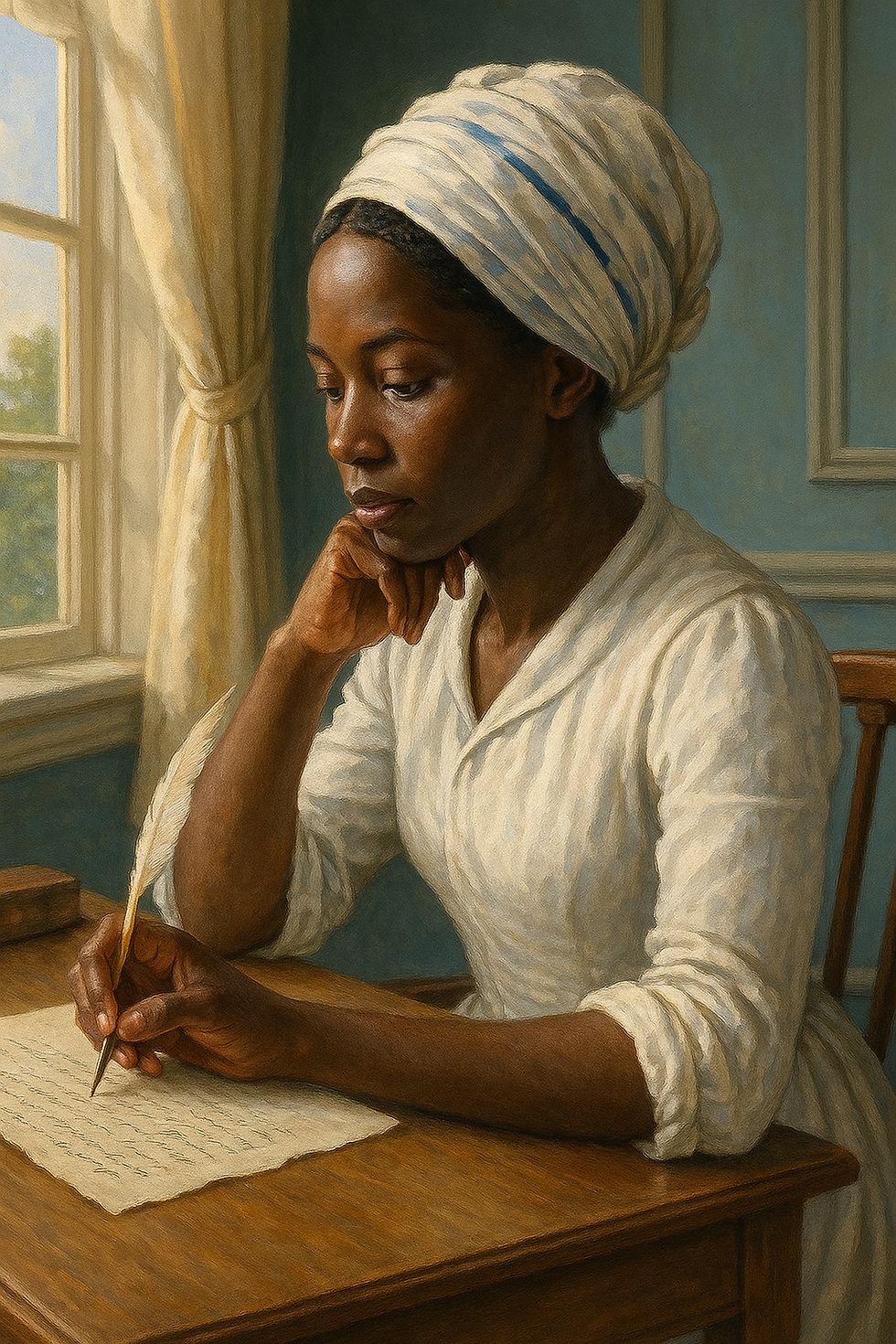
My Name is Phillis Wheatley: An Enslaved Poet of the American Revolution
My name is Phillis Wheatley, and before the world knew me for my poetry, I was a young girl taken from West Africa. I was no more than seven or eight years old when I was captured and forced onto a slave ship bound for Boston in 1761. The ship that carried me was named The Phillis, and so the family who purchased me gave me that name. I arrived in a world of cold winds, strange language, and unfamiliar faces, with only my memories of Africa to comfort me. I could not know then how drastically my life would differ from that of most enslaved children.
Life in the Wheatley Household
I was purchased by the Wheatley family, who brought me into their home not as a field laborer but as a house servant. They noticed quickly that I was small, fragile, and eager to learn. Instead of denying me education, Mrs. Susanna Wheatley taught me to read English. Within months, I mastered the alphabet, the Bible, and complex texts that many free children struggled to understand. Soon I learned Latin, Greek, and the works of classical poets. I found myself drawn to language like a bird to air. Words became my refuge—my way of exploring a world that had once been torn from me.
Discovering My Gift for Poetry
By the age of twelve, I began composing my own poems. My earliest works reflected the faith and values I absorbed in the Wheatley household, but they also carried my longing for freedom and dignity. Poetry allowed me to express truths I could not speak aloud. The Wheatleys recognized my unusual talent and encouraged me to write more. My verses circulated among Boston’s elite, who marveled that an enslaved African girl could compose poetry in the style of Milton and Pope.
A Journey to Prove My Humanity
When attempts were made to publish my poems, some refused to believe that a Black enslaved woman had written them. I was made to appear before a panel of prominent men—governors, clergy, merchants—who questioned me about my work. I answered calmly, reciting my lines and explaining my themes. They signed a document attesting that I was indeed the author of the poems. Even so, Boston printers refused to publish them, and my work was finally printed in London under the title Poems on Various Subjects, Religious and Moral in 1773. I traveled to England to meet patrons and saw a world far different from the one I knew in America.
The Revolution and the Promise of Freedom
During the American Revolution, I wrote poems praising the ideals of liberty. I believed deeply that a nation fighting for freedom should extend that freedom to all. I wrote to General George Washington in 1775, sending him a poem that celebrated his leadership. To my amazement, he replied with respect and invited me to visit him. Many of my poems carried a quiet but powerful challenge to the hypocrisy of a land that claimed liberty yet held thousands in bondage. My words became part of a growing conversation about freedom, humanity, and God’s justice.
Gaining My Freedom
Shortly after my book was published, the Wheatley family granted me my freedom. Though this moment should have brought me relief, freedom came with trials I had not expected. After the deaths of the Wheatleys who had supported me, I married a free Black man named John Peters. We struggled against poverty, illness, and the harsh realities of life for free Black people in a society that still viewed us with suspicion. Publishing opportunities faded, and many of my later poems were lost to time.
My Final Years and Legacy
I spent my final years in hardship, working to support myself and my children. Illness and poverty overwhelmed me, and I died in 1784 at only thirty-one years old. Yet even in my final days, I continued to write—because poetry was the voice of my soul. Though my life was short, my works lived on, inspiring abolitionists, writers, and leaders who would come after me. My poems proved that intellect knows no color, that talent blooms even in bondage, and that words can challenge the foundations of injustice.
Slavery and the Enlightenment Contradiction – Told by Phillis Wheatley
In the years when I began writing, the American colonies buzzed with talk of liberty, reason, and natural rights—ideas drawn from the great minds of Europe. I read the works of poets and philosophers who spoke of freedom as the birthright of all mankind. These writings stirred the hearts of the colonists, who protested against tyranny and proclaimed that no people should live under the unjust rule of another. Yet as I listened to these declarations, I could not ignore the contradiction that echoed through every street and household: those who demanded liberty for themselves denied it to the many enslaved Africans who lived among them.
A Life Lived Between Two Worlds
As an enslaved woman taught to read and write, I found myself in a peculiar place. I studied the very authors who argued that reason and equality belonged to all humanity, yet my own life was proof that these ideals were not applied universally. I lived in a world where a person could quote Cicero on justice while owning another human being, or praise the virtue of freedom while binding others in chains. My poetry became a means to navigate this space between Enlightenment thought and colonial reality.
Using Words to Expose Inconsistency
When I wrote, I chose my words carefully. I never struck out with anger, for the society around me would not have welcomed such boldness from someone in my condition. Instead, I used gentler tones—praise, reflection, and moral questioning—to reveal the inconsistency between the ideals Americans celebrated and the practices they embraced. In verses addressed to leaders, readers, and even my fellow Africans, I invited them to see the contradiction for themselves. If equality came from God, as so many believed, how then could they deny it to those who shared the same breath of life?
Faith as a Bridge Toward Reason
Many Enlightenment writers placed great value on human reason, yet I found that faith often reached places reason alone could not. In my poetry, I wrote of salvation, divine intention, and the worth of every soul. I hoped that by reminding readers of the spiritual equality they professed, I could nudge them closer to recognizing the moral failings of slavery. My own life—educated, articulate, and reflective—served as quiet evidence against the belief that Africans were somehow less capable or less deserving of freedom.
The Revolution’s Echoes of Freedom
When the colonies prepared to break from Britain, they did so under the banner of liberty. I watched men speak passionately of the oppression they endured and their right to self-governance. Their words rang with power and purpose. Yet I could not help but wonder how they reconciled their struggle for independence with the chains that remained firmly in place around so many of my people. The Enlightenment ideals that fueled the Revolution should have shone light upon the injustice of slavery, yet many chose to keep that light hidden.
A Voice Urging Reflection
Through my writings, I sought not to condemn but to inspire reflection. I believed that if people could see the contradiction between their principles and their actions, they might be moved to change. I knew the strength of the ideas they cherished, for those ideas had shaped my own thinking. The challenge was to help them apply those ideals consistently—beyond their own households and beyond their own desires.
A Hope for True Enlightenment
Looking back, I recognize that the Enlightenment contained both promise and failure. Its ideals offered a vision of equality and dignity, yet those ideals were often applied selectively. Still, I held hope that reason and faith together could one day guide society to embrace the full meaning of liberty. My role, as I saw it, was to offer my voice—quiet yet persistent—as a reminder that true enlightenment must include all people, not just the privileged few.
The Difference Between Humane Treatment and Cruelty Among the Enslaved – Told by Phillis Wheatley
In my years within the households and communities of colonial America, I learned that the fate of an enslaved person depended almost entirely on the character of those who claimed ownership over them. Slavery itself was a cruel institution, for no matter how gentle a master might appear, he still held absolute authority over another human being. Yet the conditions in which enslaved people lived varied greatly, ranging from environments where some were granted small mercies to places where unimaginable brutality ruled every hour of the day.
Moments of Relative Kindness
There were households where enslaved people were permitted education, religious instruction, or tasks that did not break the body. I myself lived in such a place. The Wheatley family, though they held me in bondage, allowed me to read, write, and express myself through poetry. They taught me religion, cared for my health, and spared me the harsh physical labor many enslaved women endured. Others lived in similar settings—often domestic households in northern colonies or in homes where the enslaved worked as cooks, seamstresses, or personal attendants. These circumstances did not free them from bondage, but they provided a degree of dignity that was denied to many others.
Examples of Gentler Circumstances
I encountered enslaved people who spoke with gratitude for small allowances: a master who permitted marriage, a mistress who taught a child to read, or a household that allowed families to remain together. Some enslaved men served as skilled craftsmen—carpenters, blacksmiths, or sailors—whose talents earned them limited autonomy. In rare cases, enslaved individuals were allowed to hire out their labor, keep a portion of their earnings, or purchase their freedom. These examples showed that within the confines of bondage, humanity could sometimes flicker.
The Terrible Reality of Cruelty
Yet such gentler experiences were exceptions, not the norm. In many plantations and farms, enslaved people suffered under violence, neglect, and unending toil. I heard stories of overseers who whipped men and women until their backs were scarred beyond recognition. Children were separated from parents and sold to far-off places. Some masters denied enslaved people food, proper clothing, or rest, believing that fear alone would drive productivity. Women were especially vulnerable, subjected to abuse that robbed them of safety and control over their own bodies.
Examples of Extreme Mistreatment
There were plantations in the southern colonies where enslaved people labored from sunrise until long after darkness, their bodies exhausted by the demands of rice, sugar, or tobacco cultivation. Runaways, when captured, faced beatings, branding, or prolonged restraint. I knew of men who were chained in irons for weeks after resisting punishment, and women who endured cruelty both in the fields and in the household. Stories from South Carolina, Georgia, and the Caribbean spoke of punishments so severe they defied comprehension—people starved, shackled, or forced to wear iron collars with prongs to restrict their movement.
A System of Power Without Boundarie
The stark difference between humane and cruel treatment arose from the same root: the absolute power granted to enslavers. A master inclined toward mercy could soften the blows of bondage, but a master inclined toward violence had the law and the system firmly on his side. Slavery gave no protection to the enslaved—no rights to appeal, no guarantees against harm. This meant that the character of the enslaver shaped the fate of the enslaved, creating a world where kindness was rare good fortune and cruelty an everyday reality.
Understanding the Human Cost
Reflecting on these contrasts, I see that even the most humane treatment could not erase the fundamental injustice of slavery. Those who experienced relative gentleness still lived in a world where their freedom was denied, their lives owned, and their futures controlled by others. And those who endured cruelty bore the full weight of an institution built upon domination. In understanding this difference, one must recognize that slavery’s variations did not change its nature—whether under a soft hand or a harsh one, it remained a system that sought to control and exploit human beings, often at the greatest cost to their bodies and souls.


Comments