

12. Heroes and Villains of the U.S. Melting Pot - Religion in and around the American Revolution


My Name is Isaac Backus: Baptist Pastor and Champion of Religious Liberty
I was born in 1724 in Norwich, Connecticut, into a society where religion shaped nearly every part of life, yet freedom of conscience was far more limited than many believed. As a young man, I was raised within the Congregational tradition, faithful to its teachings and expectations, until a deep spiritual awakening transformed how I understood faith itself. During the revivals that followed the First Great Awakening, I came to believe that true Christianity could not be inherited, taxed, or enforced, but must be freely chosen and lived from conviction. That realization cost me comfort and approval, for it placed me at odds with the established religious system of New England and set my life on a path of conflict, endurance, and purpose.
Awakening, Conviction, and the Cost of Dissent
My conversion reshaped not only my theology but my understanding of authority. I became convinced that civil governments had no rightful power over the conscience and that churches supported by law inevitably corrupted faith. This belief led me to embrace the Baptist cause, a decision that placed me among religious minorities viewed with suspicion and often hostility. Baptists were fined, imprisoned, and taxed to support churches they did not attend, and I witnessed firsthand the injustice of a system that claimed liberty while denying it in practice. I pastored Baptist congregations knowing that every sermon, baptism, and refusal to pay religious taxes was an act of peaceful resistance. Faith, to me, demanded obedience to God rather than submission to religious coercion.
Writing, Organizing, and Confronting Religious Authority
I soon realized that sermons alone would not dismantle entrenched systems, and so I turned to writing and organization. I documented abuses, recorded court cases, and published arguments showing how state-supported religion violated both Scripture and natural rights. My work sought not chaos but consistency, calling colonies that protested British tyranny to examine their own treatment of dissenters. I traveled extensively, uniting Baptist communities and urging them to speak with one voice against compulsory religious support. Though often dismissed as troublesome or radical, I remained convinced that liberty of conscience was the foundation of all other freedoms and that without it, political independence would be hollow.
The American Revolution and a Deeper Struggle for Freedom
When resistance to Britain intensified, I supported the cause of independence, but I did so with a clear warning. A new nation, I argued, could easily repeat old injustices if it merely shifted power without reforming principles. I pressed revolutionary leaders to recognize that freedom did not end with representation in government but extended to the soul itself. While many spoke passionately about liberty, I reminded them that taxing dissenters for religion was no different in principle from taxing colonists without consent. The Revolution gave weight to my arguments, for it exposed the contradiction between fighting oppression abroad while tolerating it at home.
Legacy of Liberty Beyond Independence
I lived to see independence secured, but my greatest satisfaction came from watching the slow collapse of religious establishments in New England. Though change did not come quickly, the principles I defended took root, influencing future leaders and generations of believers. I did not seek fame or political office, only a society where faith could be sincere because it was free. My life’s work was not to weaken religion, as my critics claimed, but to strengthen it by removing the chains of coercion. I believed then, and believe still, that when faith stands apart from the power of the state, both religion and liberty are preserved, and a nation is better prepared to endure.
Religion in the Colonies Before the Revolution (c. 1700–1740) – Told by Backus
When I look back upon the religious life of the colonies before the stirrings of revolution, I see a land that spoke often of God and order, yet struggled deeply with liberty of conscience. In New England especially, religion was not merely a matter of belief but a public institution supported by law. Congregational churches were established and maintained through compulsory taxes, collected from all residents regardless of personal conviction. Attendance, doctrine, and moral conduct were regulated by both church leaders and civil magistrates, creating a society that valued uniformity over voluntary faith. Many believed this system preserved righteousness and social stability, yet it carried an unseen weight that pressed heavily upon those whose beliefs did not align with the established order.
Established Churches and the Power of the State
The established church stood at the center of colonial life, shaping laws, education, and community identity. Ministers were often supported by public funds, and towns were required to maintain churches as part of their civic duty. This arrangement blurred the line between spiritual authority and civil power, granting churches influence backed by law rather than persuasion. While many sincere believers thrived within this structure, it left little room for difference. The state assumed the right to define acceptable worship, and dissent was treated not as conscience but as disorder. Faith, under such conditions, risked becoming inherited habit rather than heartfelt conviction.
Religious Taxes and the Burden on Conscience
One of the greatest injustices of this system was religious taxation. Men and women were compelled to pay for the support of churches they did not attend and doctrines they did not believe. Those who refused faced fines, property seizure, and even imprisonment. I came to see these taxes as a quiet form of persecution, for they forced the conscience into submission through economic pressure. Many colonists believed such measures were mild or necessary, yet they ignored the deeper truth that coerced support corrupted both giver and receiver. True faith cannot be purchased with tax money, nor can righteousness be enforced by law.
Dissenters and the Margins of Colonial Religion
Dissenters lived on the edges of colonial society, tolerated at times, punished at others. Baptists, Quakers, and other minority groups were viewed with suspicion because they challenged accepted forms of worship and authority. Baptists in particular were seen as disruptive, not because of violence or rebellion, but because they rejected infant baptism, insisted on voluntary church membership, and denied the state any role in the governance of the church. These beliefs struck at the heart of the established system, and so Baptists were often targeted as troublemakers rather than fellow Christians. Many suffered quietly, worshiping in homes or meeting secretly to avoid punishment.
Why Oppression Took Root Before Resistance Began
The oppression felt by Baptists and other minorities did not arise from cruelty alone, but from fear. Colonial leaders feared disorder, feared moral decline, and feared losing control over a population they believed required firm guidance. Yet in trying to preserve unity through force, they undermined the very faith they sought to protect. By the time revolutionary ideas began to circulate, many dissenters already understood the danger of unchecked authority. We had lived under it in religious matters long before Parliament asserted it politically. The struggle for independence would later echo our earlier cries for liberty of conscience, proving that freedom is indivisible. When the soul is not free, the body soon follows, and when faith is bound by law, injustice is never far behind.
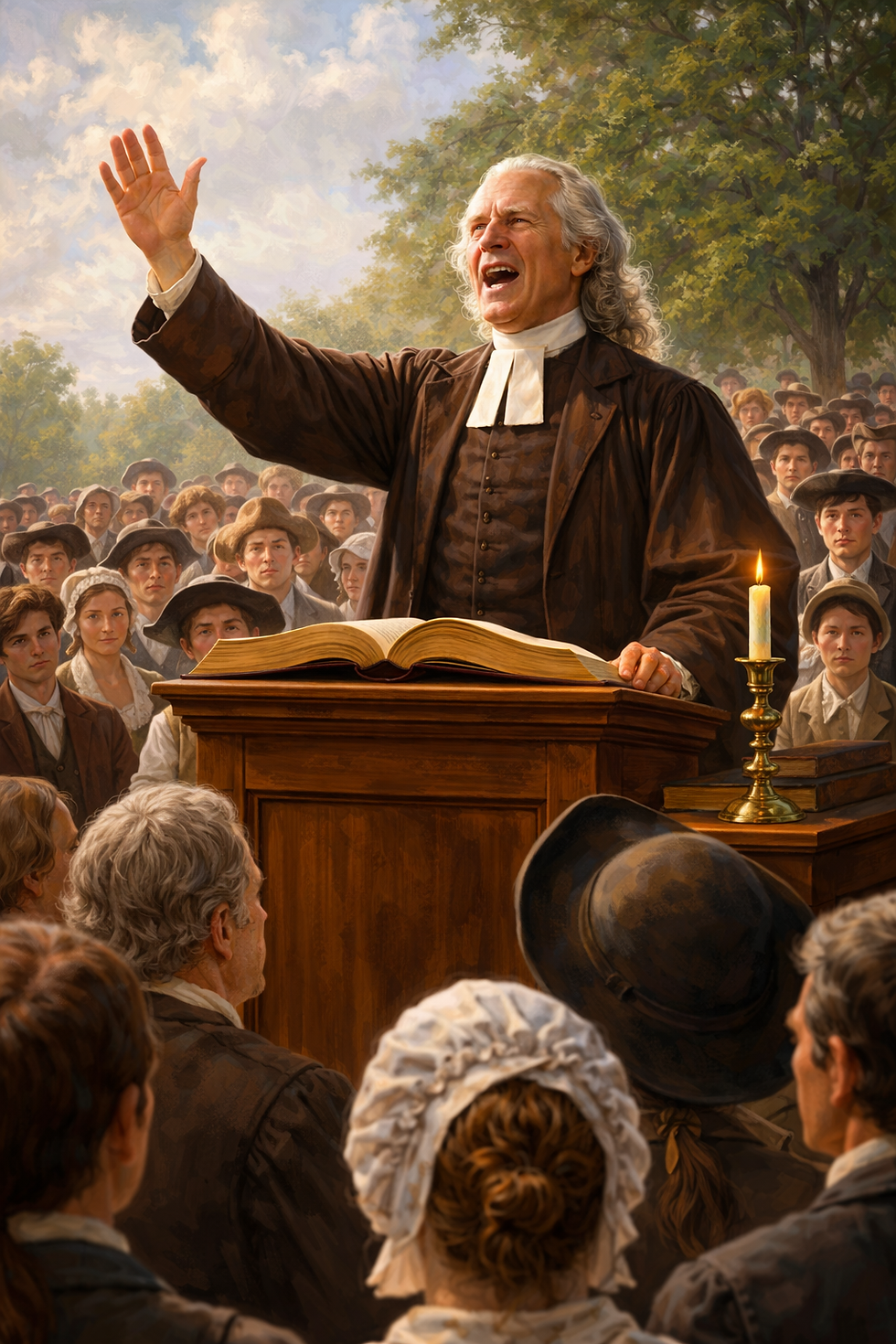
My Name is John Leland: Baptist Preacher and Defender of Liberty
I was born in 1754 in Massachusetts, into a world where religion shaped daily life but freedom of conscience was still tightly controlled by law and custom. As a young man, I experienced a powerful conversion that convinced me faith must be voluntary or it was meaningless. That conviction led me away from established churches and into the Baptist movement, where I discovered both spiritual freedom and constant resistance. I was never content with a quiet pulpit or a cautious message. I believed truth should be spoken plainly, loudly, and without fear of earthly authority, because conscience answers to God alone.
A Preacher on the Move
My ministry was not rooted in one church or town but carried across colonies and states. I preached in homes, fields, and meetinghouses, often traveling long distances to reach people hungry for a faith unbound by government control. My sermons emphasized personal conversion, believer’s baptism, and the absolute separation of church and state. I saw firsthand how laws supporting established churches corrupted faith and punished dissenters, and I refused to remain silent about it. To many, I appeared abrasive and stubborn, but I knew that liberty rarely advances through politeness alone. Wherever I traveled, I urged ordinary people to understand that religious freedom was not a gift from government, but a right inherent to human dignity.
Religion, Revolution, and the Fight for Conscience
When the American Revolution unfolded, I supported independence, but my allegiance was never blind. I warned that political liberty without religious liberty was an incomplete victory. I spoke openly against religious taxes, test oaths, and government interference in worship, even when such positions made allies uncomfortable. In Virginia, I became deeply involved in the struggle to dismantle the Anglican establishment, arguing that the same principles used to resist British tyranny demanded freedom of conscience at home. I believed governments were strongest when they left religion alone and that faith flourished best when separated from power.
Influencing the Founders Without Holding Office
Though I never sought political office, my influence reached the highest levels of government. I worked closely with James Madison, pressing him to commit publicly to the protection of religious liberty. I made it clear that many Baptists would oppose the new Constitution unless it included explicit safeguards for conscience and worship. My persistence helped secure support for what would become the Bill of Rights, particularly the First Amendment. I did not view this as political maneuvering, but as moral responsibility. Liberty, once gained, must be written down, defended, and guarded, or it will slowly erode.
A Life of Uncompromising Freedom
I lived my life refusing to trade conviction for comfort or popularity. I distrusted centralized power, rejected state support for religion, and believed that truth needed no legal protection to survive. When I died in 1841, I left behind no political titles or monuments, but I trusted that the principles I fought for would outlive me. My hope was simple yet demanding: that Americans would remember freedom of conscience is fragile, easily surrendered, and always worth defending. Faith, to me, was strongest when it stood alone, answerable only to God, and protected from the ambitions of men.
The Aftermath of the First Great Awakening (1740s–1760s) – Told by John Leland
In the years after the great revivals swept through the colonies, the ground beneath church and state was no longer firm. The Awakening did not simply stir emotions; it rearranged authority. Ordinary men and women who had once deferred quietly to ministers and magistrates began to ask whether obedience without conviction was obedience at all. The preaching of the new birth taught that faith came from an inward work of God rather than outward conformity, and once that truth took root, it could not be contained by tradition or law. People learned to listen to conscience before custom, and that single shift changed everything.
Revivalism and the Shattering of Old Authority
Before the Awakening, authority flowed downward in neat lines, from established churches to congregations and from civil rulers to the people. Revivalism disrupted this order by insisting that no human institution could grant salvation or stand between God and the soul. Traveling preachers, informal gatherings, and spontaneous conversions undermined the idea that truth belonged exclusively to trained elites. When people experienced faith directly, they grew less willing to accept religious control enforced by law. Ministers who relied on position rather than persuasion found their influence weakened, while those who appealed to Scripture and conscience gained new audiences. The result was not chaos, as critics feared, but a profound rethinking of who had the right to command belief.
Conscience Awakened and the Rise of the Ordinary Believer
The greatest legacy of the Awakening was the elevation of conscience. Men and women who had never imagined themselves capable of theological judgment now weighed sermons, doctrines, and laws against their own understanding of Scripture. This did not make them reckless; it made them responsible. They learned that faith required decision, and decision required courage. Once a person accepted that conscience answered to God alone, it became difficult to justify religious taxes, compulsory attendance, or state-sponsored worship. The same people who questioned church authority soon questioned civil authority when it intruded upon matters of belief. Revivalism trained common people to speak, choose, and resist with conviction rather than habit.
Training a Generation to Challenge Power
Though few realized it at the time, the Awakening served as a school for resistance. It taught people how to gather outside official structures, how to spread ideas without permission, and how to endure criticism for dissenting views. Baptist congregations, revival meetings, and informal networks became places where liberty was practiced long before it was defended politically. When ministers were fined or jailed for preaching without approval, their followers learned firsthand how power reacts when challenged. These experiences prepared many to recognize injustice later when Parliament asserted authority without consent. The habits of resistance were learned in meetinghouses and fields before they appeared in assemblies and congresses.
From Spiritual Renewal to Political Implications
By the 1760s, the aftershocks of the Awakening were unmistakable. Colonists were more suspicious of centralized authority, more confident in their right to judge for themselves, and more willing to oppose systems that demanded obedience without consent. The revival did not preach revolution, but it cultivated the kind of people who would eventually support it. When the time came to argue that rulers derived their just powers from the consent of the governed, many had already lived that principle in their religious lives. The Awakening proved that once conscience is freed, it rarely submits again, and that a people trained to challenge spiritual domination will not long tolerate political domination either.

My Name is John Witherspoon: Minister, Educator, and Revolutionary
I was born in 1723 in Scotland, the son of a long line of Presbyterian ministers, and from an early age I learned that faith was not meant to be quiet or private, but reasoned, defended, and lived openly in the world. I was educated at the University of Edinburgh, steeped in classical learning, moral philosophy, and Reformed theology. Those years shaped my conviction that truth could withstand scrutiny, that faith and reason were not enemies, and that a society grounded in virtue required educated minds and disciplined consciences. My early ministry in Scotland was marked by conflict, as I opposed theological liberalism that I believed weakened both the church and the moral foundations of society. That resistance earned me enemies, imprisonment for a time, and ultimately a reputation as a man unwilling to compromise conviction for comfort.
From Scotland to the American Colonies
In 1768, my life took a decisive turn when I accepted the call to become president of the College of New Jersey, known today as Princeton University. Crossing the Atlantic, I entered a world already straining under political and religious tension. The colonies were alive with debate, and I saw immediately that education would play a critical role in whatever future awaited them. At Princeton, I reshaped the curriculum to emphasize moral philosophy, classical republicanism, history, and theology, believing that liberty could not survive without virtue and that virtue could not endure without faith. My students were not trained merely to argue, but to govern themselves and others wisely. Many of those young men would later become ministers, judges, legislators, and military leaders, carrying those principles into the heart of the American Revolution.
Faith, Liberty, and the Justification of Resistance
As tensions with Britain escalated, I spoke and wrote openly in defense of resistance to tyranny. I rejected the idea that Christian obedience required submission to unjust authority, arguing instead that civil government existed by the consent of the governed and under the moral law of God. In my sermons and lectures, I taught that rulers who violated the natural rights of the people forfeited their legitimacy. This was not rebellion born of chaos, but resistance rooted in order, covenant, and responsibility. My faith did not lead me away from politics; it compelled me into it. I believed that a free people must be both educated and moral, and that liberty divorced from virtue would quickly decay into license.
A Minister in the Continental Congress
In 1776, I was elected to represent New Jersey in the Continental Congress, becoming the only clergyman to sign the Declaration of Independence. That moment was not a rejection of my calling, but its fulfillment. I saw no contradiction between preaching the gospel and affirming political independence, for both concerned truth, justice, and human dignity. In Congress, I worked quietly but steadily, supporting independence, serving on committees, and lending moral clarity to debates that would shape a nation. I was keenly aware that independence would fail without moral restraint and civic responsibility, and I warned often that freedom demanded sacrifice, discipline, and faith.
Education, Legacy, and the Shaping of a Nation
After the war, I returned my primary focus to education, convinced that the survival of the republic depended on forming wise leaders more than winning battles. I continued teaching until my death in 1794, never abandoning the belief that religion, properly understood, strengthened liberty rather than threatened it. My legacy is not found only in a signature on parchment, but in generations of students shaped to think clearly, act responsibly, and govern justly. I lived at a moment when ideas became actions and words became nations, and I believed then, as I do now, that a free society must be anchored in both reason and faith, or it will not remain free for long.
Enlightenment Thought Meets Protestant Theology – Told by John Witherspoon
When I arrived in the American colonies, I found a world already alive with ideas, yet searching for a framework sturdy enough to hold them together. The Enlightenment had crossed the Atlantic carrying confidence in reason, order, and natural law, while Protestant theology continued to shape conscience, morality, and purpose. Many feared these forces were in conflict, that reason would erode faith or that theology would suffocate inquiry. I believed otherwise. I was convinced that truth, whether discovered by reason or revealed by Scripture, could not contradict itself, and that a society grounded in both would be stronger than one ruled by either alone.
Natural Law and the Moral Order of the World
At the heart of Enlightenment thought was the belief that the universe operated according to discoverable laws, not chaos or whim. I taught my students that natural law revealed a moral order embedded in creation itself, one that testified to a rational and just God. This idea did not threaten Calvinist theology; it complemented it. Scripture revealed the nature of God and the condition of humanity, while reason helped us understand how moral principles applied to civil life. Natural rights were not inventions of philosophers, but reflections of a divine moral structure, accessible to human reason yet accountable to higher authority. In this way, liberty became not rebellion, but obedience to a deeper law.
Moral Philosophy as Preparation for Citizenshi
In colonial colleges, moral philosophy served as the bridge between theology and public life. I emphasized the study of ethics, history, and classical republican thought because I believed free governments required virtuous citizens. Calvinism taught human depravity and the need for restraint, while Enlightenment thinkers emphasized self-government and civic responsibility. Together, these ideas formed a realistic view of human nature, one that justified limited government, checks on power, and the rule of law. Students learned that liberty could not survive on optimism alone, nor could authority rest solely on fear. A balanced republic required citizens trained to reason morally and act responsibly.
Calvinist Theology and the Limits of Power
Calvinist theology offered a crucial corrective to unchecked Enlightenment confidence. While reason was valuable, it was not sufficient to redeem human ambition or pride. I taught that because all men were flawed, no ruler could be trusted with absolute power. This theological insight aligned naturally with republican political structures. The doctrine of original sin reinforced the need for divided government, accountability, and resistance to tyranny. Far from promoting passivity, Calvinism encouraged vigilance, reminding believers that injustice often clothed itself in legality and authority.
From Lecture Hall to Pulpit and Assembly
These blended ideas did not remain confined to classrooms. They flowed into sermons, pamphlets, and political debate, shaping how colonists understood their relationship to rulers and laws. Ministers spoke of liberty as a moral trust, philosophers spoke of rights grounded in nature, and together they formed a language powerful enough to justify resistance without abandoning order. This synthesis gave the Revolution its intellectual backbone, allowing faith and reason to march together rather than compete for allegiance.
A Foundation for a Free Society
I believed then, and continue to believe, that the success of the American experiment depended upon this union of Enlightenment thought and Protestant theology. Reason without virtue leads to arrogance, and faith without understanding risks fanaticism. When joined, they produce citizens capable of freedom and restraint alike. In the blending of natural law, moral philosophy, and Calvinist theology, the colonies found not merely arguments for independence, but the intellectual discipline required to sustain liberty once it was won.
Clergy Education and Training of Revolutionary Leaders – Told by Witherspoon
When I assumed leadership of the College of New Jersey, I understood that the classroom would shape the future of the colonies as surely as any battlefield or assembly hall. Education, to my mind, was not merely the transfer of knowledge, but the formation of judgment, character, and responsibility. The young men who came to Princeton were not trained only to preach sermons or argue cases, but to understand the moral weight of authority and the dangers of power unchecked. I believed that a free society would rise or fall based on whether its leaders were formed in virtue before they were entrusted with influence.
Princeton as a Forge for Public Leadership
At Princeton, we intentionally blurred the line between sacred and civic education, not to confuse their purposes, but to prepare students for a world where faith and public life were deeply intertwined. Ministers were expected to understand law and history, while future lawyers and statesmen were trained in theology and moral philosophy. This broad education ensured that religious ideas would not remain confined to pulpits, but would inform debates about rights, governance, and justice. Students studied classical republics, Enlightenment thinkers, and Scripture side by side, learning that wisdom required both reflection and restraint. Many who passed through our halls would later carry these ideas into colonial assemblies, courts, and congresses.
Training the Mind to Govern the Self and Others
I emphasized moral philosophy because I believed self-government was the foundation of political freedom. Students were taught to reason carefully, argue honestly, and recognize the limits of human virtue. Calvinist theology reminded them of human weakness, while republican theory taught them the necessity of accountability and balanced power. This combination produced leaders wary of tyranny yet cautious of chaos. They learned that liberty required discipline, and that leadership was a trust rather than a privilege. In this way, education prepared them not merely to oppose unjust authority, but to exercise authority justly when the time came.
From Seminary to Congress
As tensions with Britain grew, I watched former students step into roles of public consequence. Pastors preached sermons that shaped public opinion, lawyers crafted arguments grounded in natural law, and statesmen articulated resistance in moral terms ordinary citizens could understand. The ideas cultivated at Princeton moved outward into the life of the colonies, forming a shared language of liberty anchored in responsibility. These men did not separate their faith from their politics, but neither did they confuse religious authority with civil power. Instead, they carried religious principles into public life as guides for conscience and conduct.
Education as the Silent Architect of Revolution
The Revolution was not born suddenly in protest or violence; it was prepared quietly through years of teaching and study. Colleges like Princeton served as training grounds where ideas matured before they were tested by events. I believed then, and believe still, that armies may win independence, but education determines whether it can be sustained. By shaping pastors, lawyers, and statesmen who understood the moral dimensions of power, Princeton helped lay the foundation for a republic capable of governing itself. In that sense, the work done in classrooms proved as consequential as any declaration or treaty, for it formed the minds that would be entrusted with the future of liberty.
Religious Dissent and Resistance to Authority – Told by Isaac BackusLong before shots were fired against British soldiers, many dissenting Christians were already living under authority that pressed heavily upon conscience. We knew from experience that power, when unchecked, rarely limits itself. In the colonies, religious establishments enforced belief through law, taxation, and punishment, while across the Atlantic Parliament claimed the right to rule without consent. To many, these seemed like separate problems, but to dissenters they were closely connected. The same spirit that demanded obedience in worship also demanded submission in politics, and we learned early that liberty must be defended in all its forms or it would be lost entirely.
Living Under Two Masters of Authority
Dissenting Christians occupied an uneasy position in colonial society. On one hand, we were expected to submit to British rule as loyal subjects of the Crown. On the other, we were compelled by colonial governments to support churches we did not attend and doctrines we did not believe. Refusing to pay religious taxes or comply with church laws brought fines, confiscation of property, and imprisonment. This dual pressure made clear that authority did not merely govern actions, but sought to command conscience. We resisted not because we despised order, but because we believed no earthly power held rightful dominion over faith. Obedience to God required limits on obedience to men.
Why Dissenters Questioned British Rule Early
When Parliament asserted authority over the colonies without representation, dissenters recognized a familiar pattern. We had already experienced what it meant to be governed without consent in religious matters. The arguments used to justify religious establishments were nearly identical to those used to defend imperial control: stability, tradition, and the common good. Yet these justifications rang hollow to those who had suffered under them. We understood that liberty claimed in theory but denied in practice was no liberty at all. Our resistance to British authority was shaped not by sudden outrage, but by years of living under systems that punished belief and rewarded conformity.
Resistance Without Rebellion
It is important to understand that dissenting Christians were not driven by chaos or defiance for its own sake. Our resistance was principled and deliberate. We petitioned, wrote, preached, and appealed to law long before supporting separation from Britain. We sought reform rather than revolution, asking only that conscience be left free. Yet repeated refusal by colonial and imperial authorities taught us a hard lesson: power rarely surrenders itself voluntarily. When peaceful appeals failed, many dissenters concluded that political independence was the only path to lasting religious freedom.
Faith as the Training Ground for Liberty
Dissent trained believers to endure pressure, to organize without official support, and to rely on conviction rather than protection. Congregations learned to meet quietly, support one another materially, and defend their beliefs publicly when challenged. These habits translated easily into political resistance when the time came. We were not surprised by opposition, nor intimidated by threats, because we had faced them before. Faith had taught us that truth does not depend on permission, and liberty does not require approval.
Why Resistance Had to Be Complete
Dissenting Christians resisted both British control and colonial religious establishments because partial liberty is fragile and deceptive. A nation cannot be free while consciences are bound, nor can a people govern themselves if belief is regulated by force. We understood that exchanging one master for another would solve nothing. True freedom required dismantling all systems that claimed authority over the soul. The Revolution would later give language to these convictions, but they were forged long before in meetinghouses, prisons, and quiet acts of conscience. Our resistance was not born of rebellion, but of faith that refused to kneel where God alone commanded allegiance.

My Name is Samuel Adams: Revolutionary Leader and Moral Voice of Liberty
I was born in 1722 in Boston, Massachusetts, into a household where faith, civic duty, and public debate were woven tightly together. My father taught me that liberty was not merely a political condition but a moral responsibility, sustained only by virtue and vigilance. I was educated at Harvard College, where I studied theology, history, and philosophy, and where I came to believe that a people who forgot God would soon forget justice. Though I was trained for business, my true calling emerged not in commerce but in conscience, as I became convinced that public life demanded moral clarity as much as political courage.
Faith as the Foundation of Resistance
Religion shaped my understanding of government and liberty long before the first shots of revolution were fired. I believed civil authority was accountable to higher moral law and that rulers who violated the rights of the people betrayed the trust given to them by God and society alike. As Parliament tightened its grip on the colonies, I framed resistance not as rebellion but as righteous defense. Through essays, speeches, and public meetings, I spoke in a language ordinary people understood, drawing on Scripture, covenant imagery, and shared moral assumptions. Sermons, days of fasting, and public prayers became powerful tools, reinforcing the belief that the struggle for liberty was not merely political, but moral and spiritual.
Organizing a People, Not an Army
I was never a general, but I helped prepare a people for resistance long before war arrived. I worked tirelessly to organize committees, rallies, and networks that spread ideas faster than soldiers could march. I believed that a free society required informed citizens who understood why liberty mattered and what it demanded of them. When events like the Boston Massacre and the Boston Tea Party shook the colonies, I ensured they were framed as moral warnings, not random acts of disorder. Discipline, restraint, and purpose mattered deeply to me, for I feared that unchecked passion could destroy the very cause it sought to advance.
Independence and the Weight of Responsibility
When independence became unavoidable, I supported it fully, though never lightly. I understood that severing ties with Britain would unleash forces difficult to control, and I warned repeatedly that liberty without virtue would collapse into chaos. During my service in the Continental Congress and later in Massachusetts government, I argued that religion played a vital role in sustaining public morality, even as I supported freedom of conscience and opposed coercion in matters of faith. A republic, I believed, depended on the character of its citizens more than the power of its laws.
Legacy of a Moral Republic
In my later years, I watched with both hope and concern as the nation I helped ignite took shape. I supported the Constitution cautiously, always wary of centralized power and the temptation to trade liberty for security. My life’s work was never about personal glory or wealth, but about awakening a people to their responsibility before God and one another. I believed then, as I do still, that freedom is fragile, sustained not by force but by conviction, and preserved only when a people remember that rights come with duties. If my legacy endures, let it be this: that liberty rooted in moral truth can withstand the might of empires, but liberty untethered from virtue cannot endure.
Sermons as Political Communication – Told by Samuel Adams
In the years leading up to independence, words moved people more powerfully than armies, and no words carried farther or deeper than those spoken from the pulpit. The meetinghouse was the one place where nearly everyone gathered, listened closely, and expected moral instruction. Sermons shaped how people understood duty, authority, suffering, and justice, and they did so in language already trusted. When political tension grew, it was only natural that ideas of resistance, responsibility, and liberty would be carried along these same channels, clothed not as rebellion but as moral reflection.
The Pulpit as a Public Forum
Ministers did not need to shout slogans to influence political thought. By preaching about covenant, tyranny, obedience, and moral law, they framed events in ways that ordinary people could understand and judge for themselves. A sermon comparing unjust rulers to biblical oppressors required no direct mention of Parliament for its meaning to be clear. The pulpit offered something newspapers could not: authority rooted in shared belief and moral expectation. When ministers spoke, listeners did not merely hear opinions; they weighed those words against conscience and Scripture. In this way, sermons became a form of political communication that shaped thought without issuing commands.
Fast Days and the Language of Moral Crisis
Public fast days were among the most powerful tools for uniting religious conviction and political urgency. Declared in response to crises, they invited entire communities to pause, reflect, and repent. These days framed political events as moral tests rather than mere disputes. When colonists fasted and prayed over threats to liberty, they were taught to see resistance not as ambition, but as responsibility. Fasting transformed fear into resolve and confusion into purpose, reinforcing the belief that the struggle was not only against policies, but against injustice itself.
Public Prayer and Shared Identity
Public prayers served to bind communities together in a shared vision of purpose. When leaders prayed for wisdom, restraint, and courage, they modeled the kind of resistance they hoped to inspire. Prayer did not inflame passions recklessly; it disciplined them. It reminded listeners that liberty demanded humility and moral seriousness. These moments created a sense of collective identity, teaching people that they were part of something larger than themselves and accountable not only to one another, but to God. Such unity proved essential as the colonies faced increasing pressure and uncertainty.
Why Religious Language Reached Where Politics Could Not
Political arguments alone often divide, but moral language unites. Sermons translated abstract ideas like rights and representation into lived experience, connecting them to family, faith, and daily life. A farmer might not follow parliamentary debates, but he understood sermons about unjust burdens and moral obligation. Through preaching, revolutionary ideas spread quietly and persistently, shaping conviction rather than provoking reaction. This made resistance more durable, rooted in belief rather than impulse.
The Quiet Power of Moral Persuasion
Looking back, I am convinced that sermons and public prayers prepared the colonies for independence long before declarations were written. They taught people how to think about power, when to obey, and when obedience became complicity. By the time independence was declared, many had already accepted its moral necessity. The pulpit had done its work, not by commanding revolution, but by cultivating a people capable of understanding why it was required. In that sense, sermons were not merely religious exercises, but instruments of preparation, shaping hearts and minds for the responsibilities of liberty.
The Moral Case Against Tyranny (Early 1770s) – Told by John Witherspoon
As tensions with Britain sharpened in the early 1770s, many asked whether resistance could ever be justified by men of faith. I believed the question was not whether resistance was permissible, but whether submission to injustice was sinful. Ministers did not invent this debate; it rose naturally from Scripture, theology, and history. The issue before us was moral legitimacy. When authority ceased to protect the people and instead violated their rights, obedience no longer served righteousness. To obey tyranny was not humility, but complicity.
Scripture and the Limits of Obedience
Scripture never taught blind submission to power. While it commanded respect for lawful authority, it also warned repeatedly against rulers who oppressed the innocent and abused their trust. From the Hebrew prophets confronting kings to the apostles declaring obedience to God over men, the Bible drew clear boundaries around authority. I taught that government existed to promote justice and restrain evil, not to create it. When rulers inverted that purpose, resistance became an act of faithfulness rather than rebellion. This argument did not call people to violence lightly, but it refused to sanctify injustice simply because it wore the cloak of law.
Covenant Theology and Political Responsibility
Covenant theology shaped how many of us understood political obligation. A covenant was a mutual agreement with responsibilities on both sides. Rulers were bound to govern justly, and the people were bound to obey laws that upheld the common good. When one side broke the covenant, the relationship was damaged. I argued that Britain had violated its covenant with the colonies by imposing laws without consent, stripping rights long recognized as English liberties. Resistance, then, was not a rejection of order, but an effort to restore it. This understanding framed political resistance as a moral response to covenantal betrayal, not a rejection of authority itself.
Classical Republicanism and the Danger of Power
Alongside Scripture and theology, classical republican ideas provided practical wisdom about human nature. History taught that power, once concentrated, rarely restrained itself. Republics fell when citizens surrendered vigilance in exchange for comfort or fear. Calvinist theology reinforced this lesson by acknowledging human sinfulness. Because no man could be trusted with unchecked authority, liberty required limits, balances, and accountability. Ministers used these ideas to explain why resistance was not reckless, but prudent. It was not distrust of government that endangered society, but trust without restraint.
From Pulpit to Public Conviction
These arguments were carried from lecture halls and pulpits into the minds of ordinary people. Ministers did not call for chaos or anarchy, but for moral clarity. They urged patience where possible and firmness where necessary. By grounding resistance in Scripture, covenant, and history, they gave the people a framework that honored faith while demanding courage. This moral case transformed political grievance into ethical necessity, allowing colonists to see resistance not as ambition, but as duty.
Why Tyranny Could Not Be Tolerated
In the end, the moral case against tyranny rested on a simple truth: authority derives its legitimacy from justice. When power is severed from righteousness, it becomes tyranny, regardless of tradition or title. Ministers helped the colonies understand that liberty was not a rejection of God’s order, but its defense. Resistance was justified not because the colonies desired independence, but because submission would have meant abandoning moral responsibility. In that conviction, faith and reason stood together, preparing a people to accept the heavy cost of freedom rather than the heavier burden of obedience to injustice.
Faith and the Decision for Independence (1775–1776) – Told by Samuel Adams
When war loomed and the possibility of separation from Britain became unavoidable, faith was not a private comfort set aside for quieter days, but a guiding force brought openly into the center of public life. The decision for independence was heavy with consequence, and many sensed that political wisdom alone was insufficient to bear its weight. In moments of uncertainty, prayer offered not escape, but clarity. It reminded us that the struggle before us was not merely about power or prosperity, but about justice, responsibility, and the kind of people we believed ourselves called to be.
Prayer in Congress and the Search for Moral Clarity
Within the halls of Congress, prayer became an anchor amid division and fear. Men from different colonies, backgrounds, and convictions paused together to seek wisdom beyond their own understanding. These moments did not erase disagreement, but they framed debate within a shared moral seriousness. Prayer reminded us that independence would demand sacrifice and humility, not triumphal pride. It reinforced the idea that liberty was a trust, not a prize, and that those who claimed it must be prepared to govern themselves with restraint and integrity. In seeking guidance, Congress acknowledged that human judgment required moral grounding if it were to act justly.
Religious Language and the Case for Independence
As arguments for independence moved beyond private debate into public discourse, religious language gave them depth and resonance. Appeals to natural rights were woven together with references to providence, moral duty, and accountability before God. This language did not inflame recklessness; it steadied resolve. Independence was framed not as a rejection of order, but as obedience to a higher standard of justice. When colonists heard their cause described in moral terms, they understood that the struggle demanded perseverance rather than passion alone. Faith helped translate political necessity into ethical obligation.
Faith and the Shaping of Public Resolve
Public prayers, sermons, and days of fasting prepared the people for the cost of independence long before it was declared. These practices cultivated patience, courage, and endurance. They taught that suffering did not signify abandonment, but testing. When families sent sons to fight and communities faced loss, faith offered a framework for meaning that sustained commitment through hardship. Independence required more than agreement; it required resolve rooted deep enough to withstand fear, sacrifice, and uncertainty. Faith helped provide that depth.
The Moment of Decision
By the time independence was declared, many hearts had already crossed the threshold. Prayer and religious reflection had prepared the people to accept the consequences of separation with sober determination. Faith did not make the choice easy, but it made it possible. It allowed men and women to believe that the pursuit of liberty, though perilous, was aligned with moral responsibility rather than ambition. The declaration itself reflected this belief, acknowledging dependence on divine providence even as it asserted human rights.
Faith as the Companion of Liberty
Looking back, I am convinced that faith shaped the decision for independence as profoundly as any argument or event. It did not dictate policy, but it formed character. It reminded leaders and citizens alike that freedom demanded virtue, humility, and perseverance. Independence was not born of confidence alone, but of conviction refined through prayer, reflection, and moral struggle. In that union of faith and resolve, a people found the courage to step into an uncertain future, trusting that liberty pursued with integrity was worth the cost it required.
Religious Diversity Within the Continental Army – Told by Isaac Backus
When the colonies took up arms, the army that formed did not march under a single creed or confession. It was a gathering of men drawn from towns, farms, and congregations of many kinds, each carrying his own convictions into camp. For dissenters like myself, this diversity was both a challenge and a promise. War placed men side by side who might never have worshiped together in peacetime, and necessity forced cooperation where law had once enforced uniformity. In the ranks of the Continental Army, liberty of conscience began to function not as a theory, but as a daily practice.
Chaplains and the Spiritual Needs of Soldiers
Chaplains served as the primary spiritual guides within the army, yet they represented a range of denominations rather than a single established church. Congregationalists, Presbyterians, Baptists, and others ministered to soldiers who did not always share their precise beliefs. Their task was not to enforce doctrine, but to offer comfort, moral instruction, and hope amid fear and hardship. Worship services were often voluntary, adapted to circumstances, and shaped by the realities of camp life. This arrangement marked a departure from colonial systems where religion was regulated by law. In the army, faith relied on persuasion and presence rather than authority.
Denominational Variety in the Ranks
The soldiers themselves reflected the religious diversity of the colonies. Men prayed differently, sang different hymns, and interpreted Scripture through varied traditions. Yet shared danger softened divisions. When death and deprivation loomed, doctrinal disputes lost urgency, and common convictions about providence, duty, and justice came to the forefront. The army did not erase differences, but it taught tolerance through necessity. Soldiers learned that unity did not require uniformity, and that cooperation could flourish without coercion.
Pluralism Under the Pressure of War
Wartime conditions forced a practical approach to religious life. Commanders recognized that morale depended on respecting conscience rather than compelling belief. Efforts to impose a single religious expression would have fractured an already fragile force. Instead, pluralism became a strength. Allowing soldiers freedom in worship reduced resentment and fostered loyalty. The army became a living example of what dissenters had long argued: that religion flourishes best when left free, and that order does not collapse when conscience is respected.
Lessons Learned Beyond the Battlefield
The experience of religious diversity within the Continental Army carried implications beyond the war itself. It demonstrated that people of differing beliefs could serve a common cause without surrendering conscience. This lesson challenged long-held assumptions that social stability required religious uniformity. Many who witnessed this pluralism firsthand returned home with a changed understanding of liberty. They had seen cooperation without coercion succeed under the most trying conditions.
A Quiet Argument for Religious Liberty
Though no formal declaration emerged from the camps, the army made a quiet argument for religious freedom through its daily life. Diversity did not weaken resolve; it strengthened it. Soldiers fought not only for independence from Britain, but for a vision of liberty broad enough to include difference. For dissenters like myself, this was a powerful confirmation of what we had long believed. In the shared hardships of war, the Continental Army revealed that faith need not be enforced to be effective, and that a free conscience could stand firm even in the shadow of conflict.
Baptists, Evangelicals, and Religious Liberty – Told by John Leland
As the struggle for independence gathered force, many spoke passionately of liberty, yet not all meant the same thing by the word. Political freedom from Britain was widely desired, but freedom of conscience was often treated as secondary or assumed rather than secured. For Baptists and other evangelicals, this distinction mattered deeply. We had lived under systems that claimed political order while denying spiritual freedom, and we were determined that a new nation would not repeat those errors. Independence, to us, was incomplete unless it protected the soul as fiercely as it guarded the state.
Evangelical Conviction and the Authority of Conscience
Evangelical faith placed conscience at the center of belief. Conversion could not be inherited, legislated, or taxed into existence. This conviction shaped how Baptists approached politics. We did not seek privilege or establishment, only freedom. We believed that faith compelled freely was no faith at all, and that government interference in religion inevitably corrupted both institutions. As revolutionary rhetoric spread, evangelicals listened carefully, measuring promises of liberty against lived experience. We supported independence, but we pressed leaders to clarify whether the freedom they sought would truly extend to all believers, not merely replace British authority with local control.
Pressing Leaders Beyond Political Independence
Baptists organized, petitioned, and spoke directly to those drafting new governments. We reminded revolutionary leaders that resistance to tyranny rang hollow if religious coercion remained intact. In Virginia and other colonies, evangelicals challenged proposals that preserved state-supported churches or imposed religious tests. Our message was simple and persistent: liberty must be consistent. If conscience could not be trusted in matters of worship, it could not be trusted in matters of citizenship. This pressure was not theoretical; it was grounded in decades of persecution, fines, and imprisonment endured by dissenters.
Alliance Without Submission
Though we shared the revolutionary cause, Baptists did not surrender their independence to political leaders. We offered support without silence. Our loyalty was conditional upon the protection of conscience, not on promises of influence or favor. This stance unsettled some who preferred unity without dissent, yet it proved effective. Evangelicals brought moral credibility to the cause, demonstrating that resistance to Britain was not merely a power struggle, but a defense of fundamental human rights. By refusing to separate political liberty from religious freedom, we strengthened both.
Toward Lasting Protections for Conscience
The persistence of evangelicals bore fruit as new constitutions were debated and amended. Leaders like James Madison listened because we spoke plainly and consistently. We demanded written protections, not verbal assurances. The result was a growing recognition that religious liberty required clear boundaries between church and state. Freedom of conscience was no longer treated as a courtesy granted by government, but as a right beyond its reach.
Liberty Secured by Faithful Pressure
In the end, Baptists and evangelicals helped ensure that the American experiment did not confuse independence with freedom. By pressing revolutionary leaders to commit fully to liberty of conscience, we guarded against the quiet return of old injustices under new names. Our influence came not from numbers or power, but from conviction shaped by experience. We believed that a nation truly free must trust its people to worship, believe, and dissent without fear. That belief, once written into law, became one of the Revolution’s most enduring legacies.
State Constitutions and Religion After Independence – Told by John Witherspoon
When independence was secured, the work of defining liberty had only begun. The colonies had cast off imperial rule, but each new state now faced the task of shaping its own government, and religion stood at the center of that challenge. Long-standing habits of establishment did not vanish overnight, nor did fears that freedom of conscience might weaken moral order. The question before us was not whether religion mattered to public life, but how a free people could honor faith without allowing the state to command belief.
Religious Tests and the Fear of Moral Decline
Many early state constitutions retained religious tests for public office, requiring officials to affirm belief in God or Christianity. These measures reflected a deep concern that public authority must rest in moral character and shared values. While intended to preserve virtue, such tests revealed an unresolved tension between trust in conscience and fear of corruption. I understood the impulse behind them, yet I also recognized their danger. When the state judged belief rather than conduct, it risked elevating profession over principle. A republic grounded in liberty had to learn that virtue could be encouraged without being coerced.
Established Churches and Gradual Change
Some states continued to support established churches after independence, particularly where such systems had long shaped community life. These establishments were often defended as guardians of social stability and moral instruction. Yet the Revolution itself had exposed the hazards of enforced conformity. As debates unfolded, it became increasingly clear that establishments bred resentment and weakened genuine faith. Change came unevenly, shaped by local history and pressure from dissenters, but the direction was unmistakable. The authority of the state over worship began to erode, not through sudden decree, but through growing recognition that faith flourished best when left free.
Toleration Versus True Liberty
Early constitutions often spoke of toleration rather than freedom, granting space for dissent while preserving favored status for dominant churches. Toleration was a step forward, but it fell short of full liberty. It implied permission rather than right. I argued that conscience did not depend on the generosity of government, but stood beyond its jurisdiction altogether. This distinction mattered greatly, for a right acknowledged only by tolerance could be withdrawn when fear or politics shifted. True religious liberty required firm boundaries, not temporary allowances.
The Influence of Experience and Debate
Debate over religion in state constitutions was shaped by lived experience. Wartime cooperation among diverse believers, the persistence of evangelical dissent, and the moral arguments raised during resistance to Britain all left their mark. Legislators increasingly understood that unity did not require uniformity, and that public virtue could arise from voluntary faith rather than legal compulsion. These lessons did not erase disagreement, but they narrowed the ground on which establishment could stand.
Laying the Groundwork for a Broader Settlement
The handling of religion in early state constitutions revealed a nation in transition, moving from inherited systems toward principles refined by experience. Though imperfect and uneven, these efforts laid the groundwork for a broader settlement that would later be reflected at the national level. The states wrestled openly with the meaning of liberty, testing assumptions and adjusting practices. In doing so, they demonstrated that freedom was not secured by a single declaration, but shaped through continual reflection and restraint. Religion remained vital to public life, yet its strength increasingly rested on conviction rather than compulsion, a change that would prove essential to the endurance of the republic.
Disestablishment and the Virginia Struggle – Told by John Leland
When the war for independence ended, many assumed liberty had been secured, yet in Virginia the most intimate form of tyranny still remained. The Anglican Church, long supported by law and tax, continued to claim authority over religious life even as political power shifted. For Baptists and other evangelicals, this was an intolerable contradiction. We had helped secure independence, yet our consciences were still bound by statutes that favored one church above all others. The struggle for disestablishment was not a matter of theology alone, but of justice, consistency, and the meaning of freedom itself.
Life Under an Established Church
In Virginia, state support for religion shaped everything from parish boundaries to public finance. Taxes collected from the people maintained ministers and church buildings regardless of individual belief. Dissenters were tolerated in theory but burdened in practice, forced to support worship they rejected. This system bred resentment and hypocrisy, rewarding outward conformity while punishing conviction. For Baptists, who believed faith must be voluntary, establishment represented a direct assault on conscience. We had known fines, imprisonment, and ridicule, and though persecution softened after independence, the structure that enabled it remained firmly in place.
The Proposal That Rekindled Resistance
The fight intensified when proposals arose to continue public support for religion under the guise of moral necessity. Some argued that Christianity required state aid to survive, warning that without legal backing, virtue would collapse. To us, this argument revealed a lack of confidence in truth itself. If religion required force to endure, it had already failed. Evangelicals mobilized quickly, petitioning, preaching, and writing in opposition. We insisted that moral order could not be preserved by coercion, and that government had no authority to tax conscience, no matter how noble the intention.
Religious Activism and Legislative Pressure
This struggle was not fought quietly or politely behind closed doors. Ordinary believers signed petitions by the thousands, spoke publicly, and pressed legislators directly. Religious activism gave voice to people long excluded from power, transforming private grievance into public demand. I worked closely with James Madison, making clear that Baptist support for the new constitutional order depended upon firm protections for religious liberty. We were not asking for privilege, only for release from control. The persistence of dissenters ensured that legislators could not dismiss the issue as marginal or temporary.
Disestablishment Achieved Through Principle
The eventual dismantling of state-supported religion in Virginia marked a decisive turning point. It affirmed that faith could thrive without legal enforcement and that liberty of conscience was not a threat to society, but a foundation for it. Disestablishment did not weaken religion; it purified it, freeing churches from dependence on power and restoring credibility to belief. The law no longer stood between the soul and God, and worship was returned to the realm of conviction rather than compliance.
A Model for the Nation
The Virginia struggle carried influence far beyond its borders. It demonstrated that religious liberty could be secured through peaceful activism and principled persistence. By ending establishment, Virginia offered a model for other states and for the nation itself. The lesson was simple but profound: government functions best when it leaves religion alone, and faith flourishes most fully when it stands free. What we achieved was not merely a change in law, but a confirmation that liberty, once demanded consistently and defended faithfully, could reshape the very structure of society without sacrificing order or belief.
Religion and the Writing of the U.S. Constitution – Told by Samuel Adams
When the war was won and the task of forming a new government began, many of us felt a sober weight settle upon our shoulders. We had resisted distant authority because it concentrated power beyond accountability, and we were determined not to recreate that danger in our own design. Religion shaped this concern deeply. We believed that human nature required restraint, that ambition unchecked would corrupt even the noblest intentions. The question before us was not whether religion mattered to public life, but how it could guide a republic without becoming an instrument of coercion.
Fear of Centralized Power and Moral Failure
Our experience under British rule had taught us that power, once centralized, tends to forget the limits placed upon it. This lesson was reinforced by religious understanding of human nature. We believed men were capable of virtue, but also prone to pride and self-interest. Any government built on trust alone would eventually fail. These convictions shaped debates over federal authority, checks and balances, and the division of powers. Religion did not dictate the structure of government, but it informed our caution. A system that assumed moral perfection would invite tyranny; one that acknowledged moral weakness could be designed to endure.
Why Institutional Separation Was NecessaryMany feared that placing religion within the machinery of government would repeat the errors we had witnessed in both Europe and the colonies. Established churches had too often relied on law rather than conviction, weakening faith while breeding resentment. By keeping religion institutionally separate from the federal government, we sought to protect both. Government would be restrained from controlling conscience, and religion would be preserved from political corruption. This separation was not hostility toward faith, but respect for its power. We trusted religion more when it stood apart from law, shaping character rather than enforcing compliance.
Religion as a Cultural Foundation
Though excluded from formal establishment, religion remained culturally influential. Public life assumed a moral vocabulary shaped by Scripture, conscience, and shared ethical expectations. Laws were written with the understanding that citizens would exercise self-restraint, honesty, and responsibility. This moral framework did not require religious tests or official creeds, because it was already woven into the habits of the people. We believed that liberty depended less on enforcement than on character, and character was formed in families, churches, and communities beyond the reach of government.
Debate, Dissent, and Prudence
Not all agreed on the precise relationship between religion and the new Constitution. Some worried that insufficient religious language signaled moral weakness, while others feared any acknowledgment of religion invited control. These debates were healthy, reflecting a nation determined to avoid extremes. The absence of religious establishment at the federal level allowed states and communities to shape religious life according to conscience and tradition, while protecting the nation from uniform coercion. Prudence guided us more than certainty, and restraint proved wiser than confidence.
A Balance Intended to Endure
In shaping the Constitution, we sought a balance that recognized religion’s importance without granting government authority over belief. Faith would inform the people, and the people would restrain their government. This arrangement demanded responsibility from citizens rather than dependence on law. Looking back, I remain convinced that this balance was essential. Religion, free from state control, could continue to cultivate virtue, while government, limited in scope, could protect liberty without claiming the soul. In that careful separation, we hoped to secure not only a functioning republic, but one capable of preserving freedom across generations.
The First Amendment and the Legacy of Religious Liberty (1791) – Told by Samuel Adams and John Leland
We speak from different paths, yet we arrive at the same conviction: liberty of conscience was not handed down from power, but pressed upward by the faithful persistence of ordinary people. When the Constitution was first proposed, many rejoiced at the promise of ordered liberty, yet others feared what was missing. The absence of explicit protections for religion troubled congregations who had long suffered under establishments and tests. They knew from experience that freedom left undefined could be freedom denied. What followed was not a revolt of ambition, but a movement of conscience, steady and grounded, demanding that the nation’s highest law place clear limits on government where the soul was concerned.
Grassroots Pressure and the Demand for Clarity
From meetinghouses to petitions, believers organized not for privilege, but for protection. Baptists, evangelicals, and dissenters spoke plainly: political liberty without religious liberty was incomplete. We heard the same refrain across towns and states, voiced by farmers, preachers, and families who asked only to worship without fear or favor. Their pressure was principled and persistent, reminding legislators that authority derived from the people, and that the people’s consciences were not for sale. This was not an abstract debate among elites; it was a lived demand shaped by fines paid, jails endured, and faith tested. The call was simple and uncompromising: no establishment of religion, and free exercise for all.
From Concern to Commitment
The response to this pressure required humility from those in power. It meant acknowledging that good intentions were not enough, and that liberty must be written, not assumed. The First Amendment emerged from this reckoning, setting a boundary that government could not cross. By refusing to establish religion, the nation protected belief from political manipulation. By guaranteeing free exercise, it affirmed that conscience answers beyond the reach of law. This was not a retreat from faith, but a recognition of its strength. Religion did not need the arm of the state to endure; it needed space to breathe.
A Liberty Stronger Than Law Alone
The legacy of the First Amendment rests not merely in its words, but in the wisdom behind them. It trusts the people to live with conviction and restraint, and it restrains the government from claiming authority it cannot rightly hold. Faith remained culturally influential, shaping character and conduct, while law remained limited, guarding rights without governing belief. This balance did not weaken the republic; it fortified it. A people free to worship freely are a people capable of moral responsibility, and a government that leaves conscience alone is less likely to become a tyrant.
An Enduring Promise
As we look forward from 1791, our hope is not fixed on parchment alone, but on the vigilance of those who inherit it. Religious liberty was secured because ordinary citizens refused to be silent and leaders chose to listen. That same courage and care must carry it forward. May future generations remember that freedom of conscience is both a gift and a duty, preserved not by force, but by faithfulness. When belief is free, virtue can flourish, and when virtue flourishes, liberty finds a firm and lasting home.


Comments