

5. Heroes and Villains of the Reconstruction Era: Safer Food and Consumer Protection


My Name is Dr. Harvey Washington Wiley: A Chemist Who Fought for Safe Food
I was born in 1844 in Indiana, at a time when America was still growing and finding its identity. From a young age, I was fascinated by science and the natural world. I studied chemistry with great dedication, believing that understanding substances and their effects could improve people’s lives. My education eventually led me to become a professor and later a government scientist, where I would find my true calling.
Entering the World of Food Science
As I began my work with the United States Department of Agriculture, I quickly realized that the food Americans were eating was not always what it claimed to be. Manufacturers were adding chemicals to preserve food, improve color, or increase profits, often without any concern for human health. There were no clear rules, and the public had little knowledge of what they were consuming. I saw a dangerous gap between science and everyday life, and I felt compelled to act.
The Fight Against Adulteration
I devoted my career to studying these harmful additives and exposing their effects. Through careful research, I discovered that many commonly used chemicals could cause illness or long-term harm. Yet, many business leaders resisted change, fearing it would reduce their profits. It became clear to me that science alone would not be enough—we needed laws to protect the public.
The Poison Squad Experiments
To prove my findings, I organized a group of volunteers who became known as the “Poison Squad.” These brave young men agreed to eat foods treated with common preservatives under controlled conditions. We carefully monitored their health, and the results confirmed what I had feared—many of these chemicals were harmful. These experiments drew national attention and helped people understand the risks hidden in their meals.
A Nation Demands Change
As journalists and writers began exposing similar problems, the public grew increasingly concerned. The pressure for reform became impossible for lawmakers to ignore. I worked closely with advocates and officials, pushing for legislation that would ensure food and medicine were safe and honestly labeled. It was a long and difficult battle, but one that I believed was worth every effort.
The Pure Food and Drug Act
In 1906, our efforts led to the passage of the Pure Food and Drug Act. This law required that products be labeled truthfully and prohibited dangerous or misleading substances. It was a turning point in American history and laid the foundation for what would later become the Food and Drug Administration. For the first time, the government took responsibility for protecting consumers in this way.
A Legacy of Protection
Looking back on my life, I am proud to have stood at the intersection of science and public service. I believed then, as I do now, that knowledge must be used to serve the common good. The work was not always easy, and the opposition was often strong, but progress rarely comes without resistance. If my efforts helped make even one family safer at the dinner table, then my life’s work was well spent.
The State of Food and Medicine Before Reform (c. 1890) - Told by Dr. Wiley
When I first began my work as a chemist, I quickly realized that the American people were living in a nation without true protection over what they consumed. There were no federal laws to ensure that food was pure or that medicines were safe. Each state might attempt its own rules, but there was no consistent standard. A man could purchase food in good faith, yet have no assurance that it was what it claimed to be.
The Hidden Dangers in Everyday Food
As I studied the contents of common foods, I found alarming practices. Milk, a staple for families and children, was often diluted with water and then whitened again using chalk or plaster. To prevent spoilage, some producers added formaldehyde—a chemical used to preserve dead bodies. Spices were stretched with fillers, and canned goods were sometimes treated with substances that masked decay rather than prevented it. These were not rare exceptions; they were common business practices in a system that rewarded profit over honesty.
Adulteration as a Business Strategy
What troubled me most was that these actions were not always seen as wrong by those who carried them out. Many manufacturers viewed adulteration as clever efficiency. By adding cheaper materials, they could increase volume and profits while maintaining the appearance of quality. Without laws to define or punish such behavior, the marketplace became a place where deception could thrive. Consumers were left to trust blindly, often at great risk to their health.
The Dangerous World of Patent Medicines
If the condition of food was troubling, the world of medicine was even more so. Shelves were filled with so-called remedies promising to cure everything from headaches to deadly diseases. Yet many of these medicines contained high levels of alcohol, opium, or other narcotics. Some provided temporary relief, but only by dulling the senses or creating dependency. Others contained unknown chemicals, never tested, never explained, and never regulated.
A Public Unaware of the Risk
The greatest danger was that most people simply did not know. Labels rarely told the truth, and advertisements painted glowing pictures of miraculous cures and wholesome products. Families trusted what they bought, believing that no one would dare sell them something harmful. But in truth, the absence of regulation allowed ignorance to flourish alongside profit.
The Beginning of a Necessary Fight
It became clear to me that science alone was not enough. We could identify the dangers, but without laws, those dangers would remain in the marketplace. The American people deserved better—they deserved honesty, safety, and protection. What I witnessed in those early years convinced me that reform was not simply desirable, but absolutely necessary.
Industrial Food Production and Urban Demand - Told by Upton Sinclair
When I set out to understand the conditions of American industry, I could not ignore the cities—those swelling giants of brick and smoke that drew in millions seeking work. Between 1890 and the early 1900s, cities expanded rapidly, filled with immigrants and laborers who needed food that was cheap, quick, and available in great quantities. This demand did not arise from luxury, but from necessity. Families working long hours could not raise their own food; they depended entirely on what industry provided.
The Rise of the Food Factories
To meet this demand, factories transformed food production into a system of speed and scale. Meatpacking plants, canneries, and processing centers operated like machines, turning animals and crops into products as quickly as possible. Efficiency became the highest goal. The faster the line moved, the greater the profit. But in this race for output, something important was lost. Care, cleanliness, and quality were often pushed aside in favor of volume.
Profit Over Protection
What I witnessed was a system that rewarded those who could produce the most for the least cost. Safety—both for workers and consumers—was rarely the priority. Meat that had spoiled could be treated, repackaged, and sold. Scraps and waste were reused in ways that would disturb any honest buyer. The men who owned these operations were often far removed from the factory floor, concerned more with numbers than with what was truly being placed into the food supply.
The Invisible Distance Between Farm and Table
In earlier times, people knew where their food came from. They raised it, traded for it, or purchased it from someone they trusted. But in these growing cities, that connection disappeared. Food arrived wrapped, processed, and unrecognizable from its original form. Consumers no longer saw the farms or the animals—they saw only the final product. This distance created a dangerous trust, one that allowed hidden practices to continue without question.
A System Hidden in Plain Sight
What troubled me most was not just the conditions themselves, but how easily they were ignored. The machinery of industry was impressive, even admired. Few stopped to ask what sacrifices were made to keep it running so efficiently. It was this silence, this lack of awareness, that allowed the system to persist. And it was this very silence that I sought to break with my writing.
The Beginning of Exposure
I came to believe that if the public could see what I had seen, they would demand change. Industrial food production had solved one problem—feeding a growing nation—but it had created another, far more dangerous one. It had hidden the truth behind walls of steel and speed. My task was simple, though not easy: to bring that truth into the light.

My Name is Upton Sinclair: A Writer Who Exposed the Truth
I was born in 1878 into a family that lived between two worlds—one of wealth and one of poverty. My father struggled with alcohol, while my mother came from a more refined background. As a young boy, I saw both hardship and comfort, and those experiences shaped how I viewed society. I began writing early, selling stories to support myself while attending school, and I quickly realized that words could be more than a way to earn a living—they could be a weapon against injustice.
Discovering the Power of Writing
As I grew older, I became deeply interested in the struggles of working people. I saw how industrialization created vast wealth for a few while leaving many in poverty. I believed that if people truly understood what was happening behind factory walls, they would demand change. Writing became my mission—not just to entertain, but to reveal the hidden truths of American life.
Into the Meatpacking Industry
In the early 1900s, I traveled to Chicago to investigate the meatpacking industry. What I found there shocked me. Workers labored in dangerous conditions, and the food being produced was often contaminated and unsafe. I walked the factory floors, spoke with workers, and saw firsthand how profit was placed above human life. I knew that this story had to be told.
The Jungle and Public Outrage
In 1906, I published my novel The Jungle. I intended to expose the suffering of workers, but what captured the public’s attention was the horrifying state of the food supply. People were outraged to learn what they had been eating. My words spread quickly, and soon the nation was demanding action. I once said, “I aimed at the public’s heart, and by accident I hit it in the stomach.”
Reform and Government Action
The reaction to my work helped lead to the passage of the Pure Food and Drug Act and the Meat Inspection Act. For the first time, the federal government took responsibility for ensuring that food was safe to eat. Though I was glad to see change, I also realized that reform often comes slowly and imperfectly. Still, it proved that one voice—if heard widely enough—could spark real change.
Beyond The Jungle
I continued writing throughout my life, producing many books and articles on social and political issues. I ran for political office and remained committed to fighting inequality and corruption. My goal was always the same: to shine a light where others preferred darkness.
A Life of Purpose
Looking back, I see my life as a testament to the power of truth. I was not the strongest man, nor the richest, but I had a pen and a determination to use it. If my story teaches anything, it is that ordinary people can challenge powerful systems when they are willing to speak boldly and persistently.
Meatpacking Conditions in Chicago - Told by Upton Sinclair
When I arrived in Chicago to investigate the meatpacking industry, I stepped into a world hidden from the public eye. The stockyards were vast, loud, and relentless, processing thousands of animals each day. From the outside, it appeared to be a marvel of efficiency, but inside, I quickly discovered a system that sacrificed safety and dignity for speed and profit.
Unsanitary Slaughterhouses
The conditions within the slaughterhouses were deeply troubling. Floors were slick with blood and waste, and there was little effort to maintain cleanliness in such a fast-moving environment. Meat was handled carelessly, often falling onto dirty surfaces before being placed back into production. There were no meaningful standards to ensure sanitation, and contamination was not an exception—it was part of the process.
Workers Trapped in the System
The workers themselves were victims of this system. Many were immigrants, desperate for employment and willing to endure harsh conditions to survive. They labored long hours in dangerous environments, surrounded by sharp tools, heavy machinery, and constant pressure to keep pace with production. Injuries were common, and there was little protection or compensation. Their suffering was tied directly to the unsafe practices of the industry, as speed was valued far above human life.
What Entered the Food Supply
Perhaps most alarming was what ultimately made its way into the food supply. Rats were a constant presence in the factories, drawn by the waste and scraps. It was not uncommon for poisoned rats to be swept up along with meat trimmings and processed without distinction. Spoiled meat was treated with chemicals to mask its odor and appearance, then sold as fresh. Preservatives and dyes were used not to improve quality, but to conceal decay.
A System Designed to Hide the Truth
These practices were not widely known because they were carefully hidden from the public. Consumers trusted that the food they purchased was safe, never imagining the conditions under which it was produced. The industry depended on this ignorance, allowing it to continue unchecked. The greater the distance between the factory and the table, the easier it was to conceal the truth.
Why the Truth Had to Be Told
I did not uncover these conditions by chance, nor could I ignore them once I had seen them. What I witnessed was not simply poor management—it was a system that endangered the health of an entire nation. I believed that if people understood what was happening behind those factory walls, they would demand change. And so, I wrote, determined to bring these hidden realities into the light.
Early Scientific Concerns About Food Additives - Told by Dr. Harvey Wiley
As the nation embraced industrial progress, chemistry found its way into nearly every corner of daily life, including the food we ate. Manufacturers began adding substances to preserve freshness, enhance color, and extend shelf life. Among the most common were borax and salicylic acid—chemicals that could slow spoilage and make food appear more appealing. To many in industry, these innovations were signs of advancement. To those of us in science, they raised serious questions.
The Rise of Chemical Preservatives
Borax, often used in cleaning products, was added to meats and dairy to delay decay. Salicylic acid, a compound related to substances used in medicine, found its way into canned goods and beverages. These chemicals allowed food to travel farther and last longer, supporting the needs of a growing urban population. Yet their use was largely unregulated, and their presence was rarely disclosed to the consumer. Food was no longer simply grown or prepared—it was engineered.
The Unknown Cost to Human Health
What troubled me most was not only the presence of these chemicals, but the absence of knowledge about their effects. There had been little to no testing to determine how repeated consumption might impact the human body. Would these substances accumulate over time? Could they weaken digestion or harm vital organs? These were not questions the manufacturers sought to answer. Profit moved faster than caution, and science was left trying to catch up.
Voices of Concern Among Scientists
Within the scientific community, concern began to grow. Chemists, physicians, and public health advocates started to question whether convenience was being purchased at too high a cost. We shared findings, conducted analyses, and warned that these additives, though useful in appearance, might carry hidden dangers. But without clear evidence and without legal authority, our voices were often overshadowed by powerful industries.
A Divide Between Science and Industry
I found myself standing at a crossroads between scientific responsibility and industrial ambition. On one side were those who believed that innovation should proceed freely, regardless of uncertainty. On the other were those of us who believed that human health must come first, even if it slowed progress. This divide would only grow sharper in the years to come.
The Beginning of a Scientific Fight for Safety
It became clear to me that observation alone would not be enough. If the public was to understand the risks, and if lawmakers were to act, we needed undeniable proof. The growing use of chemical additives demanded careful study and courageous action. What began as quiet concern among scientists would soon become a national issue—one that could no longer be ignored.
The “Poison Squad” Experiments (1902–1905) - Told by Dr. Harvey Wiley
As concerns about chemical additives in food continued to grow, I realized that theory and warning would not be enough to convince the public or lawmakers. We needed clear, undeniable evidence—proof that these substances, commonly used in everyday foods, could harm the human body. It was then that I proposed an unusual and controversial idea: to test these preservatives directly on healthy volunteers under controlled conditions.
The Formation of the Poison Squad
A group of young men stepped forward, willing to take part in this experiment. They were government employees, disciplined and committed, and they understood the importance of the work. The press would later call them the “Poison Squad,” a name that captured both the seriousness and the curiosity surrounding our efforts. Each man agreed to eat meals prepared with measured amounts of chemical additives, while we carefully monitored their health.
Testing the Chemicals in Food
We introduced substances such as borax, salicylic acid, and other preservatives into their diets in controlled doses. The meals themselves appeared ordinary, but they carried hidden ingredients meant to simulate what the public might unknowingly consume. Day after day, we recorded symptoms, changes in digestion, and overall well-being. This was not guesswork—it was structured, scientific observation.
The Effects on the Human Body
As the experiments progressed, the results became increasingly clear. Many of the men experienced discomfort, including stomach pain, loss of appetite, and general weakness. Some developed more serious reactions that required us to stop their participation. These were not isolated incidents; they were consistent patterns that revealed the true impact of these additives on otherwise healthy individuals.
Public Attention and National Debate
News of our experiments spread quickly. Newspapers followed our progress closely, and the public became fascinated—and concerned—by what we were uncovering. For the first time, Americans began to question what was being added to their food and whether it was truly safe. The work of the Poison Squad turned scientific findings into a national conversation.
Building the Case for Regulation
What we achieved went beyond the laboratory. Our findings provided the evidence needed to support stronger food safety laws. No longer could manufacturers claim ignorance or dismiss concerns as unfounded. We had demonstrated, through direct human testing, that these chemicals could cause harm. This evidence became a cornerstone in the push for federal regulation.
A Turning Point in Public Health
Looking back, I see the Poison Squad as a necessary step in a much larger effort. It was not without risk, nor without criticism, but it helped transform suspicion into proof and concern into action. The experiments showed that science, when applied with courage and purpose, could protect the public and guide the nation toward safer practices.

My Name is Samuel H. Adams: A Journalist Who Exposed Dangerous Medicines
From an early age, I was drawn to writing and storytelling, but not just for entertainment—I wanted to uncover truth. As I grew older, I entered the world of journalism, a profession that demanded curiosity, persistence, and a willingness to challenge powerful interests. I believed that the public deserved to know what was really happening behind closed doors.
Entering the World of Investigative Journalism
At the turn of the century, America was changing rapidly. Industries were growing, cities were expanding, and new products were flooding the market. Among these were countless “patent medicines,” advertised as cures for nearly every illness. I began to suspect that many of these claims were too good to be true. As a journalist, I saw it as my duty to investigate.
Uncovering the Truth About Patent Medicines
What I discovered was deeply troubling. Many of these medicines contained high levels of alcohol, narcotics like morphine, or other harmful substances. Worse still, they were marketed to people who were desperate—those suffering from chronic illness, addiction, or poverty. Labels often hid the truth, and consumers had no way of knowing what they were actually taking.
The Great American Fraud (1905)
In 1905, I published a series of articles titled The Great American Fraud. In these pieces, I laid out the evidence clearly, showing how these so-called remedies were misleading and often dangerous. The response was immediate. Readers were shocked, and trust in these products began to crumble. For many Americans, it was the first time they realized how widespread the deception had become.
Public Reaction and the Push for Reform
My work, along with others who exposed similar abuses, helped ignite a national conversation. People began demanding that the government step in to protect consumers. It became clear that without regulation, businesses could continue to profit at the expense of public health. Journalism had done its part—now it was time for action.
A Lasting Impact on Consumer Protection
The pressure created by these investigations contributed to the passage of the Pure Food and Drug Act in 1906. For the first time, companies were required to be honest about what was in their products. While the law was not perfect, it marked a major step forward in protecting the American people.
A Life Committed to Truth
Throughout my career, I continued to write, always guided by the belief that truth matters. I was not a politician or a scientist, but I understood the power of information. When people are informed, they can demand change. My role was simply to bring hidden facts into the light, trusting that the public would do the rest.
“The Great American Fraud” Exposé (1905) - Told by Samuel Hopkins Adams
At the beginning of the twentieth century, America was flooded with medicines that promised miraculous cures. Newspapers, magazines, and posters were filled with advertisements claiming to heal everything from headaches to deadly diseases. These remedies were sold with confidence and authority, yet few stopped to question what was truly inside the bottles. I began to suspect that behind these promises lay something far less noble.
Investigating the Patent Medicine Industry
As I dug deeper, I found an industry built not on science, but on persuasion. Many of these medicines contained alcohol, morphine, or other narcotics—ingredients that could dull pain or create a sense of relief, but did nothing to cure illness. Some products contained dangerous chemicals, while others contained little of value at all. The labels rarely told the truth, and the advertisements were carefully crafted to mislead.
Revealing the Truth to the Public
In 1905, I published a series of articles under the title The Great American Fraud. In these writings, I laid bare the practices of the patent medicine industry, showing readers exactly how they were being deceived. I named specific products, exposed their ingredients, and explained the risks they posed. For many Americans, it was the first time they realized that what they trusted as medicine could in fact be harmful.
A Shock That Spread Across the Nation
The response was swift and powerful. Readers were outraged, not only by the dangers of these products, but by the realization that they had been misled on such a large scale. Families who had relied on these remedies began to question everything they had been told. Trust in the industry began to crumble, and the demand for honesty grew louder with each passing day.
Turning Awareness into Action
My work alone did not create reform, but it helped ignite a movement. Combined with the efforts of scientists, reformers, and other journalists, the exposure of these practices placed immense pressure on lawmakers. The public now understood that without oversight, companies could continue to profit while endangering lives. Awareness had become a force for change.
A Step Toward Accountability
The impact of these articles contributed to the growing push for laws that would regulate food and medicine. The Pure Food and Drug Act, passed in 1906, marked a turning point. It required greater honesty in labeling and aimed to protect consumers from dangerous and misleading products. Though it was only the beginning, it showed that truth, once revealed, could reshape an entire industry.
The Power of Exposing What Is Hidden
Looking back, I see that the greatest danger was not only the products themselves, but the secrecy that surrounded them. When deception is allowed to flourish, it becomes a threat to all. My purpose was simple—to bring hidden facts into the open. And once the public could see clearly, they did what they have always been capable of doing: they demanded better.
The Publication of The Jungle (1906) - Told by Upton Sinclair
After months spent in the stockyards of Chicago, speaking with workers and witnessing conditions firsthand, I knew the story could not remain hidden. I set out to write a novel that would reveal the truth—not only about the suffering of laborers, but about the system that allowed such conditions to exist. I chose fiction as my vehicle, but every detail was grounded in reality.
A Graphic Portrait of Industry
In The Jungle, I described the meatpacking industry as it truly operated. I wrote of unsanitary conditions, spoiled meat, and the careless handling of food that would be sold across the nation. I showed how waste, chemicals, and contamination were part of the process, not rare accidents. These descriptions were not exaggerated—they reflected what I had seen with my own eyes. My goal was to make the invisible visible.
A Different Reaction Than Expected
When the book was published in 1906, I hoped it would stir compassion for the workers who endured such hardship. Instead, the public reacted most strongly to the conditions of the food supply. Readers were horrified to learn what might be on their plates. I famously remarked that I aimed at the public’s heart, but struck it in the stomach. Still, the reaction was powerful, and it spread quickly.
Outrage Across the Nation
The response was immediate and widespread. Newspapers discussed the book, citizens demanded answers, and government officials could no longer ignore the issue. People from all walks of life began to question the safety of the food they consumed daily. Trust in the meatpacking industry was shaken, and calls for investigation grew louder with each passing day.
From Words to Action
My work helped spark official inquiries into the industry, confirming many of the conditions I had described. The pressure from the public forced lawmakers to act. It became clear that without regulation, these practices would continue unchecked. The nation stood at a turning point, driven not by quiet debate, but by a wave of public outrage.
A Lasting Impact of Exposure
The publication of The Jungle played a role in the passage of new laws designed to protect consumers, including the Meat Inspection Act and the Pure Food and Drug Act. Though my intentions had been broader, I came to understand that even unintended outcomes can lead to meaningful change. What mattered most was that the truth had been revealed, and the nation responded.
The Power of a Story
Looking back, I see that a story—if rooted in truth—can reach places that reports and speeches cannot. The Jungle did more than inform; it stirred emotion, challenged assumptions, and demanded attention. In doing so, it proved that words, when used with purpose, can help reshape a nation.
Public Pressure and Political Momentum - Told by Dr. Harvey Washington Wiley
By the early years of the twentieth century, something had begun to change across the nation. What had once been quiet concern among scientists and reformers was now becoming a public demand. Consumers—ordinary families, workers, and citizens—were beginning to question what was in their food and medicine. They were no longer willing to accept blind trust. They wanted answers, and more importantly, they wanted protection.
The Growth of Consumer Advocacy
This shift did not happen overnight. It was built upon years of growing awareness, fueled by investigations, scientific findings, and the lived experiences of those affected. Housewives, physicians, and civic groups began speaking out, forming early movements that called for honesty in labeling and safety in production. These voices, once scattered, began to unite into a force that could not easily be ignored.
An Unlikely Alliance Forms
What made this moment truly powerful was the alignment of different groups, each bringing their own strength to the cause. Journalists exposed hidden practices to the public. Scientists, myself included, provided evidence of the dangers. Reformers organized and amplified the message. Together, we formed an alliance that connected truth, proof, and public demand. It was no longer one voice speaking—it was many, echoing the same urgent call for change.
The Government Under Pressure
As this momentum grew, the government found itself facing a reality it could not overlook. Reports of unsafe food, dangerous medicines, and deceptive practices were no longer isolated claims—they were widely recognized problems. Lawmakers began to receive letters, petitions, and demands from their constituents. The cost of inaction was becoming greater than the effort required to act.
From Awareness to Action
The nation reached a turning point where awareness transformed into political necessity. Investigations were launched, hearings were held, and discussions of regulation moved from possibility to urgency. The combined pressure of the public, supported by clear scientific evidence, created an environment where reform was no longer optional—it was expected.
A Moment That Could Not Be Ignored
Looking back, I see this period as one of convergence. The truth had been uncovered, the people had been informed, and the demand for change had grown too strong to suppress. It was not a single event that forced action, but the steady building of pressure from every direction. In that moment, the nation chose to move forward, and the path toward reform was finally set.
The Pure Food and Drug Act (1906) - Told by Dr. Harvey Washington Wiley
After years of investigation, public concern, and growing pressure, the moment finally arrived when the nation chose to act. The problems had been laid bare—dangerous additives in food, deceptive labeling, and medicines that misled the very people they claimed to help. What had once been tolerated as common practice was now seen as a threat to public health. The passage of this law marked a turning point, not only for science, but for the responsibility of government.
Truth in Labeling
One of the most important provisions of the law was the requirement that products be labeled honestly. For the first time, manufacturers could no longer hide behind vague claims or misleading names. If a medicine contained alcohol, narcotics, or certain chemicals, it had to be disclosed. This simple idea—that the public had a right to know what they were consuming—was revolutionary in its impact. It shifted power away from secrecy and toward informed choice.
Ending Adulteration and Deception
The law also took aim at adulterated and misbranded products. Food could no longer be altered with harmful substances simply to increase profit or extend shelf life. Medicines could not be sold under false promises or disguised contents. While enforcement would take time to strengthen, the principle had been established: the marketplace must operate with honesty, and public safety could no longer be ignored.
Laying the Foundation for Oversight
Though modest in its beginnings, this act created a framework for federal oversight that had never existed before. It gave the government authority to investigate, regulate, and take action against those who violated these new standards. What started as a response to immediate concerns would grow into a larger system of protection, eventually forming the basis of what would become the Food and Drug Administration.
A Victory for Science and the Public
For those of us who had spent years studying and warning about these dangers, the passage of the law was both a victory and a beginning. It proved that science, when combined with public awareness, could lead to meaningful change. Yet we understood that laws alone would not solve every problem—they would need to be enforced, strengthened, and defended against those who sought to weaken them.
A New Standard for the Nation
Looking back, I see the Pure Food and Drug Act as more than a piece of legislation. It was a declaration that the health of the people mattered, that truth in commerce was essential, and that progress must be guided by responsibility. It set a new standard—one that would continue to shape how the nation protects its citizens for generations to come.
The Meat Inspection Act (1906) - Told by Upton Sinclair
When the truth about the meatpacking industry reached the public, it did not remain a quiet scandal—it became a national crisis. The outrage that followed the publication of my work and other investigations forced the government to confront what had long been ignored. The American people demanded to know whether their food was safe, and for the first time, those in power were compelled to answer.
Federal Eyes Inside the Factories
One of the most significant changes brought by this law was the introduction of federal inspection within meatpacking plants. No longer would these facilities operate entirely out of public view. Government inspectors were placed inside the factories to observe conditions, examine livestock, and ensure that only healthy animals were processed. This presence marked a shift in authority—private industry was no longer solely responsible for policing itself.
Raising the Standard of Cleanliness
The law also required that meatpacking facilities meet certain sanitation standards. Equipment, workspaces, and handling practices were expected to improve, reducing the risk of contamination. While conditions did not transform overnight, the expectation had been set. Cleanliness was no longer optional; it was a requirement tied directly to the ability to operate.
Changing Industry Practices
For many companies, these new regulations forced adjustments in how they conducted business. Speed and profit could no longer be pursued without regard for safety. Though some resisted, others adapted, recognizing that public trust had become essential to their survival. The industry, once shielded by secrecy, now faced accountability.
Restoring Public Confidence
Perhaps the most immediate effect of the Meat Inspection Act was the restoration of confidence among consumers. People who had been horrified by what they learned began to trust, once again, that their food was being watched and regulated. The fear that had spread across the nation began to settle, replaced by a cautious belief that reform was possible.
An Imperfect but Necessary Step
I understood then, as I do now, that no law is perfect. The Meat Inspection Act did not end every abuse, nor did it solve every problem within the industry. But it represented something greater—a recognition that the health of the public must come before unchecked profit. It proved that exposure could lead to action, and that action, even if imperfect, could begin to correct a broken system.
The Power of Accountability
Looking back, I see this law as a direct response to truth brought into the light. It showed that when people are informed, they will demand change, and when that demand grows strong enough, even the largest industries must respond. The Meat Inspection Act was not just about meat—it was about responsibility, oversight, and the protection of a nation’s well-being.

My Name is John D. Rockefeller: An Industrialist Who Built an Empire of Oil
My family did not have great wealth, and from a young age I learned the value of discipline, saving, and careful planning. My mother was deeply religious and taught me the importance of hard work and integrity, lessons that stayed with me throughout my life. As a young man, I took my first job as a bookkeeper, where I developed a sharp eye for numbers and efficiency.
The Opportunity of Oil
In the years after the Civil War, a new industry began to rise—oil. I saw in it not just opportunity, but potential for organization and control. Rather than drilling for oil myself, I focused on refining it, turning crude oil into useful products like kerosene. I believed that success would come not from chance, but from efficiency, consistency, and careful management.
Building Standard Oil
I founded Standard Oil and worked tirelessly to grow it into the most efficient and powerful company in the industry. Through negotiation, partnerships, and sometimes aggressive competition, I expanded our reach across the nation. My goal was to eliminate waste, stabilize prices, and create a system that could reliably serve millions. By the 1880s, Standard Oil controlled the majority of oil refining in the United States.
Innovation and Byproducts
One of my greatest contributions was ensuring that nothing went to waste. From oil refining came many byproducts—materials that could be used in lubricants, waxes, medicines, and later, in chemical processes that touched everyday life. What others saw as waste, I saw as opportunity. These developments helped lay the groundwork for industries that would later influence food preservation, packaging, and even pharmaceuticals.
Criticism and Controversy
Not everyone viewed my work favorably. Many believed that Standard Oil had become too powerful, and critics accused me of unfair business practices. The government eventually took action, and in 1911, Standard Oil was broken into smaller companies. While I disagreed with some of the criticisms, I understood that great success often brings great scrutiny.
A Turn Toward Giving
In my later years, I turned my attention to philanthropy. I believed that wealth carried a responsibility to improve society. I supported education, medical research, and public health efforts, helping to establish institutions that would serve generations to come. Giving became just as important to me as building.
A Life of Discipline and Vision
Looking back, I see my life as one shaped by discipline, vision, and persistence. I sought to bring order to chaos and to build systems that would endure. Though my methods were debated, my impact on industry and society is undeniable. I was a man of my time, striving to shape a rapidly changing world through industry and innovation.
Petroleum-Based Products in Food and Medicine - Told by John D. Rockefeller
When I built my fortune in oil refining, many believed its value ended with fuel and light. But I saw something more. The refining process produced not only kerosene, but a wide range of byproducts—substances that could be transformed into lubricants, waxes, dyes, and eventually materials used in food preservation and medicine. What others discarded, I believed could be refined, improved, and brought into everyday use.
The Rise of Industrial Chemistry
As the chemical sciences advanced, these petroleum byproducts found new purposes. Preservatives extended the life of food, dyes improved its appearance, and compounds were developed for use in medicines. Industry and science began working hand in hand, creating a system where raw materials could be shaped into countless consumer goods. This was the expansion of industrial chemistry—an era where laboratories and factories together began to influence how people ate, healed, and lived.
Convenience and Scale
These developments made it possible to produce goods on a scale never before imagined. Food could travel farther and last longer, reaching growing urban populations. Medicines could be manufactured consistently and distributed widely. The benefits of scale were clear—greater access, lower cost, and increased availability. Yet, with this expansion came questions about safety, quality, and long-term effects that were not always fully understood.
Science, Institutions, and Authority
During this time, there was also a shift in how medicine was taught and practiced. Scientific training, laboratory research, and standardized education began to replace older forms of practice often described as natural or traditional. Institutions supported by industrial wealth, including my own philanthropic contributions to medical education, helped promote this transformation. The goal was to ground medicine in research and measurable results, though it also meant that some earlier approaches were pushed aside in favor of modern scientific methods.
Trust in a Changing System
As these new products entered daily life, the public was asked to place trust in both industry and science. Companies claimed that their goods were safe, and institutions worked to validate those claims through research and testing. While many advancements brought real benefits, the rapid pace of change sometimes outstripped full understanding. It became clear that trust alone would not be enough—oversight and regulation would play an increasingly important role.
The Early Connection Between Industry and Consumption
What emerged during this period was a lasting connection between industrial production and everyday consumption. Petroleum, once valued primarily for fuel, became part of a much broader system influencing food, medicine, and consumer goods. This integration reshaped markets and habits, linking scientific innovation with commercial opportunity in ways that continue to shape modern life.
A Legacy of Innovation and Debate
Looking back, I see this era as one of transformation—where industry and science combined to create new possibilities, but also new responsibilities. The use of petroleum-based products in food and medicine reflected both the ingenuity of the age and the need for careful oversight. It was a time when progress moved quickly, and society was left to determine how best to guide it.
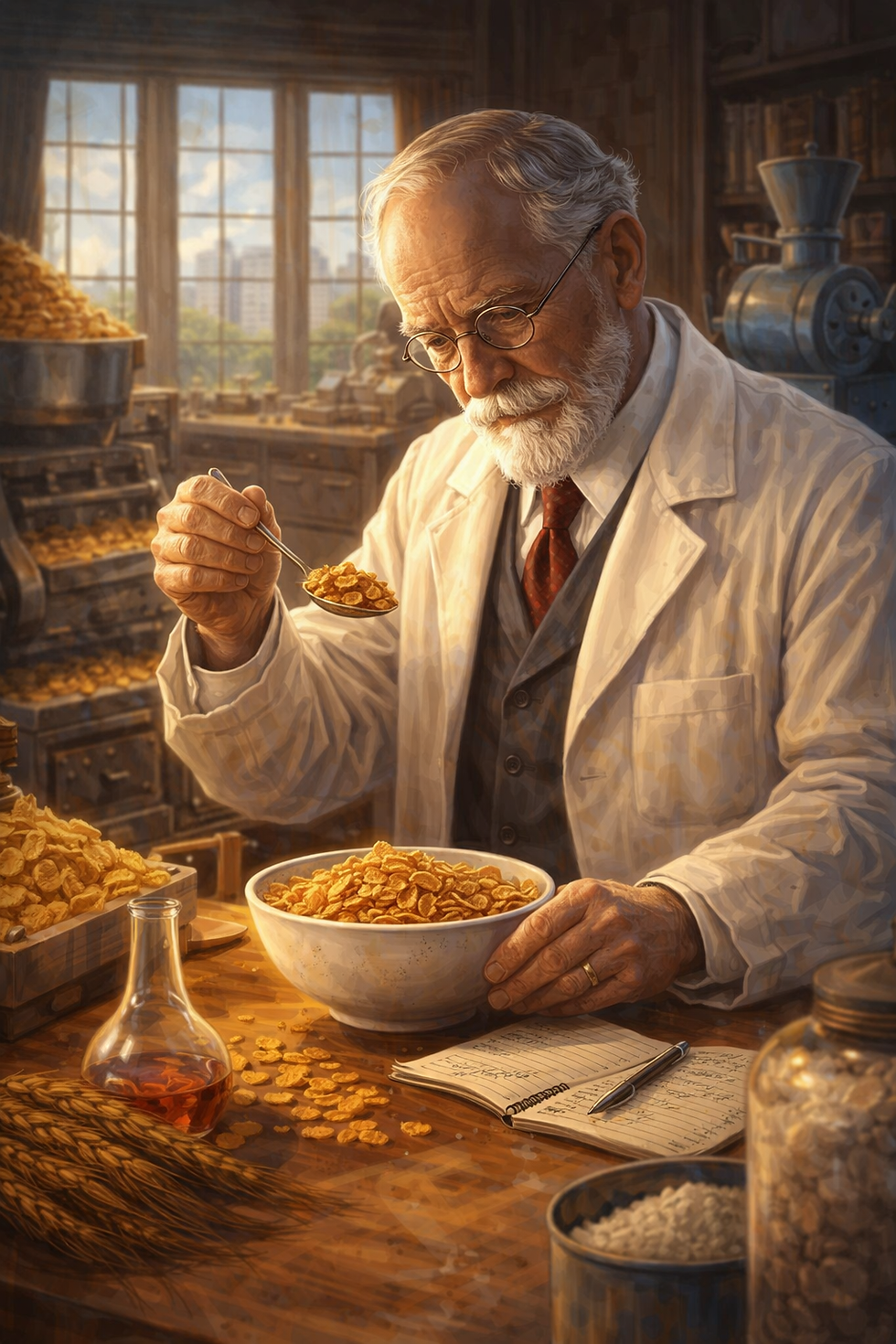
My Name is John H. Kellogg: A Physician Who Shaped Modern Diet and Health
I was born in 1852 in Michigan, raised in a home guided by strong religious principles and a belief in healthy living. My family was part of the Seventh-day Adventist movement, which emphasized care of the body as well as the spirit. From a young age, I was taught that what we eat and how we live could greatly affect our health, and these ideas would shape the course of my life.
Medical Training and a New Mission
I studied medicine with a desire to help people live longer, healthier lives. Eventually, I became the superintendent of the Battle Creek Sanitarium, a place where patients came seeking healing not just through medicine, but through proper diet, exercise, and discipline. I believed that many illnesses could be prevented or improved by changing daily habits, especially what people consumed.
Reforming the American Diet
At the time, the American diet was heavy, greasy, and often harmful. I promoted simple, plant-based foods that were easier to digest and better for the body. I worked tirelessly to create meals that were both healthy and appealing. My goal was not just to treat sickness, but to prevent it entirely by teaching people how to live differently.
The Creation of Cornflakes
In my efforts to develop better foods, my brother and I experimented with grains. One day, through a simple accident and careful refinement, we created what would become cornflakes. This new food was light, easy to prepare, and far healthier than the typical breakfast of the time. Though it began as part of a health movement, it quickly gained popularity beyond the walls of the sanitarium.
From Health Reform to Mass Production
As demand grew, breakfast cereals became a commercial success. While I remained focused on health and discipline, the industry that grew from these ideas began to shift toward convenience and profit. Foods became more processed, often including added sugars and refined ingredients. What started as a reform of the diet slowly evolved into a new kind of food system—one built on speed, shelf life, and mass appeal.
Beliefs and Controversies
I held strong beliefs about health, lifestyle, and personal discipline, and not all of them were widely accepted. Some viewed my ideas as extreme, while others embraced them fully. I remained committed to what I believed was right, even when it brought disagreement or criticism. My work was never simply about food—it was about shaping how people lived.
A Lasting Influence on Food and Health
Looking back, I see that my efforts helped change the way people think about diet and wellness. Though the world took my ideas in directions I did not always intend, the impact remains. I believed that the body could be strengthened through careful choices, and that food could be both nourishment and medicine. My life’s work was devoted to that belief, and its influence continues long after my time.
The Rise of Processed Foods and Dietary Reform - Told by John Harvey Kellogg
When I began my work as a physician, I believed that many of the illnesses troubling Americans were not inevitable, but the result of poor diet and unhealthy habits. Meals were often heavy, greasy, and difficult to digest. I set out to reform the American table, convinced that simple, plant-based foods could restore health and prevent disease.
The Creation of Ready-to-Eat Foods
At the Battle Creek Sanitarium, I experimented with new ways to prepare grains so they would be both nutritious and easy to consume. Through trial, error, and persistence, we developed foods like toasted flakes made from corn—what the world would come to know as cornflakes. These foods required little preparation, were gentle on the stomach, and aligned with my vision of a cleaner, more disciplined diet. What began as a medical solution soon captured wider attention.
Convenience for a Changing Society
As cities grew and daily life became busier, the appeal of ready-to-eat foods increased. Families no longer had the time or means to prepare elaborate meals each morning. Processed foods offered speed, consistency, and long shelf life. They could be packaged, stored, and distributed across great distances. In many ways, they answered the needs of a modern, industrial society.
From Reform to Industry
Yet as these foods moved beyond the sanitarium and into the marketplace, something began to shift. What had been created for health reform was adapted for mass production and profit. Companies refined the process, expanded distribution, and sought to make these products more appealing to a broader audience. This often meant altering the original vision, adding flavors or ingredients to increase popularity.
The Tension Between Health and Commercialization
I found myself at the center of a growing tension. On one hand, I saw the benefits of making simple, digestible foods widely available. On the other, I recognized that the pursuit of profit could lead to compromises—changes that moved away from the principles of health and discipline I had originally intended. The question became whether these foods would remain tools for better living or become products shaped primarily by market demand.
A Lasting Change in the American Diet
Despite these tensions, the rise of processed foods marked a lasting transformation. Breakfast itself was redefined, shifting from heavy meals to lighter, quicker options. The idea that food could be prepared in advance, packaged, and consumed with ease became a defining feature of modern life. What started as a reform movement helped give rise to an entirely new industry.
A Legacy Still Unfolding
Looking back, I see both accomplishment and caution in this transformation. I sought to improve health through diet, and in many ways, that goal was achieved. Yet the path from reform to commercialization reminds us that innovation must be guided carefully. Food is not merely a product—it is a foundation of life. How we choose to produce and consume it will always shape the health of generations to come.
The Long-Term Impact: Regulation and Industrial Food Systems - Told by John D. Rockefeller & John Harvey Kellogg
Rockefeller: As industry matured, it became clear that scale would define success. Just as oil refining consolidated into powerful organizations, so too did food production. Large corporations emerged, capable of producing, packaging, and distributing food across entire nations. Efficiency, consistency, and control allowed these companies to dominate markets and shape how food reached the public.
Kellogg: I witnessed that transformation firsthand. What began as small, purpose-driven efforts to improve health became part of vast systems designed to feed millions. The scale was impressive, but it also meant that food was no longer personal or local. It was industrial, standardized, and increasingly removed from its natural origins.
The Expansion of Processed Foods and Ingredients
Rockefeller: Industrial chemistry played a significant role in this expansion. Advances in refining and manufacturing introduced new ingredients—preservatives, stabilizers, and compounds that improved shelf life and consistency. These innovations allowed companies to reduce waste and increase distribution, meeting the demands of a growing population.
Kellogg: Yet I saw how this same progress could shift priorities. Foods that were once simple and wholesome became more refined, often stripped of their natural qualities and rebuilt for convenience and taste. Refined carbohydrates and processed ingredients became more common, appealing to consumers but sometimes moving away from the health principles that first inspired reform.
The Birth of Modern Regulation
Rockefeller: As industries grew, so too did the need for oversight. The early laws that followed public outcry laid the groundwork for more structured regulation. Over time, these efforts evolved into organized systems, including what would become the Food and Drug Administration. Regulation brought stability, helping to ensure that products met certain standards while allowing industry to continue expanding.
Kellogg: Regulation was necessary, but it was also a balancing act. The challenge was to protect the public without stifling innovation. Early reformers sought to create safeguards, yet the system had to adapt as new technologies and products entered the market. The relationship between industry and oversight became increasingly intertwined.
Influence, Science, and Authority
Rockefeller: Industry did not exist apart from government or science—it worked alongside both. Investments in research, education, and institutions helped shape how food and medicine were understood and regulated. Scientific authority became central to decision-making, and those who supported its advancement played a role in guiding policy. This influence was not hidden; it was part of building a modern, organized system.
Kellogg: And yet, that influence required careful scrutiny. When large corporations contribute to research and help shape institutions, questions naturally arise about independence and priorities. The same systems designed to protect the public must remain vigilant, ensuring that health remains the guiding principle, not merely efficiency or profit.
A System That Endures
Rockefeller: What emerged from this period was a durable system—one where industry, science, and government worked together to manage a complex and growing marketplace. It allowed for unprecedented scale and availability, bringing goods to people in ways that earlier generations could not have imagined.
Kellogg: But it also created lasting questions. How much processing is too much? How do we balance convenience with health? These are questions that began in our time and continue into the present.
The Legacy of Progress and Responsibility
Rockefeller: I see this legacy as one of organization and possibility. The systems we helped build laid the foundation for modern life, where access and efficiency define the economy.
Kellogg: And I see it as a reminder that progress must always be guided with care. The food system we helped shape feeds millions, but it also carries the responsibility to nourish them well. Between industry and health, between innovation and restraint, the balance must always be maintained.


Comments