

2. Heroes and Villains of Ancient Persia: The Elamite Civilization


My Name is Kutir-Nahhunte I: King of Elam
I am Kutir-Nahhunte, King of Elam, ruler of a land born from mountains and rivers, from the will of gods and the strength of men. I was not born into peace. My early years were marked by the shadow of foreign powers pressing upon our borders. The Akkadian kings to the west sought to subdue us, while rival clans within Elam vied for influence. As a prince of the royal line of Susa, I was taught from childhood that to survive in such times was to balance courage with wisdom. My tutors trained me in the art of command, but my mother taught me the value of patience—the kind that outlasts empires.
The Weight of the Crown
When I ascended the throne, Elam was a realm divided by distance and custom. The mountain clans prized independence; the city dwellers sought trade and learning. I knew that to rule was to bind these worlds together. I began my reign by calling the chieftains to council in Susa, reminding them that our strength lay in unity. They came with suspicion, but they left with purpose. Together, we began the great work of rebuilding our temples, our roads, and our faith in one another. It was then that I learned that leadership was not born in conquest, but in the quiet art of bringing peace among one’s own.
The Threat from the West
It was during my reign that the Akkadian Empire reached its height under Naram-Sin, the self-proclaimed god-king. His ambition stretched to every corner of the known world, and soon, his armies marched toward Elam. He sent envoys bearing threats and promises, but I knew the heart of such empires—they always wanted more. So we prepared, not for surrender, but for endurance. I gathered warriors from the highlands, men who knew the mountains better than any invader. We hid our supplies, fortified our valleys, and let the enemy come.
The Fire of Resistance
The Akkadians struck with force, and Susa fell for a time. Yet their victory was hollow, for they did not understand the spirit of Elam. When they marched back to their plains, they left behind a land that would not yield. My people fought from the shadows, their hearts bound by faith in our gods and faith in freedom. The mountains themselves became our allies, swallowing invaders and hiding our strength. Years passed, and the Akkadian might began to crumble under its own pride. The gods turned their favor, and in time, we reclaimed what was ours. Elam endured, and I swore that never again would we kneel to the arrogance of the west.
The Law and the Gods
In the years that followed, I turned from war to wisdom. I established new codes of justice, guided by divine law rather than royal whim. Inshushinak, the great judge of Susa, was invoked in every decree. I decreed that no man, not even the king, stood above the gods’ law. Priests and scribes recorded these edicts in clay, ensuring that future generations would remember that a kingdom stands strongest when built upon justice. Under my rule, temples thrived, and faith bound the people more tightly than fear ever could.
The Shaping of Legacy
When age came upon me, I looked upon the land I had ruled and saw both scars and triumphs. The fields once scorched by war were green again, the cities rebuilt, the temples filled with prayer. My reign had been one of endurance—a testament to Elam’s will to survive and rise stronger after every trial. I left behind a nation united in purpose and proud of its heritage, no longer a shadow to Mesopotamia, but a kingdom with its own light.
Birth of Elam: The Land Between Mountains and Rivers – Told by Kutir-Nahhunte
Long before my reign, before the rise of cities and the voices of kings, there was the land itself—a vast and sacred stretch where mountains met rivers, and life began to stir. This was Elam, the land of my ancestors. To the east stood the mighty Zagros Mountains, their peaks kissed by clouds and their slopes carved by ancient streams. To the west lay the great plains that stretched toward the rivers Tigris and Euphrates, where the cities of Sumer would one day rise. Between these two worlds, Elam took root—a land both shielded and nourished by nature’s hand.
Anshan: Heart of the Highlands
Anshan, the highland realm, was the heart of early Elamite strength. Its people lived among fertile valleys and rugged ridges, where they cultivated barley, wheat, and dates in the soft earth near mountain streams. The air there was cool and filled with the scent of wild herbs. From Anshan’s heights, our ancestors shaped stone tools and pottery, learning to tame fire and metal. These highlands gave Elam its resilience—an unbending spirit that endured even as empires rose and fell beyond our borders.
Susa: The City of Rivers
Farther west, where the mountains opened into lowland plains, lay Susa. This ancient city, even in its earliest form, was a marvel of human ambition. It rose along the banks of the Choaspes River, where trade, worship, and governance began to take form. The early dwellers of Susa built mud-brick houses and granaries, storing the harvests that sustained their growing population. Over time, Susa became not merely a settlement but the soul of Elam—a meeting place between the mountain tribes and the plainsmen. It was here that the first temples to our gods were built and where the hum of civilization began to echo.
The First Villages and the Flow of Life
Around 3200 years before my own time, the first Elamite villages thrived along the waterways that ran from the Zagros into the plains. These rivers were the lifeblood of our people. They carried fertile soil to our fields, filled our clay jars with water, and connected our homes by winding paths of trade. Each village was small, built from reeds and clay, yet alive with the rhythm of daily life—farmers tending fields, potters shaping vessels, and priests offering food to the unseen gods who guarded the earth.
A Land Between Worlds
Elam was never isolated. To our west, Sumerian merchants came seeking metal and timber, and from the east, highland herders brought obsidian and stone. The land between mountains and rivers was both a barrier and a bridge. It shaped us into traders and warriors, into people who could adapt and endure. From the mountains, we drew our strength; from the rivers, our wisdom. Together, they formed the twin spirits of Elam that would define our people for millennia.
The Dawn of Civilization
So began the story of Elam—not with conquest, but with creation. Our ancestors were builders and believers, guided by the rhythms of earth and water. As their hands molded clay and raised walls, they gave birth to something enduring—a culture that would stand alongside the greatest civilizations of its age. And though the world may remember Sumer and Akkad first, it was in our valleys and plains that the spirit of the East began to awaken.
The Promise of the Land
When I look back upon those early days, I see the roots of everything that Elam became. The mountains guarded our pride, the rivers nurtured our soul, and the meeting of the two gave us life. Elam was not just a place—it was a promise, born between the highlands and the waters, destined to endure as long as stone and soil remain.
Neighbors to Sumer: First Contacts with the City-States – Told by Kutir-Nahhunte I
In the earliest days of our people, when the first temples rose from the plains of the south, strange voices began to drift across the horizon. They came from the land we now know as Sumer, a realm of marshes and rivers where men built cities of clay and worshiped gods who walked in human form. These Sumerians were unlike the highland dwellers of Elam—they were masters of irrigation, traders of faraway goods, and dreamers who turned mud into monuments. Yet as they expanded north and east in what later came to be known as the Uruk Expansion, their curiosity led them toward our borders, and the world began to grow smaller.
The First Encounters
At first, our meeting was one of wonder, not war. Traders from the city of Uruk came bearing carved stone seals, copper tools, and cloth of rare weaving. In return, the Elamite highlanders offered obsidian, timber, and precious stones from the Zagros. These exchanges were more than barter—they were introductions between two civilizations learning to speak through the language of trade. From the Sumerians, we learned the use of the cylinder seal to mark goods and ownership. From us, they learned of the strength of mountain metals and the endurance of our roads. It was the beginning of an unspoken partnership that shaped the birth of cities on both sides.
Bridges of Culture and Belief
Though we worshiped different gods, the contact with Sumer awakened in our people new ideas about order and divine rule. Their temples, ziggurats rising toward the sky, inspired our own early shrines in Susa. We did not copy their ways, but we listened and adapted. Our gods were older than theirs, born from the mountains rather than the river marshes, yet we saw wisdom in their devotion and artistry. Clay tablets began to appear in our lands, inscribed with symbols influenced by Sumerian writing, though we shaped them into our own Elamite form. The world was beginning to connect, and the flow of thought was as strong as the flow of trade.
Tides of Rivalry
But where trade flows, ambition follows. The Sumerians, growing powerful and proud, began to see our mountain passes not as borders, but as gateways to new lands. They sent expeditions eastward, seeking control over our trade routes. Small clashes erupted between their frontier towns and our hill settlements. Yet neither side could claim lasting victory. We were protected by terrain and determination, and they by wealth and unity. These early conflicts were lessons to both peoples—a reminder that cooperation brought prosperity, while conquest brought ruin.
The Shaping of Two Civilizations
From those first encounters during the Uruk Expansion, Elam and Sumer became forever linked. We were opposites in many ways: they were the builders of the plains, we the keepers of the highlands. Yet each shaped the other. Their cities grew richer through our resources, and our culture grew deeper through their inventions. Over time, the boundaries between us became less about distance and more about influence. The echoes of their language and artistry blended with ours, forming a bridge between East and West that endured for centuries.
The Rise of Susa: Capital of a Dual Identity – Told by Kutir-Nahhunte I
There is a place where the rivers of the plains meet the breath of the mountains—a land both fertile and fierce. That place is Susa, the beating heart of Elam. Long before my reign, Susa rose from the mud and stone to become a city unlike any other. It stood as a bridge between two worlds: the lowlands of Mesopotamia to the west and the rugged highlands of Elam to the east. This position gave it a soul divided yet united, a dual nature that became the strength of our people.
The Birth of a Great City
Susa began humbly, as a settlement of farmers and traders drawn to its fertile soil and easy access to the rivers that connected us with distant lands. Over time, it grew into a bustling center of culture and governance. Its temples mirrored the towering ziggurats of the Sumerians, but its spirit was purely Elamite. The people worshiped Inshushinak, guardian of Susa, who judged the souls of men and watched over our laws. In every stone laid and every offering given, there was reverence for both the gods of the mountains and the methods of the plains.
A Blend of Worlds
Susa’s beauty lay in its dual identity. To the traveler from the west, it seemed a city of Mesopotamian design—with grand temples, courtyards, and archives filled with cuneiform tablets. To the Elamite, it was the sacred city of the gods, where ancient rituals were performed and the rulers of Elam were chosen. Its artisans carved reliefs in styles that blended both worlds: the structured order of Mesopotamia and the flowing, symbolic art of the highlands. Even our laws and languages merged there—Akkadian scribes recording decrees alongside Elamite priests chanting prayers.
The Seat of Kings and Faith
From Susa, I and my ancestors ruled Elam’s vast lands. It was here that decrees were proclaimed, alliances sealed, and offerings made to the divine. The palace stood beside the temple, for in Elam, the king and the priest shared a sacred bond. Rulership was not merely a matter of strength but of holiness. We believed that no crown could rest securely without the blessing of Inshushinak, whose temple stood at the city’s center. When I walked its corridors, I felt the weight of both power and faith pressing upon me—each shaping the destiny of my people.
The Spirit of Susa
What made Susa truly great was not its walls or wealth, but its harmony. It was a city that did not choose between worlds but united them. From the plains, we took knowledge and trade; from the mountains, we took strength and purpose. The duality that others might see as conflict became, for us, a source of balance. It was in this balance that Elam found its identity—a civilization born of contrasts yet whole in its vision.
Kings and Clans: Early Dynasties of Elam – Told by Kutir-Nahhunte I
Before the great temples of Susa rose to the heavens and before the kings of Elam were crowned beneath sacred banners, our people were ruled by clans. Each valley and plain had its own leader—chieftains chosen not by divine right, but by wisdom, strength, and the loyalty of their kin. These early lords of Elam did not wear crowns of gold; their authority was woven through family bonds and ancient oaths. Yet from these humble beginnings came the seeds of dynasties that would one day rule the mountains and the rivers alike.
A Land of Many Peoples
Elam was not born as a single nation. It was a confederation, a gathering of tribes scattered between the highlands of Anshan and the lowlands near Susa. The mountain folk were rugged and independent, proud of their lineage and skilled in warfare. The lowlanders were builders and traders, bound to the fertile earth and the rivers that sustained them. At times they quarreled—over land, over trade, or over faith—but in moments of danger, they stood together. From this unity of difference, the spirit of Elam was forged.
The Rise of the Dynasties
As our settlements grew and trade linked distant regions, stronger leaders began to emerge. The early dynasties of Awan and Simashki rose first, each claiming descent from divine ancestors and heroes of the mountains. They were not rulers in the sense the Sumerians knew, for their power was not absolute. Rather, they were stewards of the land, tasked with maintaining balance between the clans. Councils of elders advised them, priests blessed their decisions, and alliances were sealed through marriage. Through this delicate network, Elam began to take form—not through conquest, but through connection.
Unity Through Faith and Blood
The bond that held the dynasties together was both sacred and practical. The kings of Awan sought to unite the clans under shared devotion to the gods who watched over Elam. Inshushinak became not just the god of Susa, but the divine protector of all the Elamite peoples. The rulers of Simashki strengthened these ties through marriage with other noble families, weaving a web of kinship across mountains and valleys. In this way, leadership was passed not only through bloodlines, but through faith and shared responsibility.
Struggles and Strength
Of course, such unity did not come without strife. Rival clans often challenged the authority of the kings, and at times, entire regions broke away in rebellion. Yet each struggle, though costly, taught our people resilience. We learned to govern not through fear but through trust and negotiation. The early dynasties endured precisely because they listened to their people and respected the ancient traditions of the clans.
The Foundation of the Kingdom
By the time of my ancestors, Elam had grown beyond its tribal beginnings. The dynasties had transformed from loose alliances into enduring houses, capable of ruling across generations. From these foundations, kings like myself inherited not only a kingdom but a legacy—one built on the cooperation of many rather than the dominance of one.
The Spirit of the Clans
Even as I ruled over a united Elam, I never forgot that our strength was born from the unity of clans. Their voices still echoed in my council halls, their customs still guided our laws, and their faith still bound us together. The first dynasties taught us that power shared is power made strong. And though the world may remember Elam’s kings, it is the clans—the families of the mountains and plains—who built the heart of our civilization.
Wars with Akkad: Naram-Sin’s Invasion and Resistance – Told by Kutir-Nahhunte Long before my reign, when the name of Sargon still echoed through the plains of Mesopotamia, a great empire rose in the west—the Akkadians. Their kings ruled with iron discipline, their armies marched with unbroken ranks, and their ambition knew no bounds. Among them stood Naram-Sin, grandson of Sargon, who called himself “King of the Four Quarters of the World.” He looked upon the mountains of Elam not as a neighbor to respect, but as a prize to claim. His envoys spoke of peace, but his soldiers followed soon after. Thus began one of the fiercest struggles our people ever faced.
The First Assaults
Naram-Sin’s legions came swiftly across the plains, their banners glinting in the sun, their soldiers armed with bronze and arrogance. They struck first at the western edge of our land, near the border cities where trade and culture mixed. Susa fell under siege, and for a time, the Akkadian banners flew above its walls. Many of our people were taken as captives, forced to labor for the conqueror’s glory. Yet even in defeat, the heart of Elam did not yield. In the highlands of Anshan and the valleys beyond, our warriors gathered under local chiefs, refusing to submit to the rule of a foreign god-king.
The Resistance of the Mountains
The Akkadians were mighty, but they did not understand the soul of the mountains. Their soldiers grew weary in the steep passes, their supply lines stretched thin, and their armor weighed heavy in the cold winds. Our fighters struck from the shadows—quick, silent, and relentless. Villages that appeared empty by day became traps by night. The invaders soon learned that conquest in the lowlands was not the same as dominion over Elam. For every city they took, the hills answered with rebellion. Even when they built fortresses, the spirit of resistance seeped through their walls.
Naram-Sin’s Pride and the Wrath of the Gods
Naram-Sin declared himself divine, claiming to be equal to the gods. This pride, it was said, angered the heavens. Droughts struck the plains, and rebellions rose across his empire. Our ancestors believed that Inshushinak, guardian of Elam, had joined the other gods in punishing his arrogance. Taking advantage of the turmoil, Elamite warriors reclaimed their lands. Susa, once taken, was restored to Elamite hands. Though the Akkadians left their mark upon our soil, they never truly broke our spirit. Their empire, built upon conquest, began to crumble even as ours endured through patience and faith.
The Lessons of Resistance
From those wars came lessons we never forgot. We learned that strength does not rest in numbers, but in unity. The Akkadians had vast armies, yet their power depended on control; ours depended on endurance. The people of Elam—highlander and lowlander alike—discovered that the mountains and rivers were our greatest allies. Even when invaders carried away our treasures, they could not take our identity.
The Echo of Defiance
When I speak of those times, I do so with reverence. The stories of our ancestors who stood against Akkad remind us that empires rise and fall, but the will of a free people endures. Naram-Sin’s invasion tested Elam’s strength, and through that trial, we found our purpose. The scars of those battles became symbols of pride, and the songs of our victory in endurance were passed down through generations. For though the world remembers Akkad’s power, it is Elam’s resilience that survived the ages.
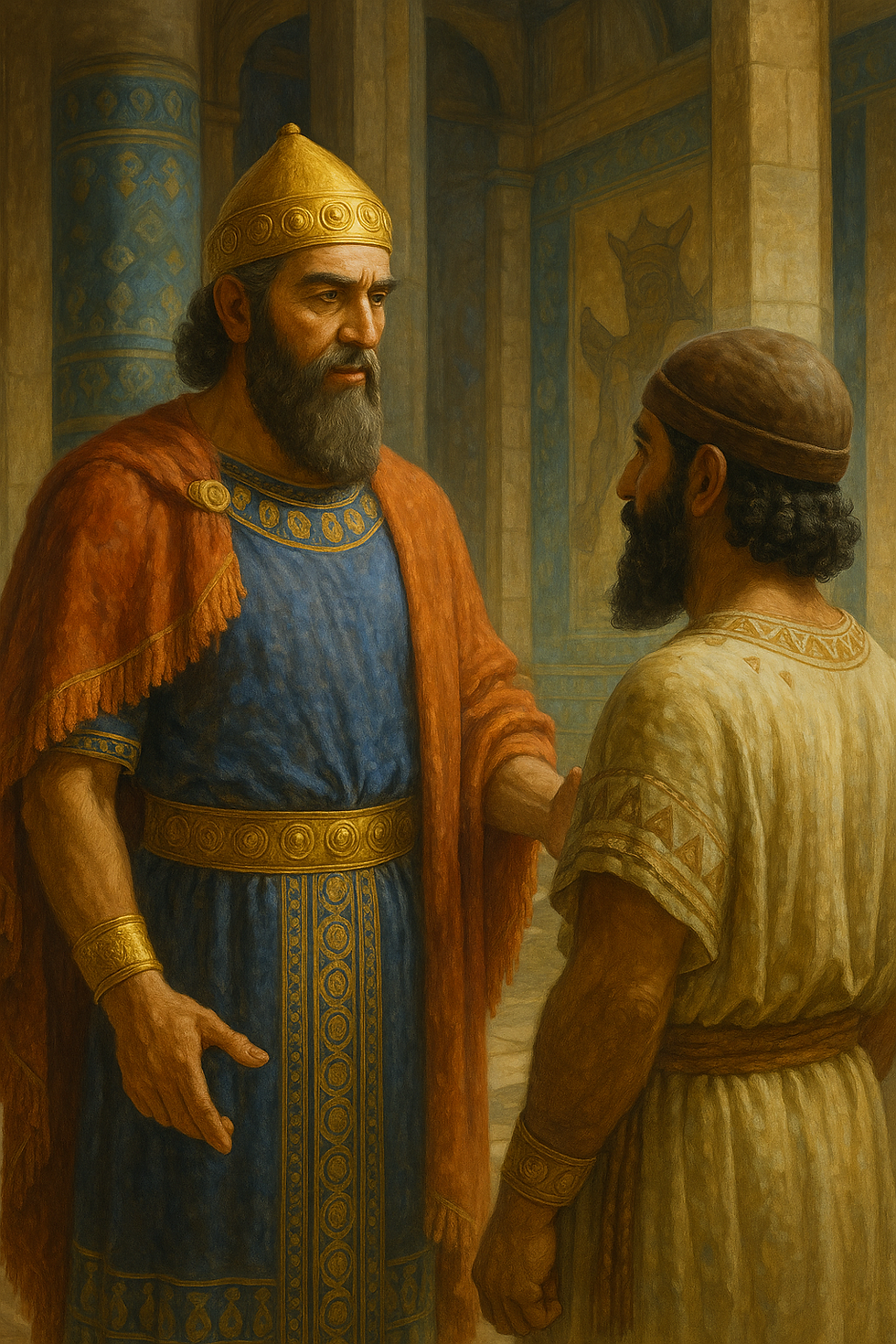
My Name is Humban-Numena: King of Elam
I am Humban-Numena, King of Elam, born of two worlds—the mountains of my fathers and the plains of my mother’s people. My mother was a princess of Kassite Babylonia, and through her, the blood of the west flowed within me. My father descended from the noble house of Anshan, where the Elamite kings traced their line to the ancient gods. From the moment of my birth, it was clear that my destiny would be to unite what had long been divided, to bridge the highlands and the lowlands, and to bring Elam into an age of strength and peace.
The Education of a Prince
As a child, I was trained not only in the arts of war but in the wisdom of kingship. The scribes of Susa taught me to read the clay tablets and understand the laws of trade, tribute, and the will of the gods. I learned the languages of both my parents’ lands, Elamite and Akkadian, so I could speak to merchants, priests, and envoys alike. My tutors reminded me that to rule well was not to command with pride but to serve with understanding. From the priests, I learned that a king was chosen not by men but by divine favor, and his duty was to preserve harmony between heaven and earth.
The Marriage of Nations
When I ascended the throne, Elam stood between powerful neighbors, its fate uncertain. I knew that strength would come not from isolation but from alliance. So I took a bride from Kassite Babylonia, a woman of grace and wisdom, whose presence brought peace between our peoples. Through this marriage, the rivalries of the past gave way to cooperation. Trade flourished along the rivers, and caravans moved freely between our lands. My court became a place where Babylonian scribes and Elamite priests worked side by side, where ideas, faiths, and cultures blended into something greater than either alone.
The Building of Susa
In my reign, Susa grew into the crown of Elam. Its walls reached higher, its temples gleamed brighter, and its markets overflowed with goods from distant lands. I rebuilt the temple of Inshushinak, our mighty protector, adorning it with tiles of blue and gold. Within its sanctuary, the priests prayed for justice and peace. I commanded that my laws be inscribed in both Elamite and Akkadian, so that all who entered our kingdom would understand our ways. The city became not only the seat of government but the heart of faith—a living testament to the unity of our people.
The Balance of Power and Faith
I learned that ruling is not only about victory in battle but about maintaining balance. To favor one god, one class, or one province above another would invite ruin. Thus, I sought to be both king and mediator. I listened to my governors, honored the words of the priests, and ensured that even the humblest farmer could bring his voice to the court. My throne was not a symbol of authority alone—it was the center of an unspoken covenant between ruler, people, and gods.
The Twilight of My Reign
As years passed, I watched Elam flourish in ways few had imagined. Yet I also saw the storms that would come, for peace is never eternal. Empires rose and fell around us, and I knew that the strength of a nation lies not in its walls but in the hearts of its people. I left behind sons and daughters trained to rule with wisdom, and temples that would stand long after my body turned to dust. I prayed that they would remember that true power is not in conquest but in creation.
Diplomacy and Marriage: The Alliance with Kassite Babylonia – Told by Humban
In my time, the world was divided among powerful nations—Elam in the east and Babylonia in the west, ruled by the Kassite kings. Though the mountains shielded us and the rivers separated us, our fates were intertwined. Wars had wearied both our lands, and the gods seemed to whisper that peace could serve us better than pride. It was through marriage, not conquest, that I sought to bind our kingdoms together. The blood of kings, after all, could build bridges where swords had failed.
The Hand of a Princess
From the royal court of Babylonia came a Kassite princess, noble and wise, whose marriage to me sealed a covenant between our peoples. She brought with her not only beauty but knowledge—the wisdom of the plains, the songs of their temples, and the customs of their gods. Through her, Babylon and Elam became one family. The union was celebrated in both lands: in Susa, priests offered incense to Inshushinak, and in Babylon, hymns were sung to Enlil and Marduk. The gods themselves, we believed, blessed this joining of nations.
Peace Through Understanding
The alliance brought more than shared blood; it brought stability. The merchants of Babylon traveled safely through our mountain passes, and Elamite caravans carried tin, copper, and lapis across the plains. Where once stood borders guarded by soldiers, now stood gates opened by friendship. Letters passed between the kings of both realms, written in cuneiform upon clay tablets, promising mutual respect and defense. We agreed to share in trade, to aid each other in famine, and to protect the routes that sustained both our economies.
The Influence of Two Worlds
This marriage also shaped the hearts and minds of our people. The Kassite scribes who came to Elam introduced new styles of recordkeeping, and our priests exchanged knowledge of rituals and omens. Though each land kept its own faith, we found harmony in understanding. The palace of Susa echoed with the voices of both tongues—Elamite and Akkadian—and our children grew up fluent in each, symbols of the unity our marriage had created. In time, these bonds of kinship would allow future generations to strengthen ties, ensuring that neither kingdom could easily fall to outside powers.
A Strategy of Wisdom
To some, marriage may seem a personal affair, but to a king, it is a matter of destiny. I knew that alliances forged in love and respect could endure longer than treaties written in fear. By joining the houses of Elam and Babylon, I ensured that our lands would know a season of peace long enough for both to prosper. In diplomacy, one must think not of the present, but of the generations to come.
The Legacy of Union
When I look back upon those days, I see how the gods guided my choice. The alliance between Elam and Kassite Babylonia became a pillar of stability in a region too often torn by ambition. It proved that nations could share power without losing their soul, that understanding could guard a border more effectively than an army. Through marriage, I bound two great civilizations together—and through that bond, both found strength.
The Middle Elamite Renaissance – Told by Humban-Numena
There are moments in history when a people, long tested by war and time, find new strength rising within them. Such was the age I was blessed to witness—the Middle Elamite Renaissance. After generations of struggle and silence, Elam began to awaken once more. The gods stirred in their temples, the artisans returned to their craft, and the voice of our kingdom grew strong again. We were no longer the divided tribes of old, nor the quiet neighbor to Babylon. We were Elam—reborn, radiant, and proud.
Building the City Eternal
In this era of renewal, our hands turned to stone and clay, shaping monuments that would defy the ages. Across Susa and Anshan, great palaces rose, adorned with bright tiles and carved reliefs depicting kings, gods, and sacred beasts. I commissioned temples in honor of Inshushinak and Kiririsha, so that their names might never fade from human memory. The architects of Elam were masters of their art; they built not only for beauty but for meaning. Every wall, every column, every inscription told the story of our return to greatness. When the sun set over the temples of Susa, their glazed surfaces shone like molten gold, reflecting the glory of both man and god.
The Word Carved in Stone
We had long borrowed the tools of writing from our western neighbors, but during this time, we made them truly our own. The Elamite language, once confined to the tongues of priests and scribes, began to appear boldly on royal monuments. I ordered that my decrees be inscribed not in the foreign speech of empires, but in the words of our ancestors. This was more than a matter of pride—it was an act of remembrance. By writing in Elamite, we declared to the world that our heritage lived, that our gods still reigned, and that no power could erase our identity. These inscriptions became the voice of our civilization, echoing through the centuries even after our palaces fell silent.
The Flourishing of Faith and Art
The Middle Elamite Renaissance was not only about power—it was about spirit. Our sculptors and metalworkers filled the temples with images of the divine, capturing both majesty and mercy in bronze and stone. Musicians performed hymns in the courts, blending the rhythm of mountain drums with the melodies of the plains. Priests revived ancient festivals, drawing people from every corner of the kingdom to celebrate the bond between the heavens and the earth. It was as if the gods themselves walked once more among us, blessing the hands of every craftsman and the heart of every believer.
The Return of Identity
This rebirth gave our people something greater than wealth or territory—it gave us belonging. For too long, Elam had been seen through the eyes of others, as an echo of Mesopotamia or a frontier to be conquered. Now, we stood as a civilization with our own soul. The symbols of Elam—its temples, language, and faith—shone brighter than ever before. Our art spoke of devotion, our buildings of endurance, and our inscriptions of destiny. We no longer imitated; we inspired.
The Elamite Pantheon and Religion – Told by Humban-Numena
To understand Elam, one must first understand our gods. They are not distant rulers of the heavens, but the living breath of our land—the mountains, the rivers, the winds, and the earth itself. Our faith was born from the world around us, shaped by the rhythm of the seasons and the balance between man and nature. When I became king, I did not see myself as a god, as some rulers of other lands claimed to be, but as a servant chosen to keep harmony between the divine and the mortal.
Inshushinak, Guardian of Susa
At the heart of our faith stood Inshushinak, the protector and judge of souls, whose temple crowned the city of Susa. He was both stern and merciful, watching over the living and guiding the spirits of the dead into the afterlife. His name means “Lord of Susa,” but his power extended far beyond its walls. It was said that every oath sworn before his altar bound not just the speaker, but their descendants as well. When our people prayed for justice, it was Inshushinak who weighed their deeds and delivered their fate. His presence reminded us that kings, too, were accountable to a higher law.
Kiririsha, the Mother of Creation
Beside him stood Kiririsha, the great mother goddess, whose embrace nourished all life. She was worshiped in the highlands as the giver of fertility and the protector of families. While Inshushinak represented law and judgment, Kiririsha embodied compassion and renewal. Her temples were adorned with carvings of flowing water and sprouting plants, symbols of her endless care. Women of Elam called upon her during childbirth, and farmers offered her the first fruits of their harvest. Together, she and Inshushinak formed the balance that sustained our world—the strength of justice tempered by the grace of mercy.
A Pantheon of Many Voices
Our gods were not few, and their roles intertwined like threads in a tapestry. Napirisha, the high god of the heavens, was honored in Anshan and seen as the eternal father of the divine family. Ishmekarab, the divine messenger, carried prayers between gods and men. Pinikir, radiant as the stars, was invoked for guidance and love. Each region of Elam had its own favorite deity, yet all were bound under the same sacred order. This unity amid diversity mirrored our kingdom itself—many peoples, but one soul.
Different from the Plains
The peoples of Mesopotamia, our western neighbors, worshiped gods who ruled from lofty palaces and demanded constant tribute. Their faith was rooted in the cities they built, in power and hierarchy. Ours, however, came from the wild beauty of our homeland. We saw the divine in every storm, every stone, every spark of life. The Mesopotamian gods governed men; our gods lived among them. We did not fear them as tyrants but honored them as guardians and companions on the path of existence.
Faith in Daily Life
Religion was not confined to temples. It lived in the rhythm of daily tasks. Shepherds whispered prayers to the mountain winds, sailors to the river currents, and mothers to the hearth fire. Each offering, however small, connected the people to the divine. Festivals brought together all walks of life in music, dance, and prayer, reaffirming the bond between heaven and earth.
The Spirit of Devotion
The Elamite pantheon taught us that strength and gentleness must walk hand in hand, that justice without compassion brings ruin, and that every life is sacred. When I ruled, I governed with these truths close to my heart. Our gods gave us more than blessings—they gave us identity. And though centuries may pass and temples may crumble, their names endure, carried on the wind that still whispers through the mountains and rivers of Elam.
Law, Governance, and Administration – Told by Humban-Numena
In every strong kingdom, there must be more than a sword to rule. There must be law—clear, sacred, and enduring. When I took the throne, Elam was a land of many cities and peoples, each with their own customs and traditions. To govern such a kingdom, we needed more than the will of a king; we needed structure. Thus, I strengthened the administration of Susa, ensuring that every decree, every judgment, and every offering was recorded with precision and authority. The order of the gods, I believed, must be reflected in the order of men.
The King as Servant of Law
I did not see myself as standing above the law, but as its guardian. My duty was to ensure that justice flowed like a river through every province of Elam. I appointed governors to oversee the regions—noble men trained in both governance and faith. Each was sworn before the temple of Inshushinak to rule fairly, to protect the weak, and to report truthfully to the throne. Those who abused their power did not face only royal punishment but divine judgment as well. In Elam, to break the law was not only to offend the king but to offend the gods themselves.
The Bureaucracy of Susa
Susa became the heart of administration, its scribes the voice of the kingdom. Within its palace halls, rows of tablets recorded the workings of our realm: land ownership, trade, tribute, and the labor of the temples. The scribes wrote in both Elamite and Akkadian, for ours was a world that understood many tongues. These records were not mere words—they were the veins through which the life of Elam flowed. They ensured that no harvest went unmeasured, no tax uncounted, and no decree forgotten. Through this, the kingdom could endure beyond the span of any single ruler.
The Interweaving of Faith and Rule
In Elam, the boundary between governance and religion was never sharp. The gods were not distant observers—they were partners in leadership. Each decision of state was consecrated through ritual, and every law was believed to carry divine authority. Before any major proclamation, I sought the guidance of the priests. They read omens, interpreted dreams, and offered sacrifices to seek the gods’ favor. Inshushinak, the great judge, was invoked in all legal matters, while Kiririsha was honored to maintain harmony among the people. The temple and the palace stood side by side in Susa because together they upheld the balance of heaven and earth.
The Spirit of Justice
True governance is not measured by wealth or armies, but by fairness. I decreed that even the humblest farmer could bring his grievance before the local court, where scribes and elders would hear his plea. Punishments were meant not to destroy but to restore balance. The guilty offered restitution, often through service to the temple or the community. In this way, justice became a living expression of faith, reminding all that the gods desired order, not cruelty.
My Name is Queen Nahita of Susa: Consort of King Shilhak-Inshushinak
I am Queen Nahita of Susa, wife of King Shilhak-Inshushinak, ruler of the powerful Elamite kingdom. I lived in a time when our people stood at the height of their strength, when Susa glittered with bronze and stone, and the temples of our gods reached higher than ever before. Ours was a kingdom balanced between mountains and plains, between the raw heart of Elam and the deep traditions of Mesopotamia. I was born among priests and scribes, taught to read the cuneiform tablets, and raised to speak not only Elamite but also the Akkadian tongue, for in my father’s court we dealt with merchants, kings, and envoys from faraway lands.
A Marriage of Power and Faith
When I was young, the gods blessed me to become consort to Shilhak-Inshushinak, the mighty ruler who expanded Elam’s borders and restored the glory of our ancestors. Our marriage was not merely one of affection, though love grew in time. It was a bond between families, cities, and divine promises. Together we renewed the worship of the great god Inshushinak, protector of Susa. I led processions during festivals, my hands heavy with gold bracelets, carrying offerings to the temple’s sacred fire. The people sang hymns, praising both their king and their queen, who stood as mother of the land. In those moments, I felt that the eyes of our ancestors watched proudly from beyond.
The City of Susa
Susa was a marvel of color and sound. Its ziggurats were lined with glazed bricks of blue and green, and its palaces filled with carved reliefs of gods and kings. I oversaw the inner court, where artisans shaped bronze vessels and embroidered robes for the temple priests. I loved to walk through the gardens where date palms and lilies swayed in the wind, and where fountains brought cool water from the river. We were not a people of endless wars, though our armies were fierce. We were builders and believers, protectors of a culture older than many empires around us. Within the palace walls, I hosted women of noble birth, teaching them to manage estates, direct servants, and honor the gods through their duties.
Times of Glory and Shadow
Under my husband’s rule, Elam’s power reached far across the mountains and into the lands once held by Babylon. Tribute flowed into Susa—silver, gold, and stone tablets bearing the records of conquered kings. But peace is fragile. Even as our kingdom shone, rival powers in Assyria watched us with envy. I remember the whispers from traders and spies, warning that the Assyrians gathered armies in the north. My husband strengthened our defenses and prayed for divine favor. I, too, prayed—to Kiririsha, the mother goddess—to protect our sons and keep the land whole. In the quiet of night, I often wondered if the gods had tired of our pride, as they had of others before us.
Art of the Highlands: Bronze, Reliefs, and Temples – Told by Queen Nahita of Susa
In the highlands of Elam, where the wind moves between mountains and valleys, art has always been more than decoration—it is devotion. Our people have long believed that the hands of artisans are guided by the divine. Each chisel stroke, each casting of bronze, each carved line of stone carries the breath of the gods. In my time as queen, I saw art flourish not only in the temples and palaces of Susa but in the hearts of craftsmen across the kingdom. Through their work, they told the story of our faith, our strength, and our enduring beauty.
The Bronze Masters of Elam
The highlands were rich in copper and tin, and from these metals our people forged wonders. The Elamite bronze-workers were unmatched, blending skill with reverence. They crafted ritual vessels shaped with swirling patterns that seemed to move like flowing water, symbolizing life’s eternal rhythm. Statues of kings, gods, and sacred animals stood in our temples, their eyes inlaid with shell and lapis to seem alive even in the shadows. Each piece bore meaning—the curve of a horn for strength, the spread of wings for divine protection. Unlike the works of the Sumerians, who favored symmetry and order, our bronzes captured motion and spirit, as if the metal itself carried a heartbeat.
The Language of Stone Reliefs
In the palaces of Susa, the walls spoke through art. Our sculptors carved scenes of ceremony, faith, and victory into stone panels that lined the great halls. The figures were not meant to glorify men alone but to honor the bond between rulers and the divine. I remember walking through those halls as light from the courtyard danced across the reliefs—the king offering gifts to Inshushinak, warriors returning from the mountains, priestesses raising sacred torches. These carvings did not simply record history; they breathed life into it. Their flowing lines and balanced forms reflected the harmony our people sought between the human and the sacred.
Temples Born of Earth and Heaven
Elamite temples were unlike those of the plains. Built into the landscape, they seemed to grow from the very earth itself. In the highlands, stones were placed with care, their shapes following the curves of the mountains rather than defying them. In Susa, our temples rose in terraced steps, each level bringing the worshiper closer to the heavens. The colors of the bricks—reds, blues, and greens—shimmered in the sun like jewels. Within, altars were adorned with bronze vessels and painted tiles depicting symbols of fertility, water, and divine power. Our architecture did not aim to dominate the land but to join it, reflecting the Elamite belief that humanity and nature must remain intertwined.
A Beauty Apart from Empires
While the Sumerians and Akkadians sought to immortalize their kings through rigid grandeur, we Elamites sought balance and grace. Our art was not born from conquest but from reverence. Every creation—whether carved, molded, or built—was a conversation with the gods. Even the smallest ornament bore a prayer. Travelers who came to Susa often said that our temples seemed alive, as if whispering the stories of the mountains. It was this spirit that set Elamite art apart: it was not made to command, but to commune.
The Living Legacy
Though centuries have passed since I walked among the artisans of my court, their work endures. The bronzes still gleam with the warmth of the fires that birthed them, the reliefs still tell their silent tales, and the temples, though weathered, still reach toward the heavens. The art of Elam is the soul of our people made visible—strong as the mountains, graceful as the rivers, eternal as the gods who once watched over us.

My Name is Shutruk-Nahhunte I: King of Elam
I am Shutruk-Nahhunte, King of Elam, chosen by the gods to restore the glory of my people. When I ascended the throne, Elam had known both triumph and turmoil. Our temples stood proud, yet our borders were restless, and the kings of Babylon had grown complacent in their wealth. I saw that the time had come for Elam to rise once more—to reclaim its strength, its honor, and its place among the great powers of the world. From the first day of my reign, I vowed to lead with courage and to bring the name of Elam to every corner of the earth.
The Call to Conquest
The gods spoke to me through dreams and omens, commanding that I extend the reach of our kingdom and restore what had been taken from us by time and neglect. Our neighbors to the west, the Kassite rulers of Babylon, had grown weak. They had forgotten the divine law of balance and had allowed corruption to rot their throne. I gathered my warriors—men forged by the mountains, their armor gleaming in the sunlight—and prepared for the campaign that would define my reign. We did not march as plunderers but as instruments of destiny.
The March into Babylon
Our armies crossed the plains and rivers, moving with purpose and precision. The Babylonian cities fell one by one, their walls no match for the discipline and faith of my soldiers. When we entered Babylon itself, its people looked upon us not with hatred, but with resignation. The Kassite king was dethroned, and I declared that the gods had chosen a new order—one rooted in strength, wisdom, and justice. Among the treasures of Babylon, we found relics of immense power: idols, stelae, and sacred texts that told the story of the world before ours. These I carried back to Susa, not as spoils of war, but as offerings to the gods who had granted me victory.
The Stele of Hammurabi
Among the relics I brought home was the great Stele of Hammurabi, the lawgiver of Babylon. Upon it were inscribed the laws said to have been given by the sun god Shamash himself. I saw in it not just the wisdom of another land, but a reflection of divine order shared by all peoples. I placed it within the temple of Inshushinak, for law is sacred, no matter whose hand writes it. The act was a declaration—that Elam was not merely a kingdom of warriors, but a guardian of civilization’s truth.
The Glory of Susa
Under my reign, Susa flourished like never before. The temples rose higher, adorned with shining tiles of green and gold. Artisans filled the city with their craft—bronze statues, painted reliefs, and sacred vessels that captured the beauty of the gods. I commissioned inscriptions in stone to record my deeds, not for vanity, but so that generations to come would remember what faith and determination could achieve. Susa became a jewel among cities, a beacon of Elamite power and culture.
The Shadow of Empire
But every king learns that glory invites envy. As Elam grew stronger, old enemies stirred. The Assyrians to the north watched with fear, and the Babylonians dreamed of vengeance. I spent my later years fortifying the kingdom, ensuring that my sons and heirs would inherit not only my crown but the strength to defend it. I taught them that true greatness lies not in the conquest of others, but in the preservation of one’s own people and the wisdom to lead them.
The Echo of My Name
Now my body rests beneath the soil of Elam, but my name lives in the inscriptions that still stand in the ruins of Susa. The world may remember me as a conqueror, but I was more than that—I was a restorer, a builder, and a servant of the gods. I brought justice and strength to a weary land and ensured that Elam’s spirit would endure long after my passing. Empires rise and fall, but the deeds of faith endure forever. I, Shutruk-Nahhunte, king of kings, leave this truth behind: power fades, but legacy is eternal.
Shutruk-Nahhunte’s Conquests: Glory and Spoils – Told by Shutruk-Nahhunte I
There comes a time in every nation’s life when it must choose between silence and destiny. For Elam, that moment came during my reign. Babylon, once mighty under the Kassite kings, had grown weak—its rulers content with comfort, its armies soft with peace. The gods spoke to me through signs and dreams, commanding that I restore Elam’s honor and bring home the relics that once belonged to our ancestors. I did not march for greed or for vengeance, but to reclaim what history had stolen and to prove that Elam was no lesser kingdom among men.
The March into Babylon
I gathered my armies at Anshan, soldiers hardened by mountain winds and bound by loyalty to both king and god. We crossed the plains with precision and purpose, moving swiftly beneath the banner of Inshushinak. Babylon’s border cities fell with little resistance; their gates opened more from fear than from valor. As we advanced, the Kassite forces scattered. The gods had clearly withdrawn their favor from that kingdom. When we reached Babylon itself, the great city that had once ruled the four corners of the earth, we found its defenses crumbling. The walls that had defied kings of the past bowed before the will of Elam.
The Spoils of Victory
When the city was taken, we entered its temples not to desecrate but to reclaim. Among the treasures of Babylon, we found relics that told the story of Mesopotamia’s greatness: statues of gods, sacred vessels, and tablets inscribed with ancient laws. One such relic was the great Stele of Hammurabi, carved centuries before my time. It was a monument to justice and kingship, its surface filled with laws said to be given by the sun god Shamash himself. I ordered it brought to Susa, where it would stand as a testament not only to Babylon’s wisdom but to Elam’s power in preserving it. In bringing these artifacts home, I did not destroy Babylon’s memory—I ensured its endurance through our guardianship.
The Triumph in Susa
When we returned, Susa welcomed us in celebration. Processions filled the streets, priests offered incense, and singers praised the gods for their favor. The treasures of Babylon were displayed in our temples, not as trophies of arrogance but as symbols of divine approval. Each relic represented a victory not only of arms but of spirit. I dedicated them to Inshushinak, for it was through his will that Elam triumphed. The artisans of Susa recorded the campaign in stone and bronze so that generations to come would remember the day when Elam’s name rose higher than that of any neighboring power.
The Meaning of Conquest
Conquest, to me, was never an end in itself. A kingdom that conquers without purpose is no better than a band of thieves. My victories were meant to bring unity and order, to show that Elam’s strength came from faith, culture, and justice. The relics of Babylon were not plunder—they were lessons, preserved and revered. I taught my sons that to rule is to protect the heritage of all mankind, even that of fallen enemies.
Cultural Borrowing: Mesopotamian Influence in Elam – Told by Queen Nahita
Elam was blessed to stand between the mountains of the east and the fertile plains of the west, and because of this, we were never alone in our journey. From early times, travelers, merchants, and envoys crossed our borders, bringing with them the knowledge and customs of distant lands. The people of Sumer and Babylon, whose cities gleamed along the Tigris and Euphrates, left deep impressions upon our own culture. Yet Elam was no mere imitator. What we took, we reshaped. What we learned, we made our own. Our greatness was born not of isolation, but of transformation.
The Gift of Writing
From the Sumerians, our ancestors learned the use of cuneiform—the wedge-shaped script pressed into clay. It began as a tool for trade and recordkeeping, but in Elam, it became something sacred. Our scribes adapted the foreign signs to suit our tongue, shaping a script that spoke in the rhythms of our own speech. Over time, the Elamite form of cuneiform diverged from its Mesopotamian parent, reflecting our need for simplicity and fluidity. Each symbol was not just a mark of words, but a symbol of identity. Through writing, our history gained permanence, and our voice could travel beyond the lifetime of any single ruler.
The Influence of Temples and Kingship
The cities of the plains taught us much about the order of governance and faith. We saw in Mesopotamia a world where temple and palace worked hand in hand, where kings ruled by divine favor, and priests served as interpreters of the gods. Yet in Elam, we softened this model with our own traditions. Our rulers did not claim godhood as the Akkadian kings did; instead, we ruled as servants of the divine, chosen to maintain harmony between heaven and earth. Our temples, though inspired by Sumerian ziggurats, reflected our love of balance with nature, built into the land rather than above it. Thus, while we borrowed the structure of power, we shaped it with humility.
Art Reimagined Through New Eyes
Mesopotamian artistry, with its bold lines and orderly precision, found new expression in Elam. Our artisans admired their craft—their cylinder seals, their statues, their reliefs—but reinterpreted them through the fluid grace of the highlands. In Elamite art, figures moved with life and emotion. The gods appeared less as distant overseers and more as companions of humankind. Even the materials differed: while Mesopotamian artists favored stone from the plains, ours blended metal, shell, and clay from the mountains, giving warmth and texture to our creations. What we borrowed, we humanized; what we copied, we filled with soul.
Shared Beliefs, Distinct Faith
Though we shared many deities’ names with our neighbors, their meanings changed in Elamite hearts. Mesopotamia’s gods ruled from distant heavens, but ours walked the earth and lived in the wind and water. Inshushinak and Kiririsha bore the echoes of ancient Sumerian divinity, yet they spoke with voices of the mountains, closer and more familiar. Thus, even in worship, we took what was foreign and made it family.
The Harmony of Borrowing and Becoming
Some might say that Elam’s greatness came from its neighbors, but I say it came from our gift of transformation. We did not fear influence; we embraced it and reshaped it until it bore our mark. In writing, in art, in faith, and in rule, we blended what was learned with what was born from our soil. The Mesopotamians may have been our teachers, but Elam became the keeper of balance—a civilization that proved that the greatest power of all is not domination, but creation born from the meeting of worlds.
The Royal Lineage of Susa – Told by Queen Nahita of Susa
In Elam, a crown was never merely a symbol of power; it was a covenant with the divine. The royal lineage of Susa was bound not only by blood but by faith. Each ruler, whether king or queen, stood as a bridge between the mortal and the sacred, chosen to maintain harmony between the gods and the people. Our authority did not come from conquest alone, but from divine recognition. The priests of Inshushinak would interpret omens, and only when the signs were favorable could the crown be placed upon the brow of the next ruler. Thus, every reign began not with a declaration of might, but with a blessing of the heavens.
The Legacy of the Founders
The early rulers of Susa came from the ancient lines of Awan and Simashki, dynasties whose names were spoken with reverence. Their descendants carried the torch of Elam’s destiny, each generation weaving its strength into the fabric of our kingdom. By my husband’s time, the royal house had grown both wise and disciplined, preserving order through faith and lineage. Marriage was not only a union of hearts but of realms, for alliances with neighboring lands—Anshan, Babylon, or the Kassites—secured both peace and divine favor. Through these unions, the blood of kings and queens became the blood of nations.
Queens as Keepers of Balance
Though history often speaks of kings, the queens of Susa held power that was spiritual as much as political. Many were priestesses before they became consorts, trained in the sacred rites of Kiririsha and the mysteries of Inshushinak. Their role was not to stand behind the throne, but beside it, ensuring that every act of rule aligned with the will of the gods. As queen, I oversaw the purification ceremonies that sanctified the palace each season, for the palace itself was an extension of the temple. Through prayer and ritual, we kept the realm in balance, reminding all that the royal line ruled only so long as it remained pure in heart and faithful in duty.
Succession and Divine Approval
When a king passed, his successor was chosen through both blood and divine confirmation. The priests of Susa would enter the inner sanctum and cast sacred lots before the image of Inshushinak, asking for guidance. If the omens were favorable, the heir was crowned; if not, another from the royal house was chosen. This prevented the throne from falling into the hands of the unworthy. No ruler could claim the crown by ambition alone—he or she had to be marked by destiny. Even disputes among heirs were settled through ritual rather than war, for to defy divine will was to invite ruin upon all Elam.
The Eternal Chain of Rule
Our lineage was not measured by years but by faithfulness. Each ruler added their name to a sacred genealogy recorded on temple tablets, ensuring that their memory would live on in prayer. To be forgotten was the greatest curse; to be remembered among the blessed was immortality. When I stood beside my husband during temple rites, I often thought of those who came before us—kings who built, queens who prayed, and all who guarded the bridge between heaven and earth.
Collapse of the Middle Elamite Kingdom – Told by Queen Nahita of Susa
There are times when even the brightest light begins to fade, not because it is extinguished by others, but because it burns itself away. Such was the fate of Elam in the final years of the Middle Kingdom. We had known centuries of greatness—our temples shone with gold, our palaces echoed with music, and our name carried weight across the lands. Yet beneath the splendor, cracks had begun to form. Ambition grew where unity once thrived, and the bonds that had long held the kingdom together began to fray. The gods, who had watched over us for generations, seemed to turn their faces from Susa.
Seeds of Division
The trouble began not with invasion, but with envy. Among noble houses and royal kin, rivalries took root. Brothers quarreled over inheritance, governors defied the crown, and priests debated omens as if they alone could speak for the gods. Each province sought its own power, and in doing so, weakened the heart of the kingdom. I remember councils that once brimmed with loyalty now filled with suspicion and deceit. Even the temple courtyards grew tense with whispers. When unity falters, no wall, no army, no blessing can shield a nation from its own undoing.
Storm from the North
It was during this time of division that a shadow fell from the north—the Assyrians, fierce and relentless. They came not as traders or envoys but as conquerors, their kings boasting of divine favor and unstoppable might. Their armies marched swiftly, armed with iron and discipline. One by one, the border cities fell, their defenses no match for such ruthless precision. When they reached Susa, they demanded tribute and submission. My husband resisted as long as he could, but Elam’s strength was waning, its soldiers weary, its unity broken. Even victory in one battle could not stop the tide of others to come.
The Fall of Faith and Power
What pained me most was not the fall of walls, but the silence of faith. When temples burned and idols were shattered, it felt as if our gods themselves were retreating. The priests prayed for deliverance, but the people had grown divided in heart. Some turned to appease the invaders; others fled to the mountains to preserve the old ways. I walked through the ruins of our sacred places and felt the weight of generations pressing upon me. The empire that had once claimed to guard the wisdom of ages now struggled to protect its own soul.
The Last Light of Susa
Even in those dark years, there were moments of courage. The women of Susa gathered to care for the wounded, to feed those who had lost everything, and to keep the sacred fires burning when all else seemed lost. I stood beside my husband as he faced the Assyrian envoys, his voice steady though his eyes carried the burden of defeat. We gave what tribute we must to preserve what little remained of Elamite sovereignty. But I knew, deep within, that our age was ending. The gods had granted us greatness, and now they called us to humility.
The Echo of a Kingdom
The collapse of the Middle Elamite Kingdom was not the death of a people, but a turning of the wheel. Though our power waned, our culture, our language, and our faith endured. From the ashes of our failure would rise a new Elam—changed, scarred, but still alive. I tell this story not in sorrow, but in remembrance. For even in collapse, there is wisdom. Kingdoms may fall, but the spirit that built them—the courage, the artistry, the devotion—can never truly die. The name of Elam, though whispered now instead of shouted, still lives in the wind that moves through the ruins of Susa.
The Neo-Elamite Revival – Told by Shutruk-Nahhunte I
There are seasons in the life of nations, as in men—times of loss, followed by the will to rise again. After years of decline and humiliation, when foreign powers had plundered our temples and scattered our armies, Elam stirred once more. This rebirth, which future generations would call the Neo-Elamite Revival, began not with conquest but with remembrance. Our people had suffered, but they had not forgotten who they were. From the ruins of Susa and the defiant spirit of the highlands, a new generation of kings emerged to reclaim the honor of Elam.
Rebuilding the Kingdom
The first task of revival was unity. The clans of the mountains and the cities of the plains had grown apart during the years of weakness. We called them back under one banner, restoring the ancient ties of faith and kinship. The temples were rebuilt stone by stone, their fires rekindled, their priests reinstated. Inshushinak’s name was once again spoken in public rituals, and his blessing was sought before every council and campaign. The scribes of Susa returned to their craft, recording decrees in the Elamite tongue as a declaration that our culture still lived, unbroken by conquest.
The Challenge of Empires
But even as we found new strength, the world around us had changed. To the north, the Assyrians had grown into an empire of iron, relentless in ambition and cruelty. To the west, Babylon rose and fell in cycles of rebellion and submission. Both saw Elam as a pawn between their struggles. We would not be their servant. Our armies defended the mountain passes and struck where our enemies least expected. When the Assyrian kings boasted of their victories, they spoke with bitterness of Elamite resistance, for though they could burn our cities, they could never tame our spirit.
Wars of Defiance
Several times the Assyrians marched against us, and several times they claimed our defeat. Yet each time, we returned stronger. Our warriors, trained in the rough terrain of the highlands, knew how to vanish into stone and shadow. The rivers that fed our land became both shield and weapon. When Babylon called upon us for aid in their revolts, we answered—not as their subjects, but as their equals. Together, we struck at Assyrian might, each seeking freedom from its grip. The struggle was long and bloody, but it reminded all the Near East that Elam was not a forgotten name carved into old tablets—it was a living power.
A Culture Renewed
Even amid war, our creativity flourished. The artisans of Susa cast new bronzes, depicting kings and gods locked in divine embrace. The scribes recorded hymns to Kiririsha and Napirisha, blending old traditions with renewed passion. Our people sang songs of endurance, of a land that would bend but never break. Trade began to flow once again, carrying our crafts eastward into the Persian plateau and westward to the cities of Mesopotamia. The Neo-Elamite age was not merely one of survival—it was one of rediscovery.
The Dawn of a New Power
Yet beyond the mountains, in lands once quiet and humble, a new power was stirring—the Persians of Anshan. They watched us, learned from us, and in time would rise to take the mantle of empire. Though some might see that as the end of Elam, I saw it differently. Our ways, our language, and our spirit became the roots from which Persia would grow. The Neo-Elamite Revival was the bridge between the old world and the new, the last great flame of a civilization that refused to die.
Fall to the Persians: A New Empire Rises – Told by Shutruk-Nahhunte I
Every kingdom faces its twilight, and for Elam, it came not with a single battle but with the slow turning of the world. By the time the Persians rose in the highlands of Anshan, our strength had already begun to wane. The long wars with Assyria had left our cities scarred, our people weary, and our unity fractured. Yet even in those fading days, the heart of Elam still beat with pride. We did not know that the people who would inherit our lands were not strangers, but descendants of our own soil—those who would carry our legacy into a new age under the name of Persia.
The Rise of a New Power
The Persians began as allies, a people of the mountains who had once looked to Elam as a teacher. They learned our ways—our writing, our building, our reverence for the divine order—and they grew strong in both spirit and ambition. Under the leadership of Cyrus, their unity became their weapon. While others underestimated them as highland tribes, I saw in them a reflection of what Elam had once been: disciplined, devoted, and guided by destiny. When their banners swept across the lands once ruled by Babylon and Assyria, they did not come as mere conquerors—they came as inheritors of a tradition we had helped shape.
The Fall of Susa
When the Persians reached Susa, our ancient capital, there was little resistance. The wars and famines of years past had drained us, and our armies could no longer stand against the tide of change. Yet the fall of Susa was not a destruction but a transformation. Cyrus the Great, wise in both strategy and spirit, honored the city rather than razing it. He saw in Susa not a rival but a treasure—a place where the wisdom of Elam, Mesopotamia, and the East converged. He made it one of his royal capitals, ensuring that the heart of Elam would continue to beat within the new Achaemenid Empire.
The Merging of Peoples
In the centuries that followed, Elamite culture did not vanish—it mingled with the Persian, creating something new yet familiar. Our language remained in the courts, used in royal inscriptions beside Old Persian and Akkadian. The scribes of Elam became teachers of administration, preserving the written word through the transition of empires. The gods of our ancestors, though called by new names, lived on in the reverence of the Persians, who shared our belief in divine justice and cosmic balance. The temples were rebuilt, their rituals adapted, but their spirit unchanged. Through faith, art, and wisdom, Elam flowed into Persia like a river joining the sea.
A Legacy Beyond Conquest
Though our independence ended, our influence endured. The Persians took the lessons of Elam—the strength of unity, the sanctity of law, the harmony of man and divine—and carried them to lands far beyond the mountains we once ruled. They built upon our foundations, turning the principles we had lived by into the framework of an empire that stretched from India to the Mediterranean. In their glory, the echo of Elam could still be heard, whispered through the halls of Susa, written on tablets, and carried in the hearts of kings who honored the wisdom of their forebears.
Elam’s Legacy: The Hidden Foundation of Persia – Told by Shutruk-Nahhunte I
When the Persians rose to greatness, the world hailed them as a new power, swift and vast, guided by the will of the gods. Yet beneath their triumphs lay the quiet strength of those who came before. Elam, though its kingdom had faded, lived on as the hidden foundation of Persia’s greatness. Our wisdom, our systems, our artistry—they became the soil from which the Persian Empire grew. Though the name of Elam grew faint in the tongues of men, its spirit flowed through every tablet, temple, and pillar that rose in Persia’s golden age.
The Administrators of Continuity
Long before the Persians learned the art of empire, we Elamites had already mastered the craft of governance. Our scribes and officials in Susa had kept records of trade, labor, and law for centuries, preserving the model of a centralized state. When the Achaemenids took our city, they did not destroy our systems—they adopted them. The Elamite scribes became indispensable to Persian administration. The first royal decrees of the Persian kings were written in Elamite, for our language was the tongue of record and ritual. Even in the courts of Darius and Xerxes, long after my age, Elamite script appeared alongside Old Persian, carrying our legacy into eternity.
The Architecture of Majesty
Persia’s magnificent palaces, like those of Persepolis and Susa, were not conjured from nothing—they were born of Elamite foundations. The methods we perfected in stonework, terrace design, and temple construction became the blueprint for Persian grandeur. The multicolored glazed bricks that once decorated Elamite shrines now gleamed across Persian walls. The use of monumental stairways, symmetrical courtyards, and relief carvings of kings in communion with the divine—all found their origins in the hands of our architects. Where Persia sought to embody power through beauty, it followed the example Elam had set generations before.
The Language of Unity
Our tongue, soft yet enduring, carried the weight of administration and ceremony. When the Persian Empire stretched across many lands, its kings found that no single language could bind so many peoples together. Yet the Elamite language—refined, orderly, and already long used for official communication—became a bridge among nations. It appeared on the trilingual inscriptions of the Achaemenid kings, standing beside Old Persian and Akkadian as an equal. In this, our words became immortal, carved into stone for the ages.
The Faith That Endured
Even in matters of spirit, the Persians carried echoes of our beliefs. Though they worshiped under new names, their reverence for truth, balance, and divine order reflected the teachings of our priests. The idea that kings ruled not by divine arrogance but by sacred duty—this, too, was an inheritance from Elam. The Persians honored the divine hierarchy as we had done, blending old faiths with new understanding. Thus, our gods lived on through theirs, transformed yet remembered.


Comments