

17. Heroes and Villains of the American Revolution: Battles of Stony Brook and Newton

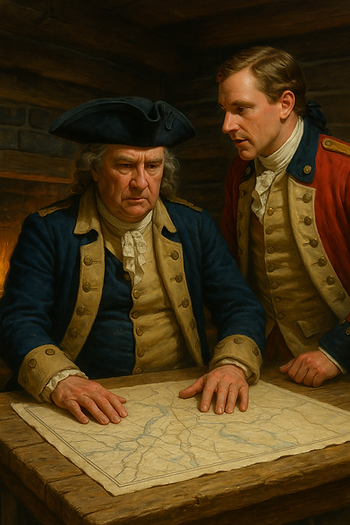
My Name is General William Alexander, “Lord Stirling”: Loyal Son of Liberty
I was born in New York City in 1726, into a family of Scottish descent with a proud sense of heritage and responsibility. My father, James Alexander, had been a respected colonial official and lawyer, a man of intellect and strong conviction. From him, I inherited not only a keen mind for organization but also a sense of duty to serve the colonies that had become our home. Yet I also carried a deeper claim—a belief that through my lineage, I was the rightful heir to the title of Earl of Stirling in Scotland. Though this claim was never recognized by the British courts, I bore the name “Lord Stirling” with pride, for I had earned it through my character and my service rather than a crown’s approval.
A Gentleman of Science and Society
Before the winds of revolution swept across the colonies, my life was one of relative prosperity and intellectual pursuit. I became an astronomer, a mathematician, and a surveyor—fascinated by the order and precision of the natural world. My estate in Basking Ridge, New Jersey, was known as a place of refinement and conversation, where soldiers, merchants, and thinkers could gather. I married Sarah Livingston, of the prominent Livingston family, whose political connections would later intertwine with my own path in the cause of liberty. Together, we raised a family amid a society that was awakening to the idea of independence.
Choosing the Cause of Freedom
When the struggle between Britain and her colonies grew bitter, I was faced with a choice between my heritage and my homeland. Though I had once served under the British flag as an officer during the French and Indian War, I could no longer stand by while Parliament imposed tyranny over free men. I aligned myself with the American cause, offering both my wealth and my leadership to the Continental Army. It was not ambition that drove me, but a sense of justice and dignity. I believed that true nobility rested in serving the people, not ruling over them.
The War for Independence Begins
In 1776, I was appointed a brigadier general in the Continental Army and soon found myself at the Battle of Long Island. There, surrounded by the might of the British army, I commanded a small but determined force of Marylanders and Delawares. We fought fiercely to hold the line and cover Washington’s retreat. Though captured by the British, I was later exchanged and returned to the army, my reputation for courage intact. Washington himself praised my conduct, calling me one of his most reliable generals. From that point on, I would fight in nearly every major campaign of the war—from Brandywine to Monmouth.
Stony Brook and the New Jersey Campaigns
The harsh winter of 1776–1777 tested every man’s spirit, including mine. As British forces advanced through New Jersey, we fought a series of small engagements that turned the tide of morale. At Stony Brook, near Princeton, I led troops to delay the British long enough for Washington to secure his position. These actions, though modest in scale, were vital in keeping the cause alive. I saw in those moments not the glory of great battles but the quiet strength of resolve. The men who followed me were farmers and tradesmen, but their hearts were steadfast. We turned the bitter cold into the fire of determination.
Winter of 1776–1777: The Road to Stony Brook – Told by “Lord Stirling”
The winter of 1776 was a season of despair for the Continental Army and for the very idea of American independence. The air was cold enough to bite through a man’s coat, but it was not the weather that chilled our spirits—it was defeat. Only months earlier, we had been driven from New York, chased across New Jersey by General Howe’s well-fed, well-trained British troops. Many of our soldiers had deserted; others were barefoot, their feet wrapped in rags, leaving trails of blood on the frozen ground. Supplies were scarce, pay was uncertain, and hope itself seemed to waver like a candle in the wind.
The Retreat Across New Jersey
I remember those long, weary miles as we marched through New Jersey, retreating before the enemy’s advance. Town after town fell to British control, and the people—once filled with patriotic fire—now doubted our cause. It seemed as if the Revolution itself was collapsing. General Washington bore the weight of that despair with quiet endurance. Though he spoke little, his resolve never wavered. His presence alone kept the army together when all else was falling apart. He believed, as did I, that perseverance was the truest measure of courage.
Crossing the Delaware and the Spark of Hope
When the army crossed the Delaware River in December, it was as though we had entered another world—one of ice, wind, and uncertainty. Yet in that frozen world, Washington began to plan. He understood that boldness was our only path to survival. The attack on Trenton, though small in scale, was a stroke of genius. On Christmas night, we crossed the river once more, through sleet and ice, to strike the Hessian garrison by surprise. The victory at Trenton rekindled the flame of the Revolution. For the first time in many months, the men believed again that we could win.
Preparing for Princeton
The days that followed were tense and uncertain. The British, stunned by our success, sent reinforcements under General Cornwallis to crush us once and for all. We took position near Trenton, building defenses and preparing for the inevitable attack. The air was thick with frost and fear. On the night of January 2, 1777, we faced Cornwallis’s army, holding our ground through hours of fighting until nightfall. Washington knew we could not survive another day in that position, so under cover of darkness, we slipped away, moving quietly toward Princeton. The men marched in silence, their breath visible in the cold air, their boots crunching the frozen earth.
The Battle of Stony Brook: January 1777 – Told by “Lord Stirling”
It was the bitter dawn of January 3, 1777, and our army was moving silently along frozen roads, the winter air cutting through our coats. General Washington had made the bold decision to slip away from the British force under Cornwallis, who believed we were trapped at Trenton. Instead of retreating, we turned northward, moving toward Princeton under the cover of darkness. Our purpose was clear: strike the enemy’s rear before they could realize we were gone. Every man marched with quiet resolve, the sound of crunching snow marking our passage through history.
Approaching the Enemy Lines
As the first pale light crept across the fields, we neared the small settlement of Princeton. Ahead of us lay a detachment of British troops under Colonel Mawhood, marching south to join Cornwallis. The fog that hung over the frozen landscape gave us concealment, but it also brought uncertainty. Washington divided his force—one column to engage the British near the Stony Brook Bridge and another to press on toward Princeton itself. My brigade was ordered to secure the Stony Brook crossing and delay any enemy reinforcements that might threaten the main attack.
The Skirmish at the Bridge
The Stony Brook Bridge was a small but vital point along the Post Road. As my men took position, we could hear the distant sound of drums and the tramp of boots—the British were coming. The skirmish began suddenly, muskets cracking through the morning mist. The enemy advanced with determination, seeking to force their way across. We met them with disciplined volleys, using the terrain to our advantage. The brook itself, swollen with winter runoff, became a natural barrier. Every moment we held that bridge was a moment bought for Washington’s main force to maneuver into place.
Coordinating the Defense
Communication was difficult amid the smoke and confusion, but our officers worked with precision and courage. Colonel Cadwalader and General Mercer had already engaged the enemy elsewhere, and our task was to ensure no reinforcements reached them too soon. I directed my men to hold fire until the British were within close range, conserving powder and making every shot count. We withdrew in good order when pressed too heavily, only to take new positions on the higher ground overlooking the brook. The fight was fierce but measured—a deliberate delay, not a reckless charge.
A Moment of Decision
As the battle raged near the bridge, I caught glimpses of Washington’s line advancing on Princeton. The thunder of cannon echoed faintly across the frozen fields. We had achieved our purpose: the British reinforcements were stalled at Stony Brook, uncertain of our strength and unable to move swiftly to aid their comrades. When word reached us that Washington’s troops had taken Princeton, cheers rose among my men despite their exhaustion. The enemy began to fall back, realizing that their rear had been struck and their communications cut.
The New Jersey Militia and the Art of Skirmishing – Told by “Lord Stirling”
While great battles may decide the fate of nations, it is often the unseen struggles that determine whether those nations survive long enough to win them. In New Jersey, between the Delaware River and the shores of the Atlantic, there was a war fought not by large armies but by determined farmers, tradesmen, and hunters—our militia. After the victories at Trenton and Princeton, the British still sought to hold the state, but they quickly found themselves harassed at every turn. The pine barrens, thick forests, and winding roads of New Jersey became a labyrinth of danger for redcoats and loyalists alike.
The Nature of Militia Warfare
The men who made up the New Jersey militia were not professional soldiers. Most had farms to tend and families to protect, yet when called, they took up arms with remarkable spirit. They were led by local captains who knew every ridge, marsh, and stream in their region. Their strength lay not in numbers but in knowledge of the land and in their ability to vanish as swiftly as they appeared. Unlike the formal ranks of the Continental Army, the militia fought as the land itself demanded—by ambush, by surprise, and by endurance.
Tactics Born of Necessity
The pine barrens provided the perfect setting for irregular warfare. The thick woods muffled movement, and the narrow roads forced British columns into long, exposed lines. The militia would strike swiftly, firing from behind trees or fences, and then melt back into the forest before the enemy could organize a response. They cut off supply wagons, captured stragglers, and raided for provisions. These actions may have seemed small compared to the great campaigns, but they were constant, unrelenting, and deeply frustrating to our enemies. The British never knew where the next shot would come from, and that uncertainty gnawed at their confidence.
The Spirit of the Jersey Farmer
I came to admire the courage and cunning of these men. They did not wait for orders from generals or seek recognition in dispatches. They fought because their homes were at stake. When the British plundered or burned their towns, the militia responded in kind, ensuring that no redcoat could march through New Jersey without consequence. In many cases, these local fighters acted as our eyes and ears, sending word of enemy movement and keeping open communication between scattered army detachments. Their actions gave us time, information, and breathing room when both were scarce.
Keeping the British Off-Balance
By the early months of 1777, the British found that holding New Jersey was like grasping water—it slipped through their fingers. Every patrol they sent out risked ambush; every outpost they established became a target. Even their loyalist supporters grew hesitant, for the militia struck swiftly and without warning. This constant harassment forced the enemy to withdraw their lines and concentrate their troops, surrendering much of the countryside to patriot control. It was a quiet victory, but a decisive one, won not by grand maneuvers but by persistence and resolve.
The Psychological Impact of Small Victories – Told by “Lord Stirling”
The winter of 1776 had left our army in a state that only those who lived through it could truly understand. We had been beaten in New York, chased across New Jersey, and driven to the very edge of ruin. Men were cold, hungry, and weary of defeat. Some questioned whether the Revolution could continue at all. Each retreat sapped not only our strength but also our spirit. The soldiers began to see the British not merely as an army but as an unstoppable force of empire. It was in that darkness that the smallest glimmer of hope became more powerful than any grand victory.
The Meaning of a Single Triumph
When General Washington led the daring attack at Trenton and later at Princeton, it was not simply the number of enemy soldiers defeated that mattered—it was the feeling those victories created within the hearts of our men. At Stony Brook, where I commanded a small skirmish to delay British reinforcements, the fight itself was brief, but its importance ran deep. The men saw that we could outmaneuver the British, that courage and cunning could triumph even against a superior force. For soldiers who had spent months retreating, standing their ground and winning, even in a small encounter, was enough to remind them of their worth.
From Despair to Determination
After the engagement near Stony Brook and the victory at Princeton, a transformation spread through the army. Where there had been doubt, there was now pride. Where there had been fatigue, there was purpose. I saw it in the way men carried themselves—their shoulders squared, their eyes bright once more. Campfires burned with laughter and talk of victory rather than whispers of defeat. These were not idle emotions; they were the foundation of endurance. A soldier who believes in himself can face hunger and hardship with a strength that no weapon can match.
The Power of Perception
War is not fought by numbers alone; it is fought in the mind. The British still held the larger force, but their sense of invincibility had been shaken. They no longer marched through New Jersey unopposed. Small victories such as ours made them cautious, forced them to question their control, and gave our people confidence in the cause of independence. Each success, no matter how small, carried the weight of a thousand speeches. It told the world—and ourselves—that the Continental Army was not broken.
Restoring the Faith of the Peopl
e
Beyond the battlefield, these victories stirred the hearts of the civilians who had suffered under British occupation. Farmers, merchants, and families who had once feared to show their loyalty to the cause began again to support us with supplies, information, and courage. The Revolution was as much a battle for belief as for territory, and belief was finally returning. The people of New Jersey no longer saw the war as lost; they saw it as winnable. That change in spirit was worth more than any number of cannons.
Securing the Princeton–Trenton Corridor – Told by “Lord Stirling”
When the guns fell silent after Princeton, the snow-covered fields of New Jersey bore the marks of both triumph and exhaustion. We had survived the darkest months of the war and struck two decisive blows against the enemy, first at Trenton and then at Princeton. Yet victory is never the end—it is merely the beginning of new burdens. The British still occupied strong positions to the north and east, and our army, though victorious, was worn thin by cold, hunger, and long marches. The question that weighed heavily on General Washington and all of us was simple: how do we hold what we have gained?
The Importance of the Corridor
The stretch of land between Princeton and Trenton was more than just ground won in battle—it was the lifeline of our campaign. It connected the Delaware River crossings to the interior of New Jersey, serving as the artery through which supplies, reinforcements, and information flowed. If the British regained control of this corridor, they could once again cut our lines of communication and isolate our forces. Securing it meant more than defending territory; it meant ensuring that the Revolution itself had room to breathe.
Reorganizing the Army and Defenses
Washington set to work immediately, ordering fortifications along key roads and river crossings. My brigade, along with others, was tasked with establishing strong defensive positions between the two towns. We repaired bridges, built redoubts, and set patrols along every major route. The local militia aided us greatly, watching for enemy scouts and protecting wagon trains carrying precious food and ammunition. The men, though weary, took pride in their labor. We all understood that these defenses were not just walls of earth—they were the foundation of our survival.
Holding Central New Jersey
The British, frustrated by their defeats, attempted to probe our lines and harass our foragers, but they no longer met the frightened army they had chased across the state months before. Every attempt to advance was met by resistance, every raid answered swiftly. The people of New Jersey, seeing our renewed strength, began to rally behind us. Farmers who had hidden their grain now brought it to our camps; blacksmiths repaired our weapons and wagons. What had once been occupied land became friendly ground once more. The corridor between Princeton and Trenton turned into a secure haven for our operations.
The Shift in Control
In the weeks that followed, the British withdrew from most of New Jersey, pulling back toward New Brunswick and Amboy to protect their own supply lines. Their hold on the state was broken, and the power they once wielded over the countryside vanished. For the first time in months, the Continental Army stood not as fugitives, but as defenders of liberated soil. The psychological and strategic gain was enormous. Central New Jersey was ours, and with it came the ability to move men and supplies freely—a luxury we had not known since the beginning of the war.

My Name is Colonel Matthias Ogden: Officer of the Continental Army
I was born in Elizabethtown, New Jersey, in 1754, to a family deeply rooted in faith, education, and public service. My father, Robert Ogden, was a respected lawyer and patriot, and my mother, Phebe, raised her children to value learning, courage, and devotion to one’s country. Growing up amid the quiet streets of Elizabethtown, I never imagined how quickly our peaceful colony would be turned into a battlefield. Yet from a young age, I felt drawn to a life of purpose—a life in which courage and conviction would define one’s place in the world.
Education and the Awakening of Patriotism
Before the storm of war broke over the colonies, I received an education that would serve me well in leadership. I studied at the College of New Jersey, known now as Princeton, where I learned not only philosophy and mathematics, but also the value of liberty. The conversations that filled those halls were electric—talk of rights, governance, and the limits of British authority. When Parliament began to tighten its grip on the colonies, I, like many of my generation, found my heart stirred with defiance. My education had taught me to think freely, and my conscience would not allow me to stand idle while our people were pressed into submission.
Answering the Call to Arms
When war came in 1775, I joined the New Jersey militia as a young officer, eager to serve. It was a time when enthusiasm was greater than experience, and yet the fire of freedom burned bright. I was soon appointed to the Continental Army under General Sullivan and saw my first major action in the assault on Quebec at the close of 1775. That winter campaign through snow and ice remains etched in my memory—the hunger, the exhaustion, and the bitter disappointment when our attack failed and our brave General Montgomery fell. I was wounded in that action and taken prisoner by the British, learning early that the price of liberty was steep.
Return to the Fight
After my release from captivity, I rejoined the army and threw myself once again into the cause. I was appointed colonel of the 1st New Jersey Regiment and led my men through years of hard campaigning. I took pride in training disciplined soldiers who fought not for pay or glory but for principle. The New Jersey campaigns of 1777 tested us all—constant skirmishes, surprise attacks, and nights spent in the frozen woods. At Stony Brook and Princeton, I witnessed the cunning leadership of Washington and the quiet courage of common men who stood firm when all seemed lost.
Raids, Espionage, and Quiet Victories
As the war continued, I turned increasingly to the use of intelligence and surprise. I believed that quick, daring actions could achieve what brute force could not. I led raids against British and Loyalist strongholds, striking fast and vanishing into the New Jersey countryside. My men and I relied on local spies and scouts—ordinary citizens who risked their lives to pass messages, smuggle supplies, and report enemy movements. It was a dangerous game of deception and courage, where one misstep could mean the gallows. Yet these quiet victories were vital to keeping the enemy unsettled and protecting our homeland from occupation.
Loyalty to Washington and the New Republic
Throughout the war, I served closely under General Washington, whose steadiness inspired all who followed him. Even when the army suffered hunger and discontent, I believed unwaveringly in the cause and in the man who led it. After Yorktown, when the long struggle was finally ending, I returned home to New Jersey—a state scarred by war but alive with hope. I was proud to have played my part, not as a grand hero, but as a loyal servant of liberty.
The Rise of Local Intelligence Networks (1777–1778) – Told by Colonel Ogden
After the battles at Trenton and Princeton, the fighting in New Jersey did not end—it merely changed its form. By 1777, the British had withdrawn from much of the state, but they still occupied New York City and its surrounding areas, casting a long shadow over the region. Skirmishes continued, yet the struggle for information became just as important as the clash of muskets. We soon realized that victory in this war would depend not only on the courage of soldiers but also on the silent work of spies, couriers, and informants. It was in those years that we began to weave the first threads of what would become our local intelligence networks.
Building the Foundation
At first, intelligence work was clumsy and uncertain. Messages were passed by word of mouth or written hastily on scraps of paper, hidden in shoes, coat linings, or hollow quills. Couriers risked capture and hanging if discovered, for espionage was considered a crime punishable by death. Yet the need was great. The British occupied strongholds throughout the northern colonies, and their movements had to be known if we were to counter them. In Elizabethtown, where I commanded, we began organizing trusted men and women who could move between lines unnoticed. Merchants, farmers, tavern keepers, and even ferrymen became our eyes and ears.
The Role of Trust and Secrecy
In intelligence work, trust was the rarest and most valuable currency. A single careless word could destroy months of planning. I learned to judge a man not by his appearance or his enthusiasm, but by his silence. Those who served as couriers carried no titles, received no public honor, and often operated without direct orders. They worked for the cause, not for glory. Some risked their families, others their lives, to pass information from occupied towns to our outposts. We created secret meeting places, used coded phrases, and devised signals—lanterns hung in windows, chalk marks on fences, and folded letters sealed with symbols known only to a few.
Coordinating Across the State
By 1778, the network had grown more sophisticated. Information flowed from New York through Bergen, Essex, and Middlesex counties, reaching Washington’s headquarters in Morristown. My men and I maintained communication lines that allowed us to anticipate British raids and monitor loyalist movements. We also relied on river crossings at night, using small boats to send messages across the Hudson. These were dangerous journeys through fog and silence, where one mistake could bring capture. Yet time and again, our couriers succeeded, slipping past patrols and returning with invaluable intelligence.
Women of the Shadows
It would be unjust to speak of these networks without mentioning the women who played their part. Many of them operated under the guise of ordinary domestic life, yet they carried information hidden in sewing baskets or baked into loaves of bread. Their courage often went unrecorded, but without them, the network would have collapsed. The British underestimated women, and in doing so, gave us one of our greatest advantages.
The Power of Information
The intelligence gathered by these humble patriots allowed us to strike with precision and avoid disaster. We learned when British foraging parties set out, where their supply wagons traveled, and which loyalist households sheltered officers. This knowledge kept our troops alive and turned the tide in countless small encounters. Our success in New Jersey showed that even an army with limited resources could outthink a greater power when armed with the truth.
Life Behind Enemy Lines: Espionage in New York – Told by Colonel Ogden
To understand the hidden war in New Jersey, one must first understand the shadow that loomed across the Hudson River—British-occupied New York. From 1776 until the end of the war, the city served as the beating heart of British operations in America. Red-coated soldiers filled its streets, loyalist merchants thrived under their protection, and British ships crowded its harbor. To most, New York was impenetrable, a fortress ruled by spies, soldiers, and suspicion. Yet within that occupied city lived men and women who quietly worked for our cause, risking everything to send information across the water to those of us still fighting for liberty.
The Network Beneath the Surface
Life behind enemy lines demanded courage beyond measure. American informants—merchants, laborers, dockhands, and even servants—moved through the city gathering whispers of British plans. Some worked in shops that catered to officers and overheard details of troop movements or shipments. Others walked the docks, counting the number of ships or noting when a new regiment arrived. All of this information had to reach our army across the river, and that required coordination, patience, and secrecy. Those involved rarely knew each other’s names; we protected them through silence. One captured courier could not betray what he did not know.
Smuggling Through the Raritan Valley
To move intelligence from New York into patriot hands, we relied on a complex web of smuggling routes stretching through New Jersey’s Raritan Valley. These paths, often used by traders and fishermen before the war, became arteries for secret communication. Couriers carried messages hidden in barrels, wagons, and even under layers of produce. Some shipments contained goods for sale—cloth, salt, or sugar—masking the true purpose of the journey. From Staten Island, letters might cross to Perth Amboy, then pass by horseback through New Brunswick, Somerville, and on to Morristown or Elizabethtown. Every mile of that journey risked exposure to British patrols and loyalist informers.
Danger, Deception, and Loyalty
Many of those involved in these operations were ordinary people whose courage rivaled that of soldiers in battle. A ferryman who rowed messages across the bay might face imprisonment or hanging if caught. Farmers who sheltered couriers risked the torching of their homes. There were times when the enemy’s agents discovered our routes, forcing us to change signals, passwords, and meeting places. I recall one winter when we lost nearly all contact with New York for several weeks after a courier was captured near Woodbridge. Yet even then, the network adapted—new couriers stepped forward, and communication resumed as if nothing had broken. Such resilience was the lifeblood of our intelligence work.
A City Divided by Allegiance
New York during the occupation was a place of contradictions. By day, British officers hosted grand balls and parades, confident in their dominance. By night, American sympathizers crept through alleys and backrooms, writing coded messages by candlelight. The people who lived there walked a fine line between loyalty and survival. Some were patriots in secret, forced to act as loyalists in public. Others changed sides when fortune demanded it. For our agents, every conversation, every handshake, and every delivery carried risk. A misplaced word could mean ruin.
The Value of Hidden Heroes
The intelligence gathered from British-occupied New York proved invaluable. It revealed enemy troop numbers, upcoming raids, and the movement of supplies. Through these reports, General Washington could anticipate enemy actions and adjust our defenses. The smuggling routes through the Raritan Valley not only carried information but also goods essential to sustaining the army—powder, medicine, and even news from abroad. Each successful transmission strengthened the invisible chain linking those who fought openly with those who fought in silence.
The Transition to the Sullivan Campaign (1779) – Told by Colonel Ogden
By 1779, the war in New Jersey had taken on a new rhythm. The days of desperate retreats and constant skirmishes had given way to a more organized, deliberate struggle. Our local operations—raids, intelligence gathering, and defensive patrols—had not only kept the British off balance but had also taught us valuable lessons in coordination and endurance. These smaller engagements became the groundwork for something far larger: the Sullivan Campaign, a major offensive into Iroquois territory aimed at breaking British influence and securing the western frontier. What began in the pine woods and river crossings of New Jersey would soon extend deep into the wilderness of New York.
Learning from the Hidden War
The years between 1777 and 1778 were our training ground in the art of irregular warfare. Through countless small missions, we learned to move swiftly, strike decisively, and adapt to ever-changing conditions. Local militia and Continental soldiers alike developed the discipline to operate independently and the intelligence to make quick decisions without constant orders from command. These experiences proved invaluable when planning larger expeditions. By 1779, our forces were no longer a collection of inexperienced men—they had become a network of capable fighters, scouts, and leaders who understood how to navigate hostile terrain and unpredictable enemies.
Securing the Frontier and Gathering Intelligence
Before any great campaign could be launched, the army needed information—and the networks we had built in New Jersey provided the model. Couriers, scouts, and local informants gathered intelligence on British-allied Iroquois villages and their supply routes. Reports of raids on frontier settlements had reached Washington, and he understood that the time had come to strike back. The intelligence gathered by men like us helped identify key enemy strongholds and determine how best to move troops through dangerous territory. The same principles that had guided our local operations—reliance on secrecy, precision, and adaptability—now shaped the planning of the Sullivan Expedition.
Preparation and Mobilization
The army that set out under General John Sullivan’s command was not hastily assembled. It was the product of years of hard-won experience. Supplies were gathered with care, routes were mapped, and communication lines were established to ensure coordination between Sullivan’s forces and those of General Clinton advancing from the north. Many officers, myself included, saw echoes of our earlier New Jersey operations in this grand design. Every ambush we had survived, every covert patrol we had led through swamp and forest, had taught us how to endure the hardships of wilderness campaigning.
A Campaign of Strategy and Survival
The Sullivan Expedition was unlike the traditional battles fought along the coast. It was a campaign of endurance and logistics—marching through untamed land, engaging scattered enemy bands, and destroying British-allied villages that had long threatened our western settlements. The lessons from our local operations had prepared us for such warfare. We knew how to live off the land, how to navigate without roads, and how to maintain discipline in harsh conditions. The campaign’s success depended as much on these skills as on musket fire.
The Evolution of a Fighting Force
What I saw in those years was the transformation of the Continental Army from a desperate militia into a professional force capable of executing complex offensives. The local struggles in New Jersey were the forge; the Sullivan Campaign was the proof of our refinement. The same spirit of determination that kept us alive in the pine barrens now guided us through the forests of the frontier. Each small victory, each bit of intelligence carried across enemy lines, had been a step toward this larger triumph.
The Use of Scouts and Guides in Wilderness Warfare – Told by Colonel Ogden
When General Sullivan’s army marched north in 1779 to carry out the campaign against the Iroquois, we entered a world unlike any we had known in New Jersey or Pennsylvania. The thick forests, winding rivers, and treacherous swamps of the frontier were as much an enemy as any soldier. Roads were few, trails often vanished beneath undergrowth, and the silence of the wilderness could conceal danger at every turn. In such a land, no amount of discipline or courage could guide us forward—we relied on the skill and knowledge of scouts and guides who understood how to move, fight, and survive where maps ended and instinct began.
Men of the Frontier
Our scouts were not trained soldiers in the formal sense. Many were hunters, trappers, and rangers, men born to the forests and mountains. Some were Oneida allies who had sided with the Americans and knew the terrain and the tactics of their Iroquois kin. Others were frontiersmen from Pennsylvania and New York, used to navigating by the position of the sun or the bend of a river. These men could read the land as others might read a book. A broken branch, a print in the mud, or the faint smell of smoke told them more than a map ever could. Without them, our columns would have been lost in a labyrinth of trees and ridges.
The Path to Newton
As we advanced toward the enemy near Newtown, the scouts moved ahead, silent as shadows. They marked the safest routes, located fords across rivers, and warned of ambushes. The Iroquois and their loyalist allies were masters of stealth, and without our guides, we might have walked directly into their traps. I remember one instance when a scout named Thomas Boyd—brave and sharp-eyed—spotted signs of recent movement along a creek bed. His warning allowed our main force to alter its route, avoiding an ambush that could have destroyed an entire brigade. Such moments were the difference between survival and disaster.
Communication and Coordination
In the wilderness, traditional orders carried by messenger were of little use. Scouts often served as the lifeline between scattered detachments, riding or running for miles through enemy-infested woods to deliver word of movement or danger. Their reports shaped our decisions—when to advance, where to camp, and when to strike. They also guided our engineers and pioneers, showing them where to build bridges or clear paths for supply wagons. Every mile of progress depended on their eyes and knowledge. When night fell, they lit no fires, slept lightly, and rose before dawn to reconnoiter once more.
The Hidden Danger of Knowledge
The work of a scout demanded more than skill; it required courage of a rare kind. Captured scouts faced torture or execution, for the enemy understood their value. Many of our best men never returned from their missions, their fates known only to the forest. Yet they went willingly, driven by duty and the bond they felt with their fellow soldiers. They understood that a single discovery—a hidden trail, an unseen campfire—could save hundreds of lives. In this way, they fought a quiet war of observation, one fought without fanfare but with immense consequence.
Victory Through Vigilance
When the battle near Newton finally came, it was fought not in confusion but with awareness of where the enemy lay. The positions of the Iroquois and loyalist defenders had been identified by our scouts days before. This allowed General Sullivan to deploy his artillery and infantry with precision, overwhelming the defenders and forcing them into retreat. The victory owed much to the steady work of those who had walked the ground first. In truth, the scouts had won half the battle before the first shot was fired.
Tactical Lessons: Coordinated Raids and Diversions– Told by Colonel Ogden
The Revolution was not won through great battles alone. Much of our strength came from small, coordinated actions—raids, diversions, and ambushes—that taught us how to think like our enemy and strike where he was weakest. From the icy roads of New Jersey to the deep forests of New York, we learned that a handful of determined men could shape the course of a campaign. The lessons we took from early encounters, such as the skirmish at Stony Brook, became the very foundation of the tactics used later in larger operations, including the expedition that led us to the Battle of Newton in 1779.
Learning to Move Like Shadows
At Stony Brook, we learned the value of mobility and deception. The British marched in tight formations, confident in their strength, while we moved swiftly and unpredictably, appearing and vanishing before they could react. Small groups of men, well-trained and well-led, could harass columns, delay reinforcements, and disrupt supply lines without risking full engagement. I carried those lessons with me through every year of the war. They became the pattern for how we operated across New Jersey—striking swiftly, forcing the enemy to chase shadows, and wearing him down piece by piece.
The Art of Diversion
Diversionary tactics proved just as important as direct confrontation. A small force could create noise and confusion in one place while a larger operation moved unseen elsewhere. During the campaigns that led to Sullivan’s expedition, we often used these maneuvers to mislead the enemy. By setting fires, spreading false rumors, or sending patrols to make their presence known, we forced the British and their allies to divide their strength. The key was timing—knowing when to strike and when to withdraw before the trap could close. These early diversions in New Jersey taught us how to think several steps ahead, a skill that served us well in the wilderness campaigns to come.
Adapting to a New Kind of War
When we moved north into Iroquois country, those same principles became our lifeline. The terrain was unforgiving—dense forests, hidden ravines, and winding rivers that swallowed sound and sight. Large armies could not move easily, but small detachments could. Scouts, guides, and light infantry operated miles ahead of the main force, conducting raids on enemy positions or feigning movements to draw the Iroquois and loyalists out of hiding. Every action was part of a greater plan, every skirmish connected to a broader strategy. We had learned that in war, confusion could be as powerful a weapon as any musket or cannon.
Unity in Chaos
The success of coordinated raids depended not just on bravery, but on communication and trust. Messages had to travel quickly across miles of wilderness, and every man needed to understand his role. In New Jersey, we had learned to fight as independent units that still acted with shared purpose. By the time of the Sullivan Expedition, this discipline allowed us to synchronize movements across vast distances. When one brigade attacked, another maneuvered into position; when one column feigned retreat, the others advanced. Such coordination gave the illusion of greater numbers and left our enemies uncertain of where the next blow would fall.
From Skirmish to Campaign
The connection between Stony Brook and Newton may not seem obvious to those who read of them in distant times, yet I lived through both and saw the thread clearly. The small-unit tactics we honed in the woods and farms of New Jersey became the model for larger operations deep in enemy territory. Every raid, every ambush, and every deception was a test—a preparation for campaigns that required both strength and subtlety. By 1779, the Continental Army had evolved into a force capable of blending European discipline with frontier cunning, and that fusion was the key to our success.

My Name is Major General John Sullivan: Commander in the Continental Army and Advocate for the American Republic
I was born in Somersworth, New Hampshire, in 1740, the son of Irish immigrants who sought opportunity and freedom in the New World. My father, an honest schoolteacher, taught me the value of discipline and learning. From a young age, I was drawn to study, to argument, and to the pursuit of justice. The frontier towns of New Hampshire offered little comfort but much opportunity for ambition. I learned that a man must shape his destiny through courage and determination. I studied law under Samuel Livermore, a respected attorney, and soon established my own practice in Durham, where my reputation grew as a fair yet fiery advocate for the rights of the people.
From Lawyer to Leader
Before the war, I lived a life that many would have considered comfortable. I had a thriving law practice, a respected position in my community, and the privilege of serving as a delegate to the provincial congress. Yet the growing tension between Britain and her colonies troubled me deeply. As a lawyer, I believed in the rule of law; as a citizen, I could not abide the injustices of Parliament’s overreach. I spoke often against British interference, urging my fellow colonists to stand firm in defense of their liberties. It was not long before words turned to action.
The Outbreak of Revolution
When the first shots were fired at Lexington and Concord, I joined my fellow New Englanders in the call to arms. In 1775, I was appointed a brigadier general in the Continental Army, serving under General Washington. I quickly found that leadership in war demanded more than courage—it demanded endurance, vision, and sacrifice. At the Siege of Boston, I learned to command men under pressure. At the invasion of Canada, I saw the harsh realities of war and the limits of human endurance. Though our efforts in Quebec failed, we gained experience and a renewed understanding that freedom would not come easily.
Service in the Continental Army
As the war deepened, I was promoted to major general and placed in command of various divisions across the colonies. I fought at Long Island, where our forces suffered heavy losses, and at Trenton, Princeton, and Brandywine, where I learned firsthand the mix of triumph and tragedy that defined our struggle. My men respected me for my resolve, though I admit that my temper sometimes flared when plans went astray. I strove always to balance discipline with compassion, for soldiers are men first and warriors second.
The Sullivan ExpeditionIn 1779, General Washington entrusted me with a task both difficult and controversial—the com
mand of a campaign into Iroquois territory. The British had long relied on their Native allies to raid our frontiers, spreading terror among our settlements. Washington ordered me to break this alliance by destroying the enemy’s strongholds and their means of support. I accepted the command with heavy responsibility, knowing it would be remembered for generations. The campaign, which culminated in the Battle of Newton, was hard and unrelenting. We drove back the combined forces of Loyalists and Iroquois warriors, burned their villages, and laid waste to their crops to prevent future attacks. It was a harsh measure born of a harsher war, and though I followed orders faithfully, I carried the weight of that campaign long after it ended.
Conflict and Controversy
My military service was not without criticism. Some accused me of ambition, others of overreach, and a few questioned the harshness of the campaign I commanded. Yet I believed my duty was clear—to protect our people and ensure the survival of the republic we were building. I faced hardship not only in the field but also in politics, where jealousy and faction often threatened unity. Still, I remained loyal to General Washington and to the cause for which we all had sacrificed so much.
The Sullivan Expedition’s Purpose – Told by Major General John Sullivan
In the spring of 1779, I received orders from General Washington that would shape one of the most difficult and controversial undertakings of the war—the campaign against the Iroquois Confederacy. The task before me was not simply to fight an enemy army, but to break the power of the Six Nations who had aligned themselves with the British. For years, these tribes had launched raids upon our frontier settlements, burning homes, destroying crops, and leaving families in ruin. Their alliance with the Crown gave the British both eyes and arms in the wilderness, and Washington understood that to secure the safety of the new nation, we had to secure its borders.
The Western Frontier in Peril
The frontier had become a place of constant terror. From the valleys of Pennsylvania to the northern reaches of New York, settlers lived in fear of sudden attack. The British, operating from Fort Niagara and other strongholds, armed and directed their Iroquois allies, turning them into a weapon of terror against our people. Villages were destroyed, men ambushed, and entire families scattered or killed. Our own forces were stretched thin and unable to protect every outpost. It became clear that defensive measures were not enough—we had to carry the war to the enemy’s doorstep.
Washington’s Orders and Intent
General Washington’s instructions to me were direct and without ambiguity. I was to march into the heart of Iroquois territory, destroy their villages and food supplies, and render them incapable of waging war. The objective was not conquest for land or vengeance, but to deprive the British of their most powerful native allies. Washington wrote that the expedition must be “the total destruction and devastation of their settlements,” so that “the country may not be merely overrun but destroyed.” His reasoning was as strategic as it was severe: by cutting off the source of frontier raids, we would protect thousands of American families and deny the British a key advantage.
Building the Army for the Wilderness
To accomplish this, I assembled a force of nearly four thousand men, drawn from New Jersey, New York, Pennsylvania, and New Hampshire. We gathered at Easton and later marched through Pennsylvania toward Tioga, where we built Fort Sullivan as our base of operations. It was a formidable task—moving men, supplies, and artillery through mountains, rivers, and unbroken forests. Our enemy knew the land far better than we did, and every ridge or stream could hide an ambush. The success of the campaign would depend on order, discipline, and the will to endure hardship.
The Mission Beyond Battle
Though many thought our purpose was to fight a decisive engagement, the truth was that the expedition’s goal went beyond a single battle. It was to break the cycle of raids that had devastated the frontier since the war’s beginning. By destroying enemy strongholds, we would force the Iroquois and their British allies to retreat farther west, depriving them of the ability to threaten our people. It was a campaign of prevention as much as punishment, a harsh but necessary measure to ensure the safety of the republic’s expanding borders.
The Moral Weight of the Task
I did not take lightly the destruction we were ordered to bring. The Iroquois were a proud and organized people, and many among them had sought only to defend their lands as they saw fit. Yet war spares few choices, and neutrality had become impossible. Those who sided with the British made themselves part of the enemy’s campaign against us. Still, as I watched the flames consume their villages, I could not help but feel the burden of what war demands. Our aim was not cruelty, but survival—and the survival of the new United States required ending the frontier war once and for all.
Securing the Republic’s Future
When the expedition concluded, the Iroquois Confederacy was broken, their alliance with the British weakened beyond repair. The western frontier, though scarred, was at last made secure. In the years that followed, settlers returned to rebuild, and the shadow of terror that had hung over the valleys of New York and Pennsylvania slowly began to lift. The Sullivan Expedition achieved its purpose, though at great cost. It stands as a reminder that the fight for independence was not confined to the great cities or famous battlefields—it stretched into the wilderness, where victory required both resolve and sacrifice.
March Through Pennsylvania: Challenges of Terrain – Told by Major Sullivan
When I received my orders to lead the expedition against the Iroquois in 1779, I knew the greatest enemy we would face might not be the warriors who lay ahead, but the wilderness itself. Our route from Pennsylvania into the heart of Iroquois country was long, harsh, and unforgiving. Mountains rose before us like walls, rivers ran swift and deep, and forests stretched endlessly in every direction. We marched not along roads but through trails carved by hunters and traders—paths scarcely fit for wagons or artillery. Yet we had no choice. To fulfill General Washington’s orders, we had to bring an army through terrain that had defeated many before us.
The Burden of Logistics
Moving nearly four thousand men, along with hundreds of horses, cattle, and wagons, required organization on a scale rarely seen in our young army. Every day was a battle against distance and delay. Our supply trains crawled through the mud, bridges had to be built and rebuilt, and fallen trees constantly blocked our way. Each regiment took its turn clearing paths for the next, hacking through underbrush with axes and shovels. It was slow, grueling work. The men carried heavy packs and often went hungry, for food spoiled quickly in the summer heat. Flour turned damp, meat rotted, and the cattle grew thin. When our provisions ran short, the soldiers foraged for berries and roots or fished in the streams that crossed our path.
The Endless Mountains
Western Pennsylvania was a land of beauty and hardship. The mountains seemed endless, rising one after another until the men began to call them “the stairs of the Almighty.” Every ascent tested our endurance, every descent threatened to overturn wagons and break limbs. The steep slopes made it nearly impossible to move artillery, yet we needed our cannon to protect the army and to strike at enemy fortifications. Teams of oxen pulled the guns inch by inch up the rocky inclines, while men steadied the wheels with ropes. There were days when progress could be measured in yards rather than miles. The wilderness made us humble, forcing us to respect its power even as we fought to master it.
Weather and Weariness
The elements were no kinder than the landscape. Sudden storms swept across the mountains, drenching our powder and turning the ground to deep mire. Insects swarmed by the thousands, biting men and beasts alike. The heat of day was followed by nights so cold that soldiers wrapped themselves in wet blankets for warmth. Sickness spread easily in such conditions—fevers, dysentery, and exhaustion struck many of our ranks. Still, the men pressed forward, driven by duty and the knowledge that failure would bring the frontier once again under the shadow of British and Iroquois raids.
Building a Lifeline of Supply
To keep the army fed and supplied, we established a chain of posts along our route—Fort Sullivan at Tioga and Fort Reed near Wyoming among them. These outposts served as depots where food and ammunition could be stored and transported in stages. It was a delicate balance: move too far ahead, and the army would starve; linger too long, and the campaign would lose momentum. Communication between the posts was vital, and couriers rode day and night through hostile country to keep the line open. Even so, we often found ourselves short on provisions, relying on ingenuity and the strength of will to keep the march alive.
Lessons in Endurance
That march through Pennsylvania taught me more about endurance than any battle I ever fought. It showed me that an army’s strength lies not only in its weapons but in its ability to persevere against nature itself. My men learned discipline, patience, and self-reliance, and these lessons carried us through the battles that followed. The mountains did not yield easily, but neither did we. By the time we reached the edge of Iroquois country, the army had been tested and tempered like iron in fire.
Native American Alliances and Their Dissolution – Told by Major General Sullivan
When the war for independence reached the northern frontiers, the Iroquois Confederacy—once one of the strongest and most unified political alliances in North America—stood at a dangerous crossroads. For generations, the Six Nations had maintained a delicate balance between the European powers, playing British, French, and colonial interests against one another to preserve their lands and autonomy. But the Revolution shattered that balance. Faced with a war that demanded loyalty from all sides, the Iroquois could no longer stand united. Old rivalries resurfaced, and the confederacy that had endured for centuries began to fracture under the strain of divided loyalties.
Choosing Sides in a Foreign War
The British had long cultivated relationships with many of the Iroquois nations through trade, diplomacy, and gifts. They promised protection of tribal lands in exchange for military support against the rebellious colonies. For the Seneca, Cayuga, Onondaga, and Mohawk, this alliance seemed the most natural path. They viewed the British Crown as the lesser of two threats—the other being the relentless westward push of American settlers. The British also operated from nearby strongholds such as Fort Niagara, giving them a presence that was both tangible and persuasive.
Yet not all among the Six Nations chose to follow this course. The Oneida and the Tuscarora, influenced by missionaries and long-standing contact with American settlers, aligned themselves with the patriot cause. They saw hope in a new nation that might one day honor their independence. It was a choice that set brother against brother and friend against friend, dividing villages that had once stood together beneath the Great Tree of Peace.
The Cost of Division
The split among the Iroquois had terrible consequences. In 1777, at the Battle of Oriskany, Oneida warriors fought alongside American militia against the British and their Seneca and Mohawk allies. It was one of the bloodiest encounters of the northern war, and it left wounds that would never fully heal. From that moment, the Great Council Fire that had bound the Six Nations began to burn low. The political harmony that had made them powerful was replaced by bitterness and distrust. The confederacy was no longer one people—it was a gathering of divided nations, each struggling to survive amid the chaos of a foreign war.
The British Alliance and Its Burden
Those Iroquois who fought beside the British did so with skill and ferocity. Their knowledge of the land and mastery of guerrilla warfare made them valuable allies. They struck hard at our frontier settlements, burning farms, destroying crops, and spreading terror across Pennsylvania and New York. Yet their loyalty to the Crown brought them little reward. The British used them as tools of war but could not protect them when the tide turned. As the conflict dragged on, supplies dwindled, promises were broken, and many Native villages found themselves abandoned and hungry. The alliance that had once seemed secure became a source of suffering.
Aftermath of Newton and the Scorched Earth Policy – Told by Sullivan
The battle near Newtown in August of 1779 marked the turning point of our expedition. The Iroquois and their loyalist allies had fortified themselves along the Chemung River, expecting to halt our advance. Yet our artillery and discipline carried the day. The enemy was driven from their positions, and the path into the heart of Iroquois territory lay open before us. It was a victory not just of arms but of planning and endurance. Still, what followed that triumph would test the moral and human limits of war itself. The orders I carried from General Washington were clear—this campaign was to devastate the Iroquois heartland, leaving it incapable of supporting further British raids.
The Beginning of Destruction
After Newton, our march became one of fire and ashes. We advanced through the valleys of the Cayuga, Seneca, and Onondaga, destroying everything that could sustain the enemy. Villages were burned, orchards felled, and fields of corn—ripe and heavy with grain—were trampled or set aflame. It was a sight both terrible and necessary. The Iroquois had used these settlements as the foundation of their power, striking from them against our frontier. If we were to end those raids once and for all, the land itself had to be denied to them. The soldiers followed orders grimly, knowing that what we destroyed had been built over generations.
Marching Through Silence
As the days passed, we entered a land eerily silent. The smoke of burning villages followed our columns like a shadow. Many of the Iroquois had already fled north toward British protection, leaving behind abandoned homes and stores of food. Yet even in absence, their presence was felt—in the carved totems that marked their clans, in the fields once carefully tended, in the ashes that drifted where children had once played. My men took no joy in the work. They knew this was not a victory of glory but one of necessity, a harsh act demanded by the logic of survival. The war along the frontier had been brutal on both sides, and this was its inevitable end.
The Hard Winter That Followed
That winter, the suffering we had anticipated came to pass. Reports reached us that the Iroquois who had fled to Fort Niagara endured starvation and disease. Their villages lay in ruins, their food stores gone, and the land frozen before it could be replanted. Many perished, not by the sword, but by hunger and cold. It was a consequence foreseen but deeply regretted. Yet Washington’s objective had been achieved: the frontier was finally quiet. No more would settlers live in daily fear of raids that left farms in ruins and families slain. The cost had been high, but the cycle of retaliation was broken.
Long Shadows of War
In the years that followed, the Iroquois Confederacy never recovered its former strength. The ties that had once bound the Six Nations together were severed. Some migrated permanently to Canada under British protection, while others tried to rebuild their lives on what remained of their ancestral lands. The great council fires that had once united them flickered weakly, their harmony undone by war, loss, and displacement. The frontier expanded westward, and with it came new settlements and new conflicts, for such is the course of nations born in struggle.
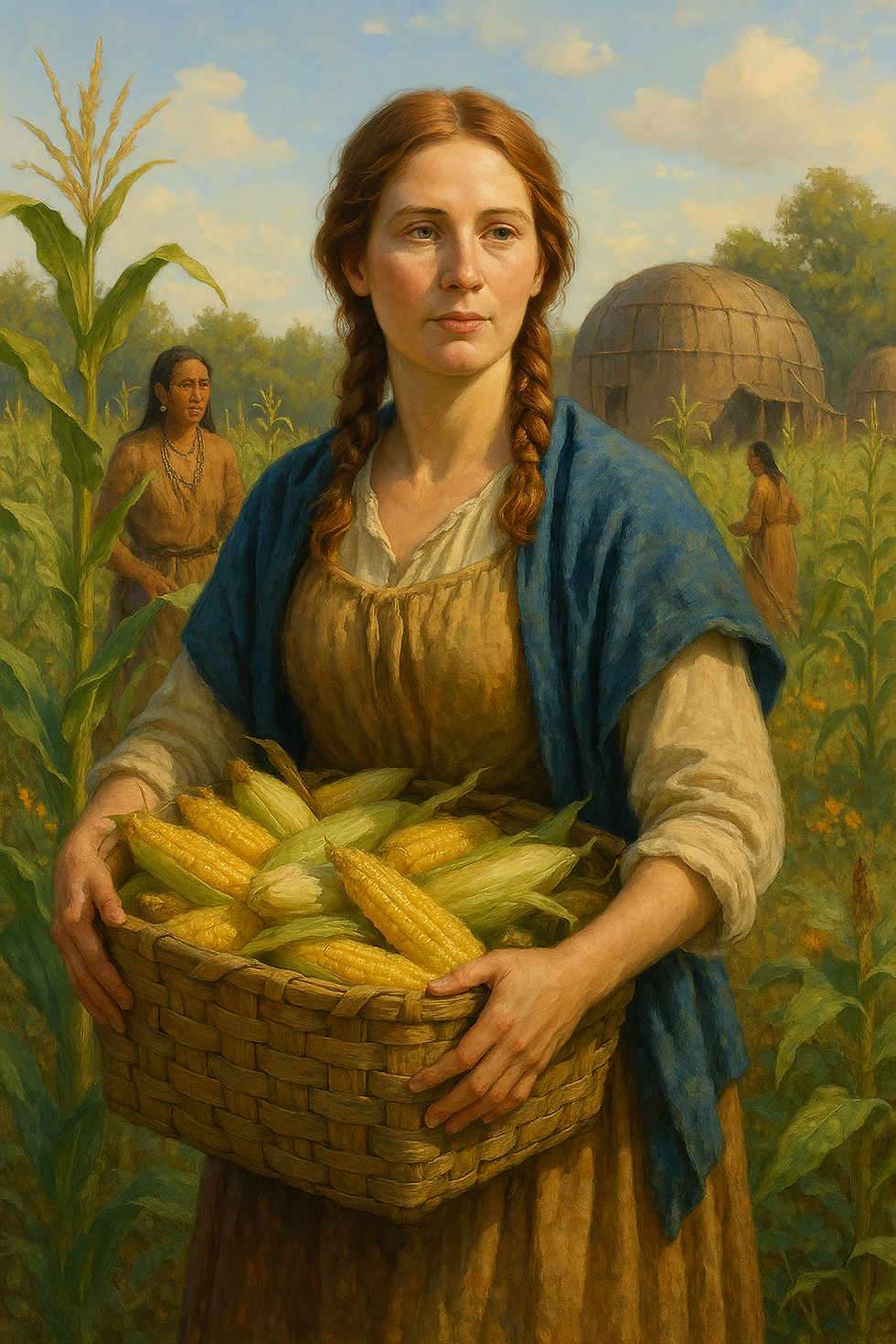
My Name is Mary Jemison: The White Woman of the Seneca People
I was born in 1743 aboard a ship crossing the Atlantic Ocean from Ireland to the New World. My parents, Thomas and Jane Jemison, were among those seeking a better life in the colonies, hoping for peace and opportunity in the vast lands of Pennsylvania. We settled near Marsh Creek, a quiet area on the frontier, where the forests seemed endless and danger was never far away. My childhood was filled with hard work and simple joys—helping my mother by the hearth, fetching water from the stream, and listening to my father’s stories of the old country. Yet even as a child, I could sense that life on the edge of the wilderness was uncertain.
Captured and Torn from My Family
In the spring of 1758, when I was fifteen years old, the war between the French and the British reached our doorstep. Bands of French-allied Shawnee and French soldiers raided our settlement. My family and I were taken captive in the confusion. The memory of that day remains forever etched in my heart—the smoke of burning homes, the cries of my parents, and the fear that gripped us all. After several days of travel, my parents and siblings were killed. I alone was spared, adopted by two Seneca women who had lost a brother in the war. In their grief, they chose me to take his place.
Becoming Part of the Seneca People
My new family treated me with great kindness, and I soon came to understand that my life had not ended—it had begun anew. They gave me a new name, Dehgewanus, meaning “Two Falling Voices.” At first, I struggled to adapt to their ways, their language, and their customs. Yet over time, the Seneca became my people, and their world became my own. I learned to plant corn, tan hides, and weave baskets. I learned their songs, their stories, and their reverence for the land. Though I had lost my birth family, I gained another, bound not by blood but by love and acceptance.
Life Among the Seneca
As the years passed, I married a Delaware man who had also been adopted by the Seneca, and we built a home along the Genesee River in western New York. We had children, and I found peace in family life once again. After my first husband’s death, I later married a Seneca chief named Hiokatoo, with whom I had several more children. Together, we tended our fields and raised our family in the heart of Seneca country. The rhythms of life were simple but rich—spring planting, summer hunts, autumn harvests, and winter gatherings around the fire. I no longer thought of myself as a captive, but as a woman of the Seneca nation.
The War of Revolution and Changing Times
When the American Revolution erupted, I found myself between two worlds once more. The Seneca, allied with the British, fought fiercely to defend their homelands. I saw the destruction that war brought—not only to soldiers, but to women and children, to farms, and to entire nations. The Sullivan Expedition of 1779, ordered by General Washington, swept through Iroquois territory, burning villages and crops, leaving thousands homeless. I will never forget the smoke that hung over the valleys or the cries of families forced to flee. Though I had once been taken by war, this time I saw it take everything from the people who had given me life again.
Loss, Survival, and Strength
In the years after the Revolution, the Seneca struggled to rebuild what had been lost. The treaties that followed took much of their land, and with it, their way of life. I remained with my people, living along the Genesee River, determined to keep my family safe and to honor both sides of my heritage. My home became a meeting place for travelers and officials who sought to understand the people they had once called enemies. I learned to speak both the Seneca and English tongues, often serving as a bridge between the two.
Telling My Story
In my later years, I met a man named James Seaver, who wrote down the story of my life so that others might know it. I told him of my childhood, my capture, my adoption, and my long life among the Seneca. Some called me the “White Woman of the Genesee,” but I never saw myself as belonging to one world or the other. My heart was shared between them both. Through my words, I hoped people would see the Seneca not as savages, but as a noble people with deep wisdom and compassion.
Life in Seneca Territory Before the War – Told by Mary Jemison
Before the storm of war swept across our lands, life among the Seneca was a picture of harmony and abundance. The valleys along the Genesee River were green and fertile, with forests that stretched beyond sight and streams filled with fish that shimmered like silver in the sunlight. Our people lived close to the earth, taking only what we needed and giving thanks for what the Creator provided. Each season carried its own rhythm—the planting in spring, the tending through summer, the harvest in autumn, and the storytelling and rest through the long winters. It was a life balanced between labor and gratitude, rich not in gold but in peace.
The Ways of Work and Family
In the Seneca villages, life was built upon cooperation. The people lived in longhouses, each one home to several generations of a clan. Women held great responsibility, for they tended the fields of corn, beans, and squash—the “Three Sisters” that sustained us. Men hunted deer and bear, fished in the rivers, and defended the villages when danger threatened. Children learned through observation, imitation, and the gentle guidance of elders. No one lived for himself alone; every act, whether planting a seed or weaving a basket, was part of the greater good. I remember the sound of laughter in the fields and the sight of smoke rising peacefully from cooking fires as the day’s work came to an end.
Trade and Friendship Among Nations
The Seneca were part of the great Iroquois Confederacy, the Six Nations united under the Great Law of Peace. This alliance had brought order and stability to our people for generations. The Mohawk, Oneida, Onondaga, Cayuga, Seneca, and Tuscarora each had their role in the council, and together they maintained balance among themselves and with their neighbors. The Seneca, being the westernmost nation, were known as the “Keepers of the Western Door.” It was our duty to guard the confederacy from threats beyond the frontier and to maintain peaceful trade with tribes farther west. We welcomed visitors from distant nations who came to exchange goods—furs for tools, corn for wampum, venison for pottery. These relationships were not merely of commerce but of trust and mutual respect.
Harmony with the Land
The Seneca understood that the earth was not to be conquered but cared for. Our villages were placed where the soil was rich and the waters clean. We rotated our fields so the land might rest and renew itself. The forests were our hunting grounds, yet we took only what we could use, leaving enough for the next season. Ceremonies were held before the planting and after the harvest to honor the spirits that sustained us. To live among the Seneca was to know one’s place in a living world where every creature, from the smallest bird to the tallest tree, had its purpose.
Alliances with Europeans
Before the Revolution, the Seneca had long known the presence of European traders—first the French, then the British. They came seeking furs and friendship, and though they brought new goods such as iron tools, firearms, and cloth, they also brought complexities that would later divide us. The Seneca were skilled in diplomacy, choosing their allies carefully while striving to preserve their independence. For many years, peace was maintained through treaties, and trade flowed along the rivers. Few imagined that the day would come when those same alliances would draw our people into a war not of our own making.
A Time of Balance Before the Fall
In those years before the Revolution, the Seneca lived in what I can only call an age of balance. Our lives were guided by respect—for family, for the land, and for the Great Spirit who watched over all things. Though there were hardships, there was also security in the rhythm of life and the strength of the confederacy. We were a proud and united people, certain of our place in the world. Yet even as the forests whispered with peace, the winds from the east carried rumors of conflict and change. None of us could know then that our fields of corn and our longhouses, once symbols of plenty, would soon become the targets of war.
The Impact of British and Patriot Diplomacy on the Iroquois – Told by Jemison
When the war between the British and the Americans began, the Iroquois nations found themselves caught between two powerful and persuasive forces. Both sides sought our friendship, our warriors, and our knowledge of the land. Each promised protection, trade, and respect for our sovereignty. Yet both the Crown and the Patriots looked upon us as a means to an end—a way to strengthen their own cause. Diplomacy, once a tool for peace among the Six Nations, became a weapon used by outsiders to pull us apart.
The British Approach
The British had long courted the Iroquois through trade and military alliance. They sent officers from their forts at Niagara and Oswego bearing gifts of blankets, powder, and food. Their agents spoke of friendship and loyalty to the King, warning that rebellion against his authority would bring ruin to all who stood against him. Many of the Seneca, Mohawk, and Cayuga found the British persuasive, believing that their promises of protection were genuine. The British had shown consistency over decades of trade, and they held the power to arm and supply those who stood with them. They appealed to our sense of honor, urging us to uphold our old agreements of alliance.
The American Pleas
The Patriots, too, sent envoys to the Iroquois council fires, asking for neutrality if not support. They spoke of freedom and the rights of all people, though their meaning of “people” often did not include us. Still, some among the Iroquois listened—particularly the Oneida and Tuscarora, who had been influenced by Christian missionaries and had forged friendships with settlers. They believed that the Americans’ struggle might one day bring equality and independence for the native nations as well. The Americans promised fair treatment and trade once the war was won, though their gifts were smaller and their influence weaker than that of the British.
The Fracturing of the Six Nations
The Iroquois Confederacy had survived for centuries because it valued unity above all things. Yet as the British and Patriots competed for loyalty, that unity began to crumble. Council meetings once filled with calm deliberation turned to heated debate. The Mohawk leader Joseph Brant urged alliance with the British, while the Oneida chiefs argued for neutrality or support of the Americans. Brothers accused brothers of betrayal, and villages that had once shared harvests now exchanged suspicion. The Great Tree of Peace that had bound our people together began to wither under the weight of foreign persuasion.
Promises and Consequences
Both the British and the Patriots spoke sweetly when they sought our help, but once blood was spilled, their promises lost their meaning. The British, though powerful, could not prevent their native allies from starvation when supplies ran short. The Americans, while claiming friendship, burned villages and destroyed crops during their campaigns. Each side used words of alliance to mask acts of war. We, the people of the Longhouse, were left to suffer the cost of their ambitions. Our homes became battlefields, our alliances turned to chains, and our trust in both sides was broken.
Reflections on Division and Loss
I lived among the Seneca through those years of division, and I saw how deeply the struggle between Britain and America wounded the spirit of our people. The diplomats who came to our councils spoke of honor and peace, but their gifts carried the weight of deceit. The Iroquois were not conquered by might alone but by the slow, deliberate unraveling of unity through words and promises. Before the Revolution, we were six nations bound together; after it, we were scattered, weakened, and mistrustful. The diplomacy of foreign powers may have won them allies, but it cost us something greater—the harmony that had been the heart of our strength.
Civilians in the Crossfire: Families, Farms, and Displacement – Told by Jemison
When the armies of Generals Sullivan and Clinton entered our lands in 1779, they did not come for warriors alone. Their orders were to burn every village, destroy every field, and leave the Seneca and the other Iroquois nations without the means to survive the coming winter. I remember the day word reached our valley—the smoke could be seen from miles away, dark columns rising where our neighbors’ homes had stood. Families who had planted and tended their crops with care fled into the forests, carrying what they could upon their backs. Mothers held their children close as the sound of distant cannon echoed through the hills. For many, there was nowhere left to run.
Homes Turned to Ash
The campaign was relentless. Soldiers moved through the villages methodically, burning longhouses and storehouses, cutting down orchards, and trampling fields of corn before setting them ablaze. I watched the destruction of farms that had fed generations, the work of entire families reduced to blackened ground. It was not an attack upon warriors in battle but upon the lives of ordinary people—men, women, and children whose only weapon had been the will to survive. When the flames subsided, there was silence, broken only by the weeping of those who returned to find nothing but ashes where their homes once stood.
The Flight Northward
With our villages gone, thousands fled north toward Fort Niagara, where the British promised shelter. The journey was long and cruel. Families walked for weeks through forests and swamps, many without shoes or food. The elderly fell behind, the weak perished along the way, and mothers buried their children in shallow graves beside the trail. Those who reached the British fort found little comfort. Supplies were scarce, disease spread quickly, and the cold of the coming winter showed no mercy. The soldiers who had destroyed our homes had not only taken away our food but had taken from us the sense of belonging to a place. We were a people uprooted, wandering in a world of hunger and despair.
The Suffering of the Innocent
The destruction reached beyond the Seneca to the Cayuga, Onondaga, and Mohawk as well. Villages that had once been vibrant centers of trade and ceremony were wiped from the earth. The Iroquois had lived in harmony with the land, tending to it as one tends to family. Now that land became a graveyard of scorched fields and fallen trees. Those who survived the burning faced a winter of starvation. It was said that people ate bark from trees and dug for roots beneath the snow. I do not think those who ordered the campaign fully understood the misery it would bring to so many who had never held a musket in their hands.
The End of a Way of Life
The Sullivan–Clinton campaign did more than destroy villages—it destroyed a way of living that had endured for generations. Our fields were our livelihood, our homes the heart of our families, our orchards the promise of tomorrow. When they were gone, something within us was broken that no treaty or peace could repair. Many of our people scattered, some settling near British lands in Canada, others trying to rebuild among the ruins. The great gatherings that once united the Six Nations grew smaller and fewer, and the harmony that had bound us to one another faded into memory.


Comments